Our readers keep the lights on and my smoothie glass nicely filled. As an Amazon Associate, I earn from qualifying purchases.
A well-fitted internal frame backpack transforms a punishing 12-mile carry into a balanced, rhythmic walk. The wrong one collapses your posture, digs into your hips, and turns every stream crossing into a gamble with your gear. Most campers buy on capacity alone and pay for it with bruised shoulders and a sore lower back by day two. The real test is how the frame transfers weight to your hips, whether the torso adjustment matches your specific build, and if the materials can survive a scrape against granite.
I’m Mohammad Maruf — the founder and writer behind WellFizz. I have spent the past decade analyzing outdoor gear specifications, comparing load-transfer systems, fabric denier, and harness adjustability across hundreds of mid-range and premium packs to find the ones that actually perform under a full weekend load.
After sifting through dozens of models, cross-referencing internal frame designs, hip belt padding density, and real-world durability reports, I landed on the seven strongest contenders that define the current landscape. This guide breaks down exactly what separates a pack that carries well from one that just holds gear, so you can confidently choose the best backpack for camping that matches your terrain and trip length.
How To Choose The Best Backpack For Camping
Picking the right internal frame pack comes down to three interconnected decisions: suspension design, torso fit, and compartment layout. A pack that fails on any of these will punish you on the trail regardless of how many liters it holds. Here is what to look for.
Internal Frame and Suspension
The frame is the skeleton that transfers load from your shoulders to your hips. Aluminum alloy frames offer the best strength-to-weight ratio for mid-range packs, while premium models use a tensioned mesh or wire frame that creates a gap between the pack and your back for airflow. The LightWire frame found in Osprey’s AirSpeed suspension and the Anti-Gravity system in the Atmos AG are two examples of engineered load transfer. Cheaper frames often use a single flat aluminum stay that bends unevenly and causes pressure points under heavy loads.
Adjustable Torso Length
A pack that doesn’t fit your torso is useless. Measure from the C7 vertebra to your iliac crest to find your torso length. Look for a multi-position torso adjustment that spans at least 4 inches so you can dial in the fit. Most budget packs skip this feature entirely, forcing you to rely on shoulder strap tension alone, which leads to forward lean and neck strain. A proper adjustable frame lets the hip belt sit squarely on your hip bones while the shoulder straps rest lightly on your shoulders with no gap or pressure.
Hip Belt Padding and Structure
The hip belt carries 80 percent of your pack weight. Foam density and wrap shape determine whether that load feels manageable or painful. Look for a belt with high-density open-cell foam that conforms to your waist without collapsing. A belt that gapes at the hips or digs into the iliac crest will cause chafing within a few miles. Premium packs like the Osprey Atmos AG use a curved, sculpted belt that follows your natural waist shape. Mid-range packs often use a flat, straight belt that works fine for short trips but may need adjustment on longer hikes.
Material and Zipper Quality
The pack fabric must resist abrasion without adding excessive weight. 600D polyester is the standard for mid-range packs, offering a good balance of durability and weight. Premium packs often use 210D or 420D nylon with ripstop reinforcement for a lighter feel that still holds up against rock and brush. YKK zippers are the gold standard — they resist jamming, shed water better than generic zippers, and survive years of gritty trail use. Check the zipper pull type as well; taped or coated zippers add some water resistance, but always pair with the included rain cover for real downpours.
Volume and Compartment Layout
A 60-70 liter pack covers weekend trips up to five days. Larger volumes like 75-85 liters handle extended trips or winter gear that takes up more space. The layout matters just as much as the total volume. A dedicated sleeping bag compartment with a floating divider lets you compress your bag without crushing the rest of your gear. Side pockets should hold a 1-liter water bottle snugly without slipping out on a lean. A hydration sleeve with a proper hanger and exit port is essential for hands-free drinking. Avoid packs with too many tiny pockets that waste space — you want a few large compartments with internal organization sleeves for small items.
Quick Comparison
On smaller screens, swipe sideways to see the full table.
| Model | Category | Best For | Key Spec | Amazon |
|---|---|---|---|---|
| Mardingtop 70L | Mid-Range | Beginners & modular users | 600D Polyester + YKK zippers | Amazon |
| MOUNTAINTOP 70L | Mid-Range | Multi-day comfort | Aluminum alloy frame + YKK | Amazon |
| Teton 75L Explorer | Mid-Range | Extended trips | Adjustable torso 15-23″ | Amazon |
| Osprey Rook 65L | Premium | Lightweight backpacking | AirSpeed suspension, 3.7 lbs | Amazon |
| Osprey Renn 65L | Premium | Women’s-specific fit | AirSpeed suspension, 3.6 lbs | Amazon |
| Osprey Atmos AG 65L | Premium | Heavy loads, all-day carry | Anti-Gravity suspension | Amazon |
| Mardingtop 60L | Value | Budget camping | MOLLE system, 4.49 lbs | Amazon |
In‑Depth Reviews
1. Osprey Atmos AG 65L
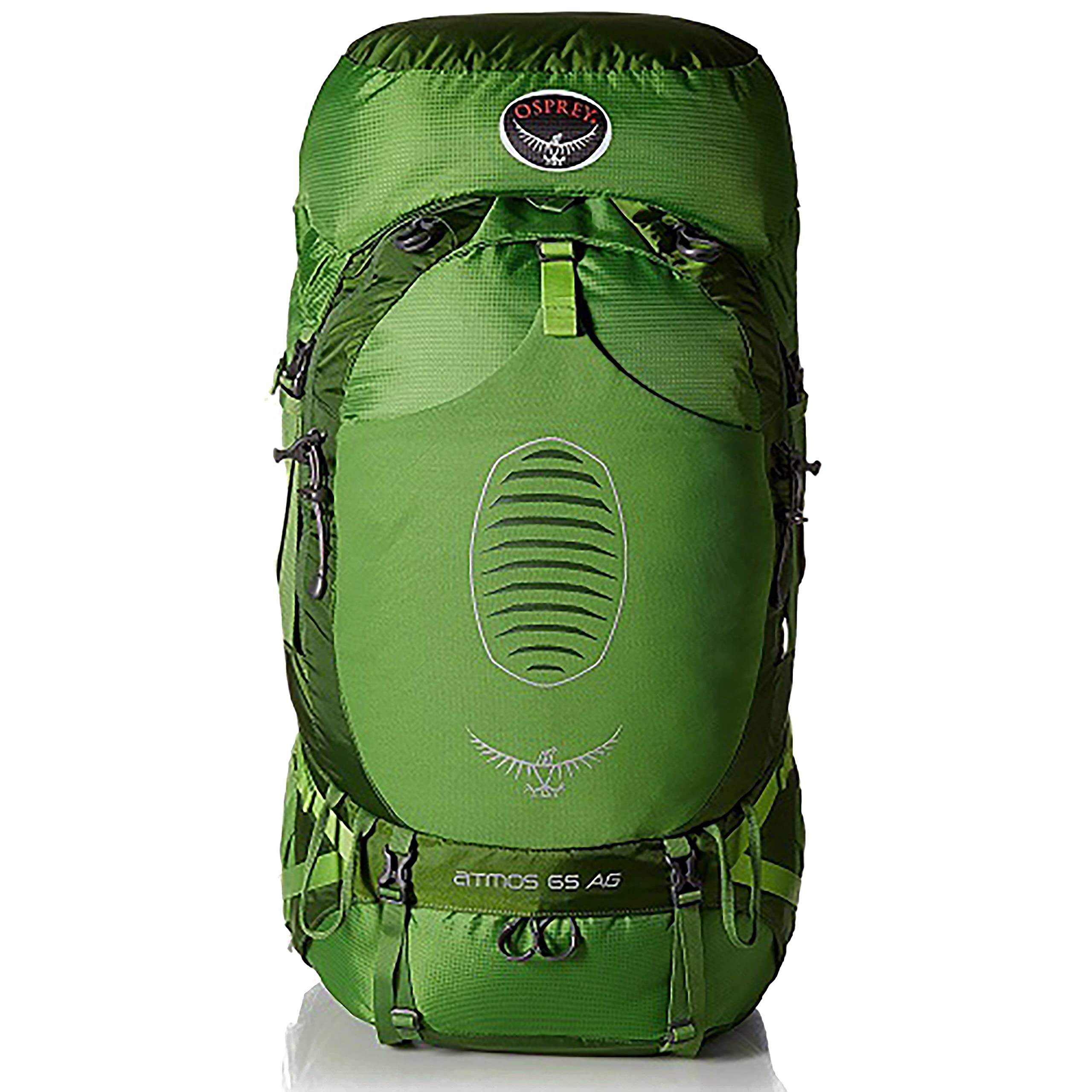
The Atmos AG 65L is the reference standard for load-carrying comfort in a premium camping backpack. Osprey’s Anti-Gravity suspension system extends the tensioned mesh backpanel seamlessly into the hip belt, creating a wrap-around fit that makes a 40-pound load feel thirty pounds lighter. The curved side-zip access lets you grab gear from the middle of the pack without unpacking everything, and the floating top lid adds practical lash points for a foam pad or tent. The included rain cover uses PFAS-free DWR coating and is stowed in its own pocket so you never lose it.
The torso adjustment is tool-free, spanning a wide enough range to fit most body types from 5’8″ to 6’2″ without swapping frames. The hip belt uses a sculpted foam wrap that conforms to your waist without gapping, and the shoulder straps are contoured to avoid digging into the neck. The fabric is a lightweight 210D nylon with ripstop reinforcement, keeping the pack weight at 4.5 pounds while still handling sharp rock abrasion. Users consistently report that this pack makes long-mile days seem easy, with one reviewer noting a 26-mile day under 30 pounds felt “perfect.”
The main tradeoff is the price point, which is firmly in premium territory. The pack also does not stand upright when loaded, which can be inconvenient during campsite organization. Some users find the waistbelt zipper difficult to close one-handed. But for anyone taking multi-day trips with loads over 30 pounds, the Atmos AG 65L delivers unmatched weight transfer and ventilation that justifies the investment.
Why it’s great
- Anti-Gravity suspension makes heavy loads feel significantly lighter
- Tool-free torso adjustment fits a wide range of heights
- Built-in side access zip for mid-pack retrieval
- Integrated PFAS-free rain cover with dedicated stow pocket
Good to know
- Does not stand upright when loaded
- Waistband zipper can be tricky to close one-handed
- Premium price point
2. Osprey Rook 65L Men’s

The Rook 65L packs Osprey’s best features into a simpler, lighter package that hits the sweet spot for weekend backpackers. The AirSpeed suspension uses a tensioned mesh backpanel with a LightWire alloy frame that keeps the pack off your back, reducing sweat buildup on warm hikes. At 3.7 pounds, this is one of the lightest framed packs in the 65-liter class, making it ideal for covering ground quickly without sacrificing structure. The integrated rain cover lives in a dedicated pocket, removing the guesswork when a squall rolls in.
The compartment layout is straightforward but effective. The zippered sleeping bag compartment has a floating divider, letting you compress your bag while keeping it separate from the rest of your gear. The angled water bottle pockets let you grab a bottle without removing the pack, and the front compression straps double as tent or sleeping pad tie-downs. Users report carrying 25 to 35 pounds comfortably over multi-day treks, with one reviewer logging several hundred miles on the same pack and praising its durability through switchbacks and stream crossings.
The biggest omission is the lack of an outer mesh pocket, which some hikers use for wet gear or quick-access items. There is no back panel entry, so packing requires more forethought. The shoulder straps, while comfortable, may feel narrow for users with broader chests. Still, for the price, the Rook 65L delivers premium-level construction and weight savings that make it a strong choice for light to moderate backpacking loads.
Why it’s great
- Lightweight 3.7 lb design for a 65L pack
- AirSpeed mesh backpanel keeps your back ventilated
- Integrated rain cover with dedicated stow pocket
- Durable YKK zippers and 210D nylon construction
Good to know
- No outer mesh pocket for wet gear
- No back panel entry for easy packing
- Shoulder straps may feel narrow for broad chests
3. Osprey Renn 65L Women’s

The Renn 65L is Osprey’s women’s-specific answer to the Rook, sharing the same AirSpeed suspension platform but engineered with a shorter torso range, narrower shoulder straps, and a hip belt curved to fit a woman’s anatomy. At 3.6 pounds it is slightly lighter than the men’s version, and the overall fit is dialed for torsos between 15 and 18 inches, which covers the majority of female hikers. The tensioned mesh backpanel provides excellent ventilation, and the LightWire frame transfers weight efficiently to the contoured hip belt.
The compartment layout mirrors the Rook’s smart simplicity — a zippered sleeping bag compartment with floating divider, two large side pockets that hold 1-liter bottles without slipping, and a hydration sleeve with a low-profile exit port. The adjustable torso system uses a hook-and-loop ladder that is easy to set without tools. Users at 5’2″ and 200 pounds report a comfortable fit with good weight distribution, and hikers at 5’3″ praise the easy adjustment system. The included rain cover fits snugly and stows away when not needed.
The main limitation is that very petite users (under 5’1″) may find the shoulder straps cannot tighten enough for a proper fit — Osprey’s Aura or Ariel series in XS/S might serve those body types better. The top compartment can be slightly awkward to access when the pack is fully compressed. But for most women in the standard height range, the Renn 65L offers premium comfort and a thoughtful fit that budget unisex packs simply cannot match.
Why it’s great
- Women’s-specific harness with shorter torso and curved hip belt
- Lightweight 3.6 lb design with excellent ventilation
- Integrated rain cover and floating sleeping bag divider
- Tool-free torso adjustment fits 15-18 inch torsos
Good to know
- Very short users may need XS/S in Aura or Ariel series
- Top compartment access can be tight when fully packed
- No outer mesh pocket
4. Teton 75L Explorer

The Teton 75L Explorer is a mid-range workhorse that delivers serious volume and a fully adjustable suspension for hikers who need to carry a week’s worth of gear. The multi-position torso adjustment spans from roughly 15 to 23 inches, making it one of the most inclusive fits in its price bracket for medium to tall adventurers. The internal frame uses an aluminum alloy stay that balances the load effectively, and the open-cell foam lumbar pad provides a stable platform that keeps weight off the shoulders. The dedicated sleeping bag compartment has a removable divider, allowing you to consolidate space when you need it.
The compartment design is thoughtful for long trips. Two large side mesh pockets hold 1-liter bottles securely, though users note bottles larger than 16 ounces may be a tight fit. Multi-directional compression straps let you cinch down the load for stability on uneven terrain, and the included rain cover deploys quickly to protect gear when the weather turns. Users report carrying 45 to 50 pounds comfortably for training hikes, with the pack staying balanced and stable even on moderate inclines. One reviewer used the 4000-cubic-inch capacity for a 5-7 day trip and found the removable divider useful for separating clean clothes from a damp sleeping bag.
The main drawbacks are the weight and zipper quality. The pack feels heavier than its premium competitors, and some users report stubborn zippers that require two hands to operate. The side mesh pockets are too small for larger water bottles, and there is no included waist pocket for quick-access snacks or a phone. The chest strap can feel tight for users with broader shoulders, especially in winter layers. Still, for the volume and adjustable fit, the Teton Explorer is a strong option for budget-conscious hikers tackling extended trips.
Why it’s great
- Wide torso adjustment range fits medium to tall builds
- Large 75L capacity with removable sleeping bag divider
- Multi-directional compression straps for load stability
- Included rain cover and durable construction
Good to know
- Side mesh pockets too small for bottles over 16 oz
- Zippers can be stiff and require effort to operate
- No waist pockets for quick-access items
5. Mardingtop 70L Internal Frame
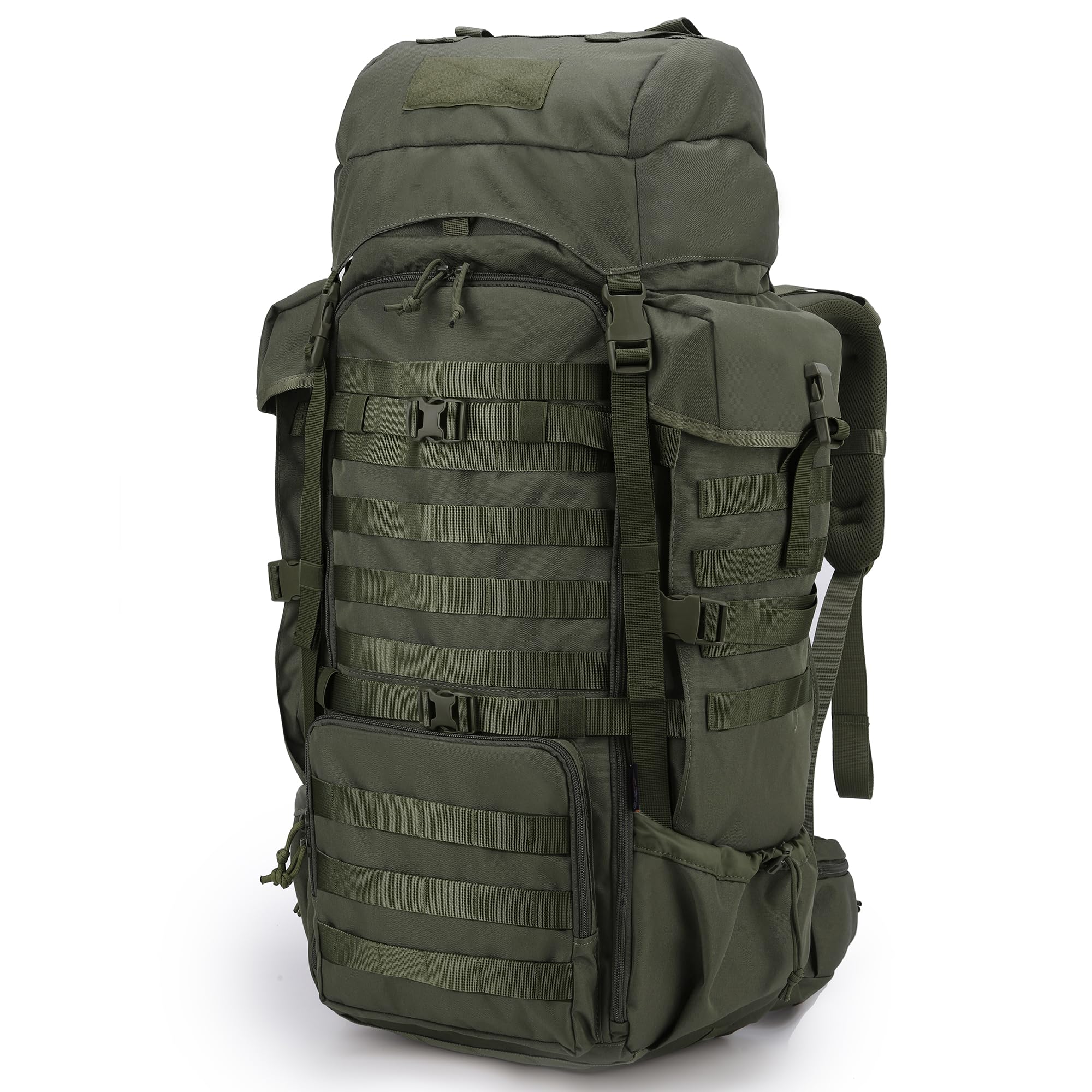
The Mardingtop 70L fills a specific niche for hikers who want a modular, military-style pack that can handle rough treatment without breaking the bank. The 600D polyester exterior is thicker and more abrasion-resistant than many competitors at this price point, and the YKK zippers add reliability that cheaper packs skip. The MOLLE webbing on the front and sides lets you attach extra pouches and gear directly to the pack, turning it into a customizable load-out system for hunting or camping trips where you need quick access to tools, water, or electronics.
The internal frame uses an aluminum alloy stay with a multi-position torso adjustment that accommodates a wide range of body sizes. Users report comfortably carrying 50 to 65 pounds with good weight transfer, and the padded hip belt and shoulder straps feature breathable mesh panels that reduce sweat buildup. The main compartment has two large internal pockets ideal for a stove and cookware, and the side mesh pockets can hold two 36-ounce bottles plus a 2-liter hydration bladder. One reviewer at 6’4″ with a 50-inch waist found the hip belt had plenty of room, and the shoulder straps adjusted easily for different users of varying heights.
The material has a crinkly, noisy texture that some hunters complain about — it squeaks against brush and can alert game. The buckles feel slightly cheap and the long strap tails need trimming out of the box. The included rain cover has thin elastic that may wear out faster than the pack itself. But for budget-minded campers who need a modular, durable pack that can carry heavy loads, the Mardingtop 70L delivers surprising quality for the category.
Why it’s great
- Thick 600D polyester with YKK zippers for durability
- MOLLE system for custom pouch attachments
- Wide torso adjustment fits tall and larger users
- Large side pockets hold two 36-oz bottles
Good to know
- Noisy fabric squeaks against brush
- Buckles feel cheaper than the rest of the pack
- Long strap tails need trimming
6. MOUNTAINTOP 70L Internal Frame

The MOUNTAINTOP 70L is a solid mid-range contender that prioritizes comfort and quality construction without reaching premium prices. The aluminum alloy internal frame plate provides excellent load-bearing support, and users consistently report that the pack feels balanced even when carrying 30 to 35 pounds for multi-day trips. The YKK zippers are smooth and reliable, and the nylon fabric resists punctures and abrasion well for its weight class. The adjustable torso system lets you dial in the fit, accommodating both average builds and taller users.
The compartment layout is practical for organized packing. The front zippered panel opens wide for easy access to the main compartment, and the sleeping bag compartment at the bottom keeps your bag separated and accessible without unpacking everything. The hydration bladder pocket is positioned correctly against the back panel, though the exit port is smaller than ideal and may not work with all hose connectors. The included rain cover protects your gear in wet conditions, and users report it kept their equipment completely dry during unexpected downpours. Two large mesh side pockets hold 1-liter bottles securely.
The main downsides are the weight and top-heaviness for smaller users. The pack weighs over 4 pounds empty, which is noticeable on longer carries. Some users report that the pack can feel top-heavy when fully loaded, especially for hikers with shorter torsos. The hydration port is small, and the top seam stitching on some units shows slight fraying after extended use. For shorter trips of 2-3 days, the weight is a minor tradeoff for the comfort and organization this pack provides.
Why it’s great
- Aluminum alloy frame provides stable load transfer
- Smooth YKK zippers and durable nylon construction
- Front panel opening for easy access
- Included rain cover tested dry in real downpours
Good to know
- Over 4 pounds empty, noticeable on long carries
- Can feel top-heavy for shorter torsos
- Small hydration port may not fit all hose connectors
7. Mardingtop 60L Military
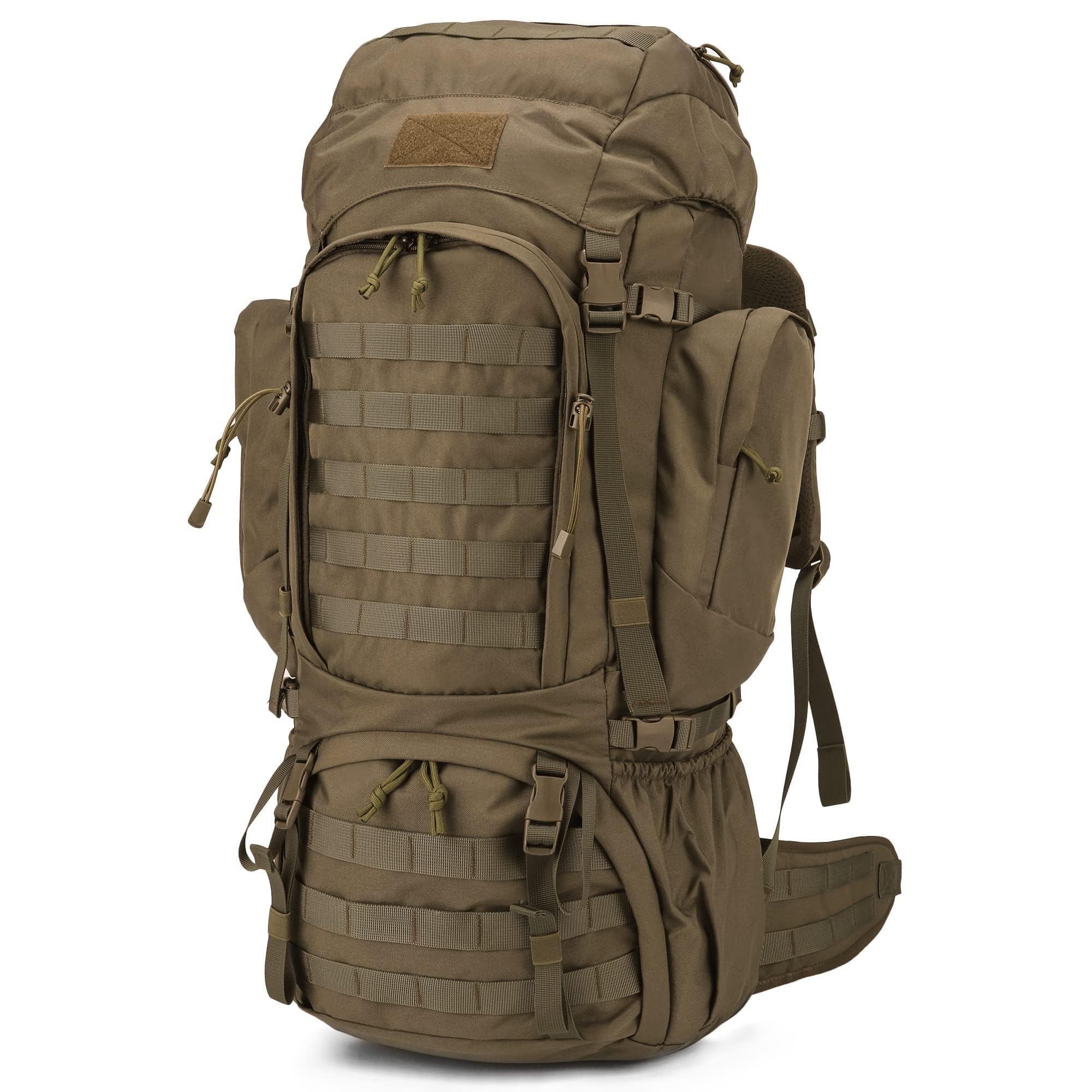
The Mardingtop 60L is an entry-level pack that punches above its price tier with YKK zippers, a modular MOLLE system, and expandable capacity from 60 to 75 liters via extra straps. The pack is built around a simple internal frame that works well for loads under 50 pounds over moderate distances. The material is robust for its price point, with double-stitched seams that hold up against branch scrapes and rough loading. The included rain cover has four tie-down points, though the elastic rim tends to lose tension faster than on premium packs.
The organization is surprisingly thoughtful for a budget pack. The main compartment has internal zippered pockets for small items, and the sleeping bag compartment at the bottom keeps your bag accessible. The MOLLE webbing lets you attach extra pouches for gear like a knife, GPS, or water filter. Users report that the pack is comfortable for occasional 3-5 day trips, with one reviewer carrying 90 pounds for short ruck runs and finding the pack structurally sound. The adjustable shoulder straps and sternum strap let you dial in the fit, though the hip belt padding is thin and can cause chafing on longer carries.
The biggest compromise is the hip belt. It lacks the dense foam and contoured shape needed to transfer heavy loads effectively, and the cinches tend to loosen under 50-pound loads. The shoulder straps are narrow and may dig in for users with broader shoulders. This is not a pack for long-distance backpacking with heavy gear — it shines as a modular, budget-friendly option for short trips, day hunts, or as a first pack for beginners learning what they need. For the price, the Mardingtop 60L offers exceptional value if you keep expectations realistic about load capacity and comfort range.
Why it’s great
- YKK zippers and robust stitching at an entry-level price
- MOLLE system for modular gear attachment
- Expandable capacity from 60L to 75L
- Good for beginners learning their pack preferences
Good to know
- Thin hip belt causes chafing under heavy loads
- Narrow shoulder straps may dig into broader shoulders
- Cinches loosen over time with 50+ lb loads
FAQ
How do I measure my torso length for a backpacking pack?
What liter capacity do I need for a 3-day camping trip?
Is a women’s-specific backpack worth the higher price?
Do I need a pack with a MOLLE system for camping?
Final Thoughts: The Verdict
For most users, the best backpack for camping winner is the Osprey Atmos AG 65L because its Anti-Gravity suspension system delivers unmatched load-carrying comfort that makes heavy packs feel manageable over long days. If you want a lighter, more affordable pack with excellent ventilation, grab the Osprey Rook 65L. And for women needing a properly contoured harness that eliminates hip gap and shoulder pressure, nothing beats the Osprey Renn 65L.

Mo Maruf
I created WellFizz to bridge the gap between vague wellness advice and actionable solutions. My mission is simple: to decode the research and give you practical tools you can actually use.
Beyond the data, I am a passionate traveler. I believe that stepping away from the screen to explore new environments is essential for mental clarity and physical vitality.