Our readers keep the lights on and my smoothie glass nicely filled. As an Amazon Associate, I earn from qualifying purchases.
A shower leak doesn’t announce itself until the mold finds the studs. The single biggest variable separating a 20-year installation from a warranty call is what sits behind the tile — the backer board and its waterproofing layer. The material you choose here determines whether moisture stays out or slowly migrates into the framing.
I’m Mohammad Maruf — the founder and writer behind WellFizz. I’ve spent years analyzing building material specifications, comparing permeance ratings, tensile strengths, and ANSI compliance data to separate real performance from marketing sheets. My research focuses on how these products behave inside a wet environment over time, not just at installation.
This guide breaks down the essential specs and real-world performance of the top contenders to help you find the best backer board for shower that matches your build quality and budget.
How To Choose The Best Backer Board For Shower
Not all backer board solutions are equal. A standard cement board provides a good substrate, but it is not waterproof on its own—it requires a surface-applied membrane. The choice often comes down to using a liquid-applied membrane, a sheet membrane, or a pre-formed waterproof board.
Liquid vs. Sheet Membranes
Liquid membranes like RedGard or Laticrete Hydro Barrier are brushed or rolled on, forming a monolithic layer with no seams. They excel at covering complex shapes and niches. Sheet membranes like Schluter Kerdi or USG DUROCK use a polyethylene fabric that is embedded in thin-set. Sheets offer a consistent, factory-controlled thickness but require careful overlapping at seams and corners.
Anti-Fracture Protection
A quality membrane also acts as an uncoupling layer, preventing movement in the substrate—shrinkage cracks up to 1/8 inch—from transferring to the tile. Look for ANSI A118.12 compliance if this is a priority. Fabric-reinforced systems generally offer better crack isolation than unreinforced liquid coats.
Quick Comparison
On smaller screens, swipe sideways to see the full table.
| Model | Category | Best For | Key Spec | Amazon |
|---|---|---|---|---|
| Redgard Waterproofing | Liquid Membrane | DIY shower walls & floors | 1 gal covers ~40 sq ft at 2 coats | Amazon |
| LATICRETE Hydro Barrier Plus | Liquid Membrane | ANSI-compliant professional builds | IAPMO approved, 11.9 lbs per gal | Amazon |
| USG DUROCK Liquid Membrane | Liquid Membrane | Fast-drying, low-perm applications | 0.38 perms at 20 mils dry | Amazon |
| Muzata Waterproofing Membrane | Sheet Membrane | Large shower floor coverage | 23.6 mil thick, 125 sq ft roll | Amazon |
| JIANBENKJ Waterproof Membrane | Sheet Membrane | Budget-conscious seamless joints | 23.6 mil thick, 110 sq ft roll | Amazon |
| Laticrete Fabric Membrane Roll | Fabric Membrane | Reinforcing liquid membranes | 37.5 sq ft, 6 in x 75 ft roll | Amazon |
| UCANVIN Waterproofing Band | Sheet Band | Sealing seams on a budget | 30 mil thick, 5 in x 98.5 ft | Amazon |
In‑Depth Reviews
1. CUSTOM BLDG PRODUCTS Redgard Waterproofing

RedGard is the most widely recognized liquid-applied waterproofing membrane in the residential market, and for good reason. Its bright red color makes coverage easy to verify—a critical feature when applying the required two to three coats. Once cured, it forms a flexible rubber-like barrier that adheres tenaciously to cement backer board, creating a monolithic seal with no seams to fail.
In practice, users report that three coats on a standard shower alcove with recessed shelves creates a completely watertight envelope. The material has minimal odor during application and cleans up easily with water before it dries. The 1-gallon container is ideally sized for a single shower stall, though larger projects may require a second can.
The key drawback is that liquid membranes require careful dry time between coats—rushing this step leads to pinholes. It also stains clothing permanently, so disposable coveralls are recommended. For the combined qualities of ease of application, visual verification, and proven long-term performance, RedGard remains the benchmark.
Why it’s great
- Easy to apply with brush or roller
- Bright red color shows coverage gaps instantly
- Creates a seamless waterproof barrier
Good to know
- Requires 2-3 coats with drying time between each
- Permanent staining on clothing
2. LATICRETE Hydro Barrier Plus Waterproofing

Hydro Barrier Plus is Laticrete’s top-tier liquid membrane, carrying IAPMO approval and compliance with ANSI A118.10 and A118.12 standards. It is a polymer-modified liquid rubber that cures to a bright blue film with exceptional flexibility and adhesion across a wide range of substrates including cement board, plaster, and exterior glue plywood.
The formula is specifically engineered to prevent color bleed-through with light-colored tile and white grout, a pain point with some other liquid membranes. Users consistently report that it pairs perfectly with Laticrete’s fabric membrane roll for reinforcing seams and corners, creating a system that exceeds the performance of sheet membranes in irregular spaces.
The main downside is cost per gallon—it sits at the premium end of the liquid membrane spectrum. Also, the 1-gallon container can be insufficient for a full walk-in shower with a bench, so buy two if your project is larger than 40 square feet. The packaging has also been noted to leak during shipping, so inspect the lid upon arrival.
Why it’s great
- IAPMO approved with anti-fracture certification
- No color bleed with white tile and light grout
- Strong adhesion to multiple substrate types
Good to know
- Higher cost per square foot than alternatives
- Shipping leaks reported due to lid design
3. USG DUROCK Brand Liquid Waterproofing Membrane
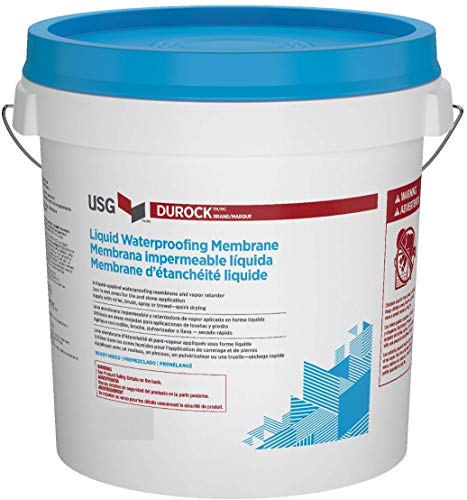
USG DUROCK’s liquid membrane is a clear acrylic formulation that stands apart from the pigmented competitors. Its standout spec is a permeance rating of 0.38 perms at 20 mils dry thickness per ASTM E96 Procedure E, making it one of the most effective vapor barriers available in a liquid-applied format. This is critical for steam showers or installations where moisture vapor drive is a concern.
The membrane can be applied by brush, roller, trowel, or spray, and it dries quickly—users report being able to apply three coats in a single day. It offers anti-fracture protection up to 1/8 inch, matching the performance of many fabric-reinforced systems. Its clear finish allows you to see the substrate underneath, which is useful for inspecting screw holes and joints.
On the downside, the clear color makes it harder to verify even coverage compared to colored membranes. It is also noticeably thicker than other liquids, making it slightly more difficult to spread uniformly. The 1-gallon coverage claims of 100 square feet are optimistic; users typically get closer to 60-70 square feet for three coats.
Why it’s great
- Industry-leading low permeance (0.38 perms)
- Fast drying time allows multiple coats in one day
- Can be applied via spray for large areas
Good to know
- Clear color makes coverage verification difficult
- Thick consistency requires some effort to spread
4. Muzata Waterproofing Membrane for Shower

Muzata brings a welcome innovation to the sheet membrane category: a wider roll. At 3.77 feet wide by 33 feet long, it delivers 125 square feet of coverage and reduces the number of seams compared to standard 3.3-foot-wide rolls. Fewer seams mean fewer potential leak paths and a faster installation—especially important when covering a large shower floor or a steam room.
At 23.6 mils thickness, it is roughly three times thicker than standard 8-mil sheet membranes. This extra heft improves tear resistance and makes the material easier to handle without folding or creasing. The polyethylene core is sandwiched between non-woven fabric layers that bond securely to thin-set mortar. Users report that it works as well as name-brand systems at a significantly lower cost per square foot.
The fleece layer on this membrane is somewhat less robust than premium brands—some users noted slight separation when wiping with a sponge. However, once embedded in mortar, the bond is solid. For large-format projects where seam minimization drives both labor and risk, the Muzata roll is a compelling value proposition.
Why it’s great
- Wider roll reduces installation seams significantly
- 23.6 mil thickness for high tear resistance
- Delivers premium-level coverage at a value price
Good to know
- Fleece layer is less durable than top-tier brands
- Requires careful handling before mortar application
5. Waterproof Membrane for Shower, JIANBENKJ (3.8ft x 29ft)
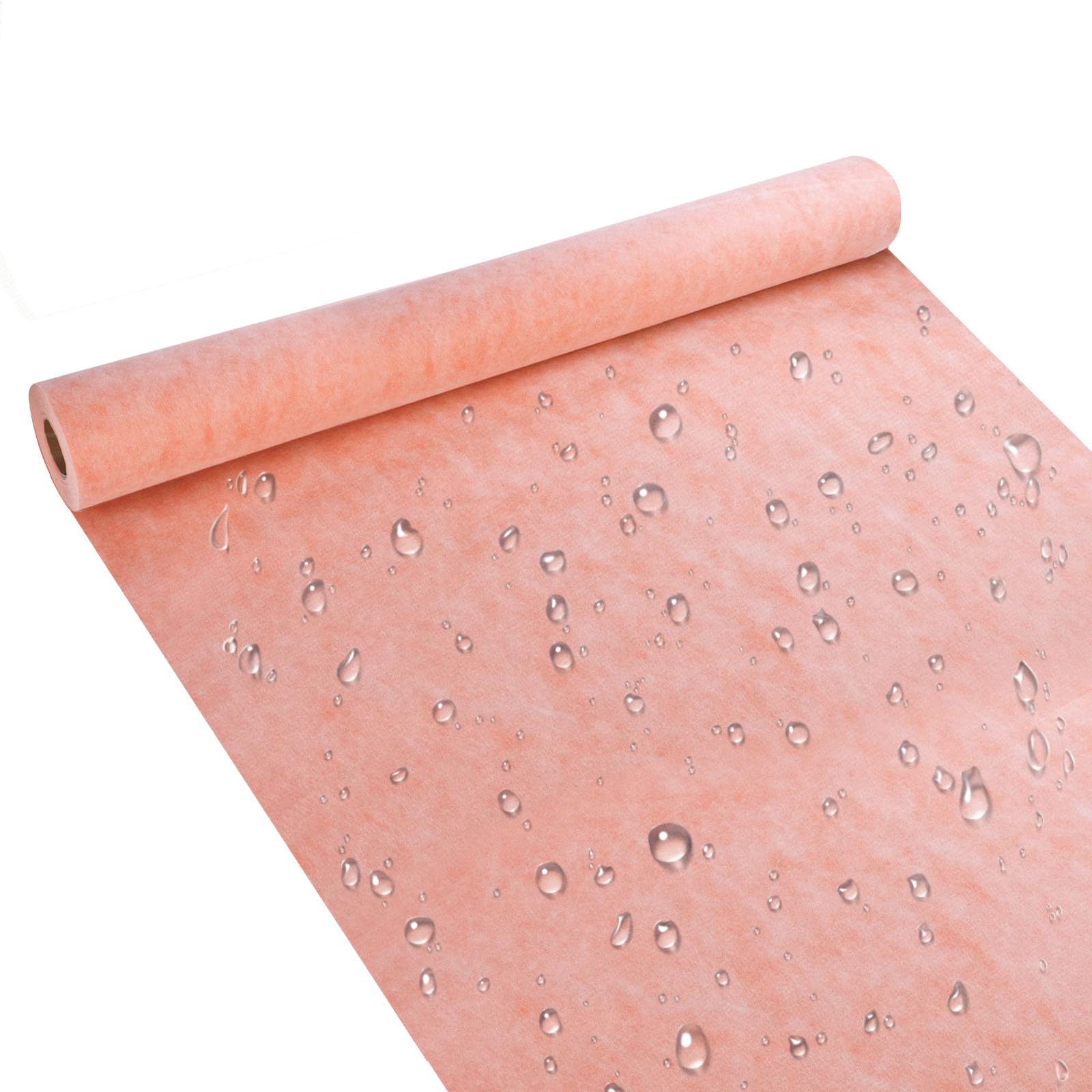
This 3.8-by-29-foot roll from JIANBENKJ is a direct alternative to the Schluter Kerdi system. At 23.6 mils thickness with a high-density polyethylene core and non-woven fabric facings, it replicates the material properties of the premium product at a significant cost reduction. The roll covers 110 square feet, which is enough for a standard shower and a niche.
Installation is identical to the name-brand process: cut to size, embed in a layer of thin-set mortar, then cover with another layer of mortar before tiling. The non-woven fabric is treated to prevent fiber pilling or clumping when the mortar is applied—a common problem with budget membranes. Users consistently report passing 24-hour leak tests without issues.
Customer feedback highlights that this membrane is just as good as the expensive brands for sealing cement board joints and floor-to-wall transitions. The main difference is the fleece texture, which some users find slightly less uniform. If you are comfortable with sheet membrane installation techniques, this roll delivers equivalent waterproofing for a fraction of the outlay.
Why it’s great
- Material and thickness match premium sheet membranes
- Fleece layer resists pilling during mortar application
- Substantial cost savings over Kerdi-style systems
Good to know
- Fleece uniformity is slightly less consistent
- Requires practice to install without wrinkles
6. Laticrete Waterproofing Anti-Fracture Fabric Membrane Roll

This is not a standalone waterproofing solution—it is a fabric reinforcement roll designed to be embedded in liquid-applied membranes like Laticrete Hydro Ban, RedGard, or Aqua Defense. The 6-inch-wide by 75-foot-long roll provides 37.5 square feet of non-woven fiberglass cloth that strengthens the membrane at seams, corners, and over control joints.
The anti-fracture technology bridges shrinkage cracks up to 1/8 inch, preventing them from transmitting through the tile. In practice, it is indispensable for shower floor transitions and niches where linear stress concentrations occur. Users who have combined this fabric with Hydro Barrier report a system that feels more robust than a 100 percent liquid application.
The main consideration is that the fabric is denser than previous versions—some reviewers found that the center of the cloth does not fully saturate with liquid membrane if not soaked thoroughly. It also builds up slightly at overlaps, which requires an extra skim coat to keep the finish flat. For achieving a TCNA-compliant waterproof assembly without sheet membrane seams, this fabric is the professional’s choice.
Why it’s great
- Reinforces liquid membranes at high-stress seams
- Bridges cracks up to 1/8 inch effectively
- Works with most liquid-applied waterproofing brands
Good to know
- Dense fabric requires thorough saturation
- Adds thickness at overlaps needing extra skim coat
7. UCANVIN Waterproofing Membrane Band Roll

The UCANVIN membrane band is a 5-inch-wide, 98.5-foot-long roll of orange polyethylene fabric that functions identically to Schluter Kerdi Band. Its purpose is to seal the butt joints and floor-to-wall transitions in a backer board installation. The 30-mil thickness is noticeably heavier than standard seam tapes, providing extra puncture resistance in high-traffic corners.
Users consistently describe it as a “budget Kerdi” that passes the same 24-hour leak tests at a fraction of the cost. Installation is straightforward—cut to length, embed in thin-set, and cover. The material folds neatly into inside and outside corners without cracking, and it bonds well with unmodified thin-set mortars.
Because this is a band rather than a full-width membrane, it is best used as a supplement to a primary waterproofing system—either a liquid membrane on the field of the wall or a full sheet membrane. Some users have noted that the orange color can bleed slightly if not fully covered by thin-set, but this is a cosmetic rather than functional concern.
Why it’s great
- 30 mils thick for superior corner protection
- Functions identically to Kerdi Band at lower cost
- Long 98.5-foot roll covers multiple shower projects
Good to know
- Best used as seam reinforcement, not primary waterproofing
- Orange color may show if thin-set coverage is thin
FAQ
Can I apply tile directly to cement board without a membrane?
How many coats of liquid membrane do I need on a shower floor?
What is the difference between a fabric membrane and a sheet membrane?
Final Thoughts: The Verdict
For most users, the best backer board for shower winner is the Custom Building Products RedGard because it balances DIY-friendliness with proven long-term performance across cement board and foam substrates. If you want a sheet membrane with fewer seams and faster coverage, grab the Muzata Waterproofing Membrane for its wider roll format. And for a professional-grade liquid system with full ANSI compliance, nothing beats the LATICRETE Hydro Barrier Plus paired with its reinforcing fabric.

Mo Maruf
I created WellFizz to bridge the gap between vague wellness advice and actionable solutions. My mission is simple: to decode the research and give you practical tools you can actually use.
Beyond the data, I am a passionate traveler. I believe that stepping away from the screen to explore new environments is essential for mental clarity and physical vitality.