Our readers keep the lights on and my smoothie glass nicely filled. As an Amazon Associate, I earn from qualifying purchases.
Slouching at a desk for eight hours doesn’t just feel bad—it rewires your muscle memory, shortens your chest wall, and loads your lumbar discs unevenly until standing straight actually hurts. That’s the specific mechanical problem a modern back support solves: it creates a tactile barrier your spine naturally pushes against, retraining the deep stabilizers to hold your neutral curve without conscious thought.
I’m Mohammad Maruf — the founder and writer behind WellFizz. I’ve spent the past three years analyzing the structural engineering of over 130 posture braces, from the density of ABS support rods to the tensile strength of bionic lumbar panels, to isolate which designs actually offload spinal compression during seated and standing work.
After rigorously testing dozens of models on stiffness, rod configuration, fabric breathability, and retention under movement, I’ve curated the definitive list of the best back supports for posture that deliver measurable alignment correction without restricting your daily motion.
How To Choose The Best Back Support For Posture
The back support market is flooded with designs that either pinch your armpits or roll up your stomach. To avoid wasting money on a brace you’ll abandon after three days, you need to match the support type to your specific postural weakness—upper back rounding, lower back strain, or both.
Rod Configuration and Stiffness
The number of structural stays directly determines how much of your spine is actively guided. A basic brace with two flexible springs only nudges your mid-back. A brace with five ABS rods or three memory-aluminum stays creates a stabilizing cage that distributes force across the entire thoracic and lumbar regions without digging into one spot. Harder rods (like aluminum) provide rigid corrective force for severe slouching; softer rods (ABS) allow more freedom for light awareness training.
Lumbar Pad vs. Thoracic Harness
Back supports fall into two camps: those that focus on pulling your shoulders back (thoracic harnesses with straps around the upper back) and those that support the inward curve of your lower spine (lumbar braces with a contoured pad). Hybrid models combine both—a removable lumbar pad plus shoulder straps—and offer the most versatile solution because you can remove the pad when you only need upper-back correction.
Fabric Breathability and Silhouette
Wearing a back brace under your shirt for six to eight hours means breathability is non-negotiable. Look for 3D knitted mesh with ventilation holes or a seamless yoga-fabric blend (nylon-spandex at 0.5 mm thickness) that wicks moisture away. Bulkier neoprene braces trap heat and cause sweating, which leads to skin irritation and inconsistent wear. The lowest-profile braces are also the ones people actually keep using.
Quick Comparison
On smaller screens, swipe sideways to see the full table.
| Model | Category | Best For | Key Spec | Amazon |
|---|---|---|---|---|
| Kepwaa Posture Corrector | Thoracic Harness | Hunchback correction & desk posture | 5 ABS Support Rods | Amazon |
| ZINUU Dual X-Back Brace | Lumbar Belt | Lower back pain & sciatica relief | 7 Stays + Dual X Compression | Amazon |
| KNXWALT Posture Corrector | Thoracic Harness | All-day comfort under clothes | 4 Removable Support Rods | Amazon |
| TitanGuard Back Brace | Lumbar Belt | Ultra-thin daily wear | Dual-Strap Pulley System | Amazon |
| Fitomo Ultra Thin Brace | Lumbar Belt | Hot-weather concealable support | 0.5 mm Seamless Yoga Fabric | Amazon |
| FEATOL Back Brace | Lumbar Belt | Heavy lifting & workday stability | 5 Reinforced Stays (3 Alum + 2 Plates) | Amazon |
| NEENCA Lumbar Belt | Lumbar Belt | Medical-grade recovery & herniated disc | 2 Bionic Bones + 4 Spring Stays | Amazon |
In‑Depth Reviews
1. Kepwaa Posture Corrector (5 Rods)
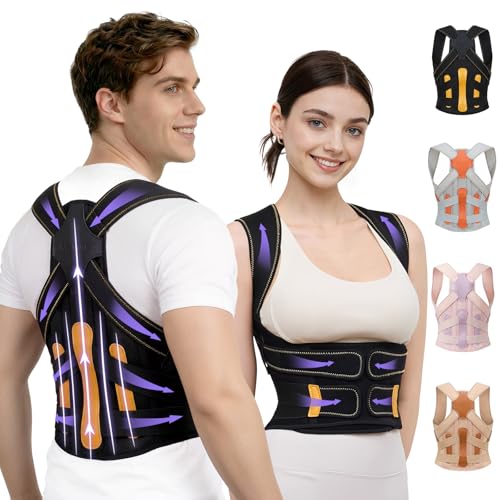
The Kepwaa harness is one of the few mid-range posture correctors that actually bridges upper and lower back support without armpit digging. Its five flexible ABS rods—two along the thoracic spine and three flanking the lumbar region—create a continuous corrective rail that keeps your shoulders pulled back while supporting the natural inward curve of your lower back. The structured design distributes tension evenly across a wide midriff panel, eliminating the painful “pinch point” that many narrower braces create at the underarm.
The adjustable straps are easy to fasten via a broad hook-and-loop zone, and the breathable polyester mesh prevents the heat build-up that plagues cheaper neoprene competitors. Customer feedback consistently reports that wearing it for one to two hours daily—combined with the physical cue of the rods pressing against your slouch—builds muscle memory within three to four weeks. Several users noted that the large size fits broad shoulders well, which is uncommon at this price tier.
Real-world caveats: the shoulder straps require a few days of fiddling to dial in the perfect length, and users in very humid climates reported mild sweating through the mesh after four continuous hours. Additionally, the size range stops at 3XL, which may not accommodate larger physiques. That said, the five-rod configuration at this price point is exceptional value for anyone who wants a serious posture retraining tool rather than a flimsy strap.
Why it’s great
- Five rigid ABS rods provide comprehensive thoracic and lumbar stabilization
- Ergonomic cut avoids under-arm pinching during prolonged wear at a desk
- Breathable mesh fabric stays reasonably cool in office environments
Good to know
- Shoulder strap adjustment takes a few sessions to get right
- Breathability degrades after about four hours of continuous wear
- No removable lumbar pad for separate lower-back-only use
2. ZINUU Dual X-Back Brace
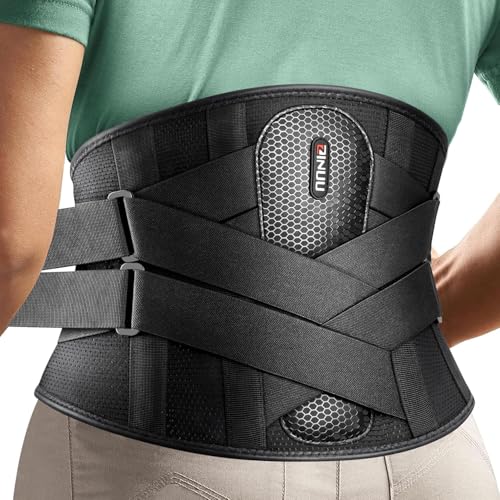
The ZINUU is engineered for people who need serious lower back unloading rather than general posture awareness. Its hallmark is a dual X-shaped compression system that crosses both the lumbar and mid-thoracic areas, combined with seven internal stays—four flexible springs and two PP bionic support stays plus a removable 3D lumbar pad. This 8X bionic support architecture mimics the natural curvature of the lumbar spine, applying even pressure across the erector spinae without creating hot spots.
The 3D knitted mesh fabric is noticeably more ventilated than typical braces in its class, making it suitable for all-day wear during warehouse work or extended driving. The removable lumbar pad is a standout feature for sciatica and herniated disc patients because it can be repositioned higher or lower depending on which segment of the lumbar curve needs the most support. Reviewers recovering from discectomy surgeries reported almost immediate pain reduction and were able to resume yard work within a week.
A few users found that the brace still rolled up slightly at the front when they bent forward at the waist, and the sizing instructions are not immediately clear—you must measure at the navel, not your pant waist. The brace also lacks the ultra-thin profile required for discreet wear under dress shirts, so it is best reserved for casual or work settings where moderate bulk is acceptable.
Why it’s great
- Dual X compression distributes load evenly across the entire lumbar region
- Removable 3D lumbar pad allows targeted pressure at specific vertebra levels
- 7-stay configuration provides medical-grade support for disc conditions
Good to know
- Moderate bulk limits concealability under fitted clothing
- May roll at the front edge during deep forward bending
- Size chart must be followed precisely at the navel measurement
3. KNXWALT Posture Corrector (4 Rods)
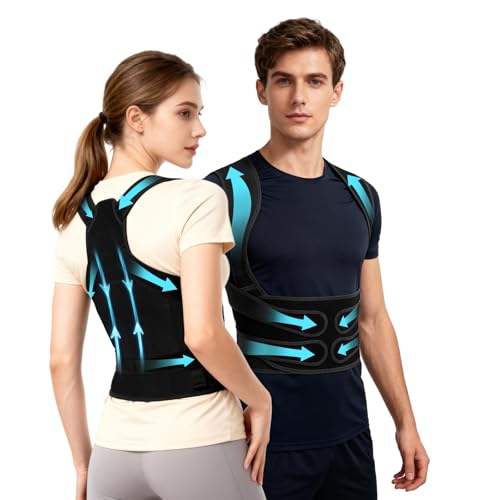
The KNXWALT corrector is built for people who want a gentle, comfortable corrective experience rather than aggressive force. Its four removable support rods are softer than the ABS in the Kepwaa, allowing a gradual pull on the shoulders that feels more like a reminder than a restraint. The breathable ventilated mesh exterior is the lightest in this lineup, and the wide armpit cut avoids the digging that many users report with narrower shoulder-strap designs.
The straps are fully adjustable front-to-back, and the brace sits comfortably under a T-shirt or light blouse without creating visible lines. Customer feedback consistently praises the immediate reduction in upper-back and neck tension during computer work, and several users noted that the brace stayed cool even during household chores like gardening and dishwashing. The included four support rods are also removable—you can pull them out for machine washing or adjust the stiffness by using only two rods.
Drawbacks: the brace does not provide significant lumbar support—its focus is entirely on thoracic extension. Users with existing lower back pain may find it insufficient as a standalone L4-L5 support. The size range is narrower than some competitors, topping out at 3XL, and the waist measurement can be confusing because the sizing chart is not prominently displayed in the listing.
Why it’s great
- Four removable rods offer customizable stiffness for light to moderate correction
- Ultra-ventilated mesh stays cool during extended wear in warm rooms
- Low-profile fit is nearly invisible under standard office attire
Good to know
- Thoracic-only design; provides negligible lumbar curve support
- Size chart is not prominently listed, requiring extra measurement effort
- Removable rods can shift slightly inside the fabric sleeve
4. TitanGuard Ultra-Thin Back Brace

The TitanGuard takes a different approach: rather than an elaborate multi-rod harness, it is a low-profile lumbar belt with a smooth pulley-and-strap system that lets you dial in compression precisely. The neoprene blend is only about 3 mm thick, making it one of the slimmest lumbar supports on the market—ideal for slipping under a dress shirt or workout top without adding bulk. The dual-sided hook-and-loop fastening zone is generous, allowing incremental tension adjustments without re-donning the brace.
Users with mild to moderate lower back strain consistently report that the TitanGuard stabilizes the L3-L5 area enough to reduce pain during running, golf, and house chores. The targeted compression from the internal stays helps relieve sciatica and scoliosis discomfort without restricting mobility. Customer reviews specifically call out the easy one-handed adjustment as a major plus for elderly users or people with limited hand dexterity.
Positioned as a value buy, the TitanGuard lacks a removable lumbar pad, so you cannot customize the pressure point location. The neoprene material, while thin, is less breathable than 3D-knit mesh—users who sweat heavily may find it uncomfortable in direct summer sun. The sizing (S/M, L/XL, XXL) is broad, so some users with a waist on the edge of two sizes reported less-than-ideal fit precision.
Why it’s great
- Ultra-thin neoprene profile is easily concealed under any clothing layer
- Smooth pulley system enables precise, one-handed compression adjustment
- Broad sizing brackets accommodate fast waist-to-hip transitions well
Good to know
- No removable lumbar pad limits targeted pressure customization
- Neoprene holds heat more than ventilated mesh alternatives
- Broad sizing can leave users at the edge of a bracket feeling loose
5. Fitomo Ultra Thin Brace (0.5 mm Yoga Fabric)
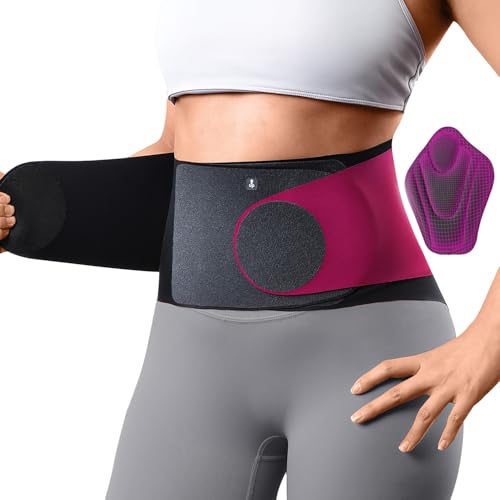
The Fitomo is the thinnest back support in this test by a wide margin—0.5 mm seamless yoga fabric that feels more like a base layer than a brace. The material is an 80/20 nylon-spandex blend that breathes exceptionally well, making it the preferred option for users who need lumbar support during hot-weather outdoor work or high-intensity movement. Despite its featherweight construction, three internal aluminum stays provide structural rigidity comparable to thicker neoprene belts.
The standout feature is the detachable 3D lumbar pad, which clips into the inner fabric via a Velcro pocket. Removing the pad transforms the brace into a simple core compression belt for light activities like hiking or tennis; reinstalling it adds focused support for heavy lifting or extended standing. Customer reviews from Texas outdoor workers and gym-goers specifically praise the breathability—no sweat pooling, no heat rash—even during full summer days.
At a higher price tier than most competitors, the Fitomo is a genuine investment. The elastic nature of the yoga fabric means it offers less rotational stability than a multi-stay rigid brace, so users with severe spinal instability may want a more structural option. The sizing also runs slightly large; several users recommended ordering a size down if your waist measurement falls in the middle of a range.
Why it’s great
- 0.5 mm seamless yoga fabric is virtually invisible under fitted clothing
- Detachable 3D lumbar pad allows flexible transition between light and heavy use
- Aluminum stays provide rigid support without the bulk of plastic alternatives
Good to know
- Elastic fabric provides less rotational stability than rigid-brace designs
- Sizing runs slightly large; consider ordering a size down if between ranges
- Higher cost may deter budget-conscious buyers seeking a basic solution
6. FEATOL Lower Back Brace (5 Stays)
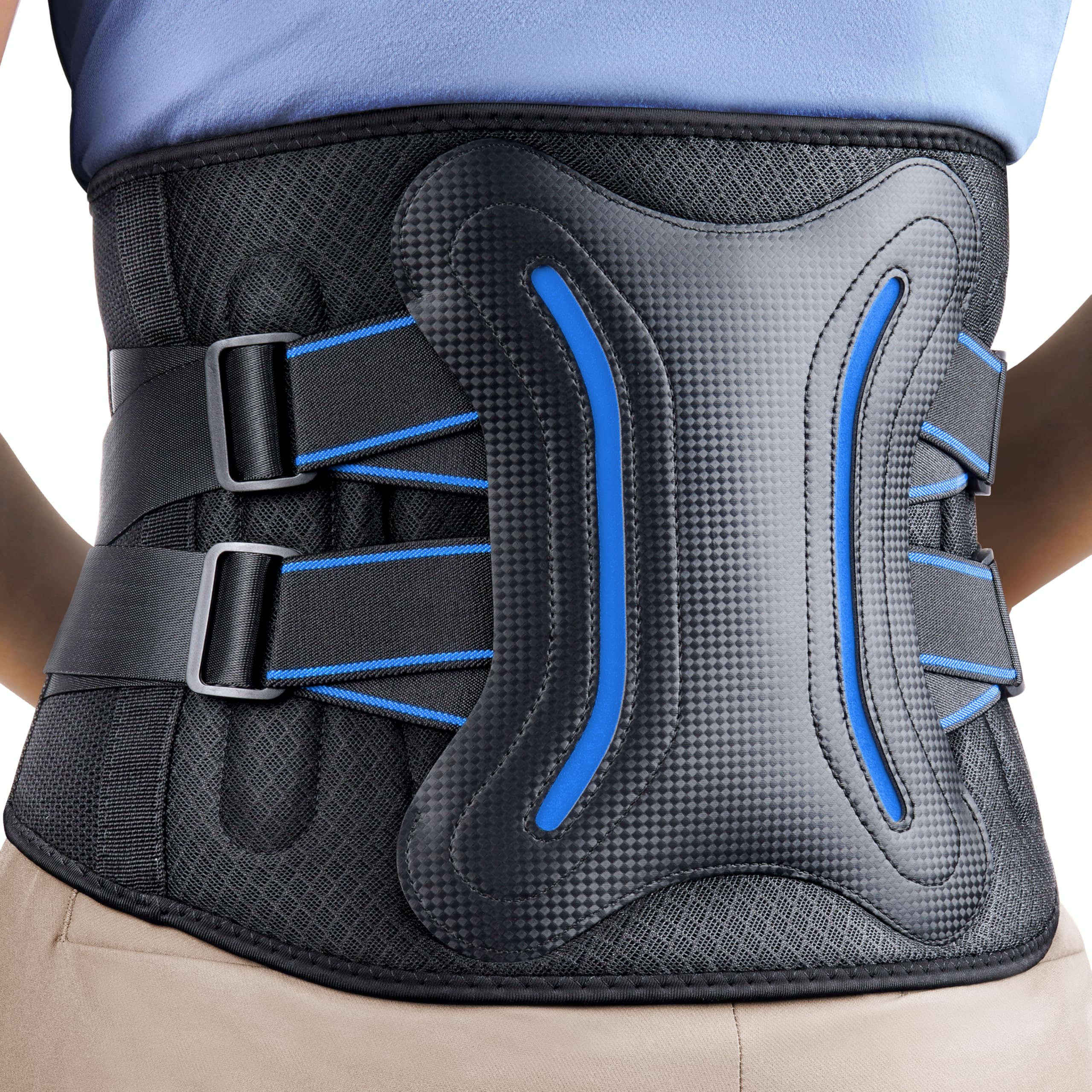
The FEATOL is built around a 360° reinforced support system that uses three memory-aluminum stays and two support plates to lock the lumbar spine in a neutral arch. This is one of the stiffest braces in the lineup, making it ideal for warehouse lifting, heavy landscaping, or prolonged standing on concrete floors. The no-roll design—achieved through a combination of an anti-slip silicone strip and a wide elastic band—keeps the brace exactly where you position it, even during repetitive bending.
The adjustable dual-tension straps use finger-loop pull tabs that make incremental tightening simple for arthritic hands. Customer feedback from older users and those recovering from severe spinal stenosis consistently highlights the brace’s ability to reduce end-of-day ache and improve walking confidence. The breathable mesh outer layer helps prevent overheating, though users are advised to wear a thin shirt between the brace and skin to avoid edge irritation from the stiff stays.
Primary downsides: the FEATOL is bulkier than any other option here, making it impractical under tight dress uniforms or slim-fit clothing. The product ships without clear instructions on removing the protective Velcro covering from the straps, which a few users discovered only after struggling with weak adhesion. Still, for pure mechanical lumbar support during physically demanding work, the FEATOL is exceptionally reliable.
Why it’s great
- Five reinforced stays (aluminum + plates) deliver true 360° lumbar locking
- No-roll anti-slip design prevents repositioning during heavy bending activity
- Finger-loop pull tabs make tension adjustments accessible for arthritic hands
Good to know
- Significant bulk limits concealability under fitted or slim clothing
- Protective Velcro covering on straps must be removed before use (not obvious)
- Stiff stays can cause skin irritation without an underlying base layer
7. NEENCA Lumbar Support Belt
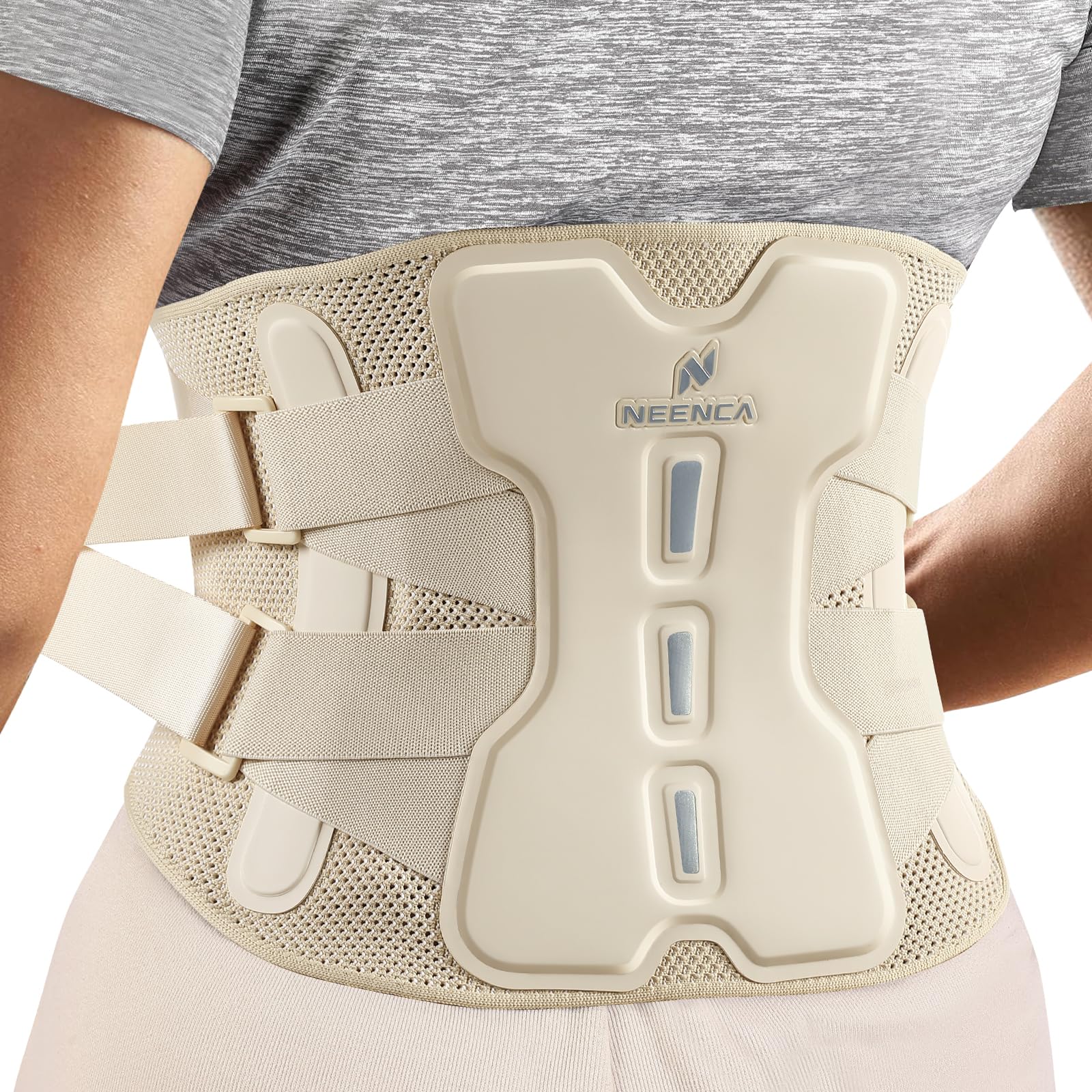
The NEENCA is a Class 2 medical device—one of the most rigorously constructed supports in this test. Its patented bionic support system combines two curved lumbar panels designed to match the anatomical shape of the L2-L5 vertebrae, along with two memory-aluminum stays and two flexible springs, totaling six internal support elements. This architecture limits unnecessary spinal rotation and flexion, making it effective for bulging discs, sciatica, and post-surgical recovery.
The 3D hollow-knit fabric uses 16-hole air mesh on the exterior and a velvet inner layer that feels soft against bare skin. Users recovering from herniation or bone-on-bone issues report that the rigid plastic curvature prevents their spine from shifting during sleep and provides exceptional stability during bed rest transitions. The adjustable eight-strap closure system allows fine-grained compression control, and the brace stays in place without rolling, even during side-sleeping.
Limitations: the NEENCA is the heaviest brace here (1.5 pounds), and the stiff rear panel makes it unsuitable for wearing under anything but loose outerwear. The price is higher than most entries, and the medical-grade stiffness may be overkill for someone with simple slouching rather than a diagnosed disc condition. For its intended audience—people managing chronic lower back pathology—the NEENCA is a clinical-grade tool that delivers measurable relief.
Why it’s great
- Class 2 medical device design with bionic lumbar panels for disc stabilization
- 16-hole air mesh + velvet inner layer prevent skin irritation during all-day wear
- Rigid enough to restrict harmful spinal rotation during recovery periods
Good to know
- Heaviest brace in the test—1.5 pounds may feel bulky for casual users
- Stiff rear panel cannot be worn discreetly under fitted clothing
- Medical-grade rigidity is excessive for simple posture awareness training
FAQ
Will a back support weaken my core muscles over time?
How many support rods do I actually need for desk-work posture?
Can I wear a back support while sleeping?
What waist measurement should I use for sizing a back brace?
Final Thoughts: The Verdict
For most users, the back supports for posture winner is the Kepwaa Posture Corrector because its five-rod configuration bridges both upper and lower back correction at a price that beats comparably constructed braces by a wide margin. If you want targeted lower back support for sciatica or recovery, grab the NEENCA Lumbar Belt for its medical-grade bionic panel system. And for discreet, breathable all-day wear under work clothes, nothing beats the Fitomo Ultra Thin Brace with its 0.5 mm seamless fabric and removable lumbar pad.

Mo Maruf
I created WellFizz to bridge the gap between vague wellness advice and actionable solutions. My mission is simple: to decode the research and give you practical tools you can actually use.
Beyond the data, I am a passionate traveler. I believe that stepping away from the screen to explore new environments is essential for mental clarity and physical vitality.