Our readers keep the lights on and my smoothie glass nicely filled. As an Amazon Associate, I earn from qualifying purchases.
Lower back tightness that refuses to release, sciatica that shoots down your leg, or a chronic ache that makes every bend a gamble — the right back stretching equipment can interrupt that cycle by targeting the spine’s natural curvature and the muscles that support it. But most options fail because they either lack the adjustability to match your body or the structural integrity to deliver a meaningful decompression.
I’m Mohammad Maruf — the founder and writer behind WellFizz. I’ve spent over a decade analyzing wellness hardware, comparing foam densities, frame gauges, and traction mechanics to separate gimmicks from genuine therapeutic tools.
This guide breaks down the seven best models available today, from passive lumbar cushions to full inversion systems, so you can confidently choose the best back stretching equipment for your specific pain profile and daily routine.
How To Choose The Best Back Stretching Equipment
Selecting the right equipment means matching the device’s mechanism to your specific diagnosis and daily habits. A passive lumbar stretcher works well for mild tension, but a herniated disc typically demands the controlled traction of an inversion table or seated decompression machine.
Understand Your Condition First
Sciatica, spinal stenosis, bulging discs, and general muscle tightness each respond to a different stretch angle and load. Inversion tables provide full spinal decompression through gravity, while curved foam supports create a gentle, sustained arch that relaxes the psoas and paraspinal muscles without inverting.
Check Adjustability and Build Quality
Fixed‑angle devices fit a narrow range of body types. Look for adjustable height settings, pivoting handles, or removable massage nodes that let you dial in the stretch intensity. Steel‑frame machines with heat‑treated joints last longer and feel more stable during use than basic aluminum or plastic builds.
Consider Your Space and Daily Routine
Full‑size inversion tables require floor space and assembly time, while compact foam stretchers store in a closet and deploy in seconds. Traction systems that keep you seated upright avoid the head‑rush of inversion and are safer for users with high blood pressure or inner ear issues.
Quick Comparison
On smaller screens, swipe sideways to see the full table.
| Model | Category | Best For | Key Spec | Amazon |
|---|---|---|---|---|
| RESTCLOUD Back Stretcher | Passive Cushion | Daily spinal decompression at home | 16 massage bars + 8 nodes | Amazon |
| ProStretch CoreStretch | Adjustable Bar | Total‑body flexibility & shoulder stretch | 10 height settings, 360° rotating handles | Amazon |
| Teclor Inversion Table | Inversion Table | Full inversion for disc issues | 350‑lb steel frame, 30.3” backrest | Amazon |
| Stamina InLine Traction | Traction System | Upright traction without inversion | 250‑lb capacity, 33 x 27 x 43” | Amazon |
| Sunny Health & Fitness Stretch Machine | Seated Stretch Machine | Full‑body stretching & warm‑up | 42.1” travel, pivoting seat, foam rollers | Amazon |
| TEETER EP‑560 Inversion Table | Premium Inversion Table | FDA‑registered medical‑grade relief | 300‑lb heat‑treated steel, ComforTrak backrest | Amazon |
| Nitrofit Limber Pro | Adjustable Seat Stretch Machine | Custom‑fit rehab & flexibility training | Adjustable seat, removable slant board, 56 lbs | Amazon |
In‑Depth Reviews
1. RESTCLOUD Back Stretcher

The RESTCLOUD uses a dense polyurethane memory foam formed into a C‑shaped curve that mirrors the natural lordotic arch of your spine. Rather than forcing a stretch through mechanical leverage, it lets gravity and your own body weight create a passive, sustained decompression over a 5‑ to 10‑minute session. Sixteen massage bars and eight nodes run along the paraspinal muscles, promoting blood flow while the foam holds its shape under repeated use.
User feedback highlights its effectiveness for spinal stenosis and sciatica — one reviewer reported relief after cortisone shots failed. The removable massage ball at the center lets you dial the intensity up or down, making it usable for both acute flare‑ups and daily maintenance. At only 1.8 pounds, it stows easily under a couch or bed.
Some users note it feels firm the first few sessions until the muscles relax into the curve. The foam does soften slightly with use but never collapses, maintaining the same therapeutic arch after months of daily stretching. It works best on a carpeted or padded floor rather than bare hardwood.
Why it’s great
- Passive stretch requires no setup, just lie back and relax
- Adjustable intensity via removable massage ball
- Lightweight and easily portable for travel or office use
Good to know
- Firm feel may be uncomfortable for the first few sessions
- Best results require a consistent daily routine of 5–10 minutes
2. ProStretch CoreStretch

The CoreStretch is an adjustable aluminum bar with cushioned pads that lets you stretch the lower back, hamstrings, hips, and shoulders from a seated or lying position. A push‑button mechanism provides ten discrete height settings, so you can progress the stretch gradually without guessing. The upper handles rotate 360 degrees, enabling side‑to‑side and twisting motions that target the obliques and thoracic spine.
Reviewers with scoliosis and post‑stroke rehab needs praise its ease of setup and versatility. One user noted it delivers an excellent thoracic distraction stretch that rivals what they received in physical therapy. At only 1.6 ounces of actual device weight, it collapses fully for storage in a drawer or gym bag, making it one of the most portable options for travel.
The foam pads sit firmly against the quadriceps during the stretch; some users found them a bit hard and wish for thicker cushioning. The aluminum construction feels light, and a few reviewers described the overall build as simple rather than premium. But the effective stretch and adjustability far outweigh the modest material feel.
Why it’s great
- Targets multiple muscle groups: back, hamstrings, hips, shoulders
- Fully collapsible and extremely portable
- 10‑position height adjustment accommodates different flexibility levels
Good to know
- Foam pad density feels firm against the thighs
- Simple construction may not feel as durable as steel‑frame alternatives
3. Teclor Inversion Table

The Teclor inversion table brings full‑body spinal decompression into the mid‑range price bracket with a steel frame rated to 350 pounds and a backrest that measures 30.3 inches long by 15.3 inches wide. The headrest adjusts by four inches, and the main height setting accommodates users from 4’3” to 6’8”, covering an unusually broad range. A safety belt and ratchet‑style ankle holders keep you secure at any inversion angle.
Assembly takes roughly an hour using the included wrenches, and the frame folds flat for storage under a bed or in a closet. Users report significant relief from lower back tension and spinal stiffness, particularly after long periods of sitting. The padded ankle cuffs lock firmly without pinching, and the long handle lets you control the tilt without straining your neck.
Some reviewers noted minor fit‑and‑finish issues — the lumbar support lacks a hook‑and‑loop attachment and can shift during use. A few users mentioned that the foam ankle pads can slide if not tightened carefully. For the price, however, the decompression benefit is undeniable, and the weight capacity makes it accessible to heavier users who struggle to find sturdy inversion tables.
Why it’s great
- Exceptional 350‑lb weight capacity for a wide range of users
- Foldable design saves space when not in use
- Height adjustment covers very short to very tall individuals
Good to know
- Lumbar support pad is not firmly attached — can move out of position
- Assembly requires about an hour and basic tools
4. Stamina InLine Traction Control System

Unlike inversion tables that hang you upside down, the Stamina InLine Traction Control System keeps you upright while applying controlled traction to the lumbar spine and hips. You lean forward against a padded chest cushion while a lap belt anchored to the frame pulls traction through your lower back. The height of the belt and the width of the arm supports are both adjustable, tailoring the stretch to your torso length and shoulder width.
Users with bulging discs and degenerative conditions report that this machine replicates the sensation of professional DRX9000 decompression sessions at a fraction of the cost. The high‑density foam arm supports and textured hand grips reduce pressure points during longer sessions of 10 to 30 minutes. At 29 pounds, it’s heavy enough to stay planted but includes a stable front and rear support system that distributes weight evenly.
The build quality draws mixed feedback — some units arrive with crooked welds or bent tubing, which raises concerns about long‑term durability. The adjustment knobs are functional but feel basic compared to premium traction tables. For users who cannot invert due to high blood pressure or inner‑ear issues, this upright system remains one of the most effective home alternatives available.
Why it’s great
- Provides spinal decompression without going upside down
- Adjustable belt and arm supports fit a variety of body sizes
- Delivers traction comparable to clinical DRX9000 sessions
Good to know
- Quality control issues reported with frame welds and tubing
- Heavy and requires dedicated floor space for setup
5. Sunny Health & Fitness Full Body Stretch Machine
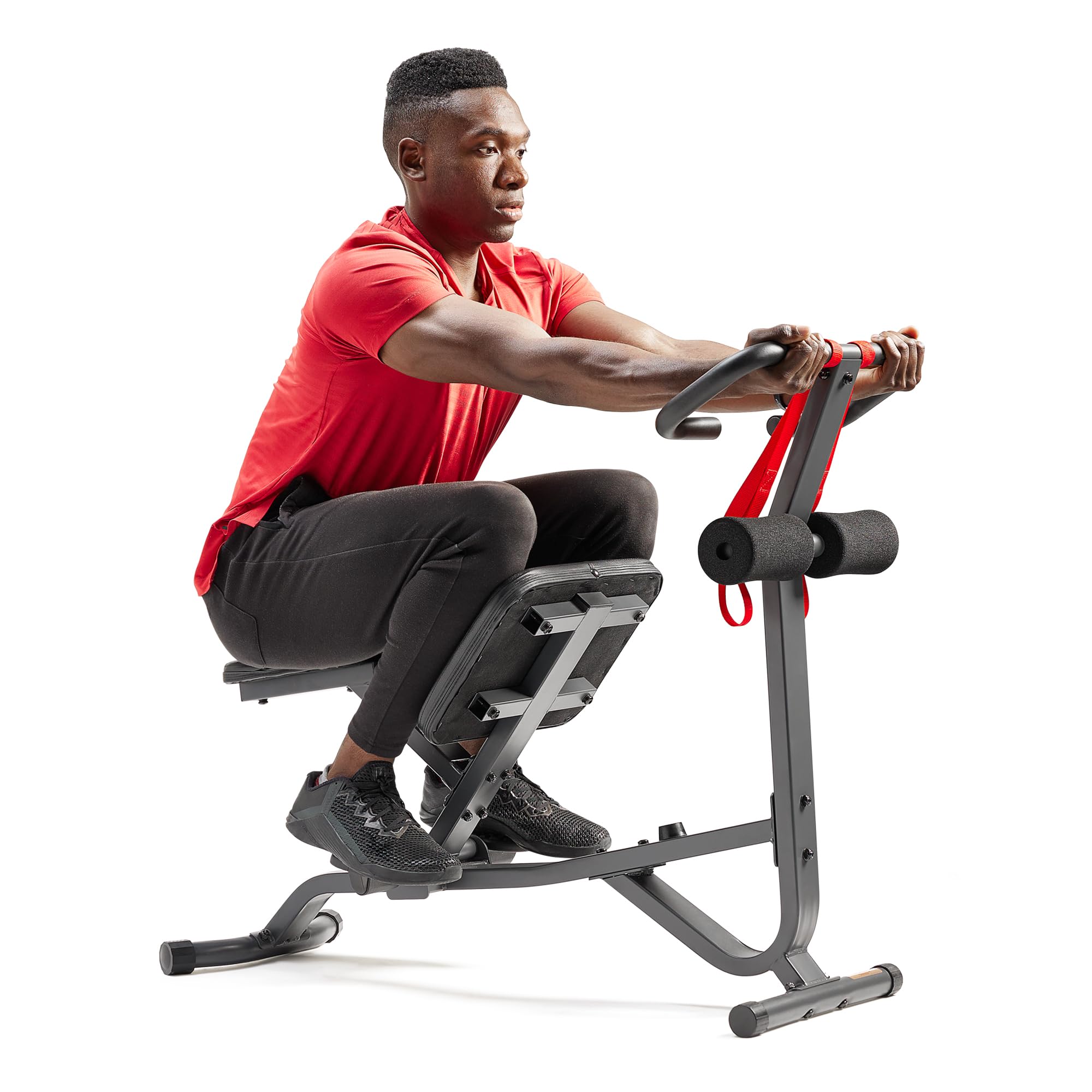
The Sunny Health & Fitness stretch machine integrates a pivoting seat, padded foam rollers, and a multi‑grip handlebar into a compact alloy‑steel frame that weighs 29.7 pounds. The seat travels over 24 inches, allowing you to lean forward for a deep lumbar and hamstring stretch while the self‑leveling pedals keep your feet planted. Two safety straps secure your position, and nine illustrated stretches are printed directly on the machine for quick reference without a manual.
Users with sciatica and chronic lower back issues report that daily sessions — sometimes multiple times per day — significantly reduce pain and improve mobility. The foam rollers minimize pressure on the back of the knees during leg stretches, making the machine comfortable for longer sessions. Assembly takes about 25 to 45 minutes, and the step‑numbered, individually packed hardware bags simplify the process considerably.
A few users weighing over 220 pounds have noted that the frame feels less stable at higher stretch angles, and the assembly diagrams are somewhat cryptic, relying on photos rather than clear step‑by‑step drawings. For the price, the range of stretches it enables — from hamstring and hip openers to full spinal decompression — makes it a strong alternative to commercial gym machines that cost several times more.
Why it’s great
- Pivoting seat and foam rollers enable a wide variety of stretches
- Self‑leveling pedals maintain foot contact at any angle
- Compact footprint fits easily into a home gym corner
Good to know
- Stability can be questionable for larger users at full extension
- Assembly diagrams are photo‑based and can be hard to follow
6. TEETER EP‑560 Inversion Table

The TEETER EP‑560 is the only inversion table registered with the FDA as a 510(k) medical device, a designation that indicates it has been cleared for therapeutic use in treating back pain, muscle tension, herniated discs, sciatica, and spinal stenosis. Its ComforTrak backrest flexes during inversion to allow maximum body slide for decompression, and the patented wrap‑around ankle cups secure the feet without excessive pressure. Heat‑treated steel construction ensures the frame is UL Safety Certified and tested to last ten times longer than typical competitors.
Integrated accessories — eight acupressure nodes at varied heights and a lumbar bridge with adjustable arch — let you add trigger‑point release and focused lower back traction without buying separate attachments. The adjustable angle tether lets you preset your maximum tilt or remove it entirely for full inversion. The BILT app provides step‑by‑step assembly, and the unit folds for storage without any disassembly required.
Some users report that the ankle lock mechanism can feel tight until you find the perfect adjustment, and a small number received units with a minor machining flaw on a handle screw hole. At 65 pounds, the table is heavy to move around, but the stability during inversion is unmatched. For anyone seeking clinical‑grade decompression at home, this is the benchmark against which all other inversion tables should be measured.
Why it’s great
- FDA‑registered as a medical device for back‑pain indications
- ComforTrak backrest and lumbar bridge provide focused decompression
- Heat‑treated steel frame with UL safety certification
Good to know
- Heavy unit at 65 pounds — requires effort to reposition
- Ankle cups need careful adjustment to avoid pinching
7. Nitrofit Limber Pro Adjustable Seat Stretch Machine

The Nitrofit Limber Pro breaks away from fixed‑seat stretch machines by offering a fully adjustable and lockable seat that slides forward and backward along a steel rail. This custom fit ensures your hips stay properly aligned during each stretch, reducing the risk of compensatory movement that can aggravate existing imbalances. The machine also includes a patented removable slant board for dedicated calf stretching, plus inward and outward facing handles with safety straps for a variety of seated and standing postures.
A large instructional placard mounted on the handlebar displays nine illustrated stretches, and a QR code links to video demonstrations of bonus stretches. Built‑in wheels on the front feet make it easy to roll the 56‑pound machine across the floor, and a removable phone shelf lets you follow guided routines or watch content during longer sessions. Users with hip bursitis, lower back pain, and poor flexibility report noticeable improvement within the first week of regular use.
A minority of units arrive with a misaligned welded stabilizer nut that requires drilling the hole larger to fit the bolt. The knee pad edge can cause discomfort during certain leg stretches, though this is easily remedied by attaching a small foam roller with Velcro. For users who want a dedicated stretching machine that feels like a commercial gym piece — with the calf board, adjustable seat, and robust steel construction — the Limber Pro delivers exceptional value for a home rehab setup.
Why it’s great
- Adjustable sliding seat ensures proper hip alignment for any body type
- Patented removable slant board adds calf stretching capability
- Built‑in wheels and compact footprint for easy storage and moving
Good to know
- Occasional quality issues with welded nut alignment during assembly
- Knee pad edge can cause pressure during extended leg stretches
FAQ
Is inversion therapy safe for herniated discs?
How often should I use a passive foam back stretcher to see results?
What is the difference between a traction machine and an inversion table?
Can back stretching equipment help with sciatica nerve pain?
Do I need a high weight capacity if I only weigh 180 pounds?
Final Thoughts: The Verdict
For most users, the best back stretching equipment winner is the RESTCLOUD Back Stretcher because it delivers a consistent, passive spinal decompression at a cost that makes daily use easy. If you want the full inversion experience with medical‑grade certification, grab the TEETER EP‑560. And for a custom‑fit stretching machine that outperforms commercial gym models, nothing beats the Nitrofit Limber Pro.

Mo Maruf
I created WellFizz to bridge the gap between vague wellness advice and actionable solutions. My mission is simple: to decode the research and give you practical tools you can actually use.
Beyond the data, I am a passionate traveler. I believe that stepping away from the screen to explore new environments is essential for mental clarity and physical vitality.