Our readers keep the lights on and my smoothie glass nicely filled. As an Amazon Associate, I earn from qualifying purchases.
That persistent knot between your shoulder blades, the dull ache in your lower back after a long day — a back roller is the simplest tool to address it, but choosing the wrong density or shape can turn relief into a painful guessing game. The market is flooded with foam cylinders, contoured wheels, and wooden sticks, each promising to melt tension, yet most buyers end up with a roller that is either too soft to be effective or too hard to use comfortably.
I’m Mohammad Maruf — the founder and writer behind WellFizz. I’ve spent years analyzing the specifications of wellness hardware, from foam density measured in PCF to the load-bearing capacity of ABS cores, to separate marketing fluff from genuine therapeutic value.
After sifting through hundreds of customer experiences and technical datasheets, I have narrowed the field to five distinct back rollers that actually deliver on their promises — this is your complete guide to finding the best back roller that matches your specific needs and pain points.
How To Choose The Best Back Roller
Not all back rollers are created equal. The wrong choice can exacerbate discomfort, while the right one becomes an indispensable part of your recovery routine. Three factors separate an effective tool from a disappointing one: material density, design geometry, and weight capacity.
Match Density to Your Pain Threshold
Foam rollers are measured by firmness, ranging from soft (low-density) to rock-hard (high-density). A medium-firm polyethylene (PE) roller offers a gentle compression ideal for older users or those with arthritis, whereas a high-density polypropylene roller delivers deep, myofascial release that athletes require. If you have bony prominences or acute injuries, start with a softer material like EVA foam before progressing to firmer options.
Understand the Geometry: Half-Round, Wheel, or Stick
A standard half-round foam roller excels at full-back and leg work, providing broad surface contact for large muscle groups. A contoured wheel with a built-in spinal channel — like the Chirp Wheel — cradles the vertebrae and targets knots on either side of the spine without direct bone pressure. A wooden ma roller with a centered groove applies intense, pinpoint pressure along the erector spinae, ideal for chronic tension but potentially too aggressive for beginners. Choose the shape based on whether you need broad coverage or isolated trigger-point work.
Check Weight Capacity and Material Integrity
Cheap foam rollers can collapse or deform under prolonged use, especially if you exceed their load limit. A roller rated for 250 pounds may suffice for basic stretching, but premium options with reinforced ABS cores and high-density EVA foam can support up to 500 pounds without losing shape. For hardwood rollers, look for solid construction with non-toxic finishes — avoid laminated or glued pieces that can splinter over time.
Quick Comparison
On smaller screens, swipe sideways to see the full table.
| Model | Category | Best For | Key Spec | Amazon |
|---|---|---|---|---|
| Chirp Wheel Foam Roller | Wheel | Targeted spinal decompression & neck relief | 500 lbs capacity / 4″ diameter | Amazon |
| Amazon Basics High-Density Foam Roller | Standard Cylinder | Full-body stretching & muscle recovery | 36″ length / 6″ diameter | Amazon |
| Pro-Tec Athletics RM Extreme | Contoured Handheld | Deep-tissue massage in hard-to-reach spots | Dual-grip handles / 9″ length | Amazon |
| Yes4All Medium Firm Half Foam Roller | Half-Round | Gentle balance exercises & light back relief | 24″ length / 250 lbs limit | Amazon |
| Body Back Wood Back Roller | Ma Roller | Intense erector spinae release & spinal alignment | 15.5″ hardwood / non-toxic finish | Amazon |
In‑Depth Reviews
1. Chirp Wheel Foam Roller
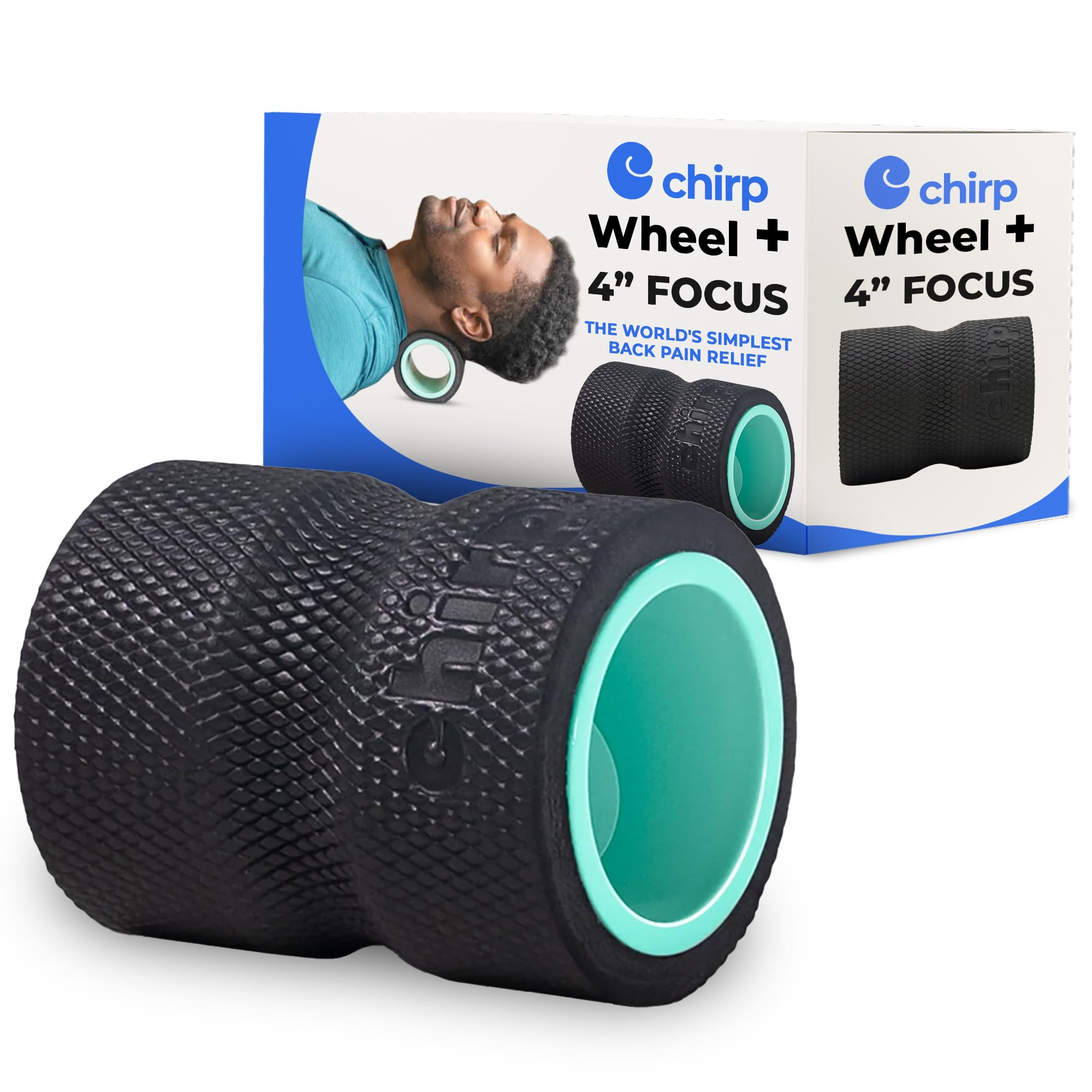
The Chirp Wheel is not a standard foam cylinder; it is a 4-inch wheel specifically engineered with a built-in spinal channel that cradles your vertebrae while the raised edges target the paraspinal muscles. This design makes it uniquely effective for upper, middle, and lower back tension without compressing the spinous processes — a common complaint with flat rollers. The reinforced ABS core paired with cushioned EVA foam supports up to 500 pounds, so it remains stable even during aggressive rolling.
Users consistently report that it outperforms traditional foam rollers for neck and shoulder relief, especially for those who spend long hours at a desk. The compact 4-inch diameter makes it exceptionally travel-friendly — it fits easily into a carry-on or gym bag. Many reviewers note that it doubles as a thigh roller and calf massager, adding versatility for a full-body warm-up or cool-down routine.
The tread pattern on the surface provides a good grip on both carpet and yoga mats, preventing unwanted sliding during use. While the smaller diameter limits broad muscle group coverage compared to a 36-inch roller, the targeted pressure it delivers is unmatched for spinal-focused work. For users seeking a portable, durable, and spine-safe option, this wheel is the clear frontrunner.
Why it’s great
- Built-in spinal channel prevents direct bone pressure while releasing adjacent muscle knots.
- 500-pound weight capacity with reinforced core ensures long-term structural integrity.
- Compact 4-inch profile makes it ideal for travel, office, and gym bag storage.
Good to know
- Small diameter covers less surface area than a standard 36-inch roller, so full-leg rolling takes more passes.
- The firm EVA foam may feel intense for complete beginners or those with acute muscle inflammation.
2. Amazon Basics High-Density Foam Roller

The Amazon Basics High-Density Foam Roller delivers exactly what its name promises: a no-frills, 36-inch cylinder made from firm polypropylene that maintains its shape over years of use. Its 6-inch diameter provides ample surface contact for full-back rolling, hip release, and quadriceps work, making it a staple for anyone serious about myofascial release without paying a premium for branding. The molded edges are smooth and comfortable against the skin, and the material wipes clean effortlessly after sweaty sessions.
Customer feedback consistently praises its density — it is noticeably firmer than standard PE foam rollers, which is a requirement for deep tissue work but may be too aggressive for beginners or those with low pain tolerance. Users with chronic back pain report excellent results when using it for posture correction exercises and spinal mobility drills. The lightweight construction (just over half a kilogram) makes it easy to reposition during a workout or carry to a class.
One limitation is the lack of texture or contouring — this is a straight cylinder, so it applies uniform pressure across its surface. For users who need targeted trigger-point work on specific knots, a wheel-style roller or a smaller lacrosse ball may be a better complement. However, for comprehensive, full-body muscle recovery at a reasonable price point, this roller is a workhorse that outlasts many pricier alternatives.
Why it’s great
- High-density polypropylene foam holds its shape and provides effective deep-tissue pressure.
- Full 36-inch length supports both your head and hips simultaneously for spinal exercises.
- Lightweight and easy to clean — simple maintenance for frequent use.
Good to know
- Firmness level can be uncomfortable for beginners or those with recent muscle injuries.
- Smooth surface lacks contouring for isolated knot targeting around the shoulder blades.
3. Pro-Tec Athletics RM Extreme Roller

The Pro-Tec RM Extreme breaks away from the traditional floor-roller format. It is a handheld contoured massager with dual grips that allow you to apply direct pressure to hard-to-reach areas — the space between your shoulder blades, the back of your neck, your hamstrings, and even the soles of your feet. The contoured surface wraps around muscle groups, while the elevated humps sink into soft tissue for a deeper, more targeted massage than a flat cylinder can achieve.
Made from closed-cell, non-toxic EVA foam, it has a slight softness that makes it comfortable over bony areas like the knee and neck, yet it remains firm enough to go deep into muscle knots. Weighing only 3.84 ounces, it is exceptionally lightweight and quiet during use — no vibration, no motor noise, just manual compression that you control entirely with your own hand pressure. Several reviewers noted its effectiveness for plantar fasciitis relief, with one user reporting a 95% reduction in pain after just three days of use following eight months of failed treatments.
The primary trade-off is that it requires upper body effort to use, so you cannot simply lie on it and let gravity work. For someone with wrist or hand fatigue, the dual-grip handles help distribute force, but it still demands active engagement. Additionally, some users noted a sharp edge on the molded plastic that can be uncomfortable, though this appears to be a batch-specific issue. For travelers and office workers who need a pocket-sized solution for on-demand knot release, this is an excellent companion tool.
Why it’s great
- Dual-grip handles provide excellent leverage for self-massage on the back, neck, and legs.
- Closed-cell EVA foam is non-toxic, quiet, and gentle on bony prominences.
- Ultra-lightweight design fits easily in a backpack or desk drawer for daily use.
Good to know
- Requires active hand and arm effort — not a passive, lie-down-and-relax tool.
- The contoured surface is small; rolling large muscle groups like the entire back takes multiple passes.
4. Yes4All Medium Firm Half Foam Roller
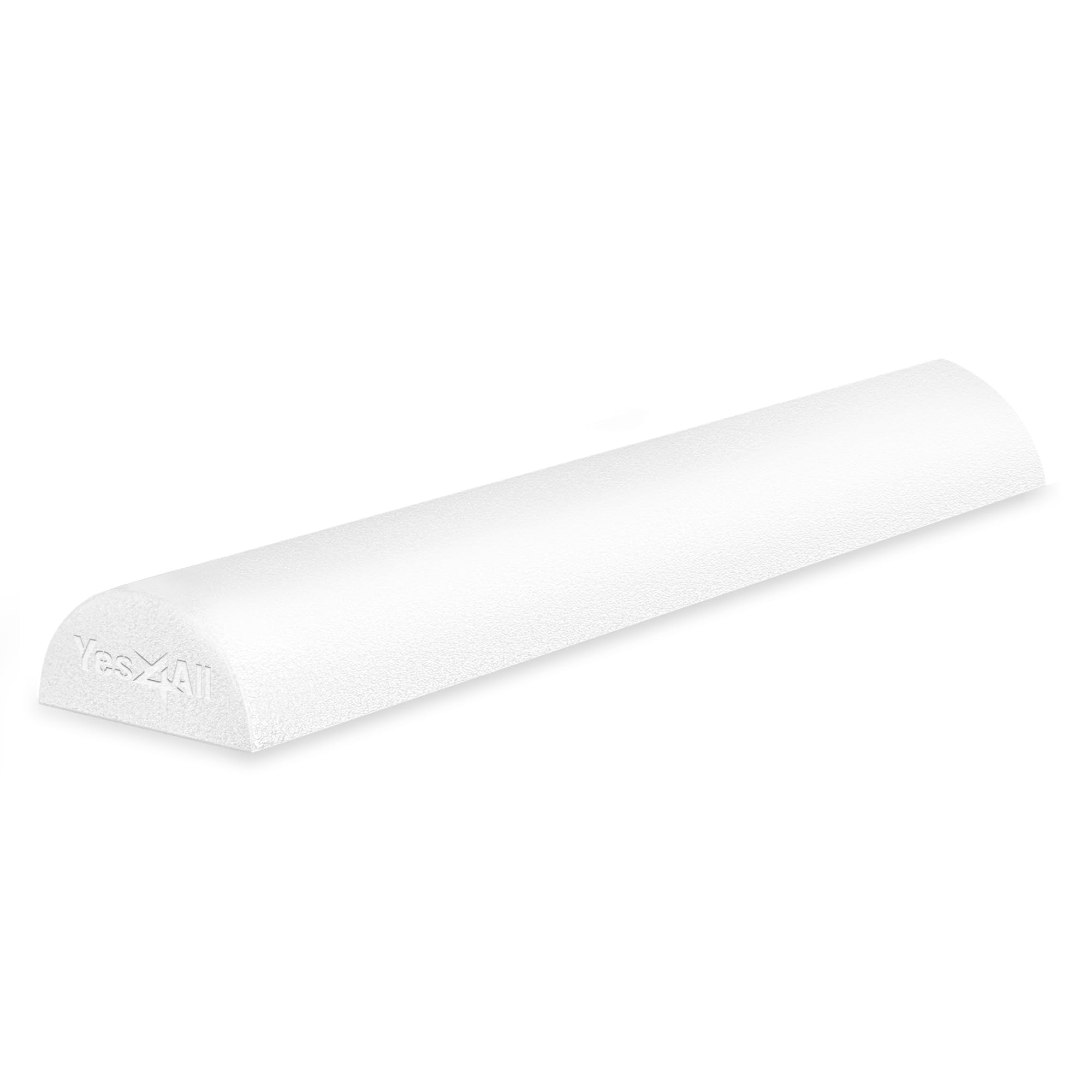
The Yes4All Half Foam Roller takes a different approach: its half-round profile is designed primarily for balance training and gentle spinal stretching, not deep myofascial release. Made from medium-firm polyethylene that is 30% heavier than standard half rollers, it provides a stable, non-slip surface for exercises like seated balancing, bird dogs, cobra stretches, and kneeling squats. The flat bottom prevents rolling during static poses, making it a safer option for older users or those with mobility concerns.
With a 250-pound weight capacity and available in sizes ranging from 12 to 36 inches, the 24-inch version strikes a practical balance between portability and coverage — long enough to support your hips and head during back extensions without being too bulky to store. Customer reviews highlight its suitability for chiropractor-recommended routines and physical therapy, with several users noting that the medium firmness is gentle enough for arthritic joints while still providing feedback for balance work. The smooth white PE surface is easy to clean and shows minimal wear after repeated use.
The trade-off is clear: this roller is not designed for aggressive muscle knotting or deep tissue work. Some users found it disappointingly hard for a so-called medium-density roller, describing it as “rock solid” with minimal give. If your primary goal is intense trigger-point release, a high-density full cylinder or a targeted wheel will serve you better. But for rehabilitation, balance training, and gentle spinal decompression, this is a remarkably well-priced tool that delivers exactly what it promises.
Why it’s great
- Half-round design offers stability for balance exercises and controlled spinal stretches.
- Medium-firm PE foam is 30% denser than identical half rollers, improving durability.
- Multiple length options (12–36 inches) let you choose the right fit for your space and body.
Good to know
- The medium firmness still feels very hard to some users — not recommended for acute back pain.
- Half-round shape limits its use as a standard muscle roller; not ideal for full-leg myofascial release.
5. Body Back Wood Back Roller

The Body Back Wood Roller takes an entirely different material approach — sustainably sourced hardwood coated with a non-toxic finish. This 15.5-inch ma roller features a deep centered groove that aligns with the spine while cylindrical humps on either side apply firm pressure to the erector spinae muscles. It is designed for passive use: you simply lie down, position the roller under your targeted area, and let your body weight do the work. Rubber grip rings at each end prevent it from sliding on tile, wood, or carpet.
Users consistently report that this tool excels at releasing chronic tension in the rhomboids and mid-back from prolonged desk work and commuting. The direct pressure mimics a skilled masseuse’s elbow, digging into knots that foam rollers often glide over. Multiple reviewers mention using it for just five minutes, two to three times daily, and noticing significant improvements in spinal flexibility and workout recovery. It is also FSA-eligible and doubles as an occipital release tool for tension headaches when placed under the base of the skull.
The hardwood construction is not without concerns. Some units may have subtle glue seams or laminations rather than being carved from a single solid piece of wood, which raises questions about long-term structural integrity under heavy or aggressive use. The roller can also feel too intense on carpet, as the rubber rings reduce its ability to roll smoothly. For users with existing spinal injuries, this tool is not recommended — its unyielding surface demands a cautious, controlled approach. For those comfortable with manual body-weight pressure who want a durable, natural-material option, this roller offers a unique and effective experience.
Why it’s great
- Hardwood construction with centered groove delivers precise, deep pressure along the spine.
- Rubber grip rings keep the roller stable on various floor surfaces during use.
- FSA-eligible and can be used for occipital release to alleviate tension headaches.
Good to know
- Wood material is unforgiving — not suitable for acute spinal injuries or bone spurs.
- Some units may have lamination seams rather than being single-piece hardwood, affecting long-term durability.
FAQ
How do I know if I need a firm or medium-firm back roller?
Can I use a back roller every day?
What is the difference between a half-round roller and a full cylinder roller?
Is a wooden ma roller better than a foam roller for back pain?
Final Thoughts: The Verdict
For most users, the best back roller winner is the Chirp Wheel Foam Roller because its built-in spinal channel provides safe, targeted relief for upper, middle, and lower back tension while supporting up to 500 pounds. If you want a full-body stretching tool for a reasonable price, grab the Amazon Basics High-Density Foam Roller. And for an ultra-portable, pocket-sized solution that tackles hard-to-reach knots on the go, nothing beats the Pro-Tec Athletics RM Extreme Roller.

Mo Maruf
I created WellFizz to bridge the gap between vague wellness advice and actionable solutions. My mission is simple: to decode the research and give you practical tools you can actually use.
Beyond the data, I am a passionate traveler. I believe that stepping away from the screen to explore new environments is essential for mental clarity and physical vitality.