Our readers keep the lights on and my smoothie glass nicely filled. As an Amazon Associate, I earn from qualifying purchases.
Lower back pain from sitting is a direct result of poor spinal alignment and sustained pressure on the lumbar discs. A standard office chair’s flat back panel and fixed seat depth rarely match the natural S-curve of your spine, forcing your pelvis into a posterior tilt that compresses the lower back over an eight-hour workday. Dedicated back pain chairs address this by introducing adjustable lumbar profiles, dynamic seat pans, and weight-distribution mechanisms that keep the spine neutral.
I’m Mohammad Maruf — the founder and writer behind WellFizz. My research focuses on ergonomic seating biomechanics, specifically how lumbar support geometry, seat density, and recline kinematics correlate with pain reduction in users who sit for prolonged periods. I analyze foam resiliency, gas lift certification, and frame load ratings to determine which chairs actually reduce spinal compression rather than just padding it.
After evaluating dozens of models across kneeling, mesh, and fully upholstered designs, I’ve narrowed the field to nine contenders that deliver measurable relief. This guide breaks down the best ways to evaluate a back pain chair based on adjustability, material quality, and the specific type of support your lumbar curve requires.
How To Choose The Best Back Pain Chair
Selecting a chair for back pain relief requires matching your specific discomfort pattern with a chair’s mechanical strengths. Lower back strain from slouching needs a different solution than sciatic pressure from a hard seat pan. Focus on the three variables that define a chair’s therapeutic effect.
Lumbar Support Adjustability (Height + Depth)
A fixed lumbar bump rarely aligns with your unique spine. Look for supports that move vertically (2 to 3 inches of range) and protrude forward (0.5 to 1.5 inches of depth). This lets you fill the gap between your lower back and the chair back, maintaining the lordotic curve. Without depth adjustability, taller users often find the support hitting their mid-back instead of the lumbar spine.
Seat Pan Design and Thigh Support
A seat that is too deep forces your pelvis to tilt backward, flattening the lower back. Adjustable seat depth (typically 2 to 4 inches of slider travel) allows you to position your knees at a 90-degree angle with about two finger-widths of space behind your calves. A waterfall front edge reduces pressure on the back of the thighs, improving blood flow and reducing numbness during extended sitting.
Weight Distribution and Recline Kinematics
Syncro-tilt mechanisms that allow the seat and back to move together as you recline maintain a consistent lumbar angle. Chairs with independent back angle locks (90 to 135 degrees) let you shift positions throughout the day, which varies pressure on the spinal discs. Kneeling chairs offload weight to the shins, opening the hip angle to 60 degrees — a posture that naturally encourages a neutral spine without active lumbar support.
Quick Comparison
On smaller screens, swipe sideways to see the full table.
| Model | Category | Best For | Key Spec | Amazon |
|---|---|---|---|---|
| Sleekform East Austin | Kneeling | Open hip posture & core activation | 28 x 22 x 21 in, wood frame | Amazon |
| Steelcase Leap | Upholstered | Premium multi-point adjustability | Natural Glide System, 4D arms | Amazon |
| TRALT Ergonomic | Mesh/Leather Hybrid | Heavy-duty build & flip-up arms | 3.5 in HD foam, 330 lb capacity | Amazon |
| ProtoArc EC200 | Mesh Back | Detailed lumbar & seat depth tuning | 2-Way lumbar + 5-pos seat slide | Amazon |
| ELABEST T96 | Full Mesh | Breathable cooling & firm support | BIFMA 5.1 certified, synchro-tilt | Amazon |
| GABRYLLY Mesh | Mesh Recliner | Reclining with integrated footrest | 135° recline, 18.1 in steel footrest | Amazon |
| MOLENTS Ergonomic | Full Mesh | Responsive customer support & build | 3D arms, 90°-120° tilt lock | Amazon |
| YFO Home Office | Upholstered | Budget-friendly spring-cushion comfort | Spring bag seat, 22 in width | Amazon |
| NYPOT Kneeling Chair | Kneeling | Entry-level posture correction | Adjustable seat pads, 250 lb limit | Amazon |
In‑Depth Reviews
1. Sleekform East Austin Kneeling Chair

The Sleekform East Austin is a kneeling chair that shifts your body weight from the full buttock pressure typical of standard seats to a distributed load across your shins and knees. This design opens the hip angle to roughly 60 degrees, which naturally tilts the pelvis forward and maintains the lumbar curve without requiring an active lumbar pad. The included backrest adds a safety net for users transitioning from conventional chairs, catching the lower back if core engagement drops.
The wooden frame supports up to 250 pounds and the adjustable seat pads accommodate a variety of leg lengths. Users report immediate lower back relief after the first sitting session, with several noting that the chair effectively eliminates the gravitational slouch that builds up over a workday. The rocking motion allows you to shift pressure points dynamically, reducing the stiffness that comes from static seated postures.
Some users experienced a chemical smell from the cushions that faded after a few days of airing. The assembly requires attention to cross-support orientation, and the knee pads can feel scratchy on bare skin over extended use. Users with desks lower than 28 inches may need a monitor riser to maintain proper viewing height.
Why it’s great
- Instantly corrects pelvic tilt without mechanical lumbar support
- Thick padding outperforms cheaper kneeling chair competitors
- Backrest provides fallback support for beginners
Good to know
- Knee pad material may feel abrasive on bare skin
- Requires desk height above 28 inches for proper ergonomics
- Initial cushion odor needs ventilation
2. Steelcase Leap Office Chair

The Steelcase Leap is the gold standard for multi-point adjustability, offering seven independent ergonomic controls including seat depth, lumbar height, lumbar depth (via a firmness dial), and 4D armrests. Its Natural Glide System allows the seat pan to slide forward automatically as you recline, keeping your torso close to the desk and preventing the shirt-pull effect that disengages lumbar support. The LiveBack technology uses a flexible exoskeleton that mimics spinal flexion, contouring to your movements rather than resisting them.
The waterfall-edge cushion reduces pressure behind the knees, and the lower back firmness dial lets you dial in exactly how much lumbar pressure you want — useful for people with herniated discs who need a softer curve. The chair arrives fully assembled, and its polyester fabric is durable and easy to clean. The Onyx frame offers a professional appearance suitable for executive offices.
Some users find the seat padding firmer than expected and report a break-in period of several days. A few customers received units with sticky plastic finishes or weak tension knobs, which may indicate refurbished or counterfeit units. At 6 feet tall, users may find the back height shorter than typical high-back chairs, and the price puts it in a premium category that may be inaccessible for budget-conscious buyers.
Why it’s great
- Unmatched adjustability with 7 independent control points
- Natural Glide System keeps lumbar contact during recline
- Fully assembled out of the box
Good to know
- Firm seat cushion requires break-in period
- Risk of receiving refurbished units from third-party sellers
- High investment cost for a single chair
3. TRALT Ergonomic Office Chair
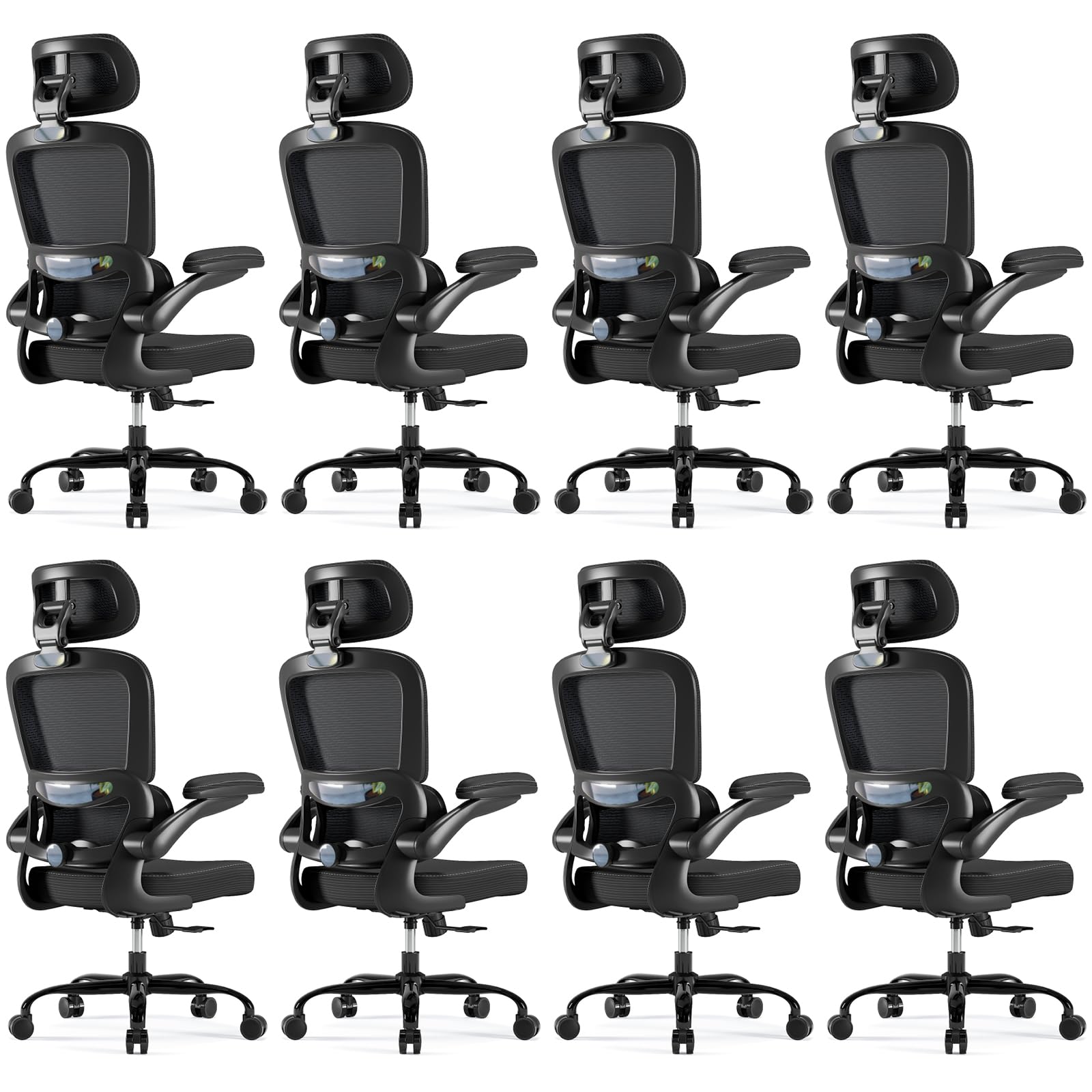
The TRALT Ergonomic Office Chair uses a hybrid construction — breathable mesh back for airflow paired with a 3.5-inch high-density foam seat cushion for sustained support. This combination prevents the heat buildup common with all-foam chairs while offering a softer initial feel than full-mesh seats. The adjustable lumbar support and headrest allow for tailored spinal alignment, and the flip-up armrests provide clearance for sliding the chair under standard desks.
The chair supports up to 330 pounds thanks to a reinforced metal base and a Class-3 gas lift. Assembly takes about 25 to 30 minutes with clear instructions, and the smooth-rolling casters protect hardwood floors from scratching. The leather seat cushion is easy to wipe clean, making it a practical choice for home offices shared by multiple family members.
Some users report that the flip-up armrests feel slightly unstable when leaning with heavy pressure. The chair is best suited for users between 5’5” and 6’2”, and the seat depth (17.3 inches) may be short for taller individuals. A small number of customers replaced the stock casters with rollerblade-style wheels for smoother movement on thick carpet.
Why it’s great
- High-density foam resists sagging over extended use
- Flip-up arms free up desk clearance
- 330 lb weight capacity with sturdy metal frame
Good to know
- Flip-up armrests lack rigidity for heavy leaning
- Seat depth too short for users over 6’2”
- Stock casters may need upgrade on deep carpet
4. ProtoArc EC200 Ergonomic Office Chair
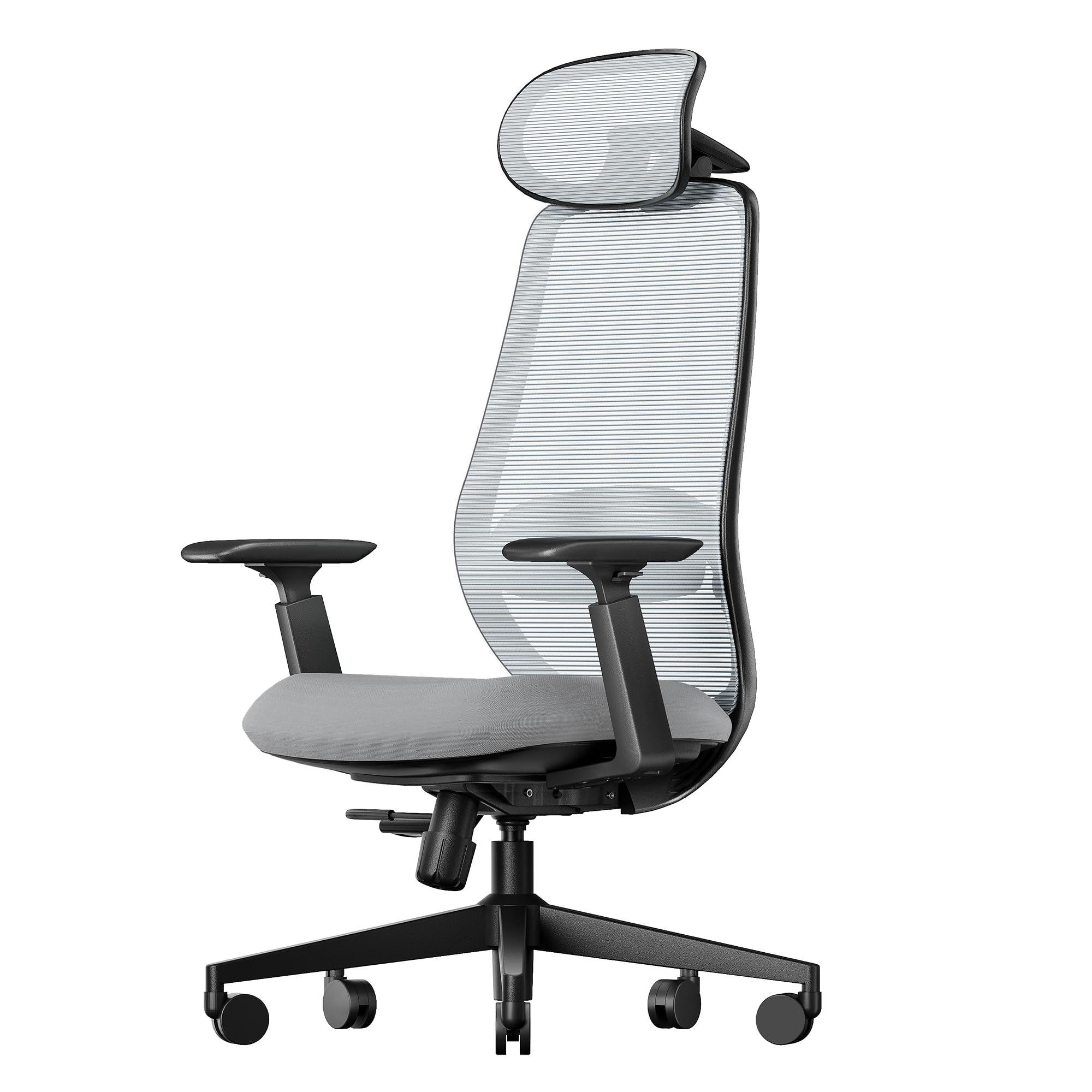
The ProtoArc EC200 is engineered for users who need granular control over lumbar support position. Its 2-way adjustable lumbar moves 2.36 inches vertically and 0.8 inches in depth, allowing you to place the support exactly where your lordotic curve resides rather than forcing a fixed bump onto your spine. The 5-position sliding seat pan adjusts from 17 to 19 inches of depth, accommodating leg lengths from short to tall without leaving a gap behind the knees.
The 55-density high-resiliency foam seat is purposely firm — soft cushions collapse under sustained weight, flattening the lumbar curve. The mesh back promotes airflow, and the 4-position backrest tilt (90, 105, 120, and 130 degrees) covers everything from focused typing to relaxed reading. The 3D dual-axis headrest adjusts in height, depth, and rotation to cradle the neck without pushing the head forward.
The recommended user range (5’4” to 6’0”, under 220 pounds) is narrower than some competitors. A few users report that their feet can bump into the wheel arms when sitting cross-legged. Some customers find the light grey color less appealing than darker options, and the chair lacks a seat pitch/tilt adjustment that some premium chairs offer.
Why it’s great
- Separate lumbar height and depth adjusters for precise fit
- 5-position seat slide protects thighs from pressure
- Firm foam core resists sagging over years
Good to know
- Limited to users under 220 pounds
- Feet may contact wheel arms in certain seated positions
- No seat angle tilt adjustment
5. ELABEST Ergonomic Mesh Office Chair (T96)

The ELABEST T96 is a BIFMA 5.1 certified full-mesh chair built for all-day use in commercial environments. Its bionic-curve backrest mimics the natural S-shape of the spine, and the adjustable lumbar support moves vertically to target the lower back. The synchro-tilt mechanism with three lockable positions and adjustable tension allows the seat and back to move together, maintaining consistent lumbar contact as you recline.
The 3D adjustable armrests (height, width, angle) reduce shoulder strain and support proper arm positioning at the desk. The full-mesh seat eliminates heat buildup and has a waterfall front edge that promotes blood flow to the legs. The metal frame and heavy-duty base provide stability, and the chair is designed for users between 5’5” and 5’10” under 200 pounds for optimal fit.
Some users find the armrests too wide for smaller frames, though the manufacturer offers a replacement with narrower rotating pads upon request. The seat depth (17.7 inches) is fixed, so taller users with longer femurs may feel the front edge pressing on their thighs. A few customers noted that the lumbar support is relatively firm and may require a break-in period of several days.
Why it’s great
- BIFMA 5.1 commercial grade for durability
- Synchro-tilt maintains lumbar contact during recline
- Breathable full-mesh seat prevents heat buildup
Good to know
- Armrests may be too wide for petite users
- Fixed seat depth limits fit for tall users
- Firm lumbar support needs adjustment period
6. GABRYLLY Ergonomic Office Chair with Footrest
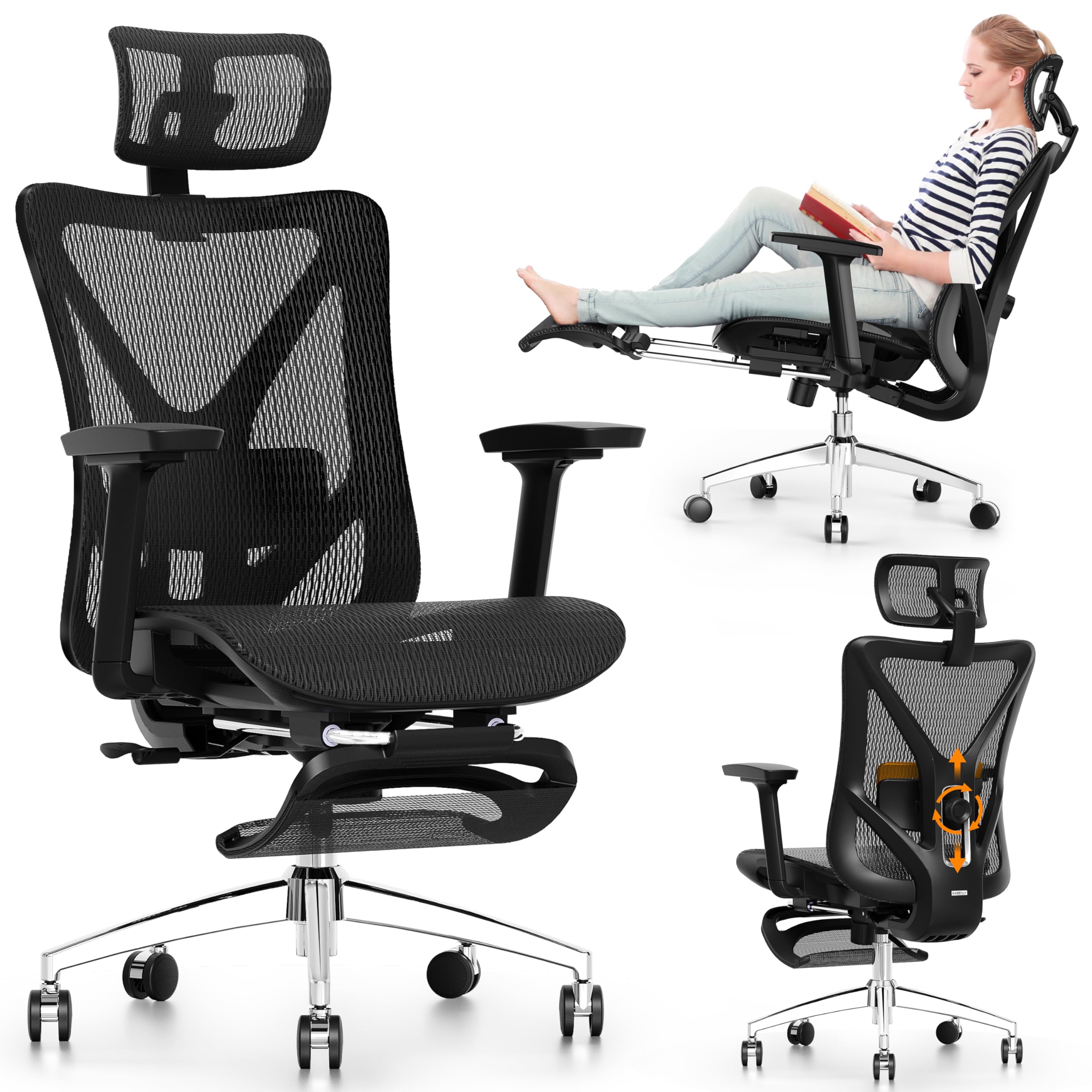
The GABRYLLY Mesh Chair targets users who need periodic spinal decompression during the workday. Its 135-degree recline with three lockable positions (90, 110, and 135 degrees) allows you to shift from an upright working posture to a nearly flat resting angle, reducing disc compression through position change. The retractable steel footrest extends 18.1 inches, providing stable leg support during breaks or short naps.
The 2-way adjustable lumbar support (3 inches vertical, 1.6 inches horizontal) dynamically contours to the lower back, and the large mesh headrest adjusts in height, angle, and bracket position for personalized neck support. The 27.5-inch diameter steel base provides stability during reclining, and the silent casters glide smoothly across various floor types. SGS and BIFMA testing confirms the 300-pound weight capacity.
The armrests lack a locking mechanism and may shift under lateral pressure, causing an audible clicking sound. Some users describe the mesh material as taut and less forgiving than premium mesh chairs, which can feel uncomfortable for lighter users. The chair requires 15 to 25 minutes of assembly time, and the gas lift height may not accommodate very short or very tall users without a replacement cylinder.
Why it’s great
- 135-degree recline with lockable positions for spine relief
- Integrated steel footrest supports full leg extension
- SGS and BIFMA certified for safety and durability
Good to know
- Armrests shift laterally without locking
- Mesh material feels taut for lighter users
- Gas lift height may not fit all user heights
7. MOLENTS Ergonomic Office Chair

The MOLENTS Ergonomic Office Chair offers a strong value proposition for users who prioritize adjustability and responsive customer service. The lumbar support adjusts both vertically and horizontally, allowing fine-grained targeting of the lower back. The 3D armrests slide up/down, forward/backward, and rotate left/right, accommodating different desk heights and typing postures.
The breathable full-mesh seat and back prevent heat buildup, and the tilt mechanism locks at 90, 105, and 120 degrees. The seat width of 19.8 inches accommodates a range of body types, and the seat depth of 18.9 inches provides ample thigh support for taller users. Assembly takes about 15 minutes with clearly labeled parts and included tools.
Some users note that the armrests do not lower enough to slide under standard-height desks. The chair is best suited for users up to 6 feet tall and 220 pounds, and the mesh seat may feel firmer than foam cushion alternatives. A small number of customers received chairs with minor cosmetic defects, though the manufacturer’s customer support team proactively offered free accessories (seat covers, upgraded wheels) to resolve concerns.
Why it’s great
- Adjustable lumbar in both height and depth
- 3D armrests with multiple axis adjustments
- Excellent customer support team
Good to know
- Armrests may not lower enough for desk clearance
- Best fit for users under 220 pounds
- Mesh seat firmer than padded alternatives
8. YFO Home Office Desk Chair

The YFO Home Office Chair offers a budget-friendly pathway to back pain relief with its spring bag seat construction and upholstered leather finish. The seat cushion uses a combination of high-density sponge and spring packs to provide consistent support without bottoming out, even during extended sitting sessions. The height-adjustable seat and recline function allow basic ergonomic customization, and the rubber casters roll quietly over wood, carpet, and marble floors.
The chair’s 22-inch seat width provides generous space for larger body types, and the design can be assembled with or without armrests, functioning as a cross-legged chair if you prefer an open hip posture. The brown leather finish adds a professional aesthetic suitable for home offices, and the assembly time is approximately 30 minutes with clear instructions.
The mid-back version lacks adjustable armrests and a locking recline mechanism — the high-back version offers these features for a higher cost. Some users note that the lumbar support could be more prominent, and the faux leather material may show wear over time compared to mesh alternatives. The seat height adjustment range is somewhat limited, which may not suit very tall or very short users.
Why it’s great
- Spring bag seat cushion prevents bottoming out
- Rubber casters protect delicate flooring
- Can be used with or without armrests
Good to know
- Mid-back version lacks adjustable arms and recline lock
- Lumbar support could be more substantial
- Faux leather may wear faster than mesh
9. NYPOT Ergonomic Kneeling Chair
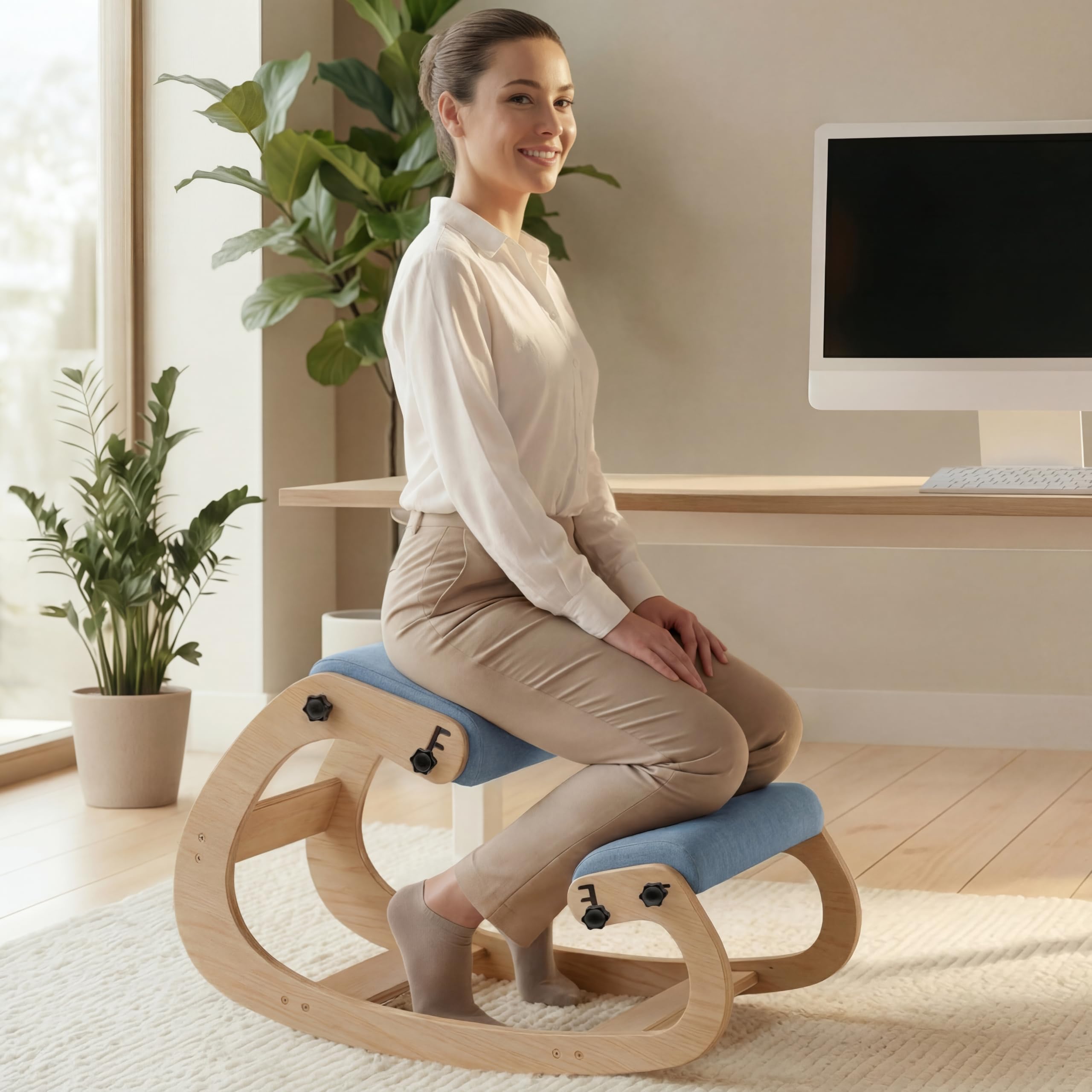
The NYPOT Ergonomic Kneeling Chair provides a low-cost entry point into kneeling posture technology. Its adjustable seat pads allow you to fine-tune the angle and height of both the seat and knee supports, accommodating a wider range of leg lengths than fixed kneeling chairs. The wood frame supports up to 250 pounds, and the high-density sponge cushions maintain their shape during extended use.
The chair’s gentle rocking motion shifts pressure points throughout the day, preventing the stiffness that comes from static seated positions. The included wooden phone holder and notepad are thoughtful additions for desk organization. The 5-year warranty provides long-term peace of mind for an entry-level investment.
Some users experience shin soreness after 20 to 30 minutes of use, which typically improves as the body adjusts to the kneeling posture. The front slat can pinch toes if the user shifts too far forward, and the cushions may feel thin for heavier users. The chair requires a transition period of gradually increasing sitting intervals to allow the shins and knees to adapt.
Why it’s great
- Adjustable seat pads for customized kneeling angle
- 5-year warranty protects long-term investment
- Rocking motion distributes pressure dynamically
Good to know
- Shin discomfort common during initial adjustment period
- Front slat design can pinch toes
- Cushions may be too thin for heavier users
FAQ
Should I get a kneeling chair or a reclining mesh chair for lower back pain?
How long does it take to adjust to a kneeling chair for back pain?
What seat depth do I need to relieve thigh pressure and back pain?
Final Thoughts: The Verdict
For most users, the back pain chair winner is the Sleekform East Austin Kneeling Chair because it corrects pelvic tilt at its source — the angle of your hips — without requiring complex lumbar padding. If you want deep customization with seven independent adjustment points and a recline system that keeps your back supported, grab the Steelcase Leap. And for a budget-friendly path to better posture with a 5-year warranty and adjustable pads, nothing beats the NYPOT Ergonomic Kneeling Chair.

Mo Maruf
I created WellFizz to bridge the gap between vague wellness advice and actionable solutions. My mission is simple: to decode the research and give you practical tools you can actually use.
Beyond the data, I am a passionate traveler. I believe that stepping away from the screen to explore new environments is essential for mental clarity and physical vitality.