Our readers keep the lights on and my smoothie glass nicely filled. As an Amazon Associate, I earn from qualifying purchases.
Lower back pain can turn a simple task—bending to tie your shoes, lifting a box, or sitting through a workday—into a sharp reminder that your spine needs support. A well-designed brace provides that support by stabilizing the lumbar region, improving posture, and reducing stress on painful discs and muscles without turning you into a stiff, immobile statue. The market is flooded with options, but understanding the difference between a quality therapeutic brace and a glorified fabric band is the first step toward real relief.
I’m Mohammad Maruf — the founder and writer behind WellFizz. I’ve spent years analyzing consumer health hardware, sorting through hundreds of product specifications and user reports to identify which designs truly deliver on their promise of lumbar stabilization and pain relief.
The best advice I can give is to look beyond the marketing and focus on a brace’s core engineering. The hunt for the best back brace for lower back hinges on its construction, adjustability, and specific support profile—not just its price tag or star count.
How To Choose The Best Back Brace For Lower Back
Choosing a lower back brace isn’t just about picking the most popular model. You need to match the brace’s engineering to your specific pain pattern and daily routine. Here are the critical factors to weigh before you buy.
Support Stays vs. Compression Only
The internal stays—the rigid strips sewn into the fabric—are the backbone of any serious brace. Braces with four or more reinforced stays (often made of spring steel or molded plastic) deliver structure that prevents the brace from rolling up and offers targeted resistance against bending. Compression-only belts lack these stays and are better suited for minor fatigue relief during heavy lifting, not for structural support during recovery.
Width and Coverage Area
A standard lumbar brace measures between 9 and 10 inches in width, covering from the lower ribcage to the top of the pelvis. Wider models provide more abdominal and lower back coverage, which is necessary for conditions like herniated discs or post-surgical recovery, but they can restrict bending at the waist. Narrower belts (around 4-6 inches) are more discreet for wearing under clothes but offer less vertical stabilization.
Breathability and Material
Neoprene is the most common material for back braces because it retains heat and promotes blood flow to sore muscles, but it can become uncomfortable during extended wear. Look for perforated neoprene or braces with mesh panels if you plan to wear the brace for long shifts or during exercise. Nylon and spandex blends offer more breathability at the cost of some thermal therapy benefit.
Quick Comparison
On smaller screens, swipe sideways to see the full table.
| Model | Category | Best For | Key Spec | Amazon |
|---|---|---|---|---|
| Sparthos Back Brace | Premium | Adjustable lumbar pad support | 9.53 x 2.56 x 6.38 inches | Amazon |
| TESETON Back Brace | Mid-Range | Wide coverage with 8 stays | 39.37 x 7.87 x 3.94 inches | Amazon |
| BLITZU SI Joint Belt | Mid-Range | SI joint and pelvic stabilization | 58 x 4.3 x 0.25 inches | Amazon |
| Neo-G Waist/Back Brace | Budget | Recovery with heat therapy | 2.36 x 4.72 x 12.2 inches | Amazon |
| Cybryeh Lightweight Brace | Budget | Discrete all-day wear | 4.23 ounces | Amazon |
In‑Depth Reviews
1. Sparthos Back Brace for Lower Back Pain
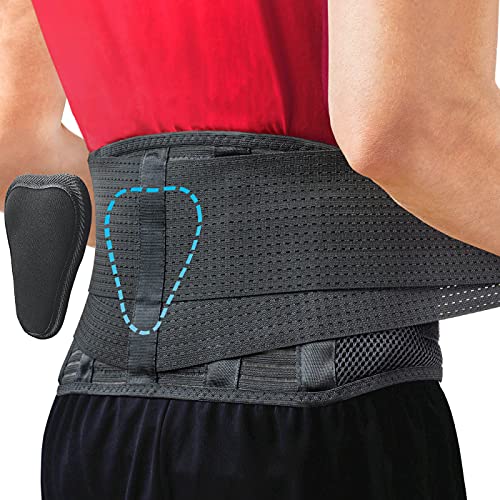
The Sparthos brace is built around a removable adjustable lumbar pad that provides targeted compression exactly where the lower back curves inward. This pad, combined with vertical support stays, creates a rigid yet breathable structure that users consistently report stabilizes the spine without feeling like a straightjacket. The nylon fabric and hook-and-loop closure system are durable enough for daily use, and at 9.53 inches wide, it offers substantial coverage without excessive bulk.
User feedback highlights its effectiveness for spinal stenosis and herniated disc conditions, with many noting improved posture and reduced slouching within hours of wear. The brace fits well under clothing for most users, though the strong Velcro can be difficult to detach one-handed. It weighs just under a pound, adding noticeable but manageable mass.
For someone suffering from chronic lower back pain, sciatica, or post-injury recovery who needs more than just minor compression, the Sparthos delivers a level of adjustable support that justifies its position as the top pick. The removable lumbar pad is the key differentiator here—no other brace in this class offers a similar modular approach to targeted pressure relief.
Why it’s great
- Adjustable lumbar pad gives targeted compression where it’s needed most
- Breathable nylon fabric reduces sweat during extended wear
- Vertical support stays prevent the brace from rolling up
Good to know
- Strong Velcro closure can be challenging to release quickly
- Not as wide as some full-coverage braces, may feel narrow for larger frames
2. TESETON Back Brace for Men and Women

The TESETON brace differentiates itself with eight built-in reinforced bones that wrap 360 degrees around the torso, offering vertical support that prevents muscle rolling and reduces disc pressure. At 10 inches wide, it provides generous coverage for both the stomach and lumbar region, making it one of the most substantial braces in this review in terms of surface area. The dual-layer compression bands add an extra layer of stability that makes this brace particularly effective for heavy lifting and workout scenarios.
User testimonials consistently praise its comfort and ease of adjustment, with four separate straps allowing for a custom fit that accommodates different body shapes. The premium stretch neoprene with cooling mesh panels does a respectable job of managing heat, though extended wear in warm environments will still produce some sweat. It is easy to fold and store, making it a practical companion for gym bags or work lockers.
This brace is ideal for individuals whose back pain is triggered by physical labor, powerlifting, or prolonged sitting in ergonomically poor chairs. The combination of width, multiple stays, and dual compression bands makes it a robust choice for preventing injury during demanding activities.
Why it’s great
- Eight reinforced bones provide excellent 360-degree structural support
- Double-layer compression bands secure the brace during high-movement activities
- Generous 10-inch width offers extensive stomach and lumbar coverage
Good to know
- Can feel warm during prolonged wear despite mesh panels
- Larger profile may be difficult to conceal under fitted clothing
3. BLITZU Sacroiliac SI Joint Hip Belt

The BLITZU belt takes a different approach than traditional lumbar braces by focusing on the sacroiliac joint and pelvic area rather than the entire lower back. It uses two adjustable double-pull tension straps that wrap around the hips, providing compression and stabilization from the L1 vertebrae down to the sacrum. This makes it a specialized tool for people whose pain originates from SI joint dysfunction, sciatica, or postpartum pelvic instability rather than general muscle strain.
At just 4.3 inches in height, it has a slim, low-profile design that fits discreetly under clothing without bulk. The mesh material is breathable and durable, though the narrow width means it offers less vertical support compared to wider braces. User experiences are mixed on sizing—some find the S/M runs large, while others with larger builds appreciate the L-XL option that fits hip circumferences up to 65 inches.
This is not the best choice for general heavy lifting or workout protection, but it excels for those needing targeted SI joint compression during daily activities. It is a highly affordable, specialized solution that fills a specific gap in the market, especially for postpartum women and those with sacroiliac-related lower back pain.
Why it’s great
- Targets SI joint and pelvic area where many braces fail to compress
- Low-profile design fits easily under looser clothing
- Dual adjustable straps allow for customized compression levels
Good to know
- Narrow width provides minimal upper lumbar support
- Sizing can be tricky; measure hips carefully before ordering
4. Neo-G Waist/Back Brace
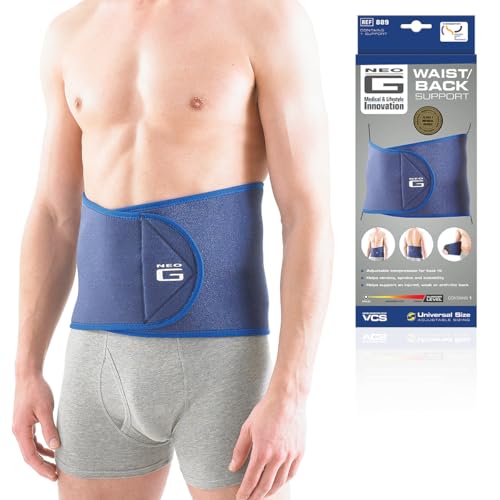
The Neo-G brace is a Class 1 Medical Device registered with the FDA, which sets it apart from many unregulated competitors. It is constructed from premium-grade neoprene that offers heat therapy—warming stiff muscles and promoting blood flow to aid recovery from sprains, arthritis, and general lower back aches. The power straps provide adjustable compression, though the brace lacks rigid internal stays, which limits its structural support compared to bone-reinforced models.
User feedback emphasizes its comfort and durability, with many noting it is barely noticeable under clothing due to its lightweight design (0.15 kg). The one-size-fits-most approach works for a broad range of waist sizes, but taller or broader individuals may find the width insufficient for full lumbar coverage. Its strength lies in recovery and rehabilitation scenarios where gentle compression and heat retention are more important than rigid immobilization.
This is an excellent choice for anyone recovering from a muscle strain or dealing with chronic lower back ache where the primary goal is comfort and circulation, not heavy-duty stabilization. The official partnership with physiotherapy associations adds a layer of clinical credibility that budget braces often lack.
Why it’s great
- Registered as a Class 1 Medical Device for clinical-grade assurance
- Heat therapeutic neoprene helps warm and relax stiff muscles
- Lightweight and barely noticeable under everyday clothing
Good to know
- Lacks rigid stays for structural support during heavy lifting
- One-size design may not fit very large or very small waistlines
5. Cybryeh Lightweight Back Brace

The Cybryeh brace is designed for users who need minimal, discrete support that fits seamlessly under clothing. Weighing only 4.23 ounces and measuring 4 inches in width, it is the lightest and most compact option in this lineup. The bottom strap uses high-quality neoprene for elasticity and conformity around the hips, while dual elastic straps provide moderate compression without the bulk of rigid stays. It is best suited for minor lower back fatigue during daily activities like walking, golf, or housework.
Customer reviews confirm its effectiveness for light support and its ability to stay in place during movement, but several users note that it is not adequate for severe pain or heavy lifting. One reviewer shared feedback from a physical therapist advising against full-time wear, which is important context—this brace is a tool for specific tasks, not a permanent crutch. The initial neoprene odor is a common complaint, but it dissipates after airing out for a few days.
For someone who experiences mild back discomfort during long hours of standing or light activity and wants a brace that disappears under a shirt or belt holster, the Cybryeh is a convincing choice. It is not a replacement for a rigid therapeutic brace, but it fills a niche for all-day wearability.
Why it’s great
- Ultra-light at 4.23 ounces for all-day wear without fatigue
- Perforated neoprene improves breathability during extended use
- Discreet design easily hides under shirts or belts
Good to know
- Not suitable for severe pain or heavy structural support needs
- New neoprene odor requires airing out before first use
FAQ
Can I sleep in a lower back brace?
How tight should a lower back brace be?
How long can I wear a back brace each day?
Final Thoughts: The Verdict
For most users, the back brace for lower back winner is the Sparthos Back Brace because its adjustable lumbar pad and breathable design strike the best balance between targeted support and daily comfort. If you need maximum coverage for heavy lifting and want 8 reinforced stays, grab the TESETON Back Brace. And for those dealing specifically with SI joint or pelvic pain, nothing beats the targeted compression of the BLITZU SI Joint Belt for its specialized fit and low-profile design.

Mo Maruf
I created WellFizz to bridge the gap between vague wellness advice and actionable solutions. My mission is simple: to decode the research and give you practical tools you can actually use.
Beyond the data, I am a passionate traveler. I believe that stepping away from the screen to explore new environments is essential for mental clarity and physical vitality.