Our readers keep the lights on and my smoothie glass nicely filled. As an Amazon Associate, I earn from qualifying purchases.
Lower back pain isn’t just discomfort—it’s a daily barrier that turns simple tasks like bending, lifting, or sitting into moments of sharp regret. The right brace delivers targeted compression to stabilize the lumbar spine, offload strained muscles, and help you move with confidence rather than caution.
I’m Mohammad Maruf — the founder and writer behind WellFizz. I’ve spent thousands of hours analyzing medical device specifications, evaluating compression technologies, and cross-referencing user claims with measurable build quality indicators to find which back brace for lower back pain designs actually hold up to real-world demands.
This guide breaks down the key specs that separate a brace that provides genuine relief from one that just takes up closet space.
How To Choose The Best Back Brace For Lower Back Pain
Every brace on this list serves the same core mission, but the wrong choice can leave you with uncomfortable bunching or inadequate support. Focus on three specific factors that determine whether a brace earns its daily spot in your routine.
Support Rigidity: Steel Stays vs. Flexible Boning
Braces with embedded steel springs or firm plastic boning prevent rolling at the waist and provide structural stability during heavy lifting. Flexible boning offers moderate support that won’t dig in during seated work. The best pick depends on how many hours you plan to wear the brace and whether your day involves lifting or desk sitting.
Breathability and Odor Management
Back braces trap body heat. Neoprene-based models provide superior elasticity and compression but can cause sweating during extended wear. Perforated mesh panels and moisture-wicking polyester blends reduce heat buildup. Some braces include odor-resistant fabric treatments, which matter if you plan to wear the brace through full work shifts.
Adjustability and Fit Precision
Dual-strap systems let you dial in tension across the upper and lower bands independently, which is critical for matching your exact pain point location. Removable lumbar pads add compressible cushioning exactly where it’s needed. Measure your waist circumference at the navel level, not your pant size, to avoid buying a brace that slides up or gaps at the lower back.
Quick Comparison
On smaller screens, swipe sideways to see the full table.
| Model | Category | Best For | Key Spec | Amazon |
|---|---|---|---|---|
| MUELLER Lumbar Back Brace 255 | Mid-Range | Heavy lifting & driving support | 4 steel springs, 52% polyester | Amazon |
| FEATOL Back Brace Support Belt | Premium | 360° compression with removable pad | 4 support strips, neoprene inner | Amazon |
| BraceUP Lower Back Brace | Mid-Range | Full range of movement after surgery | 8 firm support stays, silicone anti-slip | Amazon |
| Sparthos Back Brace | Mid-Range | Discreet all-day wear under clothes | Adjustable lumbar pad, nylon build | Amazon |
| Lightweight Back Brace | Budget | Low-profile daily support under clothes | 220g, 4-inch width, perforated neoprene | Amazon |
In‑Depth Reviews
1. MUELLER Sports Medicine Lumbar Back Brace
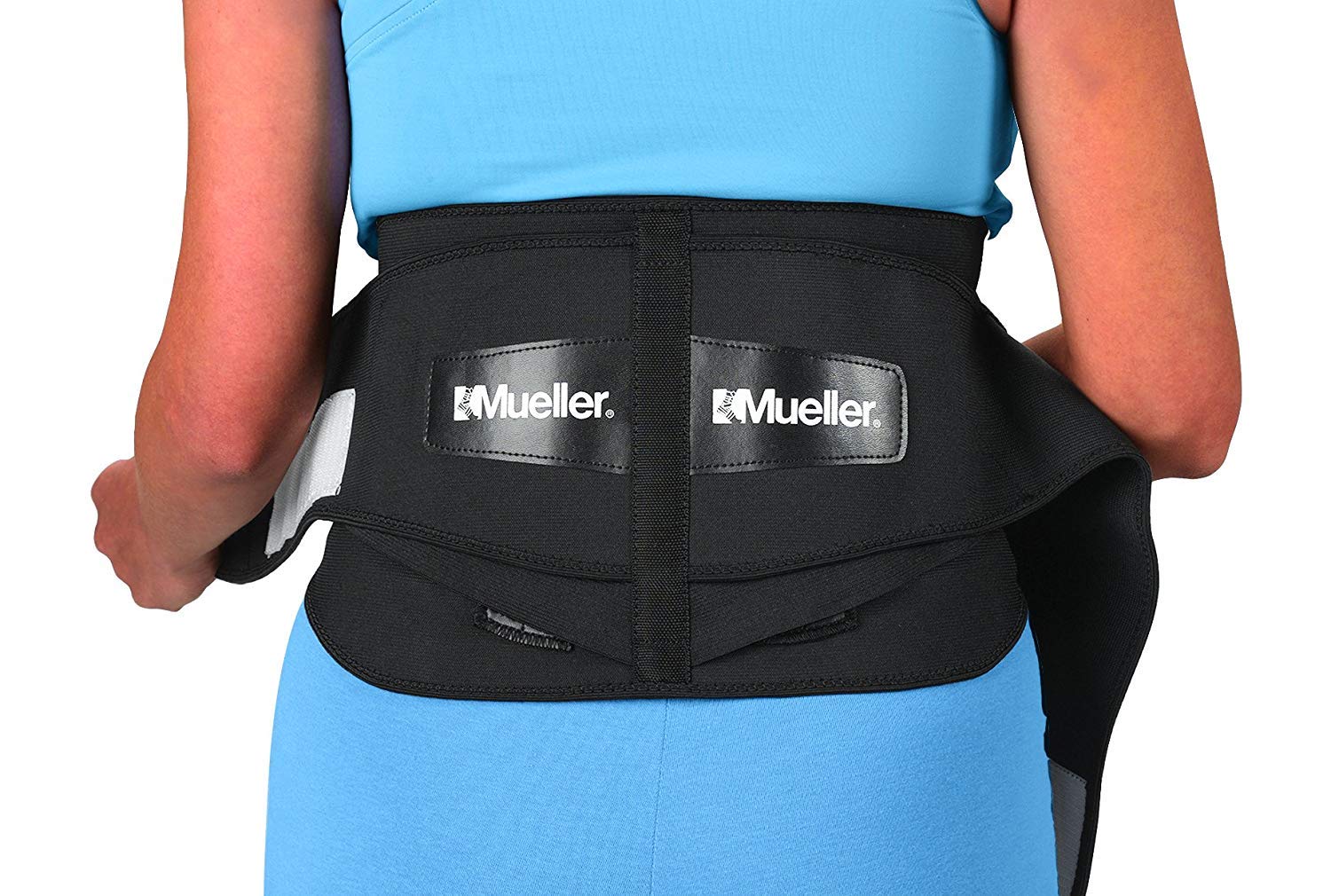
Mueller’s 255 model integrates four flexible steel springs that deliver firm, targeted compression without digging into the ribs. The 52% polyester / 19% natural rubber blend provides moderate stretch while the internal molded plastic component prevents the brace from rolling or bunching at the waistline during heavy lifting or long drives.
The removable lumbar pad adds customizable cushioning for the lower back, and the hook-and-loop closure offers a wide adjustment range. Users recovering from pinched nerves and compressed discs report noticeable relief during standing tasks, though the neoprene content can trap heat during extended wear in warm conditions.
Customer feedback highlights the brace’s effectiveness for sciatica pain while driving and for restaurant workers who lift heavy loads during long shifts. The odor-resistant fabric treatment helps, but several users note a strong chemical smell upon initial unpacking that dissipates after airing out.
Why it’s great
- Four steel springs deliver structural support without excessive rigidity
- Anti-roll plastic component keeps the brace stable during bending
- Removable lumbar pad allows targeted compression adjustment
- Trusted brand with over 60 years of sports medicine manufacturing
Good to know
- Limited breathability during extended warm-weather wear
- Chemical odor on first use requires airing out
2. FEATOL Back Brace Support Belt

FEATOL’s design uses four strong support strips combined with an extra 3D silicone lumbar pad to provide 360-degree reinforcement around the lower back. The inner layer is elastic neoprene that grips the hips and pelvis, while the outer elastic band with hook-and-loop fasteners enables fine-tuned tension from the navel around to the spine.
The brace covers a broad sizing range from 24.4 to 74.8 inches, making it one of the most inclusive options on the market. Users moving heavy materials like sandbags and pavers report near-zero pain during tasks that previously caused significant discomfort. The breathable fabric helps reduce the sweaty feeling common with all-neoprene designs.
Some users note the brace feels slightly bulky under fitted clothing and requires occasional readjustment after prolonged sitting. The silicone lumbar pad is optional, allowing you to switch between moderate and firm compression depending on the day’s demands. Several reviewers with sciatica or herniated discs describe it as the best brace they have tried for daily mobility support.
Why it’s great
- Four support strips and silicone pad deliver comprehensive 360° compression
- Ultra-wide sizing accommodates waist circumferences from 24 to 75 inches
- Breathable neoprene construction reduces sweat build-up
- Removable lumbar pad lets you switch between moderate and firm support
Good to know
- Can feel bulky when worn under slim-fit clothing
- Lower-back relief depends on correct pad positioning
3. BraceUP Back Brace for Lower Back
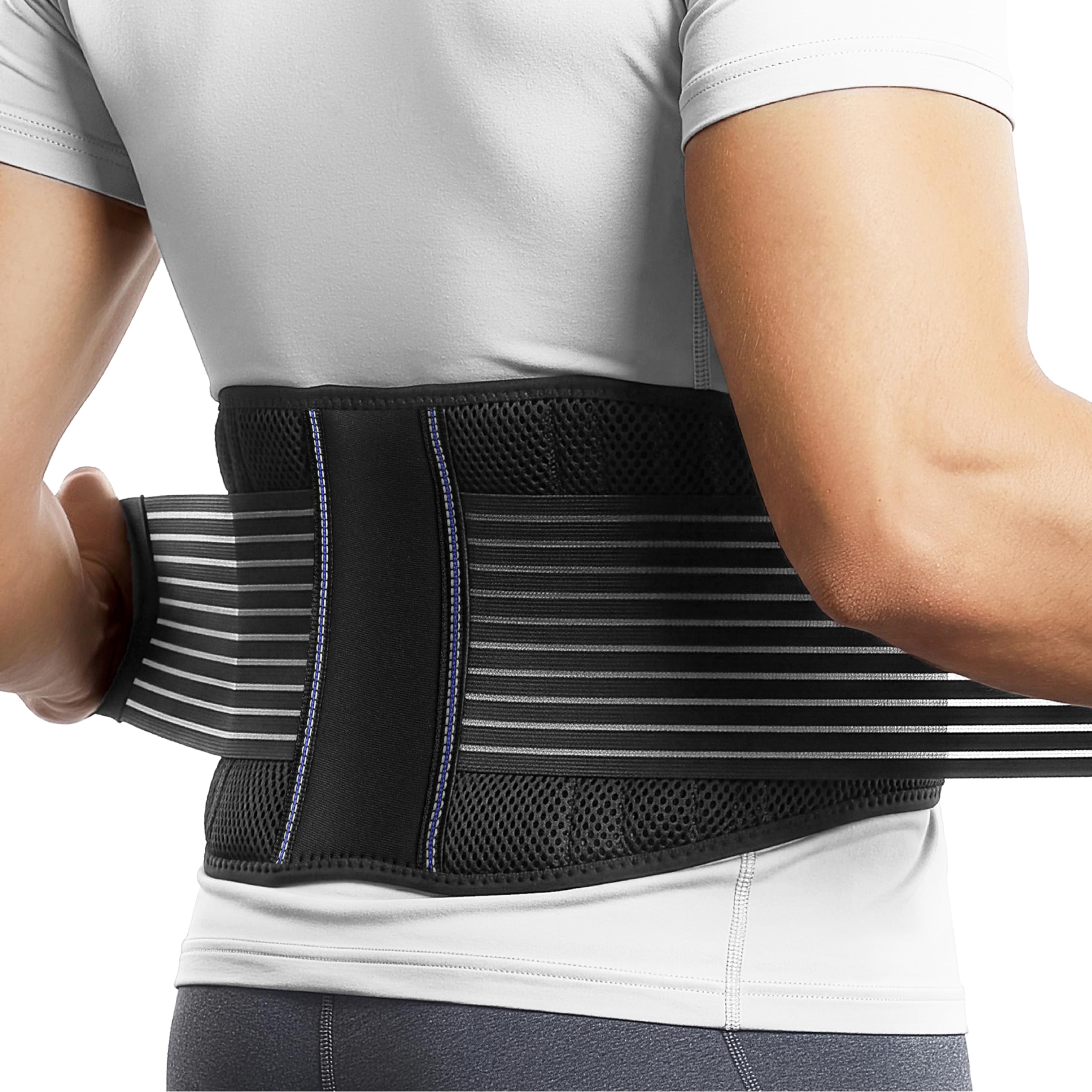
BraceUP’s dual-adjustment strap system lets you independently tighten the upper and lower sections of the brace, which is particularly useful for people with changing pain points throughout the day. The eight firm support stays hold the brace in position without adding unnecessary compression, making it a solid choice for post-surgery recovery or daily walking.
The four anti-slip silicone strips on the interior lining keep the brace anchored during active movement, even during long walks or after back surgery. The lightweight mesh panel releases excess heat and moisture, addressing the ventilation concerns that plague thicker neoprene braces. Users recovering from compression fractures and degenerative disc disease report immediate relief and appreciate that the brace stays put without bunching.
Over months of heavy use, some users experience glue separation on the boning channels, and the material could be thicker for industrial-level daily abuse. The brace lacks a belt attachment loop, which some users find inconvenient when wearing it under pants. Still, for the balance of adjustability and movement range, it remains a strong mid-range pick.
Why it’s great
- Dual adjustment straps let you customize upper and lower tension independently
- Eight firm stays maintain shape without excessive rigidity
- Four silicone anti-slip strips prevent shifting during active movement
- Lightweight mesh panel improves air flow compared to solid neoprene braces
Good to know
- Boning glue may fail under months of heavy daily use
- Material feels thinner than heavy-duty industrial braces
4. Sparthos Back Brace for Lower Back Pain
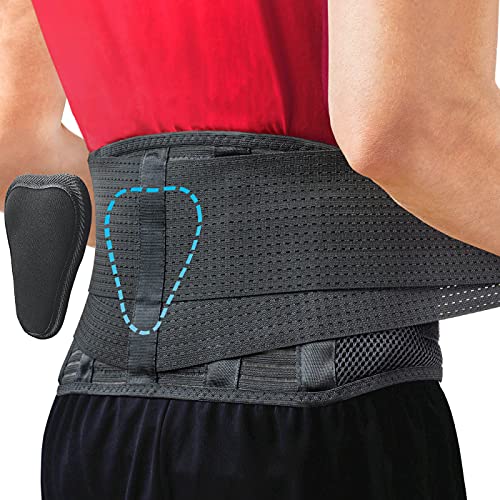
Sparthos focuses on a slim profile that fits comfortably under regular clothing without the bulk that makes some braces obvious. The adjustable lumbar pad provides targeted compression for the lower back, and the double-strap system—one wrap belt and one tension belt—delivers a precise, custom fit that doesn’t loosen during walking, bending, or stretching.
The nylon construction is sturdy enough for 8-to-10-hour daily wear, with users managing spinal stenosis and osteoarthritis reporting they eliminated their need for a cane during physical labor. The brace covers a waist size range from 28 to 52 inches, though the front panel width measures only 11 inches, which creates a more focused compression zone rather than wrapping the entire torso.
Some users find the narrow width creates a wasp-waist effect that isn’t ideal for those with flank pain or broader support needs. The velcro is exceptionally strong, and the brace stays in place even during active movement. Reviewers note the brace gets warm on long walks, and hand washing is required to maintain the velcro integrity.
Why it’s great
- Slim profile fits discreetly under shirts and light jackets
- Double-strap system provides precise, customizable tension
- Sturdy enough for 10-hour daily wear without losing support
- Strong velcro keeps the brace securely in place during active movement
Good to know
- Front panel is only 11 inches wide, narrow for full-torso support
- Can cause warmth build-up during extended walking periods
5. Lightweight Back Brace for Lower Back Pain Under Clothes

This lightweight model weighs only 220 grams and measures 4 inches in width, making it the most discreet option for users who need moderate lower-back support without the visual or physical bulk of a full brace. The bottom strap uses perforated neoprene for superior elasticity and conformity to the hip and pelvic curves, allowing dynamic compression that moves with the body.
The dual elastic straps provide adjustable pressure for the lower back, targeting fatigue, muscle pain, and sciatica without restricting full range of motion. Users appreciate how easily it fits under a belt or holster for active work days, and the quick on-and-off design makes it practical for intermittent use during specific tasks.
Because the brace is designed for low-profile wear, the support level is moderate rather than heavy-duty. Physical therapists often recommend limiting full-time wear to avoid muscle dependency, and the neoprene material may emit a mild odor upon first opening that dissipates after airing out for 2–3 days. This is the best choice for someone who needs a subtle support layer rather than a rigid therapeutic brace.
Why it’s great
- Ultra-light 220g design is nearly invisible under clothing
- Perforated neoprene provides elastic support without restricting movement
- Quick on-and-off design suits intermittent use during specific tasks
- Dual straps enable adjustable compression for different pain levels
Good to know
- Support level is moderate, not heavy-duty for lifting or rigid stabilization
- Neoprene may emit a mild odor initially that needs 2–3 days to air out
FAQ
Can I sleep while wearing a back brace for lower back pain?
How do I measure my waist for a back brace correctly?
How long should I wear a back brace each day to avoid muscle weakness?
Final Thoughts: The Verdict
For most users, the back brace for lower back pain winner is the MUELLER Lumbar Back Brace because its four steel springs provide structural support without excessive rigidity, and the removable lumbar pad lets you fine-tune compression to the exact spot that hurts. If you need 360-degree compression and a wider fit range, grab the FEATOL Back Brace Support Belt. And for a discreet, ultra-light option that slips under clothes without announcing itself, nothing beats the Lightweight Back Brace.

Mo Maruf
I created WellFizz to bridge the gap between vague wellness advice and actionable solutions. My mission is simple: to decode the research and give you practical tools you can actually use.
Beyond the data, I am a passionate traveler. I believe that stepping away from the screen to explore new environments is essential for mental clarity and physical vitality.