Our readers keep the lights on and my smoothie glass nicely filled. As an Amazon Associate, I earn from qualifying purchases.
An L5-S1 injury brings a specific, sharp instability to the very base of your spine where the lumbar curve meets the sacrum. The right brace doesn’t just squeeze your gut — it locks that transitional junction so your vertebrae stop shearing against each other during a simple bend or twist. Without targeted immobilization at that exact level, most belts become expensive fabric that does little more than remind you of the pain.
I’m Mohammad Maruf — the founder and writer behind WellFizz. I analyze lower back brace designs with a focus on the biomechanics of lumbosacral support, comparing pulley ratios, rigid panel architecture, and compression plate geometry to identify what actually stabilizes L5-S1 during daily movement.
This guide breaks down the specific design features that matter most for this vulnerable spinal segment — from bionic curvature plates to programmable pulley systems — so you can confidently choose the best back brace for l5 s1 to support your recovery or daily function.
How To Choose The Best Back Brace For L5 S1
An L5-S1 brace needs to do more than remind you to sit straight. It must mechanically restrict the flexion and rotation at the lumbosacral junction — the spot where the last lumbar vertebra meets the sacrum. A flimsy elastic belt won’t cut it. Look for a brace that combines rigid posterior support, a compression system that wraps around the pelvis, and adjustable tension that lets you dial in the exact degree of immobilization your condition demands.
Pulley Ratio and Compression Control
The simplest metric for judging a brace’s real tightening power is its pulley multiplier. A standard single-pull Velcro strap generates roughly 1-to-1 tension. A 5-to-1 pulley system lets you apply five times the compressive force with the same hand effort. For an unstable L5-S1, that extra mechanical advantage means the brace cinches tight around the iliac crests, creating a rigid pelvic cradle that prevents the lumbar spine from shifting forward during a lift or twist.
Bionic Curvature and Decompression Plates
Flat back panels push against the spine indiscriminately. A bionic curvature plate, molded at a 26-degree angle, matches the natural lordotic curve and distributes pressure evenly across the L1 through S1 vertebrae. Braces with a separate adjustable arch give you three levels of support — full extension for post-surgery immobilization, moderate arch for protection during activity, and a flat setting for maintenance. That adjustability matters because your L5-S1 disc may need more lordosis support sitting at a desk than it does standing.
Rigid Panels vs. Semi-Rigid Support
Post-surgery and acute herniation cases demand PDAC-approved LSO braces with removable rigid panels that limit range of motion to under 20 degrees of flexion. For daily wear — long drives, warehouse work, gardening — a semi-rigid brace with flexible spring strips lets you move while still blocking the end-range bending that torques the L5-S1 disc. The panel count matters: six steel stays plus flexible side strips provide 360-degree containment without turning your torso into a cast.
Quick Comparison
On smaller screens, swipe sideways to see the full table.
| Model | Category | Best For | Key Spec | Amazon |
|---|---|---|---|---|
| VertebrAlign LSO | Medical Grade LSO | Post-surgery stabilization and PDAC-coded claims | PDAC L0631-L0650 / 23–50 in waist | Amazon |
| LSO Back Brace w/ Decompression Plate | LSO with Arch | Adjustable lumbar extension for pre- and post-op | 26° bionic arch / dual-pulley | Amazon |
| BraceAbility Decompression Brace | Semi-Rigid Corset | Discectomy and laminectomy recovery | Dual-pulley / 40–45 in circumference | Amazon |
| BaxMAX 5X Compression | Pulley Brace | Active users needing lightweight, strong compression | 5-to-1 pulley / 5 oz weight | Amazon |
| Ottobock The S.P.I.N.E. | Pulley Corset | Long standing shifts and heavy lifting prevention | 1-step pulley / nylon mesh | Amazon |
| DARLIS Inflatable Pad | Adjustable Air Support | Customizable lumbar compression via inflation | 6 steel stays / inflatable pad | Amazon |
| Bracepost 360° Support | Hot/Cold Therapy | Temperature therapy with basic support | 26° bionic pad / hot/cold pack | Amazon |
In‑Depth Reviews
1. VertebrAlign LSO Lumbar Back Brace
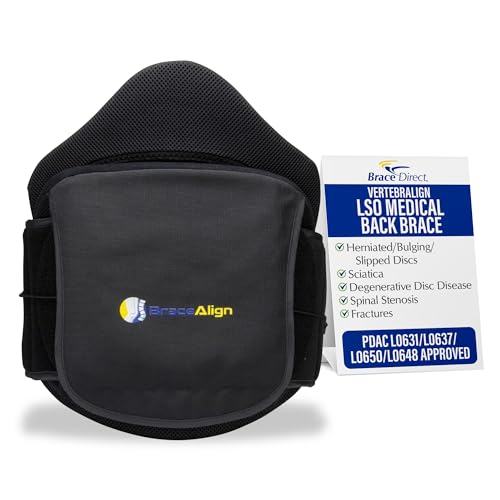
The VertebrAlign LSO carries PDAC approval (L0631, L0637, L0648, L0650), meaning its design has been reviewed by the Durable Medical Equipment Medicare Administrative Contractors for lumbar-sacral stabilization. That medical-grade certification matters for L5-S1 conditions because it confirms the brace meets clinical standards for restricting flexion and extension at the lumbosacral hinge. The one-handed pulley system tightens evenly across the torso, creating consistent compression from the iliac crests up through the lower ribs.
Removable rigid panels let you tailor the stiffness — deploy all panels for post-fusion immobilization or pull a few for daily office wear. The breathable mesh build keeps skin cool during all-day use, and the universal sizing (23–50 inches waist) with a plus extension option reduces fit guesswork for larger frames. Customer reviews highlight the same pattern: this is the brace that replaced a hospital orthosis with equal or better stabilization.
The trade-off is bulk. Multiple users note the profile looks “like a turtle shell” under clothing, and sitting in a car seat with the rigid panels engaged creates a noticeable wedge effect. The pulley cords also don’t retract automatically, so re-dressing after a bathroom break requires rethreading. For post-surgery or acute instability where function trumps discretion, this is the benchmark.
Why it’s great
- PDAC-approved medical-grade LSO designation ensures insurance billing and clinical trust
- One-handed pulley system delivers even bilateral compression without bending
- Customizable rigid panels allow variable stiffness from post-op to daily protection
Good to know
- Bulky profile makes sitting in low-backed vehicles uncomfortable
- Pulley cords require manual rethreading after loosening for bathroom breaks
2. LSO Back Brace with Maximum Decompression Plate

This LSO brace solves the problem every L5-S1 patient faces: one arch angle rarely fits both sitting and standing. The adjustable bionic decompression plate switches between three positions — a 26-degree extension for lumbar correction before activity, a moderate arch for protection during movement, and a flat setting when you just need compression without hyperextension. The dual-pulley system provides targeted compression fit that doesn’t require strong grip strength, making it ideal for seniors managing chronic disc degeneration.
The build includes a removable soft plastic abdominal plate that extends the support over the belly — useful for post-partum recovery or for patients who carry weight in the midsection and need to prevent the brace from rolling. Customer feedback from one 14-year-old with CRMO and a user with spondylolisthesis both confirm the brace allows pain-free walking and easier breathing compared to compression-only belts. The arch plate locks the L1–S1 block into a neutral curve, offloading disc pressure from the L5-S1 level.
The sizing split (S/M, L/XL, 2XL/3XL) requires a belly-button-level measurement rather than pant size. Some users note the arch plate feels rigid when sitting for prolonged periods, and the price sits in the premium bracket. For patients who need both immobilization and positional adjustability, the triple-arch design justifies the investment.
Why it’s great
- Three-position adjustable arch allows pre-activity extension and post-activity flat support
- Dual-pulley system with easy-pull finger tabs accommodates seniors with limited hand strength
- Removable abdominal plate extends stabilization to the full lumbo-pelvic region
Good to know
- Rigid arch plate creates a stiff feel when sitting for extended periods
- Premium price point may exceed budget for patients without insurance reimbursement
3. BraceAbility Lumbar Decompression Back Brace
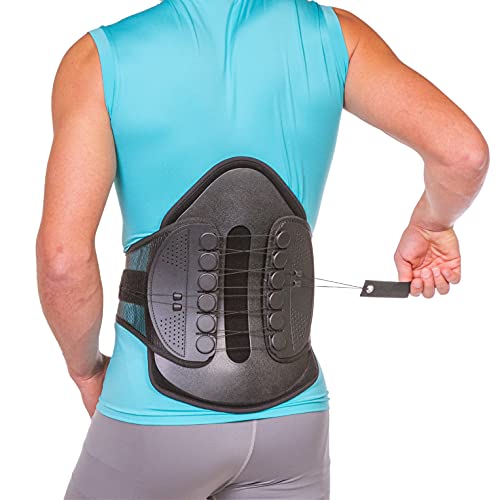
The BraceAbility decompression brace targets the post-surgical recovery window — discectomy, laminectomy, and microdiscectomy patients who need controlled flexion restriction without full-body casts. The dual-pulley system triples the compression power of a standard hook-and-loop belt, letting you cinch the corset tight around the pelvic girdle without twisting or bending. For an L5-S1 disc that has been surgically trimmed or fused, this brace creates a semi-rigid shell that blocks the forward slip that aggravates the nerve root.
The semi-rigid plastic back panel provides consistent posterior contact, while the flexible nylon wraps allow natural breathing expansion. The wraparound design eliminates the need to feed your arms through overhead straps — a genuine benefit for patients one week out from lumbar fusion. Customer reviews repeatedly mention this brace out-performs the hospital-issued orthosis purchased at a four-figure markup. One user with a lumbar displacement reported their mom “became more active with less pain” after switching to this model.
Potential drawbacks include a flimsy feeling back panel that some users say moves when bending, and the plastic panels have been reported to crack if the wearer lies down on hard flooring. The brace also compresses the stomach into the ribs for some body types, causing nerve pinching in the upper abdomen. Sizing guidance recommends measuring the widest waist circumference and ordering down if between sizes to reduce bulk.
Why it’s great
- Dual-pulley system triples compression for targeted L5-S1 immobilization
- Wraparound application requires no overhead arm movements for post-surgery wear
- Cost-effective alternative to hospital-issued braces for patients paying out of pocket
Good to know
- Plastic back panel has been reported to crack when lying on hard surfaces
- Some wearers experience upper abdomen pinching from stomach compression
4. BaxMAX Adjustable Back Brace with 5-to-1 Compression
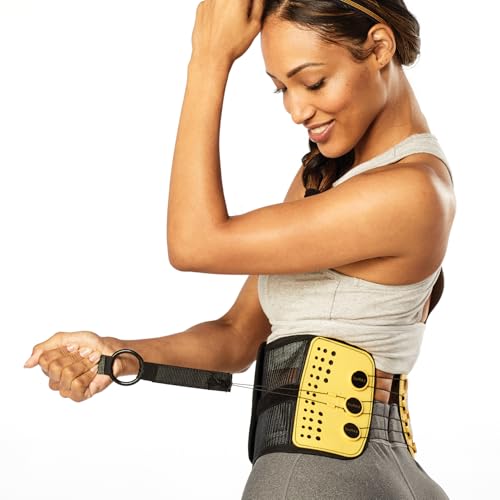
At five ounces, the BaxMAX is the lightest brace in this comparison, yet its patented 5-to-1 pulley system delivers the highest mechanical advantage of any model here. One pull creates five times the compression of a standard Velcro strap, cinching a Kevlar-reinforced cable that wraps the lumbar spine in focused tension. For L5-S1 instability caused by disc protrusions and acute muscle spasms, this brace allows users to walk after episodes that would normally floor them.
The nylon-Kevlar blend mesh is breathable enough for active wear — warehouse work, construction, hiking — and the 3-way wear system lets you adjust compression levels throughout the day without removing the brace. Chiropractor-recommended and used in over 3,000 clinics, the BaxMAX prioritizes targeted lumbar compression over full-torso wrapping. Users specifically call out the ability to release compression via the pulley mid-activity, then re-engage it before the next lift, as a workflow advantage over buckle-only models.
Two design downsides: the material rolls up at the bottom edge when sitting, making it less comfortable for prolonged desk or car use. Some larger users report the pulley edges cut into skin when fully tightened, requiring an undershirt layer. The brace also lacks a rigid posterior plate, so it relies entirely on compression tension rather than structural bracing — appropriate for disc protrusions but insufficient for post-fusion stabilization.
Why it’s great
- 5-to-1 pulley system delivers the highest compression multiplier in this guide
- Ultra-lightweight 5-ounce design moves with you during active work or sports
- 3-way wear adjustments allow mid-activity compression recalibration
Good to know
- Bottom edge rolls up when sitting for extended periods
- No rigid back panel means it relies on tension alone for stabilization
5. Ottobock The S.P.I.N.E. Adjustable Lower Back Brace
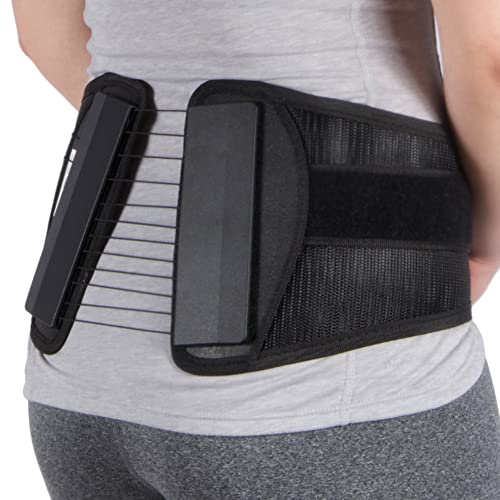
The Ottobock S.P.I.N.E. brace has been a chiropractor staple since the 1980s, and its staying power comes from the Spectra-fiber pulley cord that operates with a single finger pull. The unique rip-cord system wraps around a pulley mechanism inside the belt, generating even compression across the lumbar spine without the clamping pain of buckling wide Velcro panels. Users with L5-S1 disc instability describe this brace as enabling 10-hour standing shifts at work where previous braces would ride up and lose effectiveness.
The abdominal compression creates hydrostatic lift inside the torso, offloading spinal pressure by stabilizing the core cylinder. The nylon side panels breathe better than neoprene alternatives, and the corset-style design prevents the back panel from rolling under the ribcage — a common failure point for shorter-waisted users. Multiple reviews from patients with osteomyelitis at L5-S1 and bulging discs confirm the brace supports walking recovery when instability is the primary symptom.
The brace has a stiffer break-in period; the initial wear feels rigid until the fabric and stays conform to your body shape. Some users note branding confusion between Ottobock, Cybertech Medical, and Dr. Ho models — the S.P.I.N.E. design has been sold under multiple labels. The brace also doesn’t include a hot/cold pack pocket, and the pulley system, while effective, lacks the adjustable arch plate found on newer LSO models.
Why it’s great
- Proven design with decades of chiropractor and physical therapist recommendations
- Spectra-fiber pulley system provides smooth, one-handed tensioning
- Breathable nylon mesh prevents heat buildup during all-day wear
Good to know
- No integrated hot/cold therapy pocket for pain relief
- Stiff initial break-in period before the brace conforms to body shape
6. DARLIS Back Brace Support Belt with Inflatable Lumbar Pad
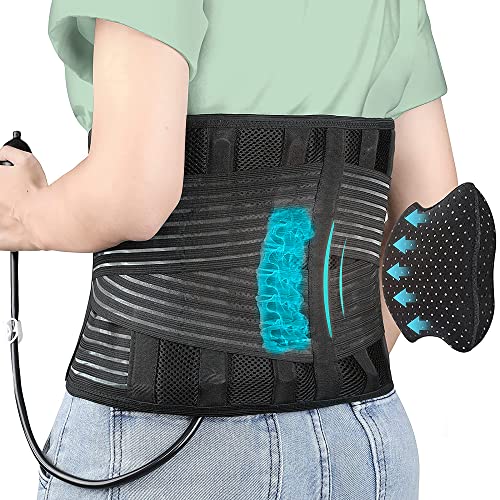
The DARLIS brace differentiates itself with an inflatable lumbar pad that gives you fine-grained control over the lordotic curve. Unlike a fixed foam wedge, the air bladder lets you add or release support mid-activity — pump it up for a heavy lifting session, deflate for car travel. Six rigid steel stays flank the spine while two flexible spring strips accommodate twisting, creating a cage that locks the L5-S1 segment in a neutral, supported position. For a mid-range price, you get hardware that rivals premium braces.
The air mesh and 80% soft nylon frame breathe well during extended wear, and silicone anti-slip bands on both sides prevent the belt from migrating upward when you sit. Customer feedback from a pre-surgery herniated disc patient notes the brace effectively reduced painkiller use enough to enable physical therapy and sleep, though the user’s surgeon advised against brace dependency — a fair point for pre-op management. The 4XL/5XL sizing accommodates larger waist circumferences without cutting into belly fat.
The main critique involves the pump hose placement. On larger models, the valve sits behind the back, making inflation difficult to reach without assistance. Customer service responsiveness has also been inconsistent based on user reports. The lack of a rigid posterior plate means the brace depends on the stay structure and inflation for rigidity — suitable for pain relief during daily activity but not for strict post-surgical immobilization requirements.
Why it’s great
- Inflatable lumbar pad allows on-the-fly lordotic curve adjustment
- Six steel stays plus flexible spring strips provide 360-degree containment
- Silicone anti-slip bands prevent brace migration during movement
Good to know
- Pump valve placement behind the back makes self-inflation difficult for larger users
- No rigid posterior plate limits use to active support rather than post-surgical immobilization
7. Bracepost Back Brace with 360° Support & Hot/Cold Compress

The Bracepost brace packs the most features per dollar in this guide, combining a 26-degree bionic curvature pad, a detachable 3D massage pad, and a reusable medical-grade hot/cold pack in one package. For L5-S1 patients who need both structural support and temperature therapy — ice to reduce nerve root inflammation, heat to loosen tight paraspinal muscles — this brace eliminates the need for separate wraps and gel packs. The 360-degree ergonomic support system wraps from the low back around the sides to the abdomen, distributing compression evenly across the iliac crests.
The five-size fit (based on precise waist measurement) with upper and lower adjustable compression straps gives you two separate tension zones — tighter across the pelvis for sacral fixation, looser over the abdomen for breathing comfort. Customer feedback shows consistent relief for herniated discs, sciatica, and post-activity spasm management. One user with acute spasms noted the brace “really helps in between PT,” suggesting it bridges the gap between clinical treatment sessions.
The sizing discrepancy creates the biggest friction point. Several reviews note that the actual belt marking reads smaller than the advertised size range on the Amazon listing, so ordering one size up is a practical precaution. The aluminum material listed in specs is unusual for a back brace — likely referring to the bionic pad’s internal stay structure. The brace’s massage pad, while a nice addition, functions more as a surface stimulator than a therapeutic muscle kneader.
Why it’s great
- Integrated hot/cold therapy pack saves separate purchases for pain management
- Two-zone compression adjustment allows pelvic and abdominal tension independence
- Detachable 3D massage pad adds surface stimulation without bulk
Good to know
- Sizing runs smaller than listed chart; order one size up for accurate fit
- Massage pad provides surface stimulation but not deep tissue manipulation
FAQ
Can I sleep in an L5-S1 back brace?
How often should I replace a back brace for L5-S1 support?
Will a back brace weaken my core muscles if I wear it every day?
Final Thoughts: The Verdict
For most users, the best back brace for l5 s1 winner is the LSO Back Brace with Maximum Decompression Plate because its three-position arch gives you clinical-grade support for both pre-activity correction and post-activity protection — no other brace in this price range lets you adjust the lordotic curve mid-day. If you need PDAC-approved medical grade for insurance claims and post-fusion recovery, grab the VertebrAlign LSO. And for lightweight, high-compression support during active work or sports, nothing beats the BaxMAX 5-to-1 at just five ounces.

Mo Maruf
I created WellFizz to bridge the gap between vague wellness advice and actionable solutions. My mission is simple: to decode the research and give you practical tools you can actually use.
Beyond the data, I am a passionate traveler. I believe that stepping away from the screen to explore new environments is essential for mental clarity and physical vitality.