Our readers keep the lights on and my smoothie glass nicely filled. As an Amazon Associate, I earn from qualifying purchases.
A baby wrap promises closeness, but the wrong one delivers backache, overheating, or a sagging baby that needs constant adjustment. The difference between a wrap that works and one that collects dust comes down to fabric stretch behavior, weight distribution geometry, and how the material handles a 7-pound newborn versus a 25-pound toddler. This guide exists to cut through the marketing and match you with the wrap that actually fits your body, your baby’s stage, and your daily rhythm.
I’m Mohammad Maruf — the founder and writer behind WellFizz. I have spent years analyzing babywearing research, comparing stretch ratios, cotton densities, and certification standards across dozens of wraps to find what actually delivers on the promise of hands-free bonding without strain or safety compromise.
Whether you are a first-time parent or adding to a growing family, finding the right baby wrap depends on understanding how fiber composition, weight limits, and hip-healthy design work together to keep both you and your little one comfortable through every stage.
How To Choose The Best Baby Wrap
Baby wraps are deceptively simple — a long piece of fabric — but the physics of how that fabric stretches, breathes, and distributes weight determines whether you get a blissful contact nap or a sweaty, aching hour. Focus on these four factors before clicking buy.
Fabric Composition & Stretch Recovery
The ideal baby wrap fabric contains a blend of cotton and spandex or elastane, typically 95% cotton to 5% spandex. That small percentage of stretch fiber gives the wrap enough give to mold around your baby while still recovering its shape between uses. Pure cotton wraps sag permanently after a few washes. Wraps with too much spandex feel bouncy and fail to keep the baby high and tight against your chest. Check for “4-way stretch” in the description — this allows the fabric to stretch both lengthwise and crosswise, distributing tension evenly across your shoulders and back.
Weight Range & Stage Suitability
Most stretchy wraps claim a range from 7 pounds to 35 pounds, but the real-world usability window is narrower. Below 8 pounds, many wraps feel loose because the baby lacks the mass to tension the fabric. Above 18 to 20 pounds, the fabric stretches too much under the load, causing the baby to bounce with each step and the parent to feel excessive strain in the lower back. If your baby is already 15 pounds or you plan to wear for long walks beyond six months, consider a wrap with a higher cotton content or a hybrid design that adds a waist belt for extra support.
Hip-Healthy Certification
The International Hip Dysplasia Institute (IHDI) certification is not a marketing gimmick. Wraps that carry this seal are designed to keep the baby’s legs in the natural “M” position — knees higher than the bottom, thighs spread around the parent’s torso. Wraps that force the baby’s legs to dangle straight down can contribute to hip dysplasia over time. If you plan to wear the wrap for more than 30 minutes at a stretch, choose an IHDI-certified model even if it costs a few dollars more.
Learning Curve & Daily Usability
Self-tie wraps require you to wrap the fabric around your body, tie it, then insert the baby. This takes practice — expect 3 to 5 attempts before it feels natural. Pre-tied or hybrid wraps, like the Ergobaby Aura or Boppy ComfyFit, reduce the learning curve by using sewn-in structures or adjustable straps. If you are a sleep-deprived parent who needs a wrap on and off in under 30 seconds, the pre-tied design wins every time. If you want maximum adjustability for different caregivers, a traditional self-tie wrap offers more flexibility.
Quick Comparison
On smaller screens, swipe sideways to see the full table.
| Model | Category | Best For | Key Spec | Amazon |
|---|---|---|---|---|
| Ergobaby Aura | Pre-Tied | Newborns & beginner parents | Pre-tied design, 8-25 lbs | Amazon |
| Boppy ComfyFit | Hybrid | Extended wear & heavy babies | Padded waist belt, 8-35 lbs | Amazon |
| Tuck and Bundle | Premium Fabric | Hot climates & sensitive skin | 100% TENCEL Modal, 8-35 lbs | Amazon |
| Boba Original | Self-Tie | Contact naps & home use | 95% Cotton / 5% Spandex, 7-35 lbs | Amazon |
| Infantino Flip 4-in-1 | Convertible | Budget-friendly versatility | 4 carry positions, 8-32 lbs | Amazon |
| KeaBabies Original | Self-Tie | Value-conscious first-timers | IHDI certified, 7-35 lbs | Amazon |
| Simply Essential Solutions | Self-Tie | Plus-size caregivers | Cotton blend, wide fabric | Amazon |
In‑Depth Reviews
1. Ergobaby Aura Baby Wrap Carrier
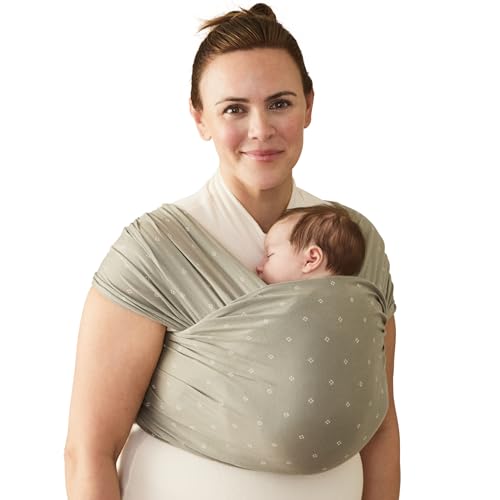
The Ergobaby Aura solves the biggest frustration of traditional wraps — the learning curve. Its pre-tied design includes a guiding edge and center marker that let you achieve a consistent, snug fit on the first attempt. The 4-way stretch knit fabric feels soft against newborn skin while maintaining enough structural tension to keep the baby from sagging. At 8 to 25 pounds, it targets the newborn-to-toddler sweet spot where stretchy wraps perform best.
Breathability stands out here. The lightweight knit prevents the overheating that plagues thicker cotton wraps, making it suitable for warmer indoor environments and seasonal transitions. Parents who tested it while wearing their babies for two-plus hours reported minimal sweat buildup and no fabric digging into their shoulders. The integrated storage pouch folds the entire wrap into a compact bundle that slides into a diaper bag without taking up much space.
Where the Aura limits itself is the upper end of the weight range. Beyond 22 pounds, the stretch fabric begins to lose its supportive snap, and the baby may feel bouncy during brisk walks. This wrap excels for the fourth trimester through the first year but is not designed for heavy toddlers. The one-size design accommodates bodies up to 4XL, making it a strong shared option between caregivers of different sizes.
Why it’s great
- Pre-tied design drastically reduces the learning curve compared to self-tie wraps
- Breathable 4-way stretch knit prevents overheating during extended wear
- IHDI-certified hip-healthy positioning supports proper leg alignment
Good to know
- Upper weight limit of 25 pounds means it outgrows before toddlerhood ends
- Thin fabric may show wear faster than heavier cotton blends
2. Boppy ComfyFit Adjustable Baby Carrier

The Boppy ComfyFit bridges the gap between a stretchy wrap and a structured carrier, combining the soft, close feel of a wrap with the adjustable support of a padded waist belt and shoulder straps. This hybrid approach means you get the cozy, hug-like hold of a wrap without the sagging that occurs when a stretchy fabric reaches its load limit. The waist belt transfers weight from your shoulders to your hips, reducing upper back fatigue during long walks or extended wear.
Three carrying positions — newborn front face-in, older baby front face-in, and front face-out — give you room to adapt as your baby grows and gains curiosity about the world. No infant insert is required for newborns, and the adjustable arm straps allow different caregivers to find their own fit without redoing the entire wrap. Parents who used this for airport travel and zoo outings reported that their babies stayed asleep for two-hour stretches without waking during repositioning.
The trade-off is bulk. Unlike a pure stretchy wrap that folds into a pouch, the ComfyFit’s padded components make it less packable for diaper bag storage. The fabric blend (88% polyester, 12% spandex) is breathable but not as airy as pure cotton or TENCEL Modal, so in very humid conditions, you may notice more warmth against your chest. For parents who prioritize long-wear comfort over packability, this hybrid remains a top-tier pick.
Why it’s great
- Padded waist belt distributes baby weight to hips, reducing back strain during extended wear
- Adjustable straps and belt accommodate multiple caregivers with different body types
- Supports three carrying positions from newborn to toddler without extra inserts
Good to know
- Bulkier than traditional wraps when packed, less convenient for diaper bag storage
- Polyester-spandex blend retains more heat than cotton or TENCEL alternatives
3. Tuck and Bundle Buttery-Soft Baby Wrap Carrier
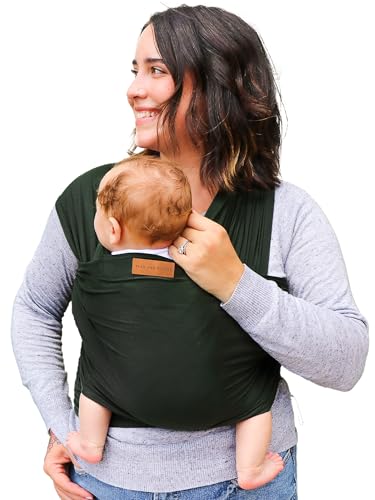
The Tuck and Bundle wrap uses 100% TENCEL Modal, a wood-pulp fiber that outperforms cotton in moisture-wicking, breathability, and tactile softness. Parents living in warm climates or those who run hot during babywearing will appreciate how this fabric stays cool against the skin even after an hour of carrying a 15-pound baby. The material feels similar to high-quality bamboo clothing — smooth, lightweight, and gentle on newborn-sensitive skin.
IHDI certification confirms that the wrap holds the baby in the recommended “M” position, with the knees higher than the hips and the spine in a natural curve. The one-size-fits-all design extends well across body types from petite to plus size, with long tails that tie at the side or back depending on your torso length. Users reported that the fabric does not dig into the shoulders even after two-hour wear sessions, and the natural fiber allows airflow that prevents the sweat patches common with synthetic blends.
The wrap’s lack of stretch is a double-edged sword. While the TENCEL fabric resists sagging better than spandex-heavy wraps, it also has less give, which means achieving the perfect tension requires more deliberate tightening during the tying process. Some caregivers found that the fabric loosened slightly after the first 30 minutes and needed a quick re-tighten. This is still a premium wrap for those who prioritize fabric quality and temperature regulation over convenience.
Why it’s great
- 100% TENCEL Modal fabric provides superior breathability and moisture-wicking for hot climates
- IHDI-certified hip-healthy positioning with natural “M” leg alignment
- Exceptionally soft texture reduces skin irritation for both baby and parent
Good to know
- Minimal stretch requires more careful tightening during initial tie
- Fabric may loosen slightly after 30 minutes and need a quick re-tension
4. Boba Baby Wrap Carrier
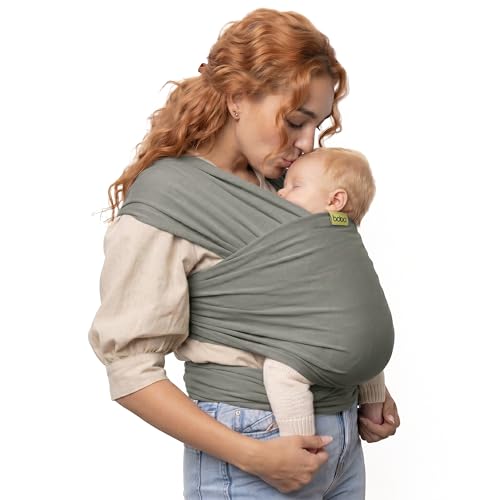
The Boba Original has been a babywearing staple for over 15 years, and its longevity in the market is built on a simple formula: 95% cotton with 5% spandex that hits the sweet spot between stretch and support. The cotton-dominant blend resists the permanent sag that plagues cheaper wraps after repeated wash and dry cycles, while the spandex gives enough give to mold around the baby without creating a bouncy ride. At 7 to 35 pounds, its official range is generous, but the real-world sweet spot sits between 8 and 18 pounds.
Boba designed this wrap to meet strict T.I.C.K.S. babywearing safety standards — tight enough to prevent the baby from slumping, in view at all times, close enough to kiss, keep the chin off the chest, and supported back. The IHDI certification adds another layer of hip-healthy confidence. Parents who wore this for contact naps reported that their babies settled faster and slept longer compared to structured carriers, likely because the wrap distributes pressure evenly across the baby’s back rather than concentrating it at a few contact points.
The main drawback is temperature regulation. The cotton-spandex blend is warmer than TENCEL or polyester blends, making it less comfortable for summer wear above 80 degrees Fahrenheit. Caregivers in humid climates may find themselves sweating through the fabric during 30-minute walks. The self-tie design also means a learning period — expect to watch a few tutorials before achieving a consistent, comfortable fit. For parents who prioritize durability and proven safety over advanced fabric technology, the Boba remains a reliable choice.
Why it’s great
- Sag-resistant cotton-spandex blend maintains shape wash after wash
- IHDI-certified and meets T.I.C.K.S. safety standards for proper positioning
- Trusted design with over 15 years of market presence and user feedback
Good to know
- Cotton fabric retains heat, making it less suitable for hot or humid climates
- Self-tie design requires practice to achieve consistent, comfortable tension
5. Infantino Flip 4-in-1 Convertible Baby Carrier

The Infantino Flip 4-in-1 is technically a structured carrier, not a wrap, but its budget-friendly positioning and similarity to wrap-like ergonomics earn it a spot in this roundup. It converts between four carrying modes — facing-in with narrow or wide seat, facing-out, and back carry — covering the full newborn-to-toddler journey without requiring additional inserts. The padded shoulder straps and wide waist belt distribute the baby’s weight better than a pure stretchy wrap, making it viable for longer outings and heavier children.
Parents who tested this carrier praised its ease of use: buckle adjustments let you switch between caregivers quickly, and the seat width adjusts from narrow for newborns to wide for toddlers. The machine-washable fabric cleans up easily after spills, and the compact folded size fits into diaper bags without dominating the interior. Several users reported using this as their primary carrier from 4 months through 18 months, with the baby falling asleep consistently during walks and grocery runs.
Compared to traditional wraps, the Infantino lacks the snug, all-over contact that some newborns crave during the fourth trimester. The structured back panel and buckles create a slightly bulkier feel that may not suit parents looking for the close, womb-like environment a fabric wrap provides. The underarm buckle placement has been noted as somewhat uncomfortable for shorter caregivers during extended wear. For those who want a single carrier that transitions from infant to toddler without a second purchase, this convertible delivers impressive versatility.
Why it’s great
- Four carrying positions cover newborn to toddler without extra purchases or inserts
- Padded straps and waist belt provide better weight distribution than stretchy wraps
- Machine-washable and easy to adjust between multiple caregivers
Good to know
- Structured design lacks the close, all-over contact of a traditional fabric wrap
- Underarm buckle can dig into shorter users during extended wear sessions
6. KeaBabies Original Baby Wrap Carrier

The KeaBabies Original brings IHDI certification and a soft, stretchy proprietary fabric to a price point that undercuts most competitors without cutting corners on safety. The fabric has enough give to wrap snugly around a newborn while still recovering its shape between uses, reducing the need for constant readjustment. Parents new to babywearing will find the learning curve manageable — the wrap comes with a video tutorial that walks through the basic front-carry tie step by step.
Weight distribution is decent for the price tier. The fabric evenly spreads the baby’s load across the shoulders and back, and multiple users reported being able to wear their baby for two hours without significant discomfort. The fabric is lightweight enough for indoor use and moderate outdoor temperatures, though it is not as breathable as TENCEL-based wraps. The wrap also pulls double duty as a postpartum support band and a nursing cover, adding practicality for parents who want one item to serve multiple roles.
The main compromise is long-term durability. Several users noted that after 6 to 8 months of frequent use, the fabric began to lose its elasticity and required tighter wrapping to achieve the same level of support. For babies pushing 20 pounds, the wrap starts to feel stretchy and bouncy during brisk walking, which may push parents to upgrade to a structured carrier earlier than expected. For the newborn-to-6-month window, however, this wrap delivers excellent value and comfort.
Why it’s great
- IHDI-certified hip-healthy design at a very accessible price point
- Soft, stretchy fabric provides quick tension adjustment without constant retying
- Versatile as a wrap, nursing cover, and postpartum band for added utility
Good to know
- Fabric elasticity degrades after 6-8 months of frequent use
- Becomes bouncy and less supportive once baby approaches 20 pounds
7. Simply Essential Solutions Baby Wrap Carrier

The Simply Essential Solutions wrap stands out for its inclusive sizing — the fabric panels are wide enough to accommodate caregivers up to 3XL-4XL comfortably, with large tails that allow for side tying or back tying depending on your torso length. The cotton blend is soft and breathable, suitable for both summer and winter temperatures, and the fabric holds up well to repeated machine washing without shrinking significantly. Plus-size parents who struggled to find wraps with enough fabric length will appreciate the generous dimensions here.
The wrap supports multiple carry positions including front-facing and hip carries, giving you flexibility as your baby grows. The fabric provides even weight distribution across the shoulders, and a 267-pound reviewer reported carrying an 11-pound newborn for extended periods without back pain. The manufacturer also donates one wrap for every ten sold, adding a social-good layer to the purchase. The instruction tag sewn into the fabric edge helps you remember the tying sequence without pulling out a manual.
Where this wrap falls short is stretch recovery. The cotton blend has less elasticity compared to spandex-enhanced wraps, meaning achieving the perfect tension requires tightening the fabric intentionally during the tying process. Some users found the fabric to be slightly hotter than expected in very humid weather. The lack of IHDI certification is also worth noting for parents who prioritize hip-healthy certification as a non-negotiable feature. For caregivers who need a wrap that fits a larger body comfortably, this is one of the most accommodating options at an entry-level price.
Why it’s great
- Wide fabric panels and long tails accommodate plus-size caregivers up to 3XL-4XL
- Cotton blend remains breathable in varied temperatures and washes well without shrinking
- Instruction tag sewn into fabric edge simplifies the tying learning process
Good to know
- Limited stretch recovery requires deliberate tightening during the tie process
- Not IHDI-certified, which may be a concern for hip-development-conscious parents
FAQ
What is the difference between a woven wrap and a stretchy wrap?
Can a baby wrap cause hip dysplasia?
At what weight should I stop using a stretchy baby wrap?
How do I know if my baby is positioned correctly in a wrap?
Final Thoughts: The Verdict
For most users, the baby wrap winner is the Ergobaby Aura because it eliminates the frustrating learning curve of traditional wraps while maintaining the close, womb-like contact newborns need. If you want a hybrid design that supports heavier babies and reduces back strain with a padded waist belt, grab the Boppy ComfyFit. And for caregivers in warm climates who need a fabric that breathes like natural fiber and feels buttery soft against the skin, nothing beats the Tuck and Bundle Buttery-Soft Wrap.

Mo Maruf
I created WellFizz to bridge the gap between vague wellness advice and actionable solutions. My mission is simple: to decode the research and give you practical tools you can actually use.
Beyond the data, I am a passionate traveler. I believe that stepping away from the screen to explore new environments is essential for mental clarity and physical vitality.