Our readers keep the lights on and my smoothie glass nicely filled. As an Amazon Associate, I earn from qualifying purchases.
A baby’s digestive system is still learning to process milk, food, and the world around it, which often leads to gas, colic, and constipation that leaves both infant and parent exhausted. Choosing the right supplement means looking beyond the label to the specific strains and colony-forming units that actually support a developing gut microbiome without causing discomfort.
I’m Mohammad Maruf — the founder and writer behind WellFizz. I’ve spent hundreds of hours analyzing clinical studies on infant gut health and comparing the bacterial strains, CFU counts, and organic certifications that define quality in this highly personal supplement category.
Whether you are dealing with occasional constipation or daily fussiness, this guide breaks down the formulation differences that matter. My goal is to help you confidently choose the best baby probiotics for your little one’s unique needs.
How To Choose The Best Baby Probiotics
Not all probiotic supplements are formulated for an infant’s delicate digestive tract. A formula designed for adults may contain strains that are too aggressive or lack the gentle delivery base that babies tolerate well. The key is matching the product to your child’s specific symptom — whether that is colic, gas, constipation, or general immune support.
Strain Specificity and CFU Count
The bacterial strain matters more than the total colony-forming units (CFU). For colic, strains like Bifidobacterium longum and Pediococcus pentosaceus have clinical backing. For daily digestive health, Lactobacillus rhamnosus GG is the most studied. Look for a minimum of 1 billion CFU per serving — enough to be effective without overwhelming a newborn system.
Organic Certification and Additives
A baby’s gut lining is more permeable than an adult’s, meaning additives, artificial flavors, and pesticide residues can pass through more easily. USDA Organic certification ensures the base oils and any flavoring agents are free from synthetic chemicals and GMOs. Many premium options also carry Clean Label Project verification, which screens for heavy metals and contaminants.
Delivery Format and Ease of Use
Liquid drops are the most common format for infants because they can be administered directly into the cheek or mixed with breast milk, formula, or a pacifier. The dropper design matters — a slow, controlled drip prevents waste and accidental overdosing. Some bottles have narrow openings that make dispensing difficult, so a well-designed dropper or syringe is a practical consideration for daily use.
Quick Comparison
On smaller screens, swipe sideways to see the full table.
| Model | Category | Best For | Key Spec | Amazon |
|---|---|---|---|---|
| Bobbie Organic Baby Probiotic Drops | Premium | Colic & fussiness | 1 Billion CFU, 2 clinically-studied strains | Amazon |
| Legendairy Milk Baby Probiotic Drops | Premium | Gas, colic & constipation | 2 Billion CFU, 4 strains, USDA Organic | Amazon |
| MARYRUTH’S Organics Baby Probiotic Drops | Mid-Range | Colic calm & stool consistency | 1 Billion CFU, 2 proprietary strains, USDA Organic | Amazon |
| Mommy’s Bliss Baby Probiotic & Gas Relief | Premium Combo | Daily digestive + fast gas relief | Lactobacillus Rhamnosus GG, 1 Billion CFU + Simethicone | Amazon |
| Wellements Organic Baby Constipation Support | Budget-Friendly | Occasional constipation relief | Organic prunes & chicory root fiber (prebiotic) | Amazon |
In‑Depth Reviews
1. Bobbie Organic Baby Probiotic Drops
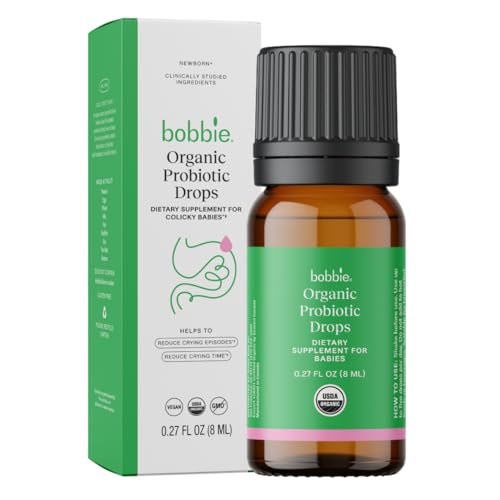
Bobbie’s formula is built around a clinically-studied blend of P. pentosaceus CECT 8330 and B. longum CECT 7894, the same strains shown in research to reduce crying time and crying episodes in colicky infants. At 1 billion CFU per 5-drop serving, it delivers a potent but gentle dose that parents report starts working within two days. The organic sunflower oil base is free from the top eight allergens, making it safe for babies with common food sensitivities.
The dropper is designed with a controlled flow that avoids the rapid dispensing issues seen in some competitors, allowing you to administer directly into the cheek or onto a pacifier. Each bottle provides enough for a full 30-day course, and the Clean Label Project certification adds third-party verification for purity. Parents consistently note that fussiness drops noticeably within the first week of use.
Bobbie’s development team includes dietitians and scientists also behind the brand’s organic infant formula, so the formulation philosophy is directly informed by infant nutrition rather than repurposed adult supplements. The only minor trade-off is the relatively small bottle size, but the concentration means a little goes a long way. For colic-targeted support with a strong clinical foundation, this is the most compelling option on the list.
Why it’s great
- Clinically-studied strain blend reduces crying and fussiness
- USDA Organic, Clean Label Certified, and top-allergen-free
- Controlled dropper design prevents waste and overdosing
Good to know
- Small bottle with only 30 daily servings
- Not ideal for constipation-focused needs
2. Legendairy Milk Baby Probiotic Drops
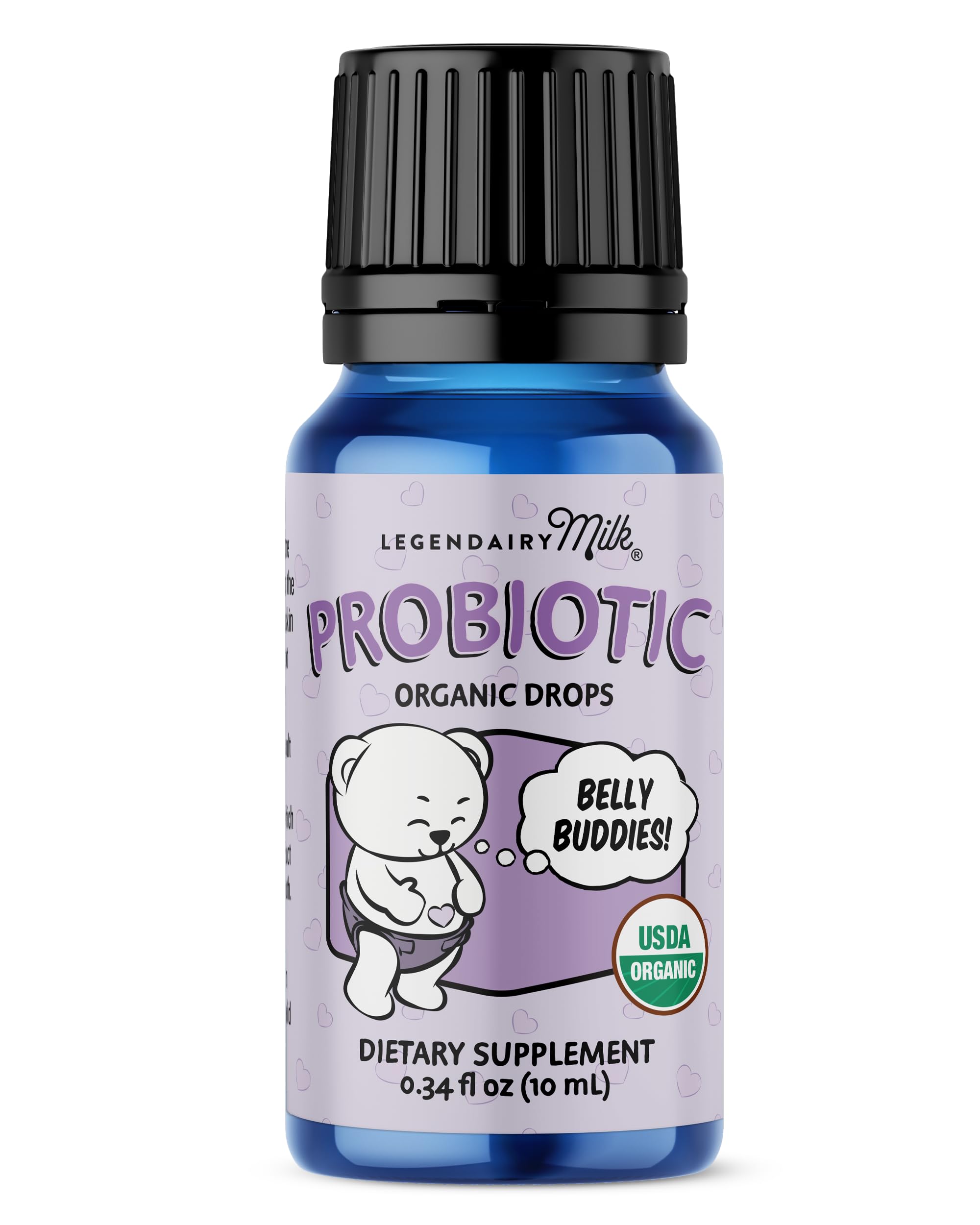
Legendairy Milk packs 2 billion CFUs across four clinically-studied strains, making it the most diverse probiotic blend in this lineup. The formula addresses gas, colic, constipation, and spit-ups in one daily drop, which is particularly useful for babies whose symptoms overlap. The USDA Organic certification and vegan, non-GMO label ensure the carrier oil and strains are free from synthetic additives and preservatives.
Parent reports highlight quick results — some babies show improved stool regularity and reduced cramping within hours of the first dose, especially when added to pumped breast milk. The six-drop daily serving is easy to measure with the included dropper, and the unflavored base means babies accept it without resistance. The bottle is compact at under an ounce, but the concentration still provides 33 servings per bottle.
One detail worth noting: the manufacturer recommends adding the drops to milk rather than solid food, as the binding effect of solids reduces efficacy. This makes the product best suited for infants who are still primarily bottle-fed. For a broad-spectrum digestive support formula that covers multiple symptoms, Legendairy Milk offers the most comprehensive strain profile in the mid-range tier.
Why it’s great
- 2 Billion CFU with four clinically-studied strains
- USDA Organic, vegan, and free from preservatives and artificial additives
- Rapid relief reported for gas, colic, and constipation
Good to know
- Less effective when mixed with solid food
- Best suited for bottle-fed infants
3. MARYRUTH’S Organics Baby Probiotic Drops

MaryRuth’s uses a proprietary blend of Pediococcus pentosaceus and Bifidobacterium longum, the same strain combination featured in clinical colic studies. At 1 billion CFU per 0.25 mL serving, it is designed for infants aged 0 to 12 months. The USDA Organic certification is backed by Clean Label Project and B Corp verification, offering multi-layered assurance about ingredient sourcing and manufacturing standards.
Parents report significant reductions in colic crying and improved stool consistency within the first week. The unflavored drops are easy to administer, and most babies accept them without fussing. The dropper design, however, has drawn criticism: some users find it extremely difficult to extract the liquid, requiring up to ten minutes to dispense a full dose. This is a practical inconvenience that can frustrate an already tired parent during a late-night feeding.
Despite the dropper issue, the formulation itself is strong, and the brand’s reputation for clean ingredients adds confidence. If you are willing to work around the dispensing difficulty, the probiotic blend is effective and well-tolerated. For parents who prioritize strain-specific colic support and don’t mind a slower dropper, this is a solid option.
Why it’s great
- Clinically-studied colic strains with USDA Organic certification
- Unflavored and well-accepted by infants
- Clean Label Project and B Corp certified
Good to know
- Dropper design makes dispensing difficult and slow
- Small bottle yields only 30 servings
4. Mommy’s Bliss Baby Probiotic & Gas Relief Drops

Mommy’s Bliss takes a dual-action approach by pairing a daily probiotic with a separate gas relief drop containing pediatrician-recommended simethicone. The probiotic uses Lactobacillus Rhamnosus GG, the world’s most clinically-studied strain, at 1 billion CFU per serving. The gas relief drops provide fast-acting relief for acute gas discomfort, making this combo a practical solution for babies who experience both chronic digestive sensitivity and sudden gas episodes.
The probiotic dropper features an easy-squeeze design that avoids the dispensing issues seen in some other brands, and the gas relief drops come with a syringe for precise dosing. Parents report noticeable reductions in fussy days when using both products together. The probiotic is free from artificial colors, flavors, gluten, dairy, and the top eight allergens, so it fits most dietary restrictions.
One trade-off is that the probiotic alone may not be sufficient for severe colic or constipation, since L. Rhamnosus GG is more focused on general digestive and immune health than on motility. Additionally, some parents noted that their baby experienced stomach cramps from the probiotic drops. If you want the convenience of a bundled solution that covers both daily maintenance and acute gas relief, this is a well-designed kit.
Why it’s great
- Combines daily probiotic with fast-acting gas relief drops
- Uses the most clinically-studied strain, L. Rhamnosus GG
- Easy-squeeze dropper and syringe for precise dosing
Good to know
- Probiotic alone may not address severe colic or constipation
- Some infants experienced stomach cramps from the probiotic
5. Wellements Organic Baby Constipation Support

Wellements takes a different approach by using organic prunes and chicory root fiber rather than live bacterial strains. This is not a probiotic in the traditional sense — it is a prebiotic fiber and gentle laxative combination designed specifically for occasional constipation. The organic prune base provides natural sorbitol to soften stool, while chicory root inulin feeds existing gut bacteria, supporting long-term regularity without harsh stimulants.
The included dispenser makes dosing straightforward, and the formula is safe for babies starting at six months. Parents report that it works effectively within one to two days when used as directed, with no cramping or diarrhea. The USDA Organic, Non-GMO, and NSF certifications add credibility, and the absence of artificial colors, flavors, and the top nine allergens makes it a clean choice for sensitive infants.
The limitation is that this product only addresses constipation — it will not help with colic, gas, or general immune support. It also requires continued use to maintain regularity, whereas a true probiotic builds a more resilient gut microbiome over time. For parents dealing specifically with occasional constipation on a tight budget, this is an effective and well-certified solution.
Why it’s great
- Natural prune and chicory root fiber for gentle constipation relief
- USDA Organic, Non-GMO, NSF Certified, and top-allergen-free
- Easy-to-use dispenser for accurate dosing
Good to know
- Not a true probiotic — no live bacterial strains
- Only targets constipation, not colic or gas
FAQ
Can I give baby probiotics to a newborn under one month old?
What is the difference between a prebiotic and a probiotic for babies?
How long does it take for baby probiotics to start working?
Can baby probiotics cause side effects like gas or fussiness?
Should I choose a probiotic with 1 billion or 2 billion CFU for my baby?
Final Thoughts: The Verdict
For most users, the best baby probiotics winner is the Bobbie Organic Baby Probiotic Drops because it combines a clinically-studied colic strain blend with USDA Organic and Clean Label certifications in a well-designed dropper that parents can use without frustration. If you want the broadest digestive support covering gas, colic, and constipation, grab the Legendairy Milk Baby Probiotic Drops. And for a dual-action bundle that pairs daily probiotic maintenance with fast gas relief, nothing beats the Mommy’s Bliss Probiotic and Gas Relief Drops.

Mo Maruf
I created WellFizz to bridge the gap between vague wellness advice and actionable solutions. My mission is simple: to decode the research and give you practical tools you can actually use.
Beyond the data, I am a passionate traveler. I believe that stepping away from the screen to explore new environments is essential for mental clarity and physical vitality.