Our readers keep the lights on and my smoothie glass nicely filled. As an Amazon Associate, I earn from qualifying purchases.
The search for the perfect pacifier often feels like a guessing game. You are balancing a baby’s need to suckle with concerns about dental development, nipple confusion, and whether the shield will leave red marks on delicate cheeks. A pacifier that works for one newborn may cause frustration for another, making the selection process highly personal and surprisingly technical.
I’m Mohammad Maruf — the founder and writer behind WellFizz. I analyze infant feeding and soothing products by studying materials science, orthodontic research, and real-world parent feedback to separate marketing claims from genuine performance.
Whether you are preparing a registry or trying to switch your little one to a better option, understanding the nuances of shield design, nipple shape, and airflow is essential. This guide breaks down the top options to help you find the best baby pacifiers for your family’s specific needs.
How To Choose The Best Baby Pacifiers
Selecting a pacifier involves more than picking a cute color. The shape of the nipple, the ventilation of the shield, and the material all directly affect your baby’s oral development and comfort. Here are the critical factors to evaluate before making your choice.
Nipple Shape: Orthodontic vs. Symmetrical vs. Cherry
Orthodontic nipples are flattened on the bottom to mimic the shape of a mother’s nipple during breastfeeding, allowing the tongue to rest naturally. Symmetrical nipples, like those from Philips Avent, offer the convenience of being placed in the mouth any direction. Cherry-shaped round nipples, common in brands like BIBS, mimic the breast shape closely but may not suit every baby’s palate. For breastfed infants, orthodontic or breast-shaped options are typically recommended to reduce the risk of nipple confusion.
Material: Silicone vs. Natural Rubber Latex
Silicone is odorless, firm, and highly durable — it withstands repeated boiling and dishwasher sterilization without degrading. Natural rubber latex is softer and more flexible, which some babies find more comforting, but it can develop a faint taste and is less heat-resistant. Latex also degrades faster once teeth emerge and can be problematic for babies with latex allergies. Most pediatric experts prefer silicone for its hygiene and longevity.
Shield Design and Airflow
A well-ventilated shield prevents moisture and drool from pooling against the skin, reducing the risk of perioral dermatitis or rash. Look for large air holes, curved shields that follow the face contour, and rounded edges that minimize pressure marks. One-piece shield-and-nipple designs eliminate crevices where bacteria can hide, making them far easier to clean thoroughly.
Age Staging and Size Progression
Pacifiers come in stages (0-3 months, 3-6 months, 6-18 months, etc.) that correspond to changing mouth size and sucking strength. Using a stage meant for an older baby too early can cause gagging; using a newborn-sized pacifier for too long may not satisfy a baby’s growing need for suction. Always match the stage to your baby’s current age and oral development.
Quick Comparison
On smaller screens, swipe sideways to see the full table.
| Model | Category | Best For | Key Spec | Amazon |
|---|---|---|---|---|
| Nanobebe Baby Pacifiers | Orthodontic | Breastfed newborns 0-3 months | One-piece 100% silicone, face-contour curve | Amazon |
| Philips Avent Ultra Air Nighttime | Orthodontic | Nighttime self-soothing 6-18 months | Glow-in-the-dark shield, extra-large airholes | Amazon |
| Philips Avent Ultra Soft | Orthodontic | Babies with sensitive skin 6-18 months | Flexible rounded shield, 80% plant-based materials | Amazon |
| MAM Supreme Baby Premium | Orthodontic | Picky babies 6-16 months needing airflow | Ultra-thin SkinSoft silicone, extra air holes | Amazon |
| BIBS Pacifiers 0-6 Months | Symmetrical | Newborns preferring natural rubber texture | Natural rubber latex, BPA-free shield, Danish design | Amazon |
In‑Depth Reviews
1. Nanobebe Baby Pacifiers 0-3 Month
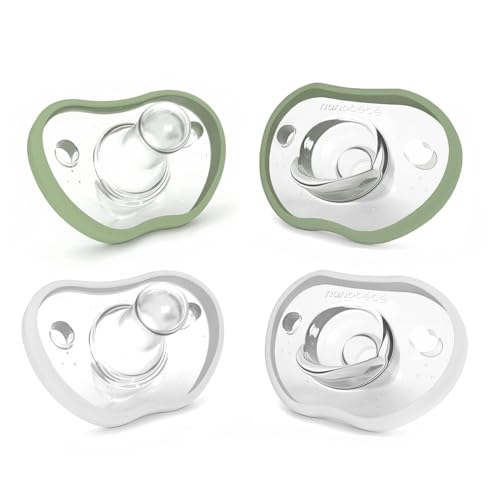
The Nanobebe pacifier is engineered specifically for breastfed babies, and its design reflects that focus with precision. The 100% silicone nipple curves along the baby’s face, nose, and chin, creating a snug fit that stays in place without constant reinsertion. The one-piece seamless construction eliminates any joints or seams where moisture or bacteria could collect, making this one of the easiest pacifiers to sterilize on the market.
At the 0-3 month stage, this pacifier’s lightweight profile and smaller bulb are ideal for tiny mouths still learning to suckle effectively. The orthodontic shape encourages proper tongue positioning, reducing the risk of nipple confusion compared to wider, more bulbous designs. Parents report that newborns often take to it immediately — a significant advantage during those early weeks when soothing is critical.
Multiple verified reviews highlight the “triangle test” compatibility for breastfeeding latch, and the shield contouring prevents the red pressure marks common with flatter shields. The Sage/White color combination is minimalist and gender-neutral, but parents should note that the 0-3 month size may be outgrown faster than expected by heavier suckers. The brand also offers a Stage 2 Flexy Active version with open side vents for older mobile infants.
Why it’s great
- One-piece silicone prevents bacterial buildup and is dishwasher safe
- Face-contour shield reduces skin irritation and stays in place
- Orthodontic nipple supports breastfeeding latch and oral development
Good to know
- Size 0-3 months may be outgrown quickly by strong suckers
- Single color option in the 4-pack limits variety
2. Philips Avent Ultra Air Nighttime Pacifiers

The Philips Avent Ultra Air Nighttime pacifiers solve one of the most common middle-of-the-night frustrations: locating a dropped pacifier in a dark crib. The shield glows consistently for hours after a brief light exposure, giving tired parents and self-soothing babies a visible target without needing to turn on a lamp. Beyond the glow feature, the extra-large airholes are the standout functional detail, allowing continuous airflow that keeps the skin around the mouth drier than standard vent designs.
The symmetrical soft silicone nipple is orthodontic-friendly with a narrow neck that reduces pressure on emerging teeth and gums. At the 98% parent-reported nipple acceptance rate, this design clearly works for the vast majority of babies in the 6-18 month stage. The included sterilizing cases are microwave-friendly and double as storage containers, making this kit a complete overnight solution in one purchase.
Parents note that the glow remains visible even after several hours in the crib, and the durable material resists biting and deformation as the baby’s teeth come in. The plant-based materials used in the shield are a thoughtful sustainability touch, though the slightly larger shield profile may not suit every baby face shape. The two included cases mean you can keep one set clean while the other is in rotation, reducing middle-of-the-night panic when a pacifier hits the floor.
Why it’s great
- Glow-in-the-dark shield lasts all night for easy location
- Extra-large airholes minimize moisture buildup and skin irritation
- Microwave-sterilizable carrying cases are included
Good to know
- Shield is slightly larger than some competitors
- Glow intensity fades gradually; requires recharging
3. Philips Avent Ultra Soft Pacifiers
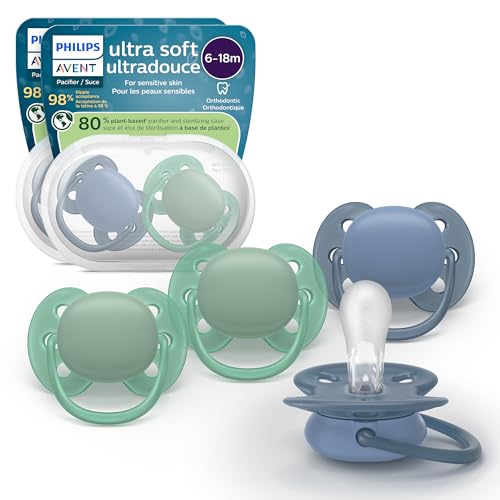
Where the Ultra Air prioritizes nighttime visibility, the Ultra Soft focuses on minimizing facial pressure marks — a common complaint among babies who use pacifiers for extended periods. The shield is flexible and rounded, with a curvature that follows the natural contours of the cheeks rather than pressing flat against the skin. This design reduces the likelihood of the red ring impressions that can alarm new parents and irritate sensitive complexions.
The symmetrical nipple retains the same orthodontic-friendly narrow neck found in the Ultra Air line, so babies switching between the two models will not experience latch confusion. The 80% plant-based material composition is a significant environmental upgrade over conventional petroleum-based plastics, and the microwave sterilizer boxes remain just as functional. Parents appreciate that the soft, lightweight feel does not compromise durability — the shields do not warp or discolor even after frequent sterilization cycles.
Verified feedback highlights that some babies who reject firmer silicon options accept the Ultra Soft more readily, likely because the flexible shield allows more natural movement during sucking. The primary trade-off is the lack of a glow-in-the-dark shield, so this model is better suited for daytime use or for parents who prefer a separate night-specific pacifier. The colors are cheerful but limited in the standard 4-pack.
Why it’s great
- Flexible rounded shield avoids red marks and cheek pressure
- Plant-based materials reduce environmental impact
- Orthodontic nipple with 98% acceptance rate
Good to know
- No glow-in-the-dark feature for nighttime use
- Limited color variety in the standard pack
4. MAM Supreme Baby Premium Pacifier
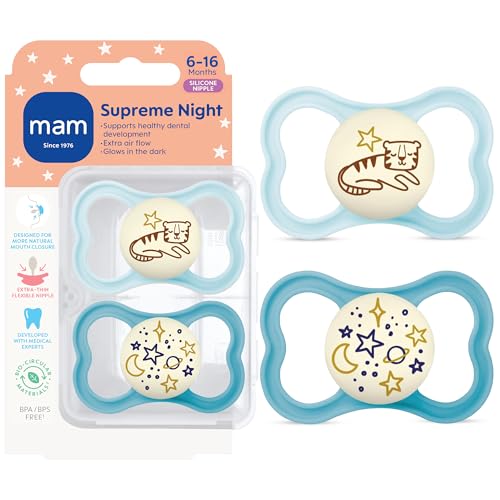
MAM has built its reputation on collaboration with orthodontists and pediatric dentists, and the Supreme model is the flagship of that approach. The patented ultra-thin SkinSoft silicone nipple is noticeably more supple than standard silicone, which helps babies who reject thicker nipples achieve natural mouth closure. The symmetrical shape works in any orientation, eliminating the frustration of inserting a pacifier upside down during a middle-of-the-night soothing session.
The extra-large air holes in the shield are among the most generous in this category, creating constant airflow that prevents the drool pooling that leads to rashes. The glow-in-the-dark front design is exceptionally bright when freshly charged, and parents report it remains visible for the entire night. The included sterilizer case is purpose-built for MAM pacifiers and offers a quick 3-minute microwave cycle that generates fewer CO2 emissions than boiling.
Parents consistently report that this is the only pacifier their 10-month-old will accept, suggesting that the nipple’s flexibility and thin profile genuinely matter for picky babies. The European manufacturing standards provide additional peace of mind, though the 2-pack quantity means you will need to purchase multiple sets to maintain a rotation. The natural rubber version is also available for those who prefer that texture, but the silicone reviewed here is the more durable long-term choice.
Why it’s great
- Ultra-thin SkinSoft silicone for high acceptance among picky babies
- Orthodontist-developed design reduces risk of misaligned teeth
- Glow-in-the-dark shield with excellent overnight brightness
Good to know
- Only 2 pacifiers per pack; buying multiple sets is necessary
- Higher unit cost compared to most 4-packs
5. BIBS Pacifiers 0-6 Months

BIBS brings over four decades of Danish design heritage to the pacifier aisle, offering a product that prioritizes aesthetic simplicity and natural materials. The symmetrical nipple is made from natural rubber latex, which has a softer, more flexible feel than medical-grade silicone. Many parents of breastfed babies report that this texture mimics the give of human skin more closely, leading to higher acceptance among infants who reject firmer silicone options.
The shield design is minimalist and lightweight, with a rounded profile that does not obscure the baby’s face. The glow-in-the-dark version (Sage Glow/Cloud Glow) adds functionality to the aesthetic, making nighttime retrieval easier. BIBS offers multiple nipple shapes — round, symmetrical, and anatomical — in different collections, so parents can experiment without switching brands. The BPA, PVC, and phthalate-free materials align with the demands of eco-conscious families.
A key limitation is the natural rubber latex: it cannot be boiled without melting, so sterilization must be done via microwave steam bags or dishwasher top-rack cycles. Latex also degrades faster once teeth emerge, and babies with known latex allergies should avoid this material entirely. Some parents note that the rubber attracts lint and hair, requiring a quick rinse before each use. Despite these caveats, the BIBS pacifier remains a favorite among families who prioritize material purity and Scandinavian design.
Why it’s great
- Natural rubber latex feels closer to skin for breastfed baby acceptance
- Danish design with BPA-free, phthalate-free materials
- Lightweight shield with multiple shape options across collections
Good to know
- Natural latex cannot be boiled; requires gentler sterilization methods
- Rubber attracts lint and hair, needing frequent rinsing
- Less durable than silicone once teeth appear
FAQ
Can a pacifier cause nipple confusion in breastfed babies?
How often should baby pacifiers be replaced?
What is the difference between stage 1 and stage 2 pacifiers?
Final Thoughts: The Verdict
For most users, the best baby pacifiers winner is the Nanobebe Baby Pacifiers 0-3 Month because the one-piece silicone construction, face-contour shield, and breastfeeding-friendly orthodontic nipple deliver an unmatched combination of safety, comfort, and ease of cleaning. If you want a glow-in-the-dark feature for smoother nights, grab the Philips Avent Ultra Air Nighttime. And for a baby with very sensitive skin who needs maximum airflow and minimal pressure marks, nothing beats the Philips Avent Ultra Soft.

Mo Maruf
I created WellFizz to bridge the gap between vague wellness advice and actionable solutions. My mission is simple: to decode the research and give you practical tools you can actually use.
Beyond the data, I am a passionate traveler. I believe that stepping away from the screen to explore new environments is essential for mental clarity and physical vitality.