Our readers keep the lights on and my smoothie glass nicely filled. As an Amazon Associate, I earn from qualifying purchases.
The quiet terror of not knowing whether your baby is breathing is a weight that settles in your chest the moment you leave the nursery. You can have the most beautiful crib, the softest swaddle, and a perfect room temperature, but none of it matters if you are lying awake wondering if you would hear a change in their breath. Real-time vitals tracking has moved beyond a luxury feature — it is now the single most important function a monitor can offer, separating tools that simply show you your baby from tools that keep you informed about their physiological state.
I’m Mohammad Maruf — the founder and writer behind WellFizz. After hundreds of hours parsing the sensor specifications, radio frequency data, and clinical-grade algorithms used in the latest wearable and contact-free monitors, I have built this guide to cut through the marketing noise.
Whether you want a medical-grade pulse oximeter sock or a contact-free camera that counts respirations per minute, this guide to the best baby monitor for real-time vitals tracking will show you exactly which device fits your family’s needs and sleep style.
How To Choose The Best Baby Monitor For Real-Time Vitals Tracking
Real-time vitals tracking is not a single feature — it is a spectrum. At one end you have contact-free cameras that measure chest movement using pixel-analysis technology, and at the other you have wearable sensors that use medical-grade pulse oximetry or accelerometers to detect breathing motion. The right choice depends on your tolerance for false alarms, your baby’s age, and whether you want oxygen saturation data or just breathing confirmation.
Wearable vs. Contact-Free Technology
A diaper-clip sensor like the Snuza Hero or Sense-U Pro detects abdominal movement directly through physical contact. This method is highly accurate for detecting apnea events because it measures the rise and fall of the belly. Contact-free cameras like the Miku Pro and Philips Avent track breathing by analyzing video data — millions of pixels per second. The trade-off is simple: wearable sensors can trigger more false alarms if the sensor shifts, while contact-free cameras require consistent line-of-sight and may struggle if your baby is fully swaddled or covered by thick blankets.
FDA Clearance and Medical-Grade Data
The Owlet Dream Duo is the only option on this list with FDA clearance for its pulse oximetry readings. This means the oxygen saturation and heart rate data meets clinical standards for accuracy. Other devices — including the Babysense, Snuza, and Nanit — explicitly state they are not medical devices. If you have a NICU graduate or a baby with a known respiratory condition, FDA clearance matters. For healthy infants, consumer-grade movement detection is usually sufficient for peace of mind.
False Alarm Rates and Alert Logic
A monitor that alarms too frequently will erode your trust and ruin your sleep. Look for devices with graduated alert systems — the Snuza Hero vibrates after 15 seconds of no movement before sounding an audible alarm, giving the baby a chance to self-arouse. The Babysense uses a 20-second window and counts micro-movements per minute. Devices that allow you to customize sensitivity or disable specific alerts (like Nanit and Sense-U) give you more control over which notifications actually wake you.
Quick Comparison
On smaller screens, swipe sideways to see the full table.
| Model | Category | Best For | Key Spec | Amazon |
|---|---|---|---|---|
| Owlet Dream Duo (Gen 3) | Premium | Medical-grade SpO2 & HR tracking | FDA-cleared pulse oximetry, 2K video | Amazon |
| Nanit Pro (with Display) | Premium | Complete system with dedicated screen | 1080p + 8″ display + sleep analytics | Amazon |
| Miku Pro | Premium | Contact-free breathing tracking | SensorFusion, no wearables needed | Amazon |
| Nanit Pro (Camera & Stand) | Premium | App-based sleep coaching | 1080p + AI sleep insights | Amazon |
| Philips Avent Premium Connected | Mid-Range | SenseIQ breathing via camera | 1080p + 5″ screen + cry translation | Amazon |
| Sense-U Pro | Mid-Range | Breathing, rollover & temp tracking | Diaper-clip + vibration arousal | Amazon |
| Snuza Hero | Mid-Range | Portable diaper-clip movement monitor | Patented direct-touch sensor, 6-month battery | Amazon |
| HOLFENRY Pulse Oximeter | Budget | Fingertip/foot SpO2 spot checks | Dual probes, 8-hour rechargeable | Amazon |
| Babysense 7 | Budget | Under-mattress movement sensor pads | Dual pads, 20-second alarm window | Amazon |
In‑Depth Reviews
1. Owlet Dream Duo (Gen 3)
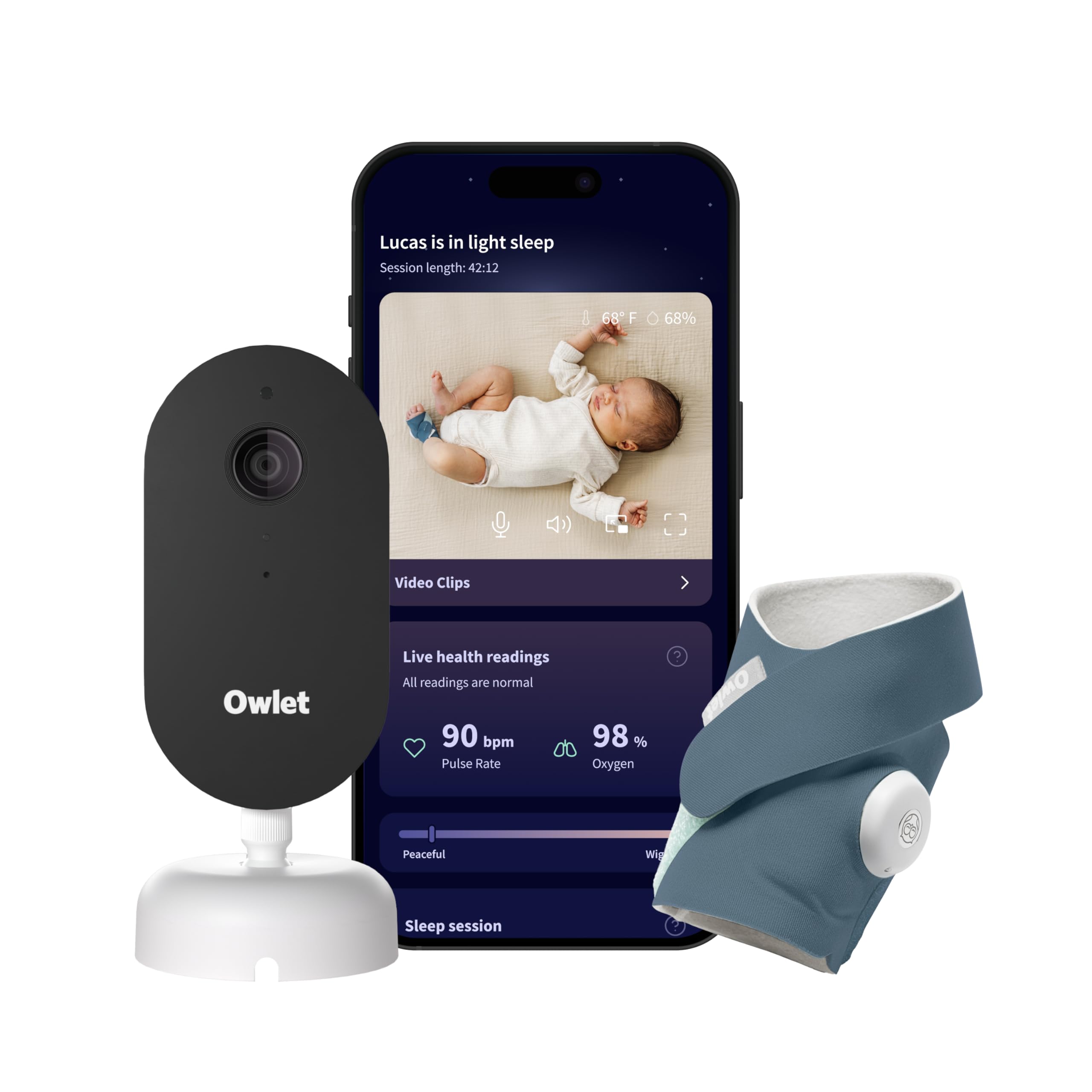
The Owlet Dream Duo is the only system on this list that combines FDA-cleared medical-grade pulse oximetry with a dedicated 2K HD video camera, all integrated into a single app. The Dream Sock uses optical sensors to track pulse rate and oxygen saturation levels in real time, alerting you if readings fall outside preset zones. This is the device for parents who want clinical data, not just movement confirmation — particularly valuable for NICU graduates or babies with known respiratory concerns.
The Dream Sight camera adds a 130-degree wide-angle lens and 4x digital zoom, delivering sharper detail than standard 1080p monitors. The system also tracks room temperature and humidity, and you can customize notifications for sound, movement, and crying. The sock fits babies from 6 to 30 pounds and comes with four fabric sizes, so it grows with your child up to 18 months.
The one caveat is the Bluetooth range — the base station must stay within about 6 feet of the sock, and the base alarm is in the nursery rather than on your nightstand. Advanced features like trend reports require a subscription after the free trial. But for families prioritizing oxygen and heart rate visibility, nothing else on the market matches the Owlet’s clinical pedigree.
Why it’s great
- FDA-cleared SpO2 and heart rate readings
- 2K HD camera with wide-angle lens
- Predictive Sleep Technology for wake windows
Good to know
- Base station must remain within 6 feet of sock
- Advanced analytics require subscription
- Base alarm is located in the nursery
2. Nanit Smart Baby Monitor System with 8″ Display
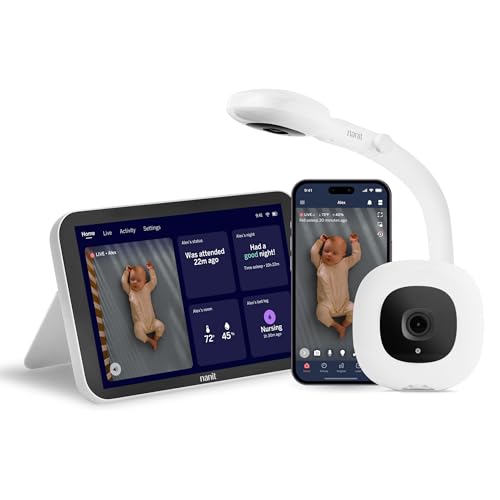
The Nanit system with the 8-inch display is the most complete all-in-one package available. It includes the 1080p overhead camera, a sturdy floor stand, and a dedicated touchscreen parent unit that frees your phone from constant monitoring duty. The camera uses computer vision to track your baby’s breathing rate and sleep patterns through the Nanit Insights subscription — no wearables, no fabric bands, just pixel analysis of chest movement.
The dedicated display has a battery life of 3 to 6 hours and charges in under 2.5 hours, making it portable around the house. You can still access the Nanit app from your phone for remote viewing, and the system works with Alexa and Google Home. Local network viewing keeps the feed active even during an internet outage, which is a critical reliability advantage over cloud-only systems.
The subscription lock for advanced features like breathing tracking and video history is the main friction point — after the free trial, you pay monthly for sleep analytics and auto-captured moments. But the hardware quality, the convenience of a separate screen, and the automatic sleep-logging make this the best choice for parents who want a full ecosystem rather than a point solution.
Why it’s great
- Dedicated 8″ touchscreen display included
- Works during internet outages
- Overhead view with floor stand
Good to know
- Breathing insights require paid subscription
- Display battery lasts 3–6 hours
- Setup requires internet access initially
3. Miku Pro Smart Baby Monitor
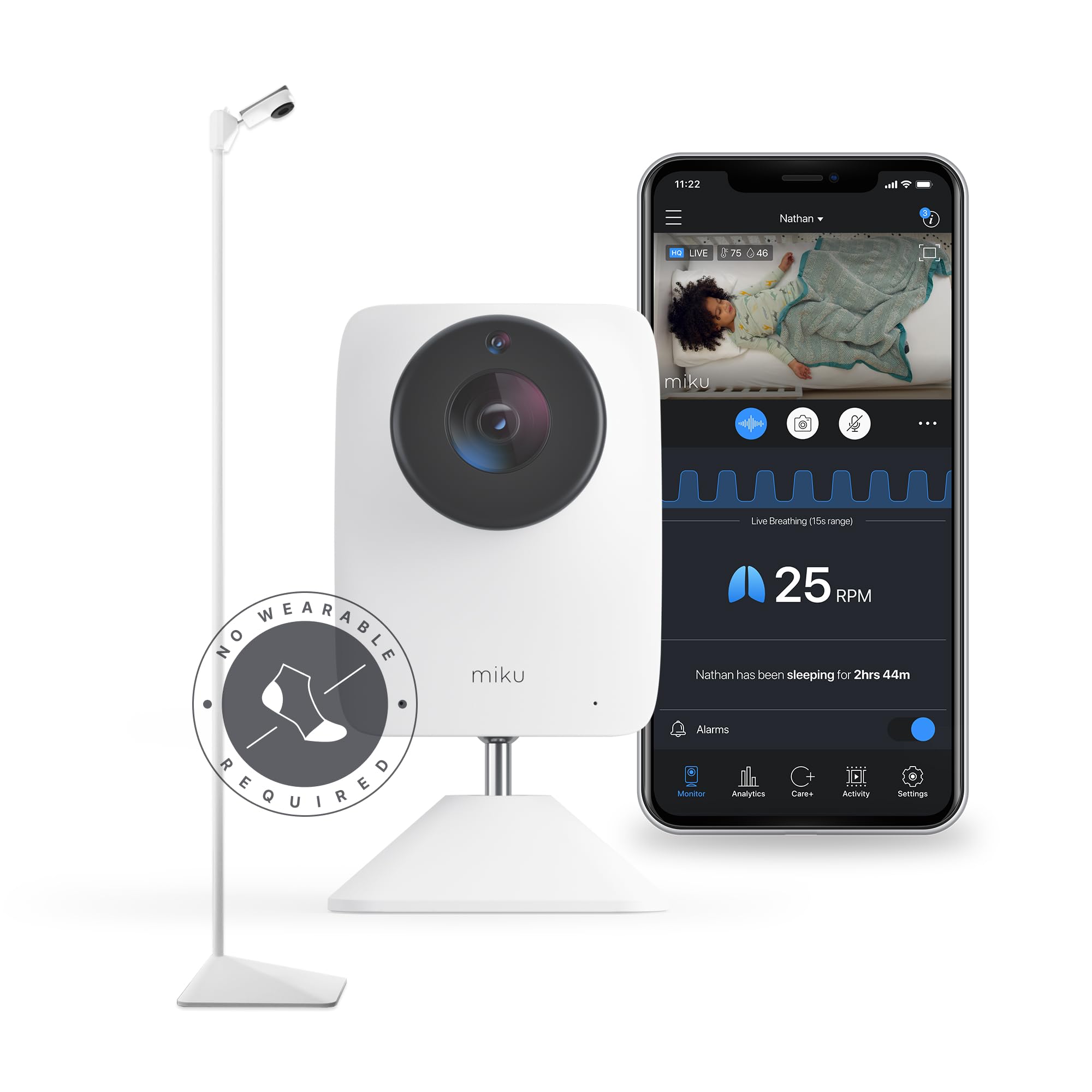
The Miku Pro is the only contact-free monitor on this list that tracks live breathing without relying on pixel-analysis of chest movement. Its proprietary SensorFusion technology works through blankets, stuffed animals, and in any sleep position or lighting condition. This is a meaningful differentiator — most camera-based monitors lose accuracy if the baby is fully covered or sleeps on their stomach, but Miku’s RF-based approach remains consistent as your child grows.
The camera delivers sharp 1080p video with night vision, two-way audio, and built-in lullabies. The setup kit includes a wall mount, floor stand, cable guides, and a level — everything you need for a clean installation. The app provides real-time respirations-per-minute data, sleep scores, and motion recordings, though the deeper analytics require a /month Miku Membership subscription.
Some users report occasional connectivity drops or motion-recording gaps, and the subscription is essentially required to unlock the full value of the device. But for parents who are uncomfortable with wearable sensors or who need a solution that works for multiple children over several years, the Miku Pro is the most advanced contact-free system available.
Why it’s great
- Live breathing tracking without any wearable
- Works through blankets and any position
- Complete installation kit included
Good to know
- Subscription needed for full analytics
- Occasional connectivity issues reported
- Premium price tier
4. Nanit Pro Smart Baby Monitor (Camera & Floor Stand)
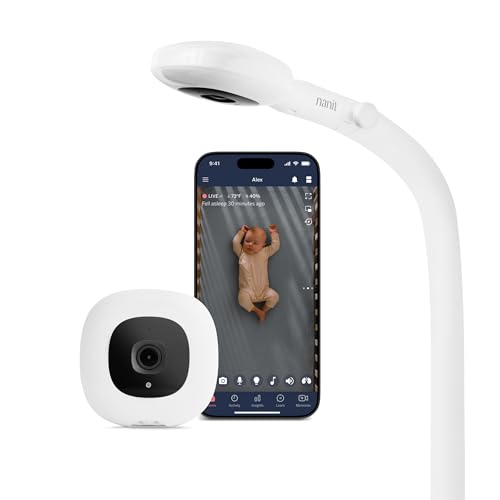
This is the same Nanit camera as the system above but sold as a standalone with the floor stand, designed for parents who prefer to use their phone or tablet as the primary viewing device. The camera mounts overhead to track your baby’s sleep duration, efficiency, positioning, and breathing rate using Nanit’s computer vision algorithms. It automatically captures sleep sessions and can send notifications for motion, sound, and crying.
The app allows multi-caregiver access, so grandparents and nannies can view the feed with customizable permissions. The 1080p video is crisp even in night-vision mode, and the two-way audio lets you soothe your baby remotely. The system also tracks room temperature and humidity, alerting you if conditions leave your preset comfort zones.
The same subscription limitations apply — breathing tracking and sleep analytics require a Nanit Insights plan after the free trial. The camera relies on Wi-Fi, so an internet outage will interrupt remote viewing, though local network streaming still works. For families already comfortable with app-based monitoring, this is the most feature-rich software ecosystem in the category.
Why it’s great
- Overhead crib view with floor stand
- Multi-user access with permissions
- Automatic sleep session capture
Good to know
- Breathing tracking requires subscription
- No dedicated parent unit included
- Wi-Fi dependent for remote viewing
5. Philips Avent Premium Connected Baby Monitor

The Philips Avent uses SenseIQ technology to track breathing and sleep patterns by analyzing millions of pixels per second from the camera feed. It does not require any wearable — the system detects the tiny rise and fall of your baby’s chest through video analysis and displays the breathing rate on the 5-inch HD parent unit or through the companion app. This gives you real-time respiration data without strapping anything to your baby.
The 1080p camera includes a versatile 2-in-1 wall and crib mount, night vision, and up to 1300 feet of open-air range. The parent unit has a stable, interference-free connection via the Secure Connect System, which uses multiple encrypted links. The cry detection feature claims to translate five distinct cries using a scientifically developed algorithm, though real-world accuracy varies.
Users report excellent video quality and reliable breathing tracking when the camera is properly positioned. The main drawbacks are the premium price and the fact that the cry translation feature is often described as inaccurate or gimmicky. The breathing monitoring is also less reliable if your baby sleeps in a moving bassinet like the Snoo. Still, for a camera-based system with a dedicated screen, the SenseIQ breathing tracking is genuinely useful.
Why it’s great
- Contact-free breathing tracking via SenseIQ
- Dedicated 5″ HD parent screen included
- 1300-foot open-air range
Good to know
- Cry translation feature is unreliable
- May struggle with Snoo or moving bassinets
- Premium price tier
6. Sense-U Pro Baby Monitor
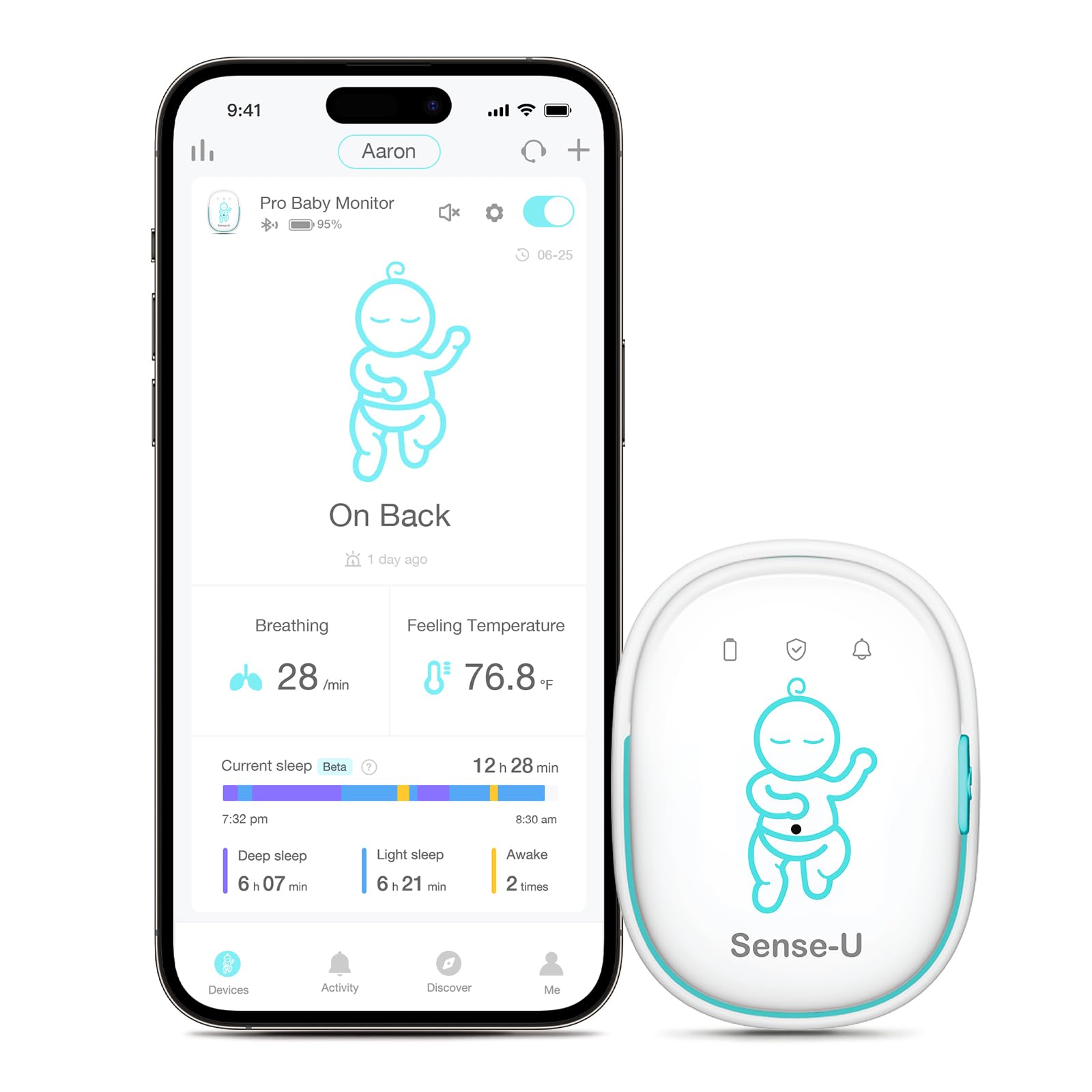
The Sense-U Pro clips directly onto your baby’s diaper and tracks three parameters simultaneously: abdominal breathing movement, rollover events, and overheating. This is the most comprehensive wearable sensor available because it monitors the causes of potential sleep discomfort rather than just the effects. If no abdominal movement is detected for 15 seconds, the device vibrates to try to arouse your baby before escalating to an audible alarm and a smartphone notification.
The battery lasts over 7 days on a single charge, and the clip-on design makes it easy to move between diapers or take on trips. The companion app provides free in-depth sleep analysis, including deep sleep stages, light sleep, and awake time. The device uses Bluetooth Low Energy with a range of about 50 feet in open space, so you need to stay in the same room for optimal connection.
Some parents note that the Bluetooth connection can drop when moving to another floor, and the device does not track heart rate or oxygen saturation — it is purely a movement and temperature monitor. But the triple-sensor approach (breathing + rollover + temperature) is unique in the wearable category and provides more actionable data than a single-function device.
Why it’s great
- Tracks breathing, rollover, and temperature
- Arousal vibration to stimulate baby
- 7+ day battery life
Good to know
- No heart rate or SpO2 data
- Bluetooth range limited to one room
- Must remove for feeding and diaper changes
7. Snuza Hero Baby Movement Monitor

The Snuza Hero is the gold standard for parents who want a simple, portable, no-app-required breathing monitor. It attaches to the front of your baby’s diaper and uses a patented direct-touch sensor to detect abdominal movement. If no movement is detected for 15 seconds, the device vibrates gently to stimulate the baby. If movement is still absent after 5 more seconds, a loud audible alarm sounds. The visual green flash confirms breathing on every breath, and you can enable an optional ticking sound for audible confirmation.
The battery lasts up to 6 months on a single set of replaceable lithium cells, which makes it one of the lowest-maintenance devices on the list. It is completely wireless and comes with a protective carry case, so you can toss it in your diaper bag for travel or naps at Grandma’s house. The device is made from medical-grade plastic and silicone, safe for sensitive skin.
False alarms do happen if the sensor shifts off the diaper or if your baby kicks it loose during a movement spurt. The alarm is not loud enough to wake the baby but will definitely wake a parent in the same room. It does not track heart rate or oxygen, and there is no app integration — this is a purely mechanical, brilliantly simple device that prioritizes reliability over connectivity.
Why it’s great
- 6-month battery life on replaceable cells
- No WiFi, app, or base station needed
- Portable with included carry case
Good to know
- False alarms from sensor displacement
- No heart rate or oxygen data
- Audible alarm may not wake baby
8. HOLFENRY Rechargeable Pulse Oximeter
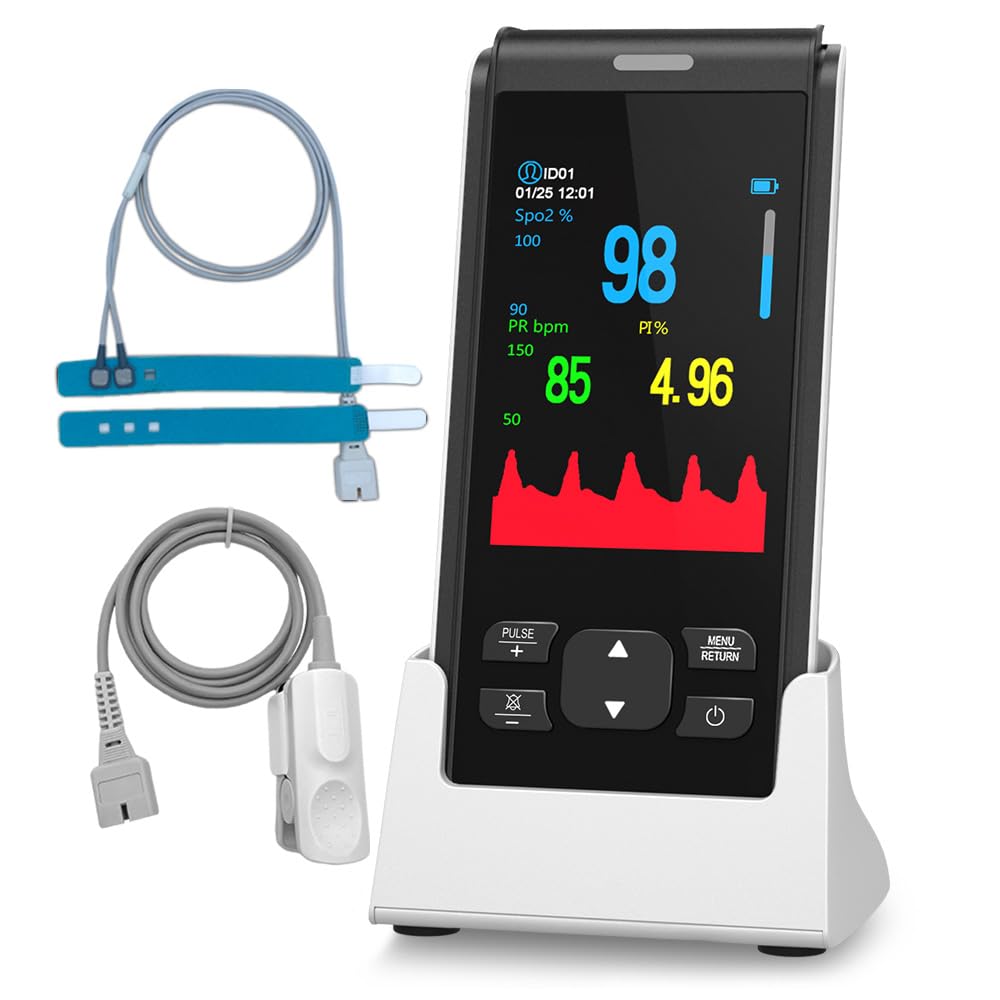
The HOLFENRY pulse oximeter is not a traditional baby monitor — it is a rechargeable fingertip and foot-wearable device that provides spot-check SpO2 and heart rate readings. It comes with two probes: a standard adult fingertip clip and a wrap-style foot probe designed for small infant feet. This makes it a useful supplementary tool for parents who want to periodically verify their baby’s oxygen saturation without committing to a full wearable sock system.
The device supports spot-check and trend-record modes, stores up to 300 data points per user across 10 IDs, and connects to the HealthTree app for data syncing. The SpO2 readings are accurate to 1 percent between 70 and 100 percent saturation, and the heart rate readings are accurate to 1 bpm. The USB-C rechargeable battery provides up to 8 hours of continuous use, or you can use it plugged in for 24-hour operation.
The foot probe can lose connection if the baby kicks, and the device is explicitly labeled for sports and aviation use — not medical purposes. The screen is small and the alarm is more of a finger-off notification than a true vitals alert. But as a budget-friendly way to get concrete SpO2 numbers without a monthly subscription, it fills a specific niche for parents who want objective data on demand.
Why it’s great
- Includes both adult and foot probes
- Stores 300 data points per user
- USB-C rechargeable, 8-hour runtime
Good to know
- Not a medical device
- Foot probe may lose connection
- No continuous overnight monitoring
9. Babysense 7 Movement Monitor
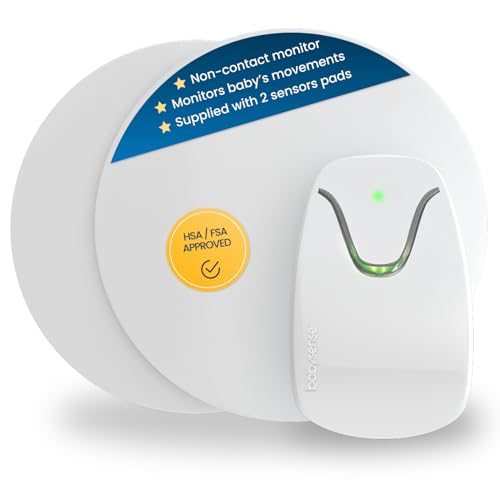
The Babysense 7 is the original non-contact infant movement monitor, using two under-mattress sensor pads to detect breathing movements through the crib mattress. There is nothing attached to your baby — no clip, no sock, no camera — making it the most passive monitoring option available. The sensors are so sensitive they can detect micro-movements as small as 10 per minute, and the system alarms if no movement is detected for 20 seconds.
The dual-sensor design provides full crib coverage, so even a rolling baby stays within the detection zone. The passive sensor system has no direct contact with the infant and no WiFi or app requirement — it is a standalone unit with a parent unit receiver. It is also HSA and FSA approved, making it eligible for flexible spending accounts. Users report that the false alarm rate is low once the sensor pads are properly positioned under the mattress.
The main limitation is that the Babysense does not provide any video, audio, or data logging — it is purely a movement detection and alarm system. You need a separate standard monitor for visuals and sound. The sensor pads require a rigid surface under the mattress, and some cribs may need small wood boards for proper support. But for parents who want the absolute simplest, most hands-off breathing monitor, the Babysense remains a reliable choice.
Why it’s great
- No contact with the baby whatsoever
- HSA/FSA eligible
- Dual pads for full crib coverage
Good to know
- No video or audio monitoring
- May require support boards under mattress
- No data logging or app integration
FAQ
Can a breathing monitor prevent SIDS?
How do contact-free cameras track breathing without a wearable?
Is the Owlet Dream Sock medical grade?
How long do batteries last on wearable sensors?
Final Thoughts: The Verdict
For most users, the best baby monitor for real-time vitals tracking winner is the Owlet Dream Duo (Gen 3) because it is the only system delivering FDA-cleared pulse oximetry alongside a high-quality 2K video camera in one unified app. If you want a dedicated parent screen with contact-free breathing tracking, grab the Nanit system with the 8-inch display. And for pure portable simplicity with zero app complexity, nothing beats the Snuza Hero.

Mo Maruf
I created WellFizz to bridge the gap between vague wellness advice and actionable solutions. My mission is simple: to decode the research and give you practical tools you can actually use.
Beyond the data, I am a passionate traveler. I believe that stepping away from the screen to explore new environments is essential for mental clarity and physical vitality.