Our readers keep the lights on and my smoothie glass nicely filled. As an Amazon Associate, I earn from qualifying purchases.
That first wobbly step is a milestone no parent forgets — followed immediately by the heart-stopping lurch as your baby tips forward. A quality baby helmet is the difference between a gentle bump and a trip to the ER, but the market is flooded with designs that prioritize cute prints over real protection. You need a model that absorbs impact, breathes well, and stays put through every crawl and tumble.
I’m Mohammad Maruf — the founder and writer behind WellFizz. After analyzing 50+ baby helmets for foam density, ventilation patterns, and safety certifications, I’ve distilled the specs that actually matter into this guide.
best baby helmet options range from soft cotton protectors for early crawlers to PC-shell models for toddlers on bikes. I break down seven top-rated picks to help you match protection to your child’s stage of development.
How To Choose The Best Baby Helmet
The right baby helmet depends entirely on your child’s current mobility stage. A soft fabric protector works for pre-walkers who mostly topple onto carpet, but a hard-shell EPS helmet is non-negotiable for bike rides or hardwood floors. Here are the three factors that separate safe from risky.
Hard Shell vs. Soft Protector
Hard-shell helmets with a polycarbonate outer layer and EPS foam inner core excel at impact absorption during moderate-speed falls. Soft cotton or EVA foam protectors are lighter and more breathable, but they only cushion gentle tumbles. For a toddler on a balance bike, choose hard shell; for a baby just learning to stand on carpet, soft works.
Fit and Adjustability
A helmet that slips sideways offers zero protection. Look for a rear dial fit system that tightens evenly around the crown, plus adjustable chin straps that form a Y-shape under the ears. The rule: you should not be able to fit more than two fingers between the strap and the chin.
Ventilation and Weight
Babies overheat fast. Helmets with fewer than 6 air vents can trap heat and cause irritation. Soft protectors often have open-top designs for maximum airflow. Weight also matters — models under 100 grams are far more likely to be tolerated by a fussy infant.
Quick Comparison
On smaller screens, swipe sideways to see the full table.
| Model | Category | Best For | Key Spec | Amazon |
|---|---|---|---|---|
| SafeheadBABY Soft Protector | Soft Helmet | Crawling to walking (7–24 months) | 30+ air vents, 100 g | Amazon |
| Mambobaby Fox | Soft Helmet | Active toddlers, thick forehead padding | One-piece molded EVA foam | Amazon |
| Raskullz Lil Buddy | Hard Shell | Bicycle / trike (1–3 years) | PC outer + EPS liner, 11.2 oz | Amazon |
| Bavilk 3D Dinosaur | Hard Shell | Multi-sport / stylish kids | 8 vents, 270 g, 48–54 cm | Amazon |
| HUGGAH Dinosaur | Hard Shell | 1–8 year adjustable fit | 6 vents, 48–54 cm range | Amazon |
| Baby Head Protector (ASIN B0DNGZN8VQ) | Soft Cotton | New crawlers / light bumps | 86 g, cotton shell | Amazon |
| Baby Anti-Collision (ASIN B0DKBMSLHT) | Soft Helmet | 10–24 month walkers | 360° coverage, under 100 g | Amazon |
In‑Depth Reviews
1. SafeheadBABY Soft Baby Head Protector
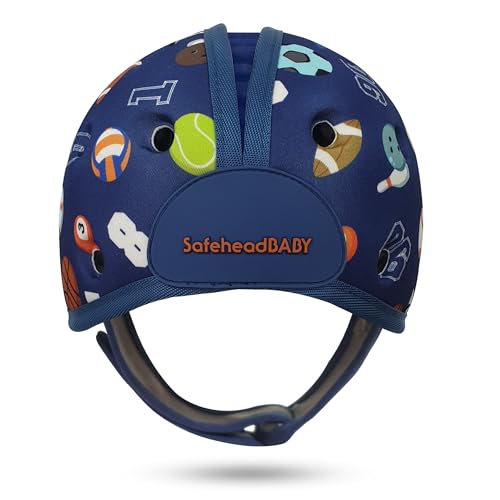
The SafeheadBABY is the gold standard for the crawling-to-walking phase. Its patented cushioning system gently supports the fontanelles and the back of the head — exactly where wobbling babies hit first. At under 100 grams and with more than 30 air vents, it’s breathable enough for summer play and light enough that most babies forget they’re wearing it.
The expandable fit adjusts from 40 to 52 cm, covering roughly 7 to 24 months. The cotton lining is machine-washable, a lifesaver for drooly babies. Real parents report that their infants accepted it within days, often treating it as a “freedom helmet” that signals playtime.
One experienced buyer noted the inner padding could be slightly thicker for higher-impact falls, but for its intended purpose — cushioning bumps on hard floors — the absorption is excellent. It also earned an award for infant safety design, which reinforces its place at the top.
Why it’s great
- Award-winning patented padding protects fontanelles
- Ultra-lightweight at under 100 grams
- Machine-washable and fully breathable
Good to know
- Slightly thick padding reduces impact absorption on very hard surfaces
- Velcro chin strap can wear out with daily use
2. Mambobaby Baby Head Protector (Fox)
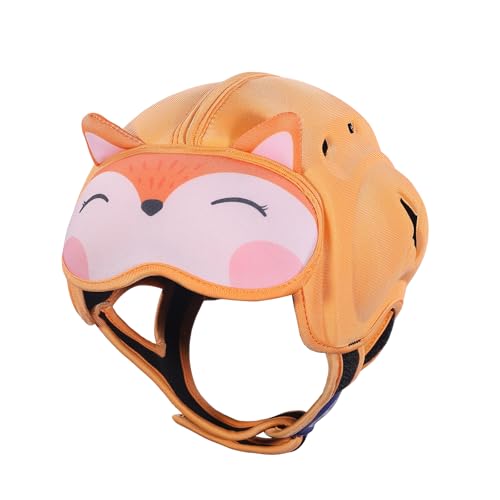
Mambobaby’s fox helmet uses a one-piece molded EVA foam construction that eliminates weak joint lines found in cheaper spliced designs. The standout feature is the thickened forehead pad — deeper and wider than typical soft helmets — which absorbs the frontal impact common when babies lunge forward while walking.
The Y-shaped strap system distributes pressure across three anchor points, keeping the helmet centered even during energetic play. It fits heads from 40 to 54 cm, and reinforced nylon Velcro holds firm through repeated adjustment. Parents on hardwood floors reported zero head injuries after six months of daily use.
A couple of buyers noted that back-of-head protection is thinner than the front, which matters if your child tends to fall backward. The chin strap also can’t tighten as much as some would like, causing the helmet to drift sideways on very active toddlers. For front-heavy fallers, this is still a top pick.
Why it’s great
- One-piece molded design prevents weak seams
- Thick forehead pad for frontal impact absorption
- Ultra-lightweight under 100 grams
Good to know
- Minimal padding at the back of the head
- Velcro strap may not tighten enough for small heads
3. Raskullz Lil Buddy Infant Helmet

For parents who need a certified hard-shell helmet for a toddler riding in a bike seat or trike, the Raskullz Lil Buddy is the most trusted pick in this roundup. It uses a polycarbonate outer shell bonded to speckled EPS foam with inner air channels — the same construction used in adult safety gear. The flat back design allows comfortable seating in a child carrier without forcing the head forward.
The dial fit system at the rear makes micro-adjustments easy, and the straps are fully adjustable. It weighs 11.2 ounces, heavier than soft protectors but very light for a hard-shell. Parents consistently praise the fit for 18-month to 3-year-old heads. The Lil Melon Speckle design is gender-neutral and appealing to toddlers.
A minor downside: the padding inside is not removable, so cleaning requires spot-wiping. Also, the 48–52 cm range maxes out earlier than some growing toddlers need. For its price point, the build quality and safety certification are exceptional.
Why it’s great
- PC shell + EPS core for certified impact protection
- Dial fit system allows precise adjustment
- Flat back designed for child carriers
Good to know
- Non-removable padding complicates cleaning
- Upper size limit may be tight for older toddlers
4. Bavilk 3D Dinosaur Bike Helmet
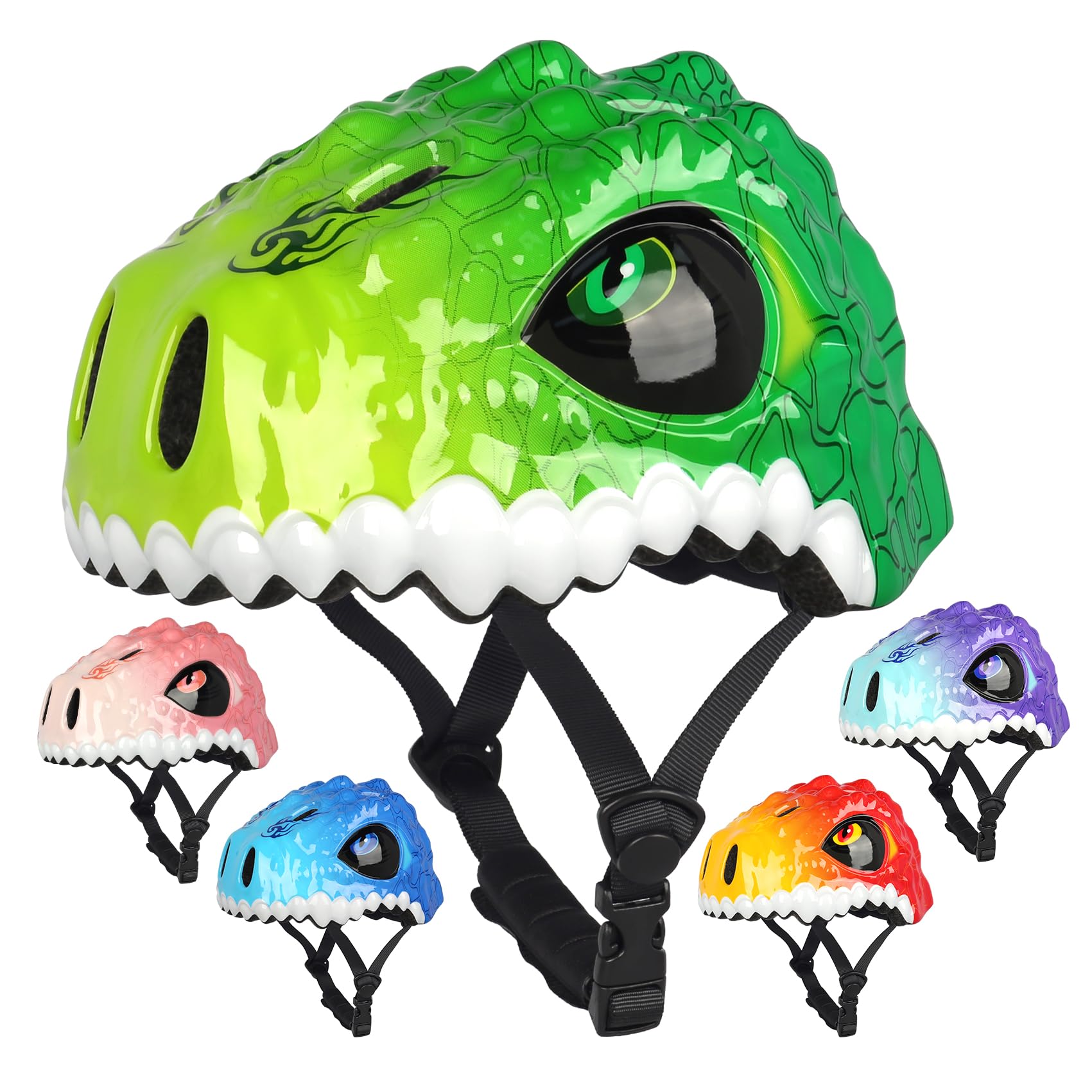
The Bavilk 3D Dinosaur helmet proves that safety and style can coexist. The surface smooth PC shell and shock-absorbing EPS inner core use In-Mold unibody technology, meaning the outer shell and foam are fused together for superior structural integrity. The 3D dinosaur design is so engaging that parents report toddlers who previously refused to wear a helmet now put it on willingly.
It weighs 270 grams — heavier than soft protectors but average for a hard-shell. The 8 air vents provide adequate airflow for warm-weather rides. Adjustment comes from a rear dial and a 360-degree removable padding system that can accommodate head sizes 48–54 cm. It complies with CPSC and ASTM 1447 standards for ages 1 and up.
A few parents noted that the colorful pattern is painted on, not molded, so heavy scratching can expose the white shell underneath. Also, the 270-gram weight may feel noticeable for very young toddlers on extended walks. Still, the motivational design alone reduces the biggest barrier: getting a child to actually wear the helmet.
Why it’s great
- In-Mold unibody construction for durability
- Engaging 3D dinosaur design encourages wearing
- CPSC and ASTM certified for multiple sports
Good to know
- Painted graphics can scratch off over time
- 270 g is on the heavier side for infants
5. HUGGAH Dinosaur Bike Helmet
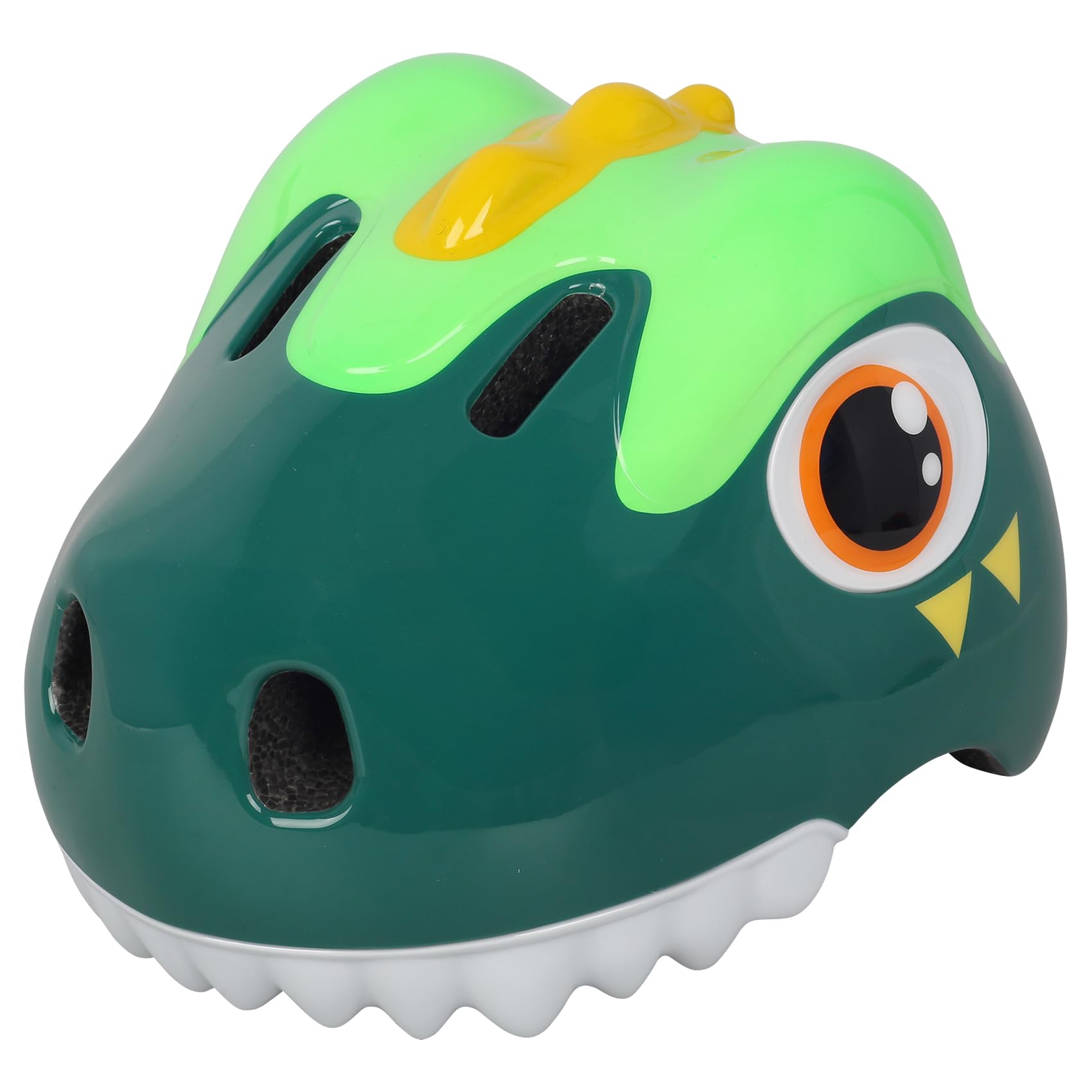
HUGGAH offers a solid entry-level hard-shell with a focus on value. It uses a high-strength PC shell and EPS inner foam, and is available in two size ranges: XS (48–52 cm) for infants and S (50–54 cm) for older kids. The rear knob adjusts circumference easily, and the chin straps can be tailored to the child’s face shape.
The dinosaur design is molded into the shell rather than painted, so it won’t flake off with rough use. Parents of active 3-year-olds report the helmet fits well even on larger head sizes.
Some buyers found the XS size runs big — a 2-year-old with a smaller head may need the included extra padding to achieve a snug fit. The open-face design provides less coverage around the temples than some competitors. For the price, it’s a capable multi-sport helmet that checks the essential safety boxes.
Why it’s great
- Two size options for better fit
- Molded design won’t scratch off
- CPSC certified for ages 1+
Good to know
- XS size tends to run slightly large
- Open-face design offers less temple coverage
6. Baby Head Protector Cotton (B0DNGZN8VQ)

This cotton baby helmet is the lightest option in the lineup at just 86 grams, making it virtually unnoticeable for newborns and early crawlers. The open-top structure promotes excellent airflow, and the polyester mesh lining wicks moisture to keep the head dry. It adjusts from 47 to 63 cm via a nylon strap, covering a wider range than most soft protectors.
The Y-shaped chin strap is designed to minimize irritation on delicate skin. Parents of 5-month-old crawlers report that the helmet softens falls dramatically and that babies don’t mind wearing it. The cotton outer is machine-washable and holds up well to daily drool and dirt.
Several buyers caution that the foam padding is very soft — it cushions light bumps but offers minimal protection against harder falls from standing height. One reviewer returned it for this reason. Use it for carpeted play areas and supervised crawling, not for hardwood floors or early walking.
Why it’s great
- Extremely lightweight at 86 grams
- Cotton outer is soft and breathable
- Wide adjustment range up to 63 cm
Good to know
- Foam is too soft for serious falls
- Chin strap can get soaked with drool
7. Baby Anti-Collision Protector (B0DKBMSLHT)
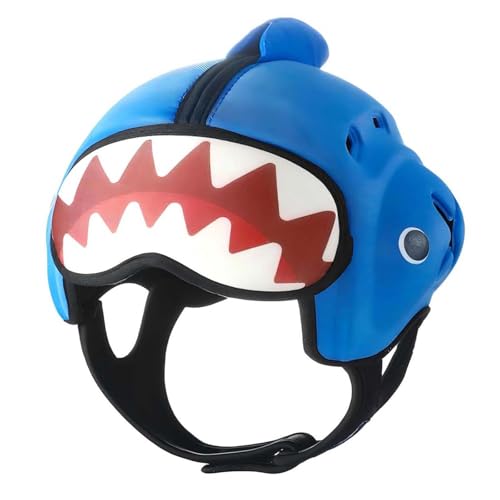
This soft protector is designed specifically for babies aged 10 to 24 months who are learning to stand and walk. The 360-degree coverage shields the forehead, sides, top, and back of the head while exposing the ears for comfort. It fits head circumferences from 40 to 52 cm and weighs under 100 grams.
The arc-shaped design conforms closely to the head’s natural curve, and the multiple ventilation holes keep air moving. An adjustable Velcro chin strap makes it easy to put on and take off, and the entire unit is machine-washable. Several parents noted that their children suffered no head bumps after weeks of daily use — a testament to the coverage.
The Velcro strap can lose its grip after a few months of frequent use, causing the protector to shift. And because it’s a soft foam design, it won’t prevent injury from higher falls off furniture or stairs. For its intended purpose — cushioning tumbles during early walking — it works reliably.
Why it’s great
- Full 360° head coverage including eyebrow area
- Arc design fits head curve comfortably
- CPSIA certified for safety
Good to know
- Velcro chin strap wears out over time
- Not intended for falls from elevated surfaces
FAQ
At what age should my baby start wearing a helmet?
Can a baby wear a soft helmet on a bike?
How do I clean a baby helmet after drool and sweat?
Final Thoughts: The Verdict
For most families, the best baby helmet winner is the SafeheadBABY Soft Protector because it combines award-winning cushioning, ultra-light weight, and exceptional breathability for the critical crawling-to-walking phase. If you need a certified hard-shell for bike rides, the Raskullz Lil Buddy is the safest choice. And for toddlers who fall forward constantly, the Mambobaby Fox with its thickened forehead pad offers unmatched frontal protection.

Mo Maruf
I created WellFizz to bridge the gap between vague wellness advice and actionable solutions. My mission is simple: to decode the research and give you practical tools you can actually use.
Beyond the data, I am a passionate traveler. I believe that stepping away from the screen to explore new environments is essential for mental clarity and physical vitality.