Our readers keep the lights on and my smoothie glass nicely filled. As an Amazon Associate, I earn from qualifying purchases.
Choosing an organic baby formula means navigating a shelf full of claims about A2 milk, HMOs, and “closer to breast milk” promises — but the real test is how your baby’s digestive system reacts after the first bottle. The wrong choice can mean hours of fussiness, gas, and sleepless nights, while the right one supports steady growth and a calm, contented baby.
I’m Mohammad Maruf — the founder and writer behind WellFizz. I’ve spent hundreds of hours cross-referencing ingredient lists, USDA certification records, customer feedback on digestibility, and the specific protein structures (A1 vs. A2 beta-casein) that set these formulas apart, so you don’t have to guess.
This guide breaks down seven leading contenders by their real-world tolerability, nutrient profiles, and certified organic status to help you find the best baby formula organic for your infant’s specific needs.
How To Choose The Best Baby Formula Organic
Selecting an organic infant formula is a decision that weighs ingredient purity, protein structure, and digestive compatibility. The following criteria will help you evaluate each option based on what matters most for your baby’s development and comfort.
Protein Type — A2 vs. Standard A1 Beta-Casein
The type of milk protein used is the single biggest factor in how well a baby digests formula. Standard milk (A1 beta-casein) releases a peptide called BCM-7, which can cause inflammation and slow digestion in some infants. A2 milk, sourced from cows that produce only A2 beta-casein, mimics the protein structure found in breast milk and human milk, making it naturally easier on the stomach. If your baby shows signs of gas, reflux, or general fussiness after feeding, an A2-based organic formula is often the first switch to try before moving to specialty hypoallergenic options.
Human Milk Oligosaccharides (HMOs) for Immune Support
HMOs are prebiotic compounds naturally abundant in breast milk that feed beneficial gut bacteria and support developing immune systems. In organic infant formula, the presence of 2’-FL and LNnT (dual HMOs) indicates a closer approximation to breast milk’s prebiotic profile. Formulas with multi-HMO blends have been shown clinically to help infants achieve softer, more regular stools and a gut microbiome composition that more closely resembles breastfed infants. This is a distinct advantage over formulas that rely on standard prebiotic fibers like GOS or FOS.
Complete Nutrition — DHA, Lutein, and Iron Levels
Brain and eye development depend on specific nutrients that must be included in the formula. Look for DHA at levels found in breast milk (around 0.3% of total fatty acids) alongside lutein and vitamin E. These three work synergistically to support neural and visual development during the first year. Iron is also critical — organic formulas for full-term infants should provide 1.0 to 1.8 mg of iron per 100 calories to prevent iron deficiency anemia. Avoid formulas that depend on corn syrup solids or maltodextrin as primary carbohydrate sources; 100% lactose is the gold standard because it reflects the carbohydrate composition of breast milk and supports better calcium absorption.
Quick Comparison
On smaller screens, swipe sideways to see the full table.
| Model | Category | Best For | Key Spec | Amazon |
|---|---|---|---|---|
| Happy Baby Organics Stage 1 (Probiotic & Prebiotic) | Premium Organic | Gut health & immune support | Patented probiotic & prebiotic blend | Amazon |
| Happy Baby Organics Stage 1 A2 | Premium A2 | Sensitive tummies & reflux | A2 milk + probiotics & prebiotics | Amazon |
| Bobbie Organic Gentle | Mid-Range Gentle | Fussiness & gas reduction | Partially hydrolyzed whey protein | Amazon |
| Baby’s Only A2 Organic | Mid-Range A2 | Transitioning from breast milk | A2 beta-casein protein only | Amazon |
| Similac Organic | Mid-Range Organics | Budget-friendly organic | DHA, lutein & vitamin E blend | Amazon |
| Mama Bear Advantage Premium | Budget-Friendly HMO | Value with dual HMOs | Dual HMOs (2’-FL & LNnT) | Amazon |
| Mama Bear Sensitivity Premium | Budget-Friendly Sensitivity | Lactose sensitivity on a budget | 99% less lactose + dual HMOs | Amazon |
In‑Depth Reviews
1. Happy Baby Organics Stage 1 Infant Formula (22.9 oz)

Happy Baby Organics stands alone in this lineup as the only USDA organic formula that combines a patented probiotic blend (B. lactis) with prebiotics at levels clinically shown to support softer, more regular stools — a direct benefit for infants transitioning from breast milk. The DHA content here meets European requirements, which are higher than the minimum set by U.S. standards, making it a frontrunner for brain and eye development support during the first year.
Parents who transitioned from breast milk or other brands consistently report zero gas, no constipation, and a smooth dietary switch even for babies with sensitive tummies. The formula mixes easily with no clumping and has a noticeably more pleasant smell than most competitors — a small but real convenience during middle-of-the-night feeds. The subscription option on Amazon brings the per-unit cost down meaningfully, making this premium-tier formula more accessible over time.
The 22.9-ounce can size is competitive for the price, though it sells out frequently on Amazon, so the subscription model also solves the availability problem. One minor point: the scoop is standard size but can be slightly tricky to level perfectly in a narrow-neck bottle. Overall, this is the most complete organic formula for parents who want probiotic and prebiotic support without adding separate supplements.
Why it’s great
- Clinically tested probiotic + prebiotic blend for gut health
- European-grade DHA levels for brain/eye development
- USDA & EU certified organic — dual standard compliance
- Mixes easily and has a mild, pleasant smell
Good to know
- Can be out of stock on Amazon; subscription recommended
- No A2 milk protein variant available in this specific SKU
2. Bobbie Organic Gentle Infant Formula (14.1 oz)

Bobbie’s Gentle formula is built around partially hydrolyzed whey protein — the milk proteins are broken down into smaller fragments that are easier for an immature digestive system to handle. This is the same approach used in many hypoallergenic formulas, but Bobbie achieves it without resorting to corn syrup or maltodextrin, keeping 100% lactose as the sole carbohydrate source, which matches breast milk’s sugar composition exactly.
Lactation consultants frequently recommend Bobbie for triple-feeding protocols (breast, pump, bottle) because its taste profile is reportedly closer to breast milk than most competitors. Parents in this review noted that their babies accepted it immediately, with reduced fussing, productive burping, and regular stool patterns. The formula is Clean Label Project Certified and USDA + EU organic, adding third-party validation beyond standard FDA compliance.
The 14.1-ounce container is on the smaller side, which means more frequent repurchasing for exclusively formula-fed babies. Some users also noted that the ingredient panel is virtually identical to Bobbie’s standard organic formula, making the “gentle” branding feel like a marketing distinction rather than a fundamentally different recipe. Nonetheless, for babies who struggle with standard intact proteins but don’t need a fully hypoallergenic formula, this is an excellent middle ground.
Why it’s great
- Partially hydrolyzed whey for easy digestion
- 100% lactose — no corn syrup or maltodextrin
- Clean Label Project Certified
- Frequently recommended by lactation consultants
Good to know
- Smaller 14.1 oz can size requires frequent reordering
- Gentle formula may be redundant vs. standard Bobbie Organic
3. Baby’s Only A2 Organic Milk Infant Formula (21 oz)

Baby’s Only takes a clean, minimalist approach by focusing entirely on A2 beta-casein protein sourced from cows that naturally produce only A2 milk — no A1 protein at all. This matters because A1 beta-casein has been linked to digestive inflammation in some infants, while A2 is the same protein structure found in human breast milk. The proprietary fat blend here uses organic oils (including coconut and sunflower) without palm oil, which many parents prefer due to concerns about palm olein’s impact on calcium absorption.
Customer feedback consistently highlights zero gas issues, normal bowel movements, and excellent growth metrics even for babies who started at low birth weight. Several parents used this formula as the transition tool from breast to bottle and reported their babies accepted it without resistance. The manufacturing takes place in Ohio in small batches with rigorous testing, which adds a layer of safety assurance that larger facilities sometimes lack.
The 21-ounce can is decently sized, though availability can be inconsistent on Amazon — some users reported needing to order from Kroger or Target when stock runs dry. The formula does not include added probiotics or prebiotics, so parents focused on gut microbiome support may need to add a separate probiotic (as noted by several reviewers). For a straightforward, A2-only organic formula made domestically with careful batch control, this remains a strong choice.
Why it’s great
- 100% A2 beta-casein — no A1 protein
- Palm oil-free proprietary fat blend
- Made in small batches in Ohio with rigorous testing
- Excellent for transition from breast milk
Good to know
- No prebiotics or probiotics included
- Stock availability on Amazon can be spotty
4. Happy Baby Organics Stage 1 A2 Infant Formula (22.9 oz)

This is essentially the same core formula as the standard Happy Baby Organics (with the patented probiotic/prebiotic blend and European DHA levels) but built on A2 milk protein instead of conventional A1 milk. The A2 variant is specifically targeted at infants who experience reflux, gas, or general digestive discomfort with standard formulas. Parents in the reviews reported dramatic reductions in spit-up volume and frequency within days of switching, even for babies who had failed hypoallergenic formulas.
The dual-certification (USDA and EU organic) is a meaningful differentiator — EU organic standards are generally stricter regarding pesticide residues and allowable additives. The probiotic blend (B. lactis) is clinically studied for immune support and softer stools, which complements the A2 protein’s gentle digestion profile. Babies with eczema saw skin clearing after switching, suggesting that the A2 protein may reduce inflammatory triggers that contribute to skin conditions in sensitive infants.
Availability is the primary headache here — Amazon has delisted this SKU occasionally, forcing parents to source it from Kroger or Target with longer delivery windows. The subscription option on Amazon, when available, is the best hedge against running out. The 22.9-ounce size is competitive, but the price per ounce is the highest in this lineup. For babies with moderate reflux or digestive sensitivity who also need probiotic support, this is the top-tier solution, but be prepared for supply chain variability.
Why it’s great
- A2 milk protein reduces reflux and spit-up
- Patented probiotic + prebiotic blend
- USDA & EU certified organic — strictest standards
- Parents report eczema improvement in sensitive babies
Good to know
- Inconsistent Amazon availability; may require alternative retailers
- Highest price per ounce among these options
5. Similac Organic Infant Formula (20.6 oz)
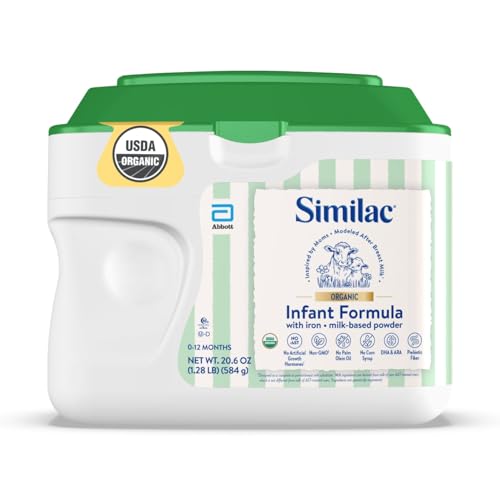
Similac Organic is the most recognizable name on this list, and it earns its place by offering USDA-certified organic complete nutrition at a cost that undercuts most boutique competitors by a noticeable margin. The formula is free from artificial growth hormones, palm olein oil, and corn syrup — three ingredients that some parents actively avoid for concerns related to bone mineral density (palm olein) and blood sugar spikes (corn syrup). The DHA, lutein, and vitamin E blend mirrors the nutrient triad found in breast milk for brain and eye development.
Customer feedback on this formula is overwhelmingly positive for babies who tolerate standard milk protein well. Parents describe easy transitions from breast milk or other Similac lines, with no increase in gas or spit-up. The availability of this formula in ready-to-feed liquid is a unique advantage for late-night feeds or travel — none of the other organic options here offer that format. Similac is also the #1 brand fed in U.S. hospitals, which gives many parents a confidence baseline.
The 20.6-ounce tub is standard-sized, but the formula uses a standard A1 milk protein base, not A2. For babies with mild digestive sensitivities, this can still cause gas or discomfort. The scoop design is functional but not particularly innovative. If your baby handles A1 protein without issue, this is the most cost-effective way to get USDA organic formula from a brand with decades of clinical research backing it. If your baby shows any signs of intolerance, the A2-based options above may be worth the premium.
Why it’s great
- USDA certified organic with no palm olein oil
- DHA, lutein, and vitamin E for brain development
- Available in ready-to-feed liquid format
- #1 brand fed in U.S. hospitals
Good to know
- Standard A1 milk protein — not ideal for sensitive tummies
- No probiotics or prebiotics in the powdered version
6. Mama Bear Advantage Premium Infant Formula (34 oz)
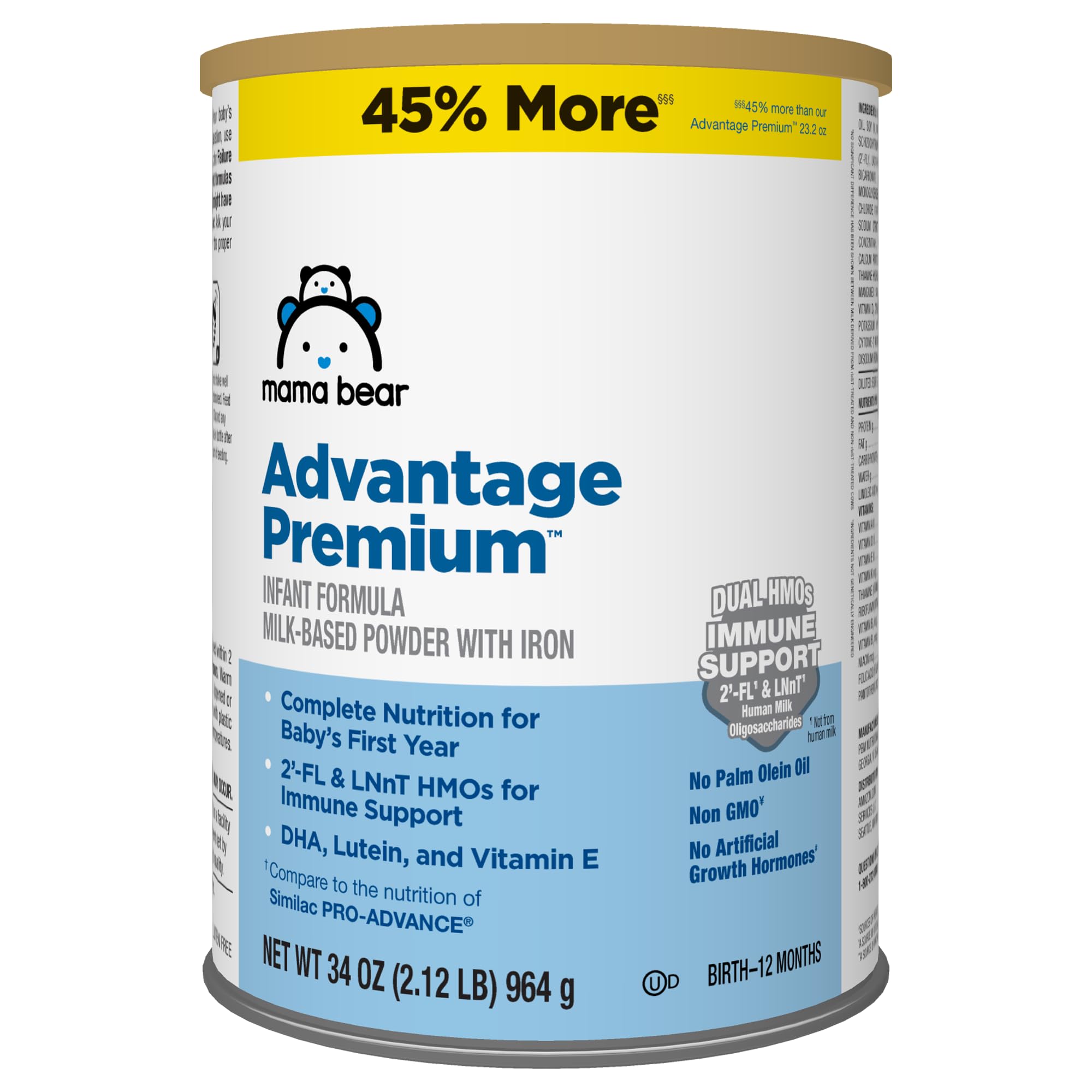
Mama Bear Advantage Premium is Amazon’s answer to the high cost of organic formula — it delivers dual HMOs (2’-FL and LNnT) for immune support, non-GMO ingredients, and complete nutrition for the first year at a price that undercuts Similac and Enfamil equivalents by a wide margin. The formula is designed to match the nutrition of Similac Pro-Advance, but with a cleaner label that excludes artificial growth hormones and palm olein oil. For parents who want HMO prebiotics without paying boutique prices, this is the most direct value proposition on the list.
Parents in the reviews consistently describe seamless transitions from name-brand formulas like Similac, with zero digestive issues and babies who accept the taste without complaint. Several reviewers noted that using a kitchen scale for precise measurement and batch mixing with a pitcher made feeding even more convenient. The 34-ounce can is the largest container here, meaning fewer restocking trips — a meaningful advantage for households going through multiple tubs per month.
The formula uses standard A1 milk protein, so it may not suit babies with strong milk protein sensitivity. The powder has been known to clump slightly if added to cold water, so following the recommended water temperature (around 160-170°F) is important for smooth mixing. For families on a tight budget who still want dual HMO immune support and non-GMO ingredients, this is the most strategic pick — especially since it is SNAP eligible.
Why it’s great
- Dual HMOs (2’-FL & LNnT) for immune support
- 34-ounce large container reduces repurchase frequency
- Non-GMO with no artificial growth hormones
- SNAP eligible and budget-friendly
Good to know
- Standard A1 milk protein — not for lactose or protein sensitivity
- May clump if mixed with water that is not hot enough
7. Mama Bear Sensitivity Premium Infant Formula (33.2 oz)
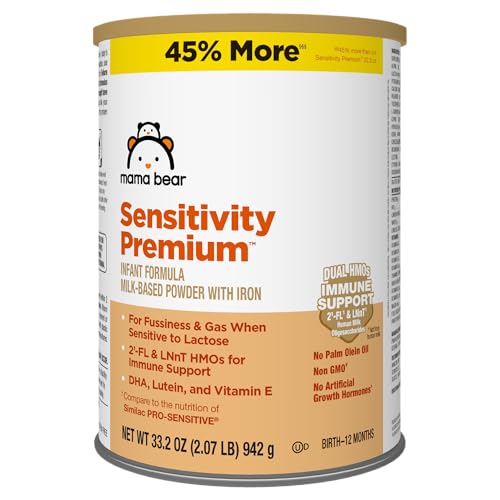
Mama Bear Sensitivity is the budget-friendly answer for babies who show signs of lactose sensitivity — gas, fussiness, and loose stools after feeding. It reduces lactose content by 99% compared to standard milk-based formula while retaining the dual HMO blend (2’-FL and LNnT) for immune and digestive support. The formula is designed to match Similac Pro-Sensitive nutritionally, but at a significantly lower per-ounce cost. It is non-GMO, free from artificial growth hormones, and does not use palm olein oil.
Parents who transitioned their babies from breast milk to this formula reported smooth acceptance and noticeable reductions in gas compared to standard formulas. Reviewers with babies diagnosed with milk protein allergy (but not requiring fully hypoallergenic formula) found this to be a cost-effective alternative to specialty brands. The 33.2-ounce container is the largest in the sensitivity category, reducing the frequency of reordering — helpful for households managing a fussy infant on a budget.
The formula is still milk-based (just with reduced lactose), so it is not suitable for babies with confirmed cow’s milk protein allergy — those infants need a hypoallergenic or amino acid-based formula. A handful of users reported that their babies developed unusual breath odor after prolonged use, though this appears to be an anecdotal rather than widespread issue. For lactose-sensitive babies without a protein allergy, this offers the best price-to-performance ratio in the sensitivity segment while still delivering HMO prebiotics.
Why it’s great
- 99% reduced lactose for sensitive tummies
- Dual HMOs for immune support
- Large 33.2 oz container — good value per serving
- SNAP eligible and budget-priced
Good to know
- Not suitable for cow’s milk protein allergy
- Some reports of unusual baby breath after use
FAQ
Is A2 organic formula worth the higher price compared to standard organic formula?
Can I use organic formula with dual HMOs for a baby with lactose sensitivity?
How do I know if my baby needs a partially hydrolyzed formula versus an A2 formula?
Final Thoughts: The Verdict
For most users, the best baby formula organic winner is the Happy Baby Organics Stage 1 because it combines a patented probiotic/prebiotic blend with European-grade DHA levels and dual USDA+EU organic certification — the most complete nutritional profile among these options. If you want an A2 protein base for gentle digestion with probiotic support, grab the Happy Baby Organics Stage 1 A2. And for the best value in organic formula with dual HMO immune support, nothing beats the Mama Bear Advantage Premium.

Mo Maruf
I created WellFizz to bridge the gap between vague wellness advice and actionable solutions. My mission is simple: to decode the research and give you practical tools you can actually use.
Beyond the data, I am a passionate traveler. I believe that stepping away from the screen to explore new environments is essential for mental clarity and physical vitality.