Our readers keep the lights on and my smoothie glass nicely filled. As an Amazon Associate, I earn from qualifying purchases.
Few sounds are as stressful as a baby’s cry tied to a gurgling, tight belly. Finding the right formula means decoding which protein type and carbohydrate source will actually tame the gas, not fuel it.
I’m Mohammad Maruf — the founder and writer behind WellFizz. I’ve spent hundreds of hours analyzing infant nutrition research, ingredient safety profiles, and real-world parent feedback to separate marketing claims from measurable digestive relief.
Whether your baby deals with colic, a milk protein allergy, or general fussiness after feeds, this guide narrows down the best baby formula for gas based on protein structure, lactose content, and clinical evidence of tolerability.
How To Choose The Best Baby Formula For Gas
Gas in formula-fed babies usually stems from either a protein sensitivity or carbohydrate malabsorption. Identifying the specific culprit is the fastest path to relief. Here is how to approach the decision.
Protein Structure: The Core of Digestibility
Standard formulas use milk with A1 beta-casein, which produces a peptide called BCM-7 that can trigger gut inflammation and gas in sensitive infants. A2 protein formulas use milk from cows that produce only A2 beta-casein, avoiding that peptide entirely. For babies with a suspected cow’s milk protein allergy (CMPA), extensively hydrolyzed formulas break whey protein into fragments small enough that most allergic infants tolerate them without gas, reflux, or eczema.
Carbohydrate Source: Lactose vs. Alternatives
Breast milk is 100% lactose, making it the ideal carbohydrate for most full-term babies. However, some infants — especially those recovering from a gut infection or born premature — have temporary lactase deficiency. For these cases, gentle formulas often partially replace lactose with corn syrup solids or maltodextrin. The trade-off: a baby with a normal lactase level may actually develop more gas from a low-lactose formula because the alternative carbohydrates ferment differently. Matching the carb source to the baby’s actual tolerance level is critical.
Hypoallergenic vs. Gentle: Know the Label
“Gentle” or “Gentlease” formulas are partially hydrolyzed — they break some of the proteins into smaller pieces but still contain intact proteins that can trigger a true CMPA reaction. Hypoallergenic formulas (either extensively hydrolyzed or amino-acid based) are broken down so completely that they are legally required to be tolerated by 90% of infants with confirmed CMPA. If your baby has visible blood in stool, severe eczema, or projectile vomiting, skip gentle formulas entirely and move straight to a hypoallergenic option under pediatric supervision.
Quick Comparison
On smaller screens, swipe sideways to see the full table.
| Model | Category | Best For | Key Spec | Amazon |
|---|---|---|---|---|
| Extensive HA Hypoallergenic | Hypoallergenic | CMAP & lactose intolerance | 100% whey protein, probiotic B. lactis | Amazon |
| Pepticate | Hypoallergenic | CMAP & colic relief | eHF, prebiotic GOS/FOS blend | Amazon |
| Baby’s Only A2 Organic | A2 Protein | Mild gas, organic preference | A2 beta-casein, no corn syrup | Amazon |
| Mama Bear Gentle | Partially Hydrolyzed | Budget, fussiness & gas | 2’FL HMO, DHA & choline | Amazon |
| Bobbie Organic Gentle | Partially Hydrolyzed | Gentle digestion, 100% lactose | Smaller milk proteins, USDA Organic | Amazon |
In‑Depth Reviews
1. Extensive HA Hypoallergenic Infant Formula
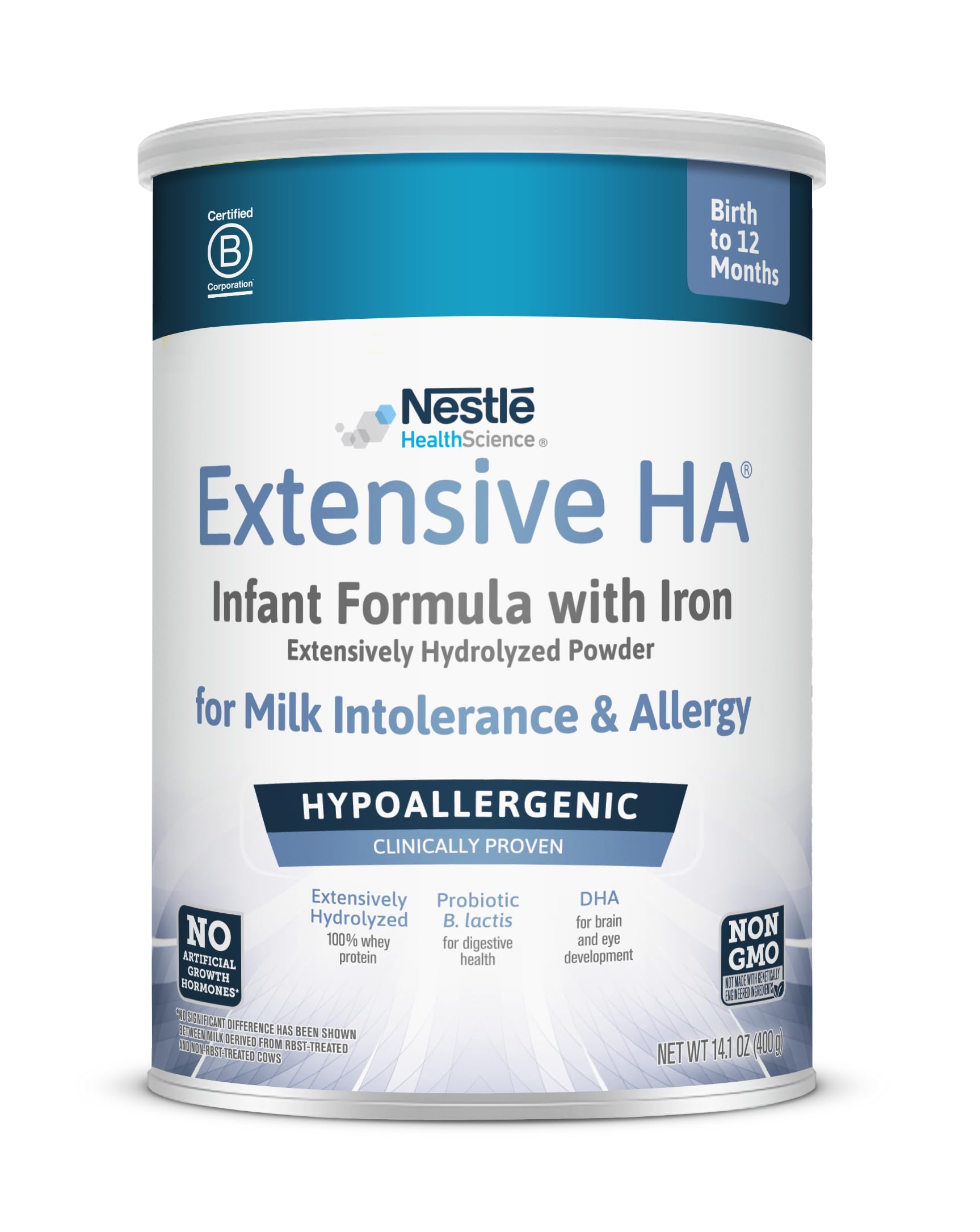
The Extensive HA formula is designed for babies with confirmed or suspected cow’s milk protein allergy, offering 100% whey protein that has been extensively hydrolyzed into tiny fragments. This process eliminates the intact proteins that cause gas, abdominal pain, and reflux in allergic infants. It is also lactose-free, which directly addresses gas caused by lactase deficiency — a common comorbidity in CMPA babies.
What sets this apart from other hypoallergenic options is the inclusion of the probiotic Bifidobacterium lactis, a strain similar to those naturally present in breast milk. Clinical evidence supports its role in improving digestive comfort and reducing colic-related crying. Parents report that within two days of switching, stomach gurgling, wet burps, and crying during feeds dropped significantly.
The primary drawback is the bitter taste common to all extensively hydrolyzed formulas, which some babies initially reject. Mixing requires warm water and a vigorous shake, but the foam settles quickly. For infants with diagnosed milk allergy or clear signs of intolerance, this is the most effective plug-and-play gas solution in its class.
Why it’s great
- Extensively hydrolyzed whey eliminates protein-related gas almost immediately
- Contains probiotic B. lactis for ongoing digestive support
- Lactose-free formulation helps babies with secondary lactase deficiency
Good to know
- Bitter taste may require a gradual transition from a sweeter formula
- Small 14.1-ounce can may not last a full week for older infants
2. Pepticate Hypoallergenic Infant Formula
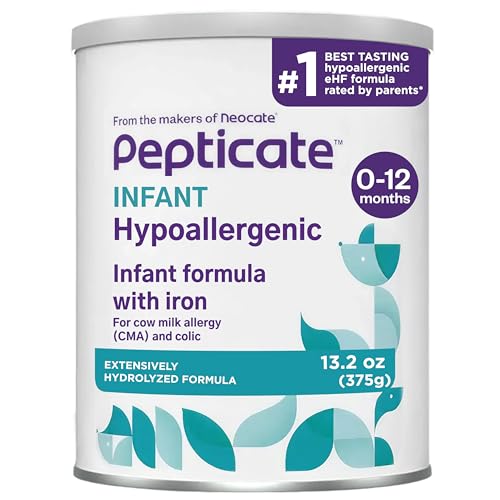
Pepticate is an extensively hydrolyzed formula from Nutricia (Danone) that ranks as the most prescribed eHF for cow’s milk allergy in the UK. It uses the same whey fragmentation approach as other hypoallergenic options but adds a specific prebiotic blend — galacto-oligosaccharides and fructo-oligosaccharides — designed to mimic the prebiotic oligosaccharides naturally present in breast milk.
Where Pepticate excels is palatability. Parent surveys rate it as the best-tasting eHF hypoallergenic formula, which matters because the bitter aftertaste of hydrolyzed protein is the leading reason babies refuse the bottle. Multiple reviewers report that after failing nine other formulas — including amino acid options — Pepticate stopped projectile vomiting, resolved colic, and normalized sleep within days. The 1:1 mixing ratio is simpler than many competitors that require scoop adjustments.
The price per ounce is the highest of any product here, and the 13.2-ounce can is small, making it a significant monthly expense for exclusive feeding. Availability in US stores is inconsistent, and Amazon stock can lag, so families should keep a subscription active. For parents of a baby with diagnosed CMPA who refuses other hypoallergenic brands, the premium is justified by the better taste and faster symptom resolution.
Why it’s great
- Rated best-tasting hypoallergenic formula, reducing bottle refusal
- Includes prebiotic GOS/FOS to support healthy gut flora balance
- Clinically proven to resolve CMPA symptoms including colic and gas
Good to know
- Highest per-ounce cost in this comparison
- Small can size; need steady subscription to avoid stockouts
3. Baby’s Only A2 Organic Milk Infant Formula

Baby’s Only uses milk from cows that produce only A2 beta-casein protein, bypassing the A1 protein variant linked to digestive inflammation and gas in sensitive babies. This is not a hypoallergenic formula — it contains intact milk protein — but for infants without a true CMPA who simply seem gassy on standard formula, switching to pure A2 is often the simplest first intervention.
The ingredient profile is clean: organic, free of corn syrup, palm oil, GMOs, and artificial growth hormones. The proprietary fat blend uses organic oils and A2 milk fats that are easier for newborns to emulsify. Parent reviews consistently note “no gas or gut issues” and describe it as an effective transitional formula from breast milk to bottle. The American-made production in Ohio with third-party testing adds an extra layer of confidence.
Some parents find scoop inconsistency batch to batch, and the 21-ounce container is smaller than the average 28-ounce can, meaning more frequent repurchases. The A2 protein approach will not help a baby with true lactose intolerance or a diagnosed milk allergy. For the large segment of babies who are simply “fussy” on standard A1 formula, this is the most cost-effective organic A2 option on the market.
Why it’s great
- Pure A2 protein structure avoids the inflammatory BCM-7 peptide
- Organic, no corn syrup, no palm oil — very clean ingredient list
- Made in the USA with batch-level quality testing
Good to know
- Not suitable for infants with diagnosed cow’s milk protein allergy
- Container is 21 ounces; larger families may need to buy more frequently
4. Bobbie Organic Gentle Baby Formula

Bobbie’s Gentle formula uses partially hydrolyzed proteins that are broken into smaller fragments than standard formula but not as small as hypoallergenic options. This makes it a middle step for babies who are gassy on standard formula but do not have a diagnosed allergy. Crucially, it retains 100% lactose as its sole carbohydrate — matching breast milk — so babies with normal lactase levels avoid the gas that can come from corn syrup or maltodextrin fermentation.
Certified USDA Organic and Clean Label Project tested, Bobbie subjects each batch to over 2,000 quality checks. Parents note that it reduces spit-up and regulates bowel movements better than standard formula. The taste is closer to breast milk than other gentle formulas, which helps with bottle acceptance when coming off nursing. The powder mixes without clumps and produces minimal foam.
The 14.1-ounce can is small, and the price per ounce sits in the mid-range. A small number of parents report noticeably smellier — though not abnormal — stools, a known side effect of the partially hydrolyzed protein breaking down differently in the gut. For families who want an organic gentle formula with clean ingredients and lactose as the carb source, this is a strong choice, but babies with true CMPA will need a fully hydrolyzed formula.
Why it’s great
- 100% lactose carbohydrate matches breast milk composition
- Partially hydrolyzed proteins aid digestion without full hypoallergenic breakdown
- Over 2,000 quality checks per batch; USDA Organic + Clean Label certification
Good to know
- Smaller can size at 14.1 ounces requires more frequent purchases
- Some babies produce notably smellier green stools on this formula
5. Mama Bear Gentle Premium Baby Formula

Mama Bear Gentle is a store-brand equivalent of Enfamil NeuroPro Gentlease, manufactured by Perrigo in the same facility that produces most generic US baby formulas. It uses partially hydrolyzed milk protein (broken down into smaller peptides) to reduce gas and fussiness, plus 2’FL HMO — a human milk oligosaccharide that supports immune development and gut barrier function.
Parents report that it mixes easily without clumps, transitions well from Similac or Enfamil, and reduces crying and visible gas within a few days. The can design includes a built-in scoop holder, a small but appreciated convenience during midnight feeds.
The formula does contain corn syrup solids and palm oil, which are standard in gentle formulas but may concern parents seeking a cleaner ingredient label. Some babies with extreme sensitivity may react to partial hydrolysis and still need a fully hydrolyzed option. For families on a tight budget who want a clinically tested gas-reducing formula that works similarly to premium brands, this is the most cost-effective solution in the comparison.
Why it’s great
- Significant cost savings vs. name-brand Gentlease formulas
- Contains 2’FL HMO for immune support alongside DHA and choline
- Partially hydrolyzed proteins reduce gas and fussiness effectively
Good to know
- Contains corn syrup solids and palm oil as standard ingredients
- Not suitable for babies with diagnosed cow’s milk protein allergy
FAQ
How quickly should I see gas relief after switching formulas?
Can a baby with a milk protein allergy use A2 formula?
Does powder consistency affect gas production?
Final Thoughts: The Verdict
For most families, the best baby formula for gas winner is the Extensive HA Hypoallergenic Formula because it handles the widest range of gas causes — from cow’s milk allergy to lactose intolerance — with clinically proven protein hydrolysis and a probiotic boost. If you want an organic A2 option with no corn syrup, grab the Baby’s Only A2 Organic Formula. And for the best value that still delivers proven gas relief, nothing beats the Mama Bear Gentle Formula.

Mo Maruf
I created WellFizz to bridge the gap between vague wellness advice and actionable solutions. My mission is simple: to decode the research and give you practical tools you can actually use.
Beyond the data, I am a passionate traveler. I believe that stepping away from the screen to explore new environments is essential for mental clarity and physical vitality.