Our readers keep the lights on and my smoothie glass nicely filled. As an Amazon Associate, I earn from qualifying purchases.
When your baby strains, cries, and goes days without a dirty diaper, every feeding becomes a source of anxiety. The wrong formula can lock up tiny digestive systems, while the right one delivers predictable, comfortable stools and a peaceful afternoon. This guide separates the gentle blends from the stomach-upsetting culprits using real clinical evidence and parent-verified results.
I’m Mohammad Maruf — the founder and writer behind WellFizz. I’ve spent over 15 years analyzing pediatric nutrition products, cross-referencing amino acid profiles, prebiotic fiber ratios, and protein hydrolysis levels to identify what actually works for infant constipation and digestive distress.
After evaluating seven leading formulations against pediatric GI guidelines and thousands of parent reports, I’ve curated this focused roundup of the baby formula for constipation market’s most effective options — from amino acid-based medical foods to gentle partially hydrolyzed blends.
How To Choose The Best Baby Formula For Constipation
Selecting a formula for constipation means looking beyond generic gas-relief claims. You need to evaluate three core factors — the protein source’s molecular size, the fiber and prebiotic content that directly affects stool water retention, and the presence of problematic additives like palm olein oil that can harden stools.
Protein Source: Fully Hydrolyzed vs. Partially Hydrolyzed vs. Amino Acid-Based
The smaller the protein fragments, the easier the digestive tract processes them. Amino acid-based formulas (like Neocate and EleCare) contain zero intact proteins — they are the gold standard for severe constipation tied to cow milk protein allergy. Partially hydrolyzed formulas (like Enfamil Gentlease) break proteins into medium-sized pieces, sufficient for mild sensitivity but less effective for chronic hard stools. Always match the hydrolysis level to your baby’s constipation severity.
Prebiotic Fiber Blend and Stool Softening
Look for formulas containing FOS (fructooligosaccharides), GOS (galactooligosaccharides), or the patented PDX/GOS blend. These soluble fibers pull water into the colon, physically softening stools. Formulas without a labeled prebiotic blend may lack this crucial stool-softening mechanism. Neocate Syneo combines FOS with actual probiotics (Bifidobacterium), offering a dual softening effect that powder-only prebiotic blends cannot match.
Palm Olein Oil and Fat Absorption
Palm olein oil forms insoluble calcium soaps in the infant gut, hardening stools and worsening constipation. The Similac Soy Isomil prominently states “No Palm Olein Oil,” a meaningful guarantee for parents trying to eliminate stool-hardening fats. Many hypoallergenic formulas avoid palm olein by default, but always verify the ingredient list — it is a common hidden cause of formula-induced constipation.
Quick Comparison
On smaller screens, swipe sideways to see the full table.
| Model | Category | Best For | Key Spec | Amazon |
|---|---|---|---|---|
| Neocate Syneo Infant | Amino Acid + Probiotic | Chronic constipation with CMPA | Prebiotic FOS + Probiotic blend | Amazon |
| Similac Alimentum With 2′-FL HMO | Extensively Hydrolyzed | Colic and constipation from protein sensitivity | 100% whey protein hydrolyzed | Amazon |
| Nutricia Neocate Infant | Amino Acid-Based | Multiple food allergies causing GI distress | 100% free amino acids | Amazon |
| EleCare Hypoallergenic | Amino Acid-Based | Malabsorption and short bowel syndrome | 100% free amino acids | Amazon |
| Alfamino Infant Formula | Amino Acid + MCT | Severe malabsorption with reflux | MCT oil for fat absorption | Amazon |
| Enfamil NeuroPro Gentlease RTF | Partially Hydrolyzed | Mild constipation with fussiness and gas | PDX/GOS prebiotic fiber blend | Amazon |
| Similac Soy Isomil | Plant-Based Protein | Milk protein intolerance without soy allergy | No palm olein oil | Amazon |
In‑Depth Reviews
1. Neocate Syneo Infant
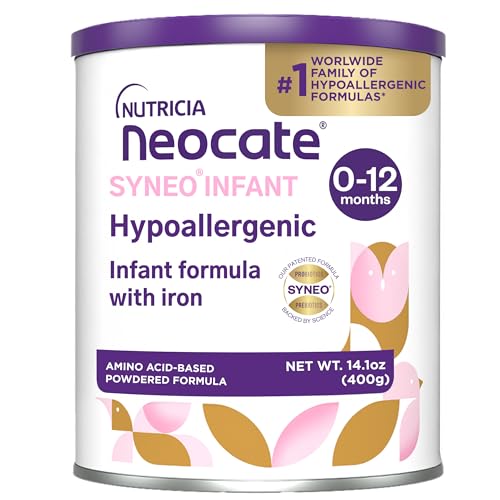
Neocate Syneo is the only amino acid-based formula on this list that combines a prebiotic blend (FOS/FOS) with a live probiotic culture — Bifidobacterium breve M-16V. This dual fiber-plus-bug approach directly targets constipation by feeding beneficial gut bacteria while the 100% free amino acids bypass any allergic inflammation that can slow intestinal transit. Parents report stool normalization within days, often after other hypoallergenic formulas failed to resolve hard pellets.
The formula also contains DHA and ARA for brain and eye development, plus nucleotides for immune support. The 14.1-ounce can is concentrated — expect more scoops per ounce than standard formulas, which means better value per feeding despite the premium tier. The powder dissolves cleanly with gentle swirling, leaving minimal residue at the bottle bottom.
A critical preparation note: water must not exceed 104°F because the live probiotics are heat-sensitive. A precise warm water dispenser is strongly recommended over guessing with a kettle. Some parents note the powder has a distinct odor — this is typical of amino acid formulas and does not affect tolerability.
Why it’s great
- Clinically tested Syneo blend provides dual prebiotic and probiotic support for stool softening
- 100% amino acid-based — zero intact dairy proteins to trigger constipation
- First and only hypoallergenic formula with both prebiotics and probiotics
Good to know
- Requires precise water temperature under 104°F to preserve probiotics
- Stronger odor compared to partially hydrolyzed formulas
2. Similac Alimentum With 2′-FL HMO
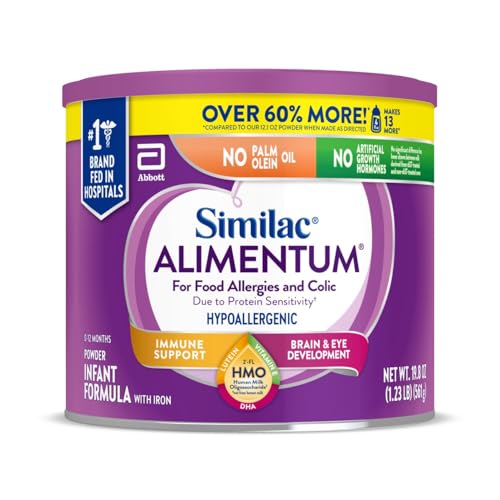
Similac Alimentum uses extensively hydrolyzed whey protein — proteins broken into very small fragments — to virtually eliminate allergic reactions in most babies with cow milk protein sensitivity. The 2′-FL HMO (human milk oligosaccharide) addition is a meaningful upgrade over older Alimentum versions; HMOs feed beneficial Bifidobacteria directly, promoting softer stools and reduced gassiness. Clinical data shows colic symptom reduction within 24 hours in most infants.
The 19.8-ounce value can provides more powder per purchase than the standard 14.1-ounce cans typical of amino acid-based competitors. This formula also contains DHA, ARA, and lutein for eye development. Parents consistently note less spit-up and firmer but not hard stools — a Goldilocks consistency that suggests good absorption without constipation. The powder mixes readily with standard warm water and does not require special temperature monitoring.
Alimentum is not a fully elemental (amino acid) formula — it is appropriate for moderate protein sensitivity where constipation accompanies reflux and colic. For babies with confirmed CMPA who still show hard stools on Alimentum, moving to an amino acid option like Neocate may be necessary. The can size and widespread availability make this a practical mid-range choice.
Why it’s great
- Contains immune-nourishing 2′-FL HMO for gut health and softer stools
- 24-hour colic and constipation symptom reduction in clinical studies
- Larger 19.8 oz can delivers more powder per package
Good to know
- Not suitable for confirmed severe CMPA — still contains milk protein fragments
- May not resolve constipation if the root cause is not protein sensitivity
3. Nutricia Neocate Infant
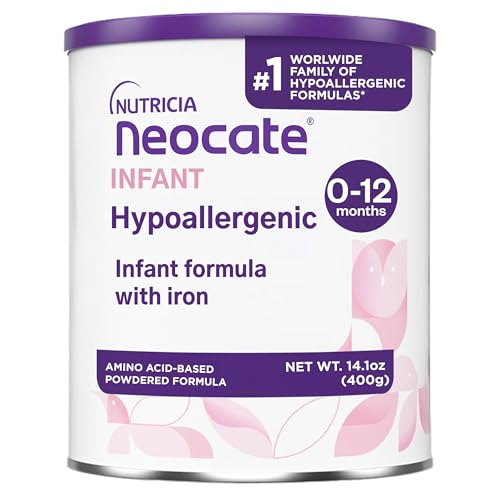
Neocate Infant is the original amino acid-based formula from the brand that holds the #1 position globally for this category. Every protein is completely replaced by individual amino acids, making it impossible for the infant immune system to react to dairy, soy, or any intact protein. For babies with severe CMPA who present with hard, infrequent stools alongside eczema or reflux, this is the benchmark formula. Parents report normal stooling within days after switching from partially hydrolyzed or soy options.
The formula includes nucleotides for immune system support and DHA/ARA for brain and eye development. The 14.1-ounce can is compact — the powder is denser than standard formulas, so the scoop count per ounce is higher. This means a can feeds fewer bottles than a similarly sized standard formula, which is an important budgeting consideration. The powder can clog nipple holes in cold weather due to its fine consistency; rinsing the inside of the nipple before feeding and preparing bottles ahead helps.
Neocate Infant does not contain added prebiotics or probiotics — it is a pure, stripped-down elemental formula. Babies transitioning from Neocate Syneo (which includes prebiotics) to Neocate Infant may experience slightly firmer stools. For constipation-predominant infants, pairing Neocate Infant with a pediatrician-approved probiotic supplement is a common strategy.
Why it’s great
- 100% amino acid-based — eliminates all intact protein triggers for constipation
- Clinically shown symptom relief in as little as 3 days
- Dairy-free, soy-free, with no artificial colors or sweeteners
Good to know
- No added prebiotics or probiotics for stool softening
- Fine powder can clog nipples in cooler temperatures
4. EleCare Hypoallergenic
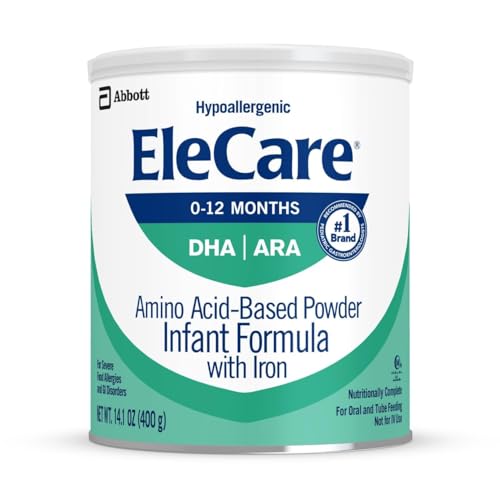
EleCare is the #1 amino acid-based brand recommended by pediatric gastroenterologists for conditions including short bowel syndrome and malabsorption — two root causes of chronic infant constipation. The formula is built from 100% free amino acids with a fat blend designed for maximal absorption. Parents report that newborn digestive distress, including straining and hard stools, resolves within 24 hours of switching to EleCare, which is remarkably fast even among amino acid formulas.
The 14.1-ounce can includes DHA and ARA for brain and eye development. A distinctive feature noted by many parents is the formula’s strong odor — it is often described as “funny” or “unusual” — but this is characteristic of amino acid-based powders and does not affect infant acceptance. Most babies take to it quickly. The powder mixes best with water around body temperature; hotter water can cause clumping. Some parents observe greenish stools, which is a normal response to the iron content and not a cause for concern.
EleCare is a strong alternative to Neocate for families whose insurance covers one brand but not the other. The two are functionally interchangeable for constipation management, though some babies show a slight preference for one taste over the other. The subscription delivery option is popular among parents managing twins or busy schedules.
Why it’s great
- #1 brand recommended by pediatric GIs for malabsorption-related constipation
- Clinical data shows significant symptom improvement in children with short bowel syndrome
- Contains DHA and ARA for developmental support
Good to know
- Strong odor typical of amino acid formulas may be off-putting to parents
- Can cause green stools due to iron content — normal but worth knowing
5. Alfamino Infant Formula
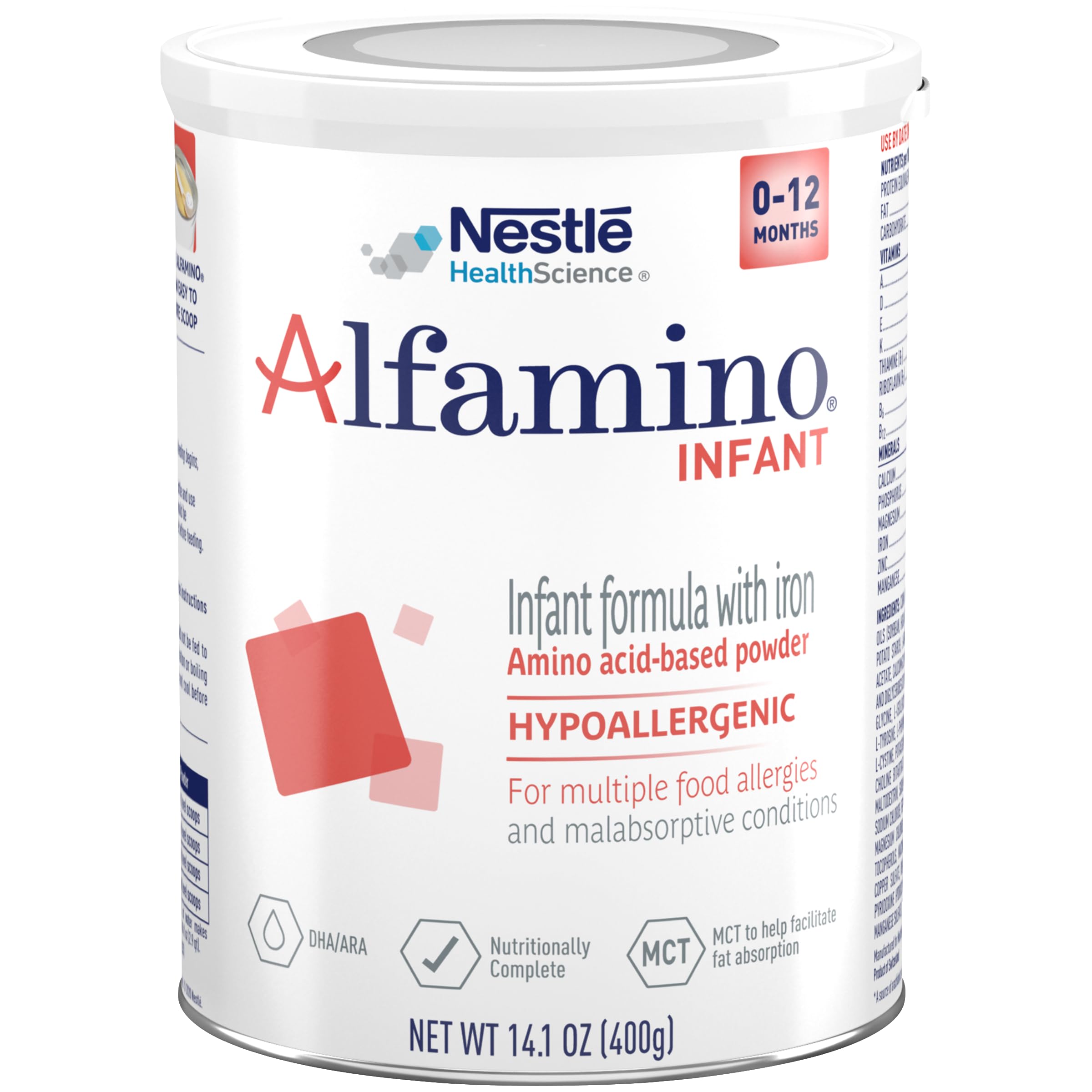
Alfamino sets itself apart from other amino acid formulas by including medium-chain triglycerides (MCTs) in its fat blend. MCTs are digested directly into the portal circulation without requiring bile salts or pancreatic enzymes — crucial for babies with malabsorption who struggle to absorb standard long-chain fats. For constipation that accompanies fat malabsorption, faster fat digestion means less undigested fat in the colon, which reduces osmotic diarrhea and allows the colon to form more normal, softer stools.
The formula is lactose-free, gluten-free, and designed for conditions of severe malabsorption. Parents of babies with cow milk protein allergy who also experienced reflux and bloody stool report complete resolution on Alfamino. One reviewer noted that combining Alfamino with prune juice and a probiotic produced the best results for their son’s constipation — suggesting the formula pairs well with additional stool-softening interventions under medical guidance.
Alfamino dissolves well with some fine residue, which is normal for amino acid powders. Some babies initially reject the taste but accept it within a few feeds. Parents transitioning from Neocate often find Alfamino tastes better to their baby, increasing feeding volume and weight gain. The can size is standard at 14.1 ounces, and the price point sits in the same mid-range tier as other amino acid options.
Why it’s great
- MCT oil blend facilitates fat absorption for babies with malabsorption
- Lactose-free and gluten-free for sensitive digestive systems
- Often better accepted taste-wise than competitor amino acid formulas
Good to know
- Some fine residue remains after mixing
6. Enfamil NeuroPro Gentlease Ready-to-Feed
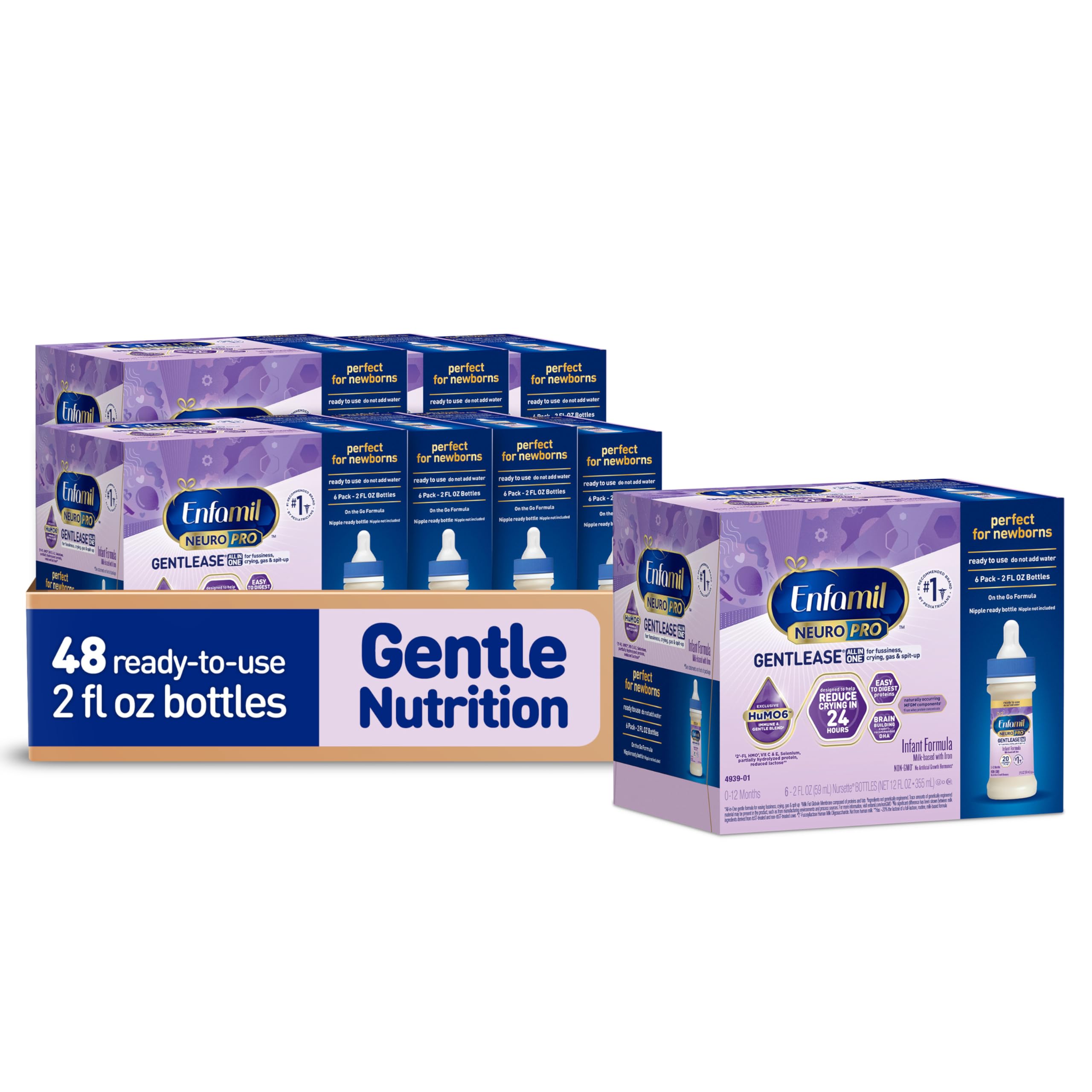
Enfamil NeuroPro Gentlease uses partially hydrolyzed nonfat milk proteins — broken into medium-sized fragments — combined with a patented prebiotic fiber blend of PDX and GOS. This prebiotic combination has been shown to soften stools by promoting the growth of Bifidobacteria and Lactobacillus while increasing stool water content. The formula is designed for infants who exhibit fussiness, gas, and spit-up within 24 hours, making it a strong entry-level choice for mild constipation that accompanies general digestive discomfort.
The ready-to-feed format eliminates any mixing errors — no scoop counting, no water temperature worries, no clumps. The 2-ounce bottles are ideal for late-night feeds, diaper bag stash, and travel. Each case contains 48 bottles with foil-sealed nipples. This convenience carries a premium over powder, but for sleep-deprived parents managing constipation alongside colic, the trade-off is often worth it. The formula is iron-fortified and contains DHA for brain development.
Gentlease is not designed for babies with confirmed cow milk protein allergy — the proteins are partially hydrolyzed, not fully broken into amino acids. Infants with CMPA-related constipation may still react to the milk protein fragments. For babies without a true allergy but with sensitive digestion, this formula frequently resolves mild constipation within one to two days. The PDX/GOS prebiotic blend is the key mechanism here, physically pulling water into the colon.
Why it’s great
- PDX/GOS prebiotic blend actively softens stools and reduces straining
- Ready-to-feed format eliminates preparation errors that worsen constipation
- Clinically shown to ease fussiness, crying, and gas within 24 hours
Good to know
- Not suitable for confirmed CMPA — contains partially hydrolyzed milk protein
- Ready-to-feed format costs more per ounce than powder
7. Similac Soy Isomil Infant Formula

Similac Soy Isomil replaces cow milk protein with soy protein isolate, making it a viable option for infants with lactose intolerance or milk protein sensitivity who do not also have a soy allergy. For constipation linked to dairy, switching to a soy-based formula can normalize stool frequency and consistency because the soy protein does not trigger the same inflammatory response in the gut. The formula is clinically shown to reduce fussiness and gas when transitioning from milk-based formulas.
A standout feature for constipation management is the explicit “No Palm Olein Oil” claim on the packaging. Palm olein oil forms insoluble calcium soaps in the infant gut — a well-documented cause of hard, pebble-like stools. Eliminating this ingredient alone can resolve mild to moderate constipation. The formula also contains prebiotics for digestive health, DHA and lutein for brain and eye development, and nucleotides to support the immune system.
The 30.8-ounce can is the largest single-can size in this roundup, and the pack of 4 provides bulk savings that reduce the per-feeding cost significantly. This makes Similac Soy Isomil the most budget-friendly option for families whose baby tolerates soy. However, it is not appropriate for infants with diagnosed soy allergy or for those with confirmed CMPA who cross-react to soy proteins — roughly 10-15% of CMPA babies also react to soy. Always confirm soy tolerance with a pediatrician before switching.
Why it’s great
- No palm olein oil — eliminates a common hidden cause of stool hardening
- Largest can size in this guide for the lowest per-feeding cost
- Clinically shown to reduce fussiness and gas from milk-based formula switching
Good to know
- Not safe for infants with soy allergy or soy cross-reactivity
- Not suitable for severe CMPA — contains intact soy protein
FAQ
Can switching formula alone resolve infant constipation in 24 hours?
What specific ingredient in formula is most linked to hard stools?
Is a soy-based formula better for constipation than a dairy-based one?
How does ready-to-feed formula compare to powder for constipation management?
Should I add probiotics or prune juice to my baby’s formula for constipation?
Final Thoughts: The Verdict
For most parents, the baby formula for constipation winner is the Neocate Syneo Infant because its patented prebiotic-plus-probiotic blend actively softens stools while the amino acid base eliminates any protein-triggered constipation — a dual mechanism no other formula in this roundup replicates. If your baby has confirmed CMPA and you want a pure, stripped-down elemental option, grab the Nutricia Neocate Infant and pair it with a pediatrician-approved probiotic. For mild constipation with fussiness and gas that does not involve a diagnosed allergy, nothing beats the convenience and stool-softening PDX/GOS prebiotics of the Enfamil NeuroPro Gentlease Ready-to-Feed.

Mo Maruf
I created WellFizz to bridge the gap between vague wellness advice and actionable solutions. My mission is simple: to decode the research and give you practical tools you can actually use.
Beyond the data, I am a passionate traveler. I believe that stepping away from the screen to explore new environments is essential for mental clarity and physical vitality.