Our readers keep the lights on and my smoothie glass nicely filled. As an Amazon Associate, I earn from qualifying purchases.
A baby’s first monster truck rally, air show, or fireworks display should be a memory of wonder, not of tears. The difference often comes down to a single piece of gear designed to tame the roar without overwhelming a tiny head. Choosing the wrong ear protection can mean constant readjustment, outright refusal, or inadequate noise reduction that still leaves your child distressed.
I’m Mohammad Maruf — the founder and writer behind WellFizz. I’ve spent countless hours analyzing decibel reduction ratings, clamping force, padding materials, and real parent feedback to find the gear that actually works for infants and toddlers in the loudest environments.
This guide breaks down the top-tier options, mid-range workhorses, and budget-friendly solutions so you can confidently pick the best baby ear protection that keeps your little one calm and safe.
How To Choose The Best Baby Ear Protection
Buying ear protection for a baby is not the same as grabbing a pair of adult work earmuffs. Infants have softer skulls, narrower ear canals, and far less patience for uncomfortable gear. You need to weigh three factors above all others: the NRR rating, the physical fit and weight, and the certification standards the product meets.
Noise Reduction Rating: The Number That Actually Counts
The NRR (Noise Reduction Rating) tells you how many decibels the earmuffs can subtract from the ambient noise level. An NRR of 31dB, like the BANZ model offers, is the gold standard for infants. An NRR of 26-27dB, common on mid-range models, is still effective for most concerts and sporting events but may feel insufficient for close-proximity drag races or jet flyovers. Always check the NRR, not the marketing SNR.
Fit, Clamping Force, and Padding Depth
A baby’s head is small and the temporal bones are soft. Earmuffs must seal completely around the ear without excessive pressure. Look for soft memory foam padding wrapped in breathable protein leather, and a headband that adjusts down to the smallest head circumference. Models with 360-degree swiveling cups adapt to a baby’s natural head movements better than fixed-cup designs.
Certifications and Safety Standards
Never buy baby ear protection without ANSI S3.19 or CE EN 352-1 certification. These standards confirm the earmuffs have been tested to reduce harmful sound levels to safe ranges. Uncertified generic products may look identical but can fail to seal or may apply uneven pressure, creating a false sense of security.
Quick Comparison
On smaller screens, swipe sideways to see the full table.
| Model | Category | Best For | Key Spec | Amazon |
|---|---|---|---|---|
| BANZ Baby Earmuffs | Premium | Infants 0-2 Years | NRR 31dB | Amazon |
| JLab JBuddies Protect | Premium | Infants to Teens | Wide Age Range Fit | Amazon |
| MelonArt Kids Earmuffs | Mid-Range | Sensory & Travel | SNR 27dB, Foldable | Amazon |
| Floriogra 3-Pack | Mid-Range | Multi-Sibling Use | SNR 26dB, 3 Colors | Amazon |
| ZIPZ Baby & Toddler | Budget | Events & Shows | Interchangeable Shells | Amazon |
In‑Depth Reviews
1. BANZ Baby Earmuffs Infant and Toddler Hearing Protection
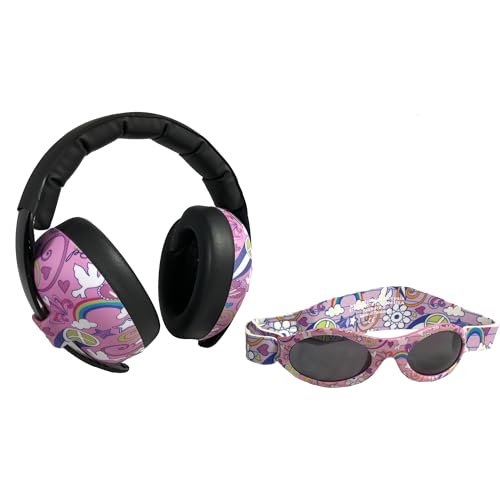
BANZ is the household name in infant hearing protection for a reason. This model delivers the highest NRR rating on our list at 31dB, which means it cuts the loudest roar of a tractor pull or jet flyover down to a safe, non-startling level for newborns through 24 months. The low-profile design avoids the bulky look and heavy pressure of multi-age earmuffs, and the super-soft padding keeps a 4-month-old comfortable for an entire helicopter ride or wedding reception.
The bundled Adventure BANZ sunglasses add serious value for outdoor events. The neoprene strap and rubber nose piece keep the shades on a squirming infant, and the Category 3 lenses provide 100% UV protection. Several verified buyers noted their baby fell asleep while wearing the earmuffs during loud construction noise and didn’t flinch during Blue Angels flyovers, which is exactly the outcome you want.
The main limitation is sizing. Parents of babies with larger heads reported that the headband already sat at its maximum extension by 8-10 months, meaning the 0-2 year claim can be optimistic for big infants. No carrying case is included either, so you’ll need to store them carefully in a diaper bag. For pure noise reduction in the smallest ears, this is the top pick.
Why it’s great
- Highest NRR 31dB rating for maximum protection
- Soft padding keeps infants comfortable for hours
- Includes high-quality baby sunglasses with UV protection
Good to know
- Sizing may max out before 2 years for larger babies
- No carrying case included
2. JLab JBuddies Protect Earmuffs
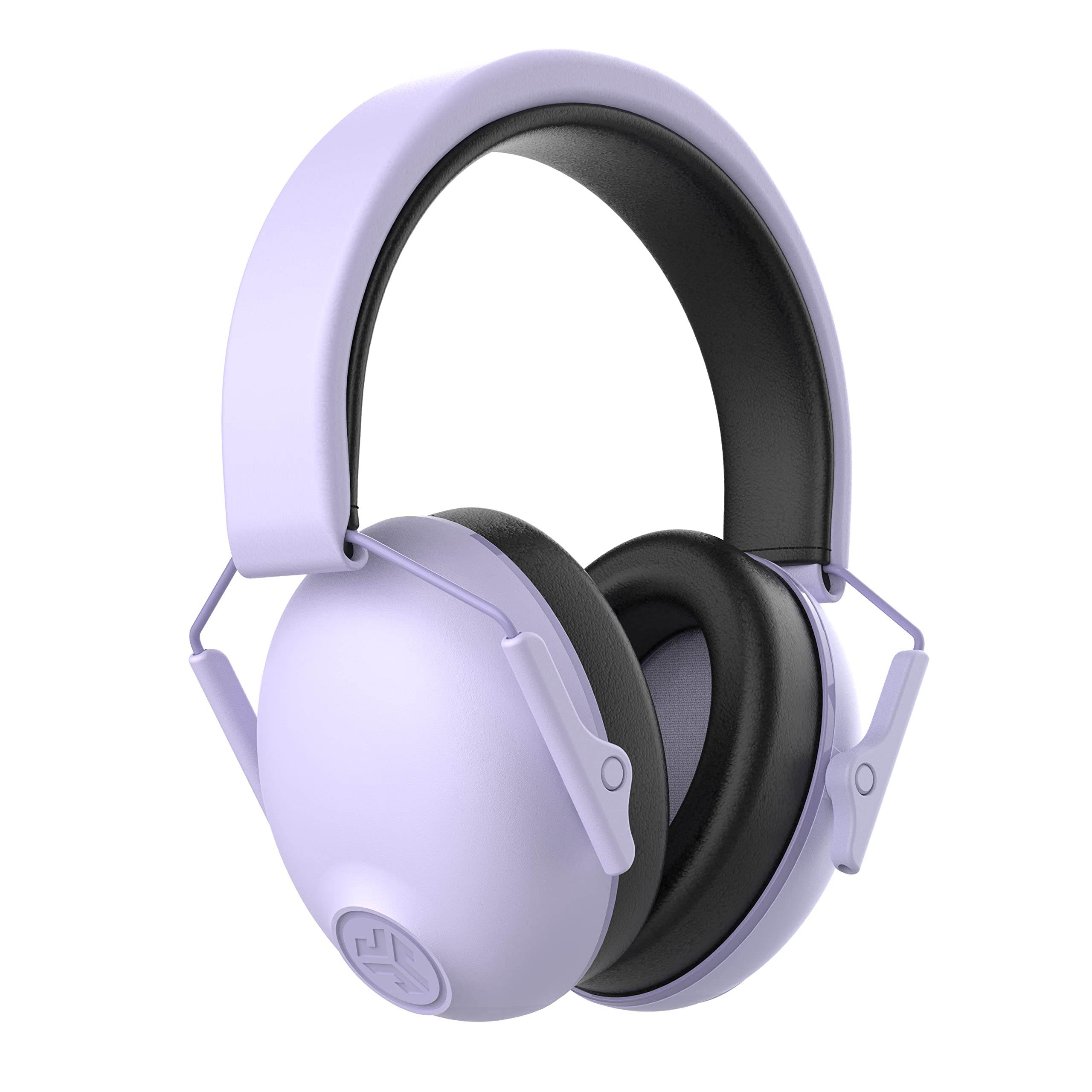
JLab’s JBuddies Protect earmuffs solve the “growing out of it” problem better than any other model here. The adjustable headband extends wide enough to fit a toddler and still accommodates a teen or adult head, making this potentially the only set of earmuffs you’ll buy for years. The build quality is notably sturdy — multiple verified reviewers mentioned these survived being thrown around by toddlers and still functioned perfectly.
Comfort is the standout feature. Parents of sound-sensitive 4- and 5-year-olds reported their children happily wore these for entire concerts and band performances without complaining about pain or slipping. The compact fold-down mechanism makes them easy to stash in a backpack, which is a real advantage for families who carry earmuffs everywhere. Several buyers mentioned these are the best they’ve tried after rotating through cheaper brands.
The trade-off is that JLab does not publish a specific NRR or SNR rating on the product page, which makes it harder to compare raw decibel reduction against the BANZ or MelonArt models. Real-world feedback suggests they work well for typical concert and sporting event noise, but if you need a guaranteed NRR number for a known extreme environment, you may want a rated alternative.
Why it’s great
- Extremely durable construction that survives toddler wear and tear
- Adjustable to fit from infant to adult head sizes
- Folds compact for easy storage in a bag
Good to know
- No official NRR rating published for spec comparison
- May be bulkier on a very small infant head
3. MelonArt Kids Ear Protection Earmuffs

MelonArt specifically targets the sensory-sensitive child, and the design choices reflect that priority. The high-density acoustic sponge inside solid ABS cups delivers an SNR of 27dB, which is enough to turn a fireworks barrage into a distant thump and a monster truck engine into a manageable hum. The real differentiator is the 360-degree swiveling ear cups combined with ultra-soft memory foam cushions wrapped in breathable protein leather — this combination reduces clamping force dramatically, which is critical for children who cannot tolerate tight pressure.
Parents of autistic children reported that these earmuffs helped their kids tolerate air travel, birthday parties, and family gatherings without meltdowns. The foldable design is genuinely compact, slipping into a backpack without taking up noticeable space. Verified reviews also noted that the earmuffs block loud noises while still allowing some environmental sound through, which is ideal for situational awareness at events.
One area where the MelonArt falls short is at the very top of the decibel scale. A parent using them for lawn mowing found the noise reduction insufficient and needed supplemental earplugs. For indoor events, concerts, and general travel, the 27dB rating is solid, but if you’re parking next to a drag strip, you may want to step up to the BANZ’s 31dB.
Why it’s great
- Specifically designed for sensory processing challenges and autism
- Memory foam cushions with low clamping force for all-day wear
- Foldable and lightweight for portable use
Good to know
- 27dB rating may feel insufficient for extreme noise like lawn mowing
- Some users report less robust build compared to premium models
4. Floriogra 3 Pack Noise Canceling Headphones for Kids
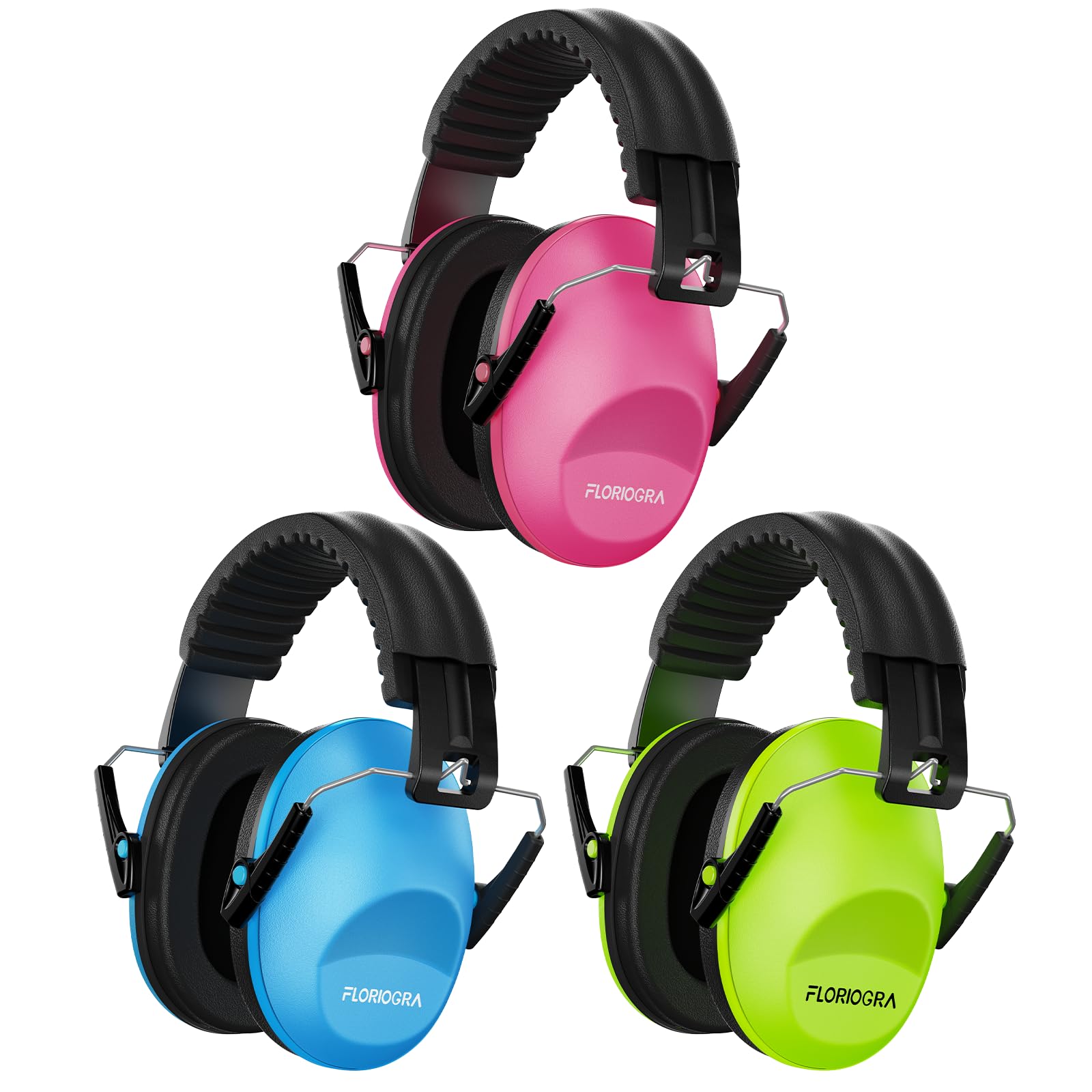
When you have multiple children or need backup sets for different locations, the Floriogra 3-pack is the most practical mid-range solution available. You get bright pink, blue, and green earmuffs in one box, each delivering an SNR of 26dB with ANSI S3.19 and CE EN 352-1 certification. The 360-degree rotatable cups and ultra-soft ear cushions provide a comfortable seal, and the adjustable ergonomic headband prevents pressure spots even during extended wear.
The educational use case here is strong. Several teachers reported buying these for their classrooms to help students with noise sensitivity focus during independent work. At home, siblings can each have their own color, eliminating battles over a single pair. The fold-flat design makes them easy to store in a backpack, and the durable construction has held up to daily use in elementary school settings.
The 26dB SNR is on the lower side of our list, and while it’s sufficient for most concerts, air shows, and fireworks displays, parents taking toddlers to extremely loud industrial environments may need a higher rating. Additionally, the “active noise cancellation” claim in the title is misleading — these are passive earmuffs, not electronic ANC headphones. As long as you understand that, they represent excellent value.
Why it’s great
- Three pairs in one box at a cost-effective price point
- ANSI and CE certified for real safety compliance
- Rotatable cups and soft cushions for comfortable extended wear
Good to know
- 26dB SNR is adequate but not the highest protection available
- Listed as “active noise cancellation” but is passive earmuffs
5. ZIPZ Baby & Toddler Earmuffs
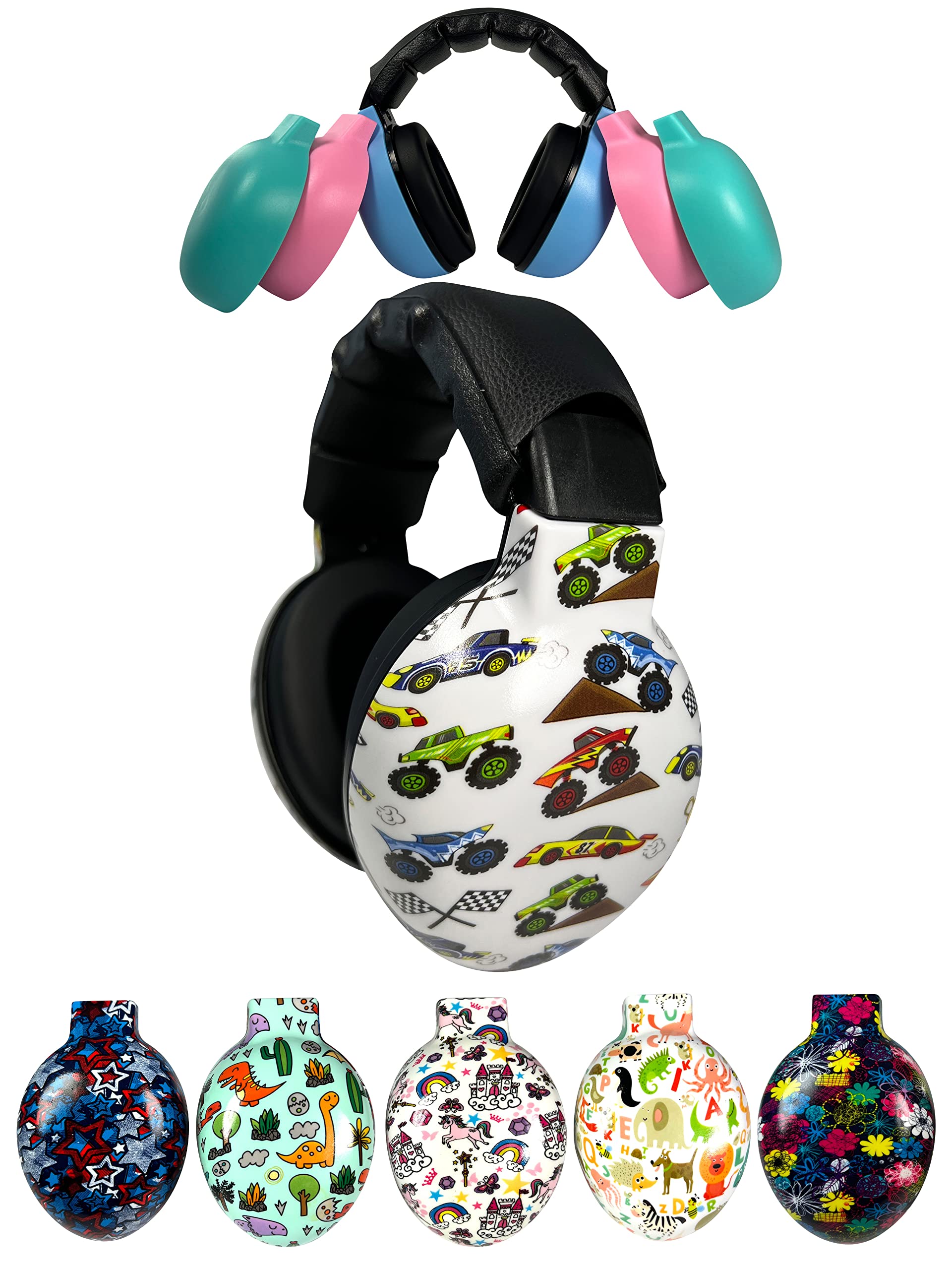
ZIPZ takes a different approach by making the external shells interchangeable, turning the earmuffs into a toy-like accessory that toddlers actually want to wear. The ANSI-certified noise protection is audiologist-recommended for ages 0-4, and the adjustable headband fits a 2-year-old perfectly for events like Monster Jam. Multiple verified reviews specifically praised how well these worked at monster truck shows, with several parents noting their toddlers kept the earmuffs on voluntarily once the engines started roaring.
The design gimmick works. Kids who previously refused any headgear because it was “boring” were happy to wear race car or animal-themed shells. The build quality is good for the price tier, and the clamping force is light enough that a 2-year-old didn’t complain even during a full rally event. The price is noticeably lower than premium options while still delivering certified protection for loud events.
The most common complaint is that the decorative shells pop off too easily. A verified reviewer reported the monster truck covers fell off during the show, creating a risk of losing them in a crowd. The product also only arrived with pink shells for one buyer despite the listing suggesting multiple colors. For a baby who loves the design and won’t play with the shells, these are a great budget entry point, but the detachable covers are a weak point.
Why it’s great
- Interchangeable shells make toddlers excited to wear them
- ANSI-certified protection at a budget-friendly price
- Light clamping force comfortable for extended events
Good to know
- Decorative shell covers can detach and be lost easily
- Color availability inconsistent based on user reports
FAQ
At what age can a baby start wearing earmuffs?
Can baby earmuffs block all sound completely?
How do I know if the earmuffs are tight enough?
Final Thoughts: The Verdict
For most users, the baby ear protection winner is the BANZ Baby Earmuffs because the 31dB NRR rating is unmatched for infants and the included sunglasses add real outdoor event value. If you want a pair that grows with your child from infancy through elementary school, grab the JLab JBuddies Protect. And for families with multiple children or classroom use, nothing beats the value of the Floriogra 3-Pack.

Mo Maruf
I created WellFizz to bridge the gap between vague wellness advice and actionable solutions. My mission is simple: to decode the research and give you practical tools you can actually use.
Beyond the data, I am a passionate traveler. I believe that stepping away from the screen to explore new environments is essential for mental clarity and physical vitality.