Our readers keep the lights on and my smoothie glass nicely filled. As an Amazon Associate, I earn from qualifying purchases.
Every new parent knows the feeling — checking the crib one extra time to make sure your baby is still breathing. A baby breathing monitor transforms that anxious instinct into concrete, reliable data you can trust while you sleep. Unlike standard video monitors that only show movement, these specialized devices track the rise and fall of your infant’s chest or belly, sounding an alert the moment breathing pauses are detected.
I’m Mohammad Maruf — the founder and writer behind WellFizz. I’ve spent hundreds of hours analyzing pediatric safety standards, sensor technologies, and real parent feedback to find which breathing monitors deliver genuine protection without false alarm fatigue.
Whether you need a wearable sensor for travel or a contact-free camera for around-the-clock nursery use, finding the right baby breathing monitor depends on understanding sensor type, alarm volume, and false alarm rate — three specs that separate peace of mind from frustration.
How To Choose The Best Baby Breathing Monitor
The right monitor for your nursery hinges on three core factors: how the sensor detects movement, how the alarm communicates to you, and how the device handles daily wear. Each approach has trade-offs that affect false alarm frequency and your own sleep quality.
Wearable Sensors vs. Contact-Free Pads vs. Camera Tracking
Wearable units like the Snuza Hero clip directly to the diaper and sense abdominal motion via direct contact. They offer the most precise detection but require proper positioning and can trigger false alarms if the sensor shifts. Under-mattress pads like Babysense 7 sense micro-movements through the crib mattress — no skin contact needed — but can lose sensitivity on soft memory foam mattresses. Camera-based systems like the Miku Pro and Nanit Pro analyze pixels for breathing motion without any wearable, making them ideal for parents who want zero-contact monitoring, though they require a stable Wi-Fi connection and may struggle with dark, heavily blanketed sleep spaces.
Alarm Timing and Volume Levels
The delay between no-breath detection and alarm activation ranges from 15 to 20 seconds across different models. Shorter timers (15 seconds) give faster response but more false alerts from normal pauses in infant breathing. Longer timers (20 seconds) reduce false alarms but require you to be a deeper sleeper to wake. Vibration-first alarms — found on the Levana Oma Sense and Snuza Hero — gently stimulate the baby before sounding a full alarm, which can rouse a paused-breath infant without panicking you. Check the decibel rating and whether the parent unit has its own alarm: some monitors only sound from the baby unit, which may not wake you if you sleep in a different room.
False Alarm Frequency and Calibration
No monitor is immune to false alerts. Wearables trigger falsely when the clip slides off the diaper. Pad-based systems can mistake a ceiling fan’s vibration for breathing movement. Camera-based systems may lose tracking if the baby rolls to the very edge of the crib. Read real-parent reviews for each model to understand its typical false alarm rate in different sleep environments. Models with adjustable sensitivity — like the Babysense 7 — give you some control, while others lock you into a single threshold. The lowest false alarm rates tend to come from medical-grade pulse oximetry wearables like the Owlet Dream Sock, though these come with the highest price and subscription costs.
Quick Comparison
On smaller screens, swipe sideways to see the full table.
| Model | Category | Best For | Key Spec | Amazon |
|---|---|---|---|---|
| Snuza Hero SE | Wearable | Precise diaper-clip detection | 15-sec vibration, 20-sec alarm | Amazon |
| Babysense 7 | Under-Mattress Pad | Non-contact, full crib coverage | Dual sensor pads | Amazon |
| Miku Pro | Camera | Wearable-free live breathing tracking | SensorFusion pixel analysis | Amazon |
| Philips Avent SCD973 | Camera + Screen | Dedicated parent unit with breathing tracking | SenseIQ pixel breathing motion | Amazon |
| Nanit Pro Bundle | Camera + Stand | Overhead crib view with sleep analytics | 1080p with floor stand | Amazon |
| Levana Oma Sense | Wearable | Value, portable, vibration stimulation | Zero WiFi or Bluetooth needed | Amazon |
| Owlet Dream Duo Gen 3 | Wearable + Camera Bundle | Medical-grade pulse oximetry tracking | FDA-cleared sock sensor | Amazon |
In‑Depth Reviews
1. Snuza Hero SE

The Snuza Hero SE uses a patented direct-touch sensor that clips to the front of the diaper, making it one of the most accurate wearable breathing monitors available. Its green indicator light provides instant visual confirmation that your baby is breathing, while the optional ticking sound gives an audible layer of reassurance for anxious parents. The 15-second vibration first stimulates the baby gently before the full alarm sounds at 20 seconds, giving both infant and caregiver time to respond without panic.
At just 1.38 ounces and powered by a replaceable battery lasting up to six months, the Hero SE is fully portable and comes with a protective carry case for travel. The medical-grade plastic and silicone construction is safe for sensitive skin, and the device requires no WiFi, apps, or cords — simply clip it on and it works. The compact size means it fits easily under a swaddle or sleep sack.
Parents report that false alarms are rare and usually caused by the sensor shifting during active sleep. The alarm volume is loud enough to hear across a hallway but may not be enough for very heavy sleepers in a distant bedroom. Overall, the Snuza Hero SE delivers top-tier detection reliability in a simple, travel-friendly package that prioritizes function over frills.
Why it’s great
- Ultra-sensitive direct-touch sensor minimizes false alarms
- Six-month battery life eliminates daily charging
- Completely wireless and portable with carry case
Good to know
- Alarm may not be loud enough for heavy sleepers in another room
- Requires proper diaper clip placement to avoid false alerts
2. Babysense 7
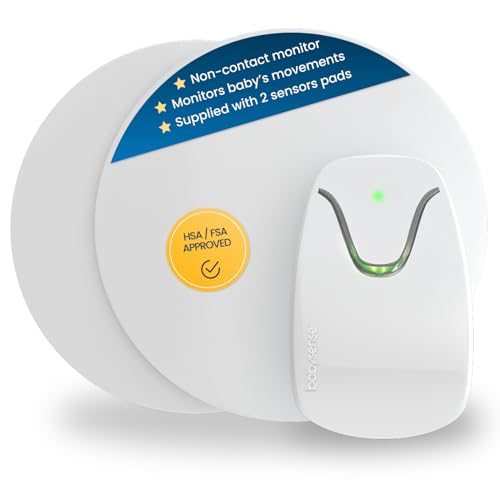
The Babysense 7 takes a completely hands-off approach with two sensitive under-mattress sensor pads that detect micro-movements through the crib mattress. The dual-sensor design provides full coverage for standard cribs and bassinets, meaning your baby can move anywhere in the sleep space without losing detection. The system sounds an alarm if no movement is detected for 20 seconds or if the movement rate drops below 10 micro-movements per minute.
Being HSA/FSA approved makes this an attractive purchase for parents using flexible spending accounts. The passive sensor system has zero contact with the infant, so there is no wearable to forget, charge, or misplace. Setup involves sliding the pads under the mattress and connecting the parent unit — no WiFi, no apps, no Bluetooth needed. The alarm is notably loud and effective at waking even deep-sleeping caregivers.
Real-parent reports indicate the Babysense 7 works reliably on standard spring and firm foam crib mattresses, but can produce false alarms on thick memory foam or soft surfaces like Newton mattresses. The system also struggles when placed on the floor for travel use. Despite these environmental limitations, the Babysense 7 remains a top choice for parents who want a non-contact, set-and-forget breathing monitor with robust alarm volume.
Why it’s great
- Two sensor pads cover entire crib without gaps
- No wearable, no charging, no WiFi required
- Exceptionally loud alarm wakes even heavy sleepers
Good to know
- False alarms more frequent on memory foam mattresses
- Not portable — pads require a fixed crib setup
3. Miku Pro
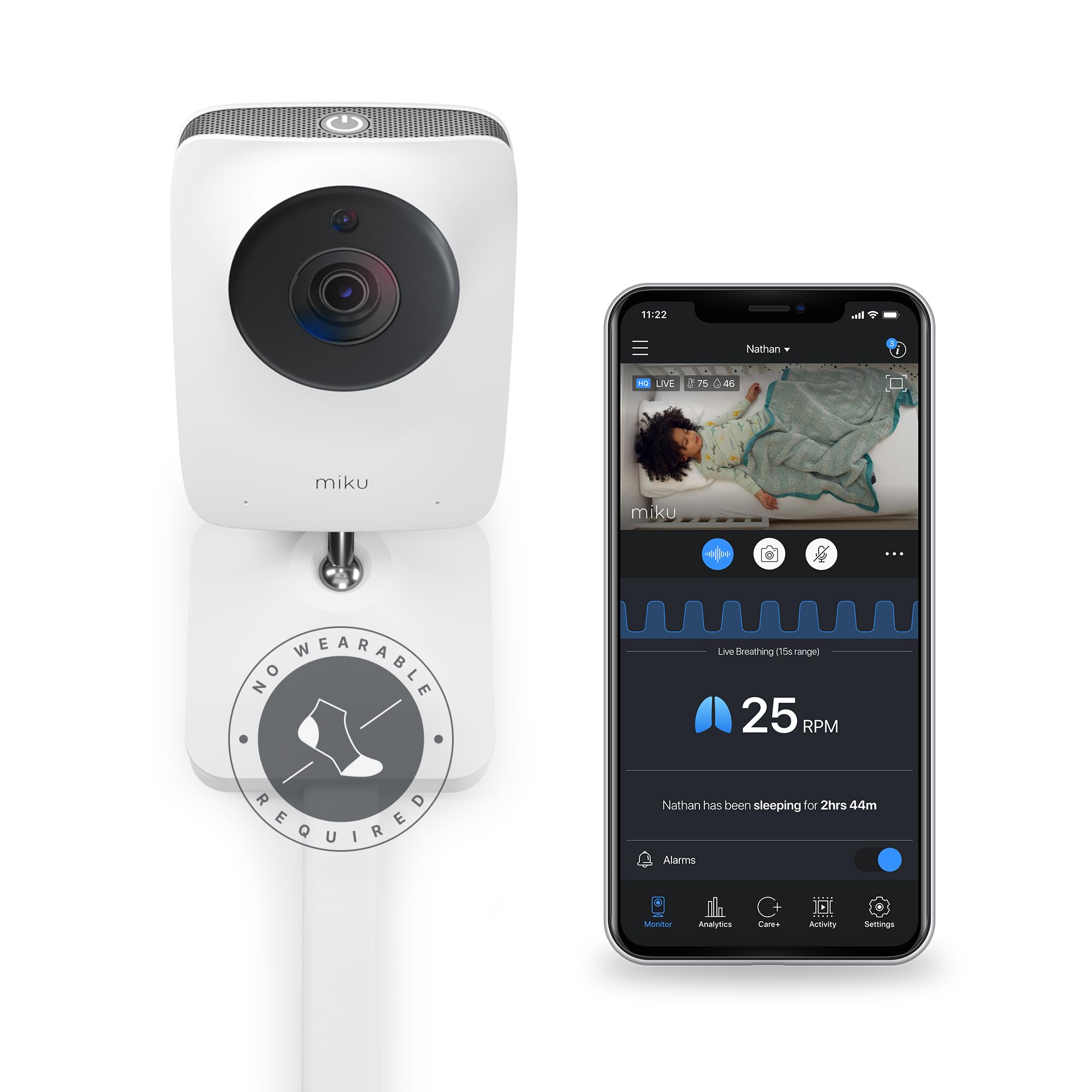
The Miku Pro is a contact-free smart camera that uses SensorFusion technology to track breathing motion through blankets, stuffed animals, and in any sleep position or lighting. Unlike wearable monitors that clip to the diaper, Miku captures every breath from above using pixel analysis, making it usable from day one through toddlerhood without repositioning. The 1080p video stream is crystal clear day and night, with dual-band WiFi and Bluetooth 4.1 ensuring a stable connection.
The comprehensive hardware kit includes a secure wall mount, cable guides, and all necessary installation tools — setup is genuinely hassle-free. The Miku app provides real-time breaths-per-minute data, sleep scoring, and motion recording. A Miku Membership at a monthly fee unlocks deeper analytics like expanded video clip storage and sleep trends, though the core breathing tracking and alerts remain functional without the subscription.
Some parents report occasional connection drops, and the motion recording feature only captures events when the baby is in the crib, not before. The subscription model for advanced features may feel restrictive for parents who prefer an all-inclusive purchase. Overall, the Miku Pro offers the most advanced contact-free breathing tracking on the market, making it ideal for parents who want zero wearables and detailed sleep insights — provided they have a reliable WiFi network.
Why it’s great
- Truly contact-free — works through blankets and in any position
- Includes wall mount and full installation kit
- Live breaths-per-minute tracking and sleep analytics
Good to know
- Requires stable dual-band WiFi to function reliably
- Subscription needed for advanced sleep insights and full playback
4. Philips Avent SCD973/37

The Philips Avent SCD973 combines a dedicated 5-inch parent unit with SenseIQ technology that analyzes millions of pixels per second to track sleep and breathing rate without any wearable. This dual-screen-and-app approach means you can monitor via the included HD screen when at home, or check in remotely through the Baby Monitor+ app when away. The 1080p camera with night vision delivers sharp, stable video, and the included 2-in-1 wall and crib mount adapts to any room layout.
Beyond breathing tracking, the monitor features a cry detection and translation system that analyzes five distinct cries using a scientifically developed algorithm. Two-way talkback lets you soothe your baby from anywhere, and the Secure Connect System keeps the connection private through multiple encrypted links. The 1300-foot range provides strong coverage for larger homes without relying fully on your home WiFi.
While the cry translation feature receives mixed reviews for accuracy, the core breathing motion tracking is reliable and provides genuine peace of mind. The premium price is justified by the combination of a standalone parent screen, breathing analytics, and robust build quality. Some parents note the smart features like cry translation feel more like a bonus than a necessity, but the monitor excels as a high-quality video monitor with integrated breathing detection.
Why it’s great
- Dedicated 5-inch parent unit plus app monitoring
- SenseIQ breathing tracking without wearables
- Long 1300-foot range with private encrypted connection
Good to know
- Cry translation feature is not consistently accurate
- Premium pricing reflects the full monitor + screen setup
5. Nanit Pro Baby Monitor Bundle
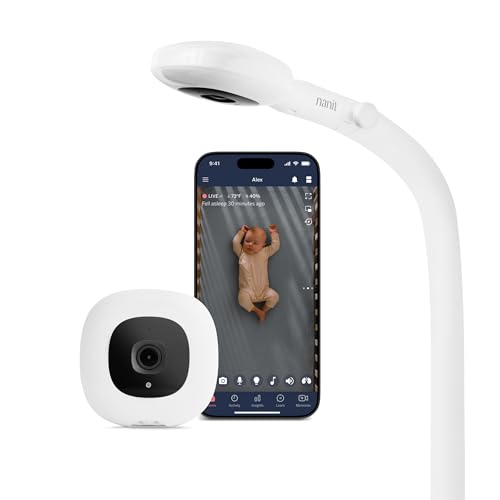
The Nanit Pro bundle includes the camera and an ASTM-certified floor stand that positions the camera directly over the crib for a bird’s-eye view — the optimal angle for breathing tracking and sleep analytics. The 1080p HD video with night vision is exceptionally clear, and the two-way audio provides clear communication. The companion app supports split-screen viewing for multiple cameras, live temperature and humidity readings, and real-time sound, motion, and cry notifications that adapt as your baby grows.
Nanit Insights, the optional subscription plan, unlocks auto-captured sleep data, personalized sleep tips, a real-time dashboard, and two-day lookback of sleep analysis plus video clips. The breathing monitoring feature uses visual motion tracking rather than a wearable, making it suitable from newborn through toddler years. Security is handled through 256-bit AES encryption and two-factor authentication, with the ability to add multiple caregivers and manage access.
The premium price reflects the hardware quality and the ecosystem of connected features, though the breathing and sleep tracking require the paid subscription after the free trial ends. The floor stand takes up more floor space than a wall mount, but its stability is excellent for standing toddlers who might pull on a wall-mounted camera. Parents who value deep sleep analytics and a clean overhead crib view will find the Nanit Pro worth the investment.
Why it’s great
- Overhead crib view provides optimal breathing tracking angle
- Crystal-clear 1080p video with reliable night vision
- Split-screen support for monitoring multiple rooms
Good to know
- Breathing and sleep analytics require a paid subscription
- Floor stand footprint may be large for small nurseries
6. Levana Oma Sense
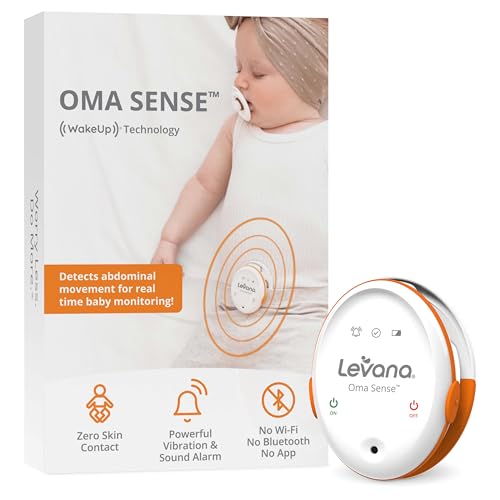
The Levana Oma Sense is a portable wearable monitor that slips over the diaper, pants, or buttoned-up onesie with zero skin contact required. Its patented Wakeup Technology monitors abdominal movement and, if no motion is detected for 15 seconds, initiates a random series of vibrations designed to gently stimulate the baby and encourage normal breathing to resume. If movement doesn’t restart within 5 seconds after the vibration, a full audible alarm sounds to alert parents.
Designed in Canada with medical-grade materials, the Oma Sense operates on zero WiFi, radio, or Bluetooth frequencies — making it completely radiation-free. The flashing blue LED on the unit provides continuous reassurance that breathing is being detected. The device is best suited for infants between 0-6 months old, and parents note it works reliably in simple setups without the complexity of apps or sensors to place under the mattress.
Some users find the alarm volume sufficient to wake a light sleeper but not loud enough for heavy sleepers in another room. The included strap works best with elastic waistbands; some parents make custom waistbands for all-in-one outfits to ensure proper positioning. For its price point, the Oma Sense delivers solid breathing detection with a unique vibration-first approach that can actually help re-establish breathing — a feature that sets it apart from simpler wearable monitors.
Why it’s great
- Vibration-first stimulation can re-establish breathing
- No WiFi, Bluetooth, or radio frequencies — radiation-free
- Zero skin contact design is gentle on baby’s skin
Good to know
- Alarm volume may not be loud enough for heavy sleepers
- Requires careful strap positioning to avoid false alarms
7. Owlet Dream Duo Gen 3
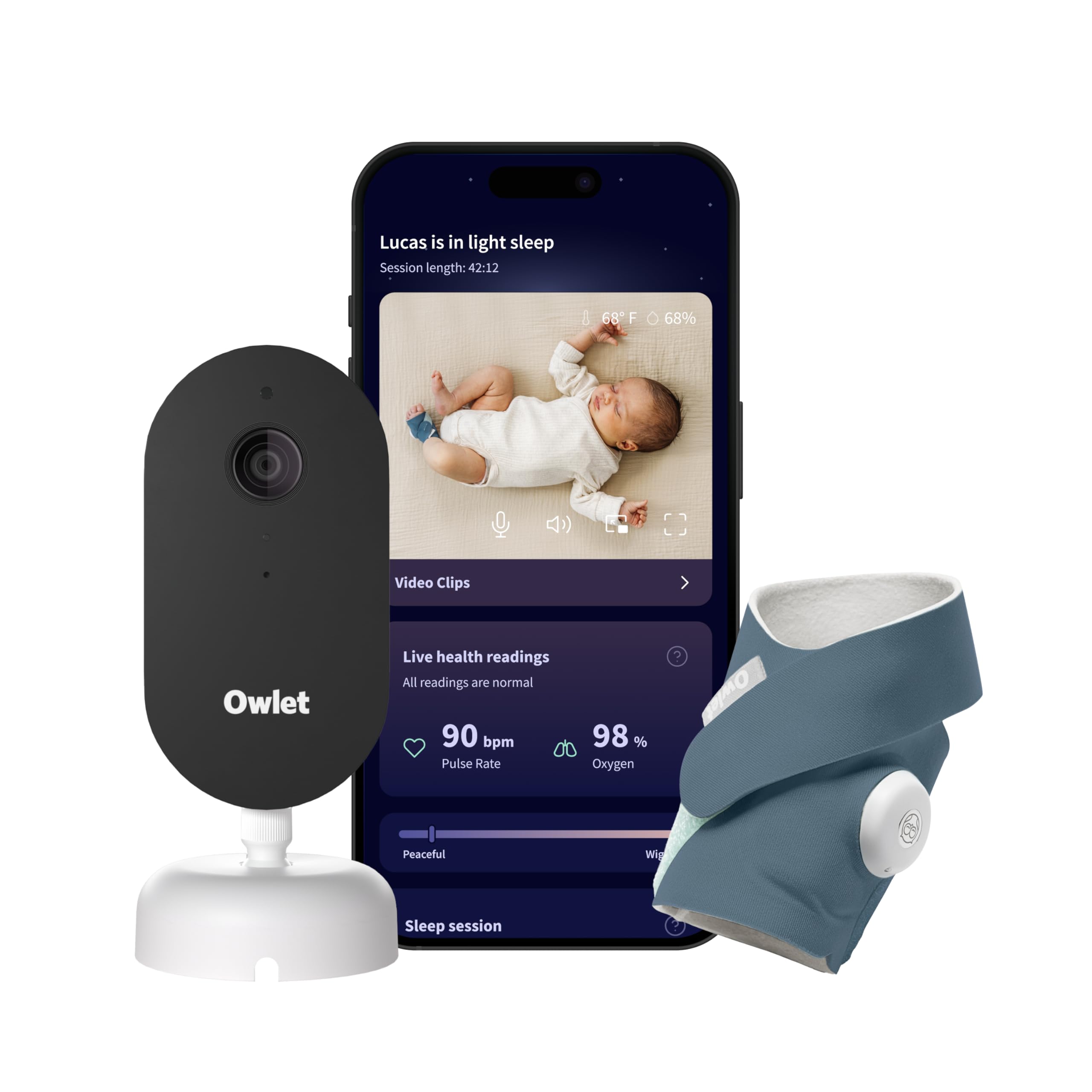
The Owlet Dream Duo Gen 3 is the most advanced all-in-one monitoring system on the market, pairing the FDA-cleared Dream Sock with a 2K HD camera. The Dream Sock uses medical-grade pulse oximetry to track your baby’s oxygen saturation and heart rate in real time, alerting you if readings leave preset safety zones. The sock fits babies from 1 to 18 months (6-30 lbs) and comes with four fabric sock sizes plus a base station for alarm relay.
The Dream Sight camera captures sharper-than-1080p 2K HD video with a 130-degree wide-angle lens and 4x zoom, all viewable from the Owlet Dream App. The system tracks room temperature and humidity, and you can customize notifications for sound, movement, and crying. The SGS Cybersecurity Mark provides independently verified protection for your video and health data through 256-bit encryption. Predictive Sleep Technology helps identify optimal wake windows to improve family sleep routines.
The Bluetooth range of the base station is a common pain point — it needs to stay within about 6 feet of the baby’s room to maintain connection, and the base alarm in the nursery doesn’t help if you’re in another part of the house. The Owlet360 subscription (approximately /month) is required to save historical health trends and access deeper insights. For NICU graduates or parents managing specific health concerns, the Dream Sock’s medical-grade oxygen and heart rate data provides a level of detail no other consumer baby breathing monitor can match.
Why it’s great
- FDA-cleared pulse oximetry tracks oxygen and heart rate
- 2K HD video with wide-angle lens provides superior clarity
- Predictive Sleep Technology helps optimize wake windows
Good to know
- Base station Bluetooth range requires it to be near the crib
- Health trend history and deep insights require a paid subscription
FAQ
Can a baby breathing monitor prevent SIDS?
How do I reduce false alarms on a wearable breathing monitor?
Do camera-based breathing monitors work in complete darkness?
What is the battery life difference between wearable and camera monitors?
Final Thoughts: The Verdict
For most users, the best baby breathing monitor is the Snuza Hero SE because it combines the most accurate direct-touch sensor with a logical vibration-first alarm sequence and exceptional battery life in a portable package. If you want contact-free monitoring with crisp HD video and detailed sleep analytics, grab the Nanit Pro Bundle. And for medical-grade pulse oximetry tracking of oxygen and heart rate, nothing beats the Owlet Dream Duo Gen 3 — though its premium price and subscription model mean it’s best suited for parents managing specific health concerns or NICU graduates.

Mo Maruf
I created WellFizz to bridge the gap between vague wellness advice and actionable solutions. My mission is simple: to decode the research and give you practical tools you can actually use.
Beyond the data, I am a passionate traveler. I believe that stepping away from the screen to explore new environments is essential for mental clarity and physical vitality.