Our readers keep the lights on and my smoothie glass nicely filled. As an Amazon Associate, I earn from qualifying purchases.
Choosing the wrong viscosity or formulation of engine oil is the fastest way to accelerate internal wear, reduce fuel economy, and risk costly sludge buildup. The right oil must match your engine’s specific tolerance demands, temperature operating range, and mileage history to deliver reliable lubrication across every driving condition.
I’m Mohammad Maruf — the founder and writer behind WellFizz. I’ve spent over a decade analyzing motor oil formulations, viscosity standards, and additive chemistry to help drivers find the lubricant that genuinely matches their engine’s requirements.
Whether you drive a high-mileage sedan, a turbocharged late-model car, or a pickup that works hard, this guide breaks down the real specifications and real user results to determine the best automotive oil for your specific needs and budget.
How To Choose The Best Automotive Oil
Selecting the right engine oil is a matter of matching the formulation and viscosity to your engine’s design, age, and operating conditions. A wrong choice — like running a conventional 10W-40 in a modern turbo engine — can lead to inadequate flow during cold starts or insufficient high-temperature shear protection.
Viscosity Grade: The Number That Matters
The first number (0W, 5W, 10W) indicates the oil’s flow performance at low temperatures — a lower number means better cold-start protection. The second number (20, 30, 40) represents the oil’s thickness at engine operating temperature. Consult your owner’s manual; deviating from the recommended viscosity can compromise fuel economy and long-term wear protection.
Full Synthetic vs. Synthetic Blend vs. Conventional
Full synthetic oils offer the highest resistance to thermal breakdown and sludge formation, making them ideal for turbocharged engines and extreme temperature ranges. Synthetic blends provide a middle ground for moderate driving conditions. Conventional oils are suitable for older, low-stress engines where the higher cost of synthetic isn’t justified.
High-Mileage Formulas
Vehicles with over 75,000 miles benefit from high-mileage oils that contain seal conditioners to reduce leaks and additives to combat deposit buildup common in older engines. These formulas often have a slightly higher viscosity to compensate for worn internal clearances.
Quick Comparison
On smaller screens, swipe sideways to see the full table.
| Model | Category | Best For | Key Spec | Amazon |
|---|---|---|---|---|
| Castrol EDGE Extended Performance 0W-20 | Full Synthetic | Extended drain intervals up to 25K miles | 0W-20 viscosity, 3X stronger vs. leading full synthetic | Amazon |
| Mobil 1 Advanced Full Synthetic 5W-20 (6-Pack) | Full Synthetic | Premium protection for modern engines | 6-quart pack, 10,000-mile protection | Amazon |
| K&N Premium Synthetic 5W-30 | Full Synthetic | All-weather protection with Synthamax tech | 5W-30 viscosity, 5 quart container | Amazon |
| Pennzoil High Mileage 5W-30 (6-Pack) | Synthetic Blend | Engines over 75,000 miles | 6-quart pack, 5W-30 viscosity, seal conditioners | Amazon |
| Valvoline Daily Protection 10W-40 | Conventional | Budget-friendly daily driving | 5 quarts, API SP/SN certified | Amazon |
In‑Depth Reviews
1. Castrol EDGE Extended Performance 0W-20 Full Synthetic

Castrol’s EDGE Extended Performance 0W-20 delivers the highest wear protection in this lineup, with a formulation that maintains viscosity 50X better under high-temperature stress compared to baseline API SQ limits. The 0W-20 grade ensures rapid oil pressure buildup during cold starts, critical for modern engines with tight bearing clearances.
Licensed with the latest API SP, ILSAC GF-7, and GM dexos1 Gen 3 standards, this oil is engineered to handle turbocharged engines and direct-injection systems where low-speed pre-ignition (LSPI) protection is mandatory. The 25,000-mile drain interval claim is supported by robust additive packages that resist oxidation and sludge formation over extended service periods.
For drivers who follow severe-service schedules or simply want the maximum protection envelope between changes, the Castrol EDGE 0W-20 is the top-tier choice that balances extreme performance with proven engine cleanliness over 35-plus years of brand refinement.
Why it’s great
- 50X better high-temperature performance than baseline API limits
- Licensed for GM dexos1 Gen 3 and ILSAC GF-7 specifications
- Extended 25,000-mile drain interval reduces maintenance frequency
Good to know
- Not ideal for engines requiring 5W-30 or 10W-40 viscosities
- Premium price point may exceed budget for basic commuter driving
2. Mobil 1 Advanced Full Synthetic 5W-20 (6-Pack)

Mobil 1 Advanced Full Synthetic 5W-20 is engineered to protect against the five common engine-damaging factors: wear, deposits, sludge, oxidation, and viscosity breakdown. Its formulation maintains stable oil pressure at operating temperatures up to 500°F while retaining fluidity at -30°F, making it suitable for a wide range of climates.
Meeting ILSAC GF-6 standards means this oil provides LSPI protection for turbocharged engines and timing chain wear resistance. The 6-quart pack offers convenience for vehicles that require 6 quarts per fill, eliminating the need for partial bottle storage. Users report that the twist cap is notably tight — using a rubber band for grip is a practical workaround.
For drivers who want a trusted global brand with a long track record of keeping engines clean and protected for 10,000-mile intervals, the Mobil 1 Advanced 5W-20 delivers proven performance at a reasonable price for the full synthetic category.
Why it’s great
- Excellent high-temperature stability up to 500°F and cold flow to -30°F
- ILSAC GF-6 certified for LSPI and timing chain protection
- Convenient 6-quart case for larger sump engines
Good to know
- Twist cap can be difficult to open without extra grip assistance
- Not formulated as a high-mileage oil for engines over 75K miles
3. K&N Premium Synthetic 5W-30 (5 Quarts)

K&N’s Premium Synthetic 5W-30 leverages Synthamax Technology — a proprietary additive package designed to minimize harmful contaminants and sludge buildup across a wide temperature range. The 5W-30 grade provides a thicker film at operating temperature than 0W-20 options, making it a strong match for engines that specify a 30-weight oil for wear protection under load.
The full synthetic base oil resists thermal breakdown better than conventional or blend formulations, which is especially relevant for vehicles that experience stop-and-go traffic, towing, or hot climate operation. Users consistently note the oil performs well in both cold starts and sustained highway driving, with no reported viscosity-related issues.
For those who prefer the K&N brand for its filtration reputation and want a full synthetic oil that performs reliably across seasons without the extended-drain price premium of the Castrol EDGE, this 5-quart jug represents a solid mid-range option.
Why it’s great
- Synthamax additives minimize sludge and contaminant buildup
- Full synthetic formula for high-temperature shear resistance
- Suitable for a wide range of driving conditions and climates
Good to know
- Not available in a multi-quart case configuration
- Limited warranty period of 3 months from manufacturer
4. Pennzoil High Mileage 5W-30 Synthetic Blend (6-Pack)
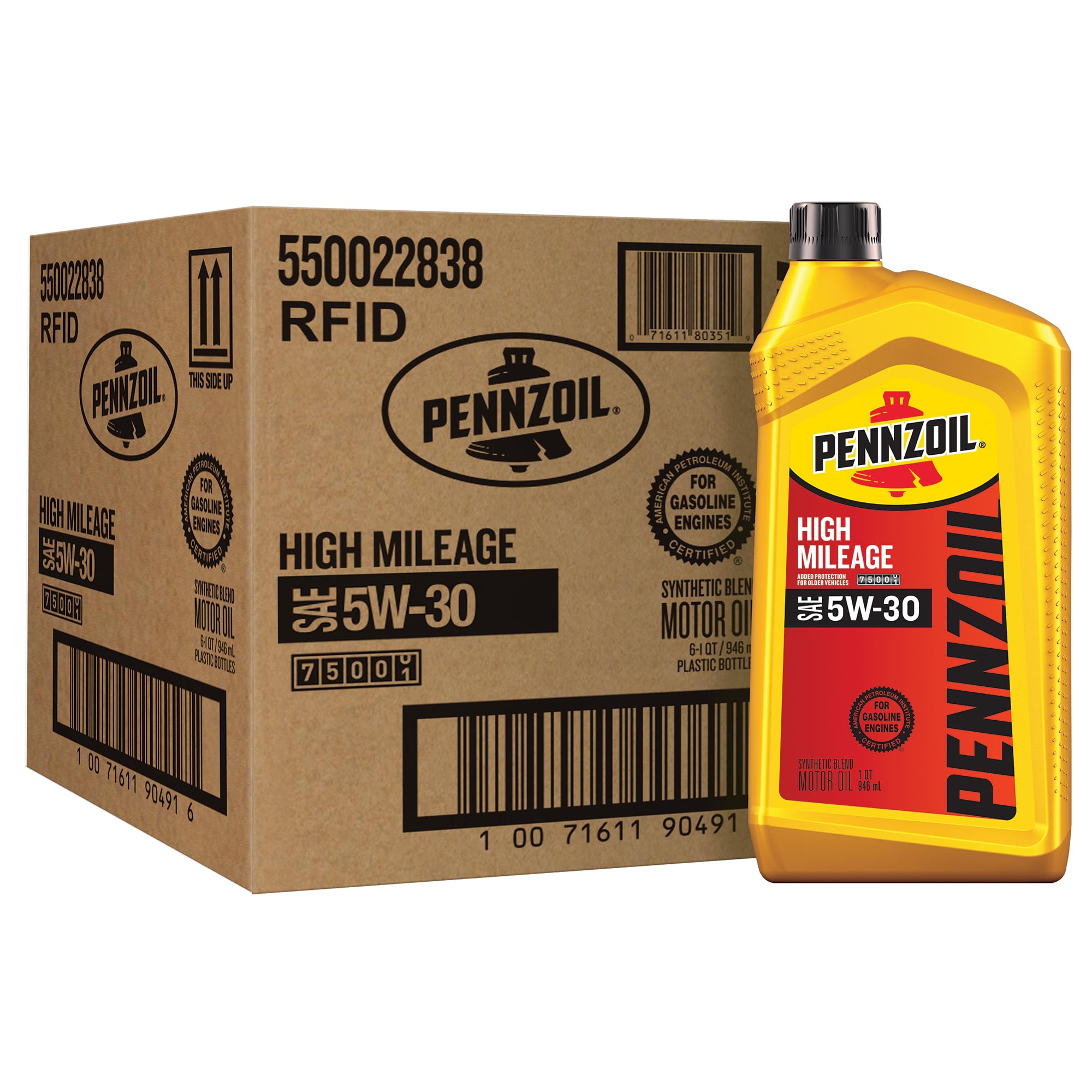
Pennzoil High Mileage 5W-30 is a synthetic blend specifically formulated to address the common issues of worn engines — oil leaks, increased consumption, and sludge deposits. The seal conditioners in this formula help recondition dried and shrunken seals, which reduces minor oil seepage that often appears past 75,000 miles.
The 5W-30 viscosity is the most commonly recommended grade for American and Asian engines from the mid-2000s onward, and this oil also provides LSPI protection for modern turbocharged engines that require a 30-weight. The 6-quart case is ideal for engines with a 6-quart sump, though users with smaller engines will have leftover oil for top-offs between changes.
For drivers with vehicles that have crossed the 75,000-mile mark and want to extend engine life without switching to a full synthetic, the Pennzoil High Mileage blend delivers targeted protection against the specific failure modes of aging engines at a reasonable cost.
Why it’s great
- Seal conditioners help reduce oil leaks in high-mileage engines
- LSPI protection for modern turbocharged applications
- 6-quart case size covers larger sump capacities efficiently
Good to know
- Synthetic blend, not a full synthetic for maximum thermal protection
- Not recommended for engines specified for 0W-20 or 10W-40 grades
5. Valvoline Daily Protection 10W-40 Conventional (5 Quarts)
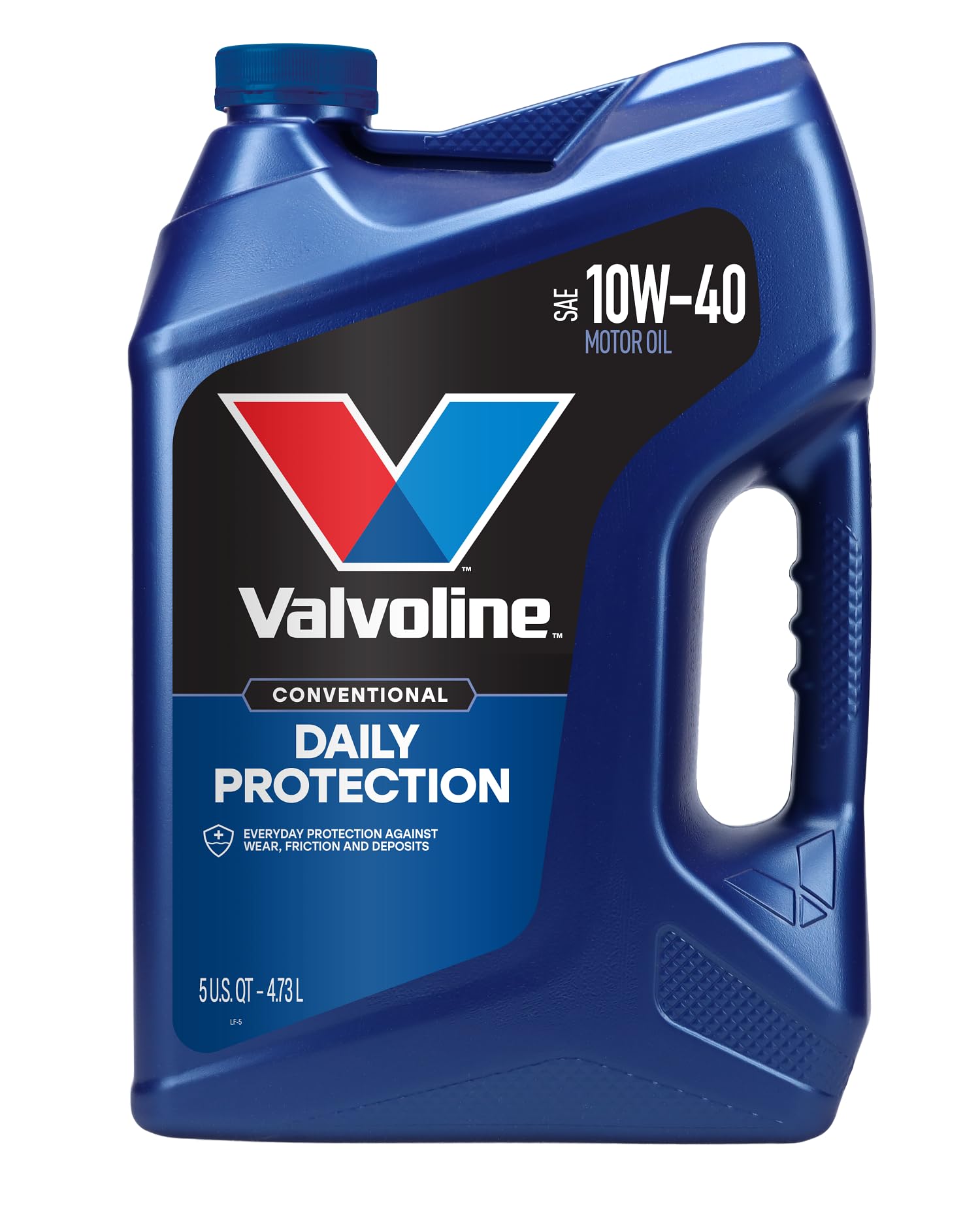
Valvoline Daily Protection 10W-40 is a conventional oil formulated with added detergents to prevent sludge and oil breakdown in older engines that require a 40-weight at operating temperature. Its low-friction technology helps optimize power delivery and fuel economy in engines that tolerate a thicker film, such as those found in older trucks and high-mileage work vehicles.
Certified for API SP and all preceding gasoline categories, this oil meets the latest industry standards despite its conventional base. The 5-quart container is the standard fill for many passenger cars and trucks, making it a straightforward one-container purchase for a complete oil change.
For budget-conscious drivers maintaining a vehicle that specifies 10W-40, the Valvoline Daily Protection offers reliable wear protection and deposit control without the premium cost of full synthetic formulations. It’s a solid entry-level choice for basic daily driving duties.
Why it’s great
- Affordable conventional formula with API SP certification
- Added detergents help keep engines clean and sludge-free
- 5-quart jug covers standard fill volumes in one purchase
Good to know
- Conventional base lacks high-temperature stability of synthetics
- 10W-40 viscosity is too thick for engines requiring 0W/5W/10W-30 grades
FAQ
Can I use a 0W-20 oil in an engine that recommends 5W-30?
What is the actual difference between full synthetic and synthetic blend motor oil?
Final Thoughts: The Verdict
For most users, the best automotive oil winner is the Castrol EDGE Extended Performance 0W-20 because it offers the highest level of wear protection and extended drain intervals for modern engines. If you need a full synthetic that balances cost and performance for standard 5W-20 applications, grab the Mobil 1 Advanced Full Synthetic 6-Pack. And for high-mileage engines over 75,000 miles, nothing beats the targeted seal-conditioning formula of the Pennzoil High Mileage 5W-30.

Mo Maruf
I created WellFizz to bridge the gap between vague wellness advice and actionable solutions. My mission is simple: to decode the research and give you practical tools you can actually use.
Beyond the data, I am a passionate traveler. I believe that stepping away from the screen to explore new environments is essential for mental clarity and physical vitality.