Our readers keep the lights on and my smoothie glass nicely filled. As an Amazon Associate, I earn from qualifying purchases.
A vinyl pool liner is a significant investment, and the wrong automatic cleaner can tear, pucker, or abrade it within weeks. The difference between a cleaner that respects your liner and one that chews it up comes down to specific design choices — soft-tread materials, gentle scrubbing action, and optimal suction that doesn’t stress the seam welds.
I’m Mohammad Maruf — the founder and writer behind WellFizz. I’ve spent countless hours analyzing the propulsion systems, tread compounds, and navigation algorithms of dozens of pool cleaners to identify which models treat vinyl surfaces with the care they demand.
After deep-diving into specifications and real owner experiences, the best automatic pool cleaner for vinyl pools balances powerful debris removal with liner-safe engineering so your pool stays pristine without hidden damage to the surface you invested in.
How To Choose The Best Automatic Pool Cleaner For Vinyl Pools
Vinyl liners require a different approach than concrete or fiberglass. The cleaning mechanism must be gentle enough to avoid rips and abrasions while still being powerful enough to keep the pool clear. Here are the three most important factors to consider before buying.
Tread and Bumper Design
Hard plastic wheels or tracks with aggressive tread patterns can leave permanent scuff marks on a vinyl liner. Look for models with soft rubber or caterpillar-style tracks that distribute weight across a larger surface area. A protective bumper along the leading edge also prevents scraping when the unit turns against the wall seam.
Brush Type and Contact Pressure
Scrub brushes vary widely in stiffness. Polyurethane or nylon bristles are generally safe for vinyl, while metal or carbon-fiber brushes can scratch and dull the surface. Some robotic cleaners allow you to adjust the brush speed or pivot angle, which is useful for minimizing friction against the liner while still loosening algae and stuck dirt.
Weight and Suction Balance
Heavier units can cause the liner to stretch or pucker, especially around steps and shallow areas. A cleaner that relies on the pool’s existing pump suction (suction-side models) adds minimal physical weight to the liner because the unit itself is lightweight. Robotic cleaners, being self-contained, are heavier — so their buoyancy and track pressure must be finely tuned to not drag or stamp the liner.
Quick Comparison
On smaller screens, swipe sideways to see the full table.
| Model | Category | Best For | Key Spec | Amazon |
|---|---|---|---|---|
| Beatbot Sora 70 | Robotic | Large pools & surface cleaning | 6800 GPH suction | Amazon |
| AIPER Scuba V3 | Robotic | AI-driven precision cleaning | AI camera + 3-micron filter | Amazon |
| BOTLUXE PC20 | Robotic | Value and track traction | 5000 GPH / 4L basket | Amazon |
| AIPER Scuba S1 2026 | Robotic | Weekly scheduled deep cleaning | 270-min runtime | Amazon |
| WYBOT C2 | Robotic | Fine debris filtration | 10-micron filter layer | Amazon |
| Hayward Pool Vac XL | Suction-Side | Lightweight, pump-powered cleaning | 5.08 lbs / 40-ft hose | Amazon |
| RERIOU Track Cleaner | Robotic | Multi-surface adaptability | Dual 180W brushless motors | Amazon |
| Zyerch SAT25 | Robotic | Extended runtime for large pools | 180-min run time | Amazon |
| NIXBOT QP5 | Cordless Robotic | Small to medium pools on a budget | Dual-motor turbine | Amazon |
In‑Depth Reviews
1. Beatbot Sora 70
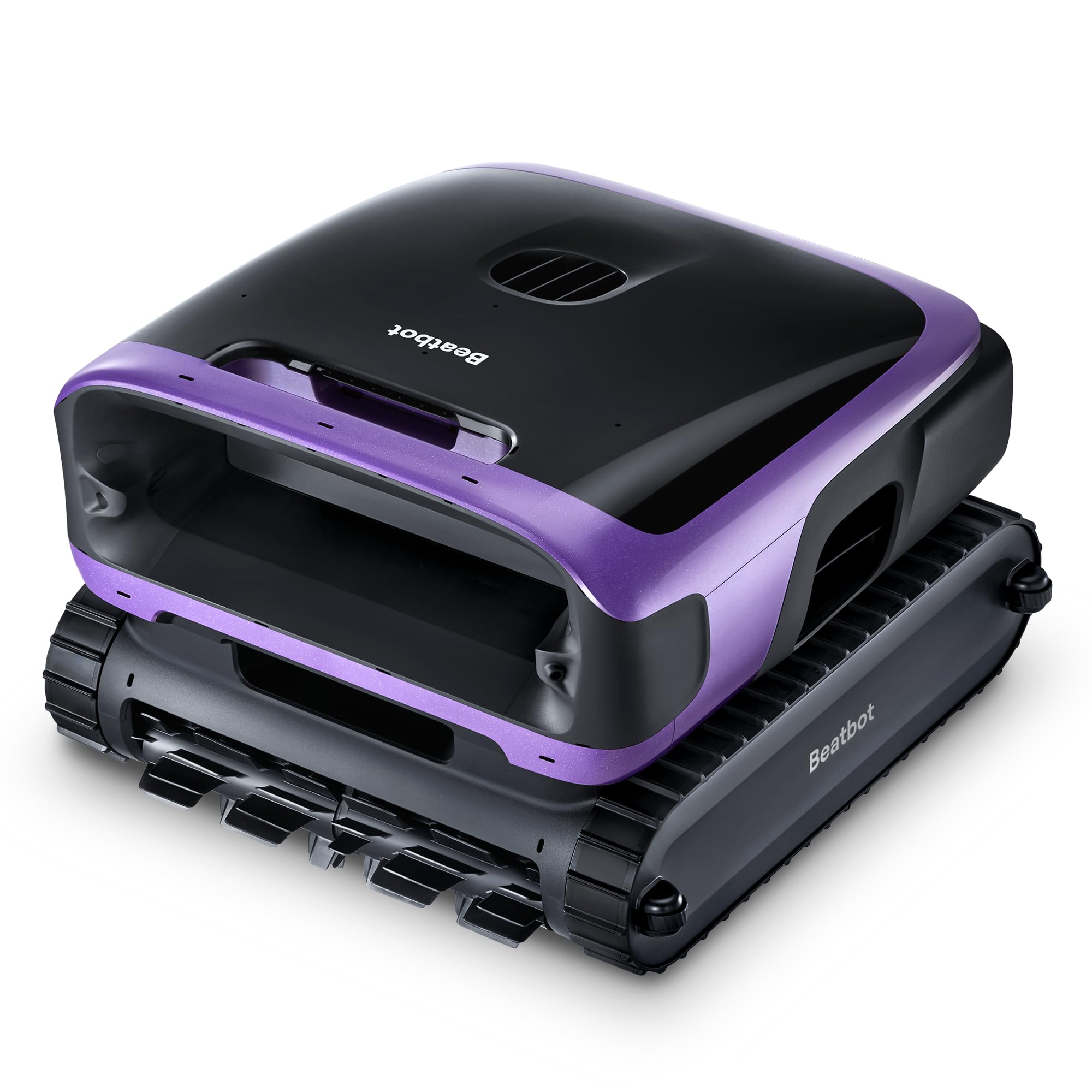
The Beatbot Sora 70 is the only unit in this class that cleans the water surface, waterline, walls, floor, and shallow-water platforms as low as 8 inches. The JetPulse dual-water jets actively guide leaves into the suction inlet — a standout feature for pool owners who battle floating debris daily. Its HydroBalance structure delivers 6800 GPH of suction without clogging, and the 10,000 mAh battery provides up to 5 hours of floor cleaning, covering pools up to 3,200 sq. ft.
For vinyl liner safety, the Sora 70 uses a well-distributed weight design and optimized track pressure that minimizes liner stress. The 6-liter filter basket (150-micron) reduces emptying frequency, while the Smart Surface Parking feature parks the robot at the waterline for easy retrieval — no dragging across the liner edge. The unit includes Bluetooth and app control for scheduling and remote operation, plus a 3-year protection plan.
Some users note the unit is heavy to lift out of the pool and that the fine filter could be finer for capturing ultra-fine sediment. But for large pools where surface debris and deep cleaning are both needed, the Sora 70 delivers a full-pool solution that respects vinyl surfaces.
Why it’s great
- Surface skimming with JetPulse improves overall cleanliness without extra chemical dosing
- Large capacity filter means fewer stops to empty during a cleaning cycle
- Smart Surface Parking prevents liner abrasion during retrieval
Good to know
- Lifting the unit out of the water requires some upper-body strength
- App scheduling is absent; must use Eco Mode for regular intervals
2. AIPER Scuba V3
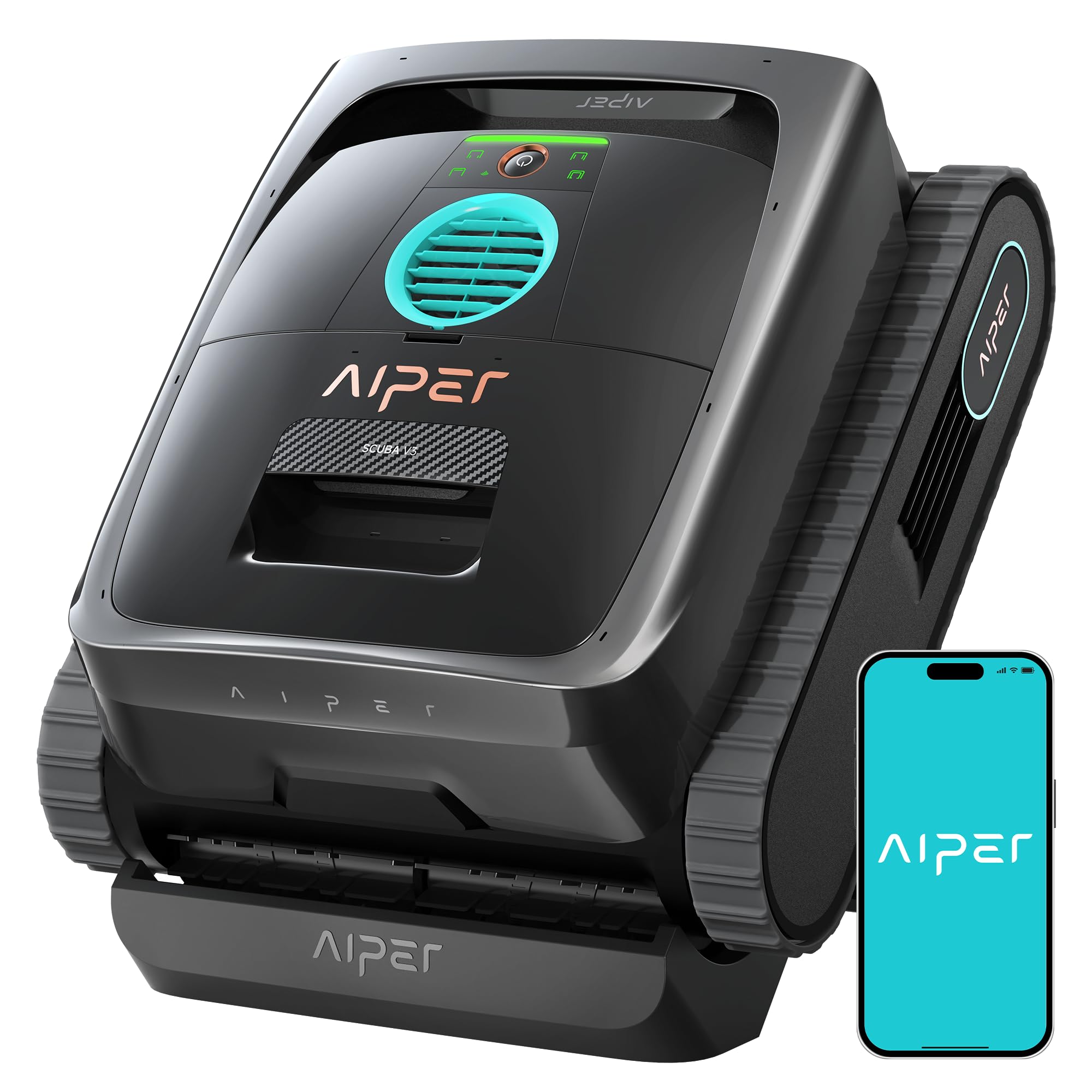
The Scuba V3 uses a front-facing AI camera combined with Navium Mode to identify over 20 types of debris and navigate directly to them — a significant leap over the random or grid-only patterns of earlier robotic pool cleaners. This targeted approach reduces overall run time and scrubbing contact with the liner, which is a key advantage for vinyl pools. The MicroMesh multi-layer filtration system traps particles down to 3 microns, resulting in visibly clearer water with fewer passes.
Weighing 18.1 pounds, the V3 is lighter than many premium robotic cleaners, and its featherlight design relative to its capabilities reduces the physical pull on the liner. The wireless charging dock eliminates the need to plug in wet cables — just set the unit on the dock to charge. When cleaning is done, the robot automatically returns to the waterline and stays there for 10 minutes for easy retrieval without touching the liner edge. The unit is backed by a 2-year warranty and TÜV-certified data privacy for the onboard camera.
A few owners report that the V3 can struggle on steep 45-degree vinyl wall angles, and the camera-based navigation relies on adequate lighting — it works best in well-lit pools. The app loses connection underwater, so scheduling must be done on land. But for vinyl pool owners who want a truly autonomous operation that minimizes liner stress, the Scuba V3 is a compelling choice.
Why it’s great
- AI camera reduces random scrubbing, lowering wear on the liner
- Wireless charging dock prevents electrical hazards and simplifies storage
- 3-micron filter captures particles that would otherwise settle into vinyl seams
Good to know
- Struggles on steep 45-degree wall transitions common in deep-end vinyl pools
- No underwater app control — must preset cleaning cycles on land
3. BOTLUXE PC20
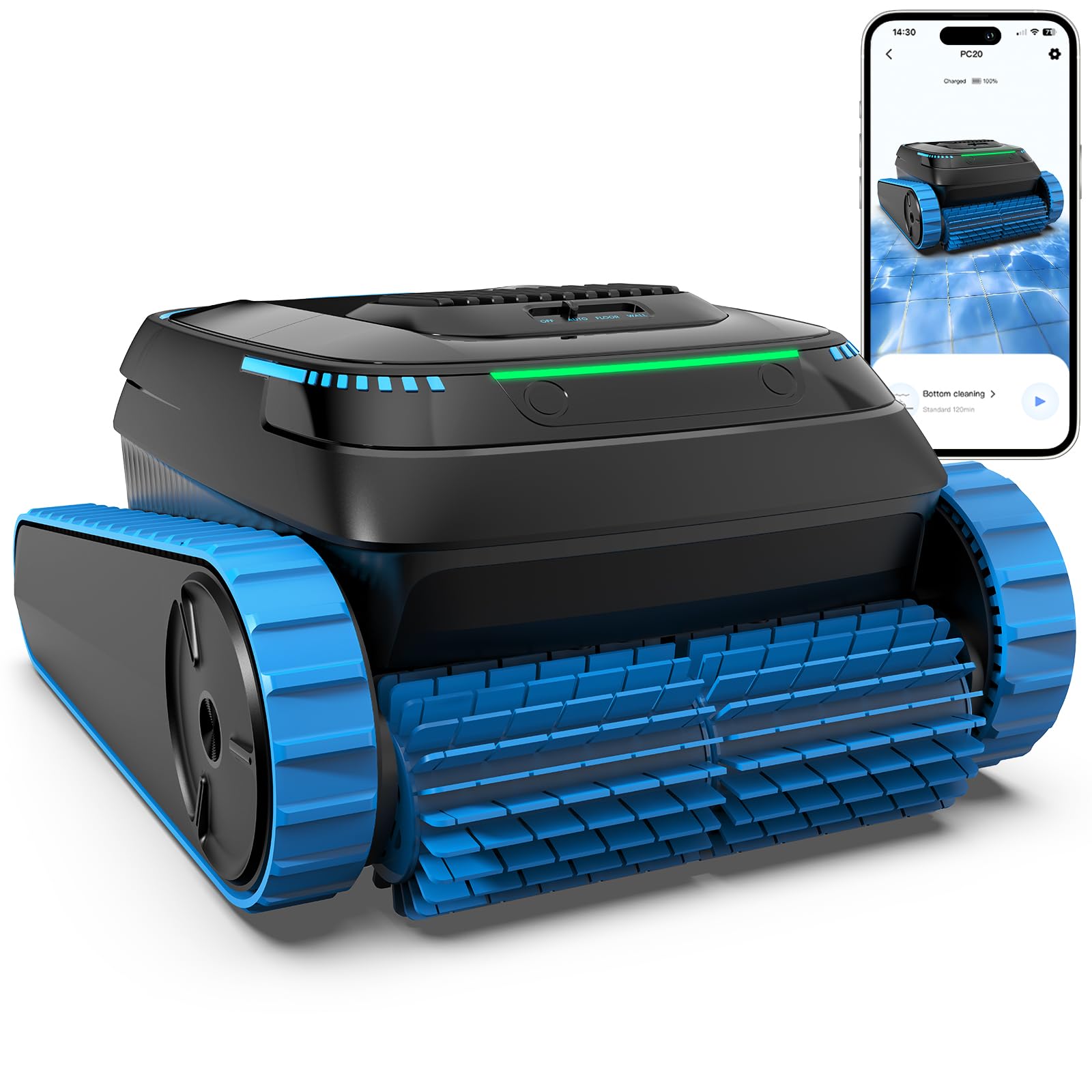
The BOTLUXE PC20 uses durable tracks that handle slopes up to 30 degrees and a smart zigzag navigation pattern that reduces missed spots. With 5000 GPH of suction and a 4-liter fine filter basket (150-micron), it captures both large leaves and fine sand in a single cycle. The unit cleans floors, walls, and waterline, and the built-in auto-park feature brings it to the pool edge when the battery runs low — this reduces the need to reach in and grab the robot, limiting accidental liner contact.
Weighing just 11 pounds, the PC20 is among the lighter robotic cleaners, which means less downward pressure on the vinyl liner. The app allows you to preset cleaning mode, suction level, and run time before submersion. Owners report excellent cleaning on steps and stairs, areas where liner damage is most common. The cordless design eliminates hose drag, and the 2.5-hour charge time gets the unit back in the water quickly.
The main trade-off is battery runtime — users report between 1.5 to 2 hours of actual cleaning per charge, which may be insufficient for very large pools in a single session. The Bluetooth connection drops once the robot is underwater, so real-time tracking is not available. Still, for the price, the PC20 offers strong track-based cleaning with minimal liner risk.
Why it’s great
- Lightweight 11-lb design reduces liner stress during operation and retrieval
- Auto-park feature prevents dragging the unit across the liner edge
- App control allows on-land presets for custom cleaning parameters
Good to know
- Battery lasts 1.5–2 hours per charge, not the full capacity for very large pools
- Bluetooth signal is lost underwater; no real-time map viewing
4. AIPER Scuba S1 2026
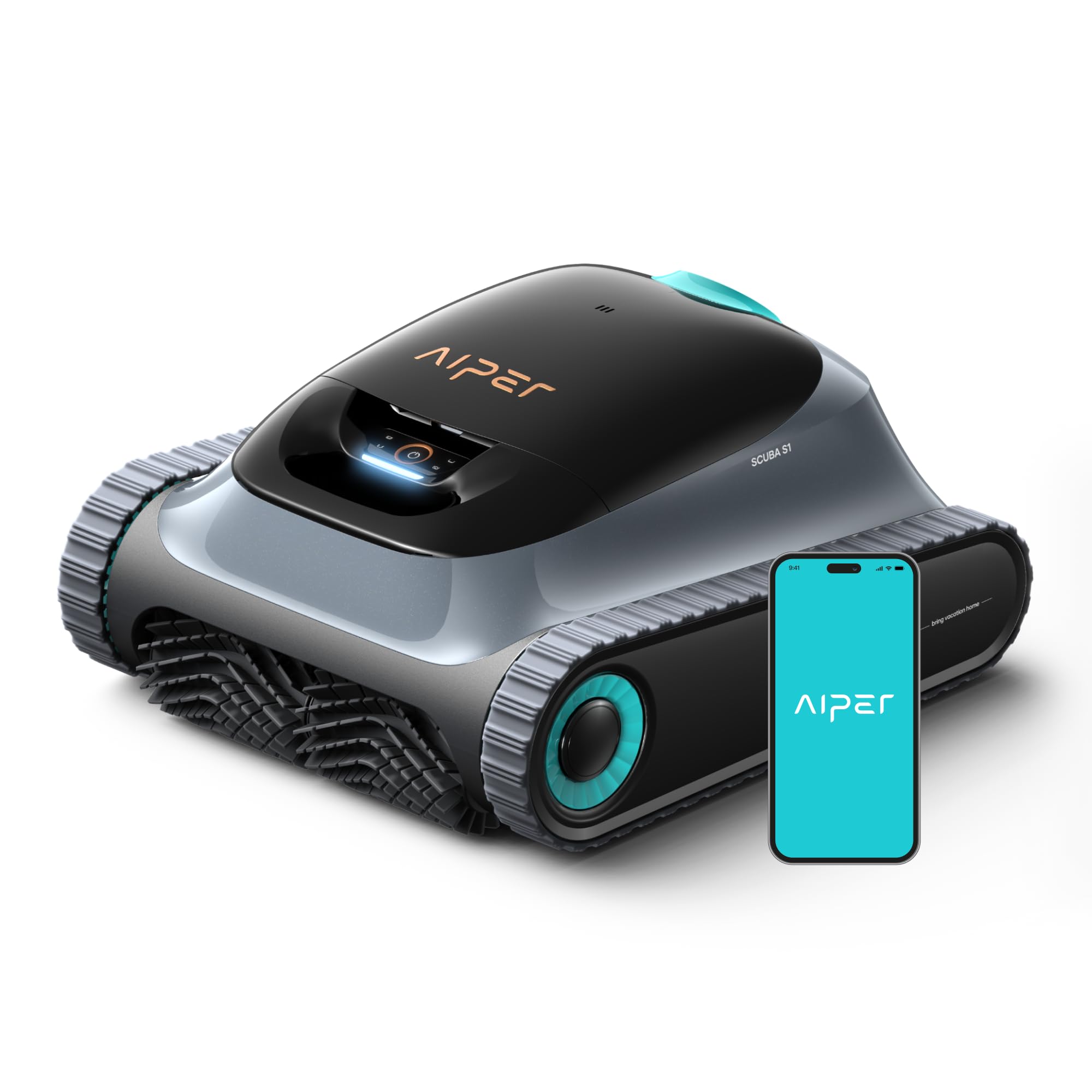
The Scuba S1 2026 upgrade extends runtime up to 270 minutes in Eco Mode, making it ideal for vinyl pool owners who want a single charge to cover the entire cleaning cycle without interruption. It uses 11 high-precision sensors with WavePath dual-path algorithms that adjust navigation in real time based on the pool’s shape. This prevents the random bumping that can scuff liner walls, replacing it with a systematic coverage that adapts to obstacles like steps and benches.
The dual-layer filtration system uses a replaceable 3-micron ultra-fine filter paired with a 180-micron standard filter, capturing dust, sand, and leaves while keeping return water clear. The over-the-waterline scrubbing action is effective at removing scum lines without harsh brushes that could dull the vinyl. The app supports 5 cleaning modes, cleaning logs, and OTA updates — and the unit comes with a 2-year warranty and is backed by Aiper’s global service network.
Some users found the initial cleaning path selection confusing — changing from standard path to Adaptive Path in the app solved coverage gaps. The unit can get stuck on certain step designs, and the charging port rubber tab requires drying before plugging in. But for vinyl pool owners who want a reliable, long-running robot with app scheduling, the Scuba S1 is a strong pick.
Why it’s great
- 270 minutes of runtime covers large pools in a single charge
- Adaptive navigation reduces unnecessary wall contact, protecting the liner
- App scheduling with Weekly Custom Cleaning Plan for hands-off operation
Good to know
- Charging port must be dried before plugging to prevent moisture damage
- May hang on deep steps; cleaning path setting needs initial adjustment
5. WYBOT C2
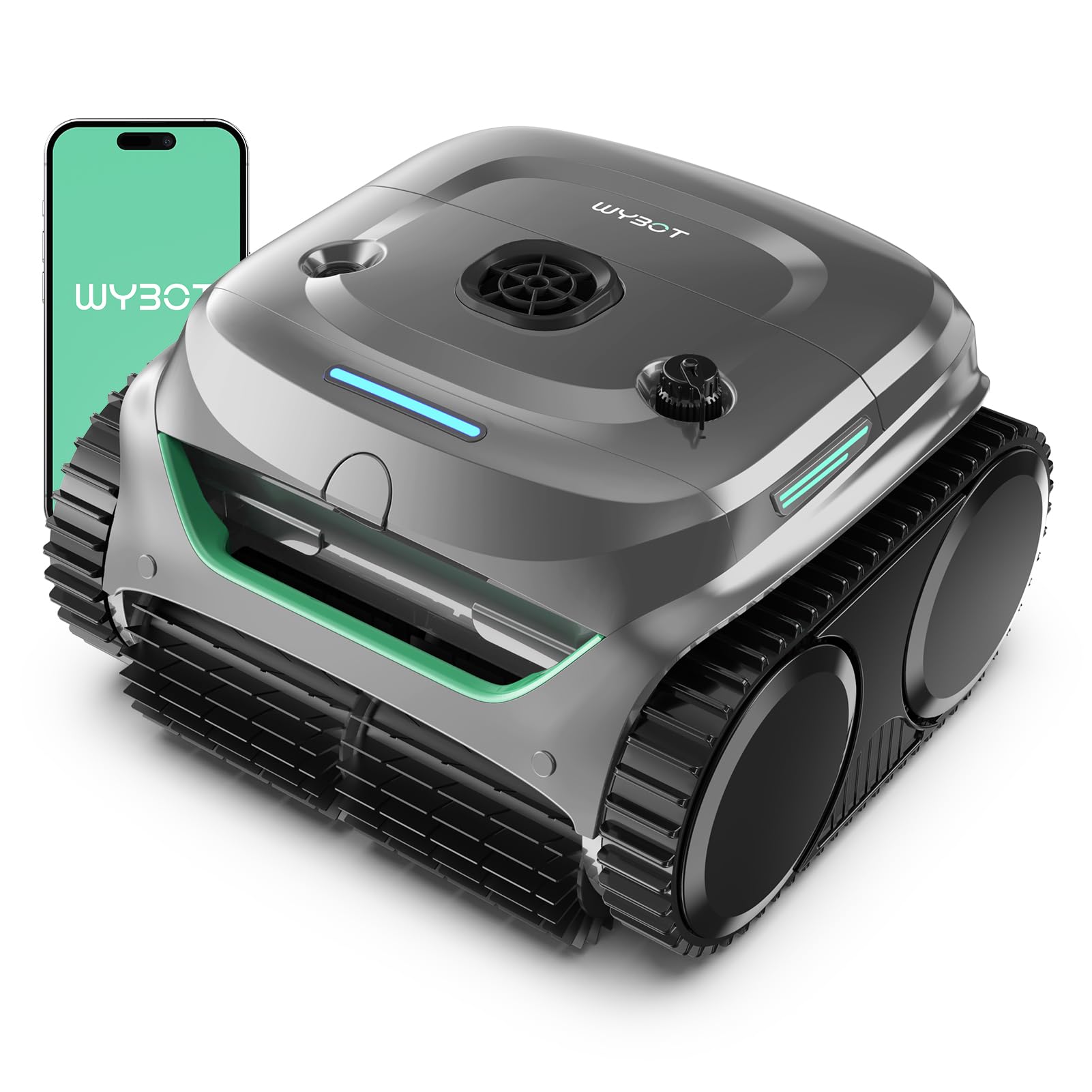
The WYBOT C2 uses an advanced dual-layer filtration system with a 180-micron primary filter and a 10-micron ultra-fine secondary layer — one of the tightest filtration setups in this guide. This means dust, algae debris, and fine sand that could settle into vinyl liner wrinkles are captured and removed from circulation. The 3792 GPH suction powers dual scrubbing brushes that lift stuck-on dirt without the harshness of metal bristles.
The C2 is designed for pools up to 2,260 sq. ft. and adapts to freeform, rectangular, and oval shapes. It cleans floors, walls, and waterline, and the included app gives you 8 cleaning modes, 6 path-planning options, and 4 scheduled timers. The cordless design frees you from hose tangling, and the easy-retrieve handle lets you lift the unit out without scraping the liner. The 3.5-hour charge time is manageable, and the 180-minute runtime in Echo Modes covers most residential pools.
Owners note that the C2 does not clean corners perfectly and that the app requires some technical familiarity to set up. The fine filter is only available in Turbo mode, which may reduce runtime. But for vinyl pools where water clarity is the top priority and fine debris is a constant issue, the WYBOT C2 delivers exceptional filtration performance.
Why it’s great
- 10-micron filter captures ultra-fine sediment that clouds vinyl pool water
- Dual scrubbing brushes clean without stiff bristles that could scratch the liner
- App scheduling offers flexible cleaning pattern options for odd-shaped pools
Good to know
- Corner cleaning is not perfect; may need occasional manual spot touch-up
- Fine filter activates only in Turbo mode, reducing overall battery life
6. Hayward Pool Vac XL

The Hayward Pool Vac XL is a suction-side cleaner that connects directly to your pool’s skimmer or suction port and uses your existing pump’s water flow for movement and cleaning. Weighing only 5.08 pounds, it is the lightest option in this guide by a wide margin — which means virtually no physical stress on the vinyl liner. The AquaPilot steering system follows preprogrammed patterns across the floor, walls, and coves, and the wings and skirt design maximize debris suction for leaves and twigs.
There is no booster pump required; the unit installs in under 10 minutes with no tools. Because there is no separate motor or battery inside the cleaner, there is also no risk of overheating or electrical component failure. The debris is sent directly to your pump’s filter or skimmer basket — there are no bags to empty. Owners report that it moves silently and can handle rocks up to 1.5 inches without jamming, though the paddle wheel may need an initial clearing if large debris is present.
The main limitation is that the cleaning pattern is random rather than mapped, so deep coverage may require multiple cycles. The unit does not climb right-angle walls and may get stuck on certain step configurations. But for vinyl pool owners who want the simplest, lightest cleaner possible — and already have a good pump system — the Pool Vac XL remains a reliable, low-maintenance choice.
Why it’s great
- Ultra-lightweight design eliminates any risk of liner stretching or puckering
- No separate power source — uses existing pump flow, reducing electrical complexity
- Simple 10-minute installation with no tools required
Good to know
- Random cleaning pattern may require multiple cycles for full coverage
- Does not climb steep walls or right-angle steps; best for flat cleaning
7. RERIOU Track Cleaner
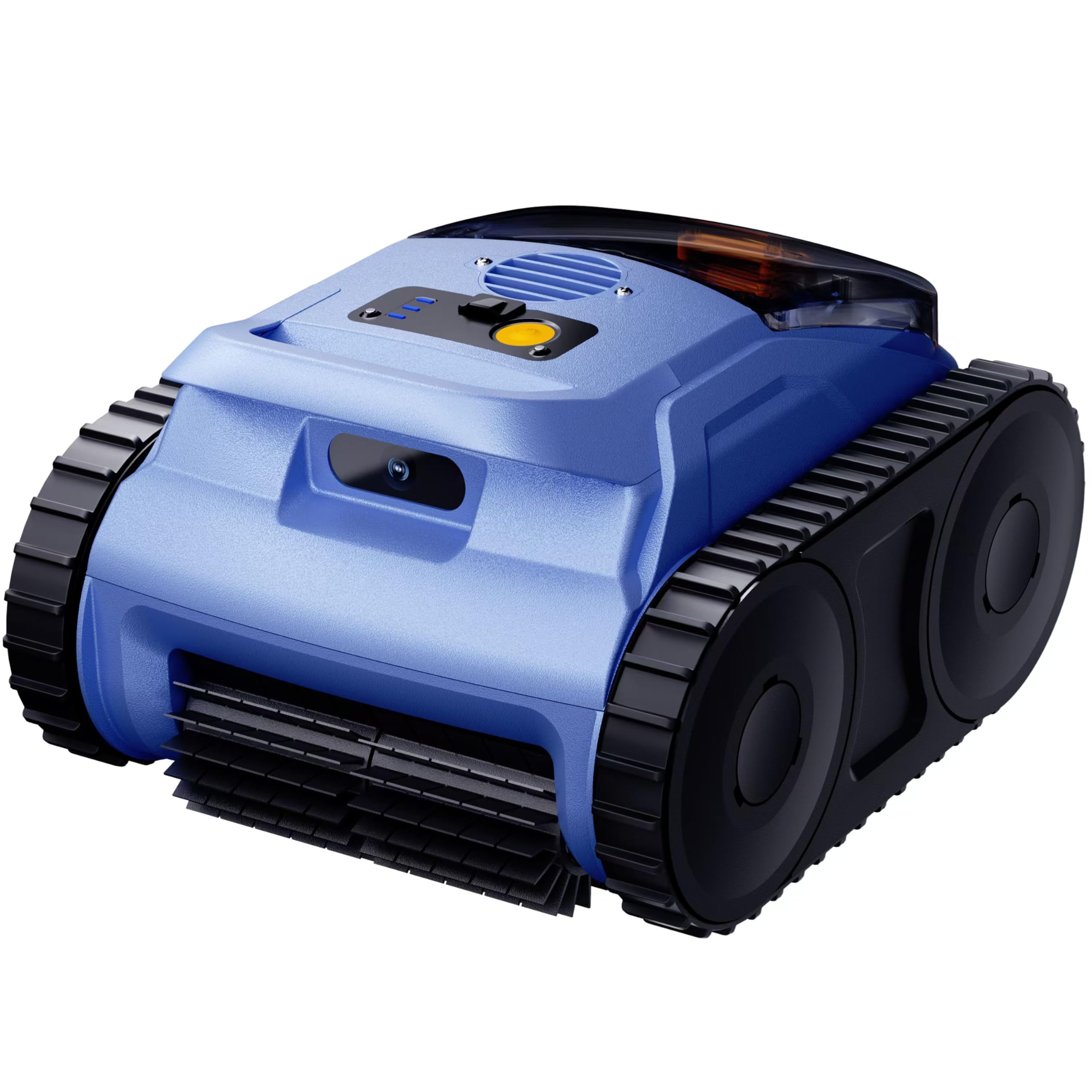
The RERIOU Track Cleaner uses industrial-grade tracks designed to handle drains, steps, corners, and uneven terrain without slipping — translating to less frantic movement that could scuff the liner. Powered by two independently controlled 180W brushless motors (IP68-certified), it delivers strong suction and scrubbing force while remaining quieter than many competitors. The sonar navigation maps the pool and optimizes cleaning paths to reduce overlap and operation time, which means fewer passes over the same liner area.
The one-touch start operation is refreshingly simple — press the button, drop it in, and the unit selects the appropriate mode for floor, wall, or full coverage. The versatility extends to vinyl, fiberglass, tiled, and concrete surfaces, so the track tension and brush pressure are calibrated to adapt rather than grind. The 14.3-pound weight is moderate, but the wide track footprint distributes the load well. The 150-minute runtime is sufficient for most pools up to 2,150 sq. ft.
Some owners note the unit can be slightly bulky on narrow steps and that the fine-mesh basket requires rinsing after every cycle. The charger connection should be dried before plugging in. However, for vinyl pool owners looking for a powerful track-driven robot that won’t scratch the surface, the RERIOU offers impressive build quality at a mid-range price.
Why it’s great
- Industrial-grade tracks provide stable grip without liner-damaging slips
- Sonar navigation reduces redundant coverage, limiting unnecessary liner contact
- One-touch start is genuinely simple — no app or setup required
Good to know
- Filter basket needs rinsing after each use to maintain suction performance
- Charging connector must be dried completely before attaching power
8. Zyerch SAT25
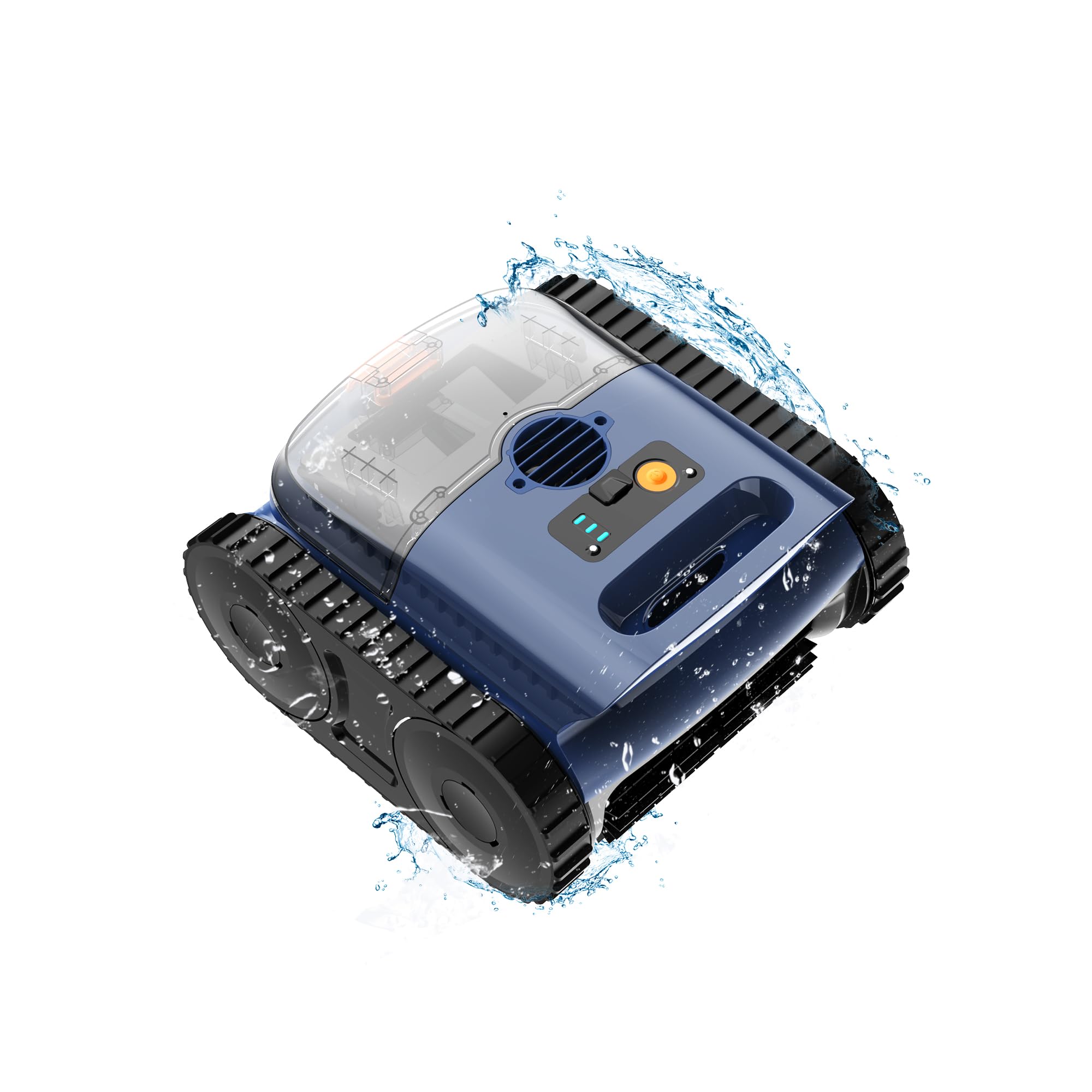
The Zyerch SAT25 is built for extension — delivering up to 180 minutes of continuous cleaning on a single charge, enough to cover large inground pools up to 65 feet in length. The caterpillar treads provide superior mobility over drains, steps, and uneven terrain, reducing the abrupt jerks that can pull at vinyl liner seams. The sonar navigation creates logical mapping paths, so the unit doesn’t waste battery or liner time on random bumping.
The unit cleans floors, walls, and waterline with a large filter basket that traps both large debris and fine particles. Owners consistently praise its ability to handle heavy debris like leaves, sand, and algae without clogging. The 3-hour charge time is reasonable for the runtime you get, and the cordless design eliminates any hose drag concerns. The SAT25 also features flexible cleaning modes — default, floor-only, and wall-focused — allowing you to target specific areas without over-scrubbing the liner.
The main issue reported is that the charging port rubber tab can let in water if not fully sealed, requiring drying before charging. The unit may also struggle with very tight corners. But for vinyl pool owners who need a long-running robot that respects the liner through thoughtful tread design, the Zyerch SAT25 delivers outstanding runtime value.
Why it’s great
- 180-minute runtime covers large pools without needing a break
- Caterpillar treads provide smooth, controlled movement over vinyl seams
- Sonar navigation follows logical paths for complete coverage without wasted passes
Good to know
- Charging port seal can trap moisture; dry thoroughly before charging
- Corner cleaning not perfect; may leave small debris clusters
9. NIXBOT QP5

The NIXBOT QP5 is an entry-level cordless robotic cleaner that offers a dual-motor turbine system and sensor-based navigation at a budget-friendly price point. It is designed for both inground and above-ground pools and provides three cleaning modes — floor only, wall only, or automatic. The lithium-ion battery charges in 4 hours and delivers enough power for a full cleaning cycle on smaller to medium pools.
For vinyl pool consideration, the QP5 uses soft rubber tracks and a lightweight body (21 pounds) with a wide base to distribute weight evenly. The sensor navigation avoids obstacles and maps the pool in real time, which reduces random collisions against liner walls. The cordless design eliminates hose drag, and the onboard control button makes operation simple — just press and drop. Owners report that it picks up everything from fine sand to large leaves effectively.
Some users experienced quality control issues, with one unit arriving non-functional, and the unit’s weight may still be a concern for very delicate or old vinyl liners. The unit does not climb steep steps very well, and the battery life is not as generous as pricier models. However, for vinyl pool owners on a tighter budget who want cordless convenience, the NIXBOT QP5 offers surprising cleaning power for the investment.
Why it’s great
- Cordless design eliminates hose drag and tangle concerns around the liner
- Sensor-based navigation reduces random bumping against vinyl walls
- Three cleaning modes allow targeted floor or wall cleaning to minimize liner wear
Good to know
- Quality control can be inconsistent; some units arrive with defects
- Weight and track pressure may still be noticeable on older, thinner liners
FAQ
Can I use a robotic pool cleaner on any type of vinyl liner?
Will a track-driven robot damage my vinyl liner over time?
How often should I replace the filter in my vinyl pool cleaner?
Final Thoughts: The Verdict
For most users, the best automatic pool cleaner for vinyl pools winner is the Beatbot Sora 70 because it delivers unmatched full-pool cleaning — including surface skimming — while its weight distribution and Smart Surface Parking respect the vinyl liner. If you want AI-driven precision with minimal liner contact, grab the AIPER Scuba V3. And for a budget-friendly, lightweight option that relies on your existing pump and places zero stress on the liner, nothing beats the Hayward Pool Vac XL.

Mo Maruf
I created WellFizz to bridge the gap between vague wellness advice and actionable solutions. My mission is simple: to decode the research and give you practical tools you can actually use.
Beyond the data, I am a passionate traveler. I believe that stepping away from the screen to explore new environments is essential for mental clarity and physical vitality.