Our readers keep the lights on and my smoothie glass nicely filled. As an Amazon Associate, I earn from qualifying purchases.
The promise of an automatic floor cleaner is simple: push a button and walk away while your floors get vacuumed and mopped. The reality is more complicated—suction power ratings vary wildly, mopping approaches range from dragging a damp cloth to spinning a roller at 270 RPM, and navigation systems determine whether your robot finishes the job or gets stuck under a couch. Choosing the wrong model means emptying bins daily, scrubbing stuck-on mud by hand, or watching your robot smear dirt across the kitchen.
I’m Mohammad Maruf — the founder and writer behind WellFizz. My research process involves cross-referencing dozens of spec sheets, analyzing real-user testing data from hundreds of verified reviews, and mapping each model’s hardware choices to actual cleaning outcomes so you skip the trial-and-error phase.
Whether you’re dealing with pet hair tumbleweeds on hardwood or dried mud tracked across tile, this guide breaks down the performance, navigation, and maintenance specs that separate capable machines from frustrating investments. This is your complete resource for finding the best automatic floor cleaner for your home.
How To Choose The Best Automatic Floor Cleaner
An automatic floor cleaner is a durable-goods investment, and choosing the wrong one can mean daily frustration with tangled brushes, missed corners, and manual bin emptying. Focus on four pillars: suction power appropriate for your floors, navigation intelligence that maps your home, mopping capability that actually cleans, and maintenance autonomy that reduces your hands-on time.
Suction Power: Pa Ratings and Surface Types
Suction is measured in Pascals (Pa). For hard floors, anything above 4,000 Pa is sufficient for dust and debris. Carpets and area rugs need more—6,000 Pa to lift embedded dirt from medium-pile rugs, and 15,000 Pa or higher for deep-pile carpets where pet hair and dander settle. Models in the 25,000 Pa range, like the Dreame L40 Ultra Gen 2 and Roborock Qrevo Edge 2, overperform on hard floors but deliver noticeable pick-up improvements on thick rugs.
Navigation: LiDAR vs. Gyro vs. Random Bump
LiDAR (Light Detection and Ranging) uses a spinning laser to map your entire home in real-time, enabling efficient row-by-row cleaning, room labeling, and no-go zones. Gyro-based navigation is cheaper but less precise—the robot knows its general orientation but often recleans areas and misses others. Random-bump navigation, found in budget models, has the robot ricochet off walls and cover the same spot multiple times before moving on. For homes over 1,000 square feet, LiDAR is the only practical choice.
Mopping Hardware: Wipe vs. Scrub vs. Roller
A flat microfiber pad dragged across the floor dislodges light dust but struggles with dried spills and sticky residue. Models with a vibrating scrub pad (Sonic Mopping, 100+ scrubs per minute) improve stain removal. Roller mops—found on the Eufy C28 and Narwal Flow 2—spin a rotating cloth that actively scrubs while continuously self-cleaning with fresh water. The Narwal Flow 2 takes this further with 212°F hot water and 12N of downward pressure, which handles dried mud and coffee rings effectively.
Dock Intelligence: Emptying, Washing, and Refilling
The convenience of any automatic floor cleaner lives in its dock. A self-emptying dust bin is the minimum acceptable upgrade—models like the Tikom L8000 Plus store 90 days of debris. Mid-range and premium docks wash the mop pad after each cleaning, dry it to prevent mold, and refill the robot’s water tank. The Shark Stratos NeverTouch base even auto-refills water for up to 30 days. The highest-end docks, like the Narwal Flow 2’s base station, wash the mop with hot water, dry it with warm air, and dispense detergent automatically.
Quick Comparison
On smaller screens, swipe sideways to see the full table.
| Model | Category | Best For | Key Spec | Amazon |
|---|---|---|---|---|
| Eufy C28 | Premium | Heavy Pet Hair & Mopping | 15,000 Pa / HydroJet Roller | Amazon |
| Narwal Flow 2 | High-End | Deep Stain Scrubbing | 31,000 Pa / 212°F Mop Wash | Amazon |
| Roborock Qrevo Edge 2 | High-End | Low-Profile Furniture | 25,000 Pa / 3.14″ Thin | Amazon |
| Dreame L40 Ultra Gen 2 | Premium | Edge & Corner Reach | 25,000 Pa / Extendable Brush | Amazon |
| Shark Stratos | Mid-Range | Self-Cleaning Base | Sonic Mop / Auto-Refill | Amazon |
| Eufy Omni C20 | Mid-Range | Under-Furniture Cleaning | 7,000 Pa / 3.35″ Slim | Amazon |
| Roborock Q7 M5+ | Mid-Range | Pet Hair & Carpet | 10,000 Pa / Anti-Tangle | Amazon |
| iRobot Roomba 105 Combo | Entry-Level | Budget Auto-Empty | LiDAR / 75-Day Empty | Amazon |
| Tikom L8000 Plus | Budget | 90-Day Self-Emptying | 6,000 Pa / 3L Bin | Amazon |
In‑Depth Reviews
1. Roborock Q7 M5+

The Roborock Q7 M5+ delivers 10,000 Pa of suction power in a compact LiDAR-guided platform that maps your home in one pass and cleans rooms twice as fast as iRobot’s older i7 generation. The JawScrapers main brush and zero-tangle side brush effectively resist hair wrap from long-haired breeds, which is the primary failure point of budget alternatives. Real-world battery life sits around 90 minutes on medium-carpet suction, which covers typical apartments and small-to-medium homes before the robot returns to recharge and resume.
The mopping system uses a flat microfiber pad with three adjustable water flow settings, which handles daily dust and light grime but falls short on dried stains—this is a maintenance mop, not a deep-clean scrubber. The 2.7-liter sealed dust bag in the self-emptying dock extends hands-free cleaning to 7–9 weeks, depending on debris volume. One recurring user note: the debris bin uses a disposable paper bag with a small opening, which makes manual emptying a chore if you skip the dock bag replacements.
LiDAR navigation is reliable and obstacle-aware, and the Roborock app supports multi-floor maps, invisible walls, and scheduled cleanings. The main trade-off is the disposable bag expense—each refill bag costs a few dollars, and the opening size discourages reusing the bin without the bag. For homes with moderate pet hair and mixed floors, this is a well-balanced mid-range unit that outperforms its sticker price tier.
Why it’s great
- LiDAR mapping is fast and accurate; completes rooms in half the time of bump-navigation rivals.
- JawScrapers main brush and zero-tangle side brush dramatically reduce hair wrap from pets and long hair.
- Suction power (10,000 Pa) lifts pet hair and crumbs from medium-pile carpets effectively.
Good to know
- Debris bin uses disposable paper bags with a small opening; manual emptying without the bag is difficult.
- Mopping uses a flat pad dragged across floors—effective for dust, not sticky stains.
- Bag replacements add a recurring cost; the dock design doesn’t allow easy bagless emptying.
2. Eufy C28

The Eufy C28 redefines mopping in the automatic floor cleaner category with its HydroJet roller mop—a 28-centimeter rotating cloth that spins at 270 RPM while continuously rinsing itself with clean water. This eliminates the common problem of a dirty pad smearing grime across hard floors after the first room. The built-in scraper removes soiled water into a separated tank, so the roller stays clean throughout the entire cleaning cycle, which is a meaningful upgrade from the typical flat-pad or vibrating mop systems found at this price point.
Suction reaches 15,000 Pa, which handles pet hair, kibble crumbs, and fine dust on both hard floors and low-pile carpets. The DuoSpiral brush is engineered for zero tangles with hair up to 11.8 inches long—real-world user reviews confirm that cat litter and long human hair don’t wrap around the roller, saving you from weekly brush-cleaning sessions. The all-in-one station empties dust into a 3-liter bag (up to 75 days), washes the mop, and dries it with 50°C hot air to prevent mildew.
One limitation: the robot’s 140-minute runtime covers about 1,500 square feet per charge, but heavy-duty mopping cycles drain faster. The LiDAR navigation is privacy-safe (no camera), but obstacle avoidance is limited to objects taller than 3 centimeters—cords and small toys can still be bumped. For households where mopping quality matters as much as vacuuming, the C28’s self-cleaning roller is a standout feature in the premium tier.
Why it’s great
- HydroJet roller mop rotates at 270 RPM and self-cleans continuously, preventing dirty water smearing.
- DuoSpiral brush resists tangling from long hair and pet fur up to 11.8 inches.
- All-in-one station washes mop with hot air and empties dust for up to 75 days of hands-free operation.
Good to know
- 140-minute battery may require a recharge for homes over 1,800 square feet with heavy mopping.
- Obstacle avoidance does not detect objects lower than 3 cm—small cords or pet toys may be bumped.
- Dock is relatively large; requires dedicated floor space near a wall outlet.
3. Narwal Flow 2
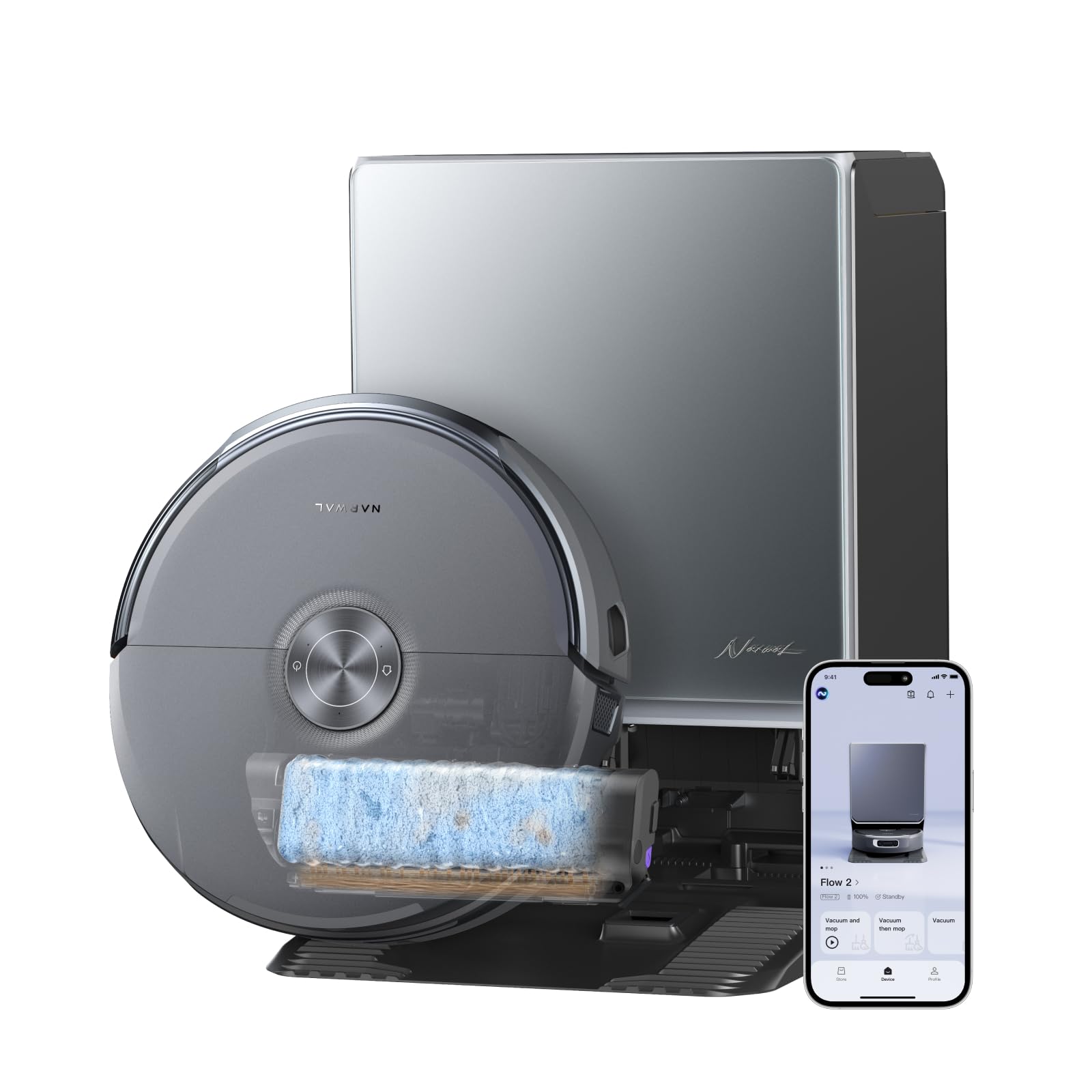
The Narwal Flow 2 takes cleaning capability to the highest level in this roundup with 31,000 Pa of suction and a FlowWash track mop that uses 212°F hot water with 12 Newtons of downward pressure to scrub dried stains. Unlike traditional mops that drag a damp cloth, the Flow 2’s roller continuously washes itself—the dirty water is scraped off and collected into a sealed tank while fresh hot water is applied to the cloth. This eliminates the “spreading dirty water” problem completely and handles coffee rings, dried mud, and sticky kitchen spills that other mops leave behind.
AI object recognition uses dual cameras and a VLM brain to identify shoes, cables, pet bowls, and furniture legs in real time, adjusting the cleaning path to avoid bumps and tangles. The dual zero-tangle roller system is SGS-certified for 0% hair entanglement, which is a genuine relief for multi-pet homes with long-haired dogs. The base station washes the mop with hot water, dries it with 104°F warm air, and stores debris in a 2.4-liter bag rated for up to 120 days of storage. Smart detergent dispensing is built into the dock, removing the need to manually add cleaning solution.
The price is the most significant barrier, and the system is over-engineered for homes with only hard floors and minimal mess. Some users report that deep carpet handling could be better—the wheel motors can overheat on thick pile, and the robot occasionally struggles to return to the base if the home layout is complex. The base station is large and heavy, requiring dedicated floor space. For homes with persistent stained floors, pet accidents, or grime buildup, the Flow 2 is the only model that moves beyond light maintenance to genuine deep cleaning.
Why it’s great
- 212°F hot water and 12N pressure on the self-cleaning roller mop scrub dried stains effectively.
- 31,000 Pa suction lifts heavy dirt, pet hair, and large debris from hard floors and low-pile carpets.
- Up to 120 days of debris storage in the base station’s 2.4-liter bag and built-in detergent dispensing.
Good to know
- Wheel motors can overheat on thick carpets, limiting deep-pile performance.
- Base station is large and heavy—requires significant floor space and a nearby outlet.
- Some user units had navigation or motor issues at launch; firmware updates are required for optimal performance.
4. Roborock Qrevo Edge 2
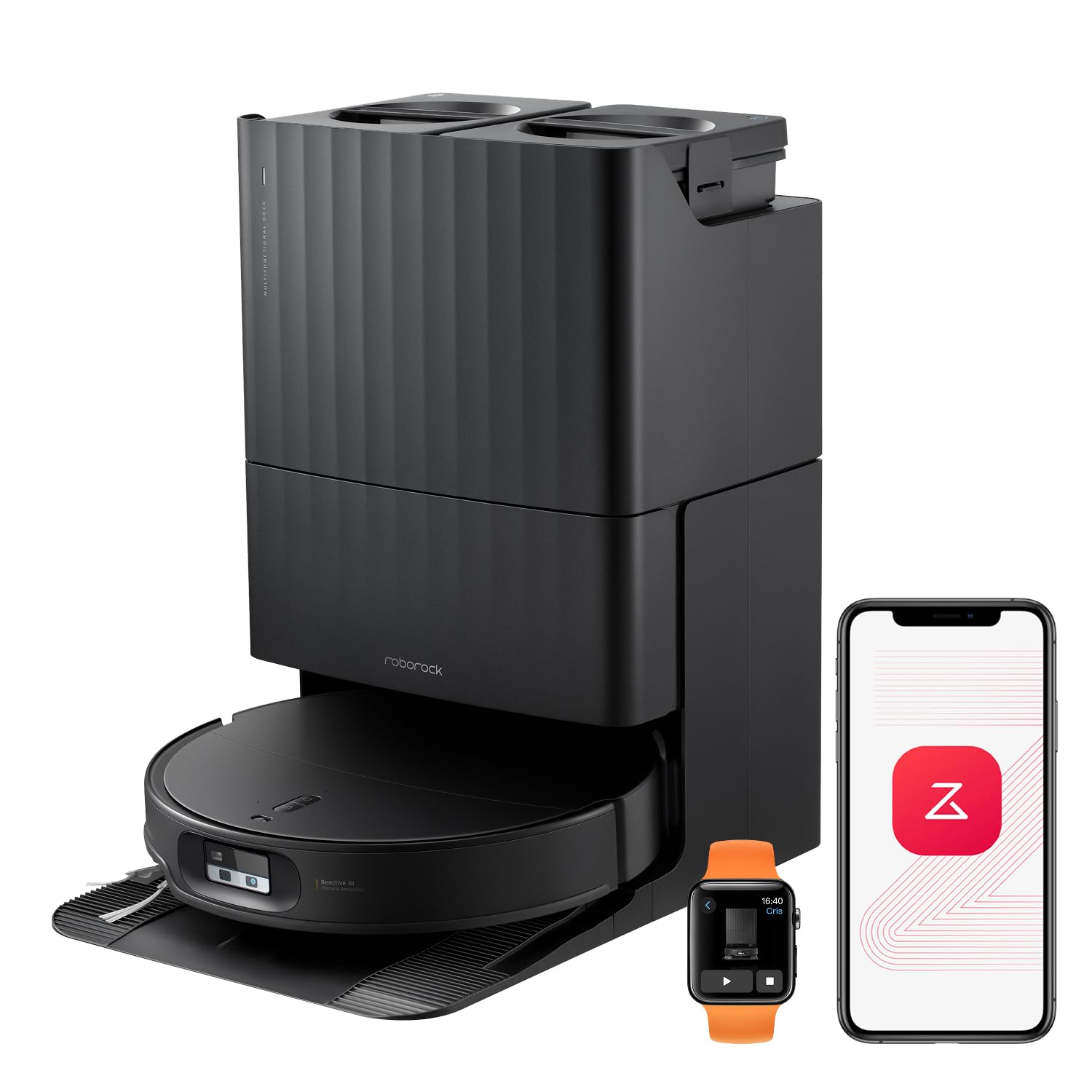
The Roborock Qrevo Edge 2 addresses the two most common complaints about automatic floor cleaners: it can’t reach edges and it can’t fit under low furniture. The FlexiArm Arc side brush extends beyond the robot’s body to sweep debris from walls and corners down to 0.98 inches from the baseboard, while the RetractSense Navigation System retracts the LiDAR tower when entering spaces as low as 3.14 inches. This means it slides under most sofas, bed frames, and entertainment centers that block taller robots.
Suction power is 25,000 Pa with an upgraded mopping system that applies 8N of downward pressure—enough to tackle dried stains without leaving excessive moisture on hardwood floors. The dock heats mop washing water to 176°F and air-dries at 131°F, which effectively sanitizes the mop and prevents bacterial growth between cleanings. Reactive AI recognizes over 280 object types using structured light and an RGB camera, avoiding shoes, cables, and pet bowls without bumping into them.
One production quirk: the robot’s camera raises privacy concerns for some users (though no images leave the device), and the large dock requires about 18 inches of clearance in front for proper docking. Battery life is 188 minutes in quiet mode, but with full suction and hot-water mop washing, a 1,300-square-foot home consumes about 60% of the battery per cycle. For homes with complex furniture layouts where corner dust and under-couch dirt are persistent problems, the Edge 2’s reach is unmatched.
Why it’s great
- FlexiArm Arc side brush extends to sweep debris from walls and corners within 1 inch of baseboards.
- RetractSense navigation retracts the LiDAR tower, allowing cleaning under furniture as low as 3.14 inches.
- Reactive AI recognizes over 280 object types and avoids obstacles without bumping.
Good to know
- Camera-based obstacle recognition raises privacy concerns for some users, though no images are stored on the cloud.
- Large dock requires significant front clearance for proper docking—measure your space.
- Occasionally misses tight corners where the flex arm can’t fully extend (e.g., very narrow alcoves).
5. Dreame L40 Ultra Gen 2
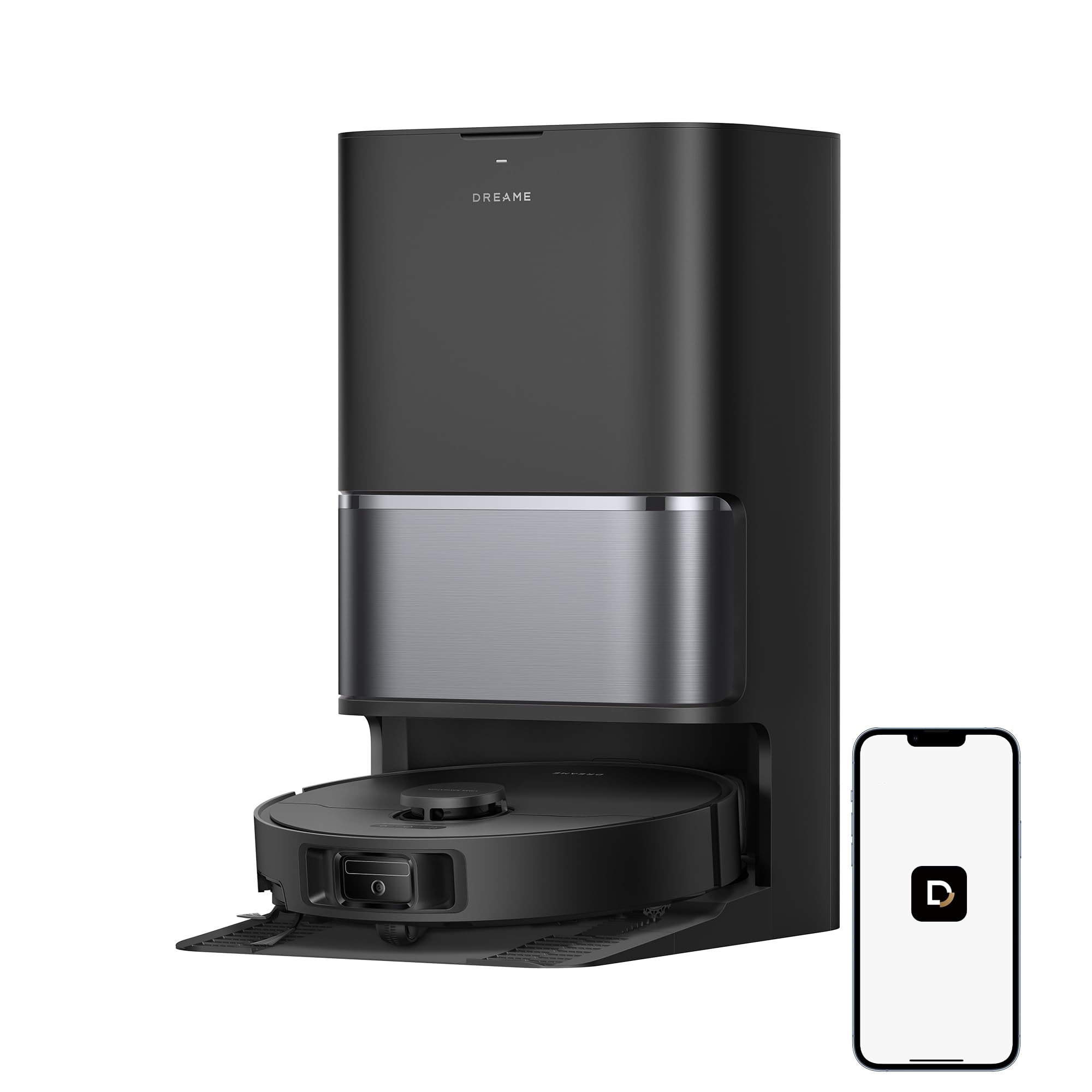
The Dreame L40 Ultra Gen 2 uses 25,000 Pa of suction and an extendable side brush that reaches into corners and along baseboards where standard fixed brushes leave a one-inch gap of untouched dust. The mop also extends outward, covering the same corners and edges that other robots miss—a symmetrical cleaning design that makes it the best option for homes with open floor plans and large rooms where edges accumulate the most dirt.
The all-in-one self-cleaning dock empties debris, washes the mop, and dries it with warm air. Smart Pathfinder navigation uses 3DAdapt technology to map your home with precision and recognize obstacles like shoes and furniture legs. Off-peak charging is a thoughtful feature—the 5,200 mAh battery can be scheduled to charge during low-rate electricity hours, saving you money over time. Battery life reaches 231 minutes in quiet mode, covering up to 1,679 square feet per charge.
One important note: the auto-detergent dispenser is an optional accessory module purchased separately, which adds to the overall investment if you want automated cleaning solution dispensing. The mopping system uses a vibrating pad rather than a rotating roller, which means it cleans well on low-pile floors but struggles with high-pile carpet transitions. The app is user-friendly with extensive customization options, including carpet avoidance, suction boost, and intensive carpet cleaning modes.
Why it’s great
- Extendable side brush and mop reach into corners and along baseboards for edge-to-edge coverage.
- 25,000 Pa suction lifts embedded dirt from carpets and hard floors, with automatic carpet boost.
- Off-peak charging schedules battery charging during low-rate electricity hours to save money.
Good to know
- Auto-detergent dispenser is an optional add-on, not included in the base package.
- Vibrating mop pad cleans low-pile floors well but struggles on thick, high-pile carpets.
- The dock is large and requires dedicated floor space—measure your base station area.
6. Shark Stratos
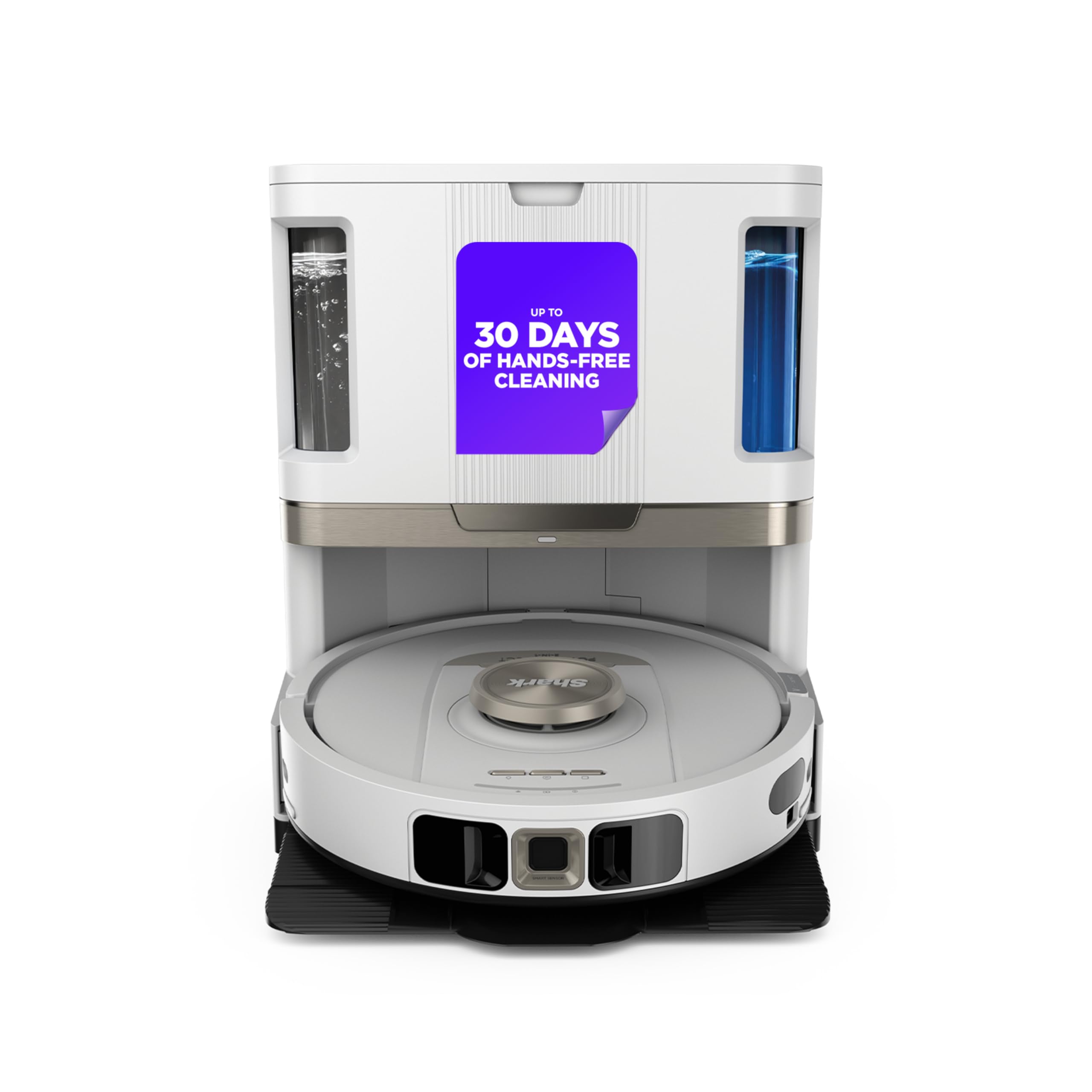
The Shark Stratos differentiates itself with the NeverTouch base, which doesn’t just empty debris—it automatically refills the robot’s water tank for up to 30 days of mopping without human intervention. The sonic mopping system scrubs floors at 100 oscillations per minute, which is effective for dried spills and sticky residue that drag-mops spread around. Autolift technology raises the mop pad over carpets and high thresholds to prevent wet spots while maintaining continuous cleaning.
Suction power is strong but not top-tier—the Stratos relies on its sonic scrubbing action and edge-cleaning air blasts (Edge Detect) to pull debris from corners. The self-cleaning brushroll with anti-hair wrap captures pet hair and long hair without manual detangling, which is validated by user reviews that mention excellent pet hair pickup. HEPA filtration with an Anti-Allergen Complete Seal traps dust and allergens, making it a good option for allergy sufferers.
The main drawback is the initial setup, which some users found frustrating due to unclear instructions and app connectivity issues—particularly requiring the Shark-branded floor solution for optimal mopping. The app scheduling is limited compared to Roborock or Eufy options, with fewer customization options for room-specific cleaning. For homes where auto-refilling the mop tank is a priority and you prefer a well-known brand, the Stratos delivers convenience without the price jump to premium tiers.
Why it’s great
- NeverTouch base auto-refills water for up to 30 days of mopping without human intervention.
- Sonic mopping at 100 scrubs per minute lifts dried stains and sticky spills effectively.
- HEPA filtration with Anti-Allergen Complete Seal traps allergens for cleaner indoor air.
Good to know
- Setup instructions are unclear—some users reported app connectivity issues during initial configuration.
- Requires Shark-branded floor solution for optimal mopping performance; other cleaners may foam too much.
- App scheduling customization is limited compared to competitors like Roborock or Eufy.
7. Eufy Omni C20
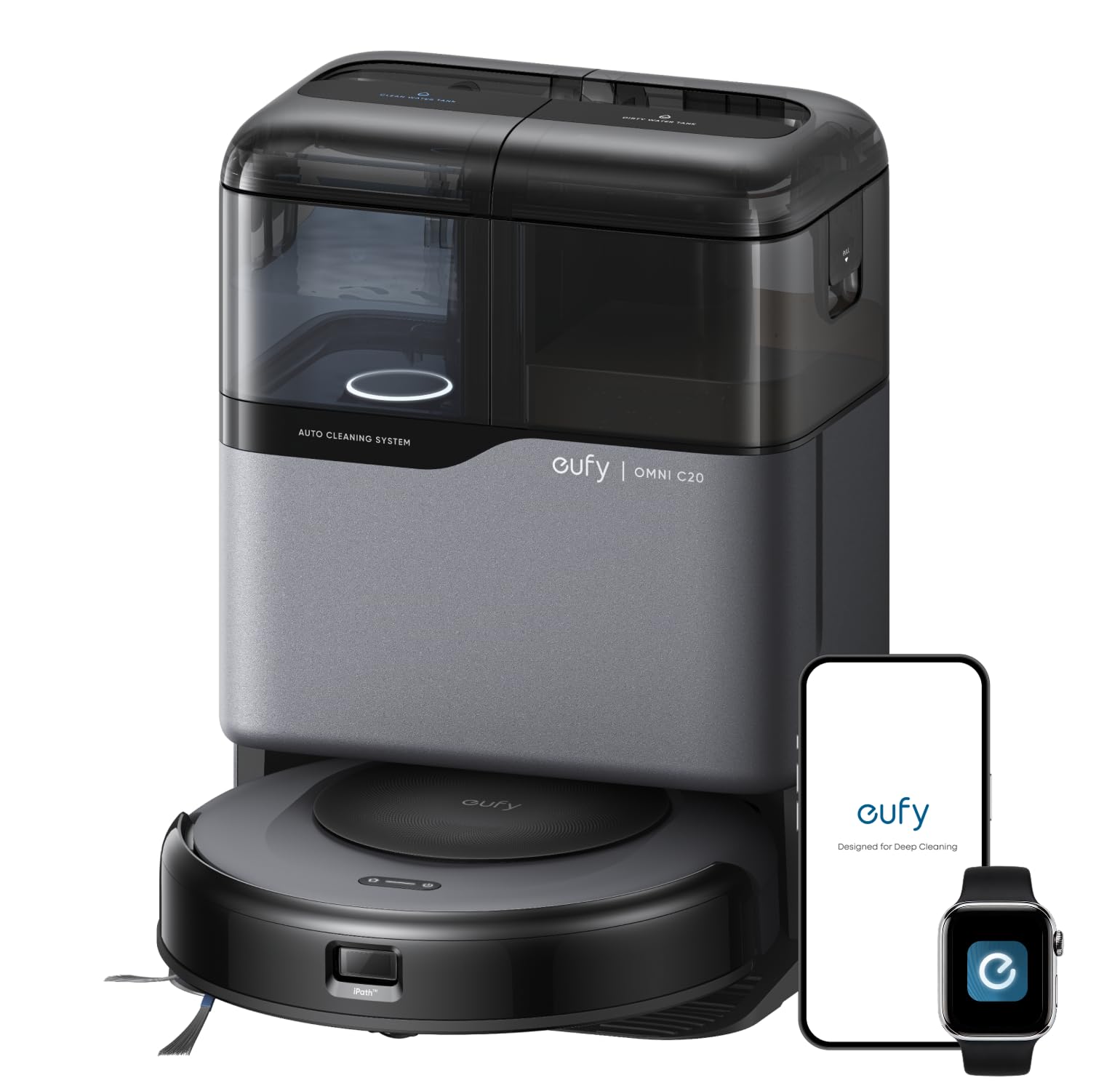
The Eufy Omni C20 hits the sweet spot between features and affordability with 7,000 Pa of suction, a 3.35-inch ultra-slim profile that fits under most sofas and bed frames, and a transparent water tank system that shows clean and dirty water levels at a glance. The Omni Station empties debris into a 3.1-liter bag (up to 60 days), washes the mop pad with room-temperature air, and dries it using only 1.56W per hour, keeping electricity costs minimal.
Mop Master technology applies 6N of downward pressure at 180 RPM to scrub away dried stains on hardwood, tile, and laminate. When carpet is detected, the mop auto-lifts to keep it dry—a critical feature for homes with area rugs. The Pro-Detangle Comb flips down mid-clean to loosen hair wrapped around the roller brush, reducing the need for manual combing. iPath Laser Navigation maps efficient routes and stores up to three floor maps for multi-floor homes.
Battery life is 132 minutes on standard mode, which covers roughly 1,200 square feet before needing a recharge. The robot’s random cleaning pattern—while not as efficient as the row-by-row path of a premium LiDAR system—still covers the entire floor over time. One user noted that the mop misses baseboards near walls, so tight edges may require occasional manual touch-up. For renters or first-time buyers who want self-emptying and self-washing without the high-end price, the C20 is the value champion.
Why it’s great
- 3.35-inch slim profile slides under low furniture that blocks taller robots.
- Transparent water tanks show clean and dirty water levels at a glance for easy monitoring.
- Mop master applies 180 RPM scrubbing with 6N pressure—effective for dried stains on hard floors.
Good to know
- Random cleaning pattern covers the floor but is less efficient than row-by-row LiDAR pathing.
- Mopping may miss baseboards near walls—tight edges may require manual touch-up.
- Room-temperature mop drying is energy-efficient but slower than hot-air drying systems.
8. iRobot Roomba 105 Combo
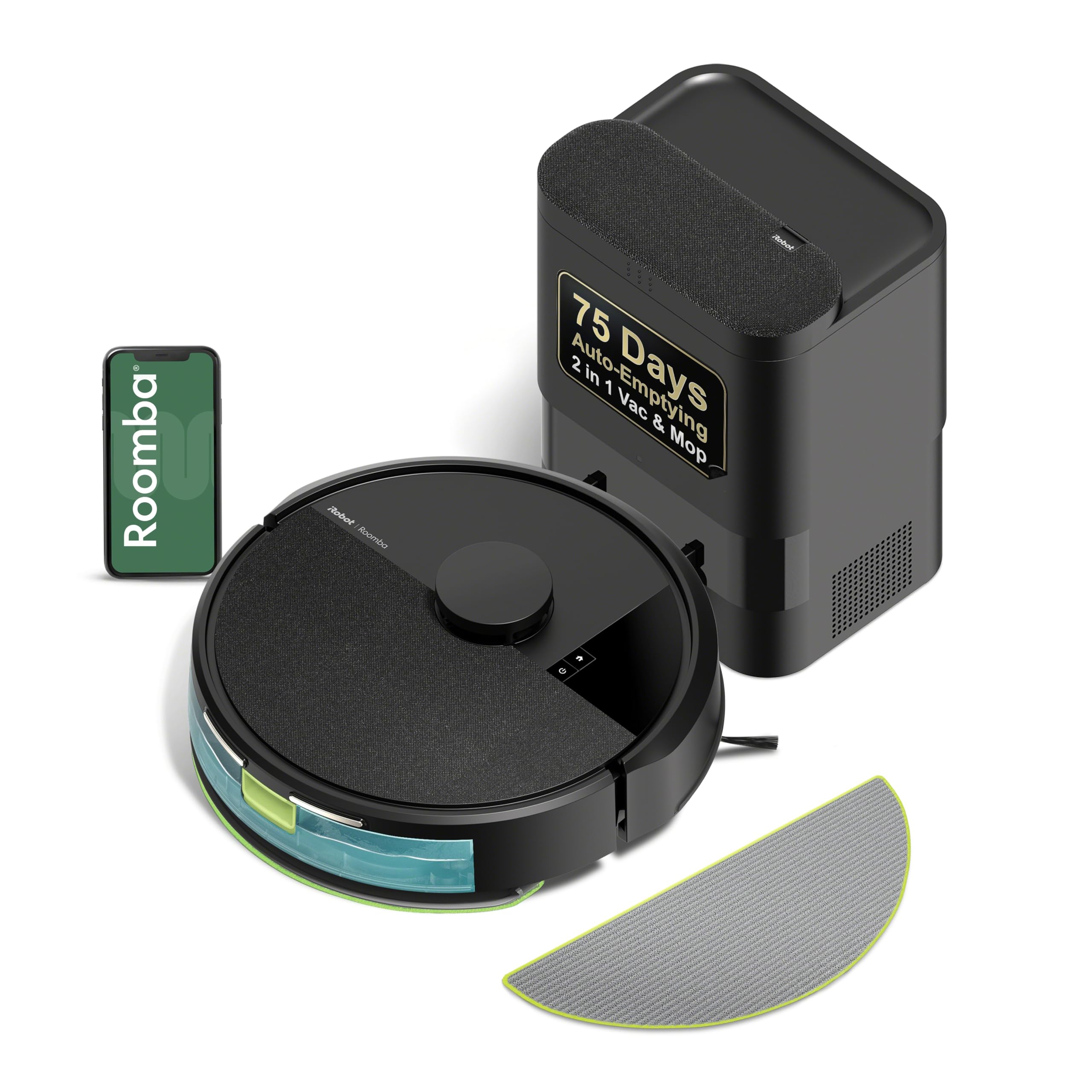
The iRobot Roomba 105 Combo brings LiDAR navigation to a more accessible tier, with ClearView technology that maps your home and avoids obstacles—a significant upgrade over iRobot’s older random-bump models. The AutoEmpty dock holds a bag that traps 99% of allergens as small as 0.7 microns and stores debris for up to 75 days, which is a standout feature for allergy sufferers who want to minimize dust exposure during disposal.
The mopping system uses a micro-pump to control water flow onto a microfiber pad, and the SmartScrub feature doubles the scrubbing time on heavily soiled areas. The robot automatically detects and avoids carpets while mopping, which protects rugs from moisture. The Roomba Home App allows custom cleaning settings, room targeting, and scheduling. Three control methods—app, voice, and touch—make it flexible for different household members.
Real-world performance has some caveats: the lightweight dock causes the robot to miss the base more than 50% of the time in some setups, and the unit is slightly taller than older Roomba models, so it may not fit under furniture that previous generations cleared. Some users report that the robot gets stuck on high-pile rugs and bumps into pet bowls. For small apartments with hard floors and minimal obstacles, the 105 Combo offers LiDAR navigation and the trusted iRobot brand name at an accessible entry point.
Why it’s great
- ClearView LiDAR navigation maps your home accurately and avoids obstacles without bumping.
- AutoEmpty dock traps 99% of allergens as small as 0.7 microns and stores dirt for up to 75 days.
- SmartScrub doubles scrubbing time on heavily soiled areas for more effective mopping.
Good to know
- Lightweight dock causes the robot to miss the base more than 50% of the time in some setups.
- Slightly taller than older Roomba models—may not fit under furniture previous generations could.
- Gets stuck on high-pile rugs and may bump into pet bowls and other low objects.
9. Tikom L8000 Plus
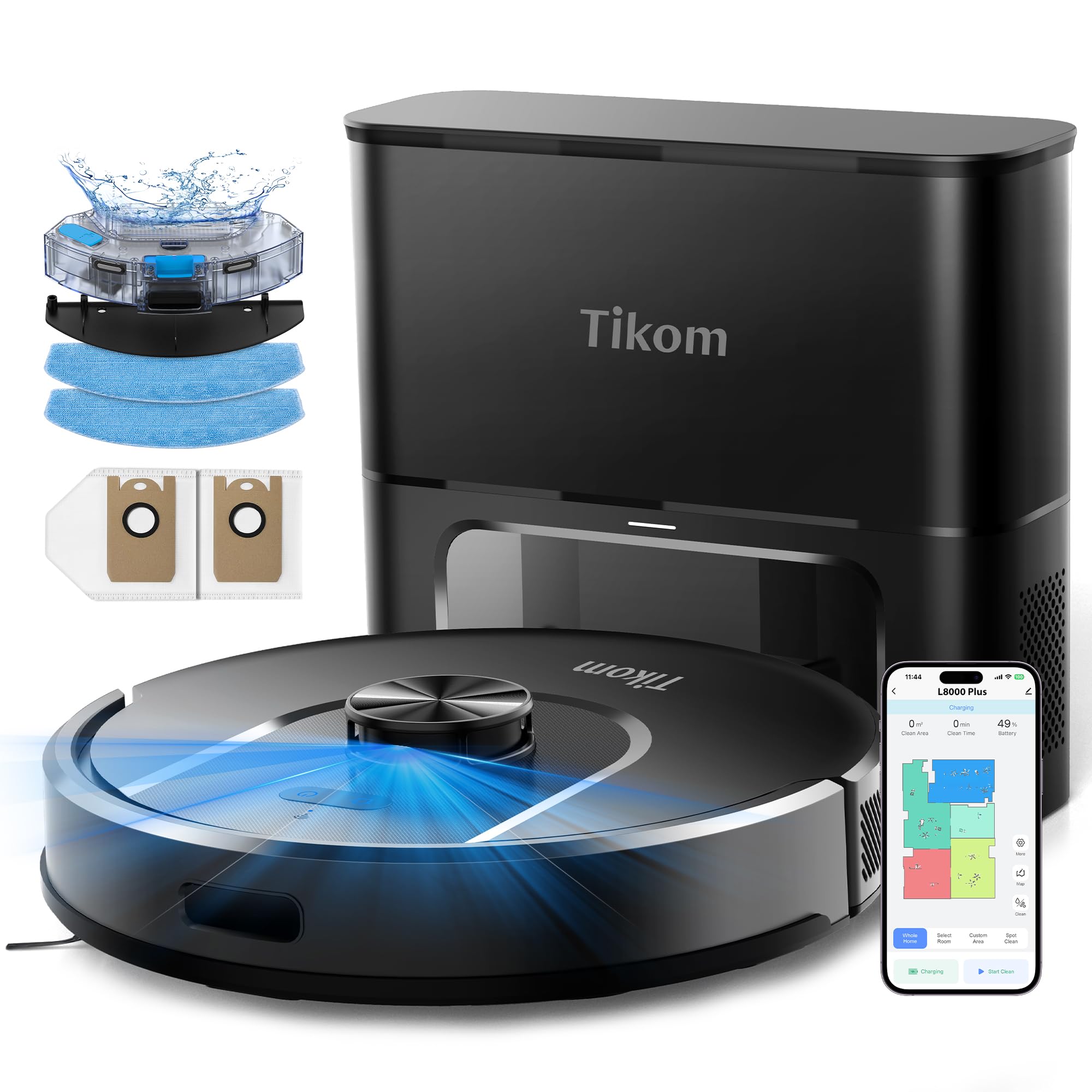
The Tikom L8000 Plus competes at a budget-friendly tier with a 3-liter self-emptying dust bag that stores debris for up to 90 days—the longest interval in this roundup, outpacing many premium models. The 6,000 Pa suction power is sufficient for hard floors and low-pile carpets, automatically boosting to max when it detects carpet. LiDAR navigation creates 360-degree maps of your home, avoiding walls and stairs with reliable cliff sensors, and stores up to five floor maps for multi-story homes.
The 2-in-1 sweeping and mopping system lets you customize cleaning with three suction levels and three water flow settings. The mopping is widely described as mediocre—one user notes that it feels like “a slightly damp cloth dragged across tile”—so it handles daily dust well but leaves sticky stains behind. The battery runs for 150 minutes in gentle suction mode, covering approximately 2,000 square feet per charge, and auto-recharges and resumes if the battery drains mid-cycle.
App control is robust for the price, with support for no-go zones, virtual walls, scheduled cleaning, and room-specific cleaning. The 90-day hands-free interval is the biggest advantage—if your priority is maximum time between emptying and you primarily have hard floors, the L8000 Plus delivers that convenience. The trade-offs are a weaker mopping system and a smaller dust bag opening compared to higher-tier models.
Why it’s great
- 3-liter self-emptying bag stores debris for up to 90 days—the longest interval of any model reviewed.
- LiDAR navigation creates accurate 360-degree maps and stores up to five floor maps for multiple stories.
- 150-minute battery life covers up to 2,000 square feet per charge, with auto-recharge and resume.
Good to know
- Mopping is a light drag-mop system—effective for dust but not dried spills or sticky stains.
- Maximum suction of 6,000 Pa is adequate for hard floors but struggles on thick or high-pile carpets.
- Dust bag opening is relatively small, making manual disposal tricky if you empty it early.
FAQ
How many pascals of suction do I really need for pet hair on carpet?
Will a robot vacuum and mop scratch my hardwood floors?
Can I use third-party cleaning solution in the mop tank?
How often do I need to replace the mop pad or roller on an automatic floor cleaner?
Final Thoughts: The Verdict
For most users, the best automatic floor cleaner winner is the Eufy C28 because it combines the most effective mopping hardware (HydroJet self-cleaning roller at 270 RPM) with strong 15,000 Pa suction and a 75-day self-emptying dock, striking the best balance of performance and maintenance reduction. If you want deep stain scrubbing with hot water and the absolute highest suction, grab the Narwal Flow 2. And for cleaning under low furniture and reaching corner dust that other robots miss, nothing beats the Roborock Qrevo Edge 2 with its retractable LiDAR and FlexiArm side brush.

Mo Maruf
I created WellFizz to bridge the gap between vague wellness advice and actionable solutions. My mission is simple: to decode the research and give you practical tools you can actually use.
Beyond the data, I am a passionate traveler. I believe that stepping away from the screen to explore new environments is essential for mental clarity and physical vitality.