Our readers keep the lights on and my smoothie glass nicely filled. As an Amazon Associate, I earn from qualifying purchases.
Selecting a sterilizer for your nail business isn’t just about picking any machine—it’s about choosing between a reliable unit that passes spore tests and a risky model that could jeopardize your license and client safety. The right autoclave ensures your tools are truly sterile, not just clean.
I’m Mohammad Maruf — the founder and writer behind WellFizz. I’ve spent years analyzing the technical specs of sterilization equipment, from chamber materials to cycle times, to help salon owners make informed, safe purchases.
This breakdown of the top-rated machines on the market will guide you toward the best autoclave for nail salon use, focusing on real-world performance, build quality, and the specific features that matter most for professional sanitation.
How To Choose The Best Autoclave For Nail Salon
Selecting an autoclave for your nail salon involves more than just finding a machine that heats up. You need to consider the classes of sterilizers, the physical size of your tools, and the workflow that keeps your station running without long delays. A poor choice can mean failed inspections or damaged instruments.
Class N vs. Other Standards
Most tabletop sterilizers suitable for nail salons are Class N autoclaves. They use steam to sterilize solid, unwrapped instruments like metal cuticle nippers, pushers, and drill bits. These units are the industry standard for beauty professionals, offering a reliable balance of cost and performance without the complexity of Class B medical devices, which are overkill for salon use.
Chamber Size and Tray Layout
Look at the internal chamber dimensions and the number of trays provided. An 18-liter unit with three trays lets you run multiple sets of tools in one cycle, which is key for back-to-back client appointments. A smaller chamber, while compact, may force you to run more cycles, slowing down your day. Ensure the tray design allows for horizontal placement of sterilization pouches.
Cycle Time and Drying Function
Total cycle time—from start to cool-down—directly impacts your turnover. Some autoclaves offer fast 11-minute cycles from a hot start, while others take 30-40 minutes including heating. Machines without an active drying cycle leave tools wet, which can promote rust unless you open the door to air-dry them. A unit with a drying feature saves steps and keeps tools ready immediately.
Build Quality and Safety Features
The chamber should be made of high-grade stainless steel, typically #304, to resist rust and corrosion from repeated steam exposure. Look for a pressure gauge that shows real-time readings, an automatic safety valve to release excess pressure, and a secure door lock that prevents opening when the chamber is pressurized. These features are non-negotiable for safe, daily operation.
Quick Comparison
On smaller screens, swipe sideways to see the full table.
In‑Depth Reviews
1. GOYOJO 18L Autoclave Sterilizer
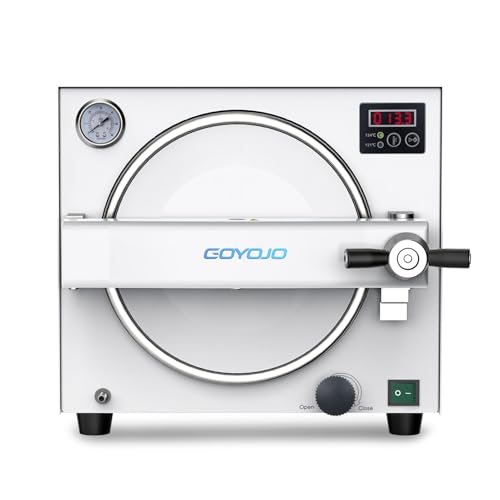
This tabletop sterilizer offers the largest chamber in our roundup at 18 liters, giving you space to run three full trays of tools simultaneously. That extra capacity is a game-changer for busy salons where downtime matters. It operates as a Class N unit, meaning it’s engineered for solid, unwrapped instruments like your metal pushers, nippers, and carbide drill bits—exactly the load a nail tech carries.
The digital LED control panel keeps operation simple with preset cycles at 121°C for 30 minutes or 134°C for 10 minutes. Users report the total cycle runs about 35 minutes including warm-up and cool-down, which is a solid pace for its size. The safety door lock and pressure gauge provide the visual and mechanical feedback you need to trust the process.
Be aware this model lacks an active drying cycle, so you’ll need to crack the door slightly to air-dry pouches after the pressure drops. Some users note it can be a bit loud during operation, but the build quality and included exhaust tube and spare fuse make it a complete package. For a mid-range investment, this unit delivers professional-grade sterilization without the medical-device price tag.
Why it’s great
- Generous 18L chamber fits multiple tool sets
- Clear digital controls and preset cycles
- Solid safety lock and pressure monitoring
Good to know
- No built-in drying function
- Can be loud during operation
2. DACAT-RICHFU TR250E 14L Autoclave
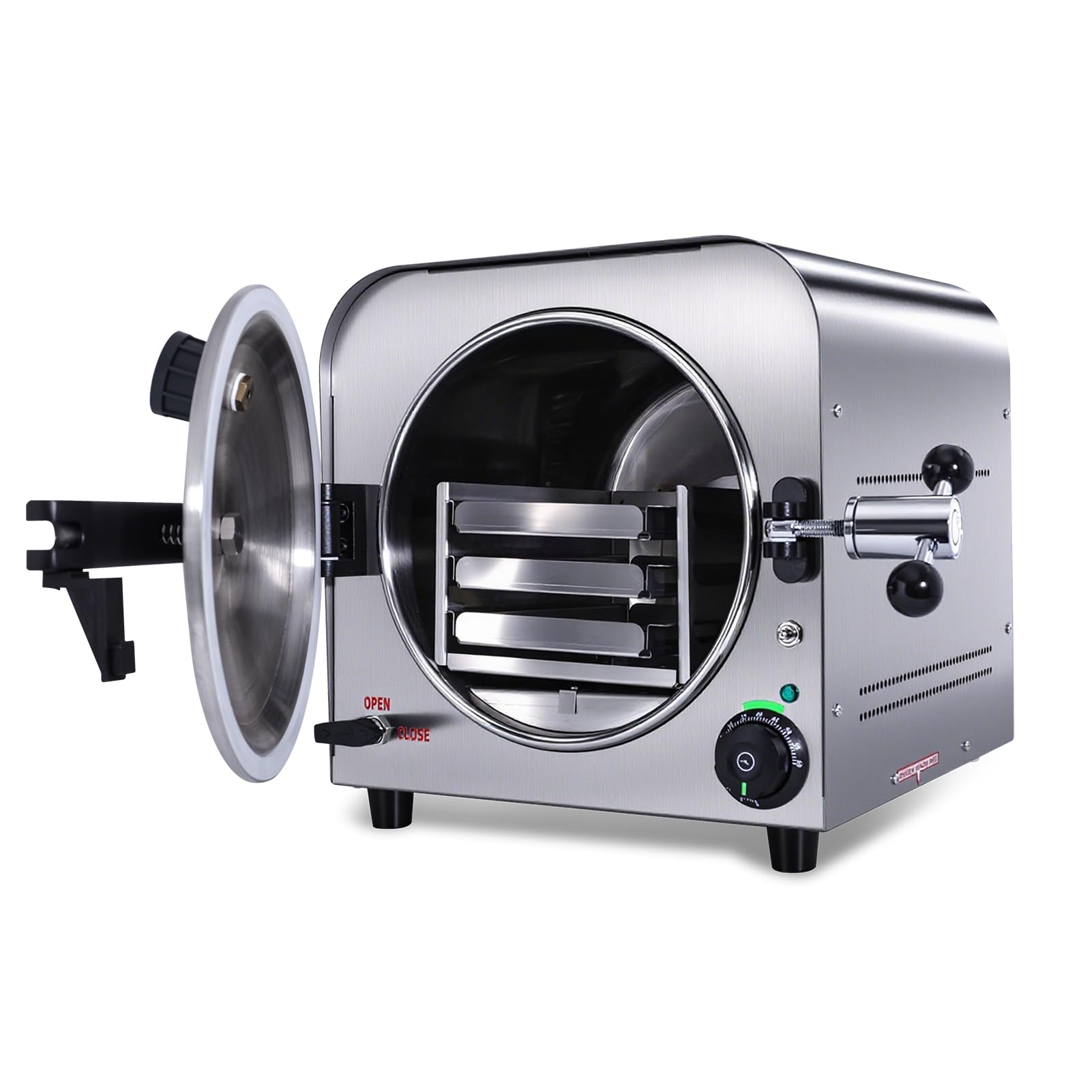
This manual autoclave uses a #304 stainless steel chamber and a 900W heating element to reach 251.6°F at 0.12 MPa. It’s a straightforward, no-nonsense machine that requires you to manually add water and monitor the pressure gauge throughout the cycle. For a nail tech who wants control and simplicity, this unit offers a 14-liter chamber with three included trays.
The 25-minute cycle time is competitive, and the automatic safety valve adds a layer of protection. However, because it’s fully manual, there is no digital timer or auto-shutoff, meaning you need to stay present during operation. Customers have reported mixed experiences—some praise the build quality, while others cite issues with reliability after a few uses.
This machine is best suited for a tech who understands the manual process and is willing to monitor it. The lack of a drying cycle is a notable omission; you must let tools air-dry after sterilization. Given the lower entry price, it’s a capable unit for those on a tight budget who are comfortable with hands-on operation, but the reliability concerns push it down the list for a primary salon machine.
Why it’s great
- Affordable entry point for manual sterilization
- Solid #304 stainless steel chamber
- Includes three trays and a pressure gauge
Good to know
- Reliability and quality control issues reported
- No drying function or digital controls
3. Tuttnauer 1730 Valueklave

The Tuttnauer 1730 is the reference standard for small offices, and for good reason. Its compact footprint (roughly 18 x 12 x 17 inches) hides a reliable manual sterilizer that has been in production for years. The chamber measures 7 by 13 inches, with a 2-gallon volume, and it hits sterilization temperature in about 11 minutes from a hot start. That fast cycle is crucial when you have back-to-back clients.
It includes an automatic shut-off at the end of both the sterilization and dry cycles, meaning you get dry, ready-to-use tools. The build quality is a cut above the competition—users report these machines lasting a decade or more with proper care. It passed spore tests on the first try for many solo practitioners, which is the ultimate measure of a sterilizer’s effectiveness.
The trade-off is the manual operation: you must monitor the process, and the small chamber limits you to about two half-cassettes or a few pouches per cycle. The lack of a dedicated vertical rack for pouches can be a minor annoyance. For a nail tech running a single chair, this unit’s reliability and fast cycle time make it a worthy investment that pays for itself in peace of mind.
Why it’s great
- Proven long-term reliability and build quality
- Fast 11-minute cycle from hot start
- Includes both sterilization and drying cycles
Good to know
- Small chamber limits batch size
- Manual operation requires attention
FAQ
What is the difference between a Class N and a Class B autoclave for nail tools?
Can I sterilize nail drill bits in an autoclave without damaging them?
Final Thoughts: The Verdict
For most nail salon owners, the best autoclave for nail salon is the GOYOJO 18L because it offers the largest capacity and digital controls at a mid-range investment. If you prioritize a proven track record and fast cycle times, grab the Tuttnauer 1730 Valueklave. And for a solo tech on a budget who doesn’t mind manual operation, the DACAT-RICHFU TR250E gets the job done.

Mo Maruf
I created WellFizz to bridge the gap between vague wellness advice and actionable solutions. My mission is simple: to decode the research and give you practical tools you can actually use.
Beyond the data, I am a passionate traveler. I believe that stepping away from the screen to explore new environments is essential for mental clarity and physical vitality.