Our readers keep the lights on and my smoothie glass nicely filled. As an Amazon Associate, I earn from qualifying purchases.
Choosing the wrong window tint can leave you with a hot, faded interior, poor visibility, and a frustrating DIY experience. It’s not just about darkness; it’s about matching advanced materials to your specific climate, privacy needs, and skill level.
I’m Mohammad Maruf — the founder and writer behind WellFizz. For over a decade, I’ve specialized in dissecting product specifications and aggregating thousands of data points from customer experiences to cut through marketing claims and identify what truly performs.
This analysis is built on comparing ceramic nano-coatings, carbon layers, and adhesive strengths across dozens of brands. Our goal is to equip you with the knowledge to select a film that protects your investment and comfort. After sifting through specifications and real-user feedback, here are the top contenders for the best auto tint film.
How To Choose The Best Auto Tint Film
Selecting auto tint isn’t just about picking a shade. The right film is a combination of climate defense, safety feature, and personal style. Focus on these core aspects to navigate the options confidently.
Visible Light Transmission (VLT) is Your Starting Point
VLT measures how much visible light passes through the film. A lower percentage means a darker tint. For side windows, 5% offers limo-style privacy but can hinder night driving, while 35% provides a balanced look that’s often legal for front windows. Always check your local regulations first.
Material Dictates Performance
Ceramic films use non-metallic particles to block heat and UV without interfering with signals, offering top-tier performance. Carbon films provide good heat rejection and a rich black finish. Basic dyed films are primarily for looks with minimal heat control.
Prioritize Heat and UV Rejection Numbers
Look for films that block 99% of UV rays to protect your skin and prevent dashboard cracking. Infrared (IR) rejection percentage directly correlates to how cool your cabin stays; aim for 85% or higher in sunny climates.
Consider Installation Difficulty
Thicker, multi-ply films are more forgiving for beginners but can be harder to shrink on curved windows. A strong, pressure-sensitive adhesive is crucial for edges not peeling over time. Generous roll length allows for practice and mistakes.
Quick Comparison
On smaller screens, swipe sideways to see the full table.
| Model | Type | Best For | Key Feature | Amazon |
|---|---|---|---|---|
| RockRose 35% Nano Ceramic | Ceramic | Overall Performance | 99% UV, 85% IR Block | Amazon |
| BDF S05 Mirror Silver | Metalized | Daytime Privacy & Style | Reflective Mirror Finish | Amazon |
| RockRose 5% Premium Carbon | Carbon | Maximum Privacy | 2-Ply Durability | Amazon |
| BDF NA05 Natural Black | PET Film | Home & Auto Privacy | Extra Dark, 99% UV Block | Amazon |
| BLACKGLASS IX 5% VLT | 2-Ply PET | Professional DIY Results | Enhanced Adhesive | Amazon |
| PAMAGOO 35% Ceramic | Ceramic | Scratch Resistance | Nano Ceramic Coating | Amazon |
| Vepagoo 15% Ceramic | Ceramic | Balanced Darkness | Wide VLT Options | Amazon |
| RockRose 35% Ceramic (36″x15′) | Ceramic | Large Coverage Projects | Extra-Wide Roll | Amazon |
| TOYOCO 20% VLT Ceramic | Ceramic | Entry-Level Ceramic | 99% UV Block | Amazon |
| TOYOCO 5% VLT Ceramic | Ceramic | Budget Limo Darkness | High IR Rejection | Amazon |
| TOYOCO 20% VLT Ceramic (20″x20′) | Ceramic | Small Jobs & Practice | Peel & Stick Simplicity | Amazon |
In‑Depth Reviews
1. RockRose 35% Nano Ceramic Car Window Tint

This mid-range ceramic film strikes an ideal balance between premium heat rejection and manageable DIY installation. The nano-ceramic technology doesn’t rely on metals, so it won’t interfere with GPS or radio signals, a common concern with older reflective films.
Users report a noticeable drop in cabin temperature, thanks to its 85% infrared radiation rejection, making it a standout in its category. The 35% VLT offers a legal-to-dark-enough look for most front windows while providing solid daytime privacy and glare reduction.
The film is praised for its clarity and lack of haze, which is crucial for safe night driving. While it requires standard wet application and heat shrinking for curved windows, its 2-ply construction gives it enough body to handle without tearing easily, making it more forgiving for first-timers than ultra-thin films.
Why it’s great
- Excellent heat and UV protection without signal interference
- Clear, haze-free vision enhances driving safety
- Forgiving 2-ply material is good for DIY beginners
Good to know
- Like all ceramic films, requires proper technique to shrink on complex curves
- Adhesion can be tricky if the slip solution is too soapy
2. BDF S05 Mirror Silver Window Film

For unmatched daytime privacy and a distinctive aesthetic, this metalized reflective film is in a class of its own. The mirror-like silver exterior gives your vehicle a custom, high-end look while effectively bouncing solar energy away, contributing to heat rejection.
It creates a powerful one-way visual barrier during daylight hours, making it impossible for outsiders to see in. This film is often chosen for its ability to meet HOA guidelines while providing performance, as the exterior appearance is sleek and non-tacky.
It’s crucial to understand the “mirror effect” reverses at night when interior lights are on. Installation demands patience, as the metalized layer can be less forgiving of creases, but the included tools and strong adhesive support a lasting result.
Why it’s great
- Superior daytime privacy with a premium mirror appearance
- Reflective properties aid in heat rejection
- Strong adhesive ensures long-term durability
Good to know
- Nighttime privacy is lost when cabin lights are on
- More sensitive to permanent wrinkles during installation
3. RockRose 5% Premium Carbon Tint

This carbon film delivers intense limo-style darkness and robust construction that appeals to those seeking maximum privacy and a classic black finish. The 2-ply thickness provides a substantial feel that professionals appreciate for its durability and ease of handling during cutting and shrinking.
It blocks 99% of UV rays and a significant portion of infrared heat, making it a strong performer beyond just aesthetics. The rich charcoal color is consistent and avoids the low-cost purple or blue hue that plagues some dyed films, maintaining a professional look over time.
Users note it’s relatively forgiving for a dark tint, allowing for some adjustment during the wet application. However, the 5% VLT is extremely dark and not legal for front windows in most regions; it’s best suited for rear passenger and back windows.
Why it’s great
- Deep, consistent black finish for ultimate privacy
- Thick 2-ply material is durable and easier to work with
- Provides solid heat reduction in addition to darkness
Good to know
- Extreme darkness can severely limit night visibility
- Carbon films can have slightly lower heat rejection than ceramic at a similar price point
4. BDF NA05 Natural Black Window Film

This premium film is designed for those who need absolute daytime privacy and are applying to single-pane glass, like many older car windows or home windows. The NA05 designation means a very dark 5% VLT, creating a near-blackout effect that looks sleek and uniform.
It excels at blocking UV rays and reducing solar heat gain, making interiors noticeably cooler. The film is absorption-based, meaning it soaks up solar energy, so the glass itself may feel warm to the touch—a trade-off for the deep darkness.
A key warning from the manufacturer is that it is not recommended for modern dual-pane windows due to thermal stress risk. For classic cars or specific home applications, its strong adhesive and included tool kit make for a reliable, permanent installation.
Why it’s great
- Unbeatable daytime privacy with a clean black appearance
- Effective heat and UV reduction for compatible glass
- Comes with a useful installation toolkit
Good to know
- NOT for dual-pane/insulated glass units
- Can make interiors very dark, requiring more artificial light
5. BLACKGLASS IX 5% VLT Professional Film
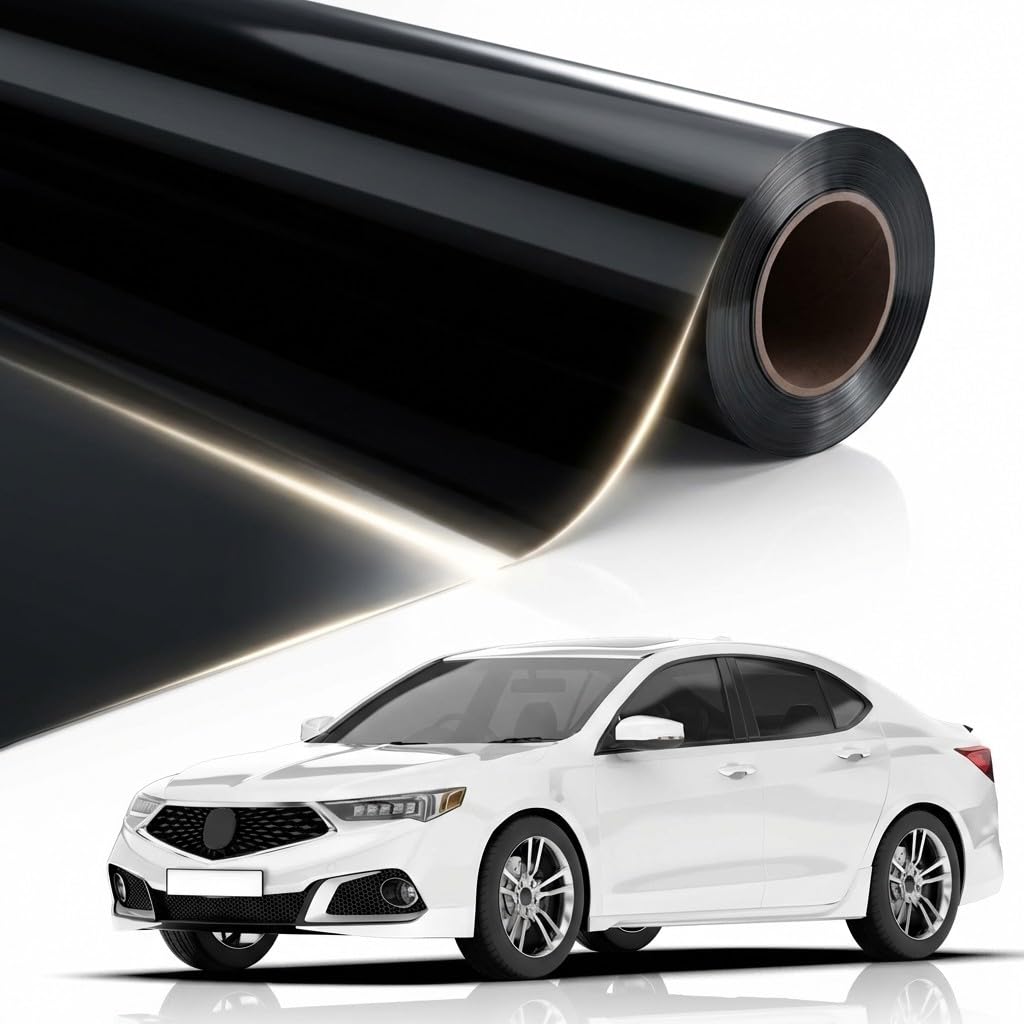
This film is built like the materials used in many professional tint shops, featuring a 2-ply laminated structure that offers superior manageability. The enhanced adhesive is formulated for long-term bonding, addressing a common complaint with budget films where edges peel.
Its thickness makes it more heat-shrinkable and less prone to tearing during the installation process, which can be a relief for DIYers tackling curved rear windows. The color stability is excellent, promising resistance against the purple fade that affects inferior dyes.
The generous 20-foot length provides ample material for multiple windows or even a full vehicle, allowing for practice pieces. While it’s a dyed film, its construction elevates it above typical entry-level options, focusing on durability and installability.
Why it’s great
- Professional-grade thickness for easier shrinking and handling
- Enhanced adhesive resists edge lifting
- Excellent color stability prevents fading
Good to know
- As a dyed film, heat rejection is lower than ceramic counterparts
- The dark limo tint significantly reduces night visibility
6. PAMAGOO 35% Ceramic Car Window Tint

Positioned as a user-friendly ceramic option, this film emphasizes scratch resistance and clear installation guides. The nano-ceramic coating is designed to withstand minor abrasions from cleaning or accidental contact, which helps maintain a pristine look over time.
Its 35% VLT and claimed 88% IR rejection target drivers who want a legal tint with credible heat reduction. The film includes detailed manuals and video references, acknowledging that proper technique is half the battle for a successful DIY job.
Feedback suggests it performs as a solid mid-range ceramic film, with some users noting it’s easier to work with than thinner, cheaper alternatives. The balance of performance, durability, and support makes it a compelling choice for the careful installer.
Why it’s great
- Focus on scratch resistance for long-term clarity
- Comprehensive installation support for beginners
- Good heat rejection for a mid-range film
Good to know
- Heat rejection specs are slightly lower than top ceramic films
- Adhesive strength can be inconsistent if surface prep isn’t perfect
7. Vepagoo 15% Ceramic Car Window Tint Film
This ceramic film offers a darker-than-average 15% VLT, which is a popular compromise for those wanting more privacy than a 35% film but more nighttime visibility than a 5% limo tint. It provides the core benefits of ceramic technology—high UV and IR rejection—at an accessible point.
The manufacturer offers an 18-month warranty and emphasizes customer support, which is a plus for DIY projects where questions arise. The film is designed to be straightforward to apply with the peel-and-stick method, assuming proper preparation with a soapy solution.
Some users report a slight blue or cool hue to the film, which is a trait of some ceramic formulations. It’s a competent performer for its category, especially suited for side windows where a darker, legal limit is often around 20-30%.
Why it’s great
- Attractive middle-ground darkness for enhanced privacy
- Backed by a responsive customer support team
- Delivers essential ceramic heat and UV protection
Good to know
- May have a slight color cast (blueish hue) compared to neutral black
- Can be prone to creasing if not handled with care during installation
8. RockRose 35% Nano Ceramic (36″ x 15′)
This is the wider-format sibling of our top pick, offering the same nano-ceramic performance in a 36-inch width. This makes it ideal for covering larger surfaces like van side windows, home windows, or windshields (where legal) with fewer seams.
The increased width reduces the numberof cuts and potential waste, streamlining the installation process for big, flat areas. It retains all the performance characteristics: 99% UV block, high IR rejection, and signal-friendly construction.
For a DIYer tackling a large SUV, a commercial vehicle, or multiple home windows, this roll offers efficiency and consistent performance. The wider film can be more challenging for a single person to handle during application, so having a helper is recommended.
As with the standard width version, its quality makes it a worthwhile investment for substantial projects where buying multiple narrow rolls would be less cost-effective and more labor-intensive.
Why it’s great
- Wide format minimizes seams on large windows
- Same high-performance ceramic specs as top pick
- Economical for covering big areas or multiple vehicles
Good to know
- Bulky and more difficult to maneuver alone during installation
- Requires more space for cutting and preparation
9. TOYOCO 20% VLT Ceramic Window Tint
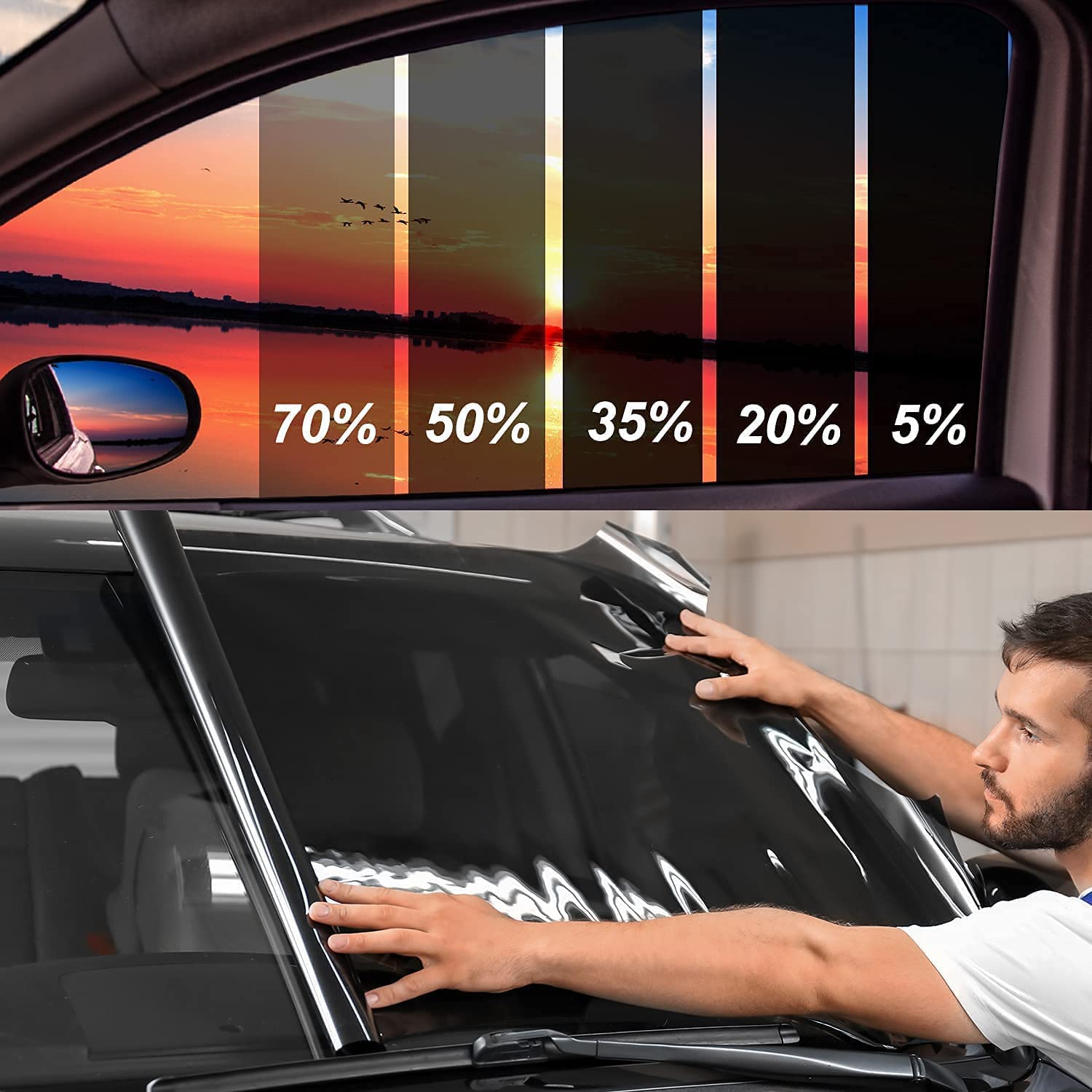
This entry-level ceramic film brings basic ceramic benefits into a very accessible range. The 20% VLT provides a noticeably dark appearance with good privacy, while the ceramic material promises better heat and UV rejection than standard dyed films.
It’s a go-to for users who want to try ceramic technology without a significant investment, perhaps for a first-time tinting project or an older vehicle. The performance is credible for the category, with effective UV blocking and moderate heat reduction.
Reviews indicate it can be less forgiving during installation than more premium ceramics, potentially showing more haziness or being trickier to shrink. However, for the careful applicator on a budget, it’s a functional step up from basic tint.
Why it’s great
- Makes ceramic heat/UV protection accessible
- Good darkness level for privacy and style
- Simple peel-and-stick application process
Good to know
- Quality and consistency can vary batch-to-batch
- May exhibit more haze or be harder to shrink smoothly
10. TOYOCO 5% VLT Ceramic Window Tint
If your primary goal is achieving maximum darkness at the lowest possible cost, this 5% ceramic film is a contender. It offers the same core promise of high UV and IR rejection as other ceramics, packaged in an ultra-dark limo tint.
It’s suitable for rear windows where legality is less restrictive and darkness is desired. The film provides the essential protective benefits, helping to keep the cabin cooler and shielding occupants from sun damage.
As with its 20% sibling, this is a budget-conscious ceramic option. The trade-off is often in the installability and optical clarity, which may not match higher-end films. It represents a value-focused path to a dark, ceramic-coated window.
Why it’s great
- Extreme darkness for maximum privacy on a budget
- Includes ceramic-based heat rejection technology
- Very affordable entry point for limo tint
Good to know
- Installation can be challenging, with edges prone to peeling
- Clarity and color consistency may be compromised
11. TOYOCO 20% VLT Ceramic (20″x20′)

This is the most entry-level option in the ceramic category, packaged in a smaller, more manageable roll. It’s ideal for a single window, a sunroof, or as a practice film to hone your tinting skills before committing to a more expensive product.
It carries the baseline benefits of ceramic technology—notably high UV blocking—which provides real protection even at this level. The peel-and-stick installation is as straightforward as it gets for window film.
Customer experiences highlight the variability typical of budget films; some rolls perform admirably, while others may have adhesion issues or arrive with imperfections. It serves a specific purpose for small, low-stakes projects or learning.
Why it’s great
- Low-cost way to experiment with ceramic tint
- Perfect size for a single window or test project
- Still provides fundamental UV protection
Good to know
- Quality control can be inconsistent
- Not recommended for a full-car, professional-looking result
Understanding the Specs
Visible Light Transmission (VLT)
This is the most critical number. It tells you the percentage of visible light that passes through the film and glass combined. A 5% VLT is “limo tint,” extremely dark. A 35% VLT is a medium shade common for front side windows. Your state’s legal limit for front windows is a maximum VLT percentage—always check this first.
Infrared (IR) Rejection
This percentage indicates how much heat from the sun’s infrared rays is blocked by the film. A higher IR rejection (e.g., 85%+) means a cooler cabin and less strain on your AC. This is separate from UV protection. Ceramic films typically excel here by absorbing and dissipating IR energy.
FAQ
Is ceramic tint really worth the extra cost?
How long does DIY window tint last?
Can I tint my windshield?
Why are the edges of my tint peeling up?
Final Thoughts: The Verdict
For most people, the best auto tint film winner is the RockRose 35% Nano Ceramic because it delivers top-tier heat and UV protection in a user-friendly format at a mid-range point. If you want unbeatable daytime privacy and a mirror finish, grab the BDF S05 Mirror Silver. And for maximum darkness and pro-grade durability on a budget, nothing beats the RockRose 5% Premium Carbon.

Mo Maruf
I created WellFizz to bridge the gap between vague wellness advice and actionable solutions. My mission is simple: to decode the research and give you practical tools you can actually use.
Beyond the data, I am a passionate traveler. I believe that stepping away from the screen to explore new environments is essential for mental clarity and physical vitality.