Our readers keep the lights on and my smoothie glass nicely filled. As an Amazon Associate, I earn from qualifying purchases.
The difference between a vibrant, smooth cup of matcha and a bitter, chalky disappointment comes down to one thing: the powder itself. Real ceremonial-grade matcha from Japan is stone-ground from shade-grown leaves, a process that preserves delicate amino acids responsible for that coveted umami sweetness—and that’s exactly what separates an authentic experience from a mediocre one.
I’m Mohammad Maruf — the founder and writer behind WellFizz. Over the past decade, I’ve analyzed hundreds of matcha powders, comparing cultivation regions, harvest seasons, and stone-grinding techniques to understand what truly defines quality in this narrow category.
Whether you’re a seasoned tea practitioner or just switching from coffee, your daily ritual depends on choosing the right powder. This guide breaks down the five top contenders to help you find the best authentic matcha powder for your taste, budget, and lifestyle.
How To Choose The Best Authentic Matcha Powder
Finding real matcha means looking past marketing terms like “premium” and “grade A.” The key indicators are origin, harvest, grinding method, visible color, and certifications. Here’s what matters most.
Origin: Why Japan matters
Authentic matcha comes exclusively from Japan—specifically regions like Uji, Kyoto, Nishio, and Kagoshima. The unique climate, soil, and centuries-old shading techniques create leaves rich in chlorophyll and L-theanine. Chinese matcha is often cheaper but can lack the complexity and smoothness of Japanese-grown leaves. Always check the label for prefecture-level sourcing.
Grade: Ceremonial vs. culinary
Ceremonial grade uses the youngest first-harvest leaves, stone-ground into a fine powder ideal for drinking straight as usucha or koicha. Culinary grade uses later-harvest leaves, making it slightly more bitter but perfectly suited for lattes, baking, and smoothies. Buying culinary grade for straight drinking often ends in disappointment—choose the grade based on your primary use.
Color and texture
Vibrant, bright green indicates fresh, properly shaded matcha rich in chlorophyll. Dull yellow or brown hues mean the leaves were exposed to light, harvested late, or stored poorly. The texture should be silky—like face powder—not gritty. Stone grinding produces the finest particle size, leading to a smooth mouthfeel and a creamy froth when whisked.
Quick Comparison
On smaller screens, swipe sideways to see the full table.
| Model | Category | Best For | Key Spec | Amazon |
|---|---|---|---|---|
| Pure Matcha Co | Premium Ceremonial Grade | Ceremonial | First-time buyers & daily drinking | 30g / 1.06oz tin·Nishio origin | Amazon |
| Matcha Moon Pure Zen Ceremonial Grade | Ceremonial | Traditional preparation & ceremonies | 30g tin·USDA Organic·Uji Kyoto | Amazon |
| HanDPICK Organic Japanese Matcha | Ceremonial/Culinary | High-volume daily lattes | 100g resealable pouch·~100 servings | Amazon |
| Midori Spring Gold No.2 Ceremonial Grade | Ceremonial | Nutty flavor lovers & cold brew | 1.0oz tin·5-cultivar blend·roasted | Amazon |
| Jade Leaf Matcha Organic Culinary Grade | Culinary | Baking, smoothies & budget-conscious | 100g resealable pouch·USDA Organic | Amazon |
In‑Depth Reviews
1. Pure Matcha Co | Premium Ceremonial Grade Matcha Green Tea Powder
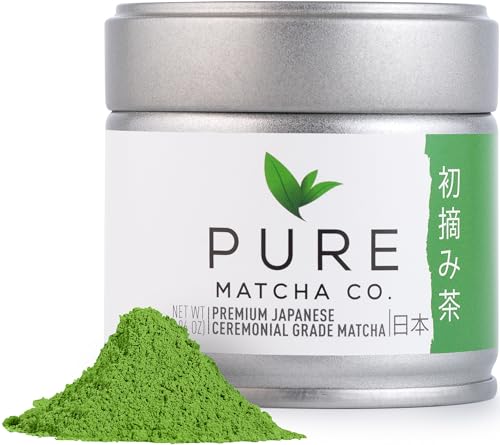
Pure Matcha Co’s ceremonial grade is sourced from Nishio, Japan—a region renowned for producing some of the country’s finest matcha. The 30-gram tin comes sealed airtight, locking in the bright green color and sweet, umami-forward aroma. At this tier, the value is exceptional: users consistently note the smooth balance of savory and sweet with no chalkiness or grit.
This powder responds well to bamboo whisking, creating a consistent micro-foam with minimal effort. Reviewers describe the taste as creamy, nutty, and earthy without bitterness, even when prepared as traditional usucha. The included directions pamphlet is helpful for beginners who may not know that stirring with a spoon causes clumps.
Energy-wise, the L-theanine content delivers a steady, jitter-free boost lasting up to six hours—a common reason coffee drinkers cite for switching. While the tin size is modest, a single teaspoon per serving makes this last comfortably for daily drinking. For its combination of flavor, origin transparency, and approachable price, this is the top recommendation for most buyers.
Why it’s great
- Vibrant green with smooth, balanced umami flavor
- Provides steady 6-hour energy without jitters
- Excellent punching-above-its-weight value for ceremonial grade
Good to know
- 30g tin is small; heavy users may want a larger option
- Requires a bamboo whisk—spoon stirring leads to clumps
2. Matcha Moon Pure Zen Ceremonial Grade Matcha Powder
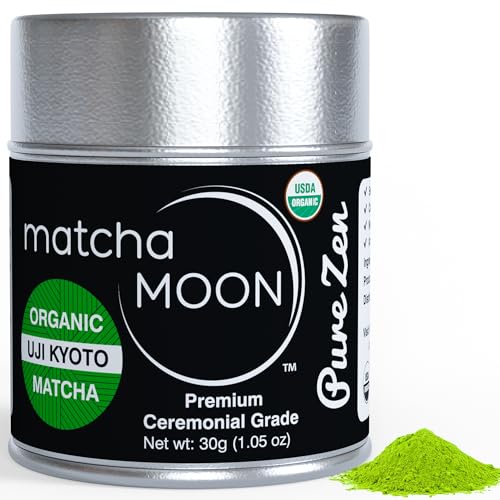
Matcha Moon Pure Zen hails from Uji, Kyoto—the spiritual birthplace of Japanese matcha. This 30-gram tin carries USDA Organic certification, which matters for buyers concerned about pesticide residues in daily consumption. The first-harvest leaves deliver a naturally sweet, umami-rich profile with a velvety finish that performs beautifully in traditional tea ceremonies.
Multiple users confirm the powder creates consistent micro-foam and resists clumping when whisked correctly. The grassy, bright flavor is well-balanced, and even reviewers who accidentally left it steeping too long reported no bitterness—a strong indicator of proper shade growing and harvest timing. A few note the relatively small size for the price, describing it as a treat-only purchase.
For anyone who values organic purity and traditional Kyoto roots, the Matcha Moon delivers authenticity in every sip. Its smooth character works equally well for meditative ceremony preparation or a simple daily latte. If you prioritize certified organic sourcing and are willing to pay a modest premium for it, this is your matcha.
Why it’s great
- USDA Organic certified—no synthetic pesticides
- Smooth, sweet, umami-rich flavor with no bitterness
- Produces consistent micro-foam with whisking
Good to know
- Small 30g tin goes fast with daily use
- Premium price point makes it more of an occasional indulgence
3. HanDPICK Organic Japanese Matcha Green Tea Powder
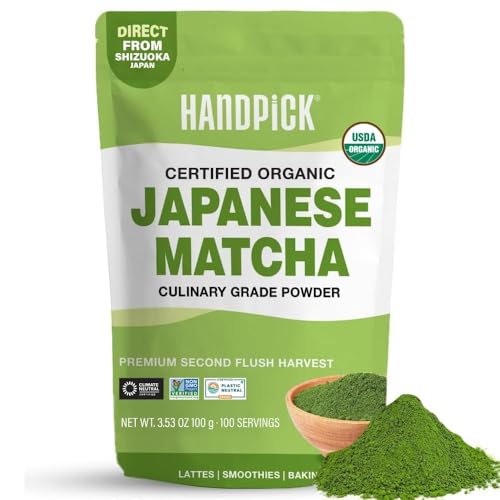
HanDPICK offers a 100-gram resealable pouch—roughly three times the volume of the typical ceremonial tin—at a competitive price. The package claims up to 100 servings, and real users confirm it lasts over two months with daily use. The matcha is organic, Non-GMO verified, and sourced directly from Japan, with a rich, earthy flavor that holds up well in lattes.
Reviewers praise its vibrant green color and smooth texture, noting it mixes without chalkiness. The flavor profile is slightly more earthy and less sweet than first-harvest ceremonial grades, which makes it ideal for blending with milk or sweeteners. Some users felt the QR code on the pouch leads to a vendor page rather than useful recipes—a minor disappointment for beginners.
For high-volume drinkers making matcha lattes daily, this pouch delivers the best cost-per-serving ratio on this list. The carbon-neutral and plastic-neutral certifications also appeal to eco-conscious buyers. If your priority is long-lasting supply without sacrificing Japanese origin, HanDPICK is the smart choice.
Why it’s great
- Large 100g resealable pouch with excellent per-serving value
- Organic and Non-GMO verified with Japanese sourcing
- Earthy, aromatic flavor that works perfectly in lattes
Good to know
- Flavor is less sweet than premium ceremonial grades
- QR code directs to vendor page, not helpful recipes
4. Midori Spring Gold No.2 Ceremonial Grade Matcha
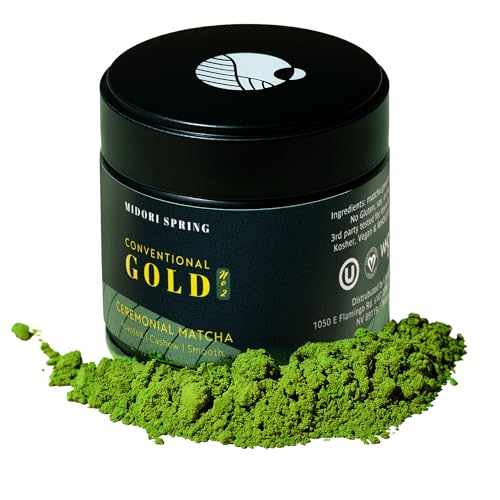
Midori Spring Gold No.2 breaks from tradition with a roasted tencha base that imparts a distinctly nutty, toasty character—less floral, more warm and satisfying. This is a blend of five cultivars—Okumidori, Samidori, Kanayamidori, Yabukita, and Sayamakaori—from Kyoto farms. The result is an approachable matcha that appeals to those who find standard grassy profiles challenging.
It produces a bold, creamy texture with low astringency and lingering umami. Several users who compared multiple brands ranked Gold No.2 as smoother than market staples, noting sharper mental clarity without coffee’s crash. It mixes well in cold brew too, making it versatile across seasons. Lab testing adds an extra layer of trust for purity and safety.
This is a premium product at a premium price, but its unique roast profile and complex cultivar blend justify the investment. For matcha drinkers who love nutty overtones and want a versatile powder for both hot ceremonies and iced preparations, the Midori Spring Gold No.2 is a standout.
Why it’s great
- Unique nutty, roasted flavor from longer-roasted tencha
- 5-cultivar blend offers exceptional flavor complexity
- Lab tested for metals and toxins; third-party verified
Good to know
- Premium price point; small tin for the cost
- Nutty profile may not appeal to traditional matcha purists
5. Jade Leaf Matcha Organic Culinary Grade Matcha Powder

Jade Leaf’s culinary grade is built for versatility. The 100-gram resealable pouch is packed with organic matcha from Uji and Kagoshima, Japan, and each serving contains roughly 16-24mg of caffeine—about a quarter of a standard coffee cup. The flavor is rich and distinct, with a beautiful green color that holds up well in baked goods, smoothies, and lattes.
Customers report smooth mixing without clumps and a natural sweetness that avoids the bitterness of lower-quality culinary powders. The resealable packaging preserves freshness, though the brand recommends refrigeration after opening and using within 30-60 days for best flavor. A note: the pouch weighs only 1.76 ounces as its shipping weight, but the actual product is the full 100g/3.53oz of matcha inside.
This is the entry-level option on the list, ideal for those who use matcha in recipes or want a low-commitment way to test daily consumption. For baking pancakes, making matcha frosting, or blending into smoothies, Jade Leaf delivers consistent quality at a budget-conscious price. Just don’t expect the refined sweetness of ceremonial-grade for straight drinking.
Why it’s great
- Large 100g pouch offers great per-serving economy
- USDA Organic with authentic Japanese Uji/Kagoshima sourcing
- Versatile for lattes, baking, smoothies, and skincare
Good to know
- Culinary grade is less refined than ceremonial for straight drinking
- Best used within 30-60 days after opening; requires refrigeration
FAQ
What does ceremonial grade matcha actually mean?
How do I know if my matcha is authentically from Japan?
Why does some matcha taste bitter and others don’t?
Can I use culinary grade matcha for drinking?
Final Thoughts: The Verdict
For most users, the best authentic matcha powder winner is the Pure Matcha Co Premium Ceremonial Grade because it delivers a perfectly balanced umami-sweet flavor, authentic Nishio origin, and a reliable jitter-free energy boost at a price that punches well above its weight. If you value USDA Organic certification and traditional Kyoto sourcing, grab the Matcha Moon Pure Zen. And for high-volume daily latte drinkers seeking the best per-serving value, nothing beats the HanDPICK Organic Japanese Matcha pouch.

Mo Maruf
I created WellFizz to bridge the gap between vague wellness advice and actionable solutions. My mission is simple: to decode the research and give you practical tools you can actually use.
Beyond the data, I am a passionate traveler. I believe that stepping away from the screen to explore new environments is essential for mental clarity and physical vitality.