Our readers keep the lights on and my smoothie glass nicely filled. As an Amazon Associate, I earn from qualifying purchases.
Whether you are dissecting the layers of a classical symphony or pinpointing footsteps in a competitive shooter, the earphones you choose define your entire experience. A muddy midrange or a harsh treble spike can ruin a track, while poorly controlled bass can mask critical details. The difference between a listening tool and a true instrument lies in driver topology, tuning philosophy, and how accurately the transducer reproduces the recording without adding its own color.
I’m Mohammad Maruf — the founder and writer behind WellFizz. I have spent years analyzing driver configurations, frequency response curves, and impedance matching to separate genuinely high-fidelity earphones from those that merely sound impressive on first listen.
From planar magnetic transducers to multi-driver hybrids, the search for the best audio quality earphones demands understanding how each design trade-off affects your listening experience, not just the price tag.
How To Choose The Best Audio Quality Earphones
The right earphone for you depends on the genres you listen to most, your tolerance for treble energy, and whether you want a flat reference or an engaging sound. Beginners often confuse loudness with quality, mistaking a boosted low-end for technical capability. Real fidelity comes from low distortion, coherent driver integration, and a tuning that reveals micro-details without fatigue.
Driver Configuration: The Core of Clarity
Single dynamic drivers offer coherent bass and natural timbre, but struggle to handle complex multi-instrument passages without blending sounds. Balanced armature (BA) drivers excel at mid and high frequencies but lack physical bass impact. Hybrid designs (dynamic + BA) aim to combine the best of both, though driver integration quality varies dramatically. Planar magnetic drivers use a large diaphragm suspended in a magnetic field, delivering fast transient response and exceptional detail retrieval across the entire spectrum, but they are less sensitive and often require more power to reach their potential. For sheer detail retrieval at moderate volumes, planar drivers dominate. For natural vocal reproduction, a well-tuned single dynamic or a coherent hybrid is often preferable.
Tuning Signature: Neutral vs. Colored
Neutral-tuned earphones aim for a flat frequency response that reveals the recording exactly as the artist intended. This is ideal for critical listening, mixing, and genres like classical or acoustic. V-shaped tuning boosts bass and treble while recessing the mids, creating an energetic, fun sound that works well for pop, EDM, and rock. Warm signatures emphasize the lower mids and bass, resulting in a smooth, non-fatiguing presentation that suits jazz and lo-fi. Decide what you want to hear more of — technical detail or emotional engagement — and choose the tuning that aligns with your library.
Impedance, Sensitivity, and Power Requirements
High-impedance earphones (above 50 Ω) require a dedicated headphone amplifier to achieve adequate volume and dynamic range. Low-impedance models (below 32 Ω) with high sensitivity (above 105 dB) can be driven comfortably by a smartphone or laptop dongle. However, pairing a low-sensitivity planar earphone with a phone dongle can result in a thin, lifeless sound due to insufficient current. Always check the sensitivity rating: a figure of 108 dB/mW or higher ensures easy driving, while 100 dB/mW or lower suggests a desktop or portable DAC/amp is needed for optimal performance.
Quick Comparison
On smaller screens, swipe sideways to see the full table.
| Model | Category | Best For | Key Spec | Amazon |
|---|---|---|---|---|
| Letshuoer S12 Ultra | Planar Magnetic | Detail-oriented audiophiles | 14.8mm planar driver, 20Hz-20kHz | Amazon |
| Moondrop Blessing 3 | Hybrid (2DD+4BA) | Studio monitoring & mixing | 2DD + 4BA, triple-frequency division | Amazon |
| AFUL Explorer | Hybrid (1DD+2BA) | Warm, fatigue-free long sessions | 26Ω, 108dB sensitivity | Amazon |
| Sennheiser IE 200 | Single Dynamic | Neutral reference listening | 7mm TrueResponse transducer, MMCX | Amazon |
| Final A4000 | Single Dynamic | Instrument separation | 6mm dynamic driver, 100dB | Amazon |
| TRUTHEAR Hexa | Hybrid (1DD+3BA) | Budget neutral tuning | 1DD+3BA, DLP 3D-printed cavity | Amazon |
| Sennheiser IE 100 Pro | Single Dynamic | Stage monitoring & live use | 10mm dynamic, detachable cable | Amazon |
In‑Depth Reviews
1. Letshuoer S12 Ultra

The Letshuoer S12 Ultra uses a 14.8mm planar magnetic driver — a massive diaphragm that delivers extraordinarily fast transient response and micro-detail retrieval that hybrid or dynamic drivers at this price point cannot match. The high-frequency extension is airy and natural without becoming brittle, while the bass remains tight and articulate rather than boomy. Layering in complex tracks is superb, each instrument occupying its own space in a wide, holographic soundstage.
This planar is less sensitive than typical earphones, meaning it benefits noticeably from a dedicated amplifier or a quality DAC dongle. Plugged directly into a phone, the volume is adequate but the dynamic range feels compressed. With a proper source, the S12 Ultra opens up into a richly layered presentation that reveals textures previously buried. The included 392-core silver-plated cable and interchangeable 3.5mm/4.4mm plugs add real versatility for source matching.
Some users find the stock ear tips compromise tonal balance, preferring smaller tips to tame the sub-bass and bring vocals forward. The cold metal housing is durable but can feel weighty during extended wear. For critical listeners who value resolution and speed over warmth, this is one of the most technically accomplished earphones available in its tier.
Why it’s great
- Exceptional micro-detail and transient speed
- Wide soundstage with precise instrument separation
- High-quality interchangeable cable included
Good to know
- Requires a DAC or amplifier for optimal performance
- Stock ear tips may not suit all ear anatomies
- Heavier metal build can cause fatigue over very long sessions
2. Moondrop Blessing 3

The Moondrop Blessing 3 employs a complex hybrid architecture — two horizontally opposed dynamic drivers handling the low frequencies and four balanced armature drivers covering mids and highs. This triple-frequency division system, enabled by a 3D-printed acoustic filter nozzle, produces a remarkably coherent sound with surgical precision. Treble extension is crystalline, vocals cut through dense arrangements, and the imaging is pinpoint across the stereo field.
Its neutral-bright tuning is ideal for music production, mixing, and critical analysis. The soundstage is wide and layered, allowing you to hear reverb tails and ambient cues that most earphones smudge. However, the bass is lean and controlled — if you seek visceral sub-bass impact, this is not the shape. The Blessing 3 is also relatively insensitive, requiring a solid DAC/amp pairing to reach satisfying volume levels without clipping.
The stock accessories feel underwhelming: the cable uses stiff connections, the ear tips are average, and the zipper case is flimsy. Many users replace the cable with a third-party silver upgrade to unlock more bass weight and detail. The stainless steel faceplate is gorgeous but easily scratched. For those who demand reference-level accuracy and are willing to invest in aftermarket upgrades, this is a formidable tool.
Why it’s great
- Exceptional treble detail and vocal clarity
- Pinpoint imaging ideal for music production
- Coherent multi-driver integration
Good to know
- Requires powerful source for optimal sound
- Stock cable and ear tips are low quality
- Bass is lean — not suited for bass-heavy genres
3. AFUL Explorer

The AFUL Explorer takes a warm, relaxed approach to fidelity — its 1DD+2BA hybrid configuration is tuned to deliver controlled bass without muddying the mids, smooth treble that never fatigues, and a natural vocal presence. The RLC network eliminates driver resonance peaks, resulting in an electrostatic-like treble smoothness that remains detailed but never harsh. Its 108dB sensitivity and 26Ω impedance make it delightfully easy to drive straight from a smartphone dongle.
Comfort is a standout feature: each earpiece weighs only 4.43 grams and uses a medical-grade resin shell that contours to the ear without pressure points. The 3D pressure balance system reduces ear canal fatigue during extended sessions, making these ideal for long commutes, workdays, or all-night listening marathons. The included silver-plated copper cable is supple and well-behaved, with minimal handling noise.
The nozzles lack a lip, causing some ear tips to slip off and occasionally get stuck in the ear canal — a design flaw that requires careful tip selection. SpinFit CP100 tips grip the nozzle securely and resolve this issue. There is also no mesh filter to protect the internal acoustic chamber from earwax, meaning regular cleaning is essential. For listeners who want a smooth, non-fatiguing signature that still reveals musical details, this is an excellent mid-range choice.
Why it’s great
- Warm, fatigue-free tuning for extended use
- Extremely lightweight and comfortable resin shell
- Easy to drive without external amplification
Good to know
- Nozzle lacking lip causes eartips to slip
- No mesh filter to prevent earwax ingress
- Stock cable is short for desktop use
4. Sennheiser IE 200

Sennheiser’s IE 200 uses a 7mm TrueResponse transducer with precision-matched drivers that minimize unit-to-unit variation — a rare level of quality control at this price. The sound is neutral with a gentle warmth: expressive mids, smooth treble, and controlled bass that never overwhelms. The dual-bass tuning design lets you reposition the ear tips on the nozzle to choose between a tighter, more linear low-end or a fuller, warmer presentation.
The ergonomic shell is one of the most comfortable IEM designs available, fitting snugly without pressure even during 8-hour sessions. The flexible over-ear hooks stay in place securely, and the memory foam ear tips provide excellent passive isolation. The MMCX connector allows cable upgrades, though the stock braided cable is prone to tangling and picking up handling noise — its main weakness.
Sound quality scales noticeably with source quality: from an iPhone dongle it sounds good, but paired with a dedicated DAC like the AudioQuest DragonFly it opens up with wider staging and tighter bass. Some users find the stock tuning too flat out of the box, but a simple EQ curve (boosting sub-bass slightly) transforms it into a remarkably capable performer. For those wanting a comfortable entry into neutral high-fidelity listening, this is a practical and rewarding pick.
Why it’s great
- Extremely comfortable for all-day wear
- Versatile dual-bass tuning adjustment
- Precision-matched drivers for consistent sound
Good to know
- Stock cable tangles easily and has handling noise
- Requires EQ to shine out of the box
- MMCX connector proprietary — cable upgrades limited
5. Final A4000

The Final A4000 is a single dynamic driver earphone with a deliberately V-shaped tuning that excites rather than soothes. The treble is detailed and sparkly without crossing into sibilance, while the bass is punchy and round with a slight sub-bass emphasis. The midrange is thin and recessed — vocals take a back seat to the percussive and low-end energy — making music feel lively and propulsive.
Its soundstage is wide and airy, with excellent instrument separation. Cymbals and hi-hats have shimmer and decay, and the imaging is precise enough for critical listening to complex arrangements. However, the same wide staging makes directional audio in competitive games feel ambiguous — this is a music-first earphone, not a gaming one. The fit is comfortable and secure once you find the right ear tip, with foam tips notably improving bass response and isolation.
The stock cable is cheap-feeling with a proprietary 2-pin notch that limits aftermarket replacement options. Some units have reported left-channel distortion at high volumes during the sub-bass region around 50-60 Hz, though this is not universal. The nozzle filter can become soiled by sweat over time but recovers with gentle cleaning. For listeners who crave energy and air in their music and prefer an engaging presentation over a neutral one, the A4000 delivers distinctive character.
Why it’s great
- Sparkly treble with excellent decay and air
- Wide, open soundstage with precise separation
- Engaging V-shaped tuning for energetic genres
Good to know
- Recessed mids make vocals sound distant
- Poor directional audio for competitive gaming
- Stock cable is low quality with limited replacement options
6. TRUTHEAR Hexa

The TRUTHEAR Hexa packs a 1DD+3BA hybrid configuration into a DLP 3D-printed resin cavity originally designed for high-end custom monitors. The tuning leans neutral with a subtle warmth: sub-bass has satisfying impact without bloat, mids are clear and well-layered, and treble is detailed without becoming harsh. Imaging is precise enough for competitive gaming, where directional audio cues are cleanly separated.
The fit is exceptional for the budget bracket — the lightweight resin shell with an aluminum faceplate is both durable and comfortable for multi-hour wear. The passive noise isolation is excellent once you achieve a good seal with the included memory foam or silicone tips. The copper silver-plated cable is thick and well-made, with minimal microphonics, and the detachable 0.78mm 2-pin connection allows easy cable upgrades.
A small subset of users report the soundstage feels narrow or congested, bordering on mono-like presentation, which may stem from a poor seal or unit variation. The tuning is reference-style — if you prefer a bass-heavy or bright signature, the Hexa will sound flat. The limited color option (black only) and the absence of a mesh filter in the nozzle are minor ergonomic compromises. For its price, however, the Hexa offers a level of technical performance that rivals units costing several times more.
Why it’s great
- Neutral tuning with excellent detail retrieval
- Lightweight resin shell with superb fit and isolation
- Great cable quality and easy detachable connection
Good to know
- Soundstage can feel narrow for some listeners
- No nozzle mesh filter — requires regular cleaning
- Limited color options and average stock ear tips
7. Sennheiser IE 100 Pro
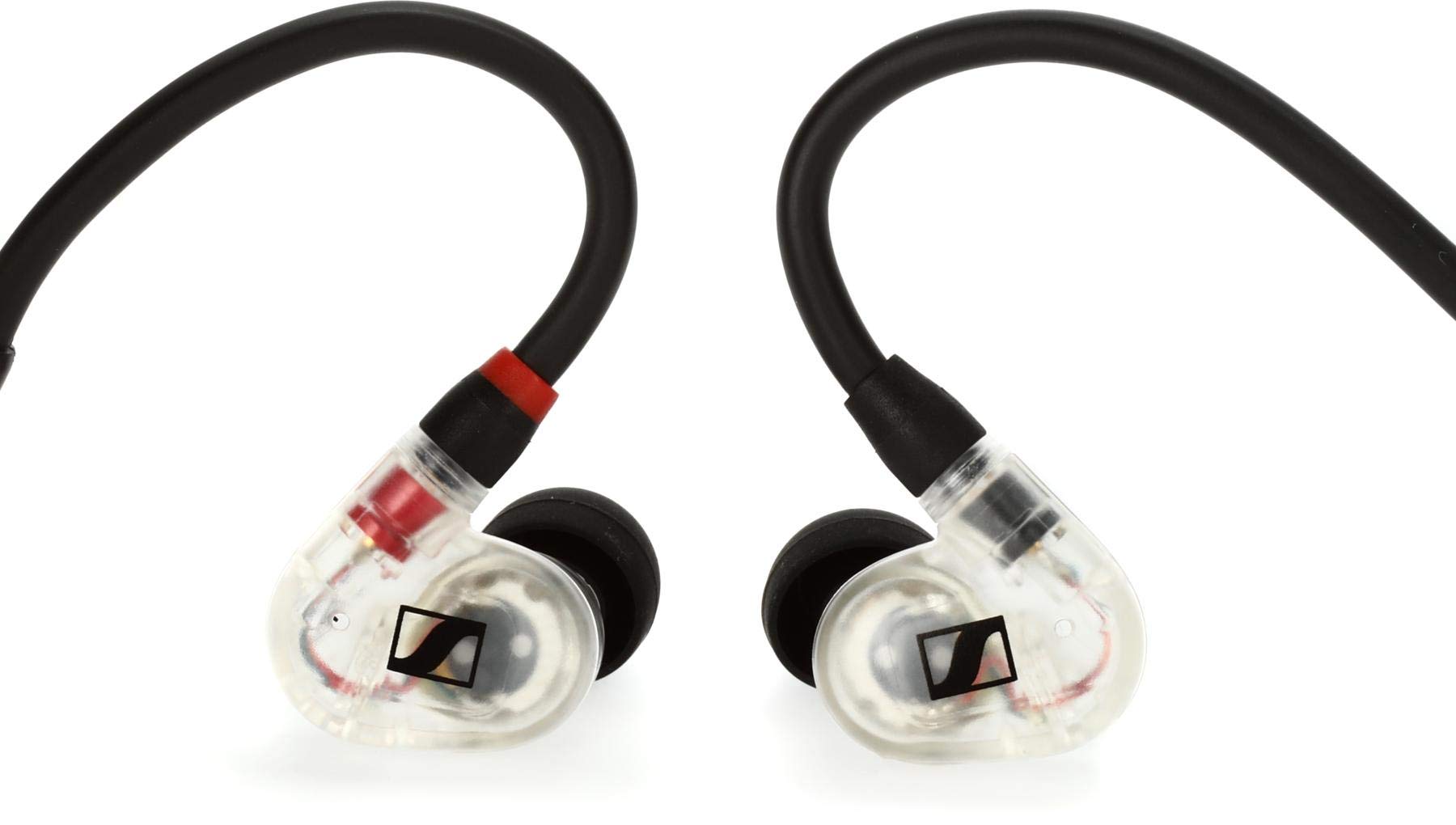
The Sennheiser IE 100 Pro is built for the stage — its 10mm dynamic transducer delivers clean, powerful monitoring with enough transparency to identify mix flaws. The sound is balanced with a slight treble boost that helps vocals and instruments cut through a noisy environment. The bass is tasteful and never muddy, making it suitable for bassists and guitarists who need to hear their own notes clearly without rumble.
The single-driver design allows for a slim, ergonomic shell that sits flush inside the ear, compatible even with smaller ear canals. The stage-proof cable features an internal cable duct that reduces handling noise, and the included foam and silicone ear tips provide a range of seal options. The housing is transparent, revealing the internal components, which adds a functional aesthetic for stage use.
While excellent for live monitoring, the IE 100 Pro’s treble emphasis can sound sibilant on “S” and “T” consonants when paired with bright sources. Instrument separation is good but not class-leading — complex studio tracks can feel slightly congested compared to hybrid or planar alternatives. The cable is detachable but uses a proprietary connector, limiting upgrade paths. For its budget-friendly price, it remains a solid entry-level professional monitor with a performance-to-durability ratio that suits gigging musicians.
Why it’s great
- Robust build designed for rigorous stage use
- Comfortable slim shell fits smaller ears well
- Clear monitoring with good instrument separation
Good to know
- Treble boost can cause sibilance on certain tracks
- Proprietary detachable cable limits upgrades
- Not the most detailed for critical studio analysis
FAQ
What does neutral tuning mean in audio earphones?
Why do some earphones need a DAC or amplifier to sound good?
How do I know if a hybrid driver earphone is well integrated?
Final Thoughts: The Verdict
For most users, the best audio quality earphones winner is the Letshuoer S12 Ultra because its planar magnetic driver delivers exceptional micro-detail and transient speed that rivals more expensive models while remaining relatively accessible with a good DAC. If you want a warm, fatigue-free listening experience for long sessions, grab the AFUL Explorer. And for a comfortable entry into neutral high-fidelity sound with versatile tuning, nothing beats the Sennheiser IE 200.

Mo Maruf
I created WellFizz to bridge the gap between vague wellness advice and actionable solutions. My mission is simple: to decode the research and give you practical tools you can actually use.
Beyond the data, I am a passionate traveler. I believe that stepping away from the screen to explore new environments is essential for mental clarity and physical vitality.