Our readers keep the lights on and my smoothie glass nicely filled. As an Amazon Associate, I earn from qualifying purchases.
Choosing earbuds for pure audio quality means navigating a landscape where driver configurations, tuning curves, and codec support determine whether you hear the recording or just a version of it. The difference between a pair that reveals micro-details and one that masks them often comes down to the hybrid driver architecture and the precision of its crossover implementation.
I’m Mohammad Maruf — the founder and writer behind WellFizz. My research for this guide involved cross-referencing driver specifications, frequency response targets, and real-world listening impressions across dozens of models to isolate what truly moves the needle on sound reproduction.
This guide breaks down the top contenders across wired and wireless categories, focusing on measurable performance rather than marketing claims, to help you identify the best audio quality earbuds for your listening preferences and budget.
How To Choose The Best Audio Quality Earbuds
Selecting earbuds for audio fidelity requires understanding how driver types, tuning targets, and physical fit interact to produce the sound you hear. A balanced armature excels at reproducing treble detail, while a dynamic driver provides the physical air movement needed for impactful bass. Hybrid configurations combine both to cover the full frequency spectrum without the distortion that single-driver designs can introduce at the extremes.
Driver Configuration and Crossover Design
The number of drivers alone doesn’t guarantee better sound — the crossover network that splits the signal between them matters more. A poorly implemented crossover creates phase issues and frequency gaps that muddy the soundstage. Look for models with multiple balanced armatures paired with a dedicated dynamic driver, where the crossover points are set to avoid overlap in the critical 2–4 kHz range where vocal presence lives.
Frequency Response Target Curves
The H-2019 target curve, widely adopted in the IEM community, aims for a neutral, flat response that allows the recording to speak without coloration. Models tuned to this curve provide accurate imaging and soundstage depth, making them ideal for critical listening and gaming where positional audio matters. A V-shaped curve, by contrast, boosts bass and treble for a more immediate, energetic sound but sacrifices midrange clarity and can cause listening fatigue over long sessions.
Wired vs. Wireless Codec Support
Wireless earbuds rely on Bluetooth codecs to transmit audio data. LDAC supports up to 990 kbps at 24-bit/96 kHz, while aptX Lossless offers CD-quality 16-bit/44.1 kHz transmission without compression artifacts. AAC, commonly used with Apple devices, caps at 256 kbps and introduces audible compression on complex passages. If your library contains high-resolution FLAC files, a wired IEM with a quality DAC will outperform any wireless model — but LDAC and aptX Adaptive close the gap significantly for portable use.
Quick Comparison
On smaller screens, swipe sideways to see the full table.
| Model | Category | Best For | Key Spec | Amazon |
|---|---|---|---|---|
| Linsoul SIMGOT EM6L | Wired IEM | Critical listening & gaming | 1DD + 4BA hybrid, H-2019 target | Amazon |
| Sennheiser IE 200 | Wired IEM | Neutral reference monitoring | 7mm TrueResponse dynamic driver | Amazon |
| SoundPEATS Air5 Pro+ | Wireless | Hi-Res wireless on a budget | xMEMS + 10mm DD, LDAC/aptX Lossless | Amazon |
| Focal Bathys | Wireless Over-Ear | Audiophile-grade wireless | 40mm Al/Mg drivers, USB-C DAC mode | Amazon |
| Nothing Ear (3) | Wireless | Balanced wireless & ANC | 12mm ceramic diaphragm driver | Amazon |
| SENNHEISER IE 100 PRO | Wired IEM | Stage monitoring & durability | 10mm dynamic broadband transducer | Amazon |
| BASN MMCX Triple Driver | Wired IEM | Bass-forward wired sound | 2DD + 1BA triple hybrid driver | Amazon |
In‑Depth Reviews
1. Linsoul SIMGOT EM6L 1DD + 4BA Hybrid IEM

The SIMGOT EM6L combines an 8mm high-polymer dynamic driver with four balanced armatures in a carefully crossed-over hybrid array that covers the full frequency spectrum without phase cancellation. The H-2019 target curve tuning delivers a neutral presentation with accurate imaging — the soundstage has distinct left-right separation and front-back depth that makes mixing decisions and competitive gaming footsteps equally precise.
The 3D-printed resin housing eliminates internal standing waves, and the CNC-processed faceplate adds rigidity that prevents micro-resonances. The detachable silver-plated OFC cable uses a QDC connector with a positioning groove that locks firmly, though the socket can loosen over time with frequent cable swaps. The shallow nozzle depth may cause fit issues for listeners with larger ear canals, requiring third-party eartips to maintain seal.
During extended listening sessions, the EM6L’s treble extension stays controlled without sibilance, and the bass maintains definition even on sub-bass-heavy electronic tracks. The midrange is where this set truly shines — vocals sit forward with natural body, and instrument separation remains clear on dense orchestral passages. For the price, the EM6L offers a level of technical performance that rivals dedicated monitoring gear.
Why it’s great
- Exceptional soundstage depth and imaging accuracy for competitive gaming and critical listening
- Crossover implementation avoids frequency overlap and maintains phase coherence across all drivers
- Lightweight resin shell with comfortable ergonomics for extended wear
Good to know
- Shallow nozzle may cause seal issues for users with larger ear canals
- QDC connector can loosen over time with frequent cable changes
- Fingerprint-prone glossy faceplate requires regular cleaning
2. Focal Bathys High-Fidelity Bluetooth NC

The Focal Bathys uses 40mm aluminum-magnesium speaker drivers manufactured in France — the same driver technology found in Focal’s high-end wired headphones, adapted for wireless use. The USB-C DAC mode bypasses the Bluetooth receiver entirely, accepting 24-bit/192 kHz audio directly from a source device and powering the internal amplifier for a listening experience that rivals wired headphones in its price bracket.
The sound signature is warm and detailed, with a lush midrange that brings female vocals forward and a treble that extends with airiness without becoming harsh. The bass is tight and controlled rather than exaggerated, which suits acoustic music and vocal-centric genres but may feel understated for listeners accustomed to V-shaped consumer tunings. The ANC implementation offers two optimized modes plus transparency, though the absence of a fully passive mode means you cannot disable the electronics even when using the headphone jack.
Build quality is exceptional — real leather on the headband, microfiber earpads, and a magnesium yoke that keeps the weight manageable for a full-size over-ear. The carrying case is leather-lined and protective. Battery life reaches 30 hours in Bluetooth plus ANC mode, and 15 minutes of fast charging provides 5 hours of playback. The main trade-off is the weight, which may cause fatigue during all-day wear, and the lack of LDAC or aptX Lossless support, which limits wireless resolution on Android devices.
Why it’s great
- USB-C DAC mode delivers 24-bit/192 kHz wired performance that rivals dedicated audiophile headphones
- Aluminum-magnesium drivers provide natural, uncolored sound with excellent transient response
- Premium materials and replaceable earpads ensure long-term durability
Good to know
- ANC cannot be fully disabled — no passive listening mode available
- No LDAC or aptX Lossless support for high-resolution wireless streaming
- Heavier than most wireless competitors, causing potential fatigue over long sessions
3. Sennheiser IE 200 In-Ear Audiophile Headphones

The Sennheiser IE 200 uses a 7mm TrueResponse dynamic driver, the same transducer technology found in Sennheiser’s higher-end IE series, scaled down for a more accessible price point. The dual-bass tuning design allows users to adjust the low-end response by repositioning the ear tips on the nozzle — pushing them fully on gives tighter, faster bass, while leaving a small gap adds warmth and body without creating muddiness.
The sound signature is neutral with a slight rise in the upper midrange that adds clarity to vocals and acoustic instruments. The high frequencies are smooth and extended rather than sharp, making the IE 200 suitable for long listening sessions without fatigue. The bass, even in the warmer tuning mode, remains controlled and never bleeds into the lower mids — a testament to the driver’s low distortion characteristics. The response is highly source-dependent; users with lossless files will hear the detail clearly, while compressed streaming sources may reveal the limitations of the source material.
The ergonomic fit is among the best in the wired IEM category — the housings are small and lightweight, and the flexible memory wire ear hooks secure the cable without pressure points. The braided MMCX cable reduces handling noise, though the stock cable is thin and the proprietary connector limits aftermarket upgrade options. The included silicone and memory foam tips in three sizes provide good passive isolation, and the dual-position tip mounting is a genuinely useful feature for tailoring the FR to personal preference.
Why it’s great
- Dual-bass tuning design lets you adjust low-end response without EQ for tailored sound
- 7mm TrueResponse driver delivers low distortion and excellent transient speed
- Ergonomic shell and flexible ear hooks provide exceptional comfort for all-day wear
Good to know
- Sound quality varies significantly based on source file quality and DAC used
- Stock cable is thin and uses proprietary MMCX connector limiting upgrade options
- Flat tuning out-of-box may sound underwhelming without EQ adjustment
4. SoundPEATS Air5 Pro+ Wireless Earbuds

The SoundPEATS Air5 Pro+ uses a hybrid driver configuration combining a 10mm composite dynamic driver with an xMEMS Cowell solid-state speaker. The xMEMS driver handles the high-frequency range with the speed and precision of a silicon MEMS transducer — a technology that offers faster transient response than traditional balanced armatures, resulting in treble that is clean, detailed, and free of the metallic timbre that can plague BA drivers.
The wireless codec support is comprehensive: LDAC up to 990 kbps, aptX Lossless for CD-quality streaming, and aptX Adaptive for dynamic bitrate adjustment. In practice, paired with an Android device supporting LDAC, the Air5 Pro+ delivers resolution that approaches wired IEMs in the same price range. The default V-shaped tuning emphasizes bass and treble, but the PeatsAudio app includes a 10-band EQ that allows precise adjustment to a neutral profile. The ANC reaches 55dB maximum attenuation with AI adaptive processing, though real-world performance is closer to 85% noise reduction in continuous noise environments.
Battery life is the primary compromise — 6 hours per charge with ANC on, dropping to 3–4 hours when using LDAC at maximum quality. The charging case provides an additional 24 hours. The fit is weightless and secure due to the vented design that prevents driver flex, and the IPX5 rating handles sweat and light rain. The glossy stems become oily with handling, but that is a cosmetic concern rather than a functional one.
Why it’s great
- xMEMS solid-state driver delivers fast, distortion-free treble without BA metallic artifacts
- Full suite of high-resolution codecs including LDAC, aptX Lossless, and aptX Adaptive
- 10-band parametric EQ in app allows precise tuning to personal preference
Good to know
- Battery life drops significantly with LDAC enabled (3-4 hours per charge)
- Default V-shaped tuning requires EQ adjustment for neutral listening
- ANC performance is good but not at Sony or Apple level for continuous noise cancellation
5. Nothing Ear (3) Wireless Earbuds
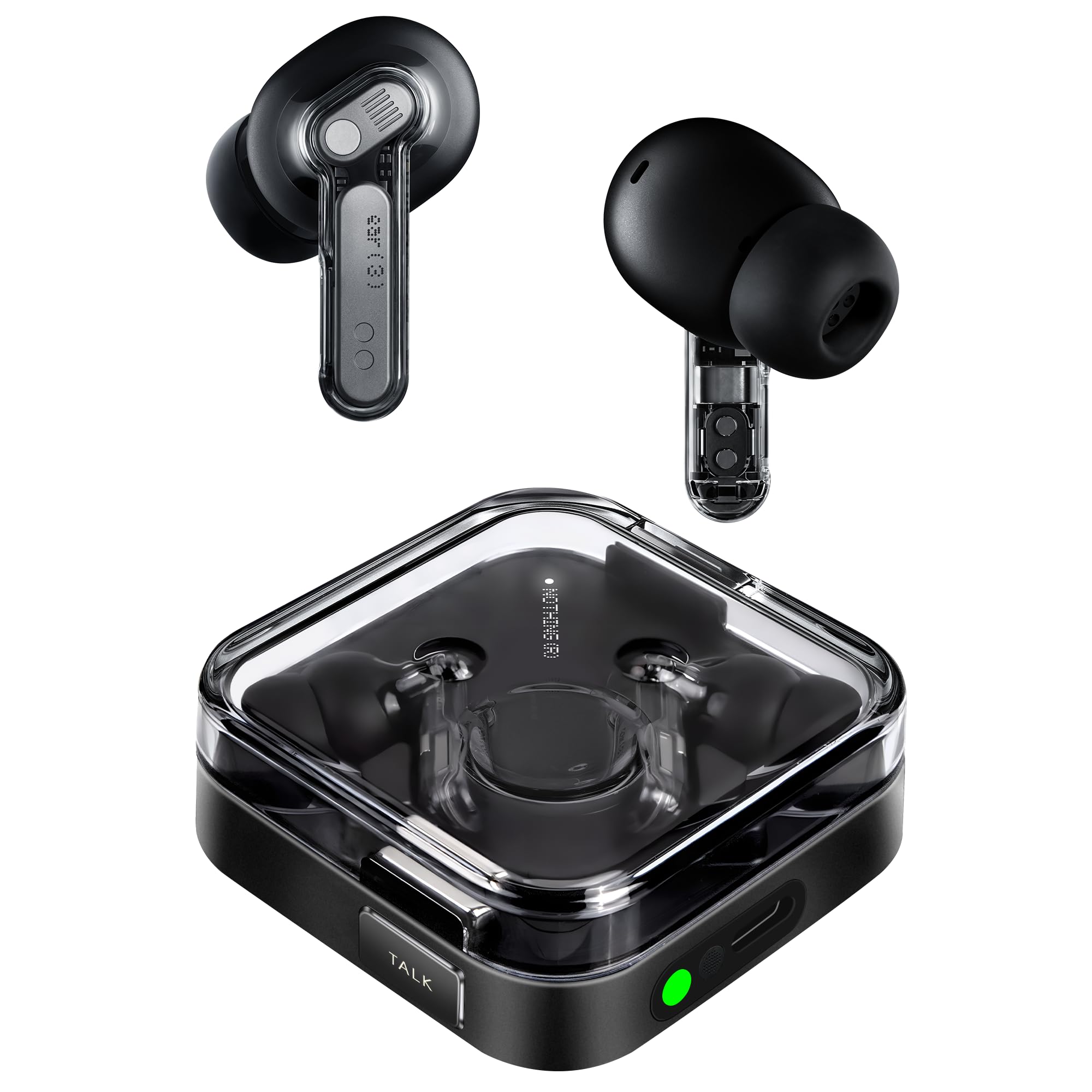
The Nothing Ear (3) features a 12mm dynamic driver with a ceramic diaphragm that increases rigidity while reducing mass — the result is a 10% improvement in airflow compared to the previous generation, lowering distortion and improving transient response. The sound signature is fun and engaging with a bass-forward tilt, though the Nothing X app’s adjustable EQ and Ultra Bass mode allow listeners to dial in a more neutral presentation when desired.
The Smart Hybrid ANC system recalibrates every millisecond using six microphones to cancel noise across a bandwidth of 5000 Hz. In practice, the 45dB rated attenuation translates to effective cancellation of engine rumble, air conditioning hum, and office chatter, though sudden impulse noises still penetrate. The transparency mode is natural-sounding and useful for brief conversations without removing the earbuds. The Super Mic feature uses the charging case’s dual-microphone array to capture voice clearly in environments up to 95 dB — a genuine differentiator for call quality in noisy settings.
Battery life reaches 10 hours per charge with ANC off, dropping to approximately 5 hours with ANC and LDAC engaged. The wireless charging case supports Qi and provides an additional 38 hours of total playback. Bluetooth 5.4 ensures stable multipoint pairing with two devices simultaneously. The transparent design is distinctive and durable, though the gloss finish shows fingerprints quickly. The fit is comfortable for most ear shapes, with four sizes of silicone tips included.
Why it’s great
- Ceramic diaphragm driver reduces distortion and improves transient speed for cleaner sound
- Smart ANC recalibrates adaptively for consistent noise cancellation across different environments
- Super Mic case array captures voice clearly in high-noise environments up to 95 dB
Good to know
- Default tuning is bass-heavy and requires EQ adjustment for balanced listening
- Battery life with ANC and LDAC drops to around 5 hours per charge
- Glossy finish shows fingerprints and requires regular cleaning
6. SENNHEISER Professional IE 100 PRO
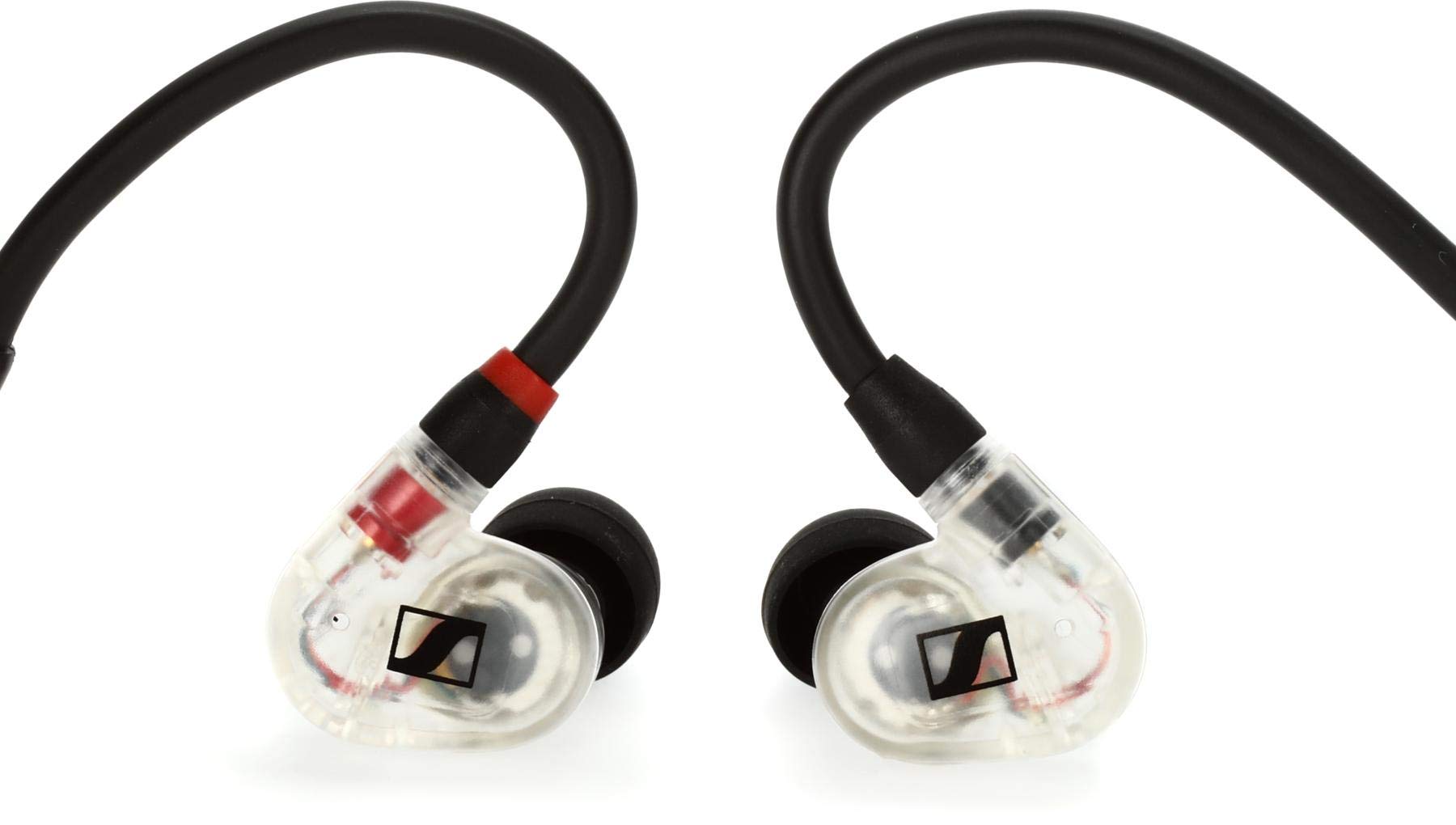
The Sennheiser IE 100 PRO is designed for in-ear monitoring on stage, with a 10mm dynamic broadband transducer that delivers powerful, precise reproduction across the frequency range without the fatigue that can come from multi-driver crossover designs. The single-driver approach eliminates phase issues entirely, providing coherent sound that translates well across different playback systems — a critical requirement for live performers who need their monitor mix to match their recorded reference.
The sound signature is balanced with a slight boost in the upper treble that makes snare drums and cymbals cut through in a live mix. This forward treble can become sibilant on certain recordings — “S” and “T” sounds may hiss on poorly mastered tracks — but the overall clarity is excellent for the price. The bass is tight and controlled rather than boomy, providing sufficient thump for rhythm section monitoring without masking the lower mids where guitars and vocals sit.
The ergonomic design is slim and lightweight, with bendable ear hooks that conform to individual ear shapes for a secure fit during active movement. The included silicone and foam tips in multiple sizes provide effective passive isolation — the foam tips in particular offer approximately 26 dB of noise reduction without batteries. The detachable cable uses a standard MMCX connector with a locking mechanism that resists accidental disconnection during performance, and the internal cable duct protects against stage wear. The plastic housing is durable but lightweight, and the clear color option allows subtle visibility for audience-free environments.
Why it’s great
- Single dynamic driver eliminates phase issues for coherent sound across all frequencies
- Ergonomic slim design with bendable ear hooks provides secure fit for active stage use
- Stage-proof detachable cable with locking MMCX connector resists accidental disconnection
Good to know
- Treble-forward tuning can cause sibilance on poorly mastered recordings
- Plastic housing may feel less premium than metal or resin alternatives at similar price
- Sound quality varies noticeably with source device quality and connected hardware
7. BASN MMCX Triple Driver In-Ear Monitor

The BASN MMCX uses a triple-driver hybrid configuration with two dynamic drivers handling the low-to-mid frequencies and one balanced armature covering the highs. The intention is to combine the physical impact of a dual-DD setup with the detail retrieval of a BA, and the result is a bass-forward sound that delivers noticeable thump for genres like EDM, hip-hop, and rock. The midrange is warm and slightly recessed, which reduces sibilance but also masks some instrument detail in dense mixes.
The soundstage is surprisingly wide for the price point, with good left-right separation that enhances immersion during movies and gaming. The high frequencies are smooth rather than extended, which prevents fatigue but also limits the airiness of cymbal crashes and string harmonics. The passive noise isolation is effective with the correct eartip seal — the package includes 12 pairs of silicone and foam tips in different sizes, allowing precise fit adjustment. The adjustable memory ear hooks help maintain a stable position during movement.
The detachable MMCX cables include both a standard with-mic cable and an upgraded silver-plated cable, offering flexibility between daily use and critical listening. The build quality of the resin shell is sturdy with a marbled appearance that is visually unique, though the cardboard carrying case feels less protective than a hard-shell alternative. The main reliability concern, echoed in user feedback, is that the right channel may fail within the first few weeks for some units — the manufacturer’s customer service appears responsive, but it is a factor to consider before final purchase.
Why it’s great
- Dual dynamic drivers provide impactful, controlled bass without muddiness at moderate volumes
- Included 12 pairs of tips allow precise fit customization for optimal seal and noise isolation
- Two detachable cables included for flexibility between daily use and critical listening
Good to know
- Reported right-channel failure rate within first 6 weeks on some units
- Treble is rolled off, limiting detail retrieval for high-frequency content
- Cardboard carrying case offers minimal protection compared to hard-shell alternatives
FAQ
Why do hybrid driver IEMs sound better than single-driver models?
How much does Bluetooth codec affect sound quality in wireless earbuds?
What does the H-2019 target curve mean for gaming and music?
Do I need a separate DAC for high-impedance wired earbuds?
Final Thoughts: The Verdict
For most users, the best audio quality earbuds winner is the Linsoul SIMGOT EM6L because its 1DD+4BA hybrid architecture delivers exceptional soundstage depth and imaging accuracy at a price that undercuts competitors with similar technical performance. If you want wireless convenience without sacrificing resolution, grab the Focal Bathys for its USB-C DAC mode that turns it into a true wired audiophile headphone when needed. And for a budget-friendly wired option that offers surprisingly competent hybrid driver performance, nothing beats the BASN MMCX Triple Driver.

Mo Maruf
I created WellFizz to bridge the gap between vague wellness advice and actionable solutions. My mission is simple: to decode the research and give you practical tools you can actually use.
Beyond the data, I am a passionate traveler. I believe that stepping away from the screen to explore new environments is essential for mental clarity and physical vitality.