Our readers keep the lights on and my smoothie glass nicely filled. As an Amazon Associate, I earn from qualifying purchases.
The search for audio headphones that deliver both sonic fidelity and lasting comfort often ends in a compromise—wireless features that drain battery life, or studio-grade drivers that lack portability. Whether you’re tracking mixes in a professional studio, commuting through a noisy city, or unwinding with a critical listening session, the right pair hinges on driver tech, impedance matching, and noise isolation architecture.
I’m Mohammad Maruf — the founder and writer behind WellFizz. I’ve spent years analyzing transducer materials, diaphragm geometries, and frequency response curves to separate marketing hype from measurable performance in this category.
After evaluating dozens of models across every price tier, I’ve distilled the market down to nine standout options that define the best audio headphones for 2025 and beyond based on their ability to resolve detail, maintain comfort over hours, and match real-world use cases.
How To Choose The Best Audio Headphones
Three technical specs define whether an audio headphone delivers on its promise: driver architecture, impedance rating, and enclosure type. Ignore these and you risk buying a model that sounds lifeless, requires gear you don’t own, or leaks sound in a quiet office. Here’s what to prioritize.
Driver Technology and Diaphragm Material
The driver is the engine—its size and diaphragm composition directly control transient response and bass authority. Dynamic drivers remain the most common, but material choices like nano wood-fiber composites (FiiO FT1) or aluminum-magnesium alloys (Focal Bathys) dramatically reduce distortion at high SPL. Larger drivers (40mm–60mm) generally move more air, producing deeper bass extension without porting tricks.
Impedance and Sensitivity Matching
Impedance, measured in ohms, dictates how much power a headphone draws. Low-impedance models (16–32 ohms) like the beyerdynamic DT 1990 PRO MKII run efficiently from phones and laptops. Higher-impedance models (150–600 ohms) require a dedicated headphone amplifier to reach acceptable volume. Sensitivity (dB/mW) also matters: a high-impedance headphone with low sensitivity will sound thin on mobile sources.
Open-Back vs. Closed-Back Enclosures
Open-back designs vent the rear of the driver, creating a spacious, airy soundstage ideal for mixing and critical listening—but they leak sound and offer zero isolation. Closed-back enclosures contain the acoustic chamber, delivering punchy bass and passive noise isolation suited for commuting, tracking, or shared workspaces. Choose based on your primary listening environment, not marketing buzzwords.
Quick Comparison
On smaller screens, swipe sideways to see the full table.
| Model | Category | Best For | Key Spec | Amazon |
|---|---|---|---|---|
| Audio-Technica ATH-M50X | Wired Studio | Monitoring & mixing | 45mm CCAW drivers | Amazon |
| Sennheiser IE 200 | Wired IEM | Portable audiophile | 7mm TrueResponse driver | Amazon |
| FiiO FT1 | Wired Closed-Back | Home critical listening | 60mm wood-fiber driver | Amazon |
| Bose QuietComfort | Wireless ANC | Travel & office focus | 24-hour battery life | Amazon |
| Apple AirPods Max 2 | Premium Wireless | Apple ecosystem users | H2 chip + Spatial Audio | Amazon |
| Focal Bathys | Hi-Fi Wireless | Audiophile on the go | 40mm Al/Mg driver | Amazon |
| beyerdynamic DT 1990 PRO MKII | Wired Open-Back | Mastering & editing | TESLA.45 30-ohm driver | Amazon |
| Bowers & Wilkins Px8 S2 | Premium Wireless | Reference wireless sound | 40mm Carbon Cone driver | Amazon |
| Bose A30 Aviation | Aviation ANR | Pilot communication | 3-mode ANR + Bluetooth | Amazon |
In‑Depth Reviews
1. Audio-Technica ATH-M50X

The ATH-M50X has earned its reputation as the gold standard for closed-back studio monitoring. Its proprietary 45mm large-aperture drivers with rare earth magnets and copper-clad aluminum wire voice coils deliver exceptional clarity across an extended frequency range, with bass that is deep and accurate without being boomy. The circumaural earcups swivel 90 degrees for single-ear monitoring, a practical detail for tracking sessions.
Build quality leans heavily on professional-grade materials—the metal headband and reinforced hinge joints survive years of daily use, as confirmed by user reports of durability beyond twelve months. The detachable cable system includes three interchangeable options (straight, coiled, and short), though the stock cable is slightly microphonic at the connector junction. Sound isolation is excellent in loud environments, cutting ambient chatter effectively during mixing.
The sound signature is not flat—it has a slight treble peak that makes S-sounds harsh at high volumes, and the soundstage is narrow compared to open-back designs. Users consistently note that the sonic quality improves dramatically with a dedicated preamp or sound card, revealing details that remain hidden on phone jacks. For its price, the ATH-M50X remains the most versatile wired studio headphone under premium competition.
Why it’s great
- Balanced, revealing sound with punchy bass and clear mids
- Rugged construction with replaceable parts and long service life
- Interchangeable cables and folding design for easy transport
Good to know
- Treble peak can cause listener fatigue on bright recordings
- Narrow soundstage compared to open-back studio monitors
- Requires quality source to unlock full resolution potential
2. Sennheiser IE 200

The IE 200 brings Sennheiser’s TrueResponse transducer technology—typically reserved for higher-end IEMs—into a compact, entry-level shell. The 7mm dynamic driver delivers a neutral sound profile with expressive mids, smooth treble, and controlled bass that avoids the one-note thump of cheaper single-driver designs. The dual-bass tuning system lets you adjust low-end response by changing ear-tip mounting depth, giving two distinct presentations from one driver.
Fit is where the IE 200 excels: the ergonomic rounded-tip shell combined with flexible ear hooks and multiple silicone and memory foam tip sizes creates a secure seal for ears of all shapes. The braided MMCX cable reduces handling noise but uses a proprietary connector angle that limits aftermarket upgrade options. Users report that the stock cable is the weakest link, prone to tangling and microphonic interference when brushing against clothing.
Soundstage is wide for an IEM but naturally limited compared to over-ears—instrument separation remains clear within a headspace that feels intimate rather than expansive. The flat out-of-box tuning means most users will need EQ to bring the frequency response to their preference, especially for bass-heavy genres. At this price, the IE 200 is a credible entry into high-resolution wired listening if you can stomach the cable quirks.
Why it’s great
- Neutral, natural sound signature with low distortion
- Exceptional comfort and secure fit for extended wear
- Interchangeable bass tuning via ear-tip positioning
Good to know
- Stock cable is microphonic and prone to tangling
- Proprietary MMCX angle limits third-party cable options
- Flat tuning demands EQ for listeners who prefer boosted lows
3. FiiO FT1

FiiO’s FT1 uses a 60mm nano wood-fiber composite diaphragm sourced from 90-year-old Nordic spruce, reinforced with carbon fiber to achieve a 0.1mm thickness that balances weight and rigidity. The W-shaped independent suspension design increases effective vibrating area by 25.8% compared to conventional 60mm diaphragms, storing more acoustic energy for deeper sub-bass extension and faster transient response. The result is a closed-back headphone that delivers bass texture and slam usually associated with open-back designs.
Comfort is handled by a ball-slide rail headband with suede fabric contact points and ample padding—the clamp force is light enough for all-day sessions. The package includes two oxygen-free copper silver-plated cables (3.5mm single-ended and 4.4mm balanced), though the stock cables exhibit noticeable microphonics at the cable split. Wood cups add a premium aesthetic and slight acoustic dampening, though they are susceptible to scratches if handled without care.
The sound signature leans warm with a mild bass elevation that never muddles the midrange. Mids are clear and present, treble is smooth without excessive roll-off, and the soundstage is impressive for a closed-back. Users consistently rate the FT1 as competitive with headphones costing significantly more, making it a standout entry-level audiophile choice. Isolation is average—the closed-back design cuts ambient noise moderately but not at ANC levels.
Why it’s great
- Deep, textured bass without bleeding into mids
- Lightweight construction with long-wearing comfort
- Includes both single-ended and balanced cables
Good to know
- Stock cables are microphonic and require replacement
- Not neutral—warm-tilted sound may not suit all genres
- Average noise isolation; not suitable for loud environments
4. Bose QuietComfort

The Bose QuietComfort line continues to define the comfort-to-ANC ratio in wireless over-ears. Plush memory foam ear cushions and a padded headband with low clamping force make these suitable for all-day wear—many users report wearing them for eight hours without pressure points. The noise cancellation offers two modes: Quiet for full isolation and Aware for situational awareness, both operating with minimal cabin pressure sensation compared to competitors.
Sound quality via the 32-bit DSP chip is clean and balanced, with adjustable EQ in the Bose app allowing users to boost bass or brighten treble. The default tuning is slightly warm with a mid-bass emphasis that suits pop and rock, but audiophiles will notice a slight muddiness on complex tracks. Battery life hits 24 hours with ANC enabled, and a 15-minute USB-C charge provides 2.5 hours of playback.
Multipoint Bluetooth works seamlessly across two devices, and the physical button controls are responsive—no touch gestures to fumble. The included audio cable with in-line mic allows passive wired use even when the battery is dead. The main criticism is that Bluetooth connectivity can occasionally drop on older Android phones, requiring a restart. The carrying case is compact but does not collapse flat for storage.
Why it’s great
- Excellent comfort for extended wear with plush padding
- Customizable ANC with effective noise suppression
- Reliable battery life and quick charging via USB-C
Good to know
- Bluetooth multipoint can be unreliable with some devices
- Sound quality is good but not class-leading for critical listening
- No option to disable ANC completely for passive wired use
5. Apple AirPods Max 2
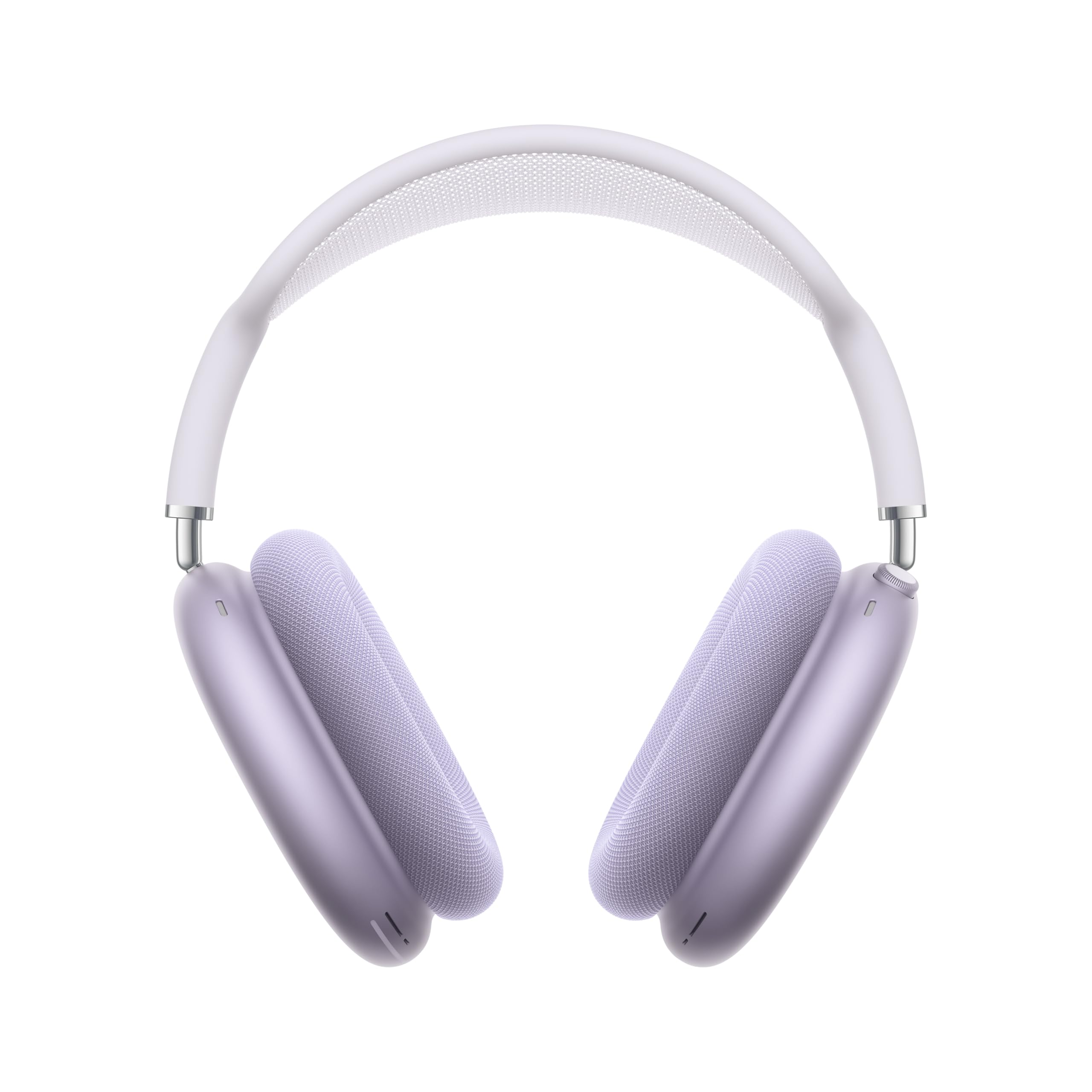
The AirPods Max 2 is powered by the H2 chip, delivering up to 1.5x more active noise cancellation than the previous generation, alongside Adaptive Audio that adjusts ANC levels dynamically based on your environment. The acoustic-first build uses a breathable knit-mesh canopy, memory foam ear cushions, telescoping arms, and custom textile ear pads—materials that enhance comfort but also push the weight to 13.6 ounces, noticeable during long sessions.
Sound quality is rich and balanced with deep bass, expansive mids, and crisp highs that closely match the ATH-M50X signature but with a wider soundstage thanks to the H2’s Spatial Audio engine. Personalized Spatial Audio with dynamic head tracking creates an immersive theater-like experience for compatible Dolby Atmos content. The USB-C port now supports lossless audio up to 24-bit/48kHz when wired to Apple devices.
Battery life is 20 hours with ANC and Spatial Audio enabled—adequate but behind the competition. The Live Translation feature, powered by Apple Intelligence, works on iPhone running iOS 26.4, letting you translate conversations in real time. Connectivity is seamless within the Apple ecosystem, with automatic switching between iPhone, iPad, and Mac. The biggest limitation is the lack of water resistance and no parametric EQ for fine-tuning the frequency response.
Why it’s great
- Industry-leading ANC with adaptive mode for changing environments
- Immersive Spatial Audio with dynamic head tracking
- Seamless integration with Apple devices and USB-C lossless
Good to know
- Heavier than most over-ear ANC competitors
- 20-hour battery is below average for this price tier
- No water resistance or parametric EQ controls
6. Focal Bathys

The Focal Bathys marries audiophile-grade driver engineering with wireless convenience, using 40mm aluminum-magnesium speaker drivers made in France. These drivers deliver a naturally detailed, pure sound with impactful bass and controlled treble that surpasses virtually every Bluetooth headphone under premium price points. The DAC mode via USB-C accepts up to 24-bit/192kHz audio, unlocking resolution that rivals wired studio monitors.
The enclosure uses a combination of real leather, microfiber, and magnesium yokes for a lightweight yet rigid structure that reduces resonance. Earpads are easily replaceable and provide excellent insulation for long sessions. Battery life exceeds 30 hours in Bluetooth with ANC active, and a 15-minute fast charge delivers 5 hours of playback—the best endurance in this premium tier.
The catch is the ANC system—it offers two optimized modes (light and transparent) but no true “off” setting, which can cause a slight pressure sensation for some users. The lack of LDAC or aptX HD means the Bluetooth ceiling is AAC, though the Creative BT-W4 dongle with aptX Adaptive can bypass this bottleneck. Soundstage is impressively wide for a closed-back ANC headphone, shifting with head placement but remaining engaging for atmospheric and acoustic genres.
Why it’s great
- Reference-grade sound quality via USB-C DAC mode
- Excellent build with premium materials and replaceable parts
- Long battery life with fast charging
Good to know
- ANC cannot be fully disabled, may cause pressure
- No LDAC or aptX HD support for high-res wireless
- Heavy build may cause fatigue over extended wear
7. beyerdynamic DT 1990 PRO MKII

The DT 1990 PRO MKII features beyerdynamic’s next-generation TESLA.45 driver, a 45mm dynamic driver with a 30-ohm impedance that achieves remarkable resolution and extremely low distortion. The open-back circumaural design delivers an ultra-wide soundstage with precise imaging, making it ideal for professional mixing, mastering, and critical editing where instrument placement accuracy is non-negotiable.
Comfort is addressed with two interchangeable velour earpad sets—one for a fuller bass presentation, one for a more analytical, detailed sound profile. The memory foam headband is generously padded, and the spring steel headband applies consistent pressure without hot spots. The detachable mini-XLR cables include a 3-meter straight and a 5-meter coiled option, both housed in a premium hard case for transport. Every component is designed for long-term repairability, with replaceable drivers, pads, and cabling.
The sound signature is balanced with a slight emphasis on the upper mids and treble, revealing detail in recordings that other headphones gloss over—cymbal decay, room reverb, and vocal nuances become front-and-center. Users report that the DT 1990 PRO MKII outperforms the DT 990 Pro in clarity and power handling, though it lacks a volume control on the cable and doesn’t include sound suppression for noisy environments. The open-back design leaks sound freely—use these in quiet rooms only.
Why it’s great
- Exceptional resolution and imaging for critical mixing
- Interchangeable earpads for tuning flexibility
- Fully serviceable construction with replaceable parts
Good to know
- Open-back design offers zero noise isolation
- No in-line volume control or sound suppression
- Requires high-quality source to avoid treble glare
8. Bowers & Wilkins Px8 S2

The Px8 S2 uses custom 40mm Carbon Cone drivers driven by a 24-bit DSP and dedicated DAC amplifier, delivering reference-quality wireless sound that rivals the Focal Bathys in clarity and surpasses it in bass authority. The carbon cone material provides exceptional stiffness-to-weight ratio, resulting in controlled, punchy bass with lifelike clarity across the mids and highs. The soundstage is wide and layered, revealing details in recordings that many wireless headphones mask.
Build materials are top-tier: die-cast aluminum arms, soft Nappa leather ear cushions, and memory foam padding create a premium feel that justifies the price. The 8-microphone system provides balanced active noise cancellation that preserves audio fidelity—while ANC is very good, it falls slightly behind the Sony XM6 and Bose QuietComfort in pure suppression. Bluetooth 5.3 with multipoint supports aptX Lossless and Adaptive for hi-res wireless streaming, plus USB-C audio and a 3.5mm cable for wired scenarios.
Battery life reaches 30 hours, and a 15-minute fast charge yields 7 hours of playback. The ear cushions are replaceable, and the hard carrying case is compact for travel. The main drawbacks are the weight—these are heavier than the Bose QC—and the price, which sits at the top of the wireless premium tier. The headband’s clamping force may feel tight initially but loosens over the first few weeks of regular use.
Why it’s great
- Reference-quality wireless sound with deep, punchy bass
- Premium materials with replaceable ear cushions
- Supports aptX Lossless/Adaptive for high-res streaming
Good to know
- Heavier than many ANC competitors
- ANC is good but not best-in-class
- Price is among the highest for wireless headphones
9. Bose A30 Bluetooth Aviation Headset

While not a general-purpose consumer headphone, the Bose A30 is the definitive active noise reduction (ANR) headset for aviation environments, carrying FAA TSO and EASA E/TSO-C139a certification. The circumaural design reduces clamping force by 20% compared to the A20, with soft ear seals that accommodate long flights without pressure headaches. Three selectable ANR modes allow pilots to optimize for different phases of flight and noise levels.
The precision noise-cancelling microphone is engineered for aircraft with “hot mic” or PTT systems, increasing transmission clarity while reducing background rotor and engine noise. Active equalization shapes incoming signals for maximum intelligibility of ATC communications. The down cable and boom mic are side-swappable without tools, and Bluetooth 4.2 enables connection to mobile devices and electronic flight bags for audio mixing or muting with intercom audio.
Battery performance is stellar: 14 hours with Bluetooth active, 35 hours without. The flexible, thin cable reduces weight for ease of movement in the cockpit. The hard carrying case protects the headset during transport. The most common criticism is the microphone positioning, which can be finicky to adjust correctly for voice clarity. This headset is purpose-built for piston, turbine, and jet aircraft—it is overkill for any consumer listening scenario.
Why it’s great
- Industry-leading ANR for extreme noise environments
- Exceptional battery life for long flights
- FAA/EASA certified with tool-free modular design
Good to know
- Overpriced and specialized for non-aviation use
- Bluetooth 4.2 is outdated for consumer audio
- Microphone positioning requires adjustment for optimal clarity
FAQ
Do I need a headphone amplifier for 30-ohm headphones?
What is the difference between aptX Adaptive and LDAC for wireless audio?
Why do open-back headphones sound more spacious than closed-back?
Final Thoughts: The Verdict
For most users, the best audio headphones winner is the Audio-Technica ATH-M50X because it delivers studio-grade detail, robust build, and versatile compatibility at a mid-range price that doesn’t require external amplification. If you want wireless freedom with audiophile-level sound, grab the Focal Bathys. And for a closed-back wired experience that rivals premium open-back designs in bass texture and comfort, nothing beats the FiiO FT1.

Mo Maruf
I created WellFizz to bridge the gap between vague wellness advice and actionable solutions. My mission is simple: to decode the research and give you practical tools you can actually use.
Beyond the data, I am a passionate traveler. I believe that stepping away from the screen to explore new environments is essential for mental clarity and physical vitality.