Our readers keep the lights on and my smoothie glass nicely filled. As an Amazon Associate, I earn from qualifying purchases.
That rush of freezing air every time you walk past the pull-down stairs isn’t normal — and it’s costing you. An unsealed attic opening can bleed as much conditioned air as leaving a window cracked all winter, forcing your HVAC system to run longer and harder than it should. The fix is a dedicated insulated cover that blocks that thermal shortcut at the source.
I’m Mohammad Maruf — the founder and writer behind WellFizz. I’ve spent hundreds of hours digging through material specs, R-value claims, zipper durability reports, and real-world install feedback to sort which attic door insulation covers actually deliver measurable draft reduction versus which ones just look the part.
This guide breaks down the top models by construction quality, thermal performance, and ease of one-person installation so you can confidently choose the best attic door insulation cover for your home’s specific opening dimensions and climate demands.
How To Choose The Best Attic Door Insulation Cover
Not all attic covers seal the same way. The three factors that separate an effective thermal barrier from a drafty disappointment are material construction, R-value density, and the zipper or access system. Measure your rough opening width and depth first — most standard pull-down stairs use a 25-inch by 54-inch frame, but the interior height clearance varies. An 11-inch deep cover fits most, while a 13-inch or 7-inch model serves specialty truss layouts or low-clearance hatches.
Material Layering and Reflective Performance
The best covers use two layers of aluminum foil bonded to a central bubble-pad of polyethylene air cells. That double-bubble construction reflects up to 97 percent of radiant heat and delivers an R-value between 14 and 15.6. Single-layer foil or thin plastic tents offer far lower resistance and can degrade faster under extreme attic temperatures that exceed 140 degrees Fahrenheit in summer.
Sealing Mechanism and Accessibility
Staple-in-place covers create a permanent airtight seal around the attic opening frame, making them the most effective option for continuous draft blocking. If you need frequent attic access for storage or HVAC maintenance, look for a heavy-duty zipper that glides smoothly and won’t separate at the stitching after repeated use. Pop-up rod-frame covers offer tool-free removal but typically leave small gaps at the corners that compromise the thermal boundary.
Quick Comparison
On smaller screens, swipe sideways to see the full table.
| Model | Category | Best For | Key Spec | Amazon |
|---|---|---|---|---|
| Miloo 25″x54″x11″ | Premium | Maximum R-value & fire resistance | R-Value 15.6, 6mm double-bubble | Amazon |
| Energy Wise Premium | Mid-Range | Balanced value & proven durability | R-Value 14.5, reflective foil | Amazon |
| Thermal Armor | Mid-Range | Garage temperature control | R-Value 14.5, double zipper | Amazon |
| DGSL Attic Stairway Cover | Mid-Range | Budget entry with included stapler | R-Value 14.5, aluminum bubble | Amazon |
| Duck Brand Stairway Cover | Mid-Range | Tool-free pop-up installation | 9.07 sq. ft., shock-cord frame | Amazon |
| Insulsure AT-2 Attic Tent | Premium | Permanent truss-sealed install | 25″x54″x7″, dead air space | Amazon |
| Attic Tent AT-4 | Premium | Rigid structure for 1×5/1×6 rails | R-Value 3.2, 13″ height | Amazon |
In‑Depth Reviews
1. Miloo Attic Door Insulation Cover 25″ x 54″ x 11″

The Miloo cover sits at the top of the performance chart with a 6mm thick double air-bubble inner lining that delivers an R-value of 15.6 — the highest measured resistance in this comparison. The reflective aluminum outer layers create a moisture and humidity barrier that prevents condensation on your hallway ceiling, a common failure point with thinner covers. Multiple reviewers confirmed a 10-minute install using a standard staple gun, with the extra-wide stapling border providing a secure bite into the attic frame.
The integrated zipper is oversized and glides smoothly, so you can access stored items without pulling staples. Several users noted that the shallow entrance dip makes climbing the pull-down ladder feel natural rather than cramped. This cover also doubles as a whole-house fan insulator if you need to seal a different ceiling opening with the same high R-value construction.
One installer reported that the Miloo solved a moisture problem on hallway walls that persisted after a thousand-dollar blown-in insulation job. The multi-layer barrier stopped warm air from migrating into the attic cavity, eliminating the condensation cycle entirely. For homeowners who want the thickest defense against both conductive and radiant heat transfer, this is the cover that delivers measurable results from day one.
Why it’s great
- Highest R-value at 15.6 with 6mm double-bubble core
- Extra-wide stapling flange for secure, gap-free install
- Durable zipper holds up to repeated access
- Also works as whole-house fan cover
Good to know
- Premium price point reflects heavier material
- Requires a staple gun (not included)
- Zipper may feel stiff before break-in
2. Energy Wise Premium Attic Door Insulation Cover 25″x54″x11″

Energy Wise has been a staple in this category for years, and the Premium cover earns its reputation through consistent construction and a proven R-value of 14.5. The double-bubble reflective foil reflects 97 percent of radiant heat while the 11-inch depth fits standard pull-down stair openings without binding the folded ladder. One reviewer documented a 10-degree Fahrenheit temperature differential eliminated after installation, with the hallway temperature matching the rest of the house within an hour.
The failsafe zipper is reinforced at the stitch line, and multiple users reported smooth operation after five years of seasonal access. Installation takes about 15 minutes with a staple gun, though some reviewers suggest adding a strip of rubber weatherstripping around the frame for an extra-tight seal. The cover comes with clear instructions and fits openings up to 25 inches by 54 inches with no trimming required.
A five-year review noted that the Energy Wise cover survived extreme attic heat cycles without the foil layers delaminating or the zipper track separating — a common failure mode in budget alternatives. The mid-range price positions this as the smart spend for homeowners who want professional-grade insulation without paying the premium for the highest R-value tier.
Why it’s great
- Proven long-term durability with 5-year user reports
- Reinforced failsafe zipper resists pull separation
- Reflects 97% of radiant heat effectively
- Fast 15-minute install with staple gun
Good to know
- Staple gun not included
- Recommended to add weatherstrip for max seal
- 11-inch depth may limit clearance for very tall ladders
3. Thermal Armor Premium Energy Saving Attic Stairs Insulation Cover
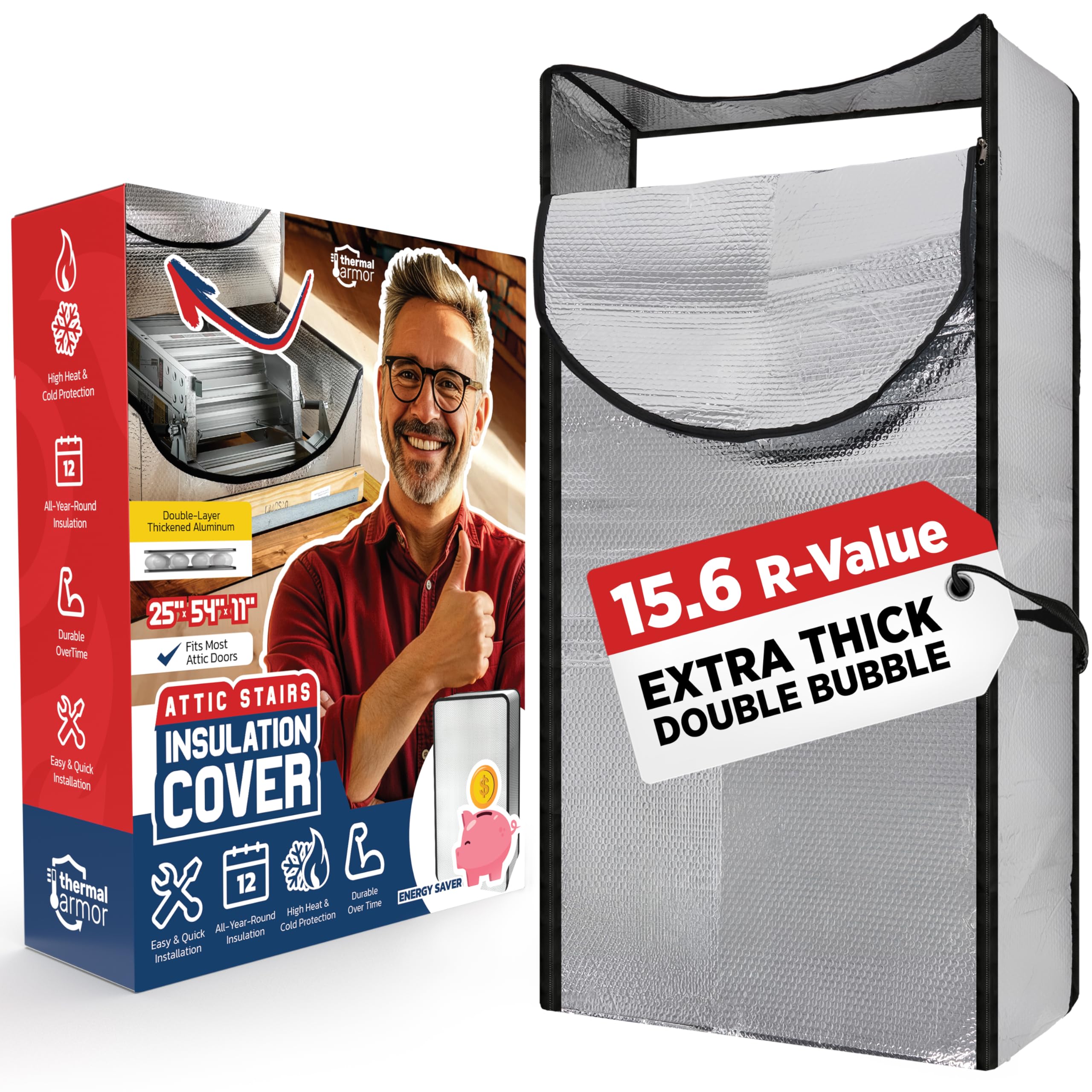
The Thermal Armor cover uses the same double-bubble aluminum foil construction as the category leaders, delivering an R-value of 14.5 with 97 percent radiant heat reflection. What sets it apart is the double-zipper system that lets you open the cover from either side, a small but meaningful upgrade when you’re carrying items up the ladder. One reviewer reported a 15-degree Fahrenheit temperature drop in a garage-turned-gym after installation, making the space usable during peak afternoon sun.
Installation requires your own staple gun, as the included one was noted by several users as inadequate for penetrating the frame material. The cover seals openings up to 25 inches by 54 inches by 11 inches, and the aluminum layers block air exchange effectively enough that users reported an immediate reduction in HVAC runtime. The material feels substantial and the zipper track is reinforced, though a few reviewers expressed concern about long-term zipper durability after repeated use.
For homeowners with a conditioned garage or a bonus room above the garage, the Thermal Armor cover provides a noticeable improvement in temperature regulation. One user measured a 15-degree difference between the covered and uncovered attic opening during the hottest part of the day, with the garage staying comfortable for a home gym setup. The value proposition is strong for anyone prioritizing summer heat rejection.
Why it’s great
- Double-zipper design for access from either side
- Effective heat rejection for garage applications
- Reflects 97% of radiant heat
- Good material quality and fit
Good to know
- Included staple gun is underpowered
- Zipper durability a concern for heavy use
- No accessories like weatherstrip included
4. DGSL Attic Stairway Insulation Cover 25″ x 54″ x 11″
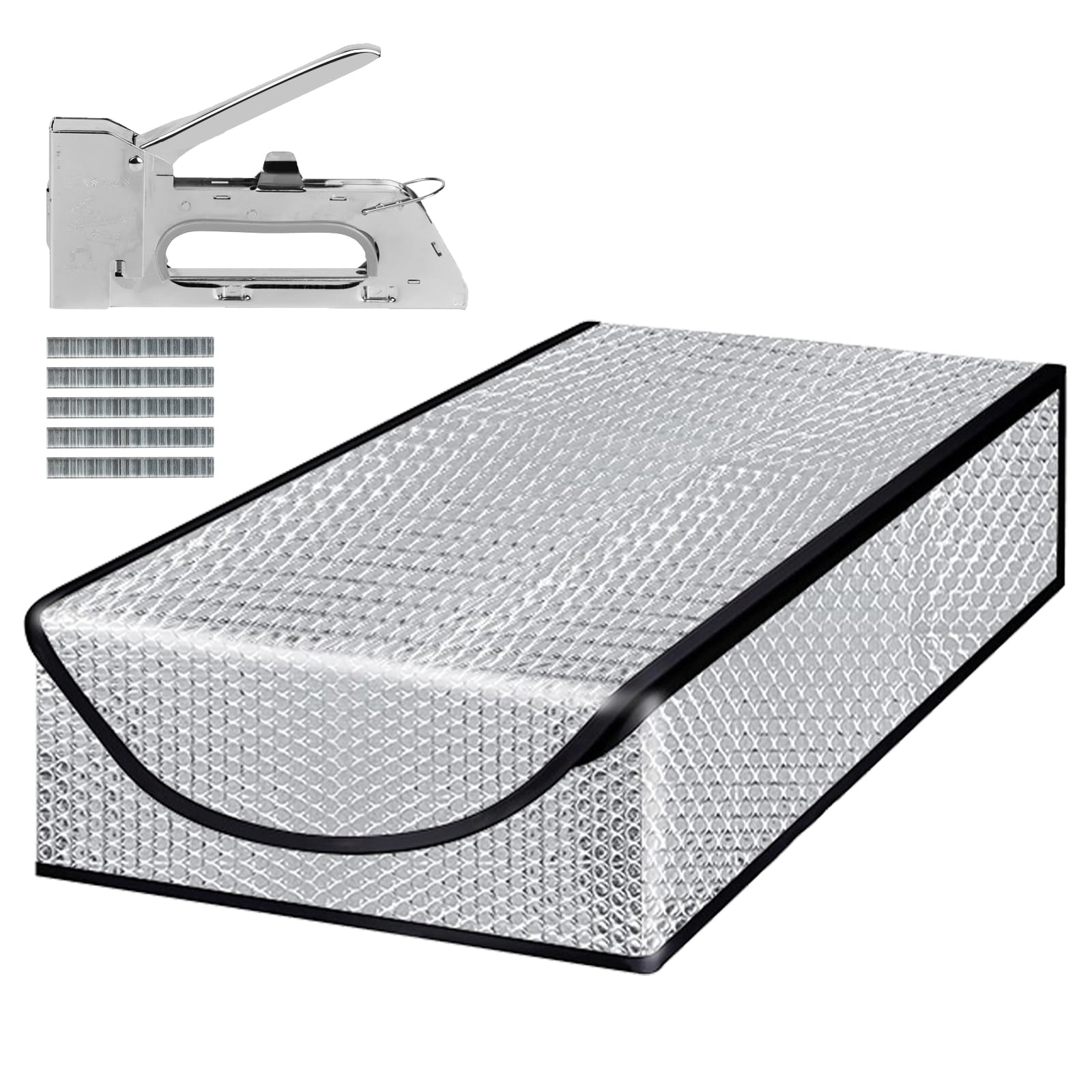
The DGSL cover brings the same double-layer aluminum bubble construction as mid-range options at a noticeably lower entry point, making it the most accessible way to stop attic drafts without sacrificing thermal performance. The R-value matches the Energy Wise and Thermal Armor covers at 14.5, with 97 percent radiant heat reflection. The included staple gun and ample staples mean you don’t need any tools beyond what comes in the box, a genuine convenience for first-time installers.
Customer feedback highlights the easy one-person installation — multiple reviewers completed the job in under ten minutes. The zipper functionality received mixed notes; while several users found it glides smoothly, others described the zipper as feeling thin with a risk of the pull detaching under heavy use. The material itself is slightly lighter gauge than the premium options, though it still blocks drafts effectively based on before-and-after temperature reports.
The 11-inch thickness fits standard pull-down ladders, and the cover can be stapled to the wood frame with the included tool. One reviewer noted that turning the staple gun sideways helps reach tight corners on the attic side. For a tight budget, the DGSL delivers the essential thermal barrier without cutting corners on the reflective core, though the zipper and material feel reflect the cost savings.
Why it’s great
- Includes staple gun and staples for tool-free install
- Full R-Value 14.5 reflective core
- Easy 10-minute one-person installation
- Blocks drafts effectively at a lower cost
Good to know
- Zipper feels less robust than premium models
- Material is thinner gauge foil
- Long-term durability not yet proven
5. Duck Brand Stairway Attic Cover 25.5″ x 54″
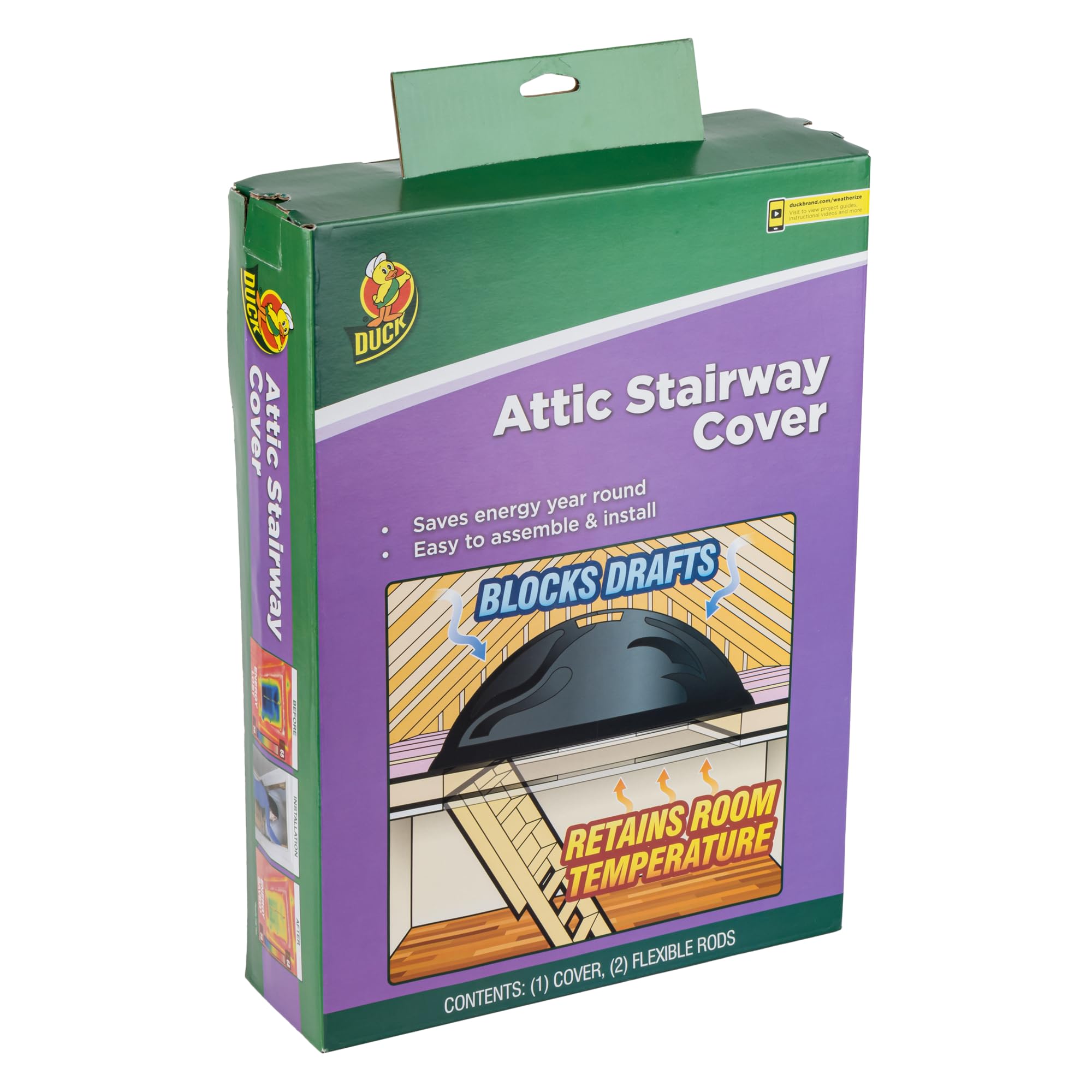
The Duck Brand cover takes a completely different approach — instead of stapling bubble foil to the frame, it uses a pair of shock-cord poles that create a pop-up tent structure. You lay the cover flat on the floor, insert the flexible rods through the built-in channels, and place the assembled dome directly over the opening. No tools, no staples, no permanent modification to your attic frame. This design makes it the best option for renters or anyone who wants the ability to remove the cover entirely.
The trade-off is thermal performance. The single-layer plastic material does not deliver the same R-value as foil bubble insulation, and the rod-frame structure leaves small gaps at the corners where air can seep through. Multiple reviewers noted that the cover blocks the worst of the draft but doesn’t create the airtight seal that a stapled cover achieves. Durability is also a concern — one long-term user reported that the material began to crumble after three years, while earlier units lasted significantly longer.
Ease of use is undeniable. You can pop the cover in place in under a minute and remove it just as quickly when you need attic access. The lightweight construction makes it simple to reposition. For homeowners who prioritize convenience over maximum insulation and don’t mind replacing the cover every few seasons, this is a functional solution that solves the draft problem without commitment.
Why it’s great
- Tool-free pop-up assembly in under 60 seconds
- Easy to remove and reposition for attic access
- Blocks noticeable draft with simple setup
- Ideal for renters or temporary installations
Good to know
- Lower R-value than foil bubble covers
- Gaps at corners reduce seal effectiveness
- Material durability varies across production runs
- Not suitable for extreme temperature climates
6. Insulsure AT-2 Attic Tent 25″ x 54″ x 7″

The Insulsure AT-2 is not a bubble-foil cover — it is a rigid nylon tent designed to create a dead air space above the attic opening. The concept uses trapped air as the insulating medium rather than reflective aluminum layers. The tent stands free in the attic, with a flange that staples to the truss framing, and the 7-inch height accommodates low-clearance scuttle holes where an 11-inch cover would interfere with roof nails or ductwork.
Installation is more involved than the staple-in-place bubble covers. You may need to build a frame extension if your truss layout doesn’t provide a flat nailing surface around the opening. Professional HVAC installers in the reviews praised the rigid structure once it was properly sealed with spray foam and caulk, reporting that it eliminated the temperature swing that caused the furnace to cycle near the thermostat. One user measured the attic side at over 100 degrees while the interior hallway stayed at 74 degrees.
The AT-2 is built for permanence. The nylon material withstands extreme temperature swings without degradation, and the free-standing design doesn’t sag over time. The trade-offs are the higher price and the more complex installation that may require carpentry skills. For homeowners who want a long-term engineered solution rather than a fabric tent, and who have the ceiling height to accommodate the assembly, the AT-2 delivers professional-grade isolation.
Why it’s great
- Rigid free-standing design won’t sag or compress
- Dead air space provides effective thermal barrier
- Durable nylon construction withstands extreme attic temps
- Proven to reduce HVAC cycling near thermostat
Good to know
- Requires frame extension for some truss layouts
- Significant installation time and carpentry skill
- Higher cost than bubble foil covers
- 7-inch height limits clearance for large items
7. Attic Tent AT-4 25″ x 54″ x 13″

The AT-4 from Attic Tent is the tallest rigid option at 13 inches, purpose-built for openings framed with 1×5 or 1×6 side rails where standard 11-inch covers won’t clear the lumber. The nylon shell provides an R-value of 3.2 from the dead air space alone — significantly lower than foil bubble covers, but the true value is in the structural rigidity and the ability to seal irregularly framed openings that flexible covers can’t accommodate. The silver reflective outer layer adds a small radiant barrier effect while the nylon body resists tearing and sagging.
Professional installers in the reviews consistently rated the AT-4 as the best brand for zipper quality and material thickness compared to off-brands. One installer used an infrared thermometer to measure a 10-degree Fahrenheit difference between the covered opening and the surrounding ceiling. Installation follows the same process as the AT-2: staple the flange to the frame and seal with silicone caulk for an airtight bond. The tent does not require assembly beyond positioning, making it one of the faster rigid options to deploy.
The main consideration is the price, which sits at the top of the market for this category. The AT-4 does not depend on bubble insulation layers for its thermal performance, so the R-value is lower per dollar compared to foil covers. However, for openings with non-standard rail heights, for attic access points that need a permanent rigid solution, or for homeowners who prioritize zipper durability and structural integrity above all else, the AT-4 justifies its cost with long-term performance.
Why it’s great
- Tallest rigid option at 13 inches for 1×5/1×6 rails
- Superior zipper quality and material thickness
- Rigid nylon design won’t sag or compress
- Fast install with staples and caulk
Good to know
- R-Value of 3.2 is low compared to bubble covers
- Highest price point in the comparison
- Requires caulk and staples for airtight seal
- Overkill for standard 11-inch openings
FAQ
What R-value do I need for an attic door insulation cover to make a difference?
Can I install an attic door insulation cover by myself without help?
Will an attic insulation cover interfere with my pull-down ladder operation?
How long does a foil bubble attic cover typically last before needing replacement?
Is a rigid attic tent better than a foil bubble cover for extreme climates?
Final Thoughts: The Verdict
For most users, the best attic door insulation cover winner is the Miloo 25x54x11 because it combines the highest R-value of 15.6 with a thick 6mm double-bubble core, a durable zipper, and an easy 10-minute install that immediately eliminates drafts and stops moisture migration. If you want the best balance of proven durability and value, grab the Energy Wise Premium Cover with its failsafe zipper and five-year track record. And for a tool-free setup that lets you avoid permanent modification entirely, nothing beats the convenience of the Duck Brand Stairway Attic Cover.

Mo Maruf
I created WellFizz to bridge the gap between vague wellness advice and actionable solutions. My mission is simple: to decode the research and give you practical tools you can actually use.
Beyond the data, I am a passionate traveler. I believe that stepping away from the screen to explore new environments is essential for mental clarity and physical vitality.