Our readers keep the lights on and my smoothie glass nicely filled. As an Amazon Associate, I earn from qualifying purchases.
An attic that traps heat and moisture is a breeding ground for mold, warped plywood, and degraded insulation. Standard basement dehumidifiers often struggle with the extreme temperature swings and cramped, low-clearance spaces found in most attics, leading to frost build-up, short cycling, and premature failure. Choosing the right unit means focusing on cold-weather operation, reliable continuous drainage, and a compact form factor that fits between your roof joists.
I’m Mohammad Maruf — the founder and writer behind WellFizz. I analyze compressor technology, drainage pump systems, and energy efficiency ratings to find dehumidifiers built for the punishing conditions of unconditioned attic spaces.
After evaluating dozens of models on their ability to operate below 50°F, handle continuous gravity or pump-assisted drainage, and fit into tight joist bays, these are the units that deliver real, lasting results for homeowners seeking the best attic dehumidifier.
How To Choose The Best Attic Dehumidifier
An attic dehumidifier faces a much harsher environment than a basement unit. Attics experience extreme temperature swings from sub-freezing winter nights to scorching summer afternoons, usually lack conditioned air, and often have limited access for tank emptying. Selecting the wrong model means dealing with ice build-up, failed electronics, or a heavy bucket you cannot reach. Here are the critical factors to weigh before purchasing.
Low-Temperature Operation and Auto-Defrost
Most conventional dehumidifiers stop working or suffer compressor damage when ambient temperatures drop below 65°F. An attic unit must be rated for low-temperature operation (ideally down to 40°F or lower) and include an intelligent auto-defrost system. This feature periodically cycles off the compressor to melt frost that forms on the evaporator coils, preventing ice blockages that can destroy airflow and permanently damage the compressor.
Drainage: Gravity vs. Built-In Pump
Attics rarely have a floor drain nearby. You have two main options: gravity drainage using a hose routed to a soffit, gutter, or existing roof drain, or a built-in condensate pump that can push water vertically (up to 9–16 feet) into a plumbing vent or sink line. Gravity is simpler and requires no pump maintenance, but demands a downhill path. A pump-equipped unit offers far more installation flexibility, especially if your attic is sealed or the drain point is above the dehumidifier’s level.
Capacity and Coverage Area
Attic square footage is typically smaller than a whole-house basement. An overly large unit (e.g., 150+ pints) may short-cycle in a compact attic, failing to remove enough moisture. Conversely, an undersized unit (50 pints) may run non-stop. For most attics between 500 and 2,000 square feet, a 70–110 pint/day unit with a coverage rating of 4,000–5,000 sq. ft. provides a solid buffer for the higher latent loads common in unconditioned, ventilated attic spaces.
Build Quality and Warranty
Attic dehumidifiers run for months at a time, often unattended. Compressors with pure copper tubing (not aluminum), hydrophilic aluminum fins, and powder-coated cabinets resist corrosion from constant humidity. Look for at least a 2-year limited warranty and responsive U.S.-based customer support. Models with a track record of reliability and easy parts availability save you from having to haul a broken 40-pound unit out of a tight attic hatch.
Quick Comparison
On smaller screens, swipe sideways to see the full table.
| Model | Category | Best For | Key Spec | Amazon |
|---|---|---|---|---|
| Moiswell Defender M145 | Commercial | Tight crawlspace attics | 155 pints/day, 265 CFM | Amazon |
| Waykar JD-CE | Premium | Large attics with pump need | 150 pints/day, pump up to 9.8 ft | Amazon |
| Waykar YDZ | Premium | 7,000 sq ft attics with pump | 150 pints/day, Energy Star | Amazon |
| DREO 711S | Mid-Range | Smart app-controlled attic | 110 pints/day, 2 gal tank | Amazon |
| Gasbye DryPrime-50-B | Mid-Range | Thickened copper durability | 115 pints/day, 45 dB | Amazon |
| DECIUU DER32S01-50 | Mid-Range | Energy Star Most Efficient attic | 100 pints/day, 5,000 sq ft | Amazon |
| Vellgoo DryTank Series | Mid-Range | Value-priced attic coverage | 64 pints/day, 4,000 sq ft | Amazon |
| AEOCKY LEO-Lite | Mid-Range | Cold attic performance | 74 pints/day, 44 dB | Amazon |
| Ludatido 525A-4 | Budget | Entry-level attic drying | 80 pints/day, 1.72 gal tank | Amazon |
In‑Depth Reviews
1. Moiswell Defender M145
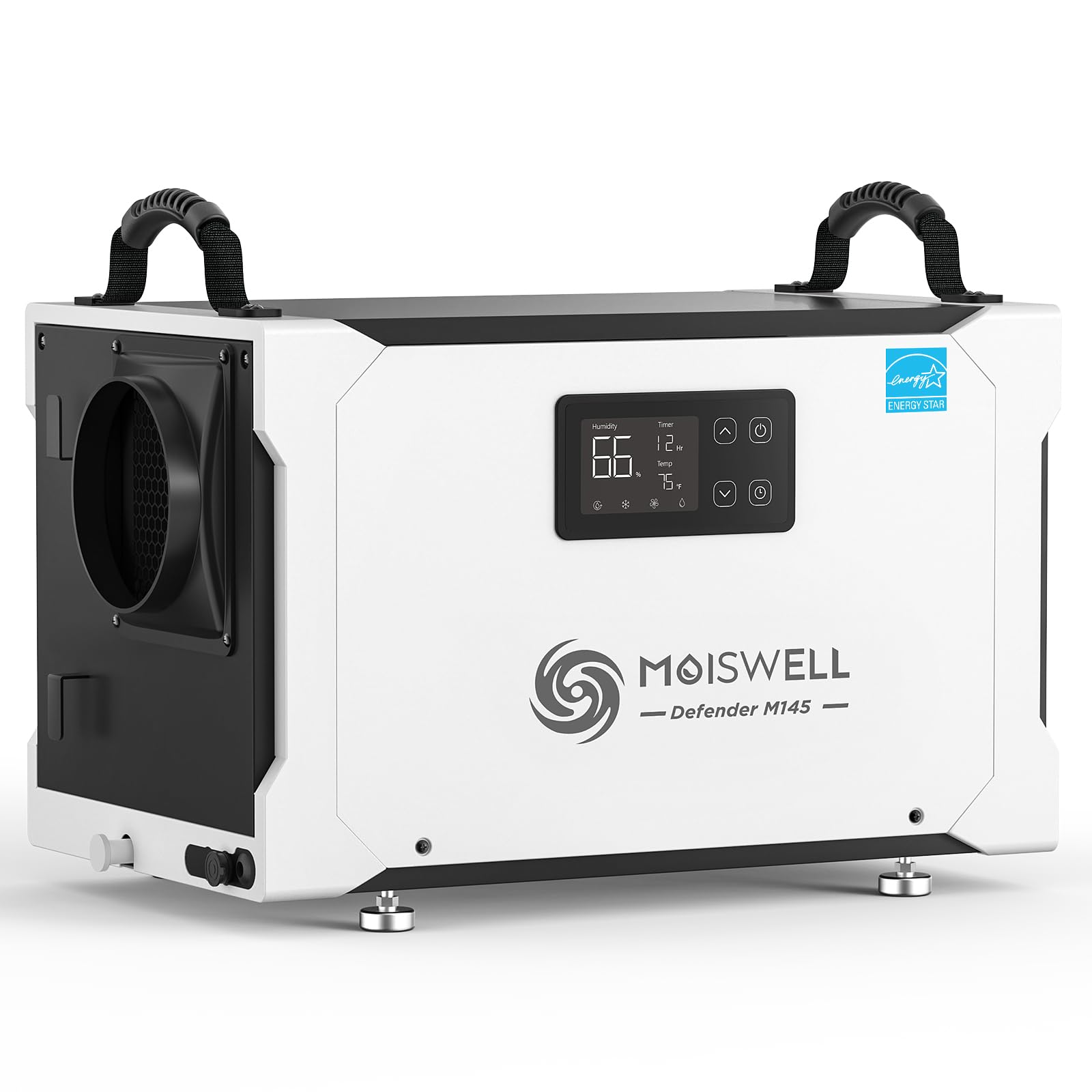
The Moiswell Defender M145 is engineered specifically for crawl spaces and tight attic joist bays, with a low-profile horizontal design measuring just 14.7 inches tall. This form factor allows it to fit between floor joists or hang from rafters, making it one of the few units that truly belongs in an attic without requiring you to sacrifice headroom. Its 265 CFM airflow and 155-pint daily capacity (70 pints AHAM) are overkill for a small attic, but that headroom ensures it handles the extreme latent loads common in unconditioned, ventilated attics without struggling.
Build quality is commercial-grade: an alloy steel cabinet, continuous gravity-only drainage with a standard 3/4-inch garden hose connection, and an auto-defrost system that allows operation down to lower temperatures without icing up. The unit has no water tank or pump, which simplifies installation but means you must route a hose to an existing drain, soffit, or roof gutter. The digital control panel lets you set target humidity from 30% to 90%, and the 24-hour timer with auto restart after power loss ensures it resumes operation after a grid hiccup.
Real-world user reports confirm it drops humidity from 89% to 59% in under 24 hours in a crawlspace, and the 5-year limited warranty provides long-term peace of mind for an attic installation where access is difficult. The lack of a pump and a heavier unit weight (63 pounds) are the main trade-offs, but for a dedicated attic setup with gravity drainage, this is the most purpose-built option available.
Why it’s great
- Compact horizontal design fits between attic joists perfectly
- Commercial-grade alloy steel build with 5-year warranty
- High 265 CFM airflow moves air through tight attic spaces
Good to know
- No built-in pump or water tank; gravity drain only
- Heavy at 63 pounds, requires two people to lift into attic hatch
- Thin included drain hose may need upgrading for reliability
2. Waykar JD-CE (150 Pint with Pump)
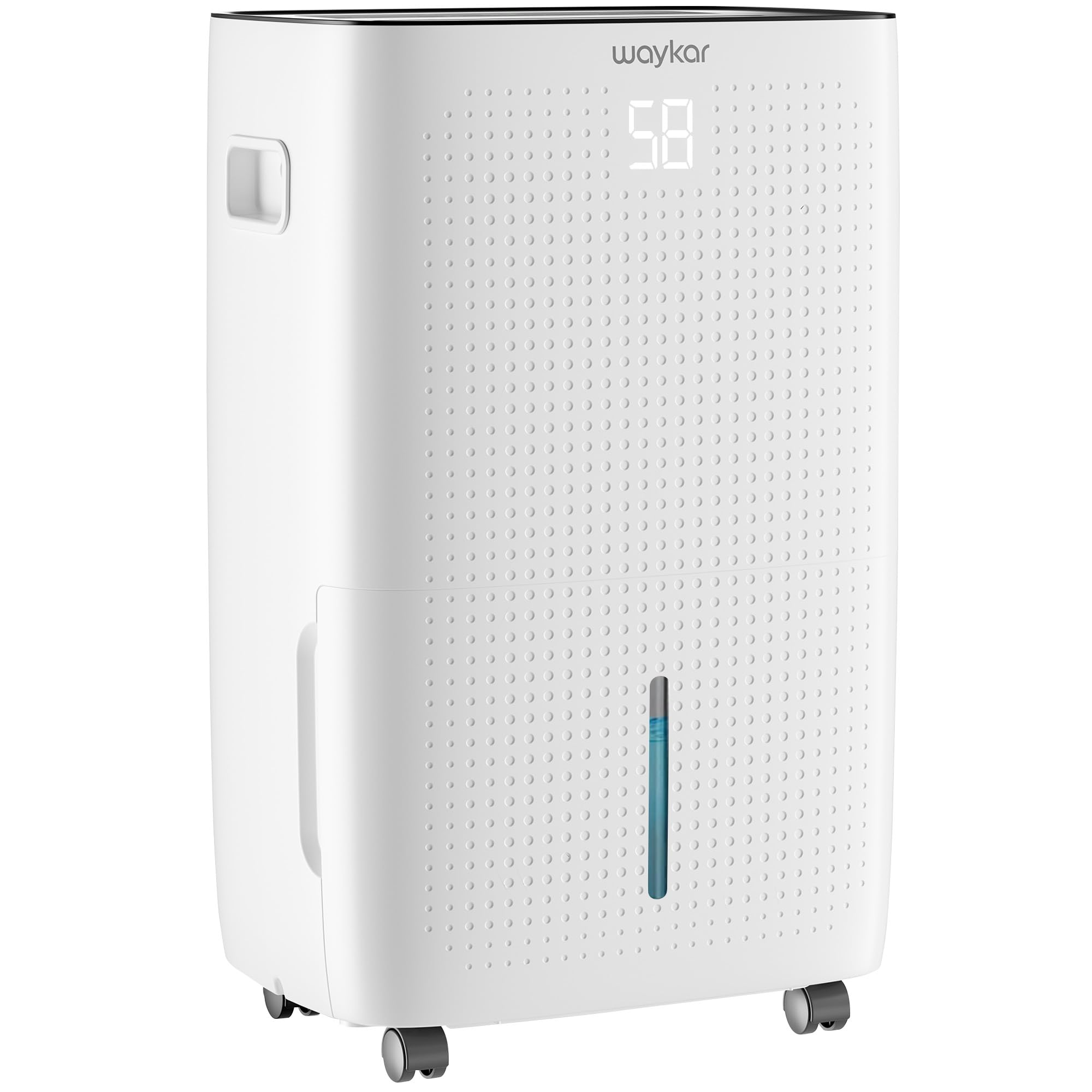
The Waykar JD-CE brings a built-in condensate pump that can push water vertically up to 9.85 feet, allowing you to discharge moisture into a plumbing vent, utility sink, or even a roof drain without relying on gravity. This is a game-changer for sealed attics where you cannot achieve a downhill hose run. Rated at 150 pints per day (under 95°F, 90% RH) and covering up to 7,000 square feet, it offers more than enough capacity for even the largest attic spaces.
Beyond the pump, this unit stands out with a unique 90-degree auto-swing louver that distributes dry air evenly across the attic, preventing stagnant moisture pockets near the eaves. It features three fan speeds, a 24-hour timer, and three operating modes (Living Area, Basement, Continuous) that simplify setup. The 30% to 80% humidity range includes a deeper 30% drying setting ideal for post-rain attic drying or protecting stored items. The washable filter includes a cleaning reminder, and the memory restart function ensures it resumes settings after a power outage.
Customer feedback consistently praises its quiet operation, effective pump drainage, and strong customer support from Waykar. Some early units had pump defects, but the replacement process is described as quick and painless. At 39 pounds, it is manageable for one person to haul through an attic hatch. The dual drainage (tank + pump hose) gives you flexibility, though the 1.85-gallon tank is mostly useful for spot testing before permanent hose routing.
Why it’s great
- Built-in pump drains vertically up to 9.85 ft for tricky attic layouts
- 90° auto-swing airflow prevents dead air zones in eaves
- Deep 30% RH setting for aggressive post-rain drying
Good to know
- Pump setting does not resume after full power loss, posing leak risk
- Some initial units had pump defects; warranty support is strong
- Requires 18-inch clearance around the unit for proper airflow
3. Waykar YDZ (150 Pint with Pump)
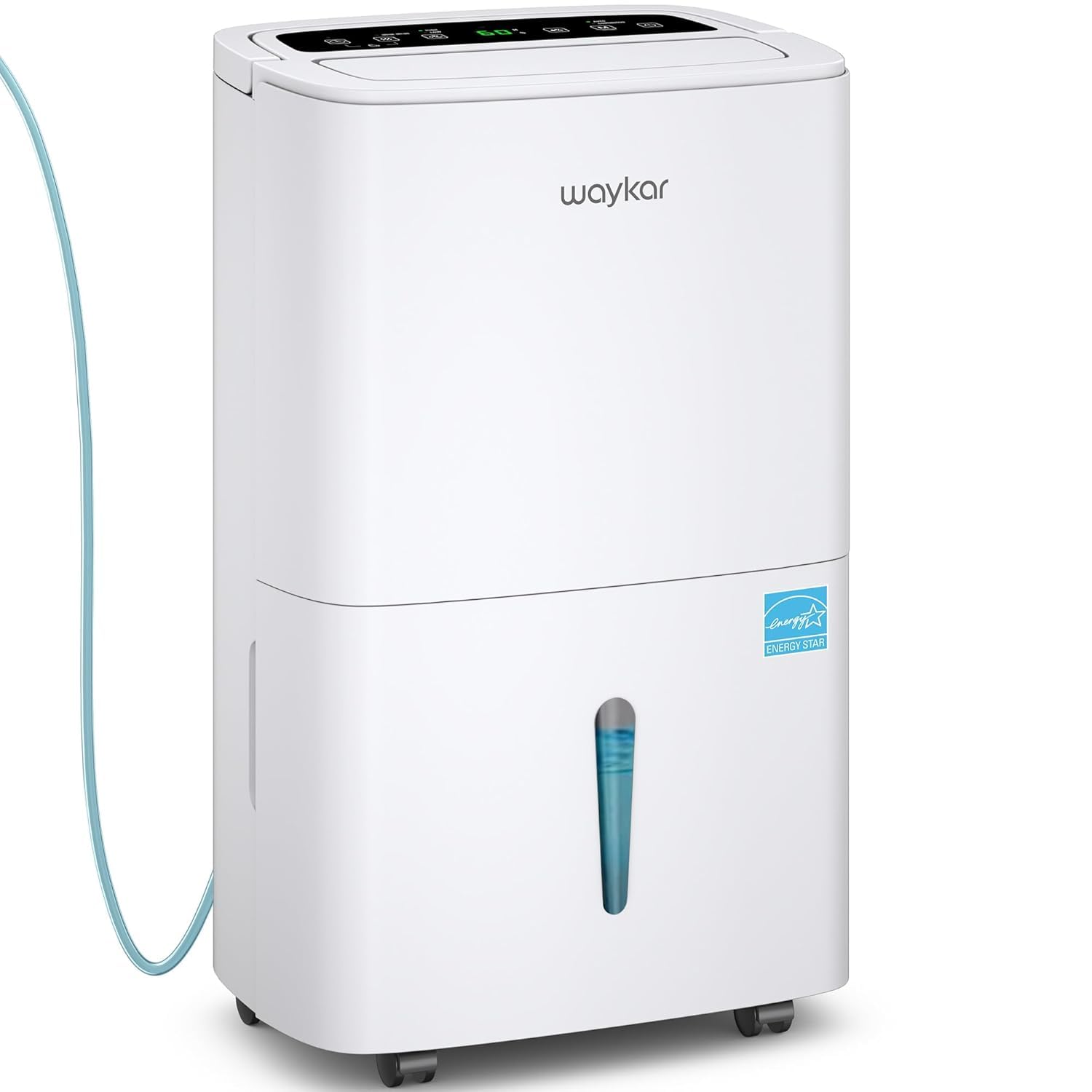
The Waykar YDZ shares the same 150-pint daily capacity and 7,000 sq. ft. coverage as the JD-CE, but with a few key differences that tilt it toward energy-conscious buyers. It carries an Energy Star 2025 certification, confirming it meets the latest federal efficiency standards. The compressor uses 7mm threaded pure copper tubing and painted metal construction, which resists corrosion better than bare steel in humid attic environments.
Like its larger sibling, the YDZ includes a built-in pump capable of vertical drainage up to 9.84 feet, a 1.85-gallon viewing tank, and a 24-hour timer. Its auto-defrost system activates when coils begin to ice, allowing continued operation in cooler attic conditions. The unit also features a self-drying function that runs the fan after the compressor shuts off to evaporate residual moisture inside the cabinet, preventing mold growth on internal components — a thoughtful touch for a unit that sits idle between seasons.
Users consistently highlight its quiet operation, compact footprint (10.48” D x 14.89” W x 24.22” H), and the responsiveness of Waykar’s support team. A few reports of pump failures within the first year were resolved with free replacements under the 2-year warranty. The 38.6-pound weight is manageable with a helper, and the omnidirectional casters make repositioning inside an attic easy once it is up there.
Why it’s great
- Energy Star 2025 certified for lower attic operating costs
- Self-drying mode prevents internal mold during off-seasons
- Pure copper 7mm tubing resists corrosion in humid attics
Good to know
- Pump failure rate appears higher than average within first year
- No auto-swing louver like the JD-CE model
- Pump setting resets after power loss, needing manual re-enable
4. DREO 711S (110-Pint Smart)

The DREO 711S is the only unit on this list with full Wi-Fi connectivity, allowing you to monitor real-time humidity, set schedules, and adjust modes via the DREO app or with Alexa and Google Home voice commands. For an attic that is difficult to access, being able to check the humidity reading from your phone is genuinely useful. Rated at 110 pints per day (86°F, 90% RH) and covering 4,500 sq. ft., its capacity is a strong match for most attics without being oversized.
It exceeds the Energy Star 2024 efficiency standard, removing 4.0 pints/kWh versus the 3.8 pints/kWh threshold. The 2-gallon extra-large tank can run for over eight hours before needing emptying, though for attic use you will want to connect the included drain hose for continuous operation. The auto-defrost system activates at 41°F, ensuring reliable performance when attic temperatures dip. Three modes — Auto, Comfort, and Continuous — make setup straightforward.
Customer reviews emphasize its fast moisture removal (dropping humidity from 55% to 43% in 1–2 hours in one home) and the helpful app notifications when the bucket is full. A common gripe is that the bucket indicator nags even when using continuous drainage via the hose. The unit also generates noticeable heat, which is actually beneficial in a cool attic. The 27-pound weight (27.3 lbs) makes it one of the lighter high-capacity units, easing the attic installation process.
Why it’s great
- Smart app and voice control let you monitor attic conditions remotely
- Exceeds latest Energy Star 2024 efficiency by 5%
- Large 2-gallon tank with continuous drain option for flexible attic setups
Good to know
- App only works on 2.4GHz Wi-Fi, not 5GHz
- Bucket-full alert continues even when drain hose is connected
- Produces heat that may raise attic temperature in summer
5. Gasbye DryPrime-50-B
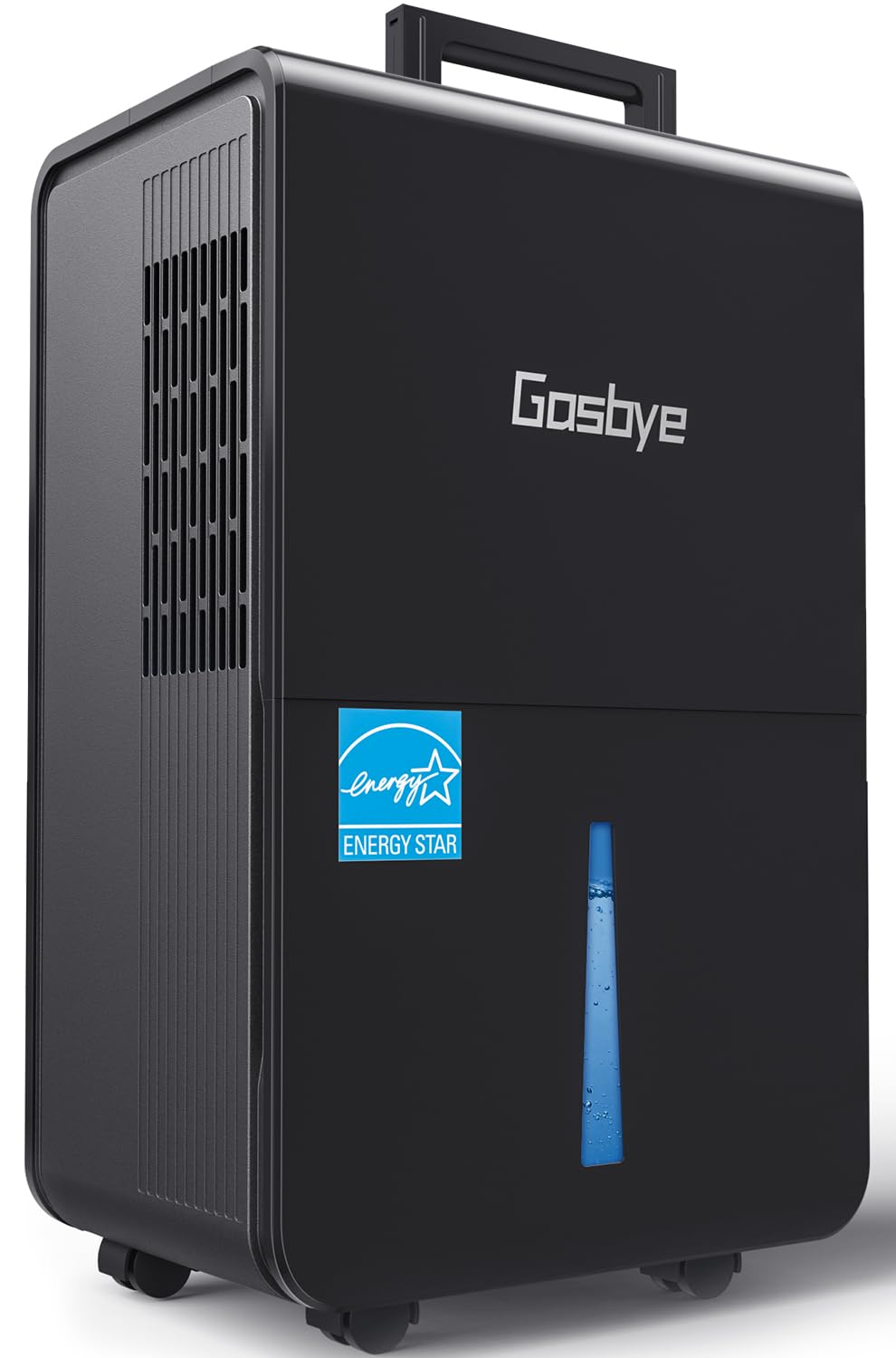
Gasbye engineered the DryPrime-50-B with a specific focus on longevity, using reinforced thickened copper tubing in the evaporator and condenser coils. This is a direct response to the common failure mode of cheaper dehumidifiers that use thin aluminum or standard copper lines, which develop pinhole leaks after a year or two in harsh attic conditions. The unit is rated at 115 pints per day at 86°F/80% RH and covers 4,500 sq. ft., making it a solid choice for mid-to-large attic spaces.
It operates at a claimed 45 dB and features smart humidity control that shuts off the compressor when the humidity drops 3% below your set point and restarts it when humidity rises 3% above. The fan continues running briefly after the compressor stops to capture residual coil cooling, improving efficiency. Three drainage options include a 1.7-gallon tank, an included 5-foot drain hose for gravity drainage, and a standard 3/4-inch garden hose connection for longer runs.
Customer feedback highlights the elegant black finish, sturdy build, and fast response from U.S.-based support (often replying within 8 hours). One user reported a unit failure after five months, and Gasbye shipped a higher-grade replacement the same day. The 43-pound weight is substantial, but the solid construction inspires confidence for an attic installation where you want to avoid future service calls.
Why it’s great
- Thickened copper tubing resists corrosion and pinhole leaks
- Smart humidity tolerance bands reduce compressor cycling
- Excellent U.S.-based customer support with same-day replacements
Good to know
- Actual coverage may be closer to 1,800–2,000 sq. ft. in real-world conditions
- Moderate fan noise at high speed, comparable to white noise
- Heavier 43-pound build requires careful handling through attic hatches
6. DECIUU DER32S01-50
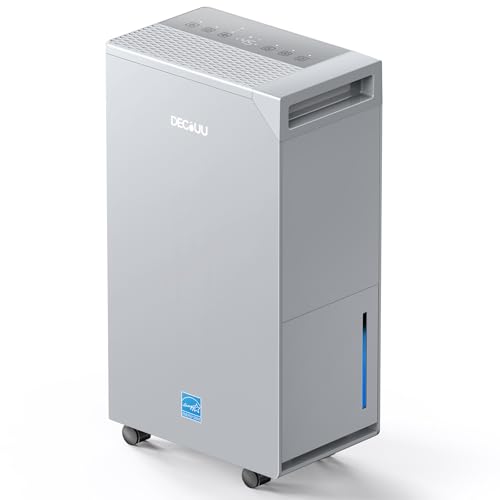
The DECIUU DER32S01-50 is one of the few units on this list to earn the ENERGY STAR Most Efficient 2024 designation, meaning it ranks in the top tier of efficiency among all certified models. It removes up to 100 pints per day under peak conditions (95°F, 90% RH) and covers up to 5,000 sq. ft., making it appropriately sized for larger attics without excessive energy draw. The 5.5-liter (1.45 gal) tank is on the smaller side, but for attic use you will rely on the included 6.56-foot drain hose for continuous drainage.
Smart humidity control allows you to set target RH from 35% to 80%, and the auto-defrost system ensures reliable performance in cooler attic conditions. The unit features 360-degree swivel casters and a hidden carry handle for mobility, along with a washable filter that is easy to access. Build quality includes a high-efficiency rotary compressor with a 3+2 evaporator-condenser configuration using pure copper tubing and hydrophilic aluminum fins, similar to premium competitors.
Users report significant humidity reduction — one warehouse dropped from 80% to below 50% in a few days — and consistent praise for its quiet operation. The 32.8-pound weight is manageable, and the 2-year coverage adds confidence for an attic installation where access is limited. A few users note that the gray finish shows dust more readily, but that is a minor cosmetic concern in an attic environment.
Why it’s great
- ENERGY STAR Most Efficient 2024 for lowest attic operating costs
- High-efficiency rotary compressor with pure copper 3+2 coil system
- Compact 32.8 lbs with swivel casters for easy attic positioning
Good to know
- Smaller 1.45-gallon tank requires frequent emptying if not using hose
- 2-year warranty is shorter than some premium competitors
- Gravity drain only; no built-in pump for uphill routing
7. Vellgoo DryTank Series

The Vellgoo DryTank Series offers a more modest 64-pint daily capacity (90°F, 90% RH) aimed at attics up to 4,000 square feet. Its smaller footprint (11” D x 25” W x 17” H) and lighter weight make it one of the easiest units to get through a scuttle hole attic hatch. It carries the ENERGY STAR Most Efficient 2024 certification, so you are not sacrificing efficiency for a smaller form factor — it delivers strong moisture removal while keeping energy consumption low.
Key features include a high-efficiency rotary compressor with a 3+2 evaporator-condenser system, pure copper tubing, and hydrophilic aluminum fins for corrosion resistance. The unit offers three drainage methods: a built-in tank, the included 6.56-foot drain hose for gravity drainage, or a standard garden hose connection for longer runs. Comfort Mode automatically maintains a comfortable humidity range, while Continuous Mode lets you run it until the tank fills. The auto-defrost and auto-restart functions are standard.
User reviews highlight its quiet operation (described as a gentle white noise), excellent moisture collection rate, and easy setup. The compact size is praised, though some users note the medium and high fan speeds are louder than expected. The 2-year limited warranty provides reasonable peace of mind. For a smaller attic or a homeowner who needs to frequently move the unit between rooms, this is a balanced choice.
Why it’s great
- ENERGY STAR Most Efficient 2024 for low energy consumption
- Compact, lightweight design for easy attic installation
- Pure copper 3+2 coil system with hydrophilic fins for durability
Good to know
- Fan noise on medium and high is louder than some competitors
- 64-pint capacity may be insufficient for very humid attic spaces
- No built-in pump; gravity drain route must be downhill
8. AEOCKY LEO-Lite
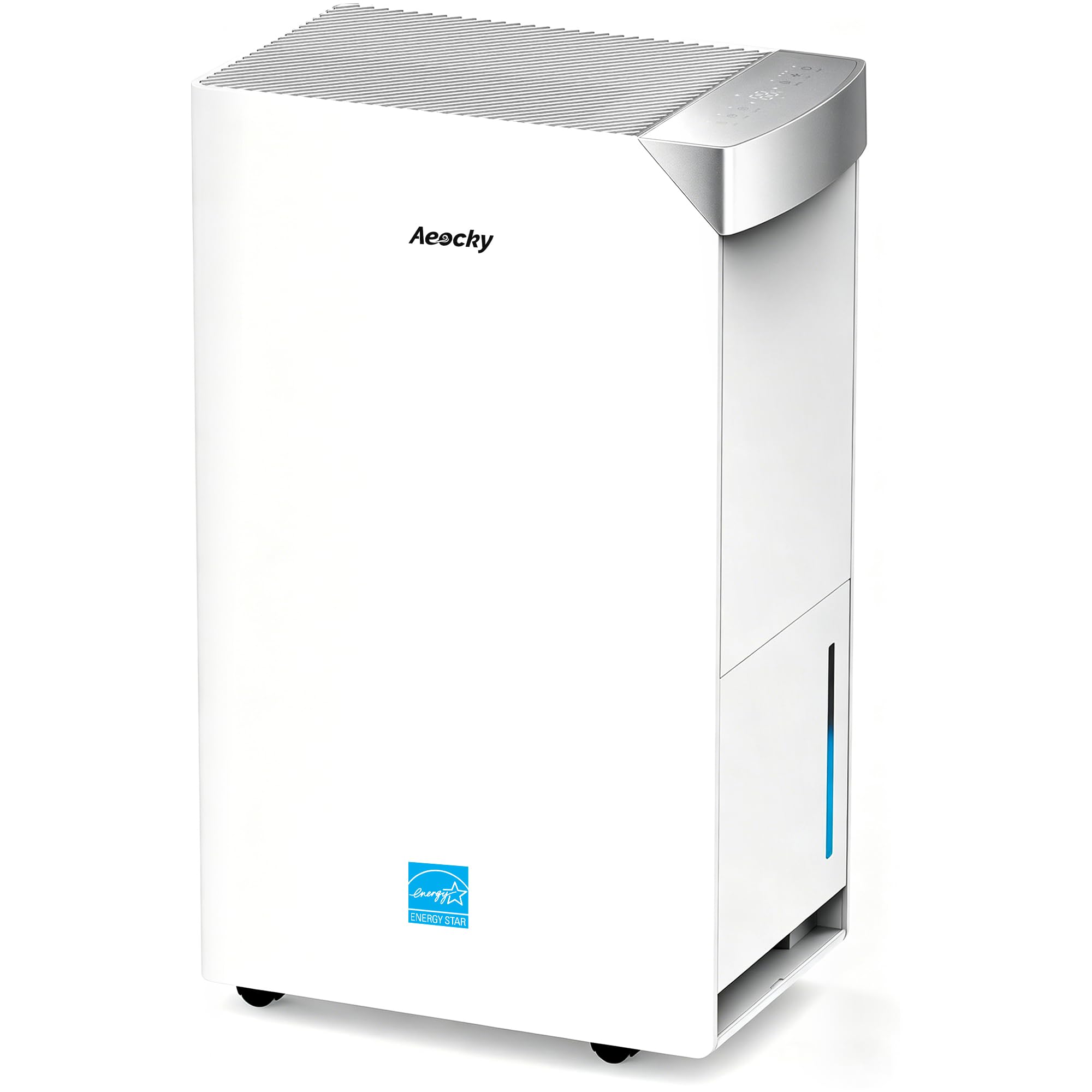
The AEOCKY LEO-Lite distinguishes itself with true ENERGY STAR Version 6.0 certification, which is the strictest federal efficiency standard for dehumidifiers. It removes 74 pints per day under peak conditions (95°F, 95% RH) and covers 4,500 sq. ft. More importantly, it is engineered to operate effectively down to 42°F — critical for attic use in colder climates where many units shut down or ice up. The intelligent auto-defrost system automatically detects and melts frost, balancing defrosting cycles with continuous moisture removal.
The unit uses AEOCKY’s high-efficiency Rotor Compressor Pro+ and a 3+2 evaporator-condenser structure with 7mm high-tooth internal thread pure copper tubes — no aluminum substitutions. The plastic-sealed AC motor driving a biomimetic Archimedes Wind Tunnel design achieves noise levels as low as 44 dB on the lowest fan speed. At 31 pounds and dimensions of 14.4” D x 8.6” W x 23.3” H, it is compact enough to fit in tight attic corners.
Customer reviews emphasize its quiet operation, low electricity consumption, and effectiveness at pulling moisture even in cooler basements (low 50s°F). The included drain hose supports continuous drainage, and the power-off memory function allows it to resume operation when used with a smart plug. A few users reported the smaller reservoir requires daily emptying, but this is less of an issue with the hose connected for continuous attic drainage.
Why it’s great
- True ENERGY STAR Version 6.0 for the highest attic efficiency
- Operates effectively down to 42°F with smart auto-defrost
- Extremely quiet 44 dB operation thanks to Archimedes Wind Tunnel
Good to know
- Smaller reservoir needs daily emptying if hose is not connected
- Potentially larger than expected dimensions for some attic joist bays
- No built-in pump for vertical drainage applications
9. Ludatido 525A-4

The Ludatido 525A-4 is the most budget-friendly entry on this list, offering an 80-pint daily capacity with coverage up to 5,000 sq. ft. It is a competent unit for its price point, featuring a 1.72-gallon tank, auto continuous drain capability, and a minimum noise level of 42 dB. The four operating modes — Dry, Sleep, Fan, and a 24-hour timer — provide flexibility, and the child lock is a thoughtful safety addition for homes where the attic hatch is accessible.
It carries a CLIMATE PLEDGE FRIENDLY certification, indicating the manufacturer met Amazon’s sustainability standards. However, real-world build quality reports are mixed: several customers praised its immediate humidity reduction and quiet operation, while others reported the screen malfunctioning after nine months and the replacement unit showing similar defects. The manufacturer offered refunds rather than further replacements, which suggests quality inconsistency at this price tier.
For an attic that does not demand rigorous year-round operation or extreme temperature tolerance, the Ludatido represents a low-risk entry point. The 14.79 kg (32.6 lbs) weight is manageable, and the compact 7.87” D x 23.62” W x 13.77” H dimensions should fit most attic joist spaces. Just be prepared for potentially shorter lifespan or the need to use the warranty sooner than with premium options. If your attic is a critical part of your home’s moisture management, investing more upfront in the Moiswell or Waykar units is likely wiser.
Why it’s great
- Lowest entry price for a 4-mode, 80-pint attic dehumidifier
- Very quiet 42 dB operation on Sleep mode
- CLIMATE PLEDGE FRIENDLY certified for environmental considerations
Good to know
- Quality control issues: screen failures reported within 9 months
- No auto-defrost system documented; cold attic performance uncertain
- Short 1.72-gallon tank requires frequent emptying if not using hose
FAQ
Can I use a regular basement dehumidifier in my attic?
How do I drain water from an attic dehumidifier without a floor drain?
What happens if the attic dehumidifier freezes up?
How do I size an attic dehumidifier for my space?
Does an attic dehumidifier need a built-in pump?
Final Thoughts: The Verdict
For most users, the best attic dehumidifier winner is the Moiswell Defender M145 because its compact horizontal design was built specifically to fit between attic joists and crawl spaces, backed by a commercial-grade build and 5-year warranty. If you need a built-in pump for uphill drainage, grab the Waykar JD-CE with its 90-degree swing louver for even attic coverage. And for a tight attic space where budget is the primary concern, the Ludatido 525A-4 provides adequate performance at a budget-friendly price, though you should watch for quality consistency.

Mo Maruf
I created WellFizz to bridge the gap between vague wellness advice and actionable solutions. My mission is simple: to decode the research and give you practical tools you can actually use.
Beyond the data, I am a passionate traveler. I believe that stepping away from the screen to explore new environments is essential for mental clarity and physical vitality.