Our readers keep the lights on and my smoothie glass nicely filled. As an Amazon Associate, I earn from qualifying purchases.
The first step onto a hard court in the wrong shoe sends a shockwave from your heel through your knee — and that’s the sound of a season cut short. Athletic tennis shoes are the only barrier between your joints and the brutal lateral forces of a 130-mph serve return, and the wrong pair doesn’t just feel bad; it increases your risk of plantar fasciitis, shin splints, and rolled ankles.
I’m Mohammad Maruf — the founder and writer behind WellFizz. I’ve spent over a decade dissecting the construction of high-performance court footwear, comparing outsole rubber compounds, foam densities, and chassis rigidity across hundreds of models to separate the genuinely supportive from the merely marketed.
If you want durability that survives 10 hours a week of hardcourt play, you need a toe box that doesn’t pinch during a split step and a heel counter that locks without chafing. This guide ranks the most reliable best athletic tennis shoes available today, based on traction, lateral stability, and midsole resilience.
How To Choose The Best Athletic Tennis Shoes
Court shoes are not running shoes with a different logo. The demands of lateral cuts, sudden stops, and toe-drag on asphalt require specific construction features that recreational sneakers simply lack. Focus on three pillars: stability architecture, outsole durability, and midsole response.
1. Outsole Rubber and Tread Pattern
Hardcourt-specific shoes use a dense, non-marking rubber compound with a herringbone or modified tread pattern. This maximizes ground contact during slides and resists flattening under constant abrasive friction. A visible, thick rubber wrap around the toe cap is a reliable indicator of high durability.
2. Midsole Foam and Cushioning Type
Two approaches dominate: polyurethane-based foams (dense, long-lasting, but heavier) and EVA-based foams (light, responsive, but prone to compression over time). Premium models often layer a softer foam core in a firmer chassis shell — known as dual-density construction — to prevent ankle roll while keeping the forefoot compliant.
3. Heel Counter and Internal Chassis
The plastic or TPU shank embedded in the midsole controls torsional rigidity. The external heel counter — the rigid cup around the back of the foot — must lock the heel without pressure points. Pinch the heel counter of any shoe you consider; if it collapses easily, lateral support is insufficient.
Quick Comparison
On smaller screens, swipe sideways to see the full table.
| Model | Category | Best For | Key Spec | Amazon |
|---|---|---|---|---|
| ASICS Gel-Resolution X | Premium | Aggressive movers needing max stability | 2.1 mm outsole thickness | Amazon |
| Wilson Rush Pro 4.5 | Mid-Range | All-court players wanting lighter weight | 13.2 oz per shoe | Amazon |
| ASICS Game FlyteFoam (Men) | Mid-Range | Daily players wanting responsive cushion | FlyteFoam midsole | Amazon |
| ASICS Game FlyteFoam (Women) | Mid-Range | Female players needing lightweight support | 13.5 oz per shoe | Amazon |
| Reebok Nano Court Sport | Entry-Level | New players with narrow feet | Sock-like knit upper | Amazon |
| K-Swiss Court Express 2 | Entry-Level | Budget players wanting wide toe box | Wider forefoot fit | Amazon |
| ASICS Gel-Dedicate 8 | Entry-Level | Female players on a tight budget | Rearfoot GEL insert | Amazon |
In‑Depth Reviews
1. ASICS Men’s Gel-Resolution X Tennis Shoes
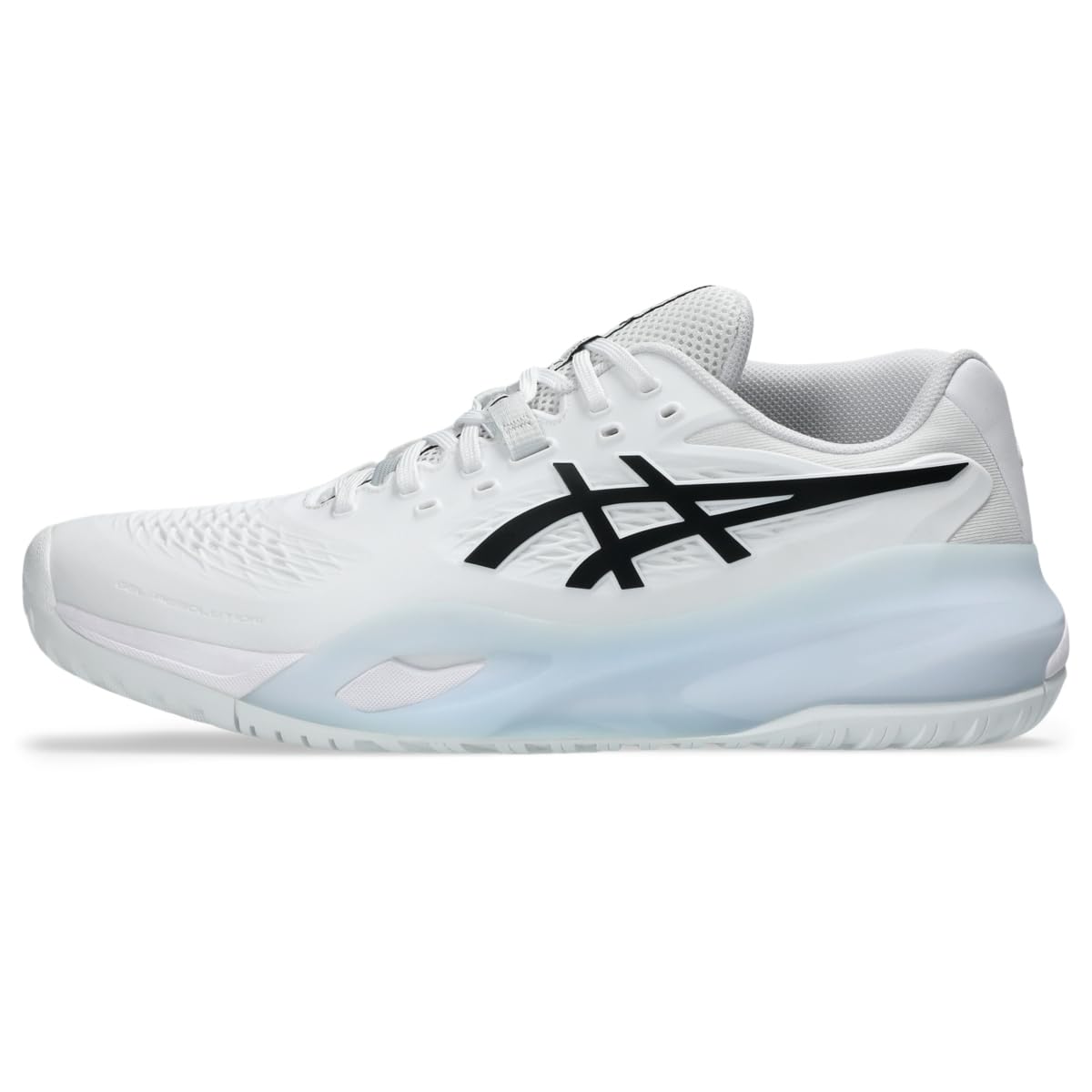
The Gel-Resolution X sits at the top of ASICS’s stability pyramid for a reason: the rigid TPU heel counter and full-length shank create a chassis that resists torsional bend better than any shoe in this lineup. Users report surviving four to six months of 3–4 sessions per week on hard courts, with the non-marking outsole retaining grip well past the 100-hour mark. The tradeoff is weight — at over 15 ounces, it feels planted rather than spritely.
Multiple reviewers who purchased this shoe three times confirm that it prevents ankle rolls during aggressive lateral cuts. The removable insole is a common complaint; most serious players swap it for a custom orthotic or a Dr. Scholls insert on day one. The toe box runs slightly shorter than previous versions, so ordering a half-size up is recommended for players with wide forefeet.
For the competitive player who prioritizes injury prevention over a nimble feel, this is the most protective shoe in the category. The sticky outsole compound also works well on clay and indoor courts, giving it year-round versatility despite its bulk.
Why it’s great
- Exceptional lateral stability from rigid TPU components
- Outsole outlasts most competitors at high play volumes
- Proven track record of preventing ankle and knee injuries
Good to know
- Heavier than most mid-range options
- Stock insole lacks arch support for many
- Runs a half-size short for some
2. Wilson Men’s Rush Pro 4.5 Tennis Shoes
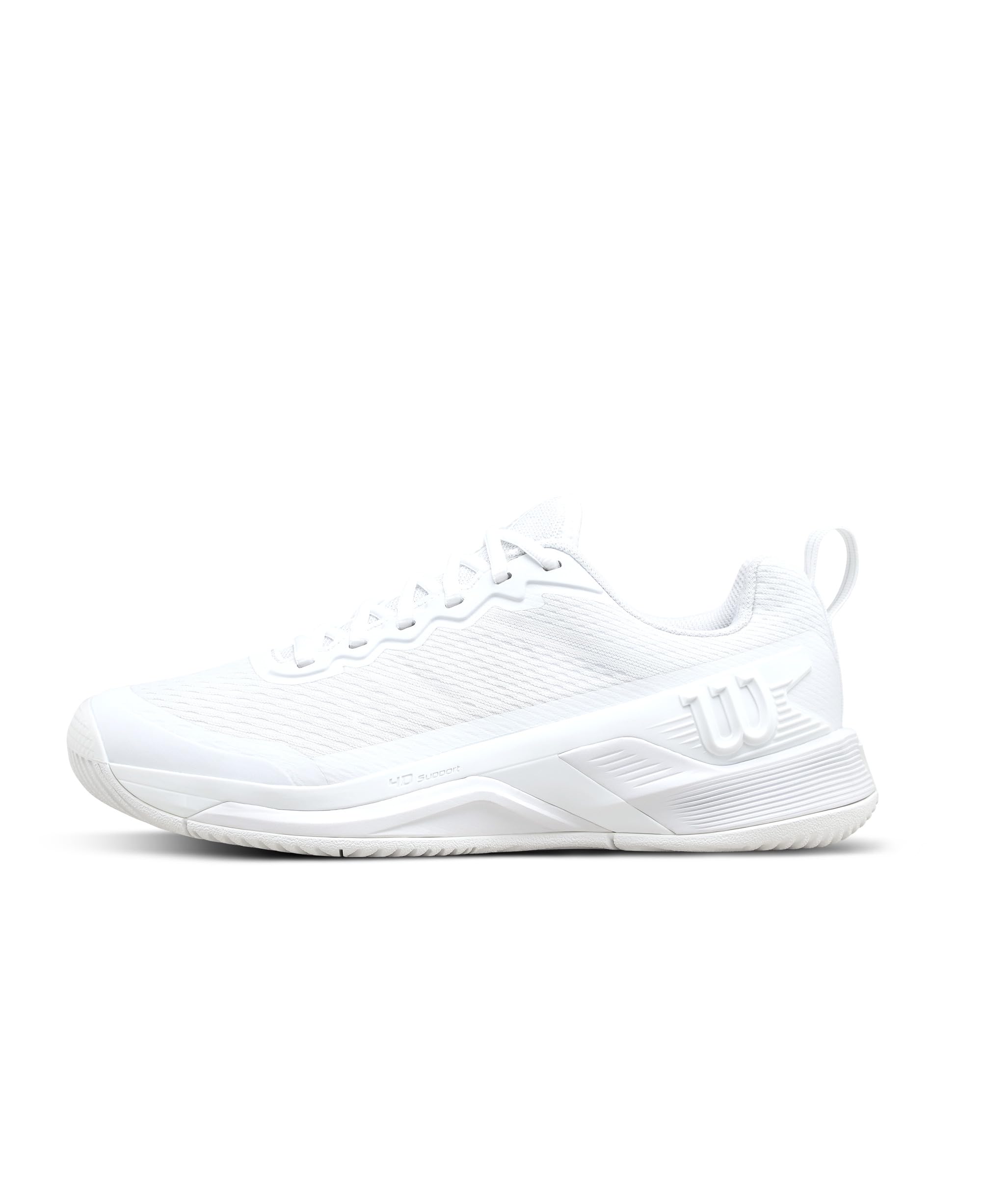
The Wilson Rush Pro 4.5 is the rare shoe that balances court feel and low weight without sacrificing lateral support. At roughly 13.2 ounces per shoe, it is noticeably lighter than the Gel-Resolution X, making it a natural pick for baseline grinders who value quick transitions. The outsole uses a durable rubber compound that many users report lasting 150+ hours before showing significant wear, with the upper remaining intact through the same period.
Reviewers with intermediate (3.0–3.5) playing levels praise the zero break-in period and stable heel lock. The forefoot is slightly softer than the rear, creating a natural rocker motion that reduces calf strain over long sessions. A small number of users with very wide feet found the length a half-inch longer than expected, so trying on with the intended sock thickness is wise.
This shoe works best for players who want a true all-around performer — light enough for a serve-and-volley style, stable enough for hard baseline exchanges, and comfortable enough for three-hour match days.
Why it’s great
- Exceptional blend of light weight and stability
- Outsole durability exceeds 150 hours for most
- Zero break-in with immediate heel lockdown
Good to know
- Forefoot may feel roomy for narrow feet
- Not as torsionally rigid as premium options
- Some units reported size variance
3. ASICS Men’s Game FlyteFoam Tennis Shoes
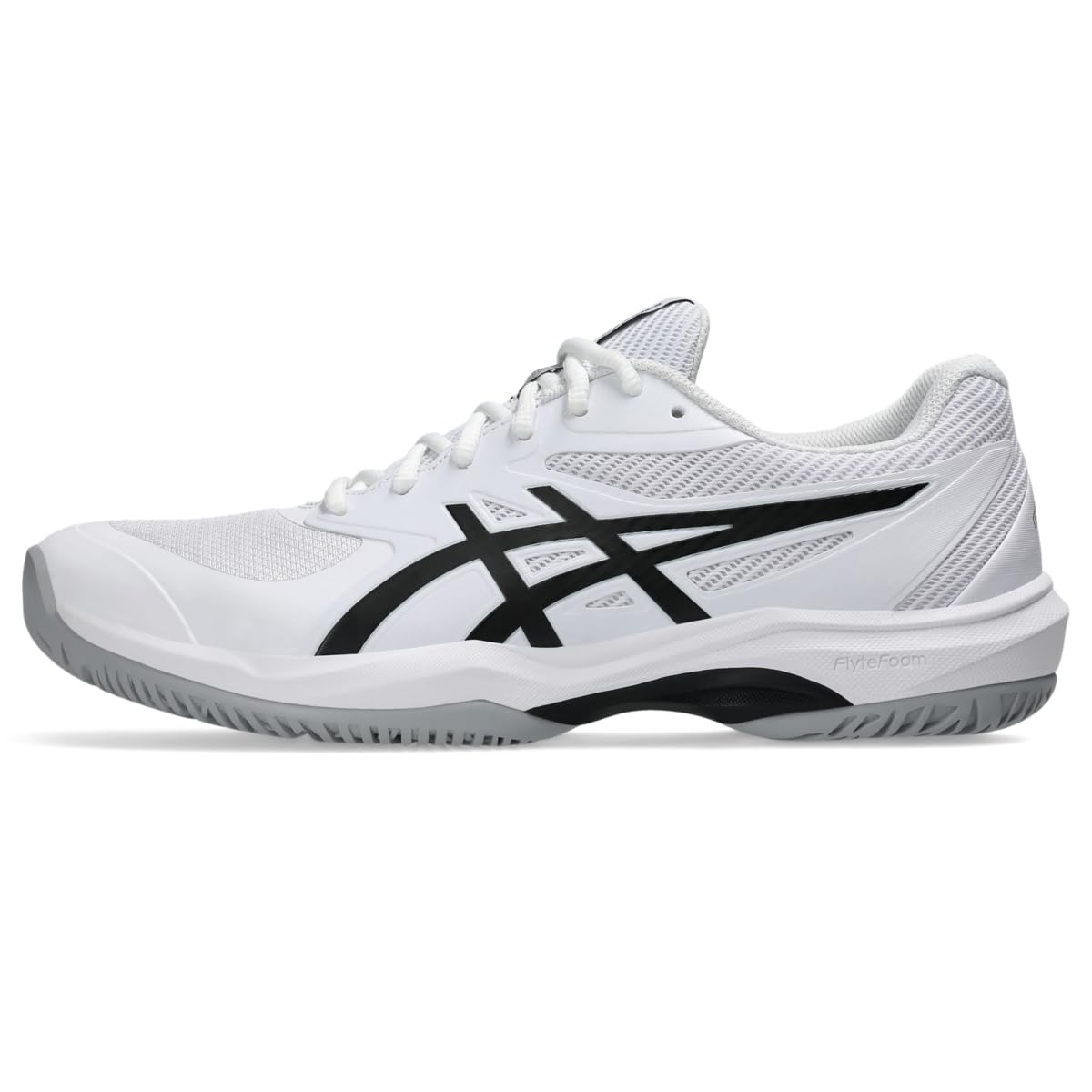
ASICS’s FlyteFoam midsole is the headline here — a lightweight foam that retains its resilience longer than standard EVA, giving the Game shoe a responsive feel that belies its mid-range price point. After three months of heavy use (~10 hours per week), one reviewer reported 75% wear on the sole, which is solid performance at this level. The herringbone tread pattern provides dependable traction on both indoor and outdoor hard courts.
The upper uses a synthetic leather and mesh combination that breathes well but shows minor cracking at the upper-sole junction near the ball of the foot over extended use. Users with neutral to slightly narrow feet appreciate the true-to-size fit; those needing more toe room should consider the K-Swiss option. The rearfoot GEL insert adds shock absorption without raising the stack height too much.
For the 2–3 times per week player who wants a shoe that doesn’t feel like an entry-level product, the Game FlyteFoam delivers a premium-feeling ride at a value-oriented price point.
Why it’s great
- FlyteFoam midsole resists compression better than budget EVA
- Good traction on multiple court surfaces
- Lightweight without feeling flimsy
Good to know
- Upper may show wear at flex points over time
- Not suitable for very wide feet
- Mid-level cushioning, not plush
4. ASICS Women’s Game FlyteFoam Tennis Shoes

The women’s version of the Game FlyteFoam shares the same midsole technology as the men’s model, offering a lightweight and responsive ride. Reviewers, including parents buying for teenage players, note that the shoe feels “lightweight and nice” on the court, with good ankle support that doesn’t feel clunky. The fit runs true to size for most, though narrow-footed players find it slightly roomy in the forefoot.
Durability is the main caveat. Multiple users playing 3–4 times per week report the sole and side ripping open after roughly four months, which is shorter than the men’s version’s reported lifespan. The outsole also shows less slip resistance on wet courts compared to more aggressively treaded models. For the casual player playing 1–2 times per week, this is a non-issue.
If you want a modern, sleek-looking tennis shoe that feels responsive out of the box and works well for recreational play, this is a solid choice. For high-frequency players, consider investing in a more durable option.
Why it’s great
- Lightweight construction with responsive FlyteFoam cushioning
- Good ankle support for a low-profile shoe
- True-to-size fit for most foot shapes
Good to know
- Durability is below average for high-frequency players
- Wet-court traction is a weak point
- Upper may tear after extended use
5. Reebok Mens Nano Court Sport Tennis Shoes
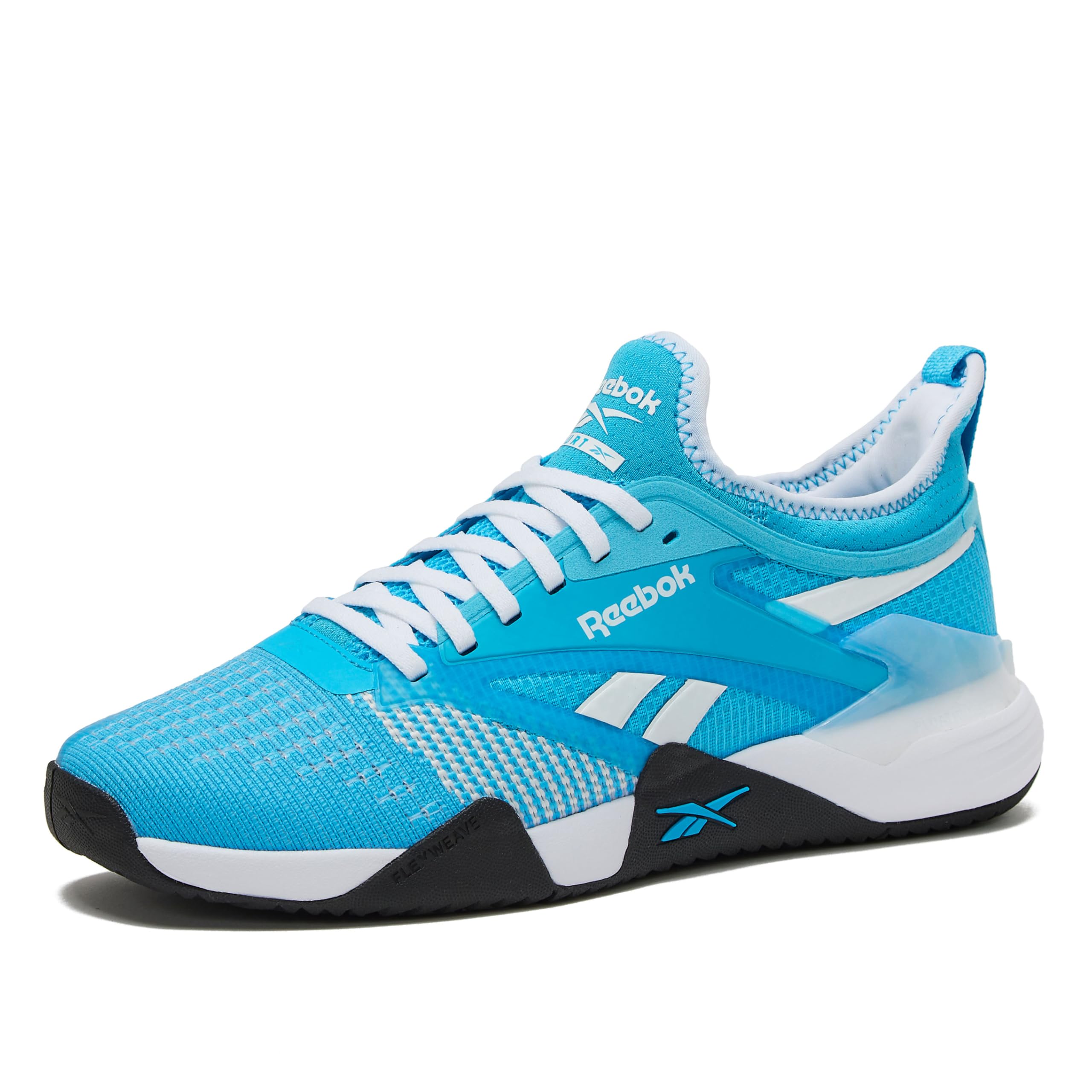
Reebok enters the court shoe category with a modern knit upper that wraps the foot like a sock, eliminating the sliding that happens in stiffer leather models. The low heel-to-toe drop (approximately 4mm) places the foot in a more natural position, which multiple reviewers note reduces calf strain during long matches. The insoles provide good arch support and heel cushioning right out of the box.
The tradeoff is durability at the outer edge. After two months of 3.5–4.0 level play, some users report the upper tearing where the foot flexes laterally. The same reviewers note the shoe feels “awesome” for comfort and lateral stability during that period. This is clearly a shoe designed for newer or intermediate players who prioritize comfort and fit over long-term wear.
If you have a narrow to medium foot and want a shoe that requires zero break-in, the Nano Court Sport delivers an excellent initial experience. Just be prepared to replace it sooner than a traditional leather-and-mesh shoe.
Why it’s great
- Sock-like upper eliminates heel slip
- Low drop reduces calf strain
- Excellent out-of-box comfort and arch support
Good to know
- Upper durability is below average for aggressive movers
- Toe box is narrow for wider feet
- Not built for high-frequency advanced play
6. K-Swiss Men’s Court Express 2 Tennis Shoe
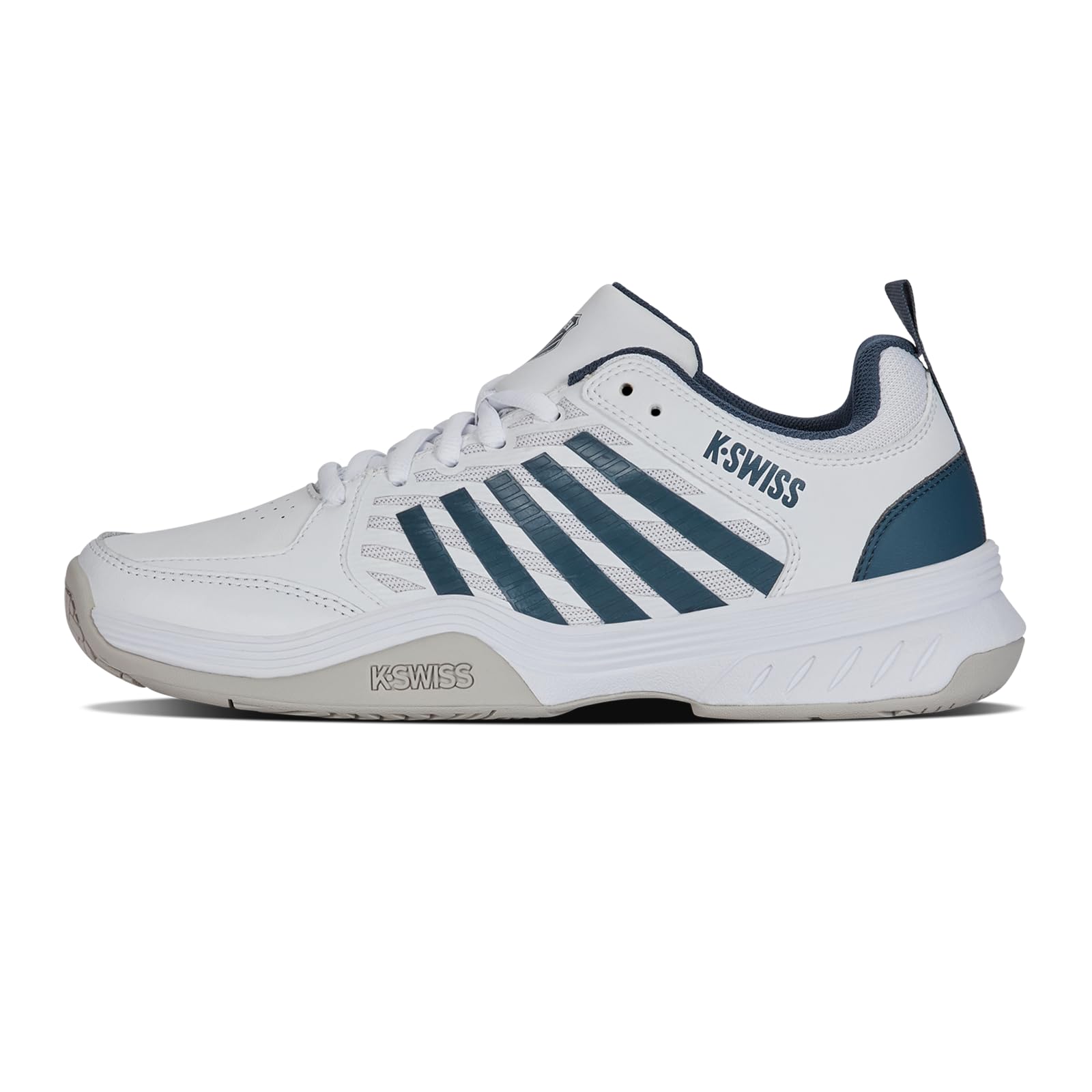
The K-Swiss Court Express 2 is a throwback to a simpler shoe design philosophy: a durable leather upper, a medium-high arch, and a wider toe box that accommodates foot swelling during hot matches. Reviewers with wider forefeet consistently report that this is one of the few shoes that doesn’t squeeze during lateral stops. The lacing system stays tied throughout play, a small but meaningful detail that eliminates mid-match reties.
The midsole is firmer than modern foam-based shoes, but several users report that this firmness actually “saved” their knees by providing a stable platform for hard cuts. The outsole uses a dense rubber compound that wears slowly, though the shoes are heavier than mesh competitors. The classic white styling also hides scuffs better than dark-colored shoes.
For the player who values foot comfort over the latest foam technology and needs a forgiving toe box, the Court Express 2 is a reliable workhorse that delivers consistent performance for the price.
Why it’s great
- Wide toe box ideal for players with wider forefeet
- Laces stay tied during intense play
- Durable leather upper withstands toe drag
Good to know
- Firmer midsole may feel stiff initially
- Heavier than mesh construction shoes
- Narrow-footed players may find forefoot too roomy
7. ASICS Women’s Gel-Dedicate 8 Pickleball Shoes
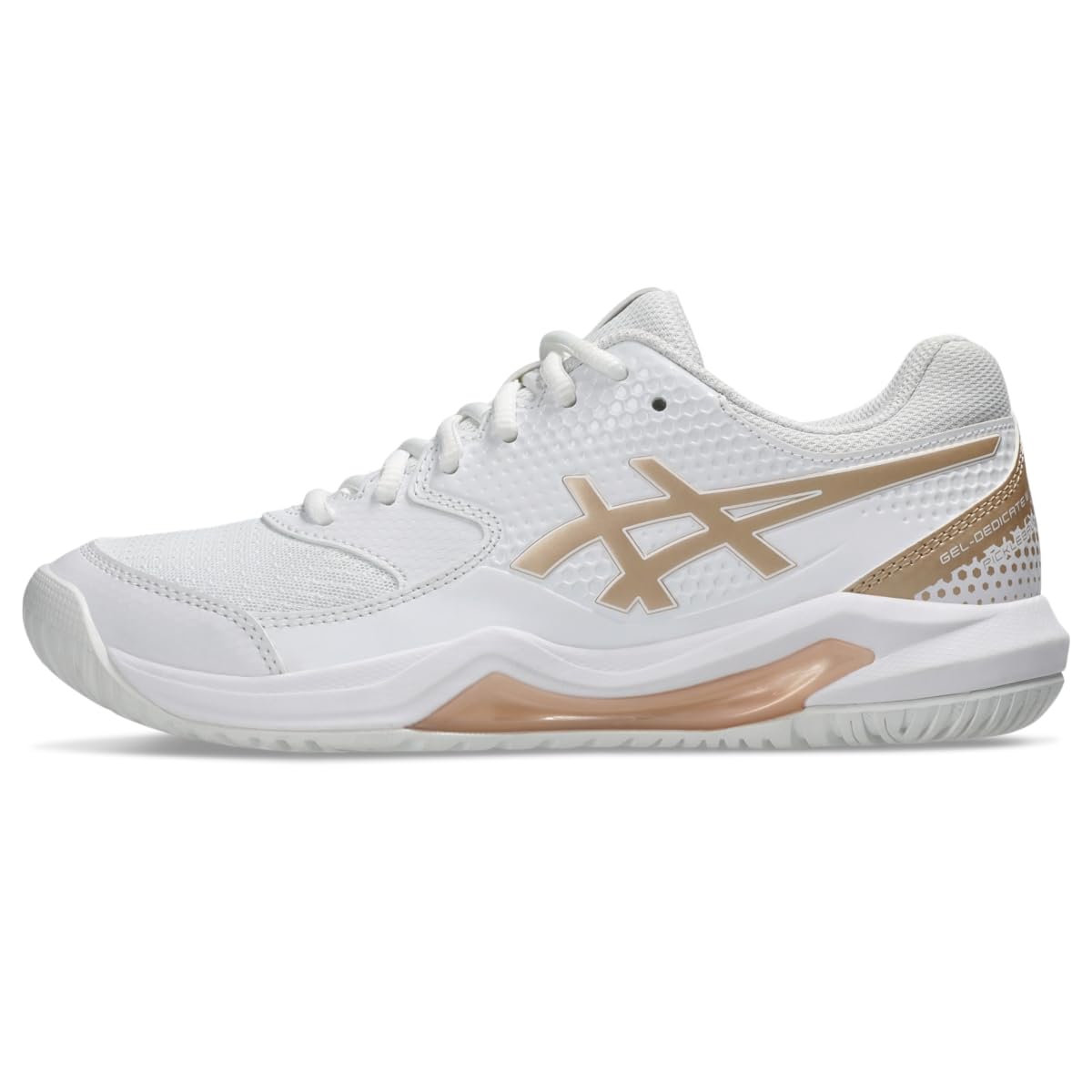
The Gel-Dedicate 8 is the most affordable entry in the ASICS court lineup, and it shows primarily in outsole longevity. Frequent players (four days per week) report that the bottoms wear out relatively quickly, though the shoe offers excellent cushioning for the price thanks to the rearfoot GEL insert. The traction is reliable for quick stops on hard courts, and the upper breathes well during extended play.
The fit runs true to size for most, but players with wider feet or high-volume heels may need to go a half-size up due to a snug heel pocket. The synthetic leather upper is less supportive than premium models, so players who cut hard should expect some upper flex over time. The shoe is also marketed as a pickleball shoe, but the outsole and midsole design translate perfectly to tennis.
For the casual player who needs a functional, comfortable court shoe without a large investment, the Gel-Dedicate 8 is a solid starting point. Just be aware that heavy use will shorten its lifespan significantly.
Why it’s great
- Rearfoot GEL insert provides good shock absorption
- Breathable upper for warm-weather play
- Reliable traction on hard courts
Good to know
- Outsole wears quickly with frequent use
- Snug heel pocket may require half-size up
- Upper lacks premium lateral support
FAQ
Can I use running shoes for tennis?
How many hours should a pair of tennis shoes last?
What does non-marking outsole mean?
Final Thoughts: The Verdict
For most users, the best athletic tennis shoes winner is the ASICS Gel-Resolution X because it combines the highest torsional rigidity with proven outsole durability for aggressive movers. If you want a lighter feel without sacrificing stability, grab the Wilson Rush Pro 4.5. And for a budget-friendly entry with a wide toe box, nothing beats the K-Swiss Court Express 2.

Mo Maruf
I created WellFizz to bridge the gap between vague wellness advice and actionable solutions. My mission is simple: to decode the research and give you practical tools you can actually use.
Beyond the data, I am a passionate traveler. I believe that stepping away from the screen to explore new environments is essential for mental clarity and physical vitality.