Our readers keep the lights on and my smoothie glass nicely filled. As an Amazon Associate, I earn from qualifying purchases.
The wrong insole turns every stride into a grinding compromise between comfort and stability. Most athletic shoe inserts rely on soft foam that compresses within weeks, leaving your arches unsupported and your joints absorbing impact that should have been managed at the sole. The best options use layered materials—structured heel cups, targeted gel zones, and arch profiles that actually rise to meet your foot rather than flattening under weight.
I’m Mohammad Maruf — the founder and writer behind WellFizz. I’ve spent hundreds of hours analyzing material density claims, heel cup depth measurements, and real-user durability reports across dozens of athletic insert designs to separate the genuinely supportive from the visually convincing.
This guide examines five distinct approaches to foot support so you can confidently choose among the best athletic shoe inserts currently available—whether you need high-arch correction, multi-sport shock absorption, or heavy-duty stability for long shifts on concrete.
How To Choose The Best Athletic Shoe Inserts
Selecting an athletic insole requires more than picking the thickest pad on the shelf. The wrong profile can destabilize your gait, cause joint strain, or compress completely after a few runs. Focus on these three factors to find a match for your foot type and activity level.
Arch Profile and Support Zone
Every foot has a different arch—low, medium, or high—and inserts designed for the wrong height will either create pressure points or fail to support the midfoot. Look for insoles that explicitly state their arch rating. A medium arch insert suits most general athletes, but runners with diagnosed plantar fasciitis often need a higher, firmer contour to offload the fascia. A shallow arch insert will only pad the foot; a sculpted one actually controls its motion.
Heel Cup Depth and Material Density
A shallow heel cup allows the fat pad under your heel to splay outward, reducing natural shock absorption and increasing impact on knees and hips. Deep cups—typically 10 to 15 millimeters—lock the heel in place and prevent slippage during lateral cuts. Material density matters too: Poron or polyurethane layers retain their resilience far longer than basic EVA foam, which can lose 40 percent of its rebound within a month of daily use. Check whether the insert uses a structured base or a single-density foam slab.
Quick Comparison
On smaller screens, swipe sideways to see the full table.
| Model | Category | Best For | Key Spec | Amazon |
|---|---|---|---|---|
| MOVE Game Day Pro | Performance | Highest arch support & multi-sport impact | X-Frame torsional support | Amazon |
| Move Game Day Performance | Versatile | Balanced cushioning for court and pavement | Composite heel with Active Heel Technology | Amazon |
| CRUVHEAL Sport Shock Absorbing | Active Cushion | Basketball and high-impact running | Strategically placed gel pads | Amazon |
| Sof Sole High Arch Performance | High Arch | Hikers, walkers, and casual athletes | Targeted gel drop in heel | Amazon |
| Heavy Duty Support Pain Relief Orthotics | Budget | Work boots and long standing shifts | Double PORON cushioning layers | Amazon |
In‑Depth Reviews
1. MOVE Game Day Pro Performance Insoles
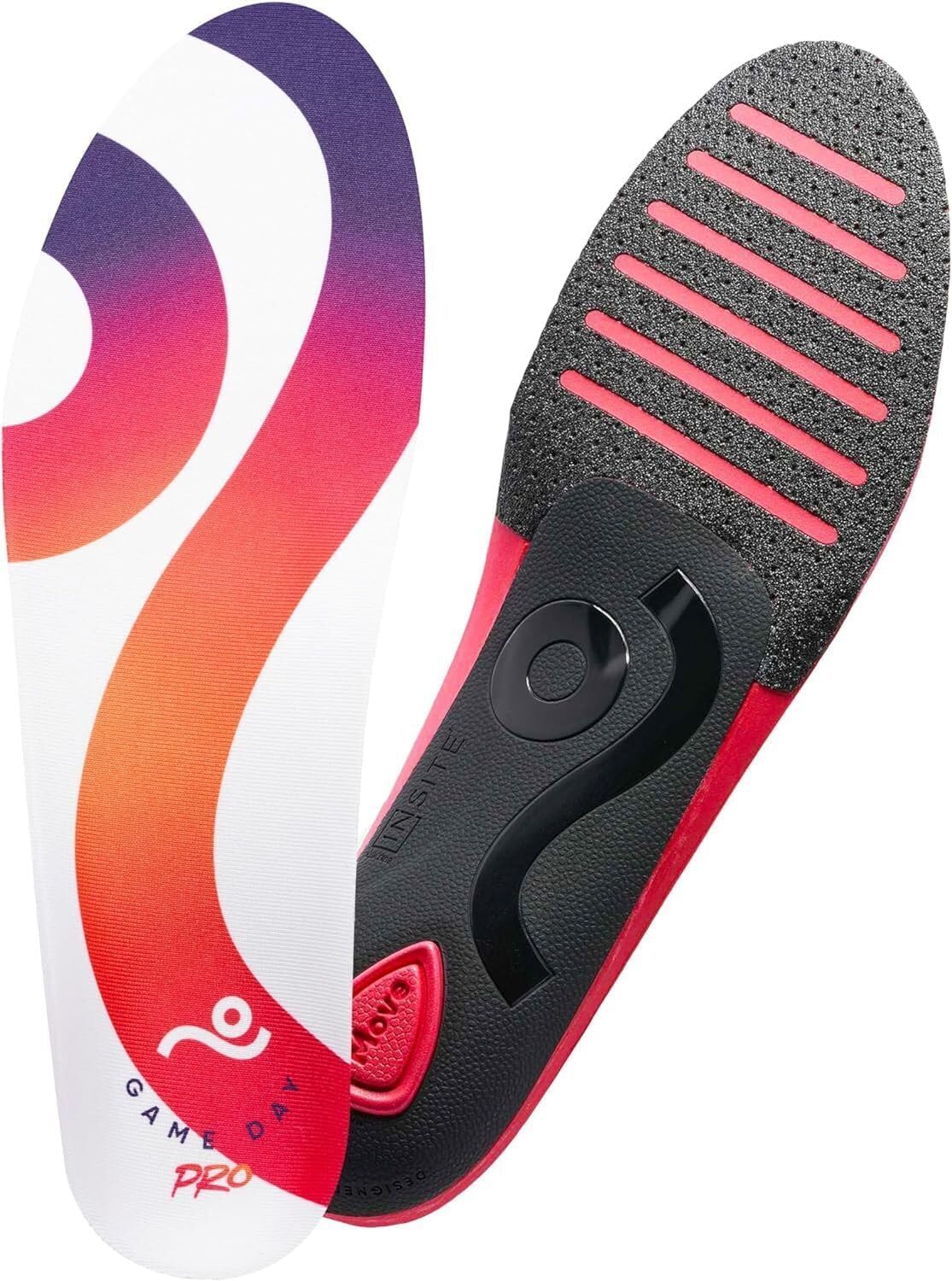
Co-founded by NBA All-Pro Damian Lillard, the Game Day Pro insole uses a rigid X-Frame that bridges the heel and midfoot to provide torsional stability during explosive lateral movements. Runners and court sport athletes consistently report no compression over time—the polyurethane core holds its shape through months of intense use. The deep heel cup combined with Active Heel Technology disperses landing force across a wide area, reducing the sharp impact that often triggers shin splints and Achilles soreness.
Testers described a responsive springy feel that improves first-step quickness without sacrificing cushioned landings, a balance most insoles fail to achieve. The arch profile is noticeably higher than standard athletic inserts, making it ideal for those with medium to high arches who need firm support. Pickleball players, tennis competitors, and volleyball athletes found it eliminated foot fatigue that previously cut sessions short.
An aggressive forward tilt in the forefoot encourages a natural rocking motion during running, which some users found initially pronounced but quickly beneficial for forward propulsion. The top fabric resists odor buildup, a practical advantage for multi-sport athletes who wear one pair of shoes across different activities. It requires no trimming for most standard athletic shoes.
Why it’s great
- Firm, uncompressing arch holds position through full seasons of play
- Torsional X-Frame reduces ankle and knee strain during lateral cuts
- Springy responsiveness aids quick acceleration from standing starts
Good to know
- The forward slope feels aggressive for walkers who prefer a flat footbed
- Not suitable for shoes with very low internal volume
2. Move Game Day Performance Insoles

Also from the Move lineup, the Game Day Performance insole positions itself as a slightly softer, more accommodating alternative to the Pro model. Its composite heel insert delivers targeted shock absorption for jumping and sprinting, while the molded forefoot design adapts to the natural curve of the metatarsal heads. Users with medium arches and a history of plantar fasciitis noted significant fatigue reduction during multi-hour basketball and volleyball sessions.
The Active Heel, Ankle, and Foot Protection system uses strategically mapped pressure relief zones rather than uniform padding, which means the insole feels supportive exactly where your foot needs it most rather than everywhere at once. One reviewer reported eliminating shin splints that had persisted for five years, and another found that a year-old pair of running shoes felt fresh again after swapping in these inserts. The balance between cushion and stability suits both daily wear and competitive play.
Not everyone over 45 with pre-existing ankle sprains found the heel protection adequate for sprinting—some preferred a thicker heel landing pad. Still, the majority of athletes across running, basketball, and casual use reported a noticeable improvement in foot comfort without the stiffness of a full orthotic. The no-cut design fits most standard shoe sizes directly out of the box.
Why it’s great
- Pressure relief mapping targets sore spots without adding bulk
- Works in multiple shoe types without needing trimming
- Known for eliminating chronic shin splints and heel pain
Good to know
- Heel shock absorption may feel insufficient for explosive sprinting
- Less torsional rigidity than the Pro model for lateral-heavy sports
3. CRUVHEAL Sport Shock Absorbing Insoles

These CRUVHEAL insoles focus on delivering high-impact absorption through strategically placed gel pads at the heel and forefoot rather than relying on a single layer of foam. The neutral arch profile makes them suitable for runners and basketball players who do not need aggressive correction but want to reduce the joint stress that leads to shin splints and tendonitis. A deep U-shaped heel cup prevents the foot from sliding forward during hard stops, and the non-slip gel backing keeps the insole itself from shifting inside the shoe.
Users reported a comfortable out-of-the-box feel with no break-in period required—a rare advantage among structured insoles. The inserts are slightly heavier than average due to the gel components, but the extra weight translates to a plushness that holds up during full-length practices. One 68-year-old active user ran a 5K without discomfort, and industrial workers on 14-hour concrete shifts found them effective for eliminating foot and ankle pain.
The size-specific recommendation is important: these insoles require the correct selection at checkout rather than trimming. Some users noted they felt bulky inside low-volume shoes like Hokas but fit perfectly in Skechers and standard athletic sneakers. The manufacturer recommends a 3 to 7 day adaptation period, starting with 2 to 5 hours of wear, which aligns with the firmer construction typical of gel-based inserts.
Why it’s great
- Gel pads absorb heavy impact without flattening over time
- Zero break-in period for immediate comfort worn all day
- Deep heel cup locks the foot securely for lateral movements
Good to know
- May feel too thick inside narrow or low-volume athletic shoes
- Slightly heavier weight compared to foam-only insoles
4. Sof Sole High Arch Performance Full-length Insole

The Sof Sole High Arch Performance insole is designed specifically for feet that need pronounced vertical support rather than gentle contouring. Its enhanced arch height lifts the midfoot more aggressively than most off-the-shelf inserts, making it a go-to option for hikers and walkers whose high arches cause the foot to roll outward. A targeted gel drop in the heel provides extra cushioning for rearfoot strikers without raising the heel height so much that it alters shoe fit.
Backpackers reported that these insoles saved their feet during multi-day trips where stock insoles would have compressed into uselessness by day two. The deep heel cup prevents slippage on steep descents, and the full-length design supports the entire foot rather than just the arch. However, some users with very high arches and existing plantar fasciitis found the arch height insufficient for their needs—these insoles fall into the moderate high-arch range rather than extreme orthotic territory.
Ideal for casual athletic use, walking, hiking, and daily sneakers rather than hard-core competitive sports. The construction is lighter than the Move or CRUVHEAL options, so they fit comfortably in shoes where bulkier inserts would crowd the toe box. Several long-term users said they replace stock insoles in all their shoes with these and keep spares for rotation.
Why it’s great
- Pronounced arch lift for hikers and overpronators with high arches
- Gel heel pad adds shock absorption without increasing stack height
- Light enough to fit in multiple shoe types without volume issues
Good to know
- Arch may not be high enough for severe plantar fasciitis cases
- Less durable in high-impact sports like basketball or sprinting
5. Heavy Duty Support Pain Relief Orthotics
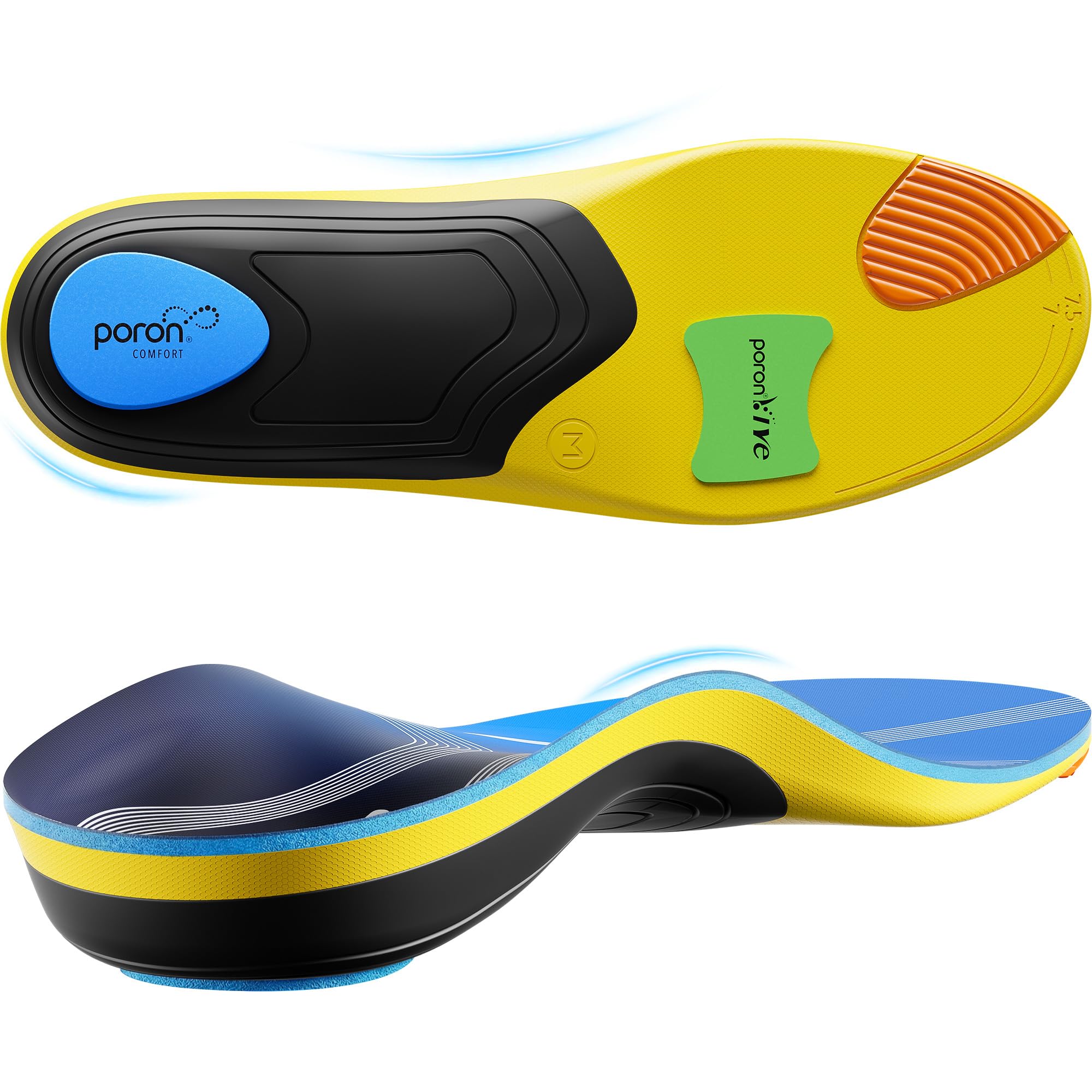
This budget-friendly option targets users over 230 pounds who need structured support for long hours on hard surfaces. The double PORON cushioning layers provide advanced shock absorption that outperforms single-density EVA inserts, and the Golden Triangle design delivers three-point support at the forefoot, arch, and heel rather than relying on a uniform curve. The deep U-shaped heel cup secures the heel and prevents side slippage, a feature usually reserved for more premium insoles.
Users in work boots and steel-toe shoes reported relief from heel pain after just one day of use on concrete floors, with the inserts holding their shape after weeks of 9 to 10 hour shifts. The skin-friendly, sweatproof top fabric helps control moisture inside boots, and the medium arch profile suits flat feet and those with mild arch collapse. Trimming is straightforward with the included guidelines.
The thicker construction means you may need to loosen laces in snug gym shoes or joggers, and users with very low arches noted they wanted more support in the midfoot. For warehouse workers, delivery drivers, and anyone whose job demands heavy standing, these represent the most cost-effective way to reduce fatigue without jumping to custom orthotics.
Why it’s great
- Double PORON foam retains rebound longer than standard athletic inserts
- Three-point support zone captures forefoot, arch, and heel independently
- Immediate heel pain relief reported in work boot use cases
Good to know
- Thick profile crowds low-volume sneakers and requires lace adjustment
- Arch height is medium and may not satisfy high-arch users
FAQ
How often should I replace athletic shoe inserts?
Can I use the same insoles for running and weightlifting?
Final Thoughts: The Verdict
For most users, the best athletic shoe inserts winner is the MOVE Game Day Pro because its X-Frame torsional support and uncompressing polyurethane base offer the highest return on durability and arch stability. If you want balanced cushioning that fits most activities without breaking the bank, grab the CRUVHEAL Sport Shock Absorbing insoles. And for heavy standing shifts in work boots where budget matters, nothing beats the Heavy Duty Support Pain Relief Orthotics.

Mo Maruf
I created WellFizz to bridge the gap between vague wellness advice and actionable solutions. My mission is simple: to decode the research and give you practical tools you can actually use.
Beyond the data, I am a passionate traveler. I believe that stepping away from the screen to explore new environments is essential for mental clarity and physical vitality.