Our readers keep the lights on and my smoothie glass nicely filled. As an Amazon Associate, I earn from qualifying purchases.
Treating a scar at home is a frustrating game of patience. Most creams feel like moisturizers in disguise, silicone sheets peel off by lunch, and the wrong choice can leave discoloration or irritation that makes the original mark look better. The difference between a scar that fades and one that stays visible comes down to occlusion, hydration, and the specific molecule or material you put on the tissue.
I’m Mohammad Maruf — the founder and writer behind WellFizz. I’ve spent fifteen years analyzing dermatological-grade topical treatments, comparing silicone delivery vehicles, and cross-referencing peer-reviewed literature against consumer-reported outcomes to separate evidence-backed protocols from placebo bottles.
Whether you’re managing a fresh surgical incision, a hypertrophic keloid, or stubborn acne marks, finding the right best at home scar treatment means understanding how ingredients like medical-grade silicone, madecassoside, and glycerin actually interact with healing tissue to soften, flatten, and repigment the new skin below.
How To Choose The Best At Home Scar Treatment
Scar tissue is structurally different from normal skin — it lacks sweat glands, hair follicles, and the organized collagen lattice that gives healthy skin its flexibility and color. At-home treatments work by manipulating the microclimate over the wound bed. Before you buy, evaluate these three factors that determine whether a product will actually change the scar’s appearance.
Silicone Delivery: Gel vs. Sheet
Silicone is the single ingredient with the most clinical evidence for flattening and softening hypertrophic and keloid scars. But the delivery system matters. Silicone sheets provide continuous occlusion and a physical barrier, making them ideal for flat, accessible areas like the chest, back, or arms. Silicone gels, on the other hand, conform to mobile joints, facial contours, and hard-to-reach spots under clothing. If your scar sits on a knuckle, knee, or jawline, a fast-drying gel is more practical.
Occlusion Rate and Hydration Retention
The core mechanism of scar treatment is reducing transepidermal water loss from the immature tissue. A higher occlusion rate keeps the stratum corneum hydrated, which downregulates fibroblast activity and prevents excessive collagen buildup. Products that pair silicone with humectants like glycerin or panthenol create a dual-action environment — they block water loss while actively pulling moisture into the scar bed. This combination is especially important for dry, flaky scars that feel tight or itchy.
Fragrance Profile and Skin Sensitivity
Fragrance is a common source of irritation on healing skin. A scar that turns red and inflamed from a perfume allergen is a scar that will pigment unevenly long-term. Medical-grade formulations are typically fragrance-free, paraben-free, and oil-free to avoid clogging the surrounding pores or triggering contact dermatitis. If you have acne-prone skin or are treating a facial scar, non-comedogenic labeling is non-negotiable.
Quick Comparison
On smaller screens, swipe sideways to see the full table.
| Model | Category | Best For | Key Spec | Amazon |
|---|---|---|---|---|
| Bio-Oil Body Oil | Natural Oil Serum | Acne marks and stretch mark fading | Vitamin E, Chamomile, Lavender Oil | Amazon |
| Medical Grade Silicone Scar Gel | Silicone Gel | Surgical, C-section, and hypertrophic scars | Fast-drying, 100% fragrance-free | Amazon |
| La Roche-Posay Cicaplast Gel B5 | Repair Gel | Post-procedure and laser recovery | 21% Glycerin, 5% Panthenol | Amazon |
| Rejuvaskin RejuvaSil Gel | Premium Silicone Gel | Old scars and long-term maintenance | Botanical + Silicone formula | Amazon |
| ScarAway Silicone Sheets | Silicone Sheet | Flat, non-mobile body areas | Reusable up to 10 days per sheet | Amazon |
In‑Depth Reviews
1. Medical Grade Silicone Scar Gel

This medical-grade silicone gel offers the best balance of clinical mechanism and everyday convenience. It mimics the skin’s natural barrier to flatten and soften raised scars, and the fragrance-free, oil-free base means zero irritation on post-surgical incisions or facial acne marks. Users reported visible flattening within two to three weeks of twice-daily application, making it one of the faster-acting silicone options available.
The fast-drying formula is a practical upgrade over thicker scar creams. It leaves a breathable, invisible shield that does not stain clothing or peel off during sleep. Unlike silicone sheets, this gel conforms easily to curved areas like C-section incisions, knuckles, and the jawline, so you get continuous occlusion even on mobile body parts.
For a mid-range investment, the value is clear: you get the same active ingredient — medical-grade silicone — that powers premium brands, but packaged without unnecessary botanicals or inflated pricing. Consistent use over four to six weeks produces the flattening and redness reduction most users want from a home treatment.
Why it’s great
- Dermatologist-recommended silicone technology with clinical backing
- Fragrance-free and paraben-free for sensitive, healing skin
- Conforms to joints, face, and curved body contours without peeling
Good to know
- Requires twice-daily application for optimal results
- Slightly less occlusive than a thick silicone sheet on flat areas
2. Rejuvaskin RejuvaSil Silicone Scar Gel
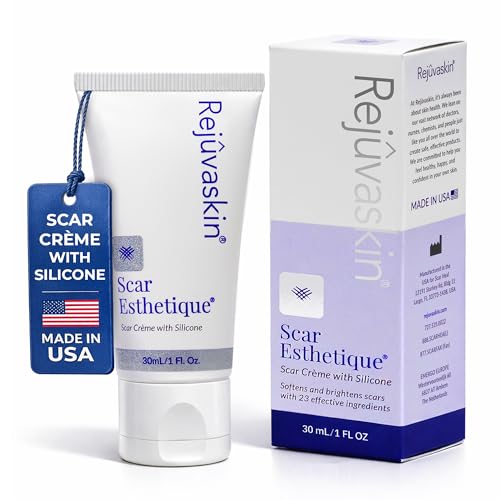
The RejuvaSil gel distinguishes itself by combining medical-grade silicone with botanical extracts designed to target discoloration and uneven texture. Users with darker skin tones reported it healed breakout marks and allergy-related rashes within days, and long-term users noted that old surgical scars became smoother, softer, and flatter even after years of persistence.
Its semi-occlusive barrier supports the body’s natural healing process while the botanicals — which include centella asiatica derivatives — work on pigmentation. The gel absorbs quickly and leaves no sticky residue, making it a strong candidate for facial scars where texture and color are the primary concerns rather than thickness.
The main compromise is speed: older, more established scars require consistent use over several months before redness fully fades. Some users pursuing complete color normalization on scars older than three years found laser treatment still necessary for the last bit of erythema, but as a daily maintenance occlusive, RejuvaSil outperforms most generic alternatives.
Why it’s great
- Targets both scar thickness and pigmentation with botanicals
- Safe for all skin types including oily and sensitive
- Effective on old scars that have been present for years
Good to know
- Full color normalization on very old scars may still require laser
- Higher price per ounce compared to generic silicone gels
3. Bio-Oil Skincare Body Oil

Bio-Oil has earned its reputation as a versatile, entry-level option for fading stretch marks and mild acne scars. The lightweight blend of vitamin E, chamomile, and lavender oil absorbs quickly without the greasy after-feel that plagues many body oils, and the non-comedogenic formulation means it will not clog pores on the face or back.
Users with hormonal acne from PCOS reported consistent fading of dark marks after a year of daily use, and the formula’s ability to hydrate without triggering breakouts makes it a solid choice for anyone managing both active acne and post-inflammatory hyperpigmentation. The subtle herbal scent is a bonus for those who prefer aromatherapy over sterile, fragrance-free gels.
The trade-off is that Bio-Oil lacks the occlusive power of medical-grade silicone. It is effective for discoloration on flat surfaces but will not flatten raised hypertrophic or keloid scars. For those whose primary concern is pigment rather than texture, however, Bio-Oil delivers reliable results at a very accessible price point.
Why it’s great
- Clinically proven to improve appearance of stretch marks and scars
- Non-greasy, quick-absorbing texture suitable for face and body
- Vegan, cruelty-free, and paraben-free with recyclable packaging
Good to know
- Not effective for raised or hypertrophic scars
- Contains fragrance, which may irritate extremely sensitive skin
4. La Roche-Posay Cicaplast Gel B5

This gel skin protectant is formulated specifically for the immediate post-procedure window — think laser resurfacing, microneedling, and stitch removal. The 21% glycerin and 5% panthenol create a powerful humectant environment that soothes disrupted barriers, while madecassoside and a mineral complex of copper, zinc, and manganese actively support tissue repair.
Users who applied Cicaplast Gel B5 after CO2 laser sessions described it as more effective than prescribed medicated lotions for cooling the burning sensation and reducing redness. The gel texture is significantly lighter than the brand’s balm version, making it ideal for warm weather or combination skin that gets dehydrated but still breaks out from heavy creams.
The limitation is that this is a repair gel, not a dedicated scar occlusive. It excels at calming inflammation and preventing scarring during the first two weeks of healing, but for established scars that need flattening, you will still want a silicone-based product for the long term.
Why it’s great
- Specifically tested and recommended for post-laser, post-stitches recovery
- High glycerin and panthenol concentration for deep hydration
- Fragrance-free formulation prevents irritation on healing tissue
Good to know
- Not a dedicated scar treatment for old or raised scars
- Small 1.35 fl oz bottle may run out quickly for large body areas
5. ScarAway Advanced Silicone Scar Sheets

ScarAway sheets offer the highest occlusion rate of any product on this list, and for flat scars on the chest, back, or limbs, that continuous pressure and hydration is what drives results. Each self-adhesive, water-resistant sheet lasts up to ten days, meaning you get uninterrupted occlusion without daily reapplication.
Users noted that the tan version is thicker and provides built-in sun protection — a critical feature because UV exposure on healing scar tissue causes permanent hyperpigmentation. On a calf scar treated since stitch removal, one user reported zero redness and visible softening within a month, and others with four-month-old surgical scars saw flattening faster than with the brand’s own gel product.
The downside is adhesion on curved, hairy, or sweaty areas. The sheets can peel off during sleep if applied over hair, and they hold water underneath, which reduces stickiness with extended wear. For hairless, non-mobile areas, these sheets are unmatched; for movable joints, stick with a silicone gel.
Why it’s great
- Medical-grade silicone with clinically proven flattening and softening
- Reusable up to 10 days per sheet for consistent occlusion
- Tan color provides UV protection to prevent hyperpigmentation
Good to know
- Stickiness decreases on hairy, curved, or sweaty skin
- Less discreet than clear sheets or gels under clothing
FAQ
How long should I use an at-home scar treatment before seeing results?
Can I use silicone scar gel on an open wound or fresh incision?
What is the difference between silicone gel and silicone sheets for scar treatment?
Final Thoughts: The Verdict
For most users, the best at home scar treatment winner is the Medical Grade Silicone Scar Gel because it combines clinical-grade silicone with a fast-drying, fragrance-free formula that works on surgical incisions, C-section scars, and facial acne marks without the hassle of sheets. If you want a premium option for old scars that need both flattening and pigment correction, grab the Rejuvaskin RejuvaSil Gel. And for protecting a flat scar from UV damage while maintaining continuous occlusion, nothing beats the ScarAway Silicone Sheets.

Mo Maruf
I created WellFizz to bridge the gap between vague wellness advice and actionable solutions. My mission is simple: to decode the research and give you practical tools you can actually use.
Beyond the data, I am a passionate traveler. I believe that stepping away from the screen to explore new environments is essential for mental clarity and physical vitality.