Our readers keep the lights on and my smoothie glass nicely filled. As an Amazon Associate, I earn from qualifying purchases.
Every home cook knows the frustration of a knife that won’t slice through a ripe tomato, pushing instead of cutting and turning prep work into a chore. A sharp blade isn’t a luxury; it’s the single most important safety and efficiency tool in your kitchen, and maintaining that edge requires the right sharpening system—not a random pull-through tool that chews up your steel.
I’m Mohammad Maruf — the founder and writer behind WellFizz. I spend my time deep in technical reviews and market research, analyzing the real-world specs of kitchen gear so you don’t have to sort through the marketing noise yourself.
After weeks of cross-referencing abrasive materials, angle guides, and grit progression systems, I’ve narrowed down the top contenders for the ultimate at home knife sharpener to give you a clear, category-specific verdict you can trust.
How To Choose The Best At Home Knife Sharpener
Finding the right sharpener depends on how much metal you need to remove, the type of steel in your knives, and how much time you want to spend learning the skill. The wrong choice can leave you with a scratched blade or, worse, an edge that feels sharp but rolls over during the first real cut.
Grit Type and Progression
Coarse grits (under 600) reshape damaged or very dull blades. Medium grits (800–2000) refine the edge and remove burrs. Fine grits (3000+) polish the edge to a razor finish. A good system offers at least two stages; a three-stage progression from coarse repair to fine honing gives you the most control.
Angle Guidance
Western knives typically use a 20° edge for durability, while Japanese blades favor 15° for slicing precision. Built-in angle guides remove the guesswork. Magnetic guides or preset slots ensure consistency across the entire blade length, which is critical for maintaining a stable edge over time.
Abrasive Material
Diamond abrasives cut the fastest and handle high-hardness steels well, but they can be aggressive. Ceramic and aluminum oxide stones provide a finer finish and last longer with proper maintenance. Corundum (aluminum oxide) oil stones offer a traditional feel and are very forgiving for beginners.
Quick Comparison
On smaller screens, swipe sideways to see the full table.
| Model | Category | Best For | Key Spec | Amazon |
|---|---|---|---|---|
| Chef’sChoice 15XV | Electric Premium | Fast daily kitchen sharpening | 3-Stage 100% Diamond Abrasives | Amazon |
| VIDOME Professional | Electric Premium | Metal, ceramic & serrated blades | 100% Diamond + Ceramic Stage | Amazon |
| XARILK GEN3 | Guided System | Precision angle for hobbyists | 3 Diamond Plates (320/800/2000) | Amazon |
| Goodjob Complete Kit | Whetstone Kit | Learning freehand sharpening | 4-Sided 400/1000/3000/8000 | Amazon |
| Bogoni Rolling Sharpener | Rolling Guide | Fast, safe, no-skill needed | 400 Diamond / 3000 Ceramic Discs | Amazon |
| Work Sharp Benchtop | Whetstone Guide | Consistent angle with water stone | 1000/6000 Grit + Angle Guides | Amazon |
| Norton Combination Oil Stone | Oil Stone | Traditional bench stone for tools | 100 / 280 Grit Corundum | Amazon |
In‑Depth Reviews
1. Chef’sChoice 15XV Professional Electric Knife Sharpener

The Chef’sChoice 15XV is the gold standard for electric sharpeners in the home kitchen. Its brushed metal housing houses a three-stage system that uses 100% diamond abrasives on stages one and two to sharpen and hone, followed by a flexible abrasive stropping stage for polishing. The unit’s patented flexible spring guides automatically adjust to the blade’s geometry, ensuring consistent contact along the entire edge without requiring any manual angle setting.
This model is designed to convert standard 20° factory edges into a 15° Trizor XV edge, which combines a durable micro-bevel with a sharper primary angle. First-time sharpening takes roughly one minute, while routine touch-ups can be done in about ten seconds. The 5-pound weight keeps it planted during use, and the noise level stays between 65 and 75 dB—noticeable but not intrusive.
The 15XV handles both straight edge and serrated knives effectively. Several users reported reviving knives that were four to five years old to a factory-level sharpness within minutes. The only real caveat is that it removes more metal than manual systems, so you should avoid over-sharpening. For speed, consistency, and professional-grade results at home, this is the category leader.
Why it’s great
- Fast sharpening cycle (under 60 seconds for most knives)
- 100% diamond abrasives cut through high-hardness steels
- Consistent 15° edge without guesswork
- Durable 5-pound all-metal construction
Good to know
- Removes more metal than a guided manual system
- Not ideal for ultra-premium thin-blade Japanese knives
- Costs more up front than pull-through options
2. VIDOME Professional Electric Knife Sharpener
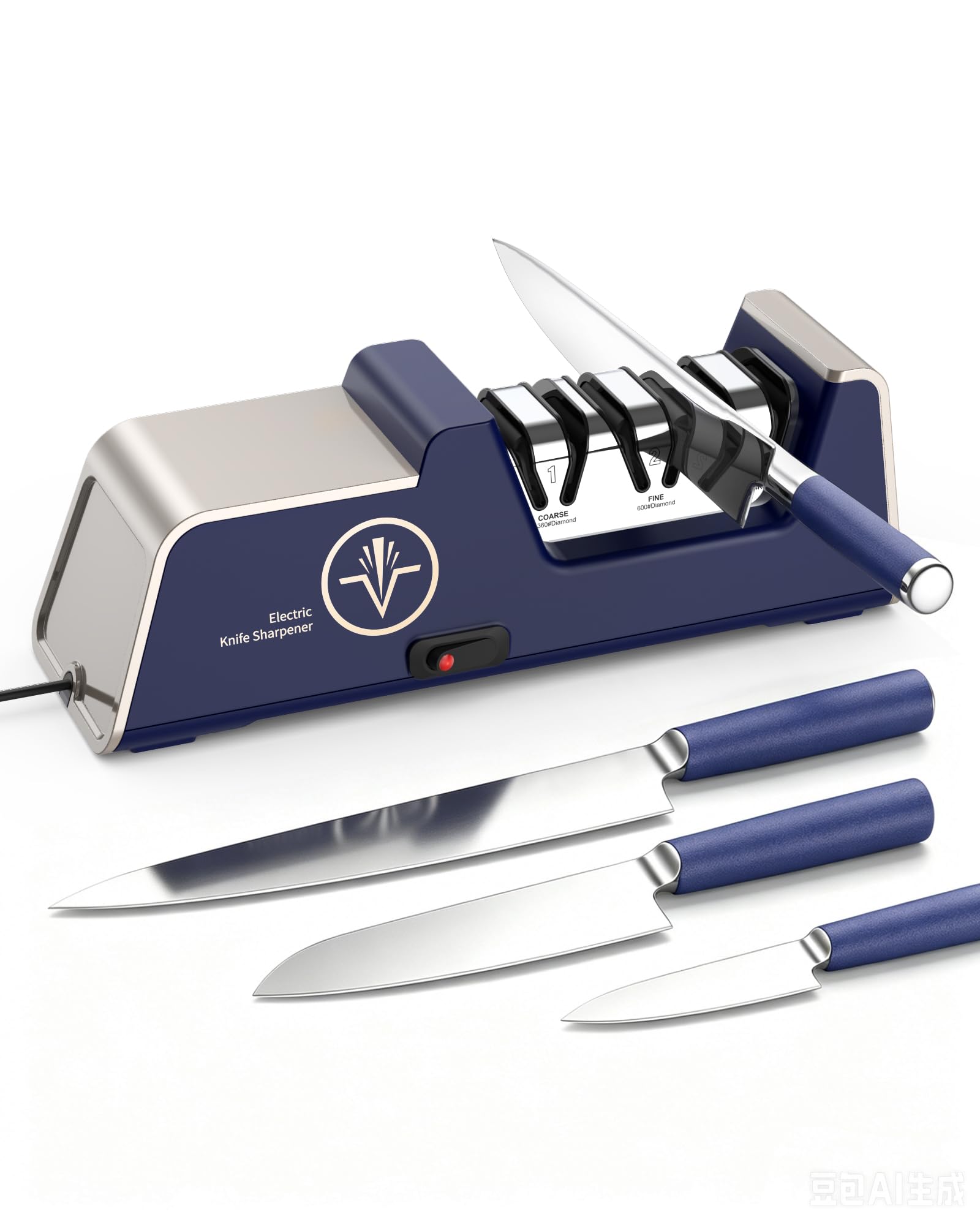
The VIDOME Professional stands out for its ability to sharpen not just standard stainless and carbon steel knives, but also ceramic blades and serrated edges. Its three-stage system uses 100% diamond abrasives on the first two slots and safe stropping disks on the third for final polishing. The diamond material is critical here—it’s the only abrasive hard enough to effectively grind ceramic without chipping.
The sharpener applies a 15° edge profile and can convert thicker 20° blades down to a finer angle over multiple passes. An elastic constant-force spring design keeps the blade pressed evenly against the abrasive surface, reducing the risk of uneven wear. The magnetic chip collection tray makes cleanup straightforward, and the compact champagne-gold finish blends into most kitchen decors.
Users report that a first-time sharpening session takes about 30 seconds for steel knives and up to 10 seconds for ceramic. One reviewer noted that it revived a ceramic chef’s knife impressively but was less effective on a very short ceramic paring knife due to clearance limitations. It’s a strong all-rounder for households with mixed knife sets, though the left-side stage access is less intuitive for some users.
Why it’s great
- Handles ceramic, serrated, and straight-edge blades
- Magnetic chip tray keeps the counter clean
- Fast operation with consistent spring-loaded pressure
- Attractive design that doesn’t look like a tool
Good to know
- Blade clearance is tight for very short knives
- Stage placement feels asymmetrical for left-handed use
- Motor is audible at 60–80 dB during operation
3. XARILK GEN3 Guided Knife Sharpening System
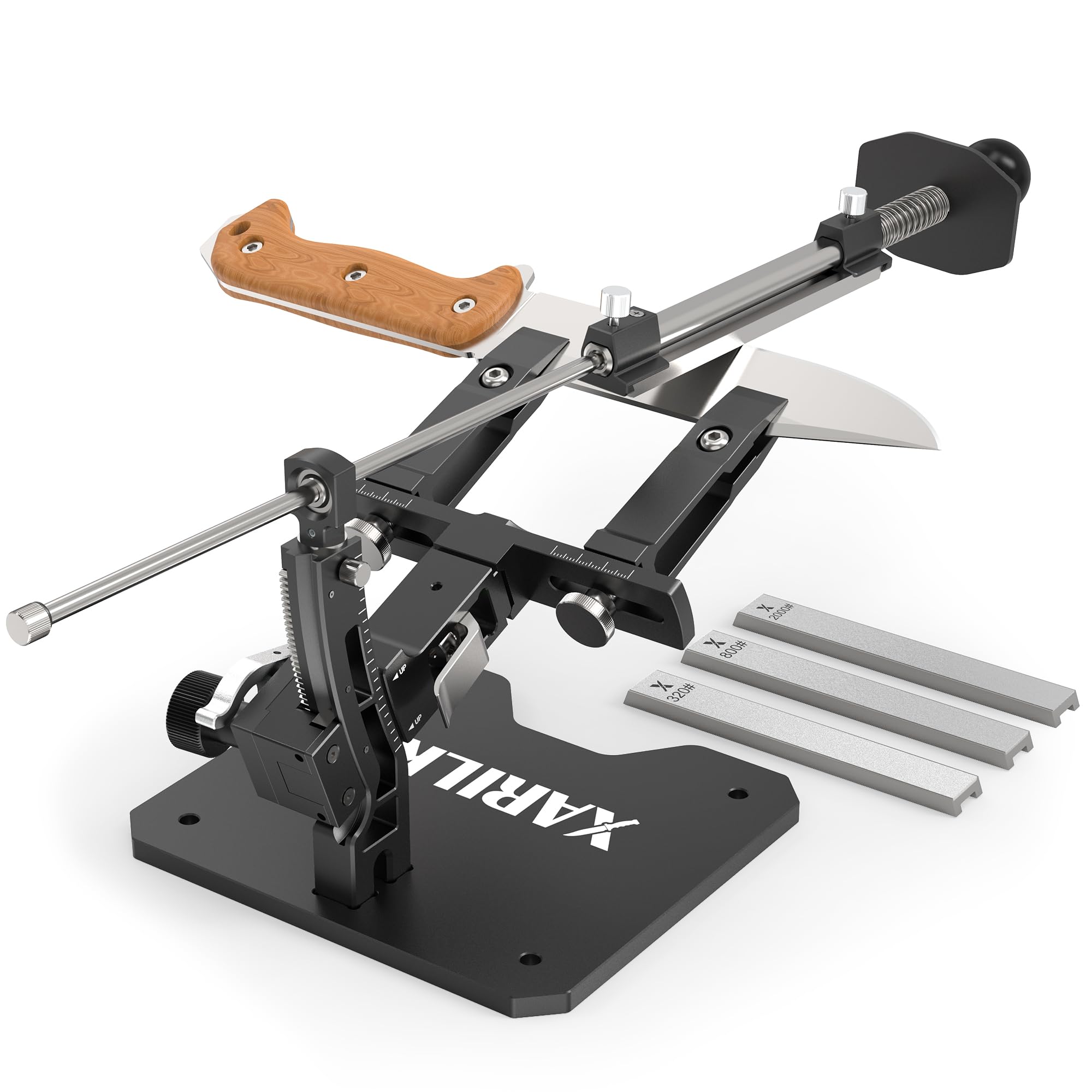
The XARILK GEN3 is a fixed-angle guided sharpening system built from high-strength aluminum alloy. Unlike electric models, this jig-style system holds the knife in a clamp while you move the abrasive stone along a guided rod, allowing for extremely precise angle control. The kit includes three diamond-impregnated aluminum plates: 320 grit for coarse reshaping, 800 grit for medium refinement, and 2000 grit for finishing.
The system accommodates kitchen knives, hunting knives, and folding blades. It disassembles easily for storage and is relatively compact for a guided system. Users consistently note that achieving a hair-shaving edge is achievable even for beginners, especially if they pair it with a digital angle finder to verify the clamp’s angle setting. The diamond plates are effective but have been reported to last around 10–15 sharpenings before showing wear, depending on steel hardness.
Some users have noted that the blade clamp can scratch knife bolsters if not padded, and the instruction manual is sparse. The gimbal bearing is made of soft aluminum, which can cause slight rod drag. However, the sheer value—providing fixed-angle precision at a fraction of the cost of high-end systems like TSProf—makes it a compelling option for anyone who wants repeatable, professional-level edges without spending on electric units.
Why it’s great
- Consistent fixed-angle sharpening, repeatable every time
- Full aluminum construction feels sturdy and precise
- Works with many knives, including thick hunting blades
- Excellent value for a guided jig system
Good to know
- Clamp can scratch blades without protective tape
- Diamond stones have a moderate lifespan
- Requires a digital angle finder for precise setup
4. Goodjob Complete Knife Sharpening Stone Kit

The Goodjob Complete Kit gives you everything you need to start freehand sharpening right out of the box. It includes two dual-grit whetstones (400/1000 and 3000/8000), a bamboo base with a non-slip silicone mat, a honing guide, an angle guide, cut-resistant gloves, a leather strop, and green compound. The stones are made from professional-grade white corundum using Japanese Osaka firing technology, which produces a dense, consistent abrasive surface.
The 400 grit side handles major edge repairs, the 1000 side establishes a working edge, the 3000 side refines further, and the 8000 side polishes to a mirror finish. The bamboo base holds the stone securely, and the angle guide helps beginners maintain the correct blade angle without guessing. The included cut-resistant gloves add an extra layer of safety for newcomers still developing their technique.
Users report that even someone with minimal sharpening experience can restore a badly damaged kitchen knife to paper-cutting sharpness in under ten minutes. The stones do require soaking in water before use, and the 400 grit side wears faster on harder stainless steels. The logo printed on one stone can create a slight rough spot that some users sand down. For the scope of accessories included, this kit punches well above its tier.
Why it’s great
- Comprehensive kit with four grit levels for full progression
- Includes angle guide, strop, and gloves for safe learning
- Bamboo base keeps the stone stable during use
- Great starting point for learning freehand sharpening
Good to know
- Stones need to be soaked before every session
- 400 grit side wears relatively fast on hard steels
- No spray bottle included for keeping stones wet
5. Bogoni Rolling Knife Sharpener

The Bogoni Rolling Sharpener reimagines the sharpening process with a rolling disc design and magnetic angle guides that require almost no skill. The kit includes a 400-grit diamond disc for reshaping and a 3000-grit ceramic disc for fine polishing, both of which are replaceable. Two preset magnetic guides lock onto the knife spine at 15° or 20°, ensuring a consistent angle without guesswork.
The natural wood body houses six N52 neodymium magnets that hold the knife securely in place during sharpening. The ergonomic roller handle makes it comfortable to use for extended sessions, and the compact footprint takes up minimal counter space. The set also includes a leather strop for final refinement and comes in a deluxe gift box.
Chef reviewers particularly appreciated that the system requires no water, oil, or electricity—just pull the roller along the blade edge. One professional chef with tendonitis reported restoring dull knives in under four minutes with minimal wrist strain. The diamond disc cuts fast, and the ceramic disc leaves a refined edge. The trade-off is that the rolling action can feel slightly less controlled on very short blades, and the price is higher than a basic pull-through sharpener.
Why it’s great
- No skill or setup required for a razor edge
- Magnetic guides lock in precise 15° or 20° angle
- Works dry with no mess or soaking needed
- Ergonomic design reduces hand fatigue
Good to know
- Less effective on very short blades under 3 inches
- Rolling motion takes a few tries to master
- Price is higher than manual pull-through sharpeners
6. Work Sharp Benchtop Whetstone Knife Sharpener

The Work Sharp Benchtop Whetstone combines the tactile feel of a traditional water stone with practical angle guidance for consistency. It uses a 1000/6000 grit aluminum oxide combination stone that covers both fast sharpening and fine honing. The included sharpening guides lock in at 15° or 17°, or can be removed entirely for freehand work, giving you flexibility as your skills improve.
The water control base holds the stone in a stable position and collects excess water to reduce countertop mess. An anti-skid mat underneath prevents the base from sliding during use. The stone itself is 2.25 inches wide and 9.5 inches long, providing enough surface area for full-length chef’s knives. Work Sharp includes detailed user guides and video tutorials, which is helpful for newcomers to whetstone sharpening.
Most users find that a five-minute soak and a few passes per side produce a noticeably sharper edge. The magnetic angle guides are strong and easy to swap. Some users noted that the plastic base feels less premium than the stone itself, but the overall performance is solid. For those who want the control of a whetstone with the guardrails of angle guides, this is the best compromise on the list.
Why it’s great
- Water stone offers fast cutting with a smooth finish
- Removable angle guides let you progress to freehand
- Compact base with water collection reduces mess
- Backed by a limited lifetime warranty
Good to know
- Plastic base feels less durable than the stone
- Stone surface is smaller than some bench stones
- Requires soaking before each use
7. Norton Combination Grit Oil Stone

The Norton Combination Oil Stone is a no-nonsense bench stone that prioritizes material removal and durability over flashy features. It features a 100-grit coarse side for repairing damaged cutting edges and a 280-grit fine side for general sharpening. The stone is pre-filled with oil to reduce friction and metal loading, and it’s made from hard corundum that resists dishing far better than soft water stones.
The stone measures 8 x 2 x 1 inches, making it wide enough for large knives, hatchets, and plane irons but compact enough for easy storage. Norton explicitly recommends using their own sharpening oil for best results, though many users report excellent results using WD-40 or kerosene as a low-mess alternative. The stone does not require any soaking or flattening before use, which significantly reduces prep time compared to water stones.
Experienced sharpeners appreciate the stone’s consistent grit and fast cutting action, especially on harder tool steels. One user successfully sharpened a hatchet and vintage knives with kerosene, noting that the coarse side cuts aggressively. The 280-grit side is closer to a medium finish, so you’ll likely need a finer stone (1000+ grit) for a polished edge. It’s a budget-friendly workhorse for restoration and tool maintenance rather than fine kitchen finishing.
Why it’s great
- Extremely durable corundum material resists dishing
- No soaking or flattening needed before use
- Coarse side removes metal fast for repair work
- Compact size works for knives, tools, and axes
Good to know
- 280 grit is not fine enough for a polished edge
- Requires oil or lubricant for proper performance
- Best suited as a coarse repair stone, not a finisher
FAQ
Can an electric sharpener ruin my expensive Japanese knives?
What is the ideal angle for sharpening kitchen knives at home?
How often should I sharpen my kitchen knives at home?
Final Thoughts: The Verdict
For most users, the at home knife sharpener winner is the Chef’sChoice 15XV because it delivers consistent, razor-sharp edges in under a minute with no skill required and handles high-volume kitchen use reliably. If you want the versatility to sharpen ceramic knives as well as steel, grab the VIDOME Professional. And for precision enthusiasts who want full control over every bevel, nothing beats the XARILK GEN3 guided system for repeatable, professional-grade results.

Mo Maruf
I created WellFizz to bridge the gap between vague wellness advice and actionable solutions. My mission is simple: to decode the research and give you practical tools you can actually use.
Beyond the data, I am a passionate traveler. I believe that stepping away from the screen to explore new environments is essential for mental clarity and physical vitality.