Our readers keep the lights on and my smoothie glass nicely filled. As an Amazon Associate, I earn from qualifying purchases.
Broken capillaries on the face — those fine, web-like red or purple lines — are one of the most stubborn skin concerns to treat with topical creams alone. Unlike acne or dryness, these damaged blood vessels sit beneath the skin’s surface, requiring light-based energy to coagulate them shut so the body can reabsorb them naturally. At-home IPL (Intense Pulsed Light) devices now offer a viable, lower-cost alternative to in-clinic laser sessions, and the technology has matured enough to actually deliver measurable vessel clearance when used consistently.
I’m Mohammad Maruf — the founder and writer behind WellFizz. I focus on analyzing medical-grade light therapy specifications, clinical study data, and real-world user outcomes to separate devices that treat vascular lesions from those that only improve general skin tone.
Whether you are dealing with telangiectasia from sun damage, rosacea-related flushing, or post-procedure redness that just will not fade, choosing the right unit is essential for safety and efficacy — this guide breaks down the best at home IPL for broken capillaries based on wavelength accuracy, energy output, and skin-contact design.
How To Choose The Best At Home IPL For Broken Capillaries
Not all light therapy devices can address broken capillaries. The key is selecting a unit that delivers a broad-spectrum pulse (usually 500–1200 nm) with enough energy density to heat the vessel wall without damaging the surrounding epidermis. You need a device specifically calibrated for vascular targets, not just general rejuvenation or hair reduction.
Wavelength Spectrum: Why 500–600 nm Is the Sweet Spot
Hemoglobin in red blood cells absorbs light most efficiently between 500 and 600 nm. IPL devices that include yellow (570–590 nm) or green (525–540 nm) filters are better suited for targeting the oxyhemoglobin inside broken capillaries. Devices that only emit red (635 nm) or infrared (800+ nm) light penetrate too deep, bypassing the superficial vessels you are trying to clear. Always check the spectral range before buying.
Energy Fluence (J/cm²): More Is Not Always Safer
Energy fluence — measured in Joules per square centimeter — determines how much thermal energy is delivered to the vessel. For at-home use, 3–6 J/cm² is a safe yet effective range for facial capillaries. Higher fluence can coagulate larger vessels faster but increases the risk of purpura (bruising), burns, and post-inflammatory hyperpigmentation, especially on darker skin tones. Look for devices with adjustable energy levels so you can start low and titrate up.
Skin Tone Compatibility: The Fitzpatrick Trap
IPL targets the contrast between hemoglobin and melanin. On darker skin (Fitzpatrick IV–VI), the melanin in the epidermis competes for the same light energy, raising the risk of burns or hypopigmentation. Many at-home IPL devices are only safe for skin types I–III. Always confirm the device’s built-in skin tone sensor (like SenseIQ or an automatic test flash) can detect and reject unsafe tones before each pulse.
Contact Sensors and Cooling: Safety on Fragile Skin
Rosacea-prone or thin skin with broken capillaries is already compromised. A device with a skin-contact sensor prevents it from flashing in the air (which wastes energy and can damage eyes). Integrated cooling — either via sapphire window chill technology or forced air — numbs the epidermis before each pulse, making treatments tolerable without a topical anesthetic.
Quick Comparison
On smaller screens, swipe sideways to see the full table.
| Model | Category | Best For | Key Spec | Amazon |
|---|---|---|---|---|
| JOVS 4D Laser Light Therapy Mask | Laser Mask | Deep dermal vascular repair | 1064 nm infrared + 20° focused beams | Amazon |
| Philips Lumea 9000 | IPL Hair + Vessels | Hair reduction with incidental capillary clearing | SenseIQ skin tone sensor | Amazon |
| Ulike ReGlow LED Face Mask | LED Mask | Redness reduction via yellow + red light | 272 LEDs, 4 modes incl. yellow | Amazon |
| Shark CryoGlow LED Face Mask | LED + Cryo Mask | Under-eye vessel tightness + cooling | InstaChill cold therapy (3 levels) | Amazon |
| iRestore LED Face Mask | LED Mask | General redness + collagen support | 360 LEDs, triple wavelength | Amazon |
| Philips Lumea 8000 | IPL Hair + Vessels | Mid-range capillary + hair removal | 3 attachments (body/face/intimate) | Amazon |
| JMOON by Ulike ReGlow Max | Panel Light | Large-area body redness treatment | 464 LEDs, 1040 cm² foldable panel | Amazon |
| JMOON Microcurrent + LED | Hybrid Device | Lifting + light therapy for vessel support | 4 modes, 5 energy levels | Amazon |
| VogueNow LED Light Therapy Mask | LED Mask | Entry-level anti-aging + mild redness | 280 LEDs, Red/NIR/Blue | Amazon |
In‑Depth Reviews
1. JOVS 4D Laser Light Therapy Mask
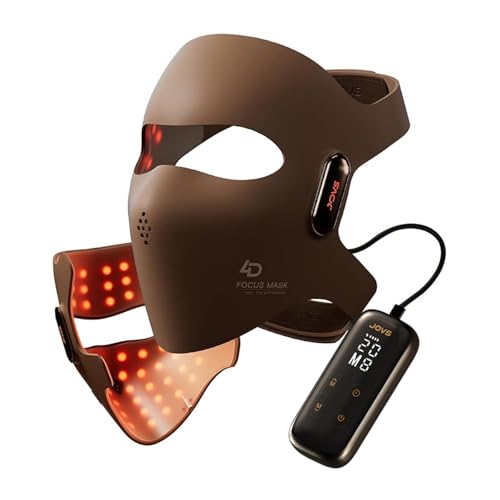
The JOVS 4D mask uses its proprietary FPT (Focused Photothermal Therapy) chip to emit ultra-narrow 20° light beams, concentrating energy six times more efficiently than standard LED arrays. This precision matters for broken capillaries because the focused beam can selectively heat the vessel wall without diffusing into surrounding tissue — exactly what you want when treating telangiectasia on thin facial skin.
The inclusion of 1064 nm long-wave infrared is a rare feature in at-home masks. While most devices top out at 850–880 nm NIR, the longer wavelength here penetrates deeper into the dermis, where larger feeder vessels may reside. Combined with the flexible curved silicone design that hugs the face, light loss is minimized, and the 140 light beams provide full coverage across the cheeks, nose, and chin — the most common capillary zones.
Users report visible improvements in fine lines and skin texture within four weeks, and the cordless, lightweight feel allows treatment while moving around. The controller design is the main drawback — the top-mounted charging cable can be awkward to route during sessions, and the thick rubber material may feel warm against the nose after longer use. Still, for targeted vascular treatment, this is the most powerful mask option available.
Why it’s great
- 1064 nm wavelength penetrates deeper for feeder vessel treatment
- 20° focused beams reduce energy scatter and improve vessel targeting
- Flexible silicone fit prevents light leakage around the nose and chin
Good to know
- Controller cable placement is awkward and the cord is short
- Thick rubber material may cause sweating at the nose during longer sessions
2. Philips Lumea 9000 Series IPL (BRI984/03)
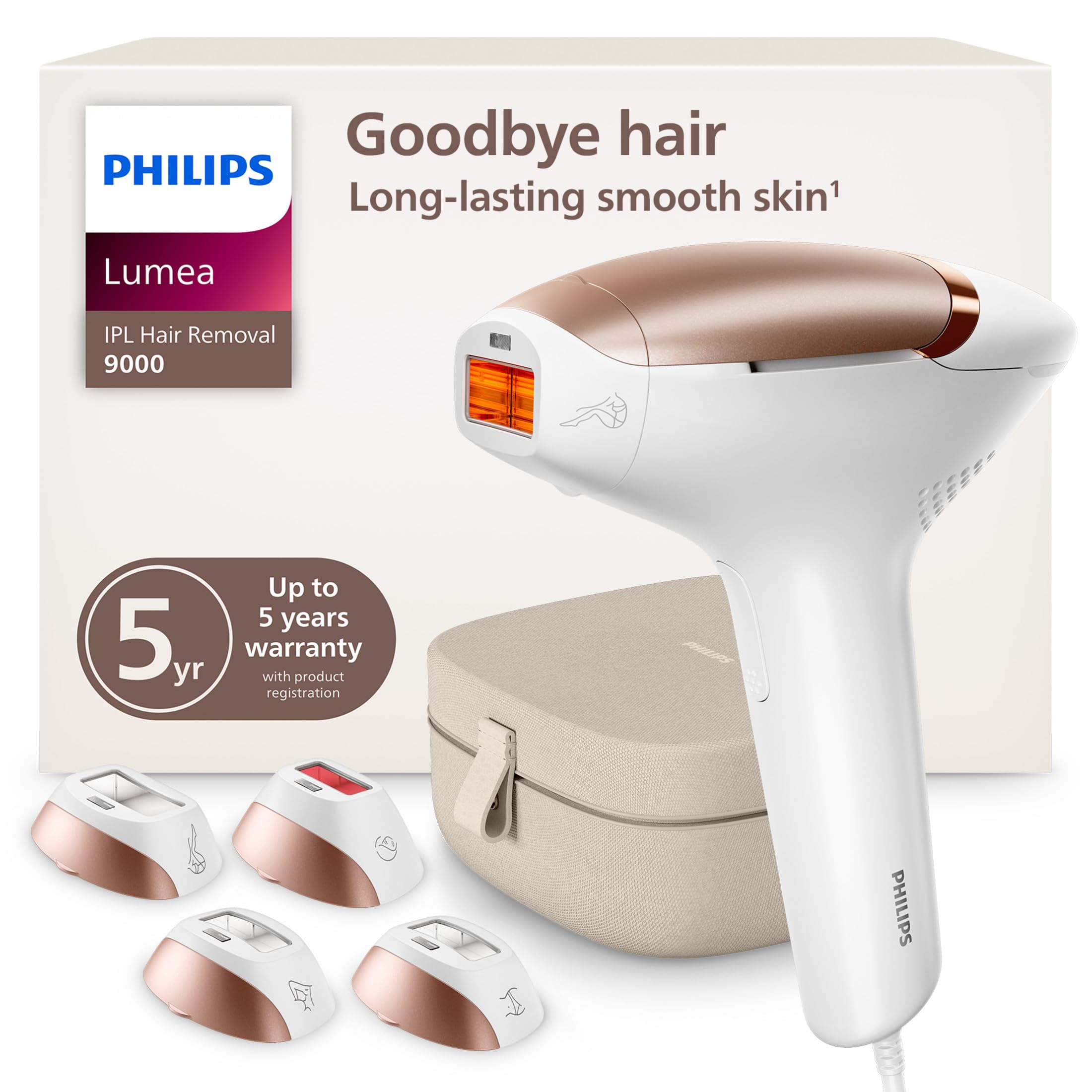
The Philips Lumea 9000 is the flagship IPL hair removal device, but its broad-spectrum pulsed light (575–1200 nm) overlaps perfectly with the absorption peak of hemoglobin. While it is marketed primarily for permanent hair reduction, many users with concurrent broken capillaries notice incidental clearance of fine facial veins after several sessions — the energy is simply strong enough (up to 6 J/cm²) to coagulate small superficial vessels.
What makes the 9000 particularly safe for capillary-prone skin is the SenseIQ system: three sensors read your skin tone and adjust the light intensity automatically, and the device will not flash unless it detects full skin contact with the correct tone. This prevents accidental burns on the fragile, redness-prone areas where capillaries tend to cluster. The four attachments include a dedicated face attachment with a smaller window (2 cm²) for precise treatment around the nose and cheekbones.
The companion app tracks your treatment schedule and provides smart reminders, which is critical because vascular clearance requires consistent bi-weekly sessions for at least eight weeks. The main limitation is that the Lumea 9000 was designed for hair, not vessels — you are relying on the incidental overlap of its wavelength range. If your primary concern is capillaries and you have light facial hair, this is a dual-purpose winner.
Why it’s great
- SenseIQ sensor prevents flashing on unsafe skin tones
- 575–1200 nm spectrum covers hemoglobin absorption peak
- Face attachment provides a small window for precise vessel targeting
Good to know
- Primarily designed for hair removal; capillary clearing is a secondary effect
- Higher intensity settings may cause mild purpura on very thin skin
3. Ulike ReGlow LED Face Mask
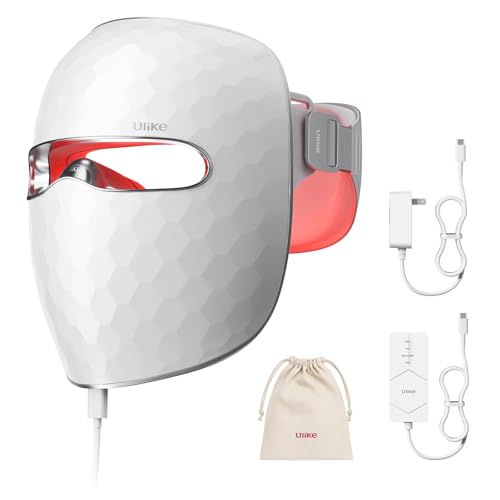
The Ulike ReGlow is the strongest all-rounder for treating facial redness and broken capillaries because it incorporates yellow light (580–590 nm) — which is the wavelength most specifically absorbed by oxyhemoglobin. While many LED masks offer only red and NIR, the ReGlow’s Glow and Firm modes use yellow in combination with red to target both the inflammation driving rosacea and the visible vessel itself.
With 272 light beads arranged in a 4-light-per-slot configuration, the irradiance is 77.4% higher than standard single-light LED masks, meaning each session delivers more therapeutic energy in the same 8-minute window. The mask hovers 1 cm off the skin to prevent overheating, and the silicone eye shields block direct light from reaching the retina — important because the yellow light is particularly intense. After four weeks, users report a 97.1% reduction in fine lines and noticeably calmer, less red skin tones.
The cordless design with a rechargeable remote makes it easy to use while moving around, and the four dedicated modes (Glow, Firm, Rejuvenate, Clear) allow you to switch between anti-aging and anti-redness treatments. The large eye shield does cover a significant portion of the mid-face, which some users feel limits light delivery directly under the eyes. However, for treating capillaries on the cheeks, nose, and chin, the coverage is excellent.
Why it’s great
- Yellow light (580–590 nm) targets oxyhemoglobin absorption peak
- High irradiance delivers more energy per session for faster vascular results
- Cordless and portable with a user-friendly remote control
Good to know
- Large eye shield covers a portion of the upper cheek area
- Must ensure remote is fully charged before first use to avoid malfunction
4. Shark CryoGlow LED Face Mask (FW312)

The Shark CryoGlow differentiates itself with the InstaChill cold technology — cryo-inspired cooling pads that sit over the under-eye area and provide three temperature-controlled chill levels. For broken capillaries located specifically under the eyes, this cooling constricts the vessels during the LED treatment, theoretically improving the coagulation effect while also reducing puffiness and inflammation. The six-minute Better Aging mode uses Red and Infrared LEDs, while the eight-minute Skin Clearing mode adds Blue light for acne-related redness.
The overall build quality is premium, with a well-padded interior, adjustable fit straps, and a remote control that displays the selected mode and session count. The under-eye cooling is genuinely effective — many users report visible tightening after a single use. However, the cooling pads are not removable, which means you cannot treat the under-eye area with LED alone if the cold sensation is uncomfortable, and the metal cooling inserts can sometimes cause a burning sensation at the lowest setting for very sensitive skin.
Clinical study data from SharkNinja claims a reduction in the appearance of fine lines and redness after 12 weeks of daily use. The main trade-off is that the CryoGlow focuses its cooling hardware on the under-eye region, leaving the rest of the face (cheeks, nose, chin) without any thermal assistance. For diffuse facial capillaries, the cooling may not be as useful as it is for periorbital concerns.
Why it’s great
- Integrated under-eye cryotherapy constricts vessels during treatment
- Three cooling temperature levels allow gradual adaptation
- Clinical study backs 12-week improvement in redness and texture
Good to know
- Cryo pads are non-removable; cannot treat under-eye with LED alone
- Cooling may feel too intense at the lowest setting for very thin skin
5. iRestore LED Face Mask
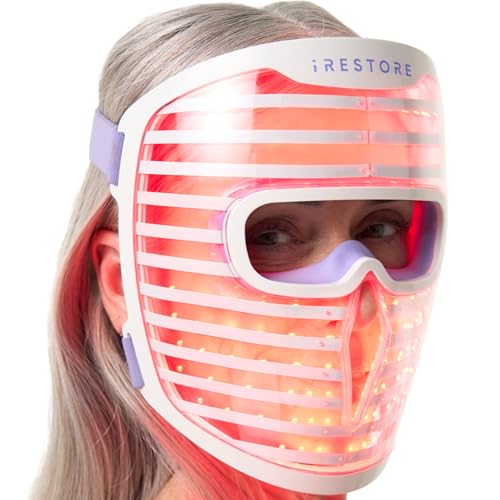
The iRestore LED Face Mask packs 360 LEDs — the highest count among the mask-style devices on this list — into a lightweight frame that hovers over the face. The three wavelengths (Red 635 nm, Infrared 830 nm, Blue 415 nm) cover the anti-aging and anti-acne spectrum, but the omission of yellow or green light means this mask is less specifically effective for hemoglobin absorption than the Ulike ReGlow. The blue wavelength is useful for calming the P. acnes bacteria that can exacerbate inflammation around broken capillaries, but it will not directly coagulate the vessels themselves.
Where the iRestore shines is its ease of use and build quality. The dual-strap design secures the mask comfortably, and the 10-minute sessions are shorter than some competitors. The mask blocks direct light from the eyes without needing separate goggles, and the portable battery pack allows cordless operation around the house. With over 500,000 customers and a dermatologist-recommended reputation, iRestore brings reliability and customer support that lower-tier brands may lack.
The strap design is a common complaint — users find the fastener system unnecessarily fiddly, especially when adjusting mid-treatment. Also, the mask’s rigid frame does not conform as closely to the face as the flexible silicone masks from JOVS or Ulike, meaning some light may escape around the edges of the nose and jawline. For general redness reduction and collagen support, this is a solid choice, but it is not the first pick for targeted capillary clearance.
Why it’s great
- 360 LEDs provide the most uniform light distribution in its class
- Portable battery pack allows cordless movement during sessions
- Dermatologist-recommended brand with strong customer support
Good to know
- Lacks yellow/green light for direct hemoglobin targeting
- Rigid frame does not conform to the nose bridge, causing light leakage
6. Philips Lumea 8000 Series IPL (BRI937/03)
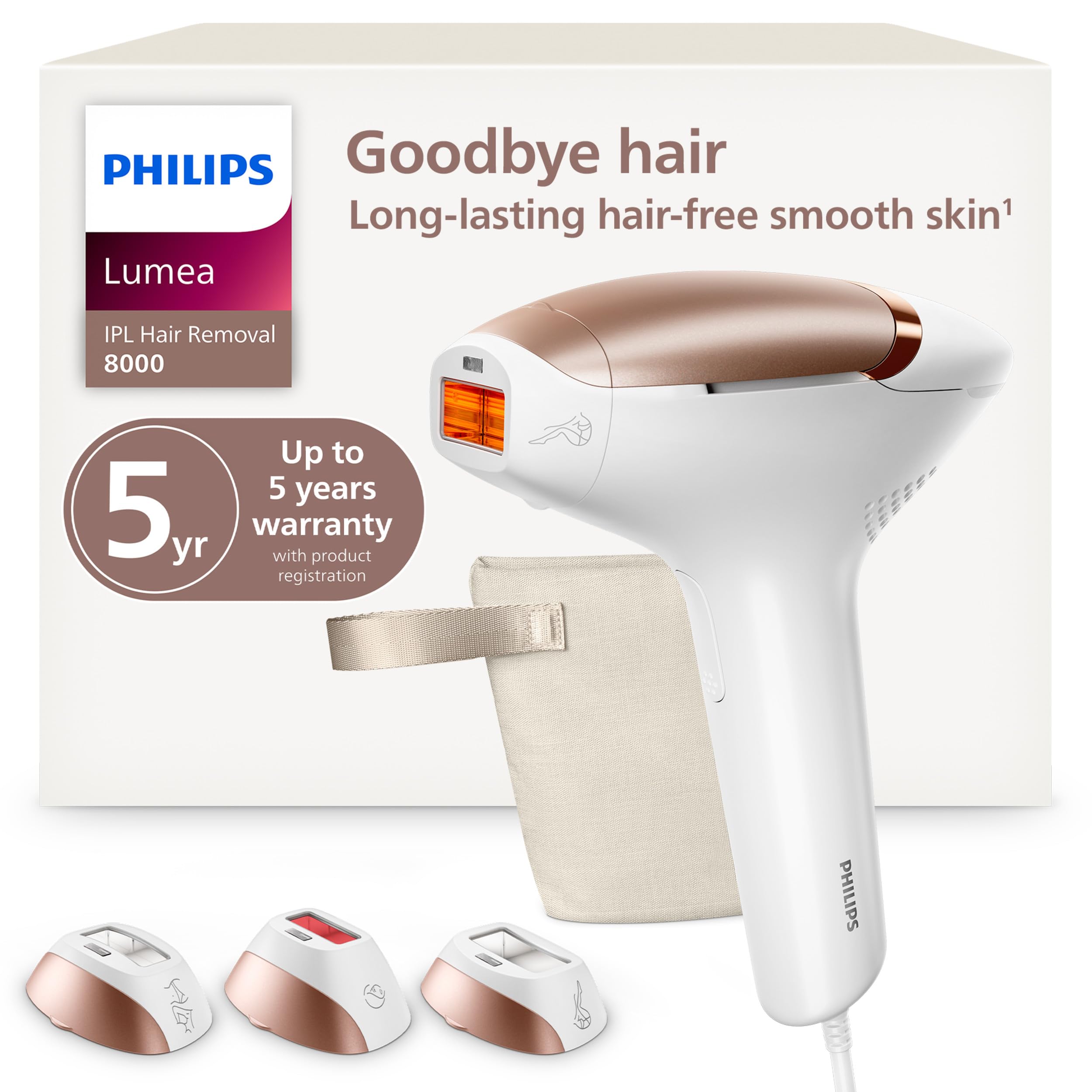
The Lumea 8000 is the slightly lower-tier sibling of the 9000, dropping one attachment (underarm-specific) and lacking the premium packaging, but retaining the same SenseIQ smart sensor technology and the identical flash energy output. For capillary treatment, this means you still get the same 575–1200 nm broad-spectrum IPL with automatic skin tone detection — just with one fewer precision guide for underarm hair. The face attachment remains in the box, which is the key piece for targeting vessels on the cheeks and jawline.
Philips claims more than 90% hair reduction in three treatments, and while the device is not FDA-cleared specifically for broken capillaries, the overlapping wavelength range means users with light skin and fine facial veins often see them fade after the same treatment sessions. The companion app is shared between the 8000 and 9000, so you get the same treatment scheduling and reminder features without paying for the top-tier extras.
The main practical difference is that the 8000 includes only three attachments (body, face, and intimate) versus the 9000’s four (body, face, bikini, underarms). For someone whose primary goal is facial capillary clearance, the missing underarm attachment is irrelevant. The trade-off is worth it if you are price-conscious and only need the face and large body areas treated.
Why it’s great
- Same IPL energy and sensor technology as the flagship 9000 at a lower cost
- Face attachment enables precise treatment of cheek and nose capillaries
- App-based reminders help maintain every-other-week treatment cadence
Good to know
- Only three attachments; missing the dedicated underarm guide
- IPL still primarily a hair device; capillary clearance is incidental
7. JMOON by Ulike ReGlow Max (Foldable Panel)
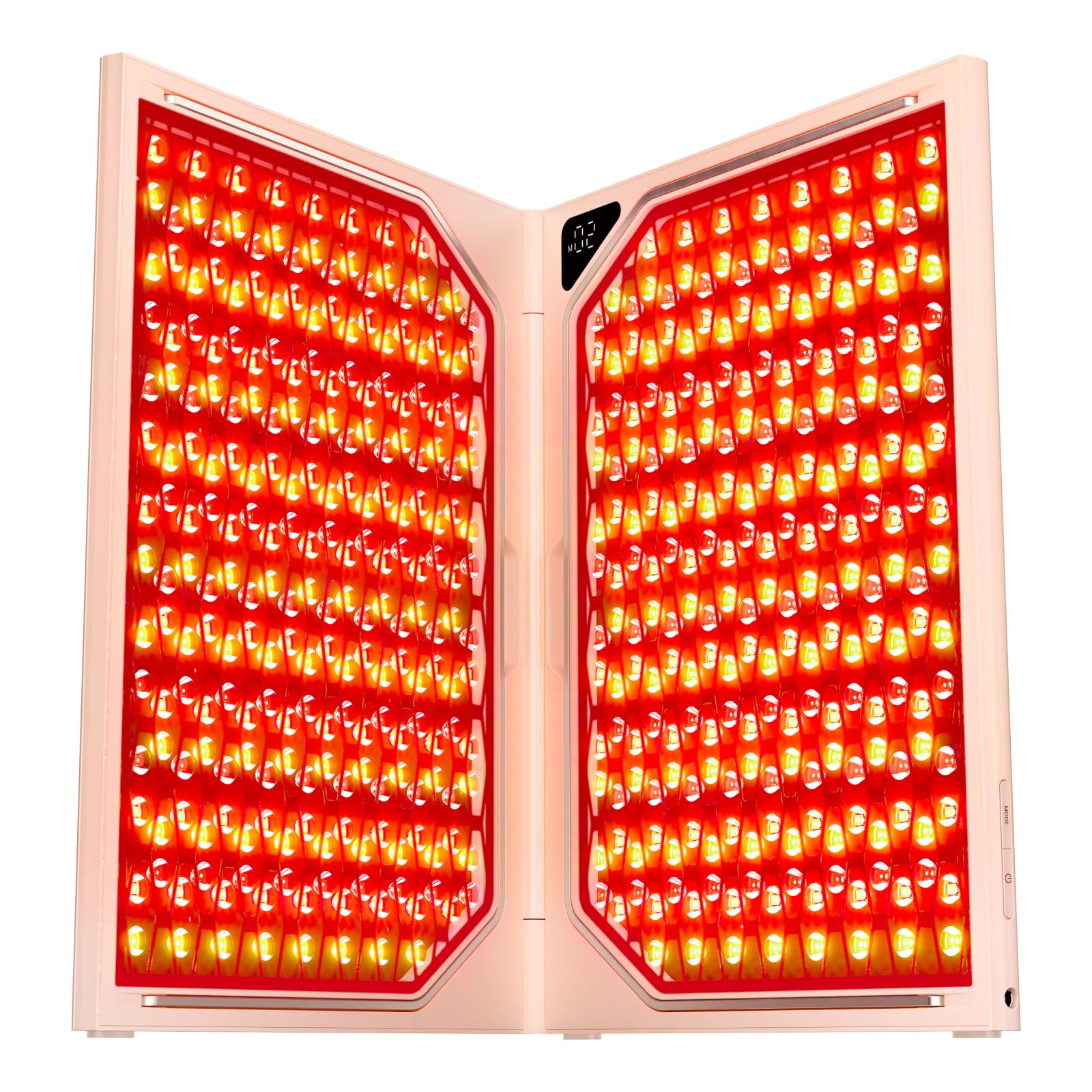
The JMOON ReGlow Max shifts the paradigm from a wear-on-face mask to a 1040 cm² foldable panel that can treat the entire face, neck, chest, and even the back in a single session. With 464 medical-grade LEDs and an advanced dual-mirror optical system that concentrates 95.26% of light energy, this device delivers the highest irradiance of any unit in this comparison. For broken capillaries that extend beyond the face — common on the chest from sun exposure or on the legs from vascular fragility — this panel is uniquely suited.
Three dedicated modes (Acne Defense, Anti-Wrinkle Recovery, and Dual Care) allow you to select the light combination appropriate for your target. The Anti-Wrinkle mode uses Red and NIR (630 nm + 850 nm), which penetrate deeper into the dermis but are less specific for hemoglobin than the yellow light in the Ulike ReGlow mask. However, because the energy density is so high, even the red/NIR combination can induce enough thermal effect in superficial vessels to cause gradual clearance over 28 days — clinical testing showed a 48.31% reduction in facial acne and a 27.78% reduction in crow’s feet.
The foldable design (it opens like a book) makes storage practical, and the stand allows you to prop it up on a table or the floor for hands-free treatment. The device must remain plugged in during use, which limits portability. A small number of user reports mention device failure after limited use, though the company’s support response has been inconsistent. For the price, the panel offers unmatched coverage area, but reliability concerns give some buyers pause.
Why it’s great
- 1040 cm² panel treats face, neck, and body in one session
- 464 LEDs deliver medical-grade irradiance for aggressive vascular targeting
- Foldable design with stand allows convenient, hands-free operation
Good to know
- Must stay plugged in; not portable or cordless
- Some reports of device failure and inconsistent customer support
8. JMOON by Ulike Microcurrent Facial Device + LED
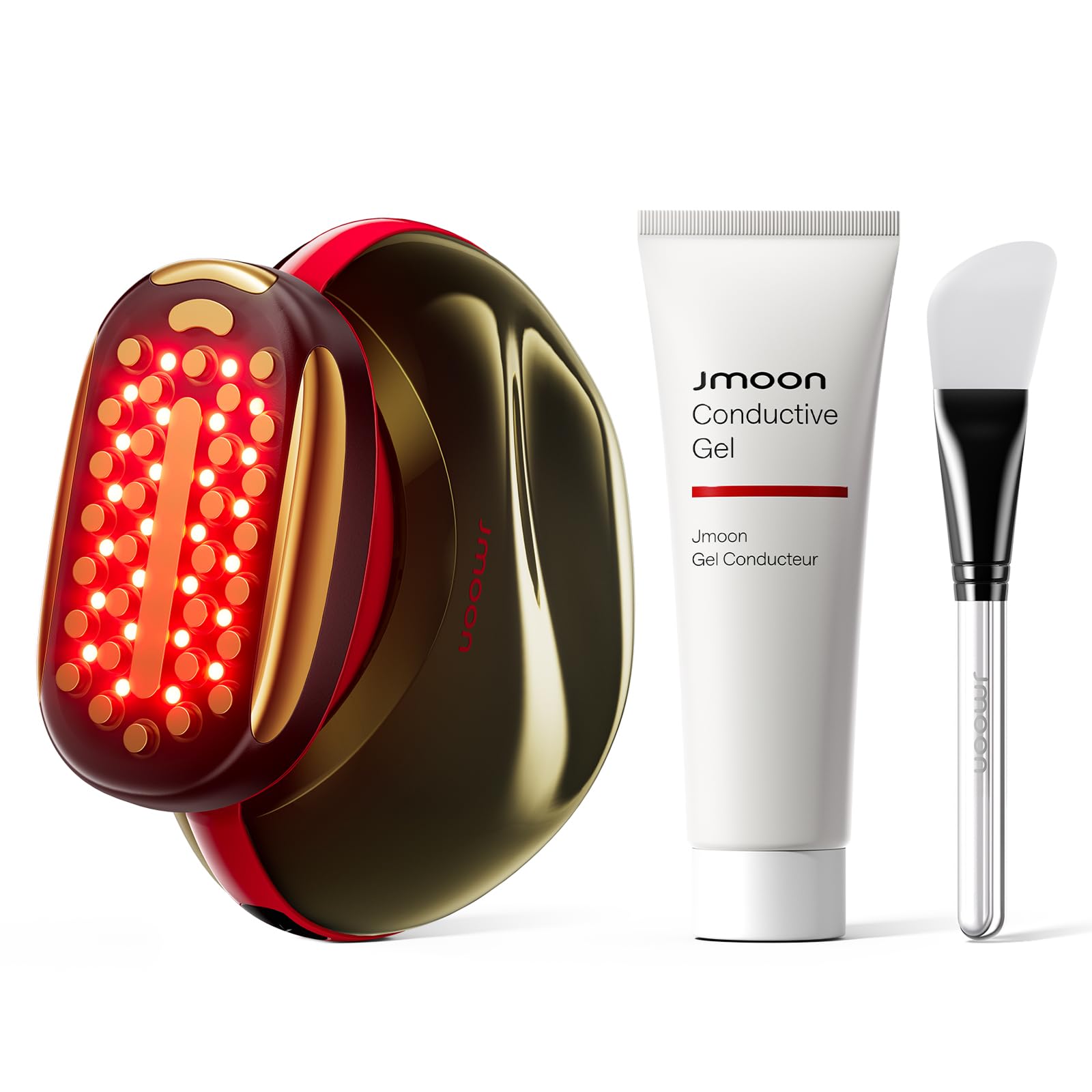
This hybrid device from JMOON combines red light therapy (635 nm + 830 nm NIR) with microcurrent stimulation in a single handheld wand. The red light component works on the same principles as the masks — stimulating mitochondrial activity in fibroblasts and promoting collagen synthesis — but the microcurrent adds a mechanical layer: it gently contracts the facial muscles, improving lymphatic drainage and reducing the fluid retention that can make broken capillaries more visible. The dual action means you can address both the vessel itself and the surrounding inflammation simultaneously.
The device has four modes and five energy levels, allowing gradual progression as the skin adapts. The included silicone brush set applies conductive gel evenly, which is essential for the microcurrent to work without irritation. Users report seeing a noticeable glow and lift after a single session, and with consistent use over six months, the skin feels firmer and more refreshed. The red light is delivered through the treatment head during the microcurrent mode, so you do not need to swap attachments or perform separate sessions — it is all-in-one.
The wand form factor means the treatment area is small (about the size of a coin), so treating the entire face takes 10–15 minutes per session. This is slower than a mask that covers everything at once. Additionally, the microcurrent gel must be washed off afterward, adding a step to the routine. For someone who wants a lifting effect along with light therapy for capillaries, this is a highly effective but slower option.
Why it’s great
- Red light therapy and microcurrent in one device for dual action
- 5 energy levels allow safe progression for sensitive capillary-prone skin
- Included silicone brush set provides hygienic gel application
Good to know
- Small treatment head requires 10–15 minutes for full face coverage
- Requires conductive gel that must be washed off post-treatment
9. VogueNow LED Light Therapy Mask
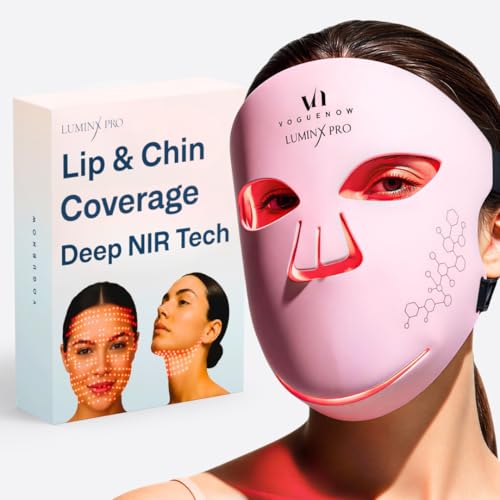
The VogueNow LED mask is an entry-level red light therapy device that includes Red (633 nm), NIR, and Blue light (460 nm). With 280 LEDs, it offers full-face coverage at a price point that makes light therapy accessible without a large upfront investment. The mask includes extended chin and lip coverage — a feature often missing in budget masks — which is useful if broken capillaries appear along the jawline or around the mouth.
Measured irradiance levels of 30–50 mW/cm² per mode are lower than the premium masks on this list, which means each 10-minute session delivers less energy to the target vessels. Users report noticeable improvements in skin smoothness and texture after consistent use, and the mask is comfortable enough to wear while walking around. However, the blue wavelength here is 460 nm, which is slightly off the optimal absorption peak for acne bacteria (470 nm), and the mask lacks yellow or green light for hemoglobin targeting, so its effect on broken capillaries will be indirect — improving the skin’s overall resilience and reducing inflammation rather than directly coagulating vessels.
The build quality is respectable for the price, with a well-made silicone frame and simple one-button light switching. The absence of an eye-blocking shield means you will see the red glow during treatment, which can be distracting. For someone new to light therapy who wants to test whether it helps their vascular concerns before committing to a premium device, this is a reasonable starting point — just temper expectations regarding capillary clearance speed.
Why it’s great
- Budget-friendly entry point with full-face LED coverage including the chin
- Comfortable, lightweight silicone frame allows use while mobile
- Simple one-button interface for easy daily use
Good to know
- 30–50 mW/cm² irradiance is lower than premium alternatives
- No yellow or green light; indirect effect on hemoglobin absorption
FAQ
Can IPL actually remove broken capillaries on the face?
Is IPL safe for rosacea with broken capillaries?
Do LED masks work for broken capillaries or only IPL?
How many IPL sessions do I need to see broken capillaries fade?
Can I use IPL on broken capillaries if I have dark skin?
Final Thoughts: The Verdict
For most users, the best at home ipl for broken capillaries winner is the Ulike ReGlow LED Face Mask because it is the only mask that includes yellow light specifically calibrated for hemoglobin absorption, combined with high irradiance and a cordless design that makes daily use effortless. If you want direct vessel coagulation plus incidental hair removal and are willing to use a handheld wand, grab the Philips Lumea 9000 Series. And for treating capillaries that extend beyond the face onto the neck, chest, or body, nothing beats the coverage area and medical-grade intensity of the JMOON ReGlow Max panel.

Mo Maruf
I created WellFizz to bridge the gap between vague wellness advice and actionable solutions. My mission is simple: to decode the research and give you practical tools you can actually use.
Beyond the data, I am a passionate traveler. I believe that stepping away from the screen to explore new environments is essential for mental clarity and physical vitality.