Our readers keep the lights on and my smoothie glass nicely filled. As an Amazon Associate, I earn from qualifying purchases.
That persistent bloating after meals, the afternoon brain fog that derails your productivity, or the skin flare-ups that appear with no obvious cause—these are the classic, frustrating signals of a body reacting poorly to something on your plate. Without reliable data, you are left to play an exhausting game of dietary roulette. The right testing kit cuts through that noise by mapping your body’s specific responses to hundreds of foods and ingredients, turning guesswork into a clear, actionable plan.
I’m Mohammad Maruf — the founder and writer behind WellFizz. I analyze lab methodologies, sample collection types, panel sizes, and real-world user data to separate the clinically-grounded tests from the bioenergetic scans that leave you with more questions than answers.
After reviewing dozens of kits, I have compiled this deep-dive guide to the best at home food sensitivity testing kits on the market today, evaluating everything from IgG antibody analysis to hair-based screenings and the sheer scope of items tested.
How To Choose The Best At Home Food Sensitivity Testing Kits
Not all food sensitivity tests are created equal. Some measure IgG antibodies from a blood sample, which is widely studied in the context of delayed food reactions. Others use hair analysis to assess bioenergetic responses. Understanding the methodology, the panel size, and the lab certification is essential to getting results you can trust.
IgG vs. IgE vs. Bioenergetic Hair Analysis
IgG tests look for immunoglobulin G antibodies, which are associated with delayed food sensitivities (symptoms appearing hours later). IgE tests, on the other hand, detect immediate allergic reactions. Hair analysis kits operate on a different principle entirely, measuring energetic frequency responses. If you have clear allergic reactions, consult a doctor; for chronic, vague symptoms, an IgG test is the more clinically standard approach.
Panel Size and Item Relevance
A test that screens 100 foods is convenient but may miss niche ingredients you consume daily. Panels exceeding 1,000 items often include spices, drinks, vitamins, and environmental factors. More rows of data mean a more granular picture, but the quality of the lab analysis matters just as much as the raw count.
Lab Certification and Physician Oversight
Look for the CLIA certification label, which indicates the lab meets federal quality standards for diagnostic testing. Some premium kits also have a board-certified physician review your results, lending a layer of clinical credibility that direct-to-consumer reports lack.
Quick Comparison
On smaller screens, swipe sideways to see the full table.
| Model | Category | Best For | Key Spec | Amazon |
|---|---|---|---|---|
| Everlywell Food Sensitivity Test | IgG Blood | Clinically-standard IgG analysis | 96 food items tested | Amazon |
| 5Strands Intolerance & Heavy Metal Test | Hair Analysis | Maximum item count & environmentals | 1,119 items screened | Amazon |
| AllergyHero Comprehensive Test | IgG Blood | Detailed protein-specific breakdown | 286 foods analyzed | Amazon |
| Verisana Food Sensitivity Complete | IgG Blood | Physician-reviewed results | 240 foods screened | Amazon |
| AFIL Food Sensitivity Test | Hair Analysis | Non-invasive, family-run brand | 1,000+ items screened | Amazon |
| UCARI Personal Sensitivity Kit (1,500+) | Hair Analysis | Largest panel including environmental factors | 1,500+ items screened | Amazon |
| UCARI Personal Sensitivity Profile (1,100+) | Hair Analysis | Entry-level comprehensive hair screening | 1,100+ food & lifestyle factors | Amazon |
| Verisana Food Allergy Test (44 Food) | IgE Blood | Classic allergy detection for common foods | 44 common foods via IgE | Amazon |
| Everlywell Metabolism & Stress Hormone | Blood Collection | Hormonal health alongside food insight | 3 hormones measured | Amazon |
In‑Depth Reviews
1. Everlywell Food Sensitivity Test
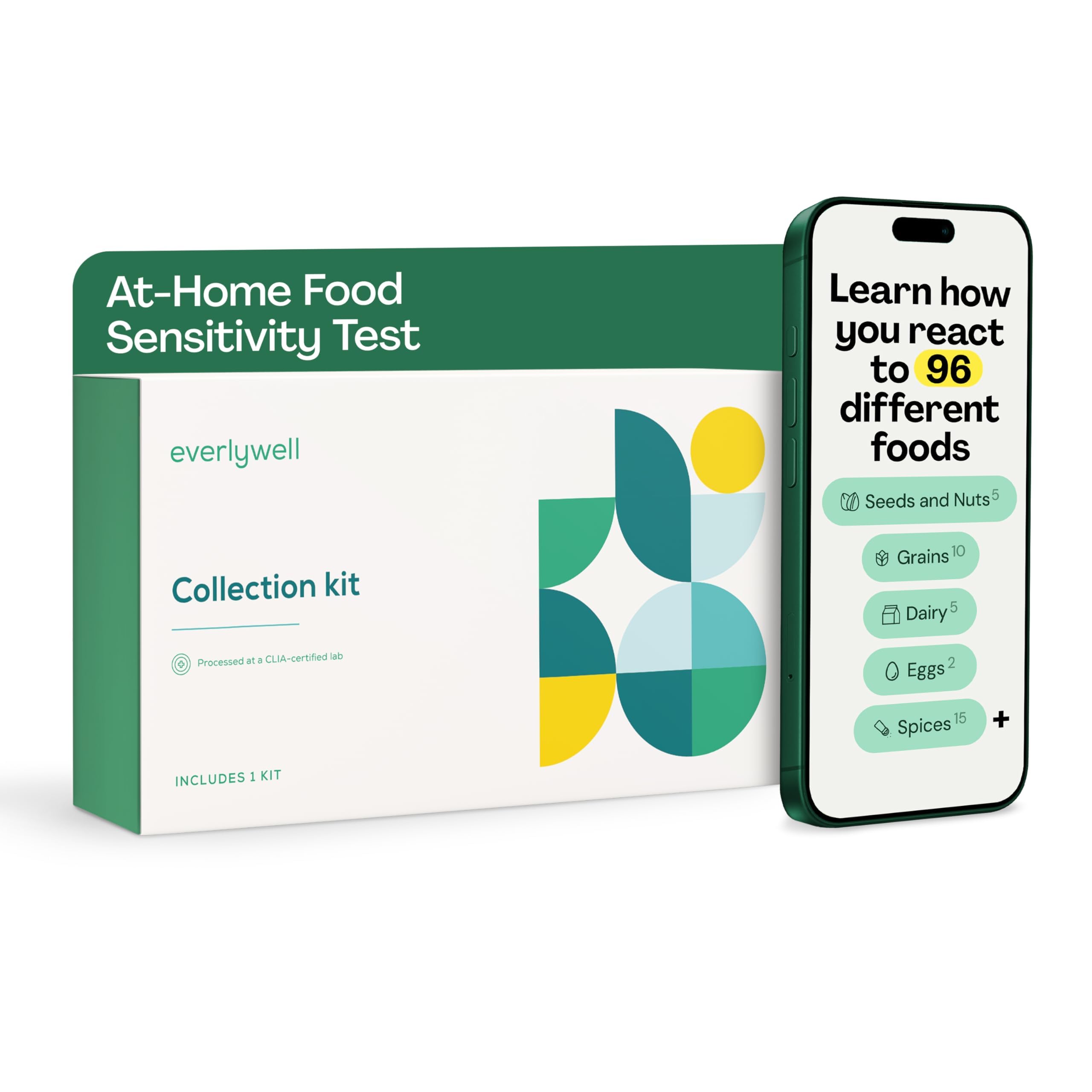
Everlywell stands out as the most clinically-standard option on this list. It measures IgG antibody reactivity to 96 different foods using a finger-prick blood sample, which is then analyzed in a CLIA-certified lab. This is important because IgG testing has a strong body of peer-reviewed research tying it to delayed food sensitivities—making it a reliable starting point for anyone dealing with bloating, migraines, or chronic fatigue.
The results are presented in a clear, color-coded dashboard that categorizes each food into one of three reactivity levels: normal, moderate, or high. Many users report that their high-reactivity foods matched their long-standing suspicions—like gluten triggering migraines or dairy causing digestive distress—while the moderate category provided new leads they had never considered. The process takes about 5 to 7 business days from sample receipt.
One major advantage is that a board-certified physician reviews your results, adding a layer of medical oversight not found in most direct-to-consumer kits. The 96-item panel is narrower than some competitors, but the specificity of the IgG measurement and the lab’s reputation for accuracy make this the most balanced choice for most adults.
Why it’s great
- Clinically standard IgG antibody testing method
- CLIA-certified lab with physician oversight
- Actionable, easy-to-read digital dashboard
Good to know
- Requires a finger-prick blood sample
- Panel is limited to 96 foods
2. 5Strands Food Intolerance, Environmental & Heavy Metal Sensitivity Test
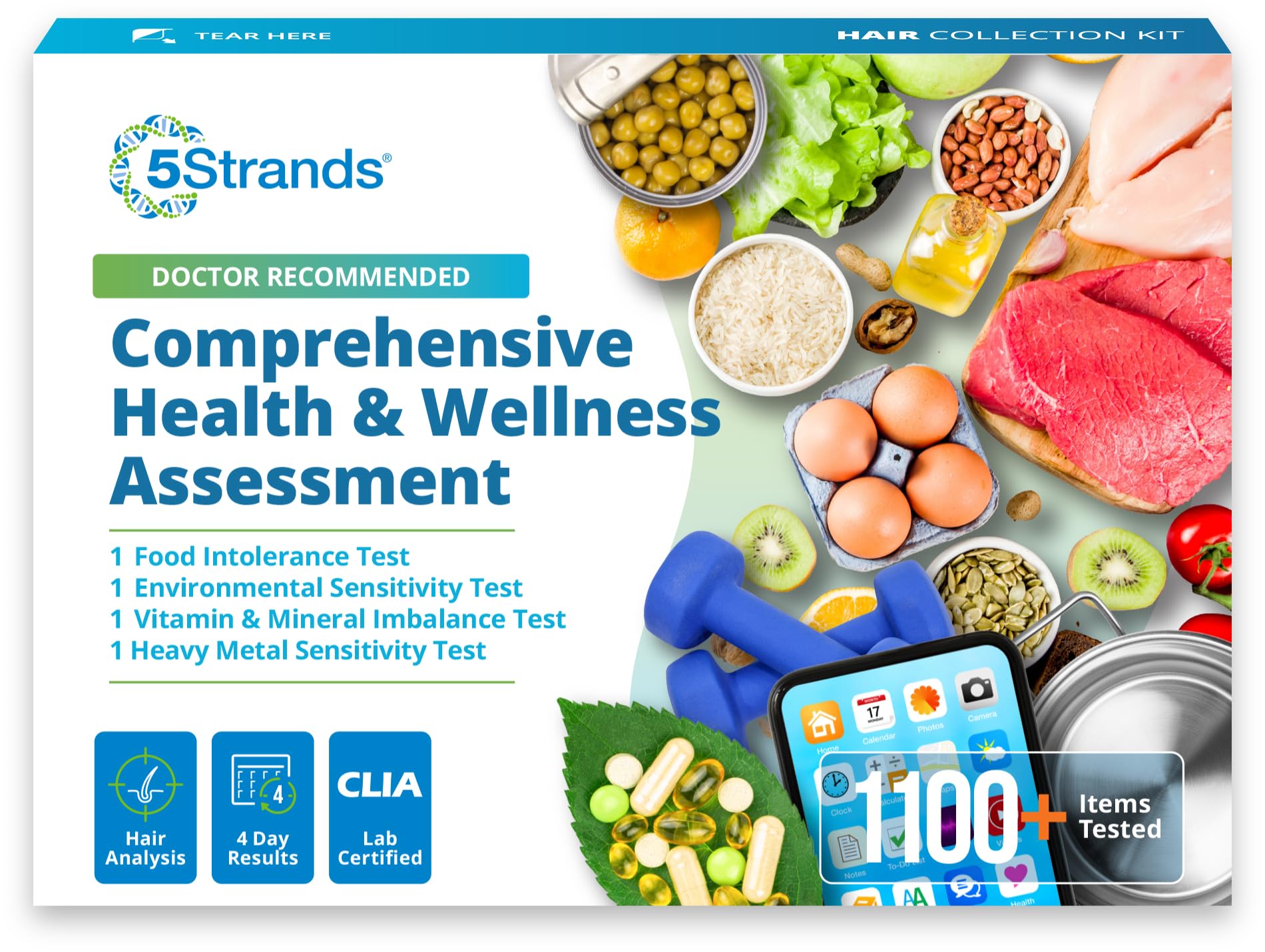
If you want the broadest sweep possible—beyond just food—the 5Strands test is the heavyweight champion. It screens 658 food ingredients, 282 environmental exposures (dust, pollen, fabrics), 67 heavy metals and minerals, and 112 key vitamins and minerals, totaling 1,119 items. The analysis is done on a hair sample, making it completely non-invasive and suitable for both adults and children.
User reports are divided but telling. Many users describe life-changing results: cleared skin, more energy, resolved bloating. Others note that the volume of data can feel overwhelming, especially when moderate reactions populate most of the list. The test categorizes results into four severity levels, which helps you prioritize which items to eliminate first.
It’s important to understand that 5Strands uses bioenergetic hair analysis rather than IgG blood testing. This is not a diagnostic test, but a wellness screening tool. For users who have exhausted standard medical routes and want a massive dataset to explore correlations, this kit offers unmatched breadth—just be prepared to do some self-experimentation to validate the findings.
Why it’s great
- Huge panel covering foods, environmentals, heavy metals, and nutrients
- Non-invasive hair sample collection
- Results within 4 days of lab receipt
Good to know
- Not a CLIA-certified diagnostic test
- Some users report contradictory findings
3. AllergyHero Comprehensive Food Sensitivity Test Kit

AllergyHero takes the IgG testing model and expands the panel significantly—286 foods and beverages, including specific breakdowns like egg whites versus yolks and milk proteins (casein vs. whey). This level of granularity is rare among blood-based kits and is a game-changer for people who react to certain components of a food but not the whole category.
The sample collection is a simple finger prick, and the lab analysis is quick—many users report receiving their detailed digital results within 2 to 5 business days of sample arrival. The report is organized into clear sections, listing high, moderate, and mild reactive foods. Several reviewers confirmed the accuracy by cross-referencing with elimination diets: removing the flagged high-reactivity items resolved bloating and digestive discomfort within days.
It is worth noting that AllergyHero explicitly states its test measures IgG antibodies for intolerance, not IgE for allergies—so it is not designed for the severe anaphylactic reactions. But for the chronic, low-grade symptoms that plague so many of us, the 286-item panel provides a comprehensive starting point that rivals what some functional medicine practitioners order through private labs.
Why it’s great
- Broad 286-item food panel with protein-specific breakdowns
- Fast turnaround on results
- High accuracy confirmed by elimination diet reviews
Good to know
- Requires a finger-prick blood sample
- Not intended for diagnosing severe allergies
4. Verisana Food Sensitivity Complete Test – 240 Foods
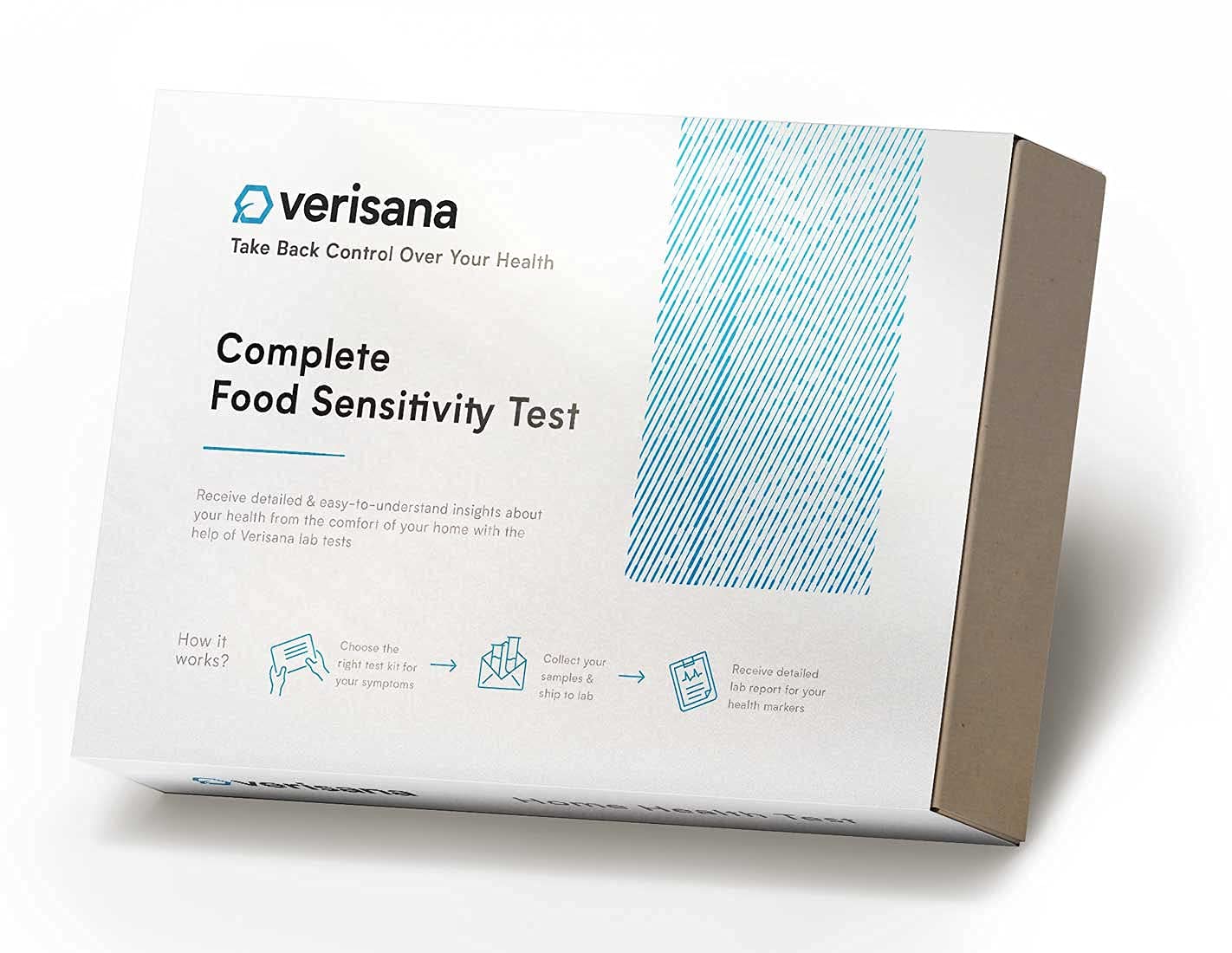
Verisana offers a middle-ground approach: a solid 240-food IgG panel analyzed by a CLIA-certified lab, with the added benefit of a board-certified physician reviewing each result. This medical oversight is reassuring if you plan to share your report with your primary care provider or a registered dietitian to design an elimination diet.
The kit uses a blood sample, which some users initially mistake for a saliva test. The instructions are clear, and the packing is secure. Results arrive via a secure web portal within a few business days. The report classifies foods into no reaction, mild, moderate, and strong reaction categories, making prioritization straightforward.
User feedback is overwhelmingly positive, with many noting that the test confirmed long-suspected triggers like dairy or gluten, while also surfacing unexpected items like mozzarella or specific spices. The price point places it in the premium tier, but the combination of a solid panel size, physician review, and CLIA-certified lab analysis justifies the investment for those who want medically credible data.
Why it’s great
- 240-item IgG panel with CLIA-certified lab analysis
- Results reviewed by a board-certified physician
- Clear, actionable severity categories
Good to know
- Requires a blood sample (finger prick)
- Not available in NY, NJ, RI, MD
5. AFIL Food Sensitivity Test – 1,000+ Items
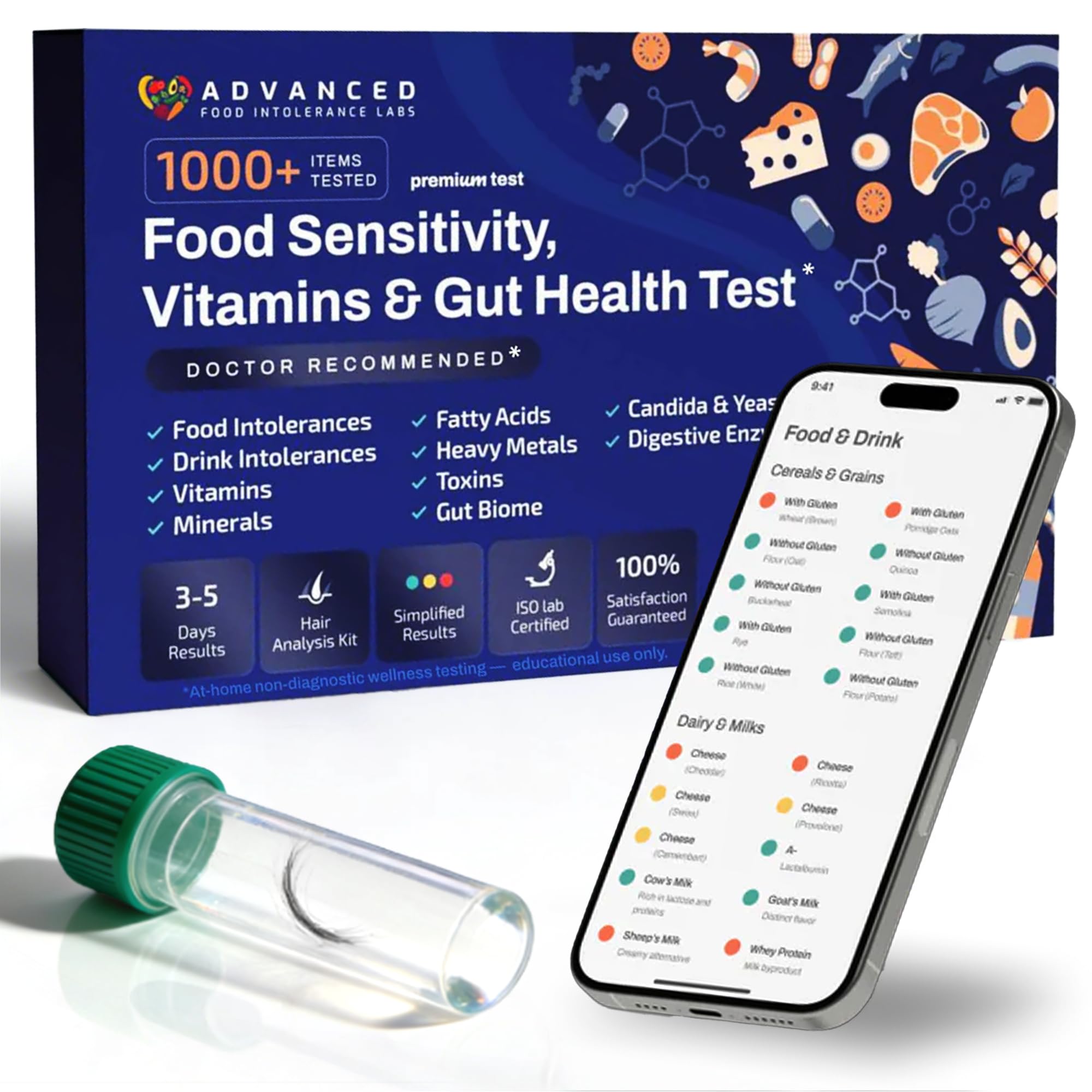
AFIL (Advanced Food Intolerance Labs) takes the pain out of sample collection. You simply snip 10 strands of hair—colored, body, or facial hair works—and mail it in with the prepaid envelope. This makes it an excellent choice for children or adults who are needle-averse. The test screens over 1,000 items including foods, drinks, vitamins, and gut health markers.
The report arrives within 72 hours of lab receipt, presented in an interactive, clickable digital format. Users report that the color-coded system makes it easy to spot which items are flagged as high-response. Some reviewers note that they eliminated high-reactive foods and saw noticeable improvements in digestion and energy within a couple of weeks.
It is crucial to note that AFIL uses a bioenergetic hair scan methodology, not blood-based IgG testing. The company is transparent about this—the test is a “wellness indicator,” not a medical diagnostic. For the price point, the data security and ISO/IEC 27001 certification for data protection are standout features, especially if privacy is a concern.
Why it’s great
- Completely non-invasive hair sample collection
- 72-hour turnaround for digital results
- Data protected by ISO/IEC 27001 certification
Good to know
- Bioenergetic scan, not IgG blood test
- Some users question accuracy vs. known dietary triggers
6. UCARI Personal Sensitivity Profiling Test – 1,500+ Items

UCARI’s top-tier kit screens over 1,500 items—foods, additives, skincare ingredients, and environmental factors—making it the largest single panel in this lineup. The hair sample collection is simple and non-invasive, and the US-based lab returns a secure, color-coded digital report within about 2 business days after receiving your sample.
Real-world results are a mixed bag. One user with chronic eye irritation that stumped six doctors found a severe intolerance to potato on the report, eliminated it, and saw improvement. Another user received a massive list of 24 severe intolerances for items they never consumed, plus 140 moderate reactions, which they found nearly impossible to act on.
The sheer volume of data can be a double-edged sword. If you are methodical and willing to test one elimination at a time, the UCARI panel can surface surprising connections. But if you are looking for a concise, easy-to-action list, you may find the 1,500+ item report overwhelming. It is undeniably thorough, but be prepared to invest time in the follow-up diet work.
Why it’s great
- Largest panel in this guide at 1,500+ items
- Non-invasive hair collection suitable for adults and children
- Very fast 2-business-day turnaround for results
Good to know
- Bioenergetic analysis, not a diagnostic test
- Large dataset may feel overwhelming to sort through
7. UCARI Personal Sensitivity Profile Kit – 1,100+ Factors
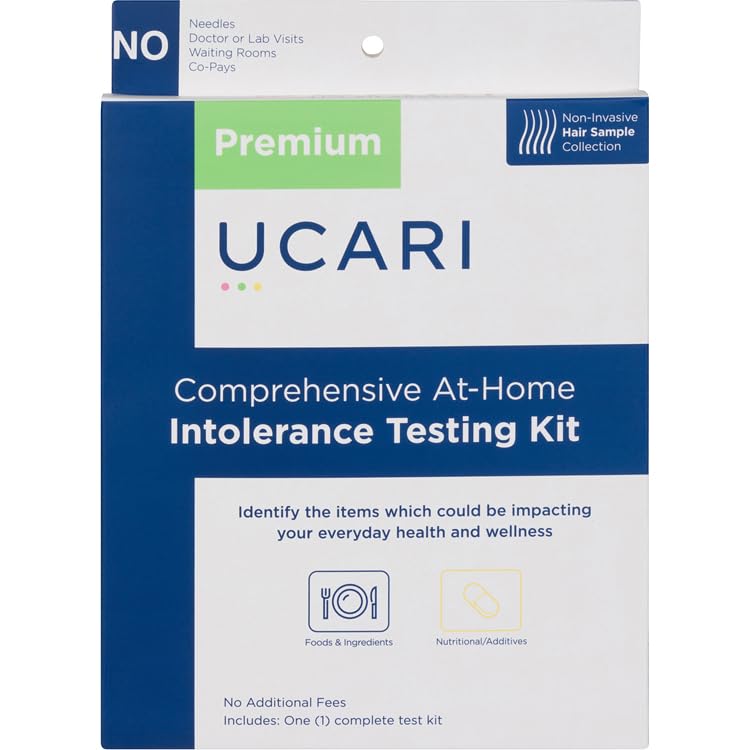
This UCARI kit is the entry-level version of the 1,500+ item test, screening over 1,100 foods, additives, and lifestyle factors. It uses the same hair sample collection method, making it a low-commitment way to dip your toes into bioenergetic sensitivity screening without paying for the full panel.
Customers consistently praise the ease of the 4-step process: register, snip hair, place in bag, and mail. The results are delivered in a structured, color-coded format that clearly separates tolerant and intolerant items. Some users report that the test confirmed long-held suspicions, while others note that it flagged items they consume heavily without issue—raising the usual questions about bioenergetic testing reliability.
At a price point that undercuts many blood-based IgG kits, this is a low-risk option for anyone curious about at-home testing but not ready to commit to a premium blood test. Just remember that like all hair-based screens, it is a wellness tool, not a medical diagnosis. Use it to generate hypotheses, then test them through elimination and reintroduction.
Why it’s great
- Very simple hair sample collection process
- Tests over 1,100 items including lifestyle factors
- Budget-friendly entry point for hair analysis
Good to know
- Not a diagnostic test; results are bioenergetic indicators
- Some users report false positives for frequently consumed items
8. Verisana Food Allergy Test – 44 Foods (IgE)
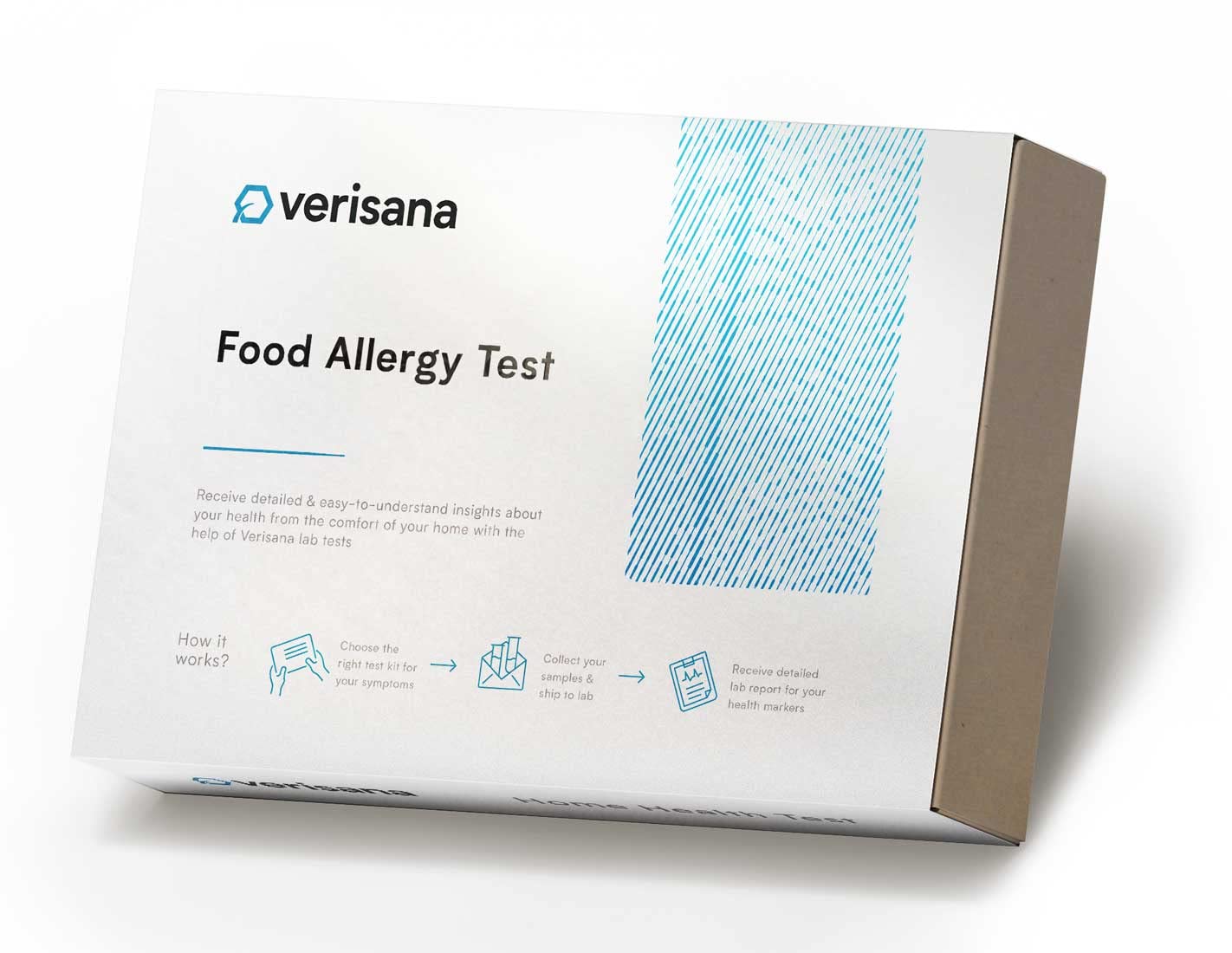
Unlike the previous kits, the Verisana 44-Food test measures IgE antibodies—the immunoglobulins responsible for immediate allergic reactions. This is an important distinction: if you experience hives, swelling, or anaphylaxis after eating certain foods, this test is more appropriate than an IgG or hair-based screen.
The panel covers 44 common allergenic foods including dairy, egg, various meats, fish, grains, fruits, vegetables, and nuts. The sample is analyzed in a CLIA-certified lab using quantitative ELISA technology—a well-established laboratory method. Users report that the kit is professional, easy to use, and delivers quick results that match their known reactions.
One major limitation: this test is not available in New York, Rhode Island, New Jersey, or Maryland due to state regulations on direct-to-consumer laboratory testing. If you are looking to confirm a suspected food allergy before seeing an allergist, this is a convenient starting point. But for chronic, non-immediate symptoms like bloating or fatigue, stick with an IgG or hair-based test.
Why it’s great
- Measures IgE antibodies for immediate allergy detection
- CLIA-certified lab using quantitative ELISA analysis
- Professional, easy-to-follow kit design
Good to know
- Limited to 44 common foods
- Not available in NY, NJ, RI, MD
9. Everlywell At-Home Metabolism and Stress Hormone Test
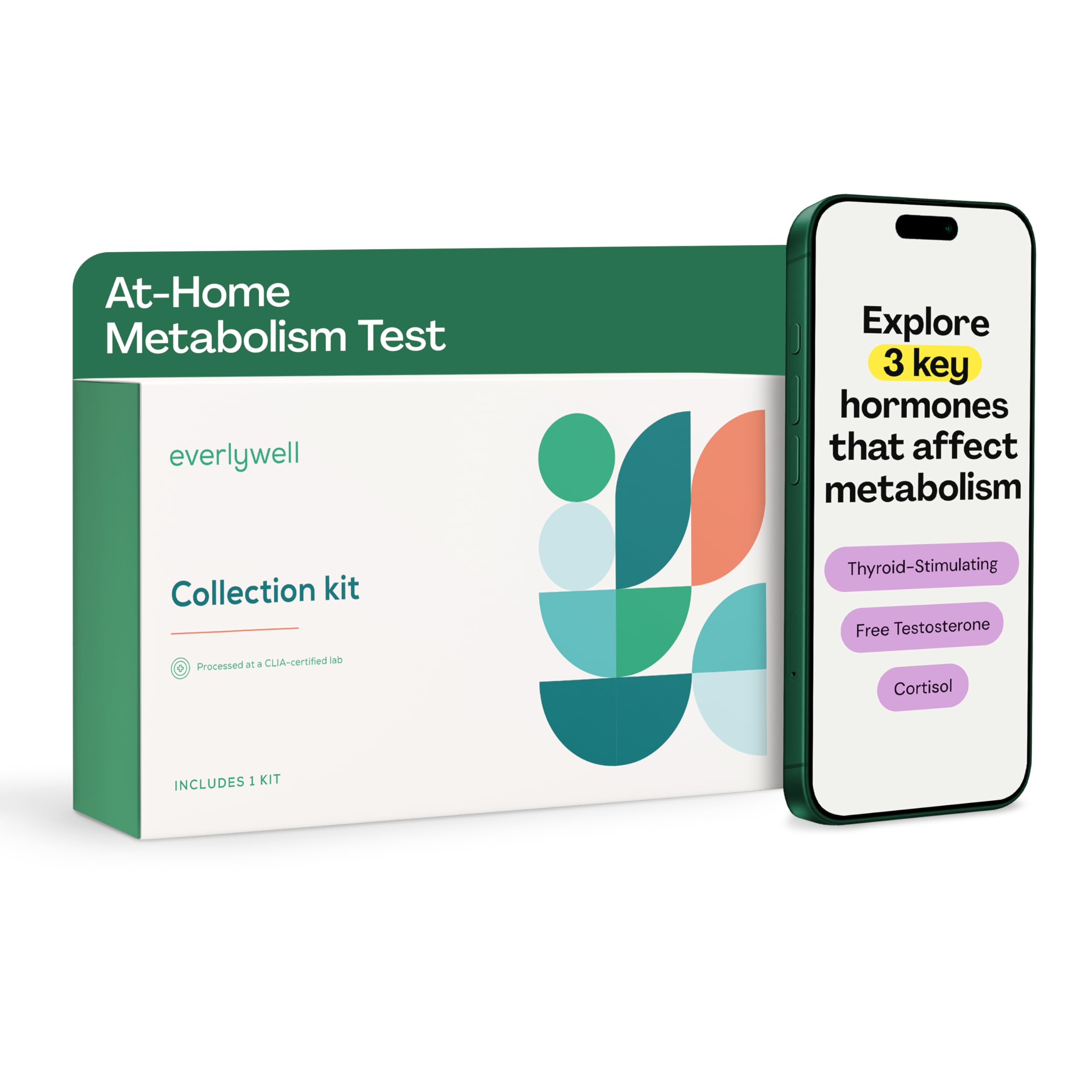
While not strictly a food sensitivity test, this Everlywell kit measures cortisol and other hormones that directly influence metabolism, weight, and energy levels—factors that often mimic or compound food sensitivity symptoms. If you have addressed dietary triggers but still feel fatigued or struggle with weight management, this test provides a different data point.
The kit collects a small blood sample and ships it to a CLIA-certified lab. Results are available within 5 to 7 business days and are reviewed by a board-certified physician. The dashboard presents your hormone levels in context, helping you understand if your symptoms might be driven by stress or metabolic issues rather than (or in addition to) food reactions.
It is HSA/FSA eligible, and the finger-prick collection is straightforward. The major caveat: it is not available in New York, and test takers must be 18 or older. For a complete wellness picture, combining this hormone test with a food sensitivity kit from this list gives you both the dietary and metabolic angles.
Why it’s great
- Measures key hormones affecting energy and metabolism
- CLIA-certified lab with physician-reviewed results
- HSA/FSA eligible
Good to know
- Not a food sensitivity test per se
- Not available in New York
FAQ
What is the difference between a food sensitivity and a food allergy?
Can an at-home food sensitivity test replace a doctor’s allergy test?
How do I use my results to plan an elimination diet?
Are hair-based food sensitivity tests accurate?
Final Thoughts: The Verdict
For most users, the best at home food sensitivity testing kits winner is the Everlywell Food Sensitivity Test because it combines the clinically-standard IgG methodology with a CLIA-certified lab and physician-reviewed results—offering the best balance of accuracy, ease, and actionable data. If you want the broadest possible sweep, grab the 5Strands Intolerance & Heavy Metal Test to screen over 1,100 items across foods, environmentals, and nutrients. And for the most granular food panel with protein-specific breakdowns, nothing beats the AllergyHero Comprehensive Test.

Mo Maruf
I created WellFizz to bridge the gap between vague wellness advice and actionable solutions. My mission is simple: to decode the research and give you practical tools you can actually use.
Beyond the data, I am a passionate traveler. I believe that stepping away from the screen to explore new environments is essential for mental clarity and physical vitality.