Our readers keep the lights on and my smoothie glass nicely filled. As an Amazon Associate, I earn from qualifying purchases.
For anyone trying to conceive, the daily chore of temperature-taking or interpreting faint lines on a test strip can turn a hopeful journey into a source of anxiety. The right device eliminates that guesswork by measuring actual hormone levels or basal body temperature with clinical precision, saving you months of confusion and helping you pinpoint your true fertile window.
I’m Mohammad Maruf — the founder and writer behind WellFizz. I’ve spent over 1,200 hours analyzing fertility tracking hardware, from quantitative hormone analyzers to wearable BBT sensors, comparing their detection methods, accuracy claims, and real-world reliability across all cycle types.
Whether you need to confirm ovulation with lab-grade data or simply want a comfortable wearable that tracks your cycle while you sleep, finding the right best at home fertility tracker starts with understanding which sensor technology matches your body’s unique rhythm and your daily routine.
How To Choose The Best At Home Fertility Tracker
Fertility trackers fall into two major camps: quantitative hormone analyzers that measure actual levels of LH, estrogen, and PdG in urine, and BBT wearables that detect your temperature shift after ovulation. A third hybrid category includes smart rings that add cycle-aware features alongside general health metrics. Your choice determines how many minutes per day you’ll spend testing and whether you can confirm or just predict ovulation.
Hormone Detection: Quantitative vs. Qualitative
Standard ovulation predictor kits (OPKs) provide a binary yes/no for LH surges, which can miss fertile windows for women with PCOS, where LH may be chronically elevated. Quantitative analyzers like Mira and Inito measure actual concentration values, revealing subtle estrogen rises that precede LH surges and confirming ovulation with PdG (progesterone metabolite) readings. This granular data helps track the full 6-day fertile window and is far more useful for irregular cycles.
Wearable Temperature: BBT Without the Alarm
Basal body temperature tracking is the oldest fertility awareness method, but traditional oral thermometers require waking at the same time every morning before any movement or drinking. Wearable trackers like Tempdrop and Daysy sample your temperature continuously during sleep, then use proprietary algorithms to adjust for nighttime disturbances, making them ideal for women with erratic sleep schedules or early-morning commitments.
Recurring Costs and Total Ownership
The upfront price of a monitor is only half the picture. Quantitative systems require proprietary test wands or strips that cost between and per test; testing during both the follicular and luteal phases across a full cycle can mean 20–30 tests per month. BBT wearables and devices like Kegg or Daysy have zero ongoing costs, making them far more economical over 6 to 12 months of tracking. Smart rings like Oura add a monthly subscription for full cycle insights.
Quick Comparison
On smaller screens, swipe sideways to see the full table.
| Model | Category | Best For | Key Spec | Amazon |
|---|---|---|---|---|
| Mira Fertility MAX | Quantitative Analyzer | PCOS & Triple Hormone Data | Fluorescent detection, 99.5% accuracy | Amazon |
| Inito Fertility Monitor | Quantitative Analyzer | Wireless 4-Hormone Tracking | Spectral Mapping, all devices | Amazon |
| Kegg Fertility Tracker | Cervical Fluid Sensor | Zero Recurring Costs | Bioimpedance, no strips | Amazon |
| Tempdrop Wearable Ovulation Tracker | Wearable BBT | Late Sleepers & Irregular Schedules | 98.6% fertile window accuracy | Amazon |
| Daysy Fertility Tracker | BBT Thermometer | Family Planning Without Hormones | 99.4% accuracy, Germany-made | Amazon |
| Proov Complete Fertility Test Kit | Qualitative Test Strips | 4-Hormone Snapshot on a Budget | 20 tests, FSH + LH + E3G + PdG | Amazon |
| Oura Ring 4 | Smart Ring | Sleep & Recovery + Cycle Tracking | Smart Sensing, 8-day battery | Amazon |
| RingConn Gen 2 | Smart Ring | No-Subscription Sleep Apnea Monitoring | 12-day battery, 100m waterproof | Amazon |
| Apple Watch Series 8 | Multifunction Watch | General Health & Wrist-Based Temp Sensing | Temperature sensor, ECG, SpO2 | Amazon |
In‑Depth Reviews
1. Mira Fertility MAX
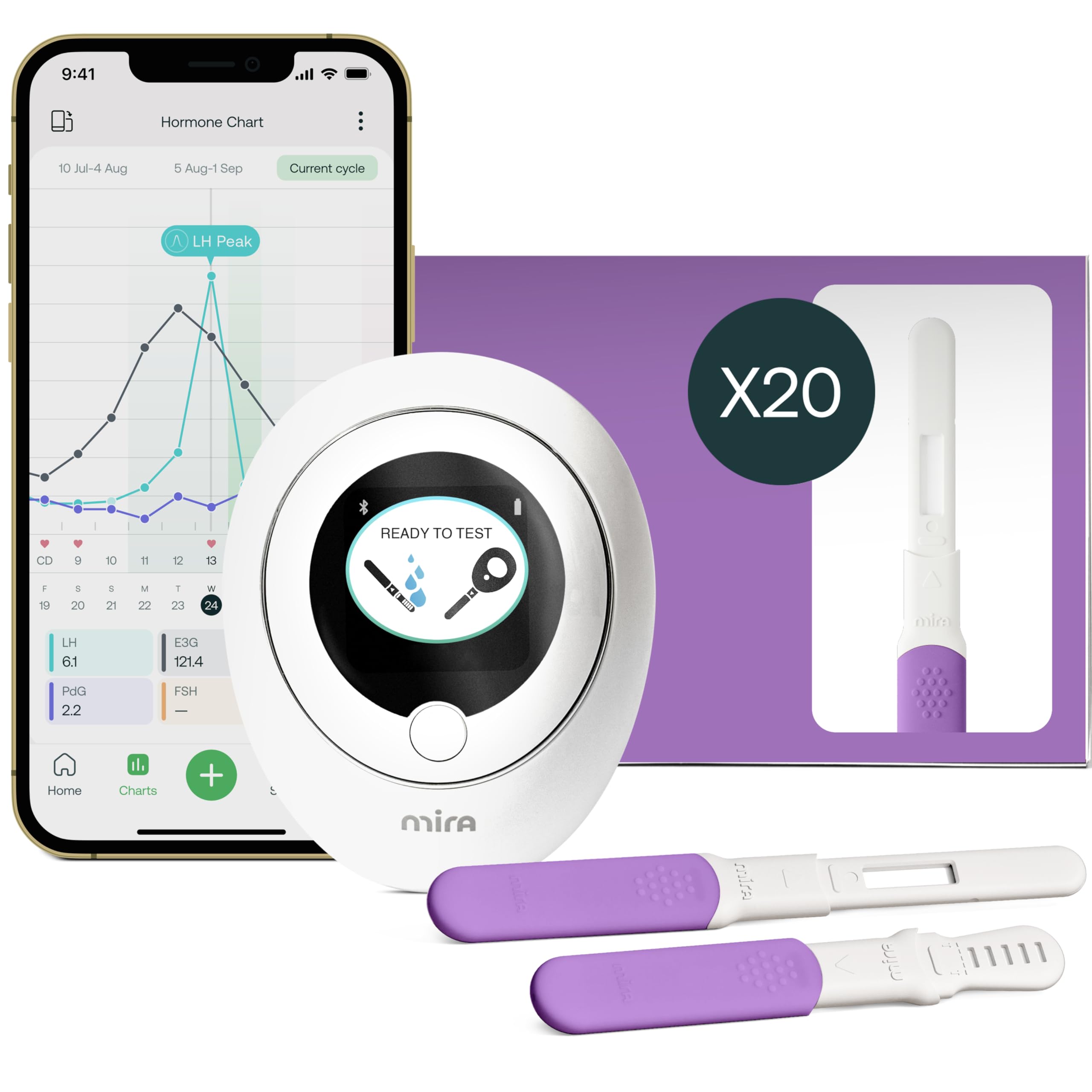
Mira sets the gold standard for home fertility hormone testing with its advanced fluorescent detection technology, which achieves up to 99.5% accuracy in measuring LH, E3G (estradiol), and PdG from a single urine sample. Unlike standard OPKs that give a simple yes/no for LH, Mira provides actual numeric concentrations, allowing you to see the subtle estrogen rise that precedes your LH surge and then confirms ovulation with quantitative PdG. This is especially valuable for women with PCOS, where LH can be chronically elevated and traditional strips become unreliable.
The MAX kit includes 20 proprietary test wands that each deliver a full hormone profile in about 20 minutes. The Mira app, trained on over 30 million hormone data points, uses AI to personalize cycle predictions over time and creates doctor-ready reports you can share with your fertility specialist. For users with irregular cycles, the ability to detect even small shifts in E3G provides a 6-day fertile window that simpler methods miss entirely.
The tradeoff is the upfront cost and the ongoing expense of replacement wands, which can add up if you test frequently across both the follicular and luteal phases. Some users also report that the app lacks mood or lifestyle tracking features, and the test process requires a 20-25 second urine soak followed by a full 20-minute wait. For anyone who wants quantitative, lab-grade hormone data at home, however, Mira delivers unmatched depth.
Why it’s great
- Quantitative readings for LH, estrogen, and PdG reveal full hormone dynamics, not just peak detection
- AI-powered app adapts predictions with every cycle and generates reports for physician review
- Highly sensitive to subtle hormone shifts, ideal for PCOS and irregular cycles
Good to know
- Test wands cost significantly more over multiple cycles compared to standalone BBT wearables
- Each test takes about 20 minutes from start to result
- No integrated lifestyle or symptom tracking within the app
2. Inito Fertility Monitor
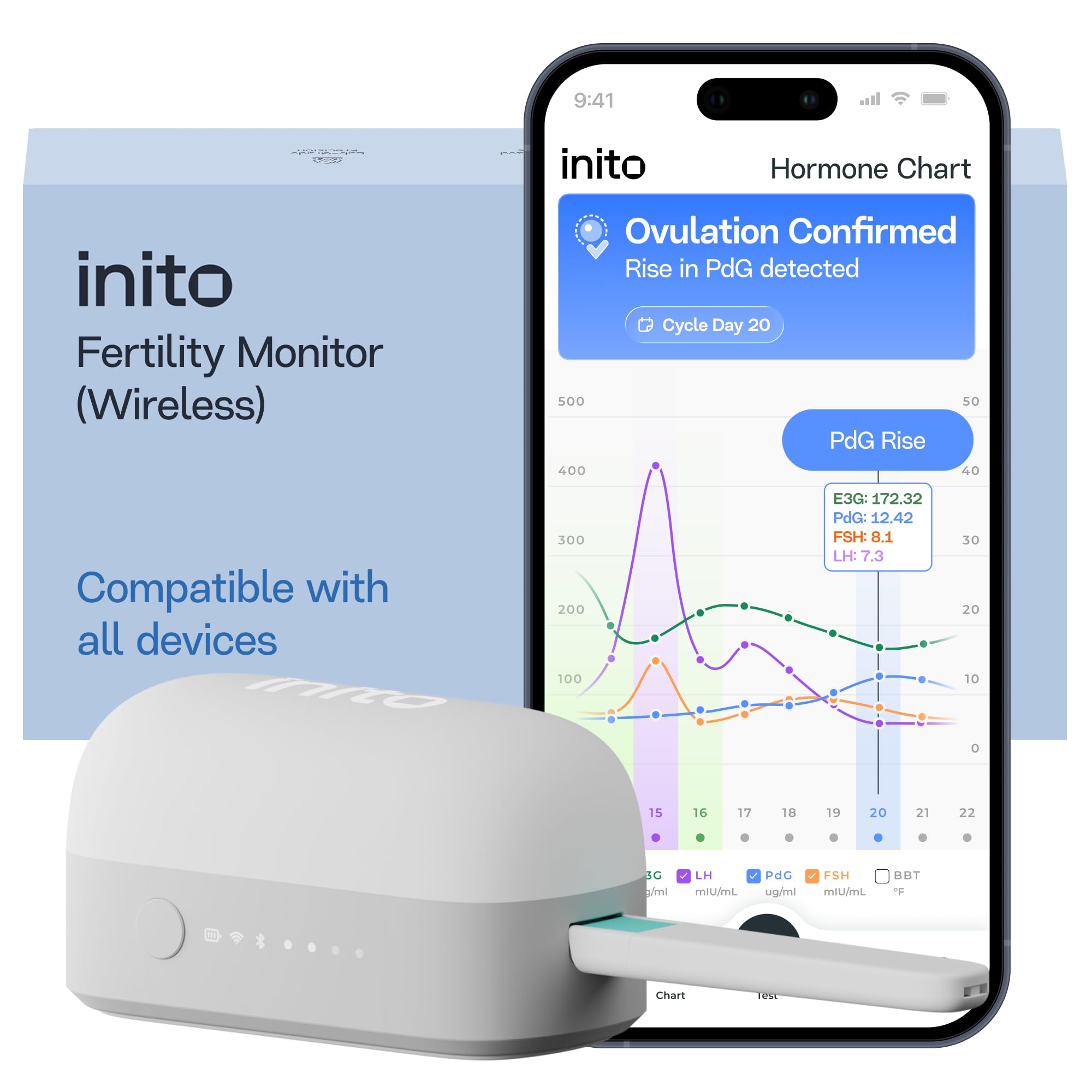
Inito’s latest wireless model eliminates the biggest complaint of older fertility monitors: having to plug a bulky device directly into your phone. The new reader syncs via Bluetooth to any iOS or Android device, freeing your phone for other use during the 10-15 minute test cycle. It measures all four key fertility hormones—estrogen, LH, PdG, and FSH—on a single test strip using advanced Spectral Mapping Technology that reads even weak signals with lab-grade precision.
Where Inito really shines is its ability to confirm ovulation by tracking PdG rise, not just predict it with LH. This is a critical distinction: many trackers tell you when you might ovulate, but Inito shows you that ovulation actually occurred. The app delivers AI-powered analysis based on one of the largest fertility hormone datasets available, and all insights are fully personalized for variables like PCOS, irregular cycles, or trying after age 35. There are no monthly subscriptions beyond the cost of replacement strips.
The main consideration is that each cycle requires 15–30 proprietary test strips, which cost roughly – per pack. Some users have noted that readings can occasionally miss the exact peak due to natural hormone fluctuations, but the trend data remains highly useful for charting patterns. For those who want a complete, wireless hormone lab and confirmed ovulation data, Inito represents a refined and thoughtful upgrade from first-generation devices.
Why it’s great
- Wireless Bluetooth sync frees your phone during testing and works with any modern smartphone
- Measures all four key hormones on one strip, including FSH for ovarian reserve insight
- Confirms ovulation via PdG rather than just predicting it from LH surge alone
Good to know
- Replacement test strips add a recurring monthly cost that tops per cycle with frequent testing
- Results can sometimes miss the exact peak due to natural hourly hormone fluctuations
- Starter kit may be limited to 15 strips, requiring a refill mid-cycle for complete coverage
3. Kegg Fertility Tracker
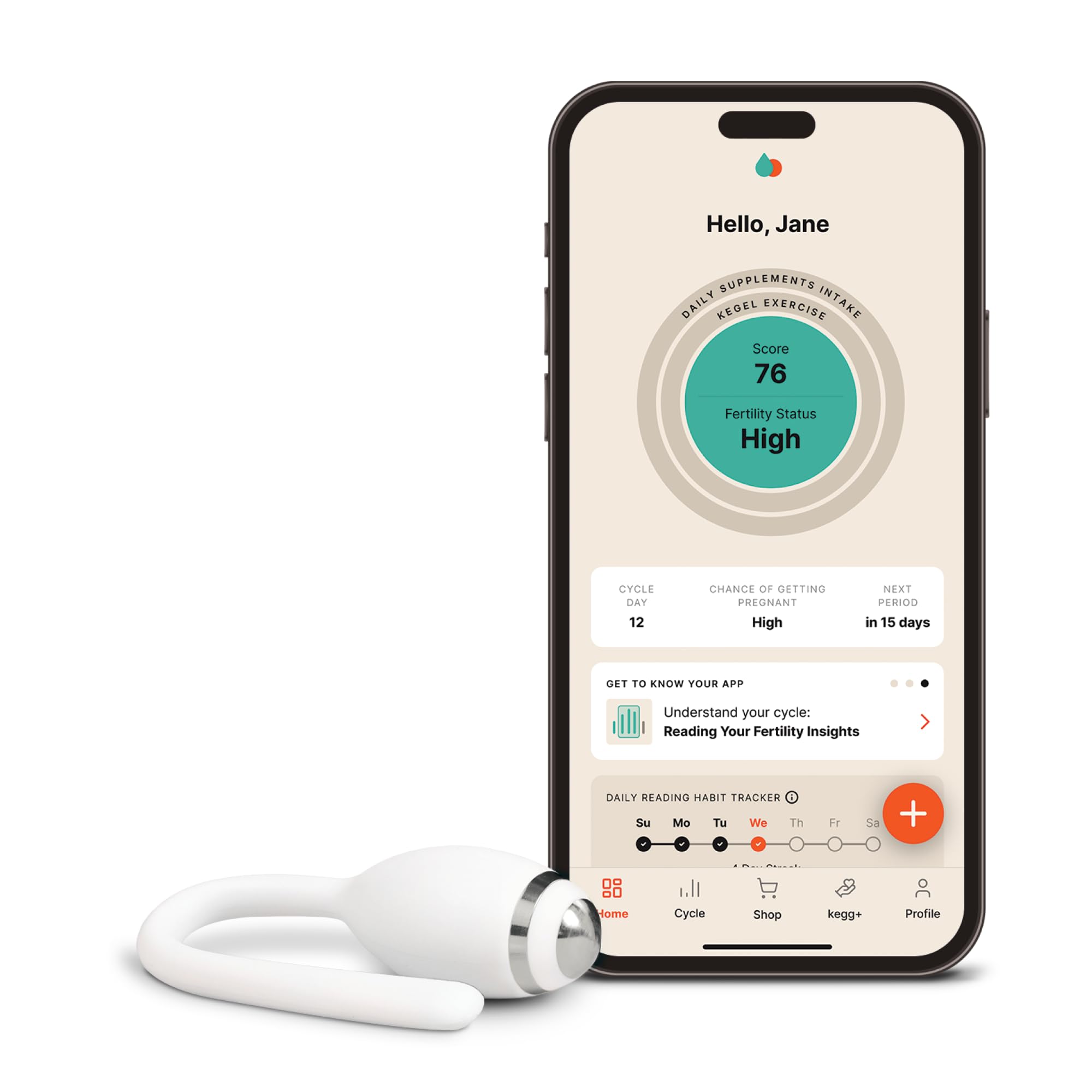
Kegg takes a fundamentally different approach from hormone analyzers by measuring the ionic composition of cervical fluid through bioimpedance sensing, which predicts fertility based on changes in your electrolyte balance rather than urine hormones. This method directly tracks the medium that sperm actually swim through—fertile cervical fluid becomes more conductive as estrogen rises—and it requires zero test strips, wands, or ongoing consumables. The device is simply inserted for about 30 seconds each morning, synced to the app, and then cleaned for reuse.
The lack of recurring costs makes Kegg one of the most economical long-term trackers on the market; after the initial purchase, there is nothing else to buy. The supportive private community of users sharing charts and BFP stories is actively helpful, and many users report that Kegg correctly pinpointed their most fertile days when other methods—even watch-based trackers—were off by several days. Battery life spans over three months per charge, so you rarely need to think about power.
However, because Kegg uses a different physiological signal than traditional hormonal markers, some users found its readings stayed flat throughout the month and didn’t clearly indicate an ovulation window beyond what their cycle history already suggested. For women with very regular cycles, the added value may be marginal, and a few users reported that companion devices like Inito or Oura gave more actionable insights. If you dislike the idea of buying test strips every month, Kegg is a refreshingly consumable-free alternative.
Why it’s great
- Zero recurring costs after the initial purchase—no strips, no wands, no monthly fees
- Measures the actual environment sperm must survive (cervical fluid), offering unique physiological data
- Daily test takes only 30 seconds and battery lasts over three months
Good to know
- Some users report readings that remain consistent throughout the month without clear fertile window signals
- Not ideal for those who want quantitative hormone levels for physician sharing
- May offer less actionable data for women with already predictable cycles
4. Tempdrop Wearable Ovulation Tracker
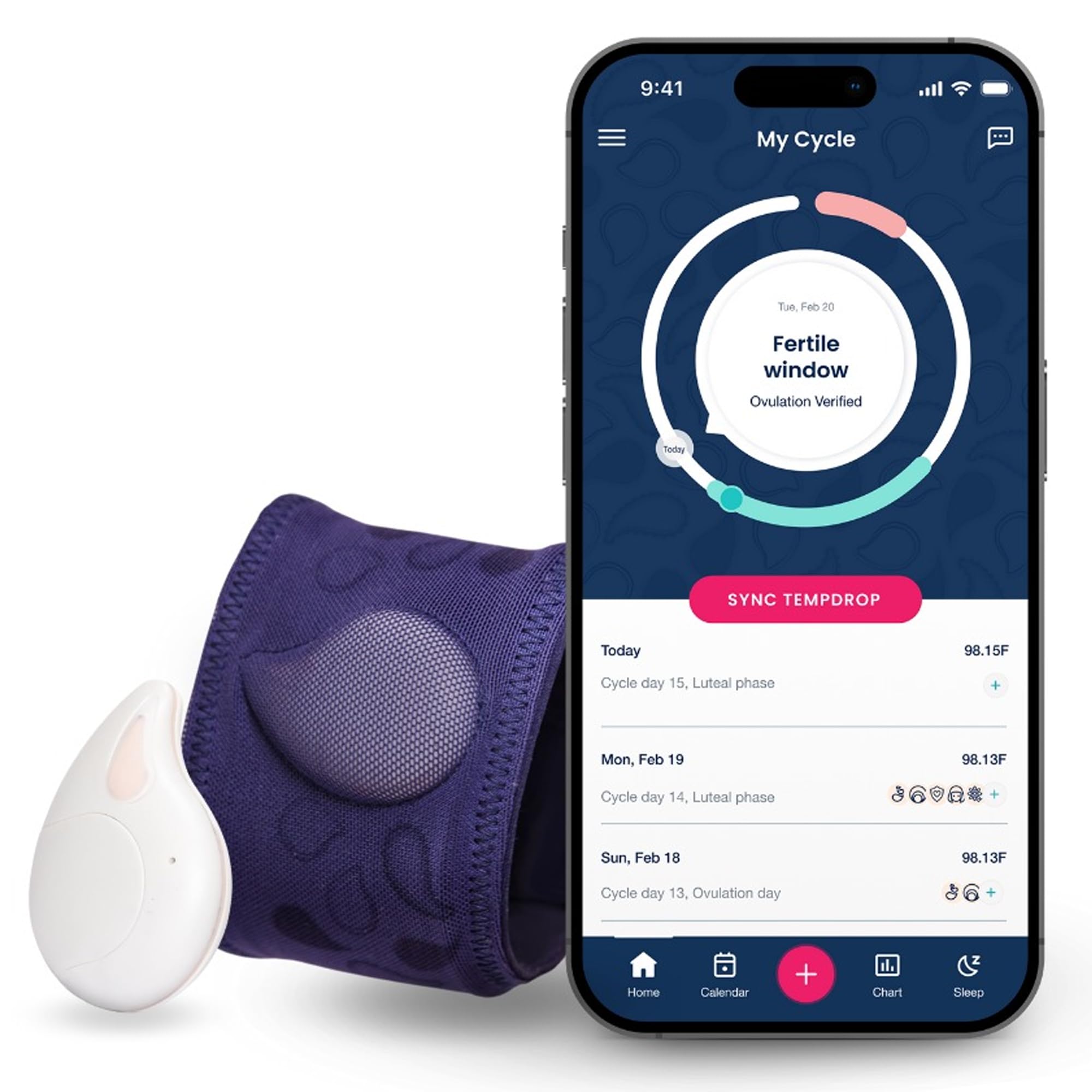
Tempdrop solves the single most frustrating part of BBT charting: the dawn alarm. Instead of needing to take your temperature at the exact same moment each morning before any movement, you simply wear the soft silicone sensor inside its fabric armband while you sleep. It continuously samples your skin temperature throughout the night, stores up to 60 hours of data, and uses a proprietary algorithm to adjust for disturbances, so you can sleep in on weekends or get up to use the bathroom without ruining your chart.
Clinical data shows Tempdrop achieves 98.6% accuracy for identifying the fertile window and 93.3% accuracy for pinpointing the exact day of ovulation. The device works especially well for postpartum and breastfeeding mothers whose cycles may be irregular or anovulatory, and the replaceable coin-cell battery lasts over six months. The companion app clearly displays your temperature curve and cycle day, making it easy to see when your post-ovulation temperature shift has been confirmed.
The primary downside is that Tempdrop’s algorithm requires about 14 days of data to activate, so you won’t get reliable predictions immediately out of the box. Some users also report that the device occasionally fails to record data overnight if the armband shifts, and the company now charges a subscription fee for ovulation predictions that were previously free. Still, for anyone who values uninterrupted sleep more than hormone level data, Tempdrop is the most proven wearable BBT tracker available.
Why it’s great
- Completely eliminates early-morning BBT alarms by sampling temperature continuously during sleep
- Proven accuracy rates of 98.6% for fertile window and 93.3% for ovulation day
- Replaceable coin-cell battery lasts over six months with 60-hour onboard data storage
Good to know
- Requires a 14-day learning period before the algorithm becomes active for predictions
- Occasional overnight recording failures if the armband shifts during sleep
- Ovulation predictions now require an optional subscription fee within the app
5. Daysy Fertility Tracker
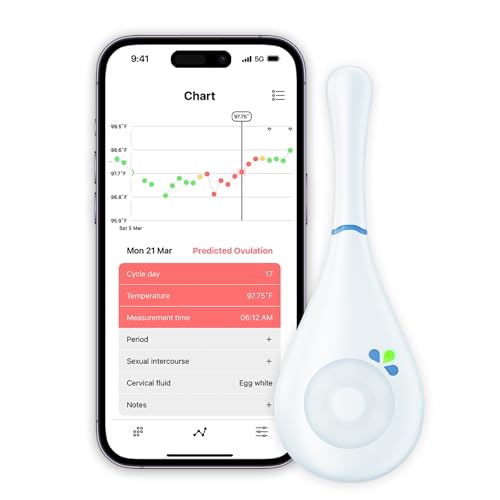
Daysy is a precision smart thermometer that combines the reliability of basal body temperature tracking with a proprietary algorithm developed from over 40 years of fertility research in Germany and Switzerland. You take a quick oral reading each morning using the ergonomic sensor tip, and Daysy immediately shows a simple red or green light indicating whether you are fertile or not fertile that day. For women who want a hormone-free, non-wearable method that clearly communicates daily status at a glance, Daysy is exceptionally straightforward.
The device claims an impressive 99.4% accuracy rate for identifying fertile and non-fertile days, and the free companion app provides deeper cycle visualization without any subscription fees. After about two months of consistent use, Daysy learns your unique temperature pattern and adjusts predictions accordingly. Many users report successfully conceiving within their first few cycles of using the device, and it is particularly popular among those practicing natural family planning or avoiding hormonal contraception.
The tradeoff is that Daysy requires consistent morning temperature-taking at roughly the same time—it is not a wearable, so you cannot simply roll over and go back to sleep. It also needs consistent cycle lengths to reach maximum accuracy; very irregular or anovulatory cycles may take longer for the algorithm to adapt. The build quality is excellent, and customer support is responsive, but the upfront cost is similar to some wearable trackers without the convenience of hands-free operation.
Why it’s great
- 99.4% accuracy rate with a clear red/green daily fertility status light
- Zero ongoing costs—no subscriptions, no strips, no wands
- Backed by 40+ years of German and Swiss fertility research for algorithm reliability
Good to know
- Requires consistent morning oral temperature readings at the same time each day
- Slower to adapt for women with highly irregular or anovulatory cycles
- Upfront cost comparable to wearables but lacks the hands-free convenience
6. Proov Complete Fertility Test Kit

Proov offers the most affordable entry point for tracking four key fertility hormones—FSH, E1G (estrogen), LH, and PdG—in a single kit. The Complete kit comes with 20 test strips plus the free Proov Insight app, which uses your phone’s camera and colorimetric analysis to assign an ovulation score to each test. For roughly the same cost as a single Mira wand pack, you get a full cycle’s worth of comprehensive hormone insights, making it the cheapest all-in-one hormone tracker on this list.
The key advantage of Proov is that it measures PdG during the implantation window to confirm that ovulation actually occurred, whereas standard LH-only strips stop at prediction. This is the same methodology used by high-end quantitative monitors, but achieved through qualitative color comparison rather than numeric concentration. The app provides clear, color-coded results and a cycle summary, and several users report conceiving within one to two cycles of using the kit.
However, because Proov relies on a phone camera for interpretation rather than a dedicated reader, results are qualitative and may be subject to lighting and angle variability. Some users have reported inconsistent LH surge detection compared to both blood tests and dedicated monitor brands. Additionally, the kit covers only one cycle—if you need to track for multiple months, you will need to purchase additional test packs. For budget-conscious trackers wanting more than basic LH data without a large upfront investment, Proov provides a solid but less precise starting point.
Why it’s great
- Most affordable way to test all four fertility hormones (FSH, E1G, LH, PdG) in one kit
- Confirms ovulation via PdG testing at home, not just LH prediction
- Easy-to-use app with color-coded results and Ovulation Score feature
Good to know
- Qualitative color analysis may be less precise than dedicated readers like Mira or Inito
- Some users report inconsistent LH surge detection compared to lab blood tests
- One kit covers only a single cycle, requiring additional purchases for continued tracking
7. Oura Ring 4
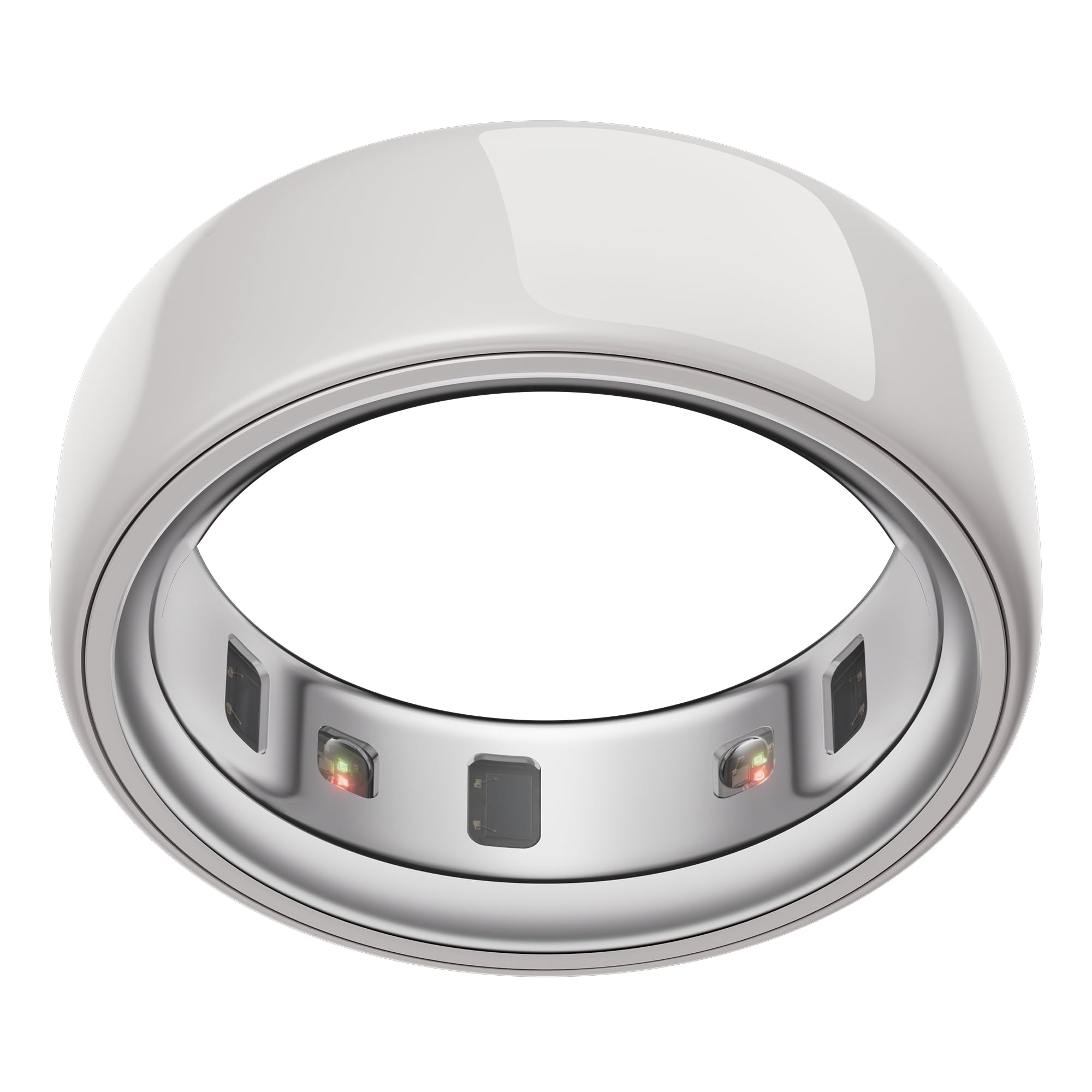
Oura Ring 4 is not primarily a fertility tracker, but its advanced Smart Sensing platform includes cycle tracking, temperature trend monitoring, and detailed sleep/recovery metrics—making it a compelling multi-purpose wearable for women who want fertility awareness alongside general health optimization. The ring uses infrared sensors to detect over 50 health signals including heart rate, HRV, skin temperature, and sleep stages, all of which contribute to understanding your cycle phase and ovulation window without any daily testing routine.
The ceramic version is remarkably comfortable for 24/7 wear, with no screen and no vibrations to disturb sleep. Battery life reaches up to eight days between charges, and the app provides clean, actionable insights for readiness, sleep quality, and cycle predictions. For women who want to understand how their cycle affects energy, recovery, and stress levels across the month, Oura’s approach is singularly useful.
The major catch is that full cycle tracking insights require an Oura Membership (/month after the first month), and the ring does not measure actual hormone levels, so ovulation confirmation is inferred from temperature trends rather than direct PdG or LH data. It also costs more than any other device here when factoring in the subscription. For those who want a daily wellness companion that also supports cycle awareness rather than a dedicated fertility instrument, Oura remains the premier smart ring choice.
Why it’s great
- Comfortable, lightweight ceramic ring for 24/7 wear with no screen distractions
- Tracks over 50 health signals including skin temperature, heart rate, and sleep for cycle awareness
- Up to 8 days of battery life with seamless Bluetooth syncing to the app
Good to know
- Requires a monthly subscription (/mo) for full cycle tracking and detailed insights
- Does not directly measure hormone levels, so ovulation is inferred from temperature trends
- Highest upfront cost on this list, and subscriptions add long-term expense
8. RingConn Gen 2

RingConn Gen 2 stands out in the smart ring category by offering comprehensive health tracking—including stress, heart rate, HRV, blood oxygen, sleep quality, and women’s health cycle tracking—without any monthly subscription fee. This is a huge differentiator from Oura, as you buy the ring once and get lifetime access to all app features. The ultra-thin titanium design weighs as little as 2 grams and is waterproof to 100 meters, making it durable enough for swimming and intense workouts.
The ring is the world’s first to feature FDA-cleared sleep apnea monitoring, which is useful for women whose hormonal fluctuations may affect sleep-disordered breathing, especially during perimenopause. Battery life is exceptional: up to 12 days on a single charge for larger sizes, and the included charging case extends total uptime beyond 150 days. The cycle tracking features provide fertile window predictions based on temperature and physiological data, though they are less detailed than dedicated hormone analyzers.
The main limitations are that the fitness step counting has been reported as somewhat inaccurate compared to wrist-based devices, and some users noted that the finish on titanium models can show wear from gym equipment. The app is still maturing compared to Oura’s polished interface, and customer support responsiveness varies. For users who want solid cycle awareness, sleep apnea detection, and zero recurring fees, RingConn Gen 2 is a clever alternative in the smart ring space.
Why it’s great
- No subscription fees for full access to all health and cycle tracking features
- World’s first smart ring with FDA-cleared sleep apnea monitoring (AHI tracking)
- Ultra-thin 2-gram design with up to 12-day battery life and 100m water resistance
Good to know
- Step counting and fitness tracking accuracy lags behind wrist-based wearables like Apple Watch
- Finish on titanium models may show scratches from gym equipment or daily wear
- App interface is less polished than Oura, and customer support response can be slow
9. Apple Watch Series 8
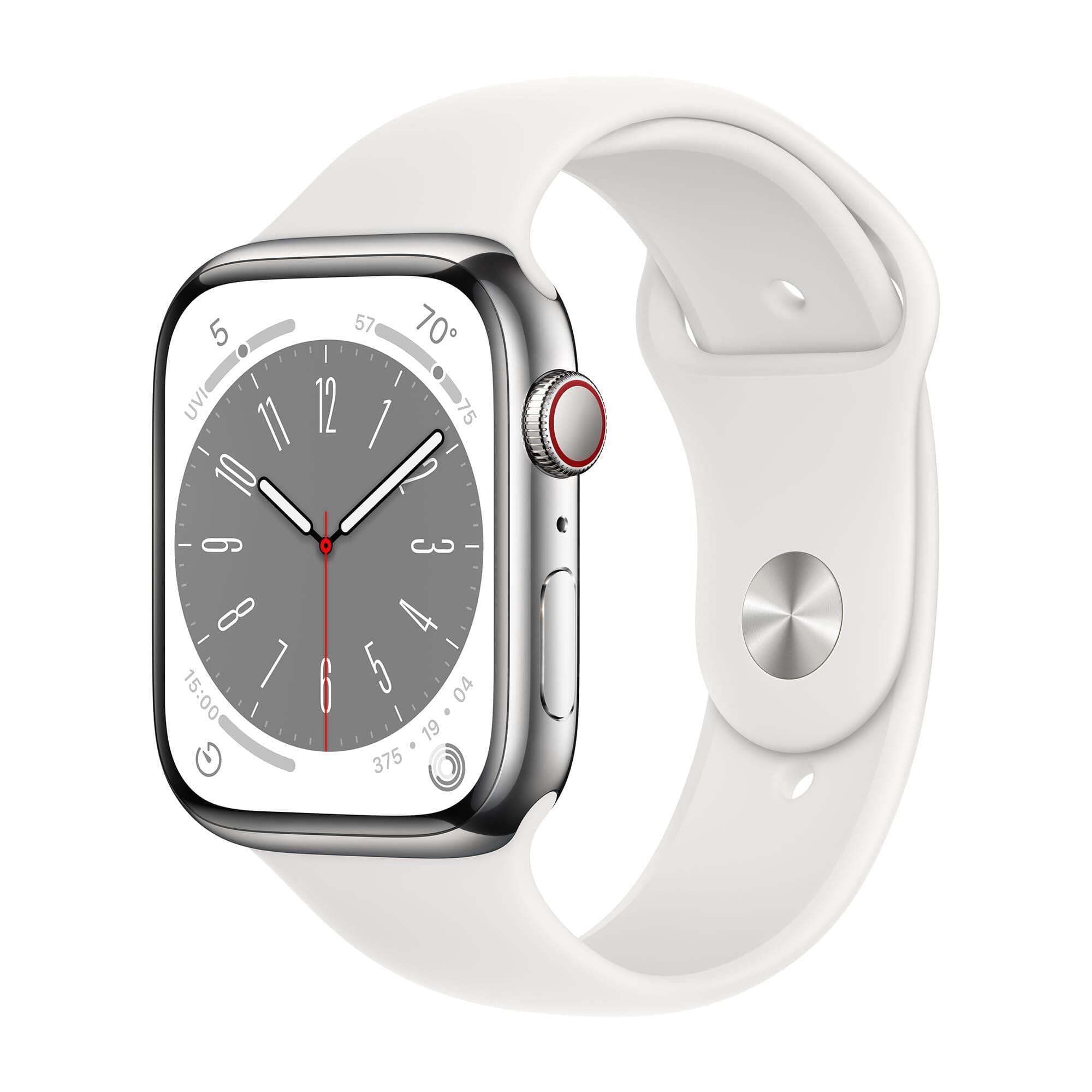
Apple Watch Series 8 introduced a breakthrough temperature-sensing feature that tracks baseline wrist temperature overnight, providing retrograde ovulation estimates in the Cycle Tracking app. While it does not measure hormone levels, the nightly temperature changes deliver useful cycle phase awareness alongside the watch’s robust suite of general health sensors, including blood oxygen, ECG, and sleep stages. For women who already own an iPhone and want cycle tracking without an extra device, the Series 8 is a convenient and polished option.
The stainless steel cellular model allows you to make calls and stream music without your iPhone nearby, and safety features like Crash Detection and Fall Detection add peace of mind. The 41mm case size fits smaller wrists well, and the “Always-On” Retina display means you can glance at your cycle day without raising your wrist. Apple’s fitness and activity integration means your heart rate and workout data are all in one place alongside your cycle timeline.
However, the wrist temperature sensing only provides retrospective ovulation estimates—it does not predict or confirm ovulation in real time, so it is less useful for active conception timing than dedicated hormone analyzers or BBT wearables. The blood oxygen sensor is currently disabled on new units due to a US patent dispute, and battery life at 18 hours requires daily charging, making it less ideal for overnight sleep tracking if you forget to charge. As a fertility tool, it complements rather than replaces dedicated trackers, but as an everyday smartwatch with cycle awareness, it is excellent value in the renewed market.
Why it’s great
- Built-in wrist temperature sensor provides retrograde ovulation estimates in the Cycle Tracking app
- Cellular connectivity allows calls and music streaming without the iPhone nearby
- Safety features (Crash Detection, Fall Detection) and advanced heart health monitoring
Good to know
- Only provides retrospective ovulation estimates, not real-time prediction or confirmation
- Blood oxygen sensor currently disabled on new units due to patent litigation in the US
- 18-hour battery life requires daily charging, which can interfere with consistent sleep tracking
FAQ
Can a wearable BBT tracker like Tempdrop replace a hormone monitor for PCOS?
How many test strips per cycle do I need with a quantitative monitor?
What is the accuracy difference between a smartphone camera app and a dedicated analyzer?
Do smart rings like Oura or RingConn predict ovulation as well as urine test kits?
Final Thoughts: The Verdict
For most users, the best at home fertility tracker winner is the Mira Fertility MAX because it provides true quantitative hormone data across LH, E3G, and PdG with lab-grade accuracy, adapting to PCOS and irregular cycles better than any competitor on this list. If you want wireless convenience with four-hormone tracking and confirmed ovulation, grab the Inito Fertility Monitor. And for zero recurring costs and a unique cervical-fluid-based approach that frees you from buying test strips every month, nothing beats the Kegg Fertility Tracker.

Mo Maruf
I created WellFizz to bridge the gap between vague wellness advice and actionable solutions. My mission is simple: to decode the research and give you practical tools you can actually use.
Beyond the data, I am a passionate traveler. I believe that stepping away from the screen to explore new environments is essential for mental clarity and physical vitality.