Our readers keep the lights on and my smoothie glass nicely filled. As an Amazon Associate, I earn from qualifying purchases.
Your fatigue, brain fog, joint pain, or mysterious rashes may be your immune system turning against itself, yet the average person waits years for a diagnosis. At-home autoimmune tests put that power back in your hands — letting you screen for specific antibodies, inflammation markers, and thyroid function from a simple finger prick or hair sample collected in your own bathroom.
I’m Mohammad Maruf — the founder and writer behind WellFizz. I’ve analyzed the regulatory certifications, biomarker panels, lab partnerships, and real-world accuracy data across nine of the most prominent at-home autoimmune and sensitivity tests on the market to give you a clinically grounded buying guide.
Whether you suspect Hashimoto’s, celiac disease, adrenal dysfunction, or food-driven inflammation, choosing the right at-home autoimmune test depends on knowing which biomarkers matter and whether the lab behind the kit holds CLIA or CAP accreditation.
How To Choose The Best At-Home Autoimmune Test
Autoimmune testing is not a single test — it is a targeted investigation into specific antibody markers. The right kit depends entirely on your symptoms, whether you suspect a thyroid disorder, celiac disease, adrenal fatigue, or systemic inflammation triggered by food. Start with the biomarker panel, then check the lab’s certification, sample type, and turnaround time.
Biomarker Panel Depth
Not all autoimmune tests cover the same ground. A thyroid-focused test should measure TSH, free T3, free T4, and TPO antibodies — the latter being the primary marker for Hashimoto’s. Celiac screening requires tTG-IgA antibodies. Adrenal health tests need cortisol and DHEA-S. A test that only checks one marker will miss the full autoimmune picture; look for panels that pair hormone markers with the specific antibodies tied to autoimmune attack.
Lab Accreditation (CLIA vs. CAP)
The kit in your hands does nothing — the lab behind it does everything. CLIA certification means the lab meets federal quality standards for clinical testing. CAP accreditation is even stricter, adding an extra layer of proficiency testing and lab inspection. If a kit does not explicitly state CLIA or CAP certification, consider that a red flag. Some brands also have board-certified physicians review each result before release, which adds medical accountability to the raw numbers.
Sample Type and Collection Ease
Most at-home autoimmune tests use a dried blood spot from a finger prick, but some require hair strands or urine samples. If you have a bleeding disorder, are taking blood thinners, or are collecting a sample from a child, look for tests that request only hair or saliva. The volume of blood needed varies sharply — one kit may require five drops while another demands ten, which can make the difference between a successful sample and a frustrating retake.
Turnaround Time and Result Format
Typical turnaround from lab receipt to online results ranges from 3 to 14 days. Premium labs often deliver in 3 to 5 days, while busier labs stretch to 10 or more. More important than speed is the format: does the report show ideal ranges alongside your results, or just flag “high” and “low”? The best dashboards explain each biomarker’s role and offer personalized diet or lifestyle recommendations tied to your specific values rather than generic advice.
Quick Comparison
On smaller screens, swipe sideways to see the full table.
| Model | Category | Best For | Key Spec | Amazon |
|---|---|---|---|---|
| Choose Health 4-in-1 Thyroid Test | Thyroid Panel | Hashimoto’s & hypothyroidism screening | TSH + T3 + T4 + TPO-Ab (4 markers) | Amazon |
| Everlywell Celiac Disease Screening | Celiac Screening | Gluten-related autoimmune concern | tTG-IgA antibody detection | Amazon |
| Paloma Complete Thyroid Test | Thyroid Panel | Hashimoto’s root cause investigation | TSH + Free T3 + Free T4 + TPO-Ab | Amazon |
| Choose Health 4-in-1 Cortisol & DHEA-S Test | Adrenal Health | Stress, sleep & adrenal function | Cortisol + DHEA-S + ratio + visceral fat | Amazon |
| Everlywell Women’s Health Test | Hormone & Thyroid | Hormonal wellness across 11 biomarkers | Cortisol + Estradiol + TSH + Progesterone | Amazon |
| Verisana Women’s Health Test | Comprehensive Panel | 7-marker metabolic & hormonal check | 7 key health markers in one kit | Amazon |
| AllergyHero Food Sensitivity Test | Food Sensitivity IgG | 286-item dietary trigger elimination | IgG antibody response to 286 foods | Amazon |
| Verisana Food Sensitivity Complete Test | Food Sensitivity IgG | 240-food home-to-lab IgG screening | IgG response to 240 foods + candida | Amazon |
| 5Strands Food Intolerance & Sensitivity Test | Hair-Based Screening | Budget-friendly broad intolerance check | 658 foods + 282 environmental items | Amazon |
In‑Depth Reviews
1. Choose Health 4-in-1 Thyroid Test
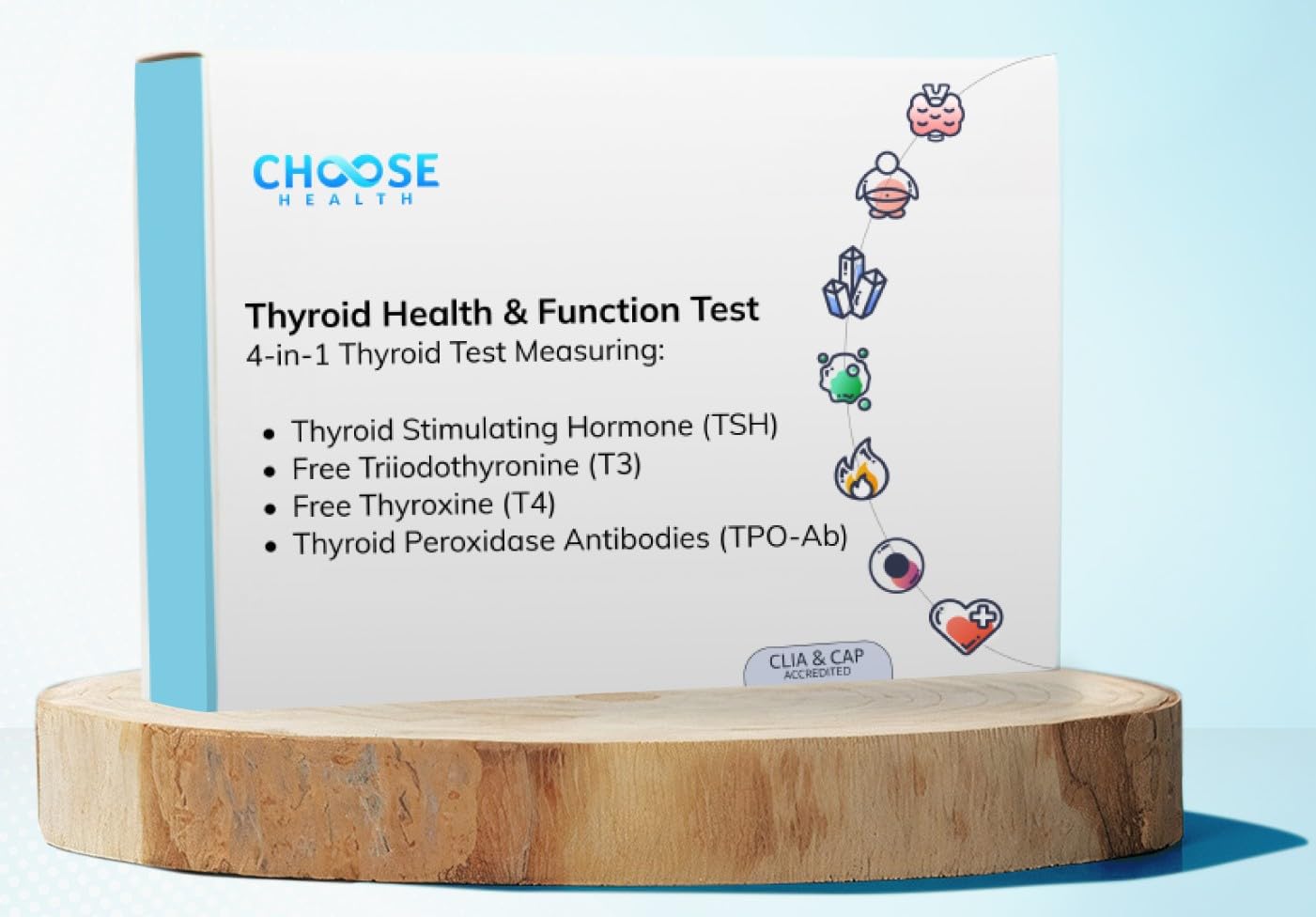
The Choose Health 4-in-1 Thyroid Test checks four essential markers — TSH, T3, T4, and TPO antibodies — making it the most direct at-home screen for Hashimoto’s thyroiditis, the leading autoimmune cause of hypothyroidism. The finger prick blood collection requires only five spots on the test card, which is one of the lowest volume demands among dried blood spot kits. Users consistently report receiving results on the Choose Health dashboard in five to seven days, with some seeing results as fast as three days after mailing.
Unlike many single-marker thyroid tests, the inclusion of TPO-Ab is critical because it specifically identifies autoimmune attack on the thyroid rather than just tracking hormone levels. The kit uses a CAP and CLIA accredited third-party lab, and each result is reviewed by a board-certified physician in your state before release. The dashboard displays ideal ranges unique to thyroid markers and offers personalized diet and lifestyle recommendations tailored to your results.
The kit is not available in New York or Rhode Island due to state lab regulations, but it is FDA-registered and HSA/FSA eligible. Users who cross-referenced results against traditional lab draws reported high concordance, with one reviewer noting a five-day turnaround that matched their doctor’s values within a decimal point. The only gap is the absence of reverse T3 analysis, which some thyroid patients seek for a complete picture of T4-to-T3 conversion.
Why it’s great
- Measures all four core thyroid markers including TPO antibodies for autoimmune detection
- CAP and CLIA accredited lab with physician-reviewed results
- Low blood-volume requirement with fast 5–7 day turnaround
Good to know
- Does not include reverse T3 in the panel
- Not available for shipment in NY or RI
2. Everlywell At-Home Celiac Disease Screening Test
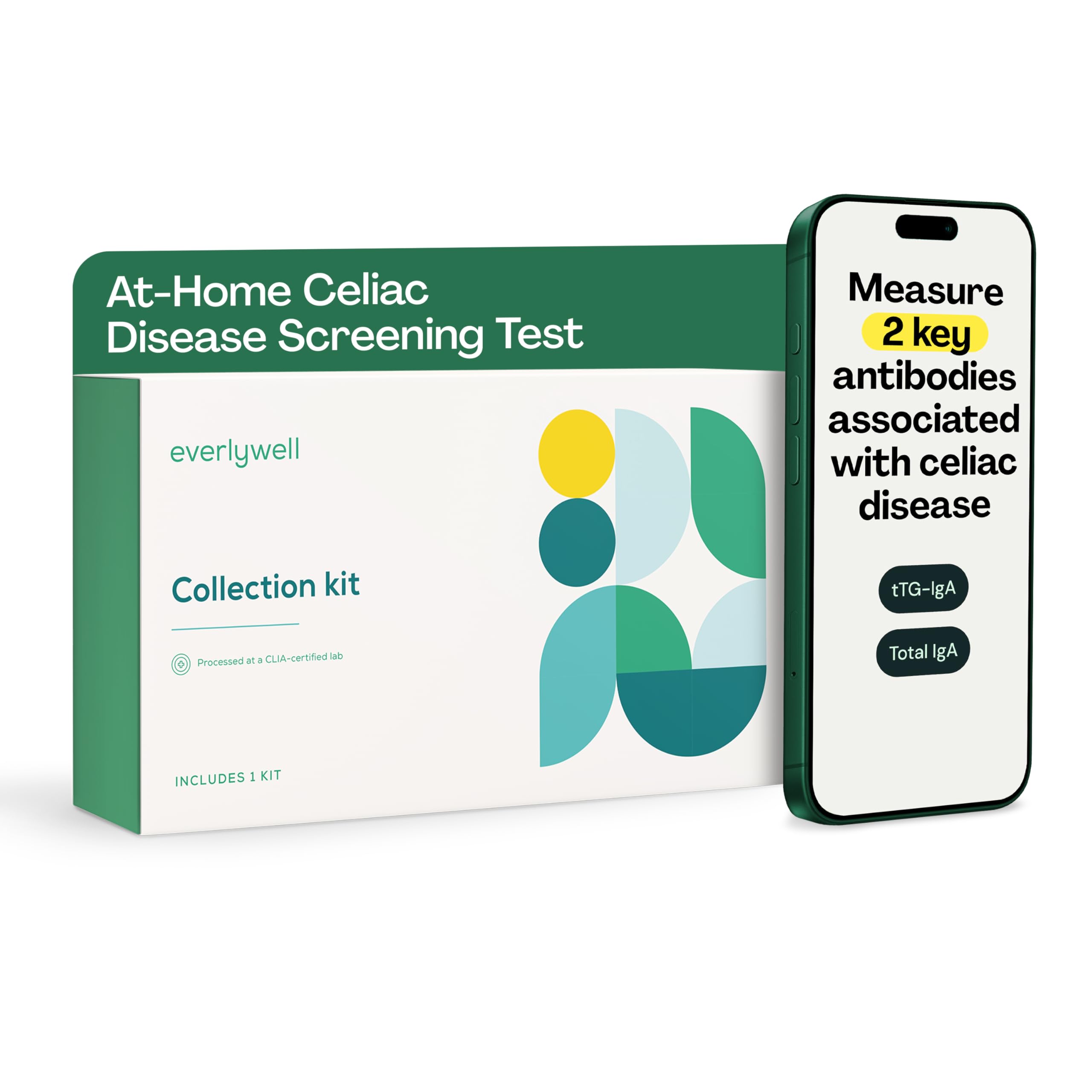
Everlywell’s Celiac Disease Screening Test targets the tTG-IgA antibody — the single most reliable blood marker for celiac disease, an autoimmune condition triggered by gluten. The kit uses a dried blood spot card, CLIA-certified lab analysis, and board-certified physician oversight. The process is straightforward: a finger prick fills five circles on the blood card, the card dries overnight, and you mail it back using the prepaid label. Results appear in the Everlywell dashboard within five to seven business days of lab receipt.
This screening test is explicitly a first step, not a diagnostic tool — positive results should be followed up with a gastroenterologist who may order an endoscopy for definitive diagnosis. The importance of this test lies in its specificity: tTG-IgA is positive in about 98% of untreated celiac cases. Users who tested positive with Everlywell and later had hospital lab confirmation reported matching results, suggesting strong clinical accuracy for a home-based screening method.
The primary friction point is the blood volume required — this kit asks for eight to ten drops of blood, which is nearly double what some competitors request. If your blood clots quickly or you struggle to fill the circles, you may need to re-prick. The app experience has drawn mixed feedback, with a small number of users reporting dashboard errors or ambiguous result formatting, though the majority found the layout easy to read. Not available in New York state.
Why it’s great
- Targets tTG-IgA, the gold-standard celiac screening antibody
- Physician-reviewed results from a CLIA-certified lab
- High concordance rate with hospital follow-up tests
Good to know
- Requires 8–10 drops of blood, more than most dried blood spot kits
- Some users reported app crashes or ambiguous result formatting
3. Paloma Complete At-Home Thyroid Test

Developed by thyroid specialist doctors at Paloma Health, this test panel mirrors exactly what an endocrinologist would order — TSH, free T3, free T4, and TPO antibodies. The use of free T3 and free T4 rather than total T3/T4 is significant: free hormone levels reflect what is biologically available in your tissues, giving a truer picture of metabolic thyroid function. The finger prick collection takes under five minutes and the kit includes a prepaid return envelope to a CLIA-certified lab.
Paloma’s approach is built around root-cause investigation of Hashimoto’s, not just hormone tracking. The results dashboard is educational rather than just numerical, explaining what each marker means and offering guidance on next steps. Many users compared the cost favorably against doctor visit copays plus lab fees, and most received results within 7 to 11 days. The instructions include a QR code linking to a video walkthrough, which helps first-time finger prick users avoid common mistakes like insufficient blood or overlapping drops.
The main drawback reported is a persistent upselling attempt after purchase — Paloma pushes its telehealth consultations and supplement line aggressively through text messages and emails. A minority of users experienced test failures due to overlapping blood droplets, and one reviewer noted that replacement kits were not delivered as promised. The report also lacks built-in reference ranges, requiring you to look up optimal thyroid ranges separately unless you upgrade to a consultation package.
Why it’s great
- Measures free T3 and free T4 for biologically active hormone levels
- Developed by Hashimoto’s specialist doctors with educational dashboard
- Painless finger prick with video walkthrough for first-time users
Good to know
- Heavy upselling of telehealth and supplements post-purchase
- No reference ranges displayed in the basic report
4. Choose Health 4-in-1 Cortisol & DHEA-S Test

This test from Choose Health targets the adrenal axis by measuring cortisol, DHEA-S, the cortisol-to-DHEA ratio, and an estimated visceral fat level. Cortisol is the primary stress hormone, and DHEA-S is its balancing counterpart — the ratio between them is widely used to assess adrenal reserve and chronic stress burden. Unlike single-point cortisol tests, the finger prick collection captures a snapshot of your basal stress hormone level and how your adrenal glands are responding to long-term pressure.
The kit uses the same CAP and CLIA accredited lab infrastructure as Choose Health’s thyroid test, with results posted to a dashboard that explains each marker in plain language. Users reported receiving results in about three to five days after the lab received the sample, which is on the faster end for adrenal panels. The visceral fat estimation is a useful bonus marker that connects adrenal health to metabolic risk, though it is a calculated value rather than a direct measurement.
Some buyers noted that the same cortisol and DHEA-S tests can be ordered at a local hospital for roughly a fraction of the kit price if insurance covers standing lab orders — but for those without a doctor willing to order the test or without insurance, the convenience and speed justify the premium. Not available in New York or Rhode Island. The kit does not measure 24-hour salivary cortisol rhythm, which some adrenal fatigue patients prefer for capturing diurnal patterns rather than a single blood value.
Why it’s great
- Measures cortisol, DHEA-S, and their ratio for adrenal function analysis
- Fast 3–5 day turnaround from CAP/CLIA accredited lab
- Includes visceral fat estimate as an adrenal-metabolic cross-reference
Good to know
- Single-point blood cortisol lacks the diurnal pattern of a 24-hour saliva test
- Not available in NY or RI
5. Everlywell At-Home Women’s Health Collection Kit (11 Biomarkers)
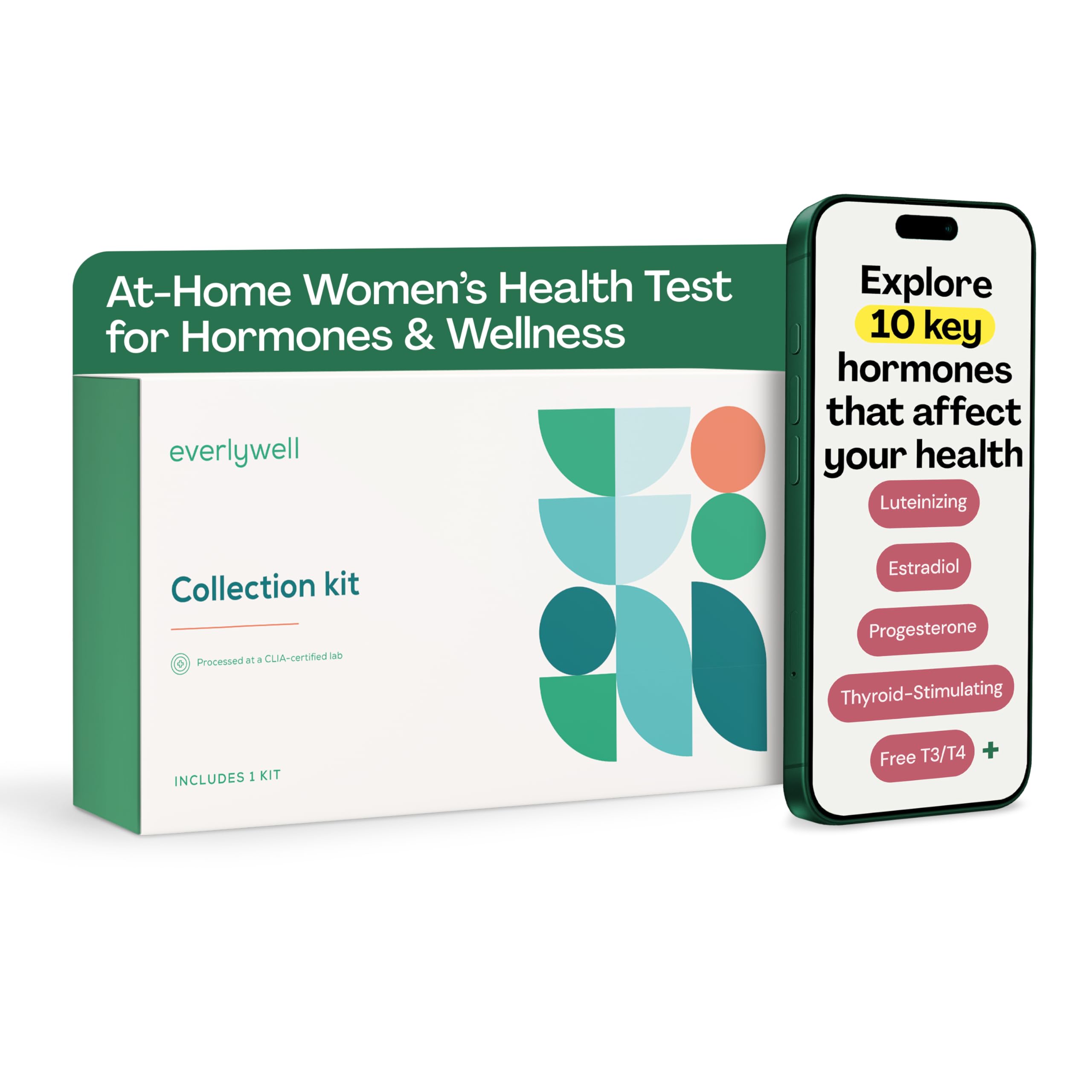
Everlywell’s flagship Women’s Health Test measures 11 biomarkers including cortisol, estradiol, progesterone, TSH, free T3, and free T4 — bridging both autoimmune thyroid markers and sex hormone analysis in a single kit. This makes it particularly useful for women experiencing overlapping symptoms of Hashimoto’s and perimenopause, where fatigue, weight changes, and mood shifts could originate from either the thyroid or the ovarian axis. The kit includes both a blood spot card and a saliva collection tube, giving a broader picture than blood-only panels.
The inclusion of DHEA sulfate (DHEA-S) is rare among home women’s health tests and adds adrenal contribution to the hormonal profile. The CLIA-certified lab analysis is physician-reviewed, and results arrive within five to seven business days. Users who compared outcomes against hospital lab results reported close correlation — for example, one reviewer found TSH values of 1.75 from Everlywell versus 2.0 from a venipuncture draw, well within standard variance. The blood volume required is slightly less than some competitors, with smaller circles on the collection card.
The main complaint revolves around customer service and kit expiration policies — several users reported difficulties when kits expired before use or when samples were damaged in transit. Results processing times have been reported as high as five weeks for some batches, though most users saw standard turnaround. The saliva vials are tedious to fill but do provide additional hormone data (especially for progesterone) that blood tests alone may miss. Not available in New York.
Why it’s great
- 11-marker panel covering thyroid, adrenal, and sex hormones in one kit
- Includes DHEA-S and progesterone via combined blood and saliva collection
- Good correlation with hospital lab values for TSH and estradiol
Good to know
- Customer service complaints around kit expiration and replacement policies
- Processing times can occasionally stretch to 5 weeks
6. Verisana Women’s Health Test (7 Markers)
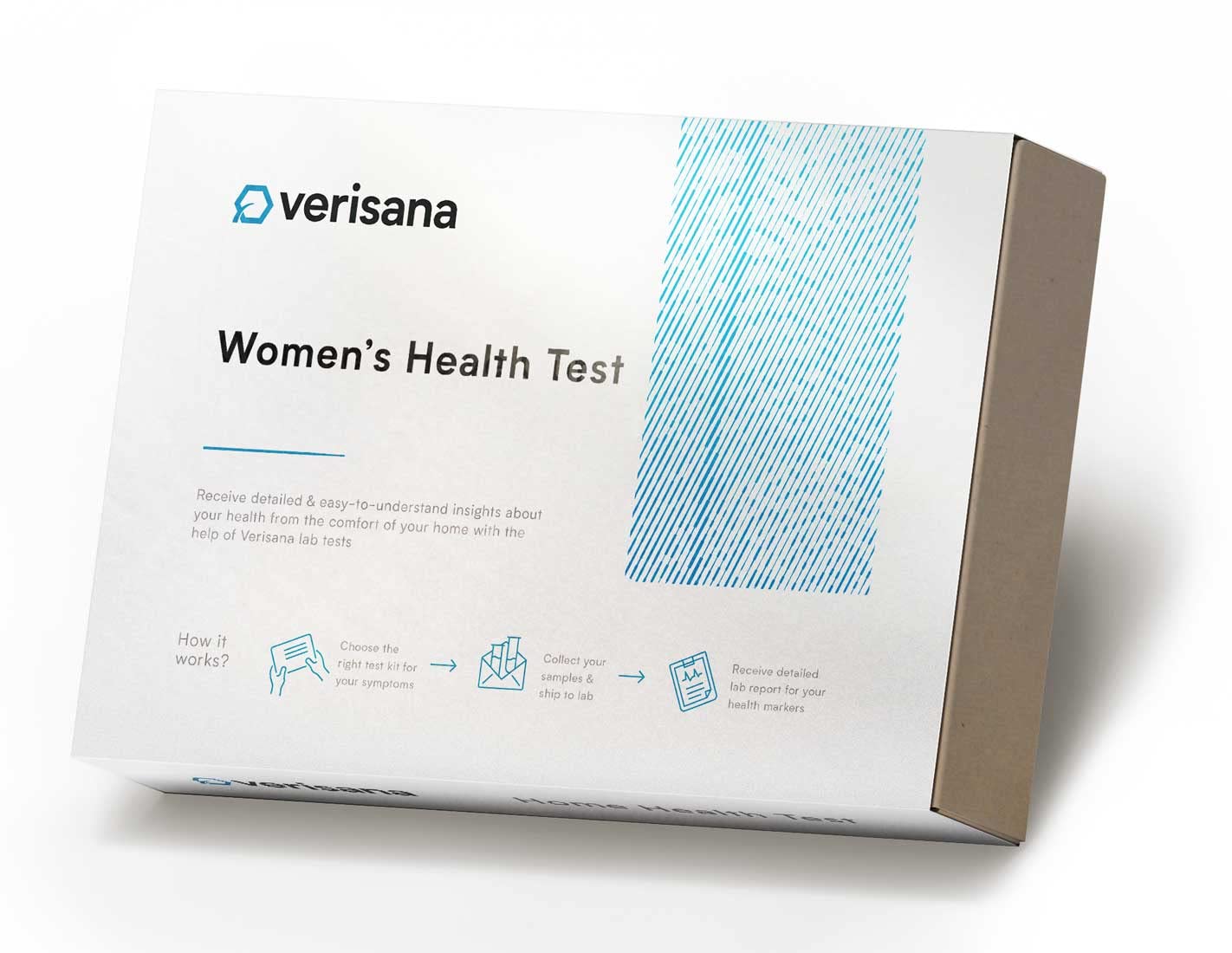
Verisana’s Women’s Health Test covers seven key markers including thyroid hormones, sex hormones, and metabolic risk indicators from a single finger prick blood sample. The panel checks TSH, free T3, and free T4 for thyroid autoimmune activity alongside estradiol and progesterone for hormonal balance. The CLIA-certified lab analysis is included in the price, and results are available via a secure Verisana web portal. The collection process takes under ten minutes, with extra lancets provided in case of a failed first attempt.
Users consistently rate this test for its straightforward packaging and clear instruction booklet. The pre-paid return label and mailer make the send-back step frictionless. Results typically appear within three to five days after lab receipt, which is notably faster than many competitors’ estimated windows. The dashboard presents each biomarker with a color-coded range indicator and a brief explanation of what each value means for overall women’s health, including fertility context for estradiol and progesterone readings.
Availability is restricted — Verisana cannot ship to New York, New Jersey, Rhode Island, or Maryland due to state-specific lab regulations. The test is designed for adults 18 and over and is HSA/FSA eligible. Some users noted that the panel does not include cortisol or DHEA-S, so if adrenal-related autoimmune symptoms are a concern, you would need to pair this test with an adrenal-specific kit. The report also lacks diet or lifestyle recommendations, focusing purely on the raw biomarker data.
Why it’s great
- Seven-marker panel from a single painless finger prick sample
- Fast 3–5 day lab turnaround with color-coded dashboard
- Extra lancets included for backup collection
Good to know
- Not available in NY, NJ, RI, or MD
- No cortisol or DHEA-S markers for adrenal autoimmune assessment
- Report lacks personalized diet or lifestyle recommendations
7. AllergyHero Comprehensive Food Sensitivity Test

The AllergyHero test evaluates IgG antibody responses to 286 foods and beverages, making it one of the broader IgG panels available for home use. This is not a true autoimmune test in the clinical sense — IgG reactions indicate food intolerance, not IgE-mediated allergies or autoimmune disease — but many users with autoimmune conditions use IgG testing to identify dietary triggers that exacerbate inflammation. The test breaks down common foods into individual protein components, such as separating egg whites from yolks and milk into casein and whey fractions.
The collection method is a simple finger prick blood card with clear pictorial instructions. Users report receiving results within two days after the lab receives the sample, which is exceptionally fast compared to the 7–14 day norms of most food sensitivity labs. The personalized report categorizes each food into four severity levels — safe, caution, reduce, and remove — making elimination diet planning actionable. Multiple reviewers noted that removing high-IgG foods identified by the test resolved long-standing bloating, skin issues, and fatigue within one to three weeks.
IgG testing remains controversial in conventional gastroenterology because IgG can sometimes indicate food exposure rather than intolerance, so the results should be treated as directional rather than diagnostic. Some users who had previous IgE allergy testing found the AllergyHero results less specific to their known severe allergies. Shipping and lab processing can take up to two weeks from mailing if the lab is backlogged, though most samples turned around in under five days. The kit is suitable for both adults and children.
Why it’s great
- Tests 286 foods with individual protein component breakdown
- Fast 2-day result turnaround after lab receives sample
- Clear four-tier severity scale simplifies elimination diet planning
Good to know
- IgG testing reflects intolerance, not IgE allergy or autoimmune disease
- Interpretation is directional; some conventional doctors do not endorse IgG panels
8. Verisana Food Sensitivity Complete Test (240 Foods)
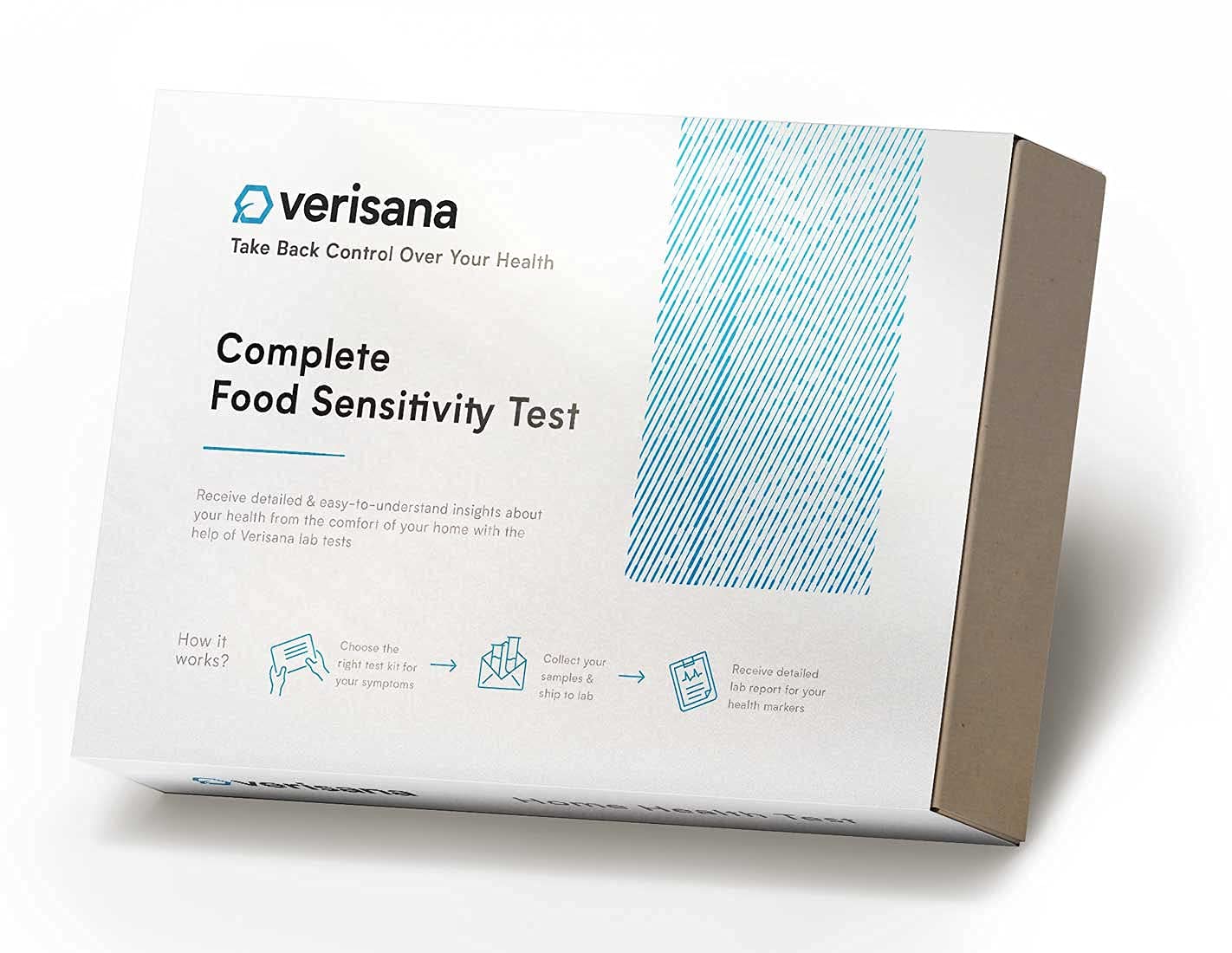
Verisana’s Food Sensitivity Complete Test screens IgG antibody reactions to 240 foods plus a candida marker, giving insight into both dietary triggers and potential yeast overgrowth — a common comorbidity in autoimmune patients. The test uses a dried blood spot sample collected at home and sent to a CLIA-certified lab. Results are reviewed by an independent board-certified physician and posted to a secure web portal within a few days. The physician review step adds a layer of medical accountability that many IgG-only tests skip entirely.
The food panel covers dairy, eggs, grains, meats, seafood, nuts, legumes, fruits, vegetables, spices, and food additives. Users who cross-referenced Verisana results against elimination diet reintroduction reported strong correlation — the foods flagged as high-IgG matched exactly with the foods that caused bloating, headaches, or skin flare-ups during reintroduction. The candida marker is a helpful bonus, as candida overgrowth can produce symptoms that mimic or exacerbate autoimmune fatigue and brain fog.
The kit requires a blood sample, not saliva as some users assumed, so if you are needle-averse or expecting a non-invasive hair or saliva test, you may be disappointed. Results are presented as a list with severity levels, but the dashboard does not include meal plans or recipes. Shipping restrictions apply in New York, New Jersey, Rhode Island, and Maryland. A small number of users reported that the blood collection card required more drops than expected, leading to a second collection attempt.
Why it’s great
- 240-food IgG panel plus candida screening in one test
- Physician-reviewed results from CLIA-certified lab
- Strong correlation between high-IgG foods and real-world symptoms
Good to know
- Blood sample collection may surprise buyers expecting saliva or hair test
- Not available in NY, NJ, RI, or MD
9. 5Strands Food Intolerance & Environmental Sensitivity Test (950 Items)
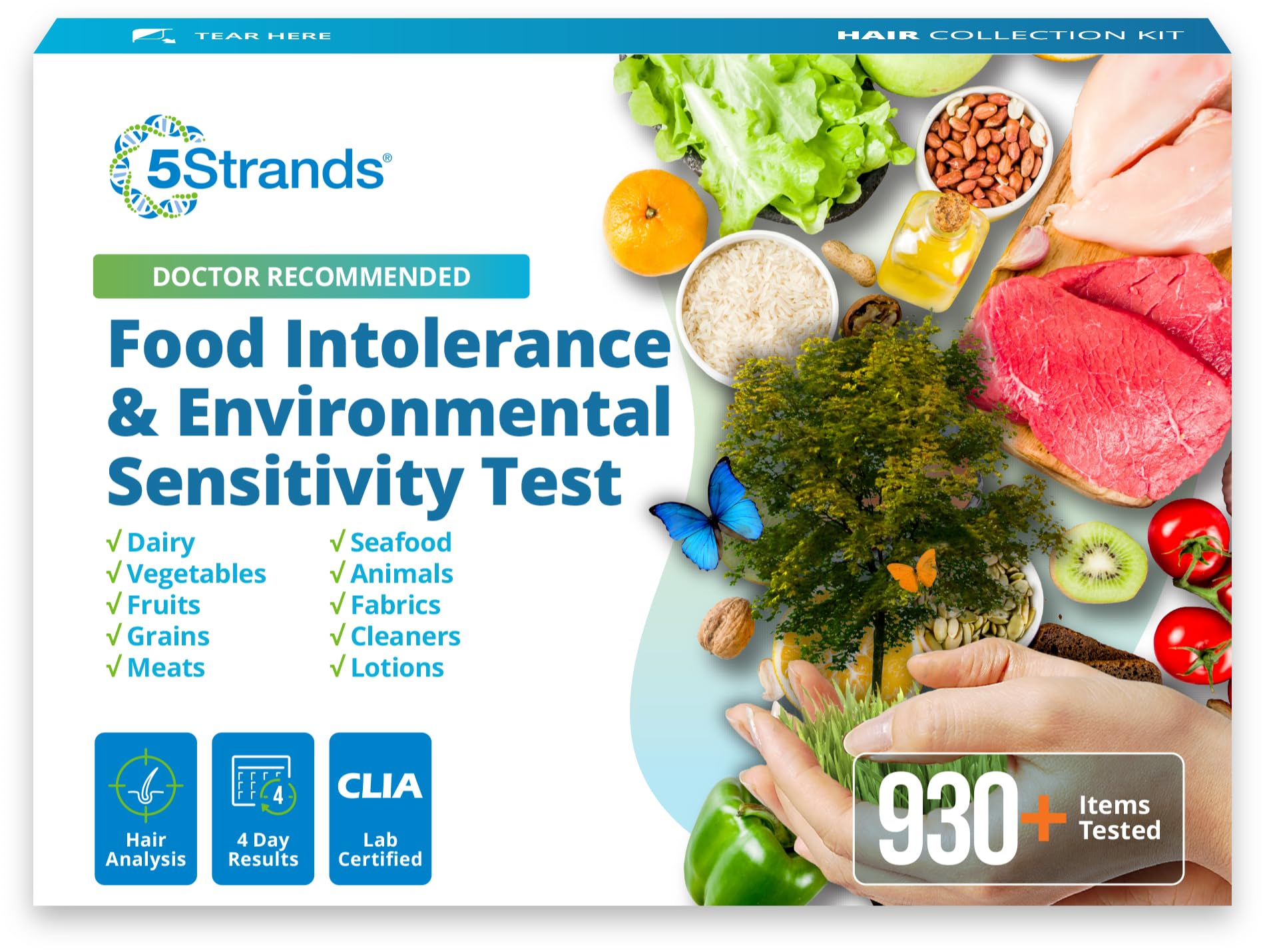
The 5Strands test stands apart from every other kit in this guide because it uses hair strand analysis rather than blood — no finger prick required. The kit tests for reactions to 658 foods and 282 environmental items including grasses, trees, molds, pollen, chemicals, fabrics, and pet dander. The sample collection involves cutting 10–15 strands of hair from anywhere on the body and mailing them to the 5Strands lab. Results are delivered via email or mobile app within four days of lab receipt, making this the fastest turnaround in the roundup.
For users who are needle-phobic, have children who fear blood draws, or are seeking a broad environmental screen alongside food sensitivities, the 5Strands hair-based method is uniquely accessible. The detailed report places each item into one of four severity levels (safe, moderate, reduce, remove), and many users who eliminated high-reactive items reported significant reductions in bloating, fatigue, and skin irritation. The company states that over 345,000 people and pets have used their testing service, and independent third-party research has been conducted to validate the methodology.
However, the hair analysis methodology is not accepted by conventional medical organizations for diagnosing food intolerance or environmental sensitivities. One well-documented user review demonstrated a 58% inconsistency rate when the same hair sample was tested twice one week apart under identical conditions — 286 out of 940 items changed by two or more severity levels. This reproducibility concern makes the 5Strands test most appropriate as a low-cost, low-commitment directional screening rather than a definitive diagnostic tool. The upgraded 950-item kit also received criticism for adding items that many users considered irrelevant while omitting some common trigger foods.
Why it’s great
- Hair-based collection eliminates needle anxiety entirely
- Tests 940 total items including 282 environmental triggers
- Fastest results in the roundup at 4 days from lab receipt
Good to know
- Hair analysis methodology shows reproducibility issues (58% inconsistency in a controlled retest)
- Results are directional only; not accepted by mainstream gastroenterology or allergology
FAQ
Can an at-home autoimmune test replace a diagnosis from my doctor?
What is the difference between an autoimmune test and a food sensitivity test?
Why are some at-home tests not available in New York or Rhode Island?
How many drops of blood do I really need for a dried blood spot test?
Final Thoughts: The Verdict
For most users, the at-home autoimmune test winner is the Choose Health 4-in-1 Thyroid Test because it measures the exact four markers needed to screen for Hashimoto’s, uses a CAP and CLIA accredited lab, and requires minimal blood volume. If you want a combined thyroid-hormone-adrenal panel in one go, grab the Everlywell Women’s Health Test. And for celiac-specific screening without a doctor visit, nothing beats the Everlywell Celiac Disease Screening Test for its specific tTG-IgA targeting.

Mo Maruf
I created WellFizz to bridge the gap between vague wellness advice and actionable solutions. My mission is simple: to decode the research and give you practical tools you can actually use.
Beyond the data, I am a passionate traveler. I believe that stepping away from the screen to explore new environments is essential for mental clarity and physical vitality.