Our readers keep the lights on and my smoothie glass nicely filled. As an Amazon Associate, I earn from qualifying purchases.
Choosing a drawing tablet is no longer a simple choice between screen or no screen. The market now floods with pressure sensitivity claims of 8K, 16K, and even 16K-plus, but the real test is how the pen feels in your hand during a three-hour line art session and whether the display’s laminated glass creates a parallax gap that throws off your cursor placement. Artists who ignore the gap between spec sheet numbers and actual drawing physics often end up with a tool that fights their hand.
I’m Mohammad Maruf — the founder and writer behind WellFizz. I’ve spent thousands of hours researching digital art workflows, analyzing driver stability across operating systems, and breaking down how features like full lamination, surface texture, and pressure curve actually impact brush stroke accuracy. This guide filters the noise to help you find the right canvas for your style and budget.
Whether you’re a beginner sketching in your bedroom or a professional rendering in 4K, the best artist tablet must balance responsiveness, color accuracy, and ergonomic comfort without unnecessary gimmicks.
How To Choose The Best Artist Tablet
A drawing tablet is a multi-year purchase that sits at the center of your creative workflow. Rushing the decision based on brand name alone leads to frustration with driver bugs, inadequate pressure response, or an active area that doesn’t match your monitor. Focus on these criteria first.
Screen vs. Screenless: The Real Trade-Off
Screenless tablets force you to look up at your monitor while drawing on a blank pad. This hand-eye disconnect is manageable for beginners and professionals who prefer a large, unobstructed drawing surface without the weight of a display. Pen displays, on the other hand, let you draw directly on the image, reducing the learning curve and improving accuracy for detailed work. The catch: they cost more, weigh more, and require a computer to operate unless you choose a standalone model running Android or iPadOS.
Pressure Sensitivity and Pen Technology
Pressure levels have climbed from 2K to 16K, but the difference between 8K and 16K is subtle in practice — what matters more is the initial activation force (IAF). A pen that registers your lightest brushstroke at 2 grams of force feels responsive; one that requires 5 grams will feel numb. Battery-free pens (electromagnetic resonance) are the standard for reliable performance. They never need charging and maintain consistent pressure response over years of use. The shape, grip material, and side button placement also affect long-session comfort, so look for a stylus with a silicone or textured rubber grip if you draw for hours.
Active Area, Resolution, and Color Accuracy
The active area should match or exceed the aspect ratio of your monitor (typically 16:9). A 10×6 inch surface works for casual sketching, but a 13.3-inch or 15.6-inch area reduces hand cramps and awkward arm movements when working on detailed compositions. For pen displays, resolution determines how crisp your reference images and UI elements appear — Full HD (1920×1080) is the baseline, while 2.5K and 4K panels offer noticeably sharper text and finer gradients. Color gamut coverage (sRGB and Adobe RGB) matters if your final artwork goes to print or client review.
Driver Stability and OS Support
A tablet with flawless hardware can feel broken if the driver software fights your operating system. Check recent user reviews for your specific OS — Windows, macOS, Linux, and Android all have different driver quirks. Some tablets require complicated permission grants on macOS, while others ship with drivers that fail after sleep mode on Windows. The safest bet is a brand with a mature, frequently updated driver suite and a track record of fixing reported bugs within weeks.
Quick Comparison
On smaller screens, swipe sideways to see the full table.
| Model | Category | Best For | Key Spec | Amazon |
|---|---|---|---|---|
| HUION Kamvas 13 (Gen 3) | Pen Display | Beginner to mid-level illustrators | 16K pressure, 13.3″ Full Lamination | Amazon |
| XPPen Artist13.3 Pro V2 | Pen Display | Color-critical digital painting | 125% sRGB, Red Dial, 16K pressure | Amazon |
| HUION Kamvas Pro 16 V2 | Pen Display | Professional studio work | 15.6″, Smart Touch Bar, 16K | Amazon |
| Wacom Cintiq 16 | Pen Display | Industry-standard reliability | 2.5K 16″ IPS, 99% DCI-P3 | Amazon |
| Apple iPad Pro 13″ (M5) | Standalone | Professional on-the-go creation | 13″ Ultra Retina XDR, M5 chip | Amazon |
| Wacom Cintiq Pro 17 | Pen Display | High-end professional production | 17.3″ 4K 120Hz touchscreen | Amazon |
| XPPen Deco Pro LW 2nd | Screenless | Wireless multi-device workflow | 9×6″, Bluetooth, 16K pressure | Amazon |
| HUION Inspiroy 2 Large | Screenless | Budget-friendly entry-level drawing | 10×6.5″, 8 custom keys + scroll | Amazon |
| Frunsi T8 | Standalone | Beginner no-PC workflow | 8″ FHD, Android 13, 2048 pressure | Amazon |
In-Depth Reviews
1. HUION Kamvas 13 (Gen 3)

The Kamvas 13 (Gen 3) delivers the most balanced package in the mid-range pen display market. Its 13.3-inch fully laminated screen uses Canvas Glass 2.0, which eliminates the distracting air gap that causes cursor misalignment on older models. The anti-sparkle coating reduces glare without introducing the grainy sparkle effect that plagues some etched-glass screens. Out of the box, the included ST300 adjustable stand lets you tilt the display comfortably, so you can draw without craning your neck.
PenTech 4.0 raises pressure sensitivity to 16,384 levels with a 2-gram initial activation force. That means even a featherlight stroke registers as a faint pencil mark in apps like Clip Studio Paint or Photoshop. The PW600L stylus features three customizable side buttons and a textured grip that prevents finger slip during long sessions. Color accuracy reaches an average Delta E under 1.5 with 99% sRGB coverage, making this display suitable for illustration work that will eventually go to print.
The dual dial controls and five shortcut keys can be customized per application, which speeds up zooming, brush resizing, and canvas rotation. A single USB-C cable carries video and data, reducing desk clutter. The main drawback is the 200-nit brightness, which feels dim compared to premium panels, and the display lacks touch functionality. Some users report inconsistent pressure response out of the box, usually resolved by adjusting the pressure curve in the driver settings.
Why it’s great
- Fully laminated screen with minimal parallax
- 16K pressure sensitivity with 2g IAF for delicate strokes
- Dual dial controls and customizable shortcut keys
- Factory-calibrated Delta E under 1.5
Good to know
- 200-nit brightness feels dim in brightly lit rooms
- No touchscreen support
- Requires computer connection — not standalone
2. XPPen Artist13.3 Pro V2
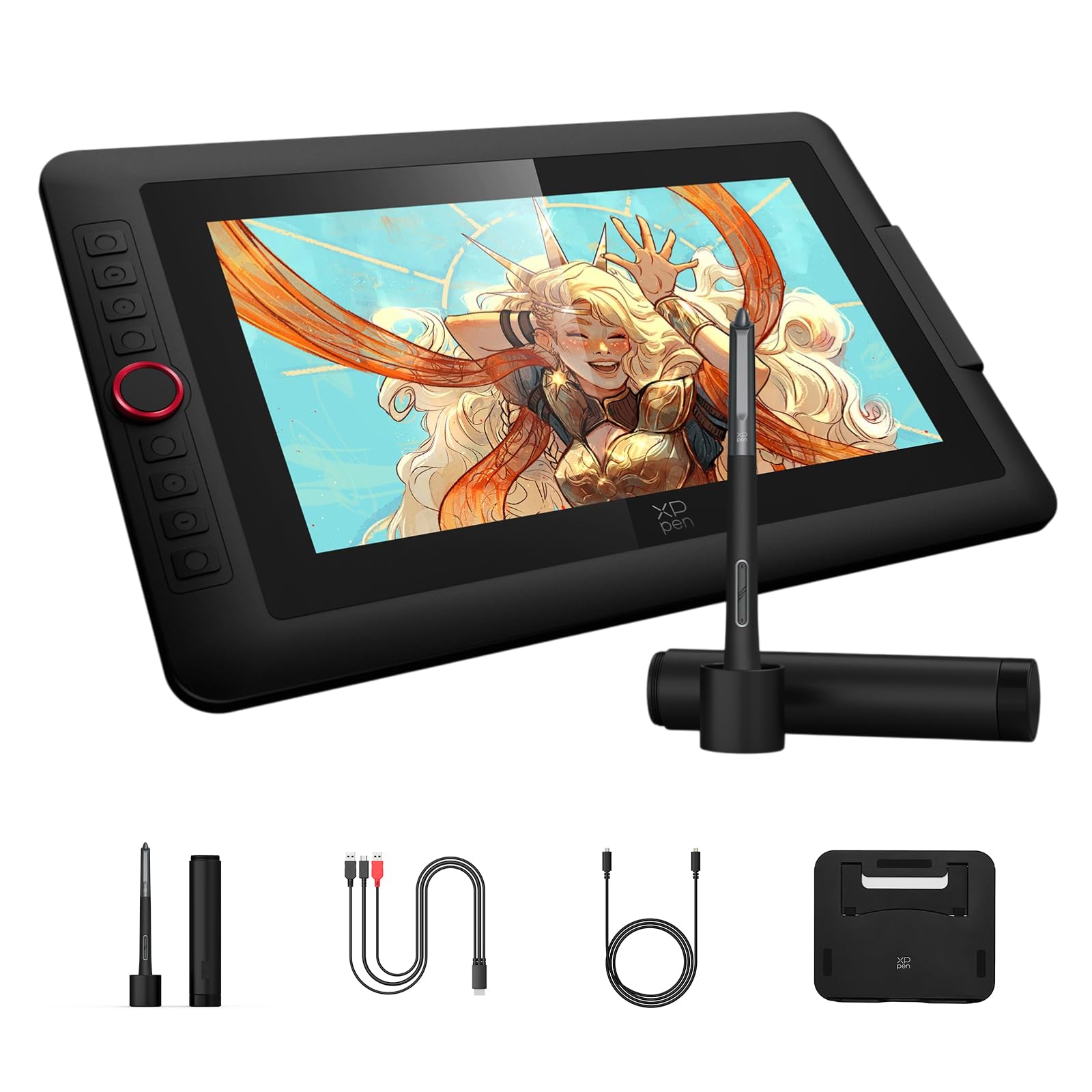
The Artist13.3 Pro V2 targets artists who prioritize wide color gamut and a streamlined interface. Its 125% sRGB coverage (99% sRGB coverage) and 95% P3 gamut make it one of the most color-accurate displays under . The 250 cd/m² brightness produces a noticeably punchier image than the Kamvas 13 Gen 3, which helps when working in brighter studio lighting. The full-laminated AG film screen reduces parallax effectively, though the surface texture is slightly smoother than the Kamvas’s paper-like feel.
The X3 Pro Smart Chip Stylus delivers 16K pressure levels with a 60-degree tilt function. Initial latency drops to 90 milliseconds, and the line accuracy is clean — no jitter on diagonal strokes at slow speeds. The Red Dial Quick Key is a physical rotary encoder that lets you adjust brush size or zoom without reaching for the keyboard. Eight customizable shortcut keys flank the left side, which is adequate for most workflows but lacks the dual-dial convenience of the Kamvas 13 Gen 3.
Setup is genuinely beginner-friendly: the driver installer auto-detects your OS and configures the active area, brightness, and pen buttons in a single package. However, some users report that the pen can scratch the display surface over time without a screen protector. A few reports of the tablet failing to wake from sleep mode on Windows exist, requiring a driver restart. The included foldable stand is functional but less stable than the ST300 stand that ships with the Kamvas.
Why it’s great
- Wide color gamut 125% sRGB with 250-nit brightness
- Red Dial Quick Key for tactile brush/zoom control
- X3 Pro stylus with low latency and tilt support
Good to know
- Pen can scratch screen — screen protector recommended
- Some driver stability issues after sleep mode
- Stand is less sturdy than competing models
3. HUION Kamvas Pro 16 V2
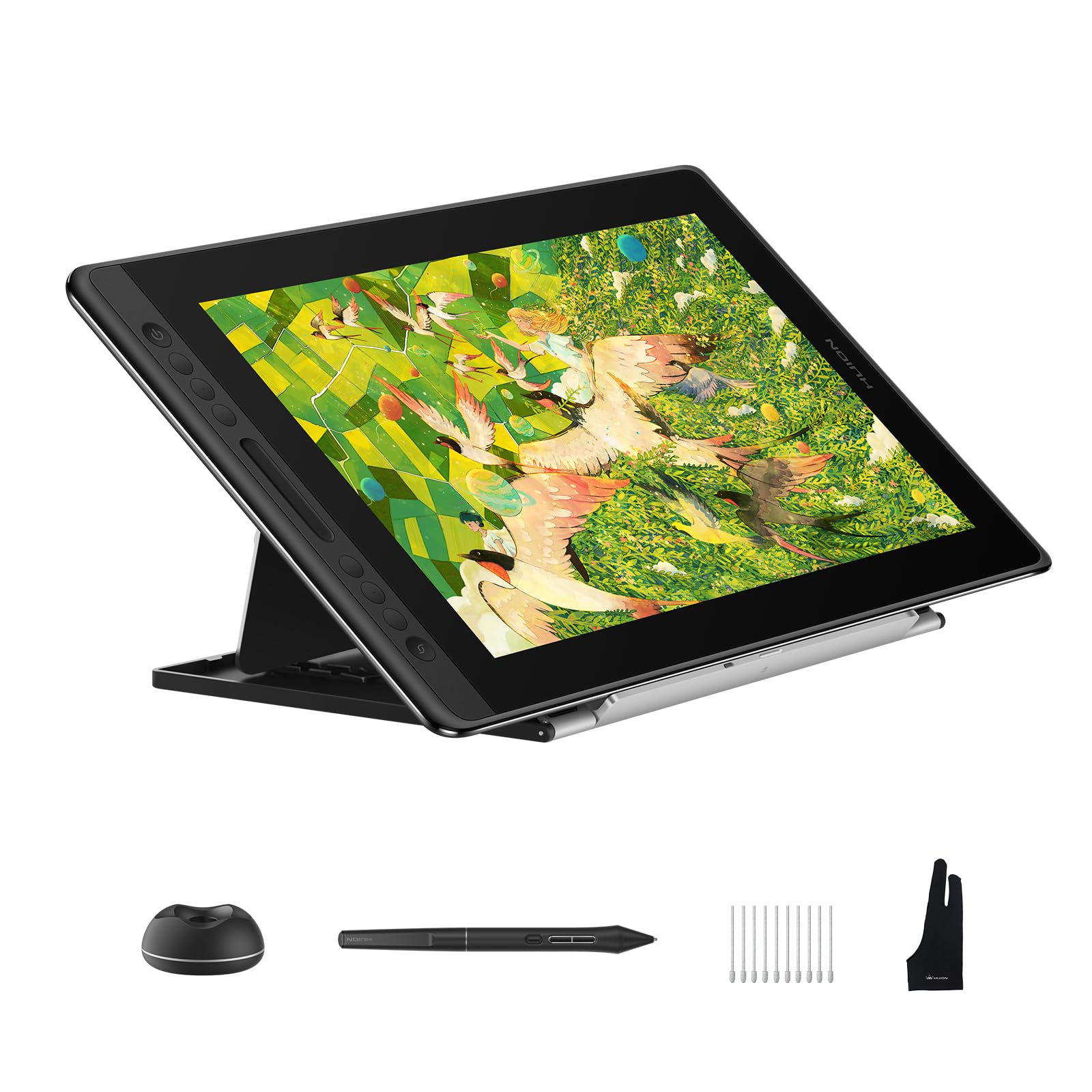
The Kamvas Pro 16 V2 is HUION’s answer to the professional segment, offering a 15.6-inch full-laminated anti-glare display with 120% sRGB color coverage. The larger active area (344x193mm) is a meaningful upgrade over 13-inch panels — you can rest your forearm on the tablet without crowding the canvas, and the extra space reduces the need to zoom and pan constantly. The Canvas Glass 2.0 surface provides a paper-like tooth that gives the pen tip a controlled drag, similar to drawing on a textured sketchbook page.
The Smart Touch Bar replaces the traditional scroll wheel with a capacitive strip that can be configured for zoom, brush size, or canvas rotation. Six dedicated Express Keys sit next to the Touch Bar, and you can map them to any keyboard shortcut per application. The PW600A stylus continues HUION’s PenTech 4.0 platform with 16K pressure sensitivity and a dust-proof grip that prevents the barrel from sliding. The stylus has a slightly thicker barrel than the PW110, which some users find more comfortable during extended rendering sessions.
The 3-in-1 cable system connects via a recessed USB-C port that locks the cable in place, preventing accidental disconnects when you shift the tablet. The included ST200 aluminum stand supports six tilt angles from 14.5 to 45 degrees. At just 2.65 pounds, it’s lighter than the Cintiq Pro 17 and easier to reposition. The main downsides are the 200-nit peak brightness (dim compared to premium options) and the lack of a touch layer, which means you cannot zoom or rotate with your fingers.
Why it’s great
- Large 15.6-inch active area reduces zooming and panning
- Smart Touch Bar offers intuitive gesture control
- Paper-like surface texture with minimal parallax
Good to know
- 200-nit brightness limits use in very bright rooms
- No touchscreen support
- Requires 3-in-1 cable connection to computer
4. Wacom Cintiq 16
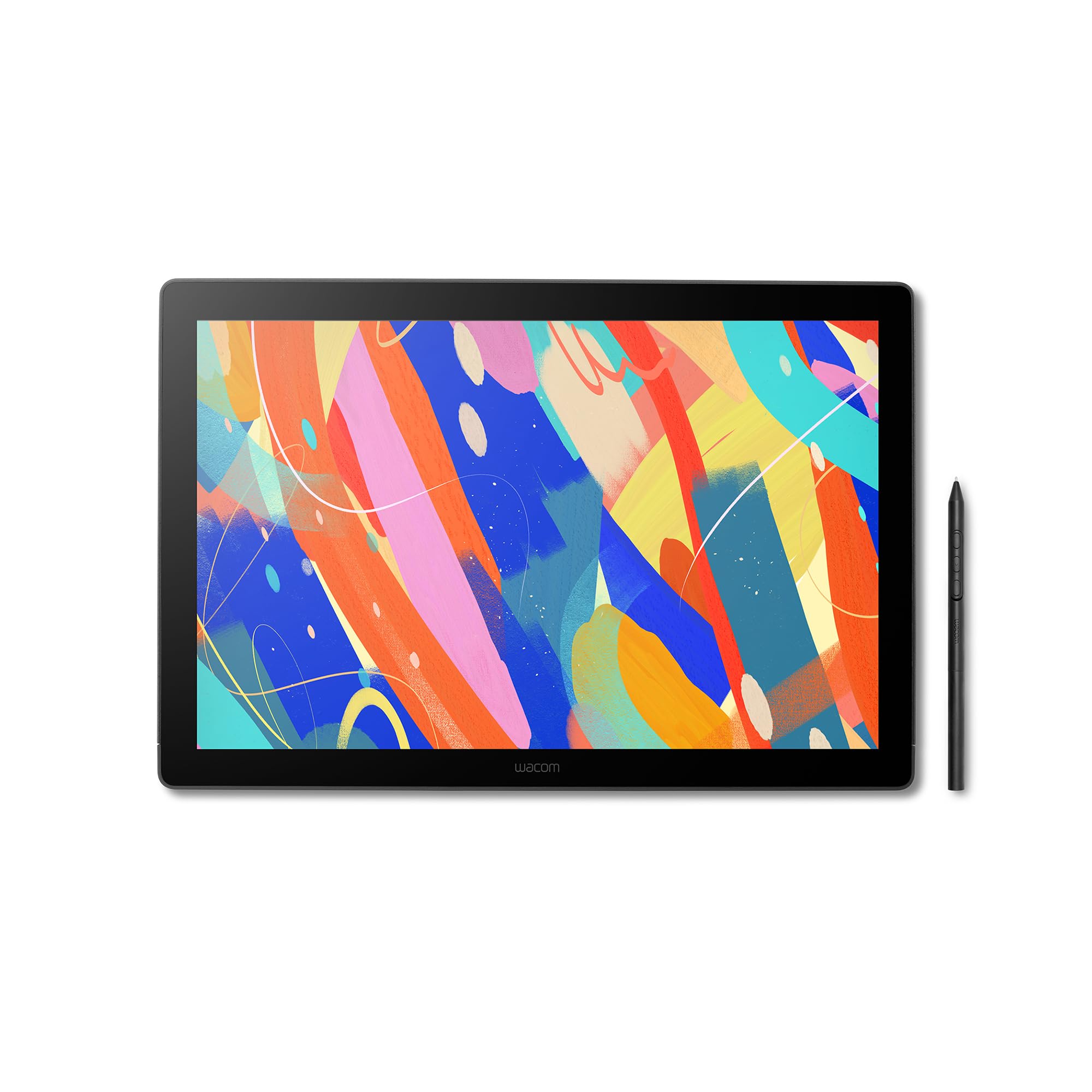
The Wacom Cintiq 16 offers a 16-inch IPS display with 2.5K WQXGA (2560×1600) resolution — significantly sharper than the 1080p panels common at this price tier. The anti-glare glass surface provides a controlled friction that mimics drawing on paper without the rainbow sparkle effect that appears on some competitors’ etched-glass panels. Color coverage hits 99% DCI-P3 and 100% sRGB with 8-bit color depth, making this display suitable for professional illustration, concept art, and animation.
The Pro Pen 3 uses Wacom’s electromagnetic resonance technology with 8,192 pressure levels and 60-degree tilt support. It includes three customizable side switches and a removable weight and balance piece, letting you adjust the center of gravity to match your preferred pen feel. The built-in fold-out legs provide a 20-degree working angle without needing a separate stand — useful for travel, though a dedicated stand offers better ergonomics for long sessions.
Driver installation on macOS requires multiple permission grants (keystroke monitoring and accessibility), which can feel invasive but is standard for Wacom’s input system. The tablet connects via USB-C with DisplayPort Alt Mode or Thunderbolt 3/4. Some users note that the Pro Pen 3’s slim barrel and stiff buttons feel less comfortable than the older Pro Pen 2, and the lack of ExpressKeys on the tablet body forces you to rely on keyboard shortcuts or an external remote. The absence of a Mini-HDMI cable in the box is a minor but annoying omission.
Why it’s great
- Sharp 2.5K resolution on a 16-inch IPS panel
- Professional-grade color coverage (99% DCI-P3)
- Adjustable pen weight and center of balance
Good to know
- No ExpressKeys on the tablet body
- Pro Pen 3 barrel is slim with stiff buttons
- Requires additional purchases for ergonomic stand
5. Apple iPad Pro 13″ (M5)

The iPad Pro 13-inch with the M5 chip is the most powerful standalone drawing device available. The Ultra Retina XDR display with ProMotion (120Hz refresh rate) produces fluid, lag-free strokes with the Apple Pencil Pro. The 13-inch screen size matches an 8.5×11-inch sheet of paper, and at 1.28 pounds with a thickness of 0.2 inches, it’s far more portable than any tethered pen display. The M5 chip handles multi-layer compositions in Procreate, Clip Studio Paint, and Adobe Fresco without stutter, even with complex brush engines.
The Apple Pencil Pro adds squeeze gesture, barrel rotation, and haptic feedback for tool switching — features that no third-party stylus matches. The display supports P3 wide color and True Tone, ensuring your colors remain consistent across lighting conditions. The four-speaker audio system and 12MP front-facing camera with Center Stage make this tablet equally capable for video calls and portfolio reviews. Battery life easily spans a full day of drawing, with fast charging that brings the device from 50% to 80% in under an hour with a 35W charger.
The main barrier is the total cost of the ecosystem. The iPad Pro base configuration starts at a high price point, and the Apple Pencil Pro and Magic Keyboard are sold separately. The iPad runs iPadOS, which means desktop versions of applications like Photoshop lack full feature parity with macOS and Windows. File management and external display support are more limited than a traditional computer setup. For artists who value portability and a mature app ecosystem, however, the iPad Pro remains the most versatile standalone option.
Why it’s great
- 120Hz ProMotion display with P3 wide color
- Apple Pencil Pro with squeeze and haptic feedback
- Full standalone operation — no computer required
Good to know
- High total cost with accessories sold separately
- iPadOS limits full desktop software parity
- File management and external display support are restricted
6. Wacom Cintiq Pro 17

The Cintiq Pro 17 is Wacom’s most advanced mid-size pen display, featuring a 17.3-inch Ultra HD 4K panel with a 120Hz refresh rate. The 10-bit display delivers smooth color gradients and near-zero latency, which is critical for fast-paced animation and VFX work. The etched glass surface provides a controlled friction that feels like drawing on paper, but the matte coating can create a slight fuzziness on text compared to glossy displays — a trade-off most artists accept for the tactile feedback.
The Pro Pen 3 offers adjustable weight and center of balance via interchangeable grips and a balance piece. The 8,192 pressure levels require a light touch to activate, and the three side switches are programmable via the Wacom driver. The Cintiq Pro 17 also includes 10-point multi-touch, which allows pinch-to-zoom and two-finger panning. This is a meaningful workflow advantage over non-touch displays — you can zoom into a detail with one hand while drawing with the other. The 8 ExpressKeys can be configured per application, but the pen holder’s position can block some buttons depending on your setup.
The Easy Stand provides a fixed-angle height, but it’s overpriced and wobbles slightly during use. The fan noise is minimal — barely audible in a quiet room. The panel runs on USB-C with Thunderbolt 4 support, keeping cable management simple. The 4.9-pound weight makes it lighter than the previous generation, but it’s still desk-bound. A few users report that the side buttons are positioned poorly for left-handed use, and the rubberized ExpressKey surface collects dust, requiring frequent cleaning.
Why it’s great
- 4K resolution with 120Hz refresh rate for near-zero latency
- 10-point multi-touch for intuitive canvas control
- Adjustable pen weight and center of balance
Good to know
- Etched glass reduces text sharpness slightly
- Easy Stand is overpriced and not very stable
- Some button placement issues for left-handed users
7. XPPen Deco Pro LW 2nd

The Deco Pro LW 2nd is a screenless tablet that prioritizes wireless freedom and a premium build. It connects via Bluetooth 5.0, a USB wireless receiver, or a wired USB-C connection, and it can pair with two devices simultaneously — switching between them with a single button press. The 1000mAh lithium battery provides over 10 hours of continuous use, so you can work through a full day of sketching without hunting for a charging cable. The metal back plate helps dissipate heat and gives the tablet a solid, premium feel at 1.2 pounds.
The X3 Pro Smart Chip Stylus delivers 16K pressure levels with a 60-degree tilt function. The pen has a well-balanced weight and a silicone grip that reduces hand fatigue. The active area measures 9 x 6 inches, which is adequate for most screenless workflows but may feel cramped if you’re used to larger surfaces. The included Wireless Shortcut Remote with 10 keys adds extra programmable shortcuts without cluttering the tablet surface, and you can configure up to four sets of shortcuts for different applications.
Bluetooth wireless mode is not compatible with Android 10 or later or Linux, which limits its utility for mobile artists working on smartphones. Some users report minor Bluetooth lag in demanding 3D applications like Maya and ZBrush, though the wired USB-C connection eliminates this issue entirely. The pen nibs wear out faster than expected — two nibs lasting 10 days was reported by a heavy user, and the lack of available screen protectors for the drawing surface is a concern for those who press hard.
Why it’s great
- Bluetooth 5.0 + wireless receiver + wired options
- Dual-device pairing with one-click switching
- X3 Pro stylus with 16K pressure and tilt support
Good to know
- Bluetooth not compatible with Android 10+ or Linux
- Pen nibs wear out relatively quickly
- Active area may feel small for some users
8. HUION Inspiroy 2 Large

The Inspiroy 2 Large is a screenless tablet that punches above its price point. The 10×6.5-inch active area is one of the largest in the budget tier, giving you ample room for broad arm gestures without feeling cramped. The PW110 stylus uses PenTech 3.0, which reduces line wobble and improves tracking accuracy compared to the previous generation. The pen is battery-free and features a slim body with a soft silicone grip — a noticeable ergonomic improvement over the hard plastic pens found on cheaper models.
The tablet includes a unique scroll wheel and three sets of eight customizable shortcut keys (24 total programmable shortcuts). You can map different shortcuts to different applications and switch between sets with a button press, which accelerates workflows in apps like Krita, MediBang, and Photoshop. The slim design (less than 0.3 inches thick) and 1.2-pound weight make it easy to slip into a laptop bag. It connects via USB-C and supports Windows, macOS, Linux, and Android devices running OS 6.0 or later.
The driver software receives mixed reviews — some users report that the tablet buttons map input to the wrong portion of the screen, requiring a driver reinstallation to fix. The pressure sensitivity has a dead zone in the first 40% of the curve, which may feel unresponsive if you prefer very light strokes. The tablet is not standalone and must remain connected to a computer or Android device to function. Despite these quirks, the Inspiroy 2 Large remains the best value for beginners who want a large active area without spending heavily.
Why it’s great
- Large 10×6.5-inch active area at an entry-level price
- Scroll wheel and 24 programmable shortcuts
- Battery-free pen with silicone grip
Good to know
- Driver software has some button mapping bugs
- Pressure sensitivity has a dead zone in the lightest range
- Not standalone — requires computer or Android device
9. Frunsi T8
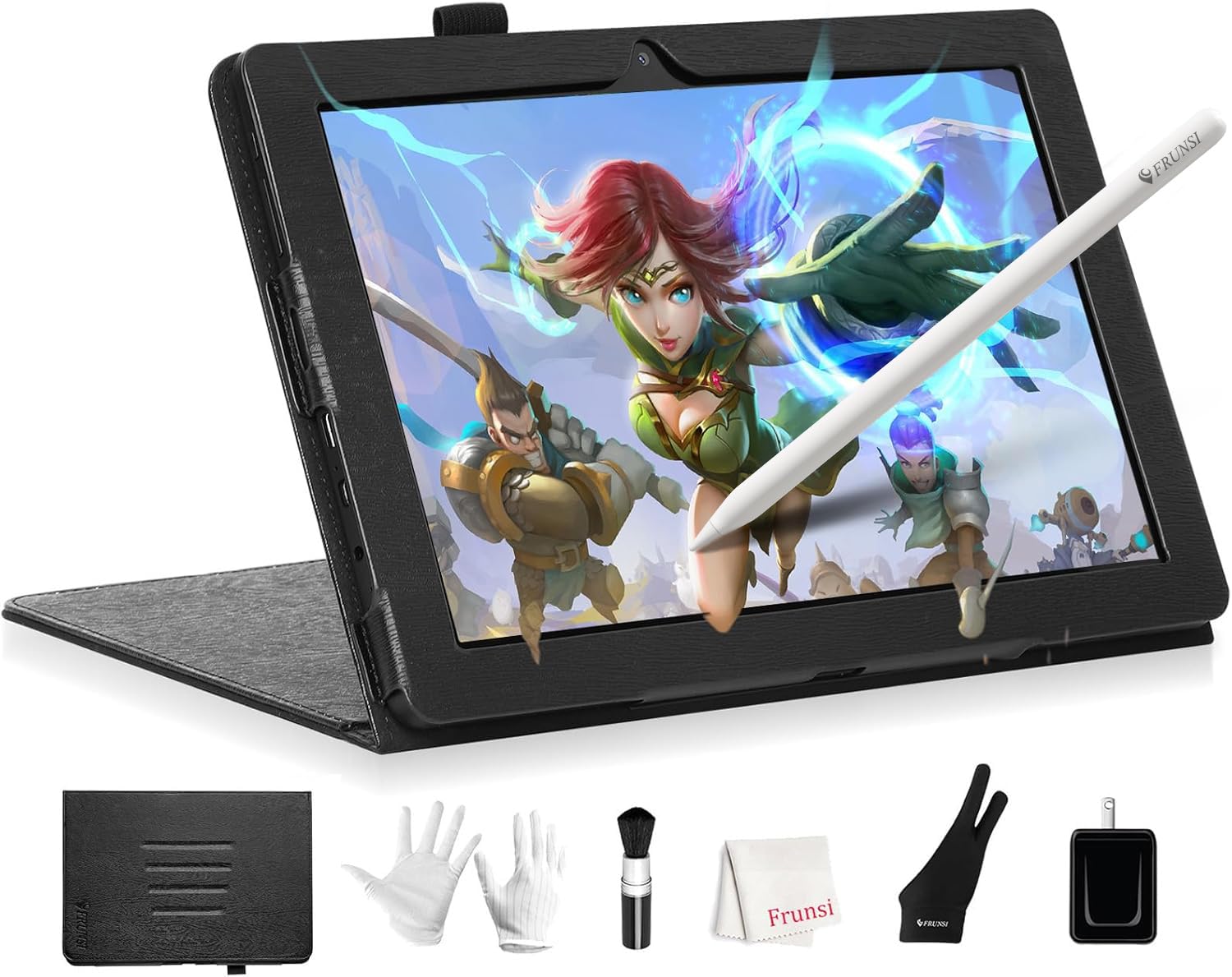
The Frunsi T8 is a standalone drawing tablet that runs Android 13, which means you do not need a computer to start creating. The 8-inch FHD display (1200×800 resolution) is compact and portable, fitting easily into a small bag or backpack. The tablet comes pre-installed with drawing apps and tutorials, making it a turnkey solution for beginners who want to start sketching immediately after unboxing. The included detachable keyboard, stylus pen, screen protector, and cleaning cloth add genuine value for the price.
The tablet is powered by a quad-core CPU with 4GB RAM and 64GB of storage, expandable to 256GB via microSD. This configuration runs apps like SketchBook, Krita, Ibis Paint X, and Clip Studio Paint without major issues, though taxing brushes and fast diagonal lines can cause some lag and jitter. The 2048 levels of pressure sensitivity are entry-level — you will notice fewer gradations between light and heavy strokes compared to 8K or 16K pens. The 4000mAh battery is rated for up to 20 hours of drawing, but real-world usage with Wi-Fi and high brightness drops this to around 3.5 hours in intensive applications.
Customer service receives consistent praise for fast and friendly warranty replacements. The included case and magnetic stand are convenient, though the stand lacks a pen holder. The tablet lacks palm rejection, which can cause accidental marks when resting your hand on the screen during detailed work. A few users report drawing delay when the battery level is low, so keeping the tablet charged is important for consistent performance. For absolute beginners exploring digital art without committing to a PC setup, the Frunsi T8 is a functional, low-risk entry point.
Why it’s great
- Standalone operation — no computer required
- Includes keyboard, stylus, screen protector, and case
- Expandable storage up to 256GB
Good to know
- Low pressure sensitivity (2048 levels) limits nuance
- Battery life drops to ~3.5 hours with heavy use
- No palm rejection technology
FAQ
Can I use a drawing tablet without a computer?
How many pressure sensitivity levels do I really need?
Does the stylus need batteries or charging?
Will my drawing tablet work with Linux or Android?
Final Thoughts: The Verdict
For most users, the best artist tablet winner is the HUION Kamvas 13 (Gen 3) because it delivers a fully laminated 13.3-inch display with 16K pressure sensitivity, dual dial controls, and factory-calibrated color accuracy at a mid-range price point that doesn’t compromise on essential features. If you want industry-standard reliability and a sharper 2.5K display, grab the Wacom Cintiq 16. And for professional artists who need 4K resolution, multi-touch, and a 120Hz refresh rate, nothing beats the Wacom Cintiq Pro 17.

Mo Maruf
I created WellFizz to bridge the gap between vague wellness advice and actionable solutions. My mission is simple: to decode the research and give you practical tools you can actually use.
Beyond the data, I am a passionate traveler. I believe that stepping away from the screen to explore new environments is essential for mental clarity and physical vitality.