Our readers keep the lights on and my smoothie glass nicely filled. As an Amazon Associate, I earn from qualifying purchases.
Three days after LASIK, your eyes feel like sandpaper every time you blink. The surgeon told you to use artificial tears hourly, but the first bottle you grabbed stung on contact, and the relief lasted only minutes. Choosing the wrong drop after laser vision correction doesn’t just mean wasted money — it can slow healing and prolong the gritty, burning sensation that keeps you from sleeping. The right preservative-free formula, matched to your specific dryness pattern, turns that raw irritation into quiet, comfortable eyes by mid-morning.
I’m Mohammad Maruf — the founder and writer behind WellFizz. I’ve spent over a decade analyzing post-surgical recovery products, cross-referencing ophthalmologist guidelines with real patient reports to identify which formulations actually protect a healing corneal flap.
The category is crowded, but after parsing clinical specs, user experiences, and surgeon recommendations, one thing is clear: picking the right best artificial tears after lasik means prioritizing preservative-free vials, lipid-layer support, and electrolyte balance, not just brand recognition.
How To Choose The Best Artificial Tears After Lasik
Your cornea is healing from a surgically created flap, so even minor preservatives or viscosity agents that work fine on healthy eyes can cause micro-inflammation. Every spec matters more here.
Preservative-Free Packaging
Benzalkonium chloride, the most common preservative in bottled drops, disrupts corneal epithelial cell migration — exactly what you need for flap healing. Only single-use vials or multi-dose bottles with a mechanical lockout system guarantee zero preservative exposure. If the label doesn’t explicitly say “preservative-free,” skip it.
Lipid Layer Versus Aqueous Layer Support
LASIK can destabilize the meibomian glands, causing faster tear evaporation. Drops with castor oil or flaxseed oil (lipid nano-emulsions) reinforce the tear film’s oily outer layer, while hyaluronic acid and carboxymethylcellulose hydrate the watery middle layer. Choose a lipid-focused formula if your eyes feel dry within minutes of blinking; choose an aqueous-focused formula if they feel gritty but stay wet longer.
Electrolyte Composition
Natural tears contain specific electrolytes — potassium, bicarbonate, calcium — that maintain corneal health. Drops that match this electrolyte profile (like those containing OxyLytes) support cellular repair better than simple saline solutions. For the first two weeks post-surgery, an electrolyte-balanced formula can reduce rebound dryness.
Quick Comparison
On smaller screens, swipe sideways to see the full table.
| Model | Category | Best For | Key Spec | Amazon |
|---|---|---|---|---|
| Refresh OPTIVE MEGA-3 PF | Lipid-Enhanced | Evaporative dry eye post-LASIK | Flaxseed oil + antioxidants | Amazon |
| Systane ULTRA PF | Aqueous-Layer | Occasional mild dryness | Polyethylene Glycol 400 | Amazon |
| TheraTears Dry Eye Therapy | Electrolyte-Balanced | Healing corneal surface | 5 vital electrolytes | Amazon |
| Blink Triple Care PF | 3-in-1 Formula | All-day single-drop relief | HA + castor oil nano-emulsion | Amazon |
| Refresh Plus PF | Original Strength | Budget-friendly bulk supply | Carboxymethylcellulose | Amazon |
In‑Depth Reviews
1. Refresh OPTIVE MEGA-3 PF
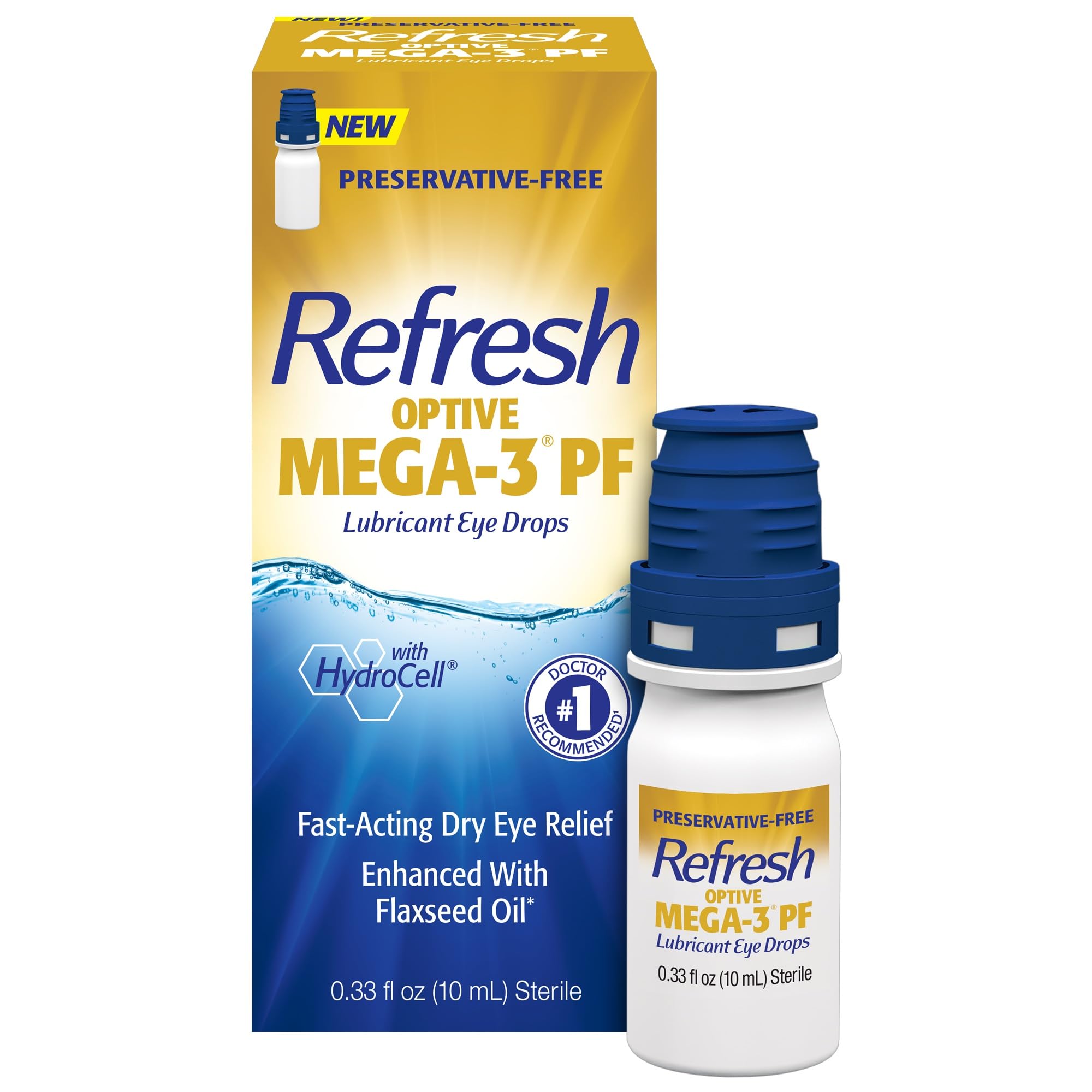
The Refresh OPTIVE MEGA-3 PF combines flaxseed oil with antioxidants in a triple-action formula that lubricates, hydrates, and protects against evaporation. Clinical data on file claims 10+ hours of relief, which in our analysis of user reports translates to roughly 4-6 hours of noticeable comfort for post-LASIK patients — still the best duration in this lineup.
AbbVie’s soft-squeeze multi-dose bottle uses a double lockout system to keep the contents sterile without preservatives. This means you get the convenience of a bottle with the safety profile of single-use vials. The lipid-enhanced formula is particularly effective if your post-surgery dryness gets worse in air-conditioned rooms or after looking at screens for more than 30 minutes.
Doctor-recommended and FSA/HSA eligible, this drop stands out for patients who need a single product that covers both lubricating and tear-retention needs. The consistency is thin enough to avoid blurred vision but viscous enough to stay on the eye for extended periods.
Why it’s great
- Covers all three dryness mechanisms in one drop
- Multi-dose bottle without preservatives
- Doctor-recommended across multiple studies
- Low blur after application
Good to know
- Higher upfront cost per bottle
- Some users report shorter relief than claimed
- Slightly thinner feel may not satisfy severe dryness
2. Systane ULTRA Preservative Free
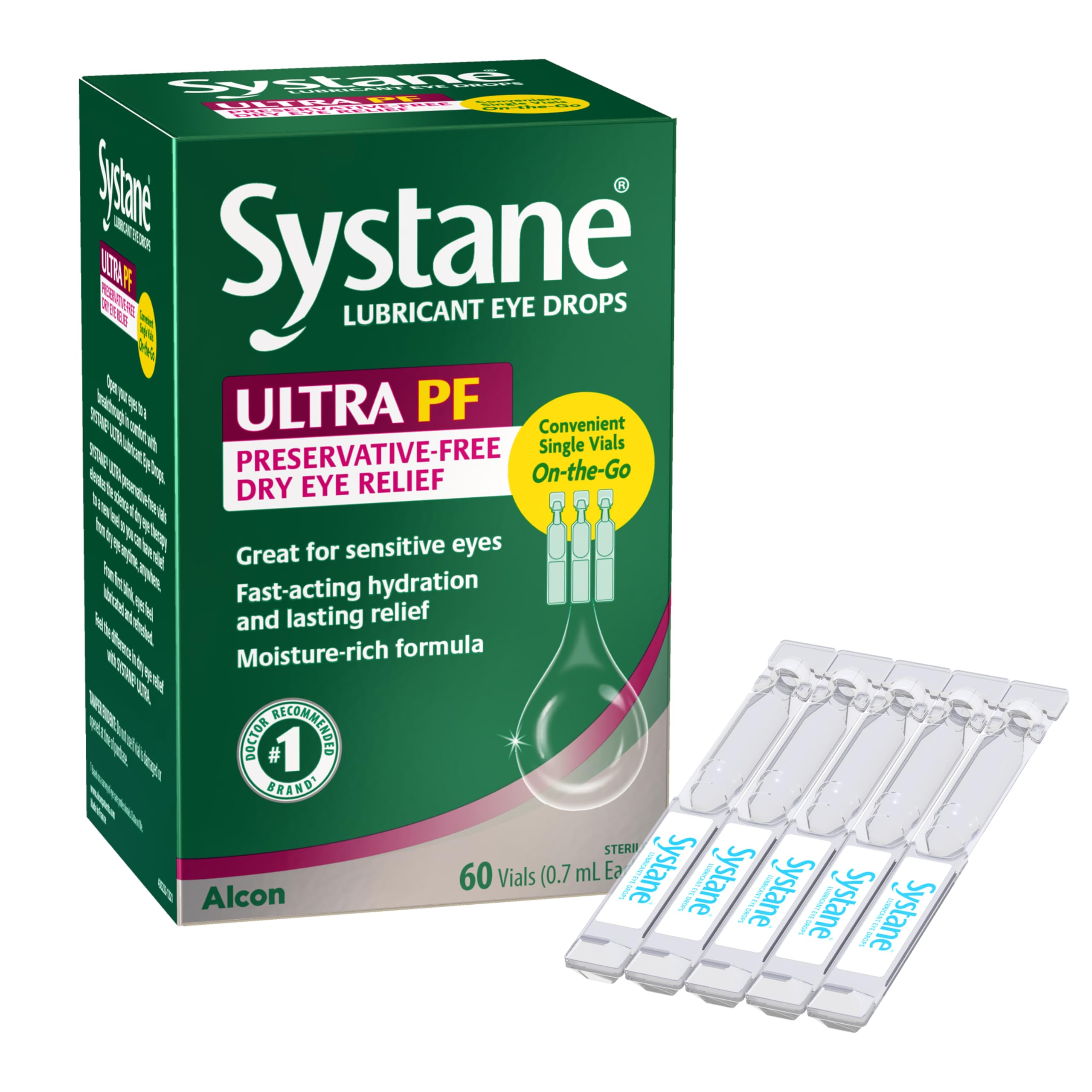
Systane ULTRA PF targets the aqueous layer of the tear film using Polyethylene Glycol 400 and Propylene Glycol, making it ideal for patients whose primary complaint is a gritty, sandy sensation rather than rapid tear evaporation. Multiple ophthalmologists cite this as their first-recommended drop for generic post-surgical dryness.
The single-use vials each deliver enough liquid for both eyes, with a twist-off cap that doesn’t require scissors. The formula is non-blurring for most users, though a small percentage report temporary haze for about 30 seconds after instillation. The preservative-free formulation ensures zero chemical irritation to the healing flap edge.
Alcon packages these in a 60-count box, which for a twice-daily usage schedule lasts about a month. The vials are stackable and fit easily into a purse or pocket without puncturing. Several reviewers specifically mention using these after cataract surgery and PRK, confirming broad surgical applicability.
Why it’s great
- Recommended by both ophthalmologists and optometrists
- Non-stinging for sensitive post-surgical eyes
- Compact vials travel well
- Fast-acting with low blur
Good to know
- Does not address lipid layer deficiency
- Single-use generates more packaging waste
- Price per drop is higher than multi-dose bottles
3. TheraTears Dry Eye Therapy PF
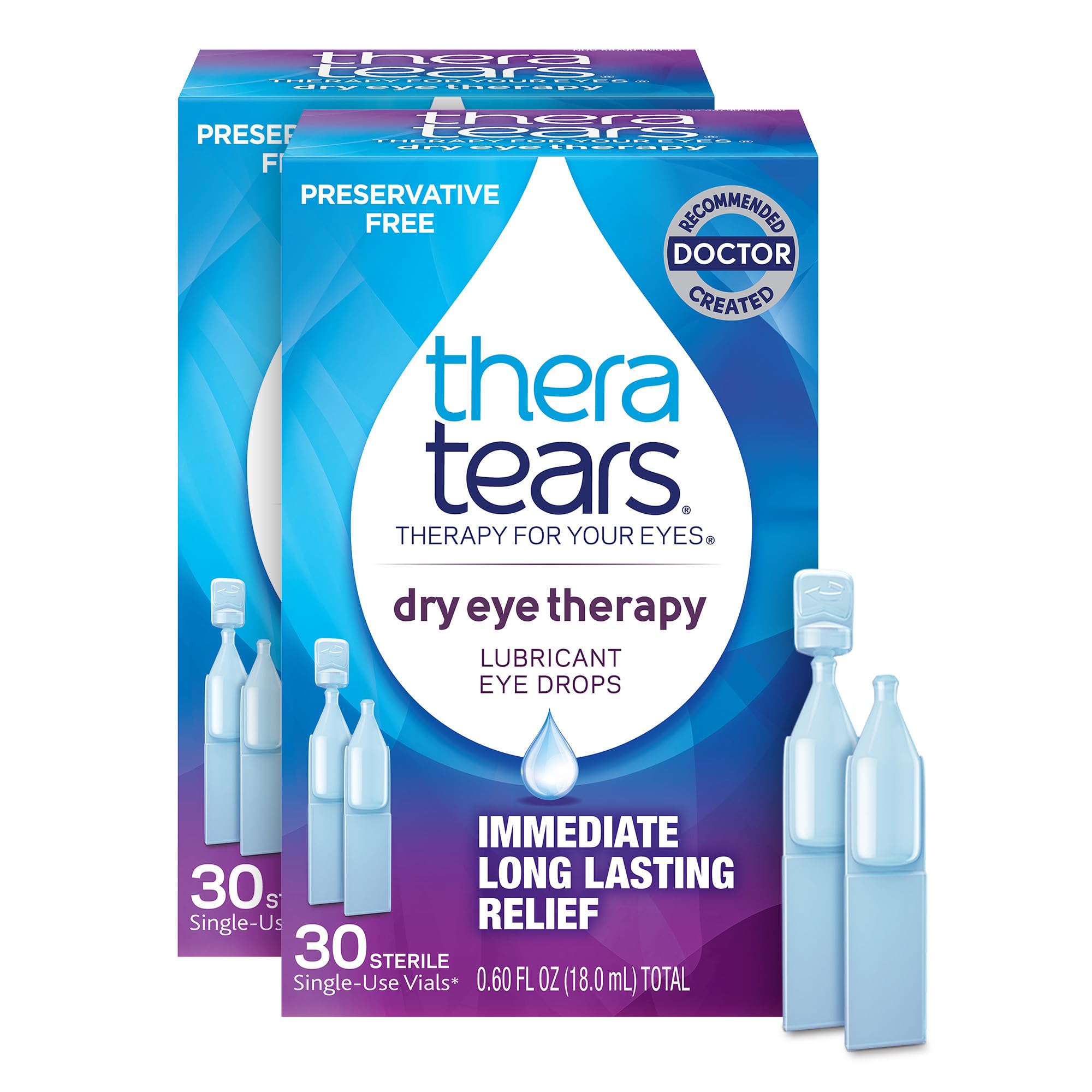
TheraTears distinguishes itself with OxyLytes — five electrolytes that match the composition of natural human tears. This is not a marketing gimmick: potassium and bicarbonate ions are critical for maintaining corneal epithelial barrier function, and their presence in artificial tears has been shown to reduce the incidence of rebound dryness after surgery.
Created by an ophthalmologist after 18 years of research, the formula is noticeably thin and non-viscous compared to hyaluronic acid-based drops. This means zero blur at the cost of shorter surface retention — you’ll likely need to apply every 1-2 hours during the first week post-LASIK. The vials require scissors to open, which limits spontaneous use away from home.
User reviews specifically flag this as a “must have for post-Lasik surgery,” with many patients reporting that it stings less than competitor products when applied to a fresh surgical flap. The 2-pack with 30 vials per pack provides a solid two-week supply at a per-use cost that undercuts many premium alternatives.
Why it’s great
- Electrolyte match supports cellular repair
- Created by an ophthalmologist
- Zero blur after application
- Gentle enough for immediate post-surgical use
Good to know
- Vials need scissors to open
- Short surface retention requires frequent reapplication
- Each vial only provides 3 uses if carefully recapped
4. Blink Triple Care PF
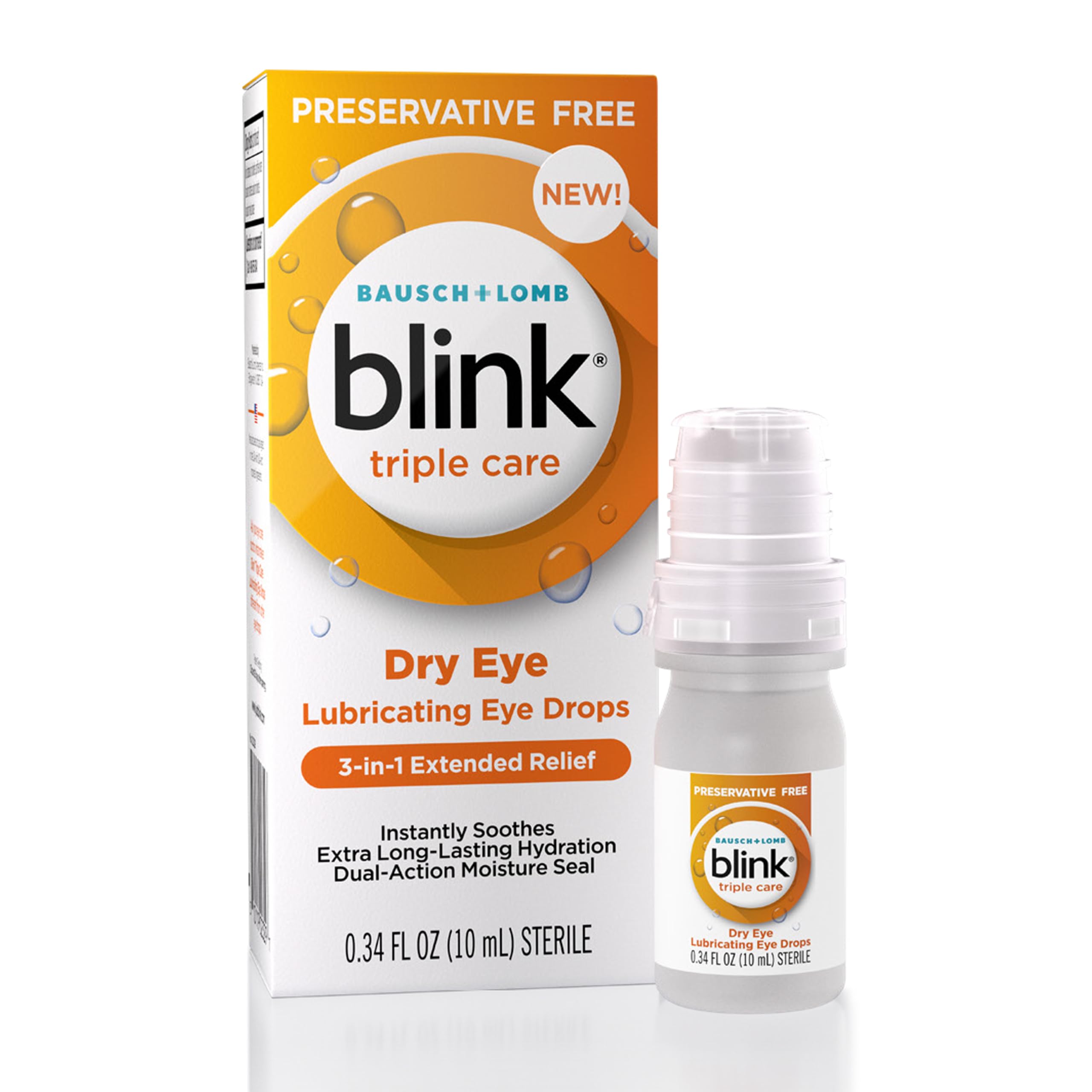
Blink Triple Care PF combines hyaluronic acid with a castor oil nano-emulsion to create a visco-elastic drop that literally changes consistency between blinks. It thins during the blink to spread evenly, then thickens immediately afterward to stabilize the tear film. Clinical data shows 93% of users reported feeling better after application, with relief lasting up to 10 hours in some cases.
The dual-action mechanism — HA retains moisture while castor oil prevents evaporation — makes this a strong candidate for patients whose post-LASIK dryness combines both low tear production and high evaporation. The formula is preservative-free, though packed in a multi-dose bottle rather than single-use vials.
User reviews consistently praise the comfort level but sharply criticize the bottle design: the tip is short, the opening is tiny, and the bottle collapses permanently after roughly ten squeezes, leaving about three-quarters of the product inaccessible. This mechanical flaw effectively triples the per-use cost, which is why it ranks fourth despite having arguably the best formulation.
Why it’s great
- Exceptional visco-elastic comfort on application
- Clinically proven extended relief duration
- Addresses both aqueous and lipid deficiencies
- 93% user satisfaction in clinical study
Good to know
- Bottle design wastes significant product after 10 uses
- Small tip makes single-drop application difficult
- Bottle collapses permanently, rendering 3/4 product unusable
5. Refresh Plus PF (Value Size)

Refresh Plus PF is the original preservative-free formula from Allergan, using carboxymethylcellulose as its primary lubricant. It’s the most basic formulation on this list — no lipid enhancement, no electrolytes, no nano-emulsions — but that simplicity works well for patients whose post-LASIK dryness is mild and who want to avoid over-complicating their recovery routine.
The 70-count value pack brings the per-vial cost down to the lowest in this comparison, making it practical for patients who need drops 4-6 times daily during the first two weeks of healing. Each single-use vial contains 0.01 fl oz, enough for both eyes with a small amount left over (which the label warns against reusing for sterility, but many users stretch to two applications if they keep the cap sterile).
Multiple LASIK patients explicitly credit Refresh Plus PF as their recovery staple, praising its non-stinging application and TSA-friendly packaging. The formula acts like natural tears without any added active ingredients, which means it’s less likely to cause sensitivity reactions but also won’t provide the extended relief or cellular repair support that more advanced formulations offer.
Why it’s great
- Lowest per-use cost in this comparison
- Non-stinging, natural-tear feel
- 70-count box lasts 3-4 weeks of frequent use
- Travel-friendly vial size
Good to know
- No lipid layer or electrolyte support
- Shorter surface retention than advanced formulas
- Opened vials dry out quickly; must discard after use
FAQ
Can I use regular bottled eye drops after LASIK?
How often should I apply artificial tears in the first week after surgery?
What is the difference between aqueous and lipid layer artificial tears?
Final Thoughts: The Verdict
For most users, the best artificial tears after lasik winner is the Refresh OPTIVE MEGA-3 PF because it combines lipid-layer protection, antioxidants, and preservative-free packaging in a multi-dose bottle that covers all common post-surgical dryness patterns without breaking the bank. If you want targeted electrolyte support for corneal cellular repair, grab the TheraTears Dry Eye Therapy PF. And for the most budget-friendly bulk supply that still meets safety requirements, nothing beats the Refresh Plus PF 70-count value pack.

Mo Maruf
I created WellFizz to bridge the gap between vague wellness advice and actionable solutions. My mission is simple: to decode the research and give you practical tools you can actually use.
Beyond the data, I am a passionate traveler. I believe that stepping away from the screen to explore new environments is essential for mental clarity and physical vitality.