Our readers keep the lights on and my smoothie glass nicely filled. As an Amazon Associate, I earn from qualifying purchases.
After cataract surgery, your eye’s natural tear film is disrupted, and the prescribed antibiotic or steroid drops often sting, leaving you with a raw, gritty sensation that over-the-counter options can’t always fix. The wrong artificial tear can blur your vision, introduce preservatives to a healing surface, or simply not last through a long blink-free night.
I’m Mohammad Maruf — the founder and writer behind WellFizz. I’ve spent years analyzing the formulation chemistry, vial sterility protocols, and clinical study data behind post-surgical eye care products so you don’t have to wade through conflicting recommendations.
This guide breaks down the five most surgeon-recommended and patient-tested preservative-free options to help you find the best artificial tears after cataract surgery for your specific healing timeline and sensitivity level.
How To Choose The Best Artificial Tears After Cataract Surgery
Selecting the wrong drop can delay healing or cause irritation. Focus on these three factors before buying.
Preservative-Free Is Non-Negotiable
Healing corneal incisions are highly sensitive to benzalkonium chloride and other preservatives found in standard artificial tears. These chemicals can disrupt epithelial cell migration and increase inflammation. Only preservative-free formulations should touch a post-surgical eye.
Viscosity and Blur Factor
Thicker drops like gels provide longer-lasting relief but often blur vision for 10–20 minutes after instillation. Thinner drops provide instant clarity but may need reapplication more often. For daytime use, a medium-viscosity drop strikes the best balance between comfort and visual function.
Vial vs. Multi-Dose Bottle Design
Single-dose vials guarantee maximum sterility since each unit is opened fresh and discarded after use, making them ideal for the first few weeks post-op. Multi-dose preservative-free bottles use special valves to prevent contamination but cost less per drop over time. Your choice depends on whether convenience or absolute sterility matters more during your healing phase.
Quick Comparison
On smaller screens, swipe sideways to see the full table.
| Model | Category | Best For | Key Spec | Amazon |
|---|---|---|---|---|
| Systane Complete PF | Multi-Dose Bottle | Mid-range daily hydration | Propylene Glycol 0.6% | Amazon |
| Blink Triple Care PF | Multi-Dose Bottle | Long-lasting relief (10h) | Hyaluronic Acid + Castor Oil | Amazon |
| Optase Dry Eye Intense | Single-Dose Vials | Moderate to severe dry eye | .01 fl oz per vial, 30 vials | Amazon |
| Systane Ultra | Multi-Dose Bottle | Thicker gel-like protection | Propylene Glycol 0.4% | Amazon |
| Refresh Optive Mega-3 | Single-Dose Vials | Budget-friendly single-dose | Flaxseed Oil (Omega-3) | Amazon |
In‑Depth Reviews
1. Systane Complete Preservative Free
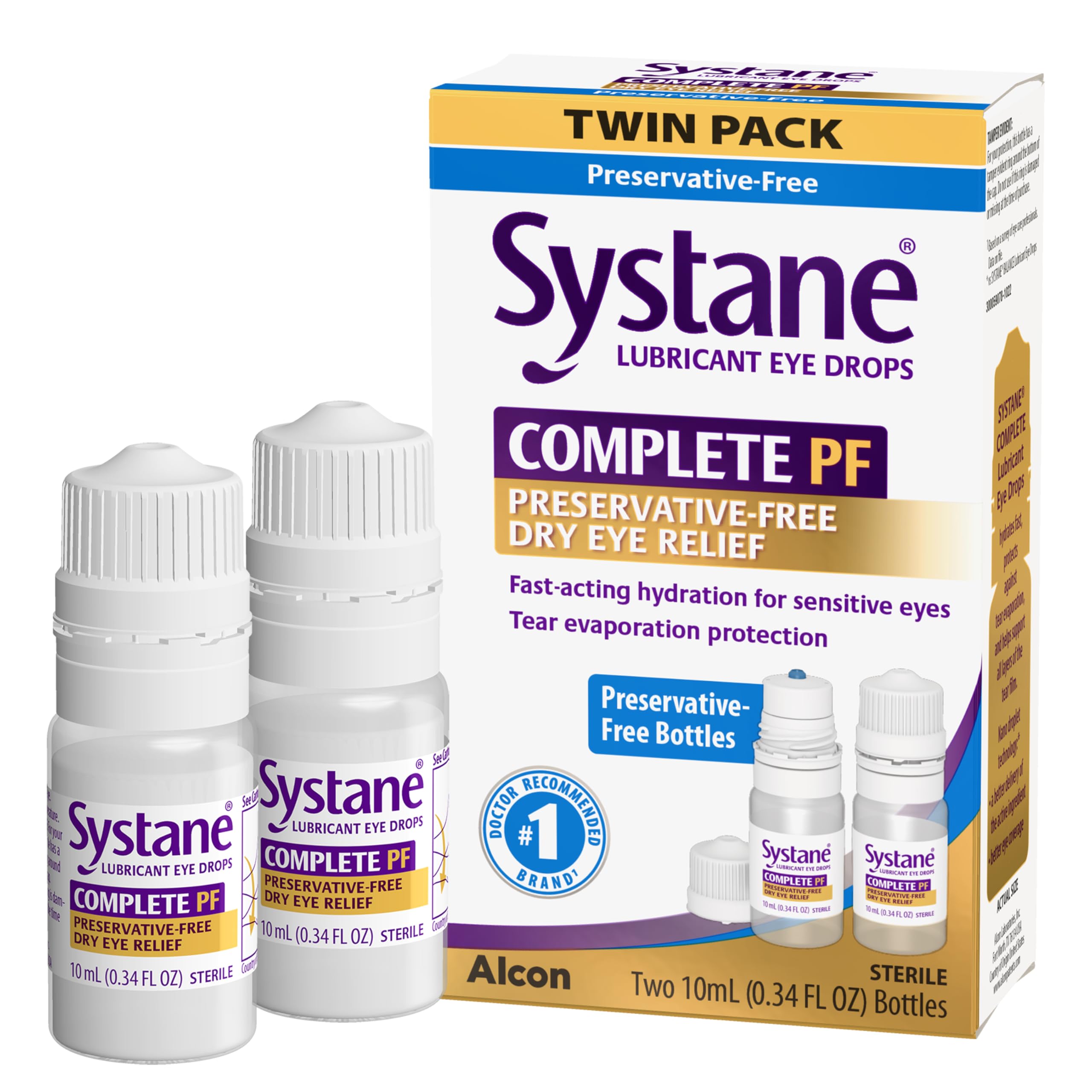
Surgeons frequently recommend Systane Complete because its nano-droplet technology spreads rapidly across the entire ocular surface, providing full coverage in a single drop. The 0.6% propylene glycol concentration offers up to eight hours of relief, reducing the need for frequent reapplication during the critical first weeks post-op. The multi-dose bottle uses a preservative-free valve system that maintains sterility while letting you get dozens of doses from one unit.
Patients consistently report that it soothes without the sticky residue or prolonged blur common with thicker gel formulations, making it ideal for daytime use. The balance of hydration and evaporation protection addresses both aqueous-deficient and evaporative dry eye components, a smart precaution for unpredictable post-surgical tear film changes.
That said, the flat tip design can be messy for some users, and the first drop should always be discarded to ensure consistent sterility. It sits at a premium price point, but the eight-hour efficacy often makes it more economical than cheaper drops that require hourly reapplication.
Why it’s great
- Nano-droplet technology delivers fast, even surface coverage
- Up to 8 hours of relief reduces daytime reapplication
- Trusted by optometrists for post-surgical recovery
Good to know
- Multi-dose bottle requires discarding first drop before use
- Flat tip design can be messy and imprecise
2. Blink Triple Care Preservative Free
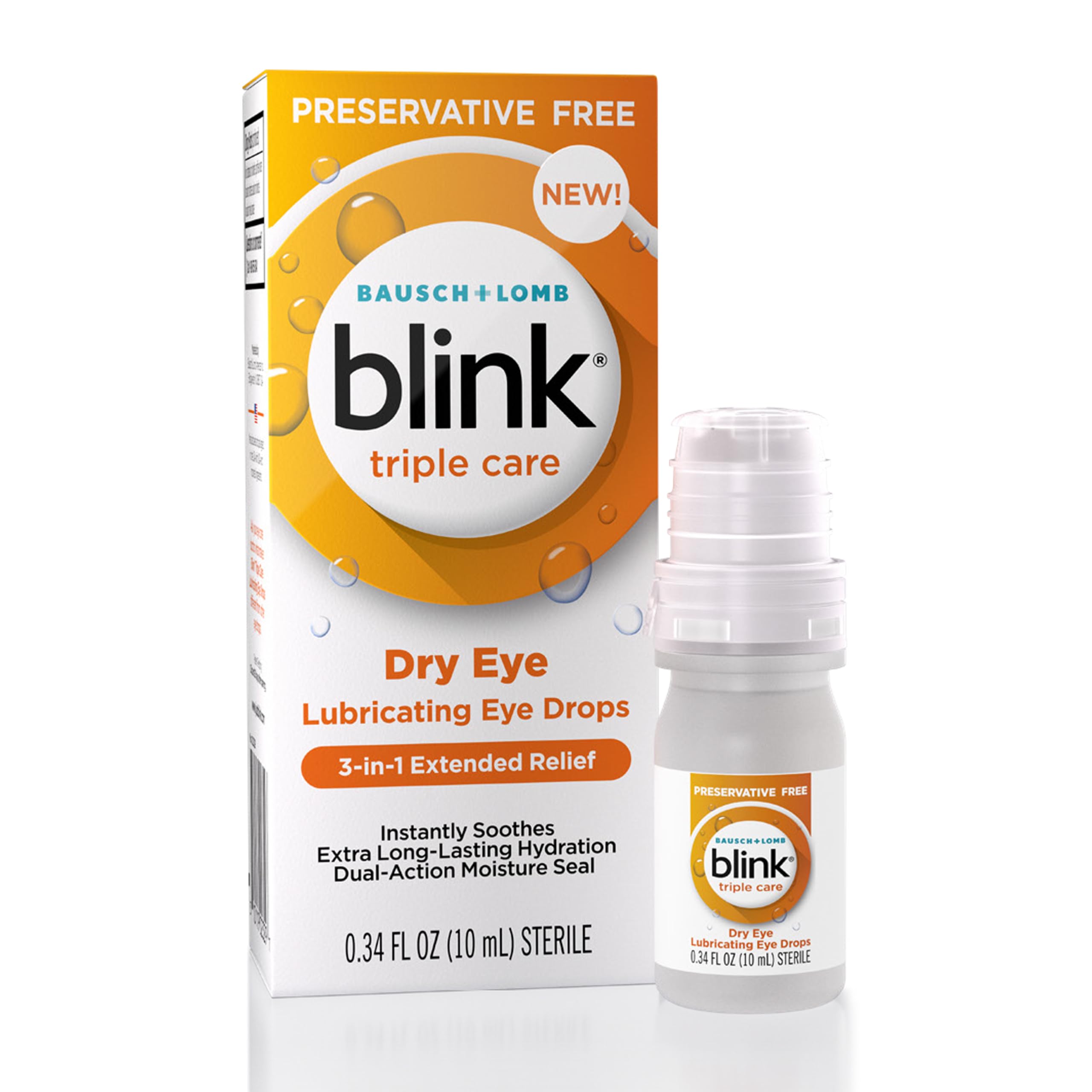
Blink Triple Care combines hyaluronic acid with a lipid nano-emulsion containing natural castor oil, creating a dual-action moisture seal that rivals clinical-grade post-op regimens. Its visco-elastic formula thins between blinks and thickens during eye closure, dynamically stabilizing the tear film. Clinical data shows 93% of users report relief lasting up to ten hours, the highest duration claim in this comparison.
This product excels for overnight use or for patients who struggle with waking up to gritty, painful eyes after surgery. The hyaluronic acid component retains moisture directly on the corneal surface, while the castor oil layer prevents rapid evaporation — both critical for a healing eye that may not produce a stable lipid layer on its own.
However, multiple user reports highlight a significant design flaw: the bottle collapses permanently after roughly ten uses, leaving around 75% of the product inaccessible. The dispensing hole is also unusually small, requiring a hard squeeze that makes precise application difficult. This flaw effectively multiplies the cost per usable drop.
Why it’s great
- Up to 10 hours of relief — highest in this review
- Hyaluronic acid + castor oil dual-action moisture seal
- Visco-elastic formula adapts between blinks
Good to know
- Bottle design collapses after ~10 uses, wasting product
- Small dispensing hole requires forceful squeeze
3. Optase Dry Eye Intense Drops
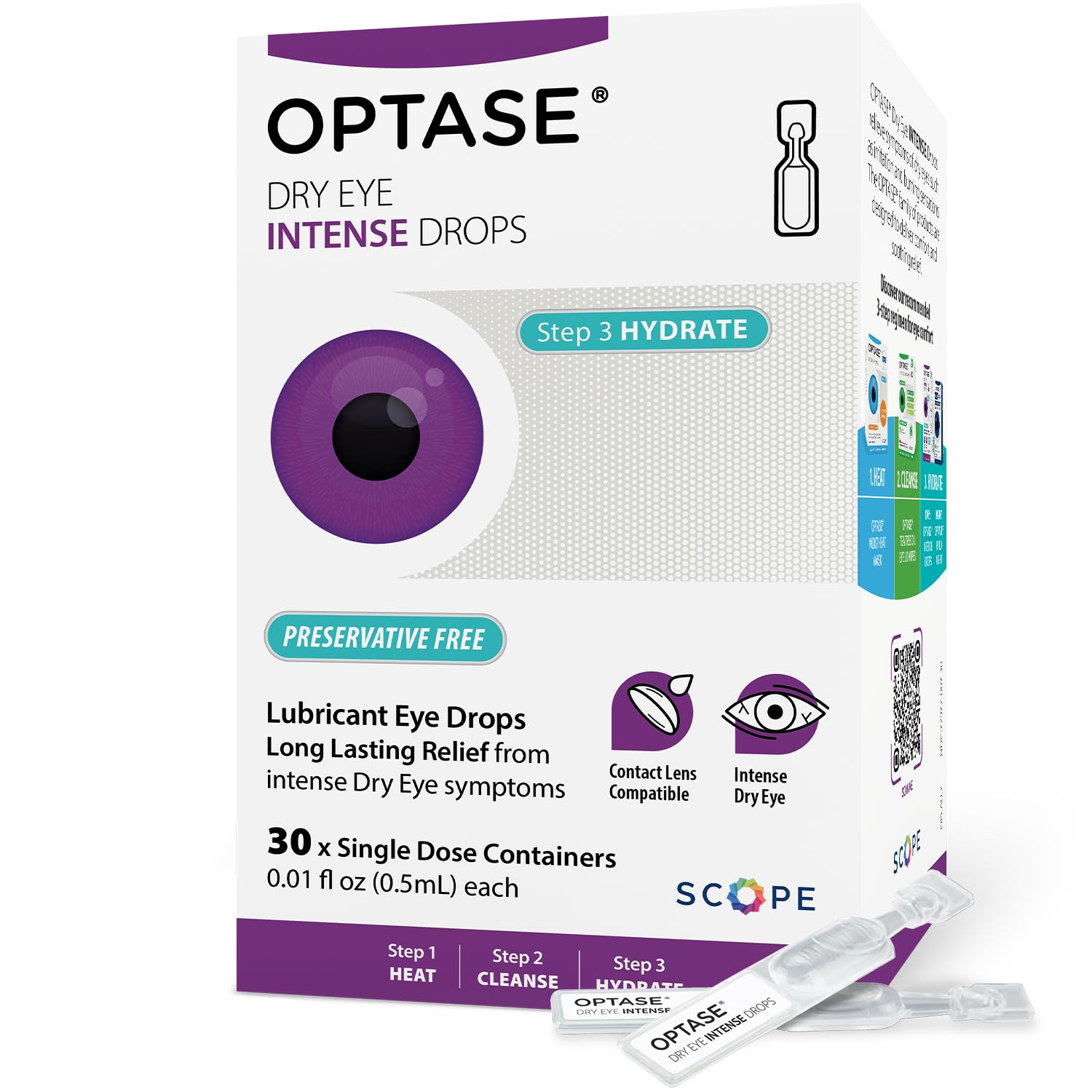
Optase Intense is formulated for moderate to severe dry eye, making it a strong choice for patients who experience persistent gritty pain beyond the typical first-week recovery window. Each single-dose vial contains 0.01 fl oz of preservative-free solution, guaranteeing sterility every time — a critical advantage for corneas still vulnerable to infection. Users consistently report that one vial covers both eyes and provides relief that lasts significantly longer than mainstream brands like Refresh.
The formula is contact lens compatible, which matters for patients who resume lens wear after their surgeon gives clearance. The vial top is designed to be twist-open and can be resealed for a second use within the same day, though sterility purists will prefer to discard after each single application. Many users pair these drops with Optase eyelid wipes to maintain overall ocular hygiene during recovery.
The trade-off is cost: at roughly 80 cents per vial, this is the most expensive option here when calculated per dose. For patients who need fewer applications daily, a 30-count package can last three months with nightly use, but anyone applying four or more times daily will burn through the supply quickly.
Why it’s great
- Single-dose vials guarantee 100% sterility each use
- Targets moderate to severe dry eye effectively
- Contact lens compatible for post-recovery use
Good to know
- Higher per-dose cost compared to multi-drop bottles
- 30-vial supply depletes fast with frequent use
4. Systane Ultra Lubricant Eye Drops

Systane Ultra is a thicker formulation that creates a protective shield over the eye, bridging the gap between a standard drop and a gel. For patients who experience night-time dryness or wake up with crusted eyelids, this drop provides extended protection that lasts through the night. The 0.4% propylene glycol concentration is slightly lower than the Complete variant, but the higher viscosity compensates with a longer residence time on the ocular surface.
Long-time users — some with decades of experience — report that the 10 mL (1/3 fl oz) bottle with the green label is easier to squeeze than the larger blue-label Hydration PF bottle, which requires significantly more hand strength. This nuance matters for older patients with reduced grip strength after surgery. The formulation is safe for use before and after contact lens wear, adding versatility for gradual return to normal routines.
The main drawback is the blur factor: because it is a thicker drop, vision can remain cloudy for 10–20 minutes after application, making it less ideal for daytime use when driving or reading immediately afterward. While it delivers reliable soothing relief, the visual side effect means many patients prefer using it only at night.
Why it’s great
- Thick gel-like consistency offers longer corneal protection
- Trusted by retina specialists and optometrists for decades
- Smaller bottle design is easier to squeeze for aging hands
Good to know
- Significant blur for 10-20 minutes after application
- Not ideal for daytime use when clear vision is needed
5. Refresh Optive Mega-3 Preservative-Free

Refresh Optive Mega-3 is the entry-level price option that still delivers the essential preservative-free safety profile required after cataract surgery. Its triple-action formula — lubricate, hydrate, and protect — uses HydroCell technology to rehydrate dry cells, and the plant-based flaxseed oil provides omega-3s that may support meibomian gland function. For patients on a budget who need single-dose sterility, this gets the job done without compromising on the core medical requirement.
The thin formula absorbs quickly with minimal blur, making it a practical choice for daytime use during the early healing phase when you need to see clearly after each application. Patients with Sjogren’s syndrome or other chronic dry eye conditions report that it eliminates the gritty feeling without stinging, though they typically need to apply three times daily on good days. The pre-measured 0.4 mL vials are compact and easy to carry in a pocket or purse.
Because the formula is thinner, the relief duration is shorter than the Systane or Blink options; many users find they need to reapply every 2-3 hours. The unused portion of each vial must be discarded after opening, which can feel wasteful if you only need one drop per eye per application. For heavy users, the per-vial cost adds up despite the low per-package price.
Why it’s great
- Preservative-free single-dose vials at the lowest entry cost
- Thin, quick-absorbing formula with minimal visual blur
- Omega-3 flaxseed oil supports meibomian gland health
Good to know
- Shorter relief duration requires frequent reapplication
- Unused portion per vial must be discarded
FAQ
When can I start using artificial tears after cataract surgery?
Can I use multi-dose bottles instead of single-dose vials?
How do I know if my artificial tear is too thick?
Final Thoughts: The Verdict
For most users, the best artificial tears after cataract surgery winner is the Systane Complete Preservative Free because its nano-droplet technology delivers eight hours of relief with minimal blur and a trusted preservative-free multi-dose bottle. If you want the longest possible relief with a dual-action moisture seal, grab the Blink Triple Care PF, but be prepared to work around its bottle design flaw. And for maximum sterility with severe dry eye symptoms, nothing beats the Optase Dry Eye Intense single-dose vials.

Mo Maruf
I created WellFizz to bridge the gap between vague wellness advice and actionable solutions. My mission is simple: to decode the research and give you practical tools you can actually use.
Beyond the data, I am a passionate traveler. I believe that stepping away from the screen to explore new environments is essential for mental clarity and physical vitality.