Our readers keep the lights on and my smoothie glass nicely filled. As an Amazon Associate, I earn from qualifying purchases.
That dull, constant ache in your arm—whether from tendonitis, lymphedema, or repetitive strain—makes every lift, every keystroke, every swing a reminder of what you can’t do. The right compression sleeve doesn’t just hide the pain; it applies targeted pressure to improve circulation and stabilize the underlying muscles, turning a source of frustration into a functional support you can wear through your entire day.
I’m Mohammad Maruf — the founder and writer behind WellFizz. I’ve spent years analyzing the engineering and material science behind compression garments, from yarn composition to graduated pressure gradients, to find the models that deliver genuine therapeutic value without cutting off circulation.
These reviews cut through the marketing to reveal which sleeves actually stay put, deliver consistent 20-30 mmHg compression, and hold up to daily wear, so you can find the true best arm compression sleeves for pain for your specific condition.
How To Choose The Best Arm Compression Sleeves For Pain
The market is flooded with stretchy fabric tubes that claim to be “medical grade,” but a sleeve that slips, pinches, or delivers uneven pressure makes the pain worse. Here are the three specs that separate effective therapy from a wardrobe misfire.
Compression Rating — Why 20-30 mmHg is the Sweet Spot
Compression is measured in millimeters of mercury, and 20-30 mmHg is considered “firm” medical-grade support. This range is strong enough to reduce swelling and improve venous return in conditions like lymphedema, tendonitis, and arthritis, yet mild enough for all-day wear. Lower ratings (8-15 mmHg) feel like a light hug and do little for pain; higher ratings (30-40 mmHg) require a doctor’s prescription and fit guidance. For over-the-counter pain relief, 20-30 mmHg is the verified target.
Silicone Grip Bands — The Anti-Slip Engineering
The most common frustration with arm sleeves is slippage. Without a gripper, the bicep cuff works its way down within an hour, bunching at the elbow and losing compression. High-quality sleeves use a silicone dot pattern or a wide silicone band at the top edge to stay anchored. The concern is skin irritation: some users develop contact dermatitis from the adhesive. Look for “hypoallergenic silicone” and check reviews for allergy complaints before committing.
Fabric Composition — Nylon vs. Spandex Ratio
A typical compression sleeve is a blend of nylon (for strength and moisture-wicking) and spandex (for elasticity and recovery). A 70/30 or 80/20 nylon-spandex ratio is the most common. More spandex means more stretch but faster loss of compression over time. More nylon means durability but less forgiveness. Also critical: “latex-free” construction, since latex allergies can cause rashes and swelling that defeat the purpose of the sleeve entirely.
Quick Comparison
On smaller screens, swipe sideways to see the full table.
| Model | Category | Best For | Key Spec | Amazon |
|---|---|---|---|---|
| Ailaka Medical | Premium | Lymphedema & Post-Surgery | 78% Nylon / 22% Spandex | Amazon |
| Zensah Tennis Elbow | Mid-Range | Light Support Under Clothing | Lightweight Breathable Knit | Amazon |
| KEKING 20-30 mmHg | Mid-Range | Tennis & Golf Elbow | 80% Nylon / 20% Spandex | Amazon |
| Hiball Full Arm | Budget-Friendly | Edema & Swelling Relief | 70% Nylon / 30% Spandex | Amazon |
| Modvel 2-Pack | Budget-Friendly | Weightlifting & Daily Wear | 2-Pack, Lightweight Fabric | Amazon |
In‑Depth Reviews
1. Ailaka Medical Compression Arm Sleeves

The Ailaka sleeve hits the therapeutic 20-30 mmHg range with a 78/22 nylon-spandex blend that strikes a rare balance: firm enough for lymphedema and post-surgery edema, yet flexible enough to allow a full range of motion. The silicone dots at the top do an excellent job of anchoring the sleeve on the bicep, and the material is noticeably thicker than budget options, which translates to longer compression retention after repeated washing.
Real-world feedback from users managing Dystonia tremors and burn scars confirms that the fabric is less abrasive than custom medical orthotics, making it comfortable for full-day wear. The latex-free construction is a critical detail for anyone with skin sensitivities—several reviews highlight the sleeve’s ability to stay in place without causing the allergic scabbing that sometimes occurs with cheaper silicone bands.
The only recurring complaint is that the silicone dots can irritate sensitive skin in some users, and putting it on solo requires a technique (rolling the sleeve up the arm rather than pulling). But for consistent, medical-grade compression that actually holds its position from breakfast through bedtime, this is the most reliable option on the list.
Why it’s great
- True 20-30 mmHg graduated compression for serious edema and pain relief
- Thick, durable fabric retains compression after many washes
- Silicone grip dots prevent slipping without needing a finger loop
Good to know
- Silicone dots may cause irritation for those with latex-adjacent allergies
- No finger holes, so positioning must be done carefully
2. Zensah Compression Tennis Elbow Sleeve
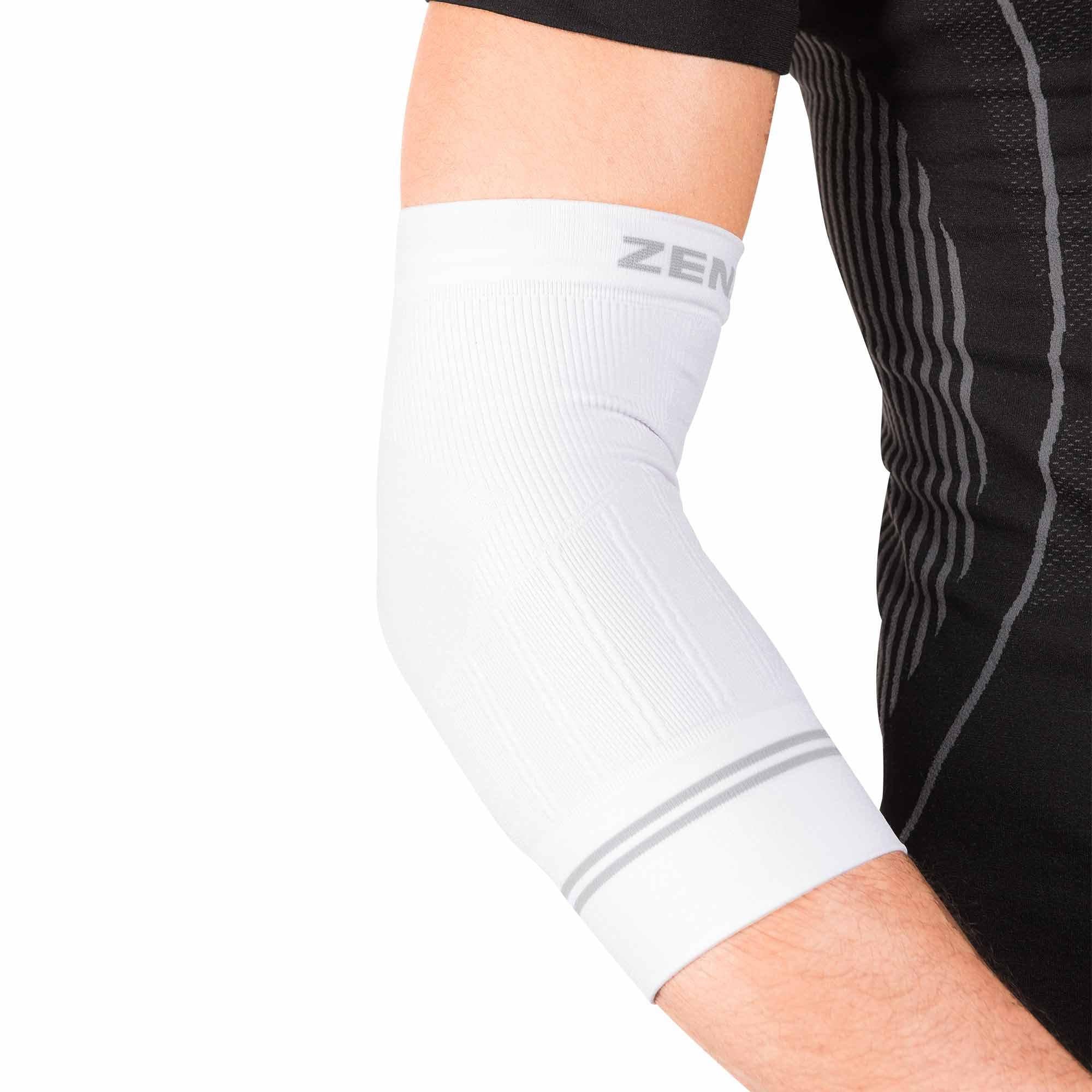
The Zensah sleeve has been on the market since 2013, and its longevity is a testament to its reliable, if conservative, design. This is a lighter compression garment than the firm 20-30 mmHg options—it offers what multiple reviewers call “transformative” relief for mild to moderate tennis and golfer’s elbow, but it is not designed for significant swelling or post-surgical edema.
What sets the Zensah apart is its nearly invisible profile under clothing. The knit is thin, breathable, and stretchy enough that it does not create a bulky lump under a dress shirt or blouse. The hand therapist who prescribed it to one reviewer specifically pointed to its ability to provide consistent targeted support without cutting off circulation at the elbow crease.
The trade-off is durability: after about a year of regular wear and washing (without machine drying), the fabric begins to lose its tensile strength. Users with moderate to severe tendonitis may find the compression insufficient for high-impact activity. It is a maintenance sleeve, not a recovery sleeve—ideal for keeping pain at bay during desk work or light recreational sports.
Why it’s great
- Slim profile fits discreetly under everyday clothing
- Breathable knit prevents overheating during extended wear
- Well-established design with consistent sizing
Good to know
- Compression is light-duty, not medical-grade firm
- Fabric tends to stretch out and lose support after a year
3. KEKING 20-30 mmHg Compression Arm Sleeve
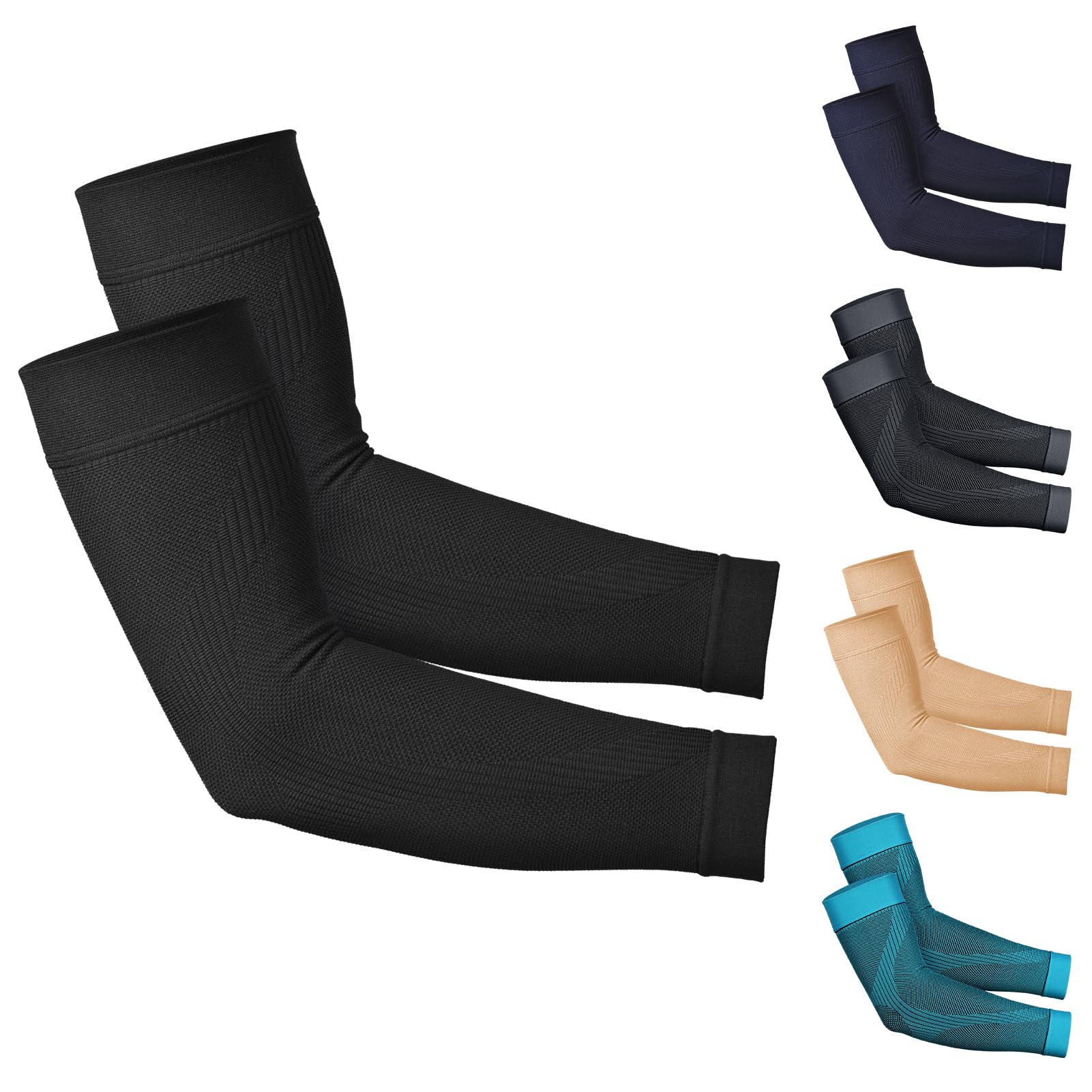
The KEKING sleeve delivers a true 20-30 mmHg graduated compression in an 80/20 nylon-spandex blend that feels exactly right for tendonitis, tennis elbow, and radial tunnel syndrome. The standout feature is how well it stays in place—users report that even after eight hours of work or a full sports session, the cuff does not slide down or bunch behind the elbow.
Multiple verified reviews from post-arm-lift surgery patients confirm that the compression is strong enough to relieve swelling without feeling like a tourniquet. The moisture-wicking fabric keeps the arm dry, which is a real advantage for athletes who sweat heavily during games or training. The wide cuff design at the bicep distributes pressure evenly, avoiding the pinching effect that cheaper sleeves create at the narrow end.
One drawback: the material can feel scratchy against sensitive skin, and some users find the length too long, requiring them to roll the top cuff. The sleeves also run warm, which may be uncomfortable in hot weather or during intense indoor workouts. But for the price, the compression accuracy and anti-slip performance are hard to beat.
Why it’s great
- Accurate 20-30 mmHg compression with excellent graduation
- Superb anti-slip performance, stays put all day
- Moisture-wicking fabric keeps skin dry during activity
Good to know
- Scratchy material can irritate very sensitive skin
- Runs warm; not ideal for extremely hot environments
4. Hiball Lymphedema Medical Compression Arm Sleeve

The Hiball sleeve is a relatively new entrant (June 2024) that aims to cover the full arm from wrist to bicep with a 70/30 nylon-spandex blend and a dotted silicone band at the top. The value proposition is clear—it offers a full-coverage solution for conditions like lymphedema, arthritis, and edema at an entry-level price point that makes it accessible for anyone trying compression for the first time.
Several users who used the sleeve after liposuction on the upper arms reported “very good, balanced compression throughout the arm” and found it held up well in the wash. The extra-long cuff design does provide continuous support that wraps the wrist, forearm, elbow, and upper arm, which is genuinely useful for people with swelling that extends across multiple joint zones.
The main failure mode is slippage and uneven compression. Multiple reviews report that the bicep cuff loosens over the course of the day, causing the sleeve to slide down and create a tight band at the forearm that acts like a tourniquet. This is a serious problem: graduated compression that reverses direction can worsen swelling rather than help it. Size selection is finicky, and the manufacturer’s chart does not always match reality.
Why it’s great
- Full arm coverage from wrist to bicep in one sleeve
- Soft fabric that conceals well under clothing
- Very affordable entry point for compression therapy
Good to know
- May lose grip at the bicep, causing slippage and uneven pressure
- Compression graduation can feel reversed for some users
5. Modvel 2-Pack Elbow Brace
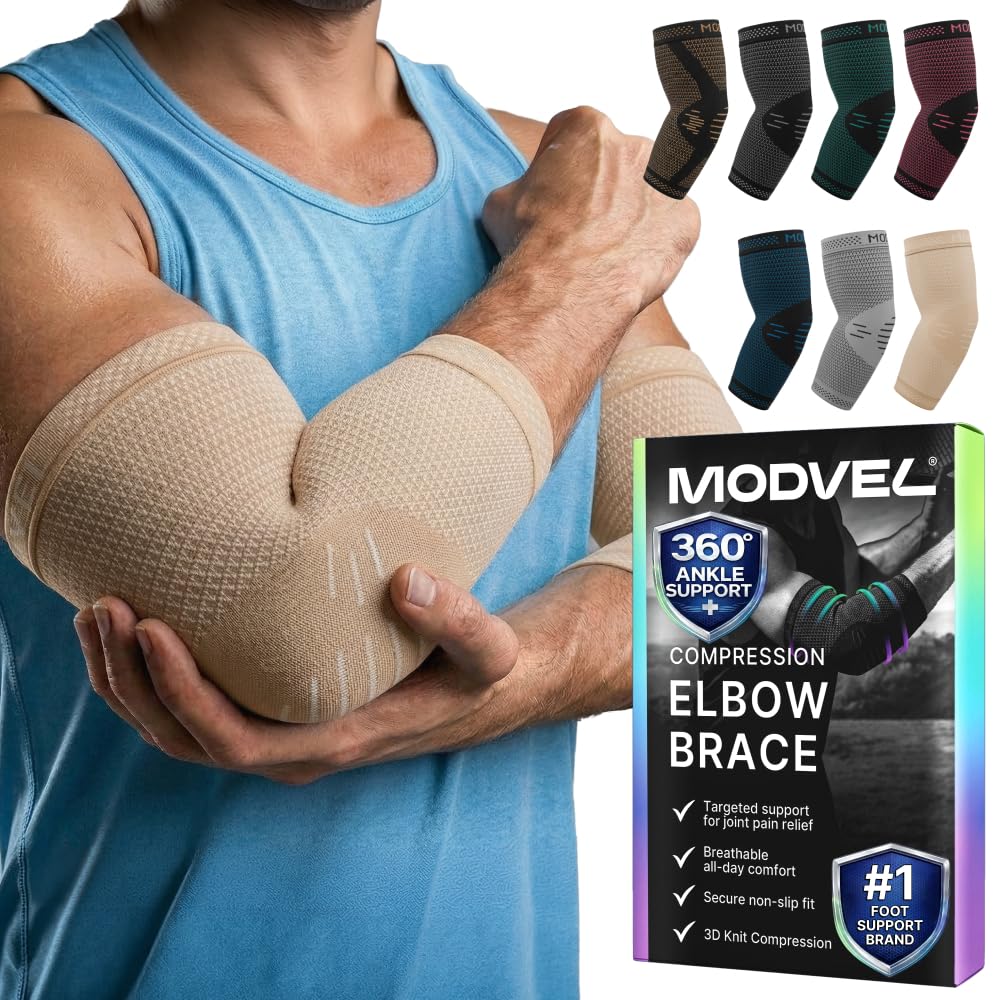
The Modvel 2-Pack is the only offering on this list that gives you two sleeves in one purchase, making it the logical choice for anyone who needs to rotate pairs between washes or wants a spare for travel. The sleeves are designed primarily for the elbow—they provide targeted support for tennis elbow, golfer’s elbow, and weightlifting recovery rather than full arm coverage.
The fabric is lightweight and breathable, with a rubberized inner band that does an admirable job of preventing slippage during dynamic movements like curls, presses, and swings. Users who lift weights or play racquet sports report immediate relief and support during activity, and the 2-pack structure means you are not stranded when one sleeve is in the laundry.
The limitation is that the compression is moderate rather than firm. The sleeves lack the specific 20-30 mmHg rating that medical conditions require, and some users note that sizing down for more stability reduces comfort at the top band. If you need genuine therapeutic compression for lymphedema or significant edema, this is not the right tool—but for workout recovery and general elbow pain, the convenience of the 2-pack is hard to argue with.
Why it’s great
- Two sleeves for rotation or backup use
- Rubberized inset band effectively prevents slipping
- Breathable fabric suitable for high-sweat workouts
Good to know
- Compression level is moderate, not medical-grade firm
- Top band can feel too tight if sized down for stability
FAQ
Can I wear an arm compression sleeve while I sleep?
How do I measure my arm for a compression sleeve?
How long does a compression sleeve maintain its pressure?
Final Thoughts: The Verdict
For most users, the best arm compression sleeves for pain winner is the Ailaka Medical Compression Arm Sleeve because it delivers true 20-30 mmHg graduated compression with a durable, latex-free build that stays anchored all day. If you want a low-profile sleeve that fits discreetly under office clothing for mild tennis elbow, grab the Zensah Compression Tennis Elbow Sleeve. And for a solid mid-range option that combines accurate compression with excellent anti-slip engineering, nothing beats the KEKING 20-30 mmHg Compression Arm Sleeve.

Mo Maruf
I created WellFizz to bridge the gap between vague wellness advice and actionable solutions. My mission is simple: to decode the research and give you practical tools you can actually use.
Beyond the data, I am a passionate traveler. I believe that stepping away from the screen to explore new environments is essential for mental clarity and physical vitality.