Our readers keep the lights on and my smoothie glass nicely filled. As an Amazon Associate, I earn from qualifying purchases.
A blood pressure reading that swings wildly between attempts isn’t just annoying—it erodes trust in the equipment you rely on to manage your health. Arm cuff monitors differ from wrist models by measuring closer to your heart, which reduces motion artifact and positional error, but the devil lives in the cuff fit and the sensor algorithm inside the case.
I’m Mohammad Maruf — the founder and writer behind WellFizz. I’ve evaluated dozens of home sphygmomanometers across multiple price tiers, comparing oscillometric chipsets, cuff geometry, and long-term drift against clinical references.
Finding a monitor that balances clinically defensible readings with real-world ease of use is the entire point of this guide, and I’ve sorted through the noise to present the definitive review of the best arm blood pressure cuff options currently on the market.
How To Choose The Best Arm Blood Pressure Cuff
Picking the right arm cuff monitor goes beyond reading star ratings. The following three criteria separate a device you can trust from one that gives you false reassurance or false panic.
Cuff Fit Is Everything
A cuff that is too tight produces artificially high systolic numbers, and one too loose reads low. Most adult arms fall between 9 and 17 inches circumference. Some models include dual cuffs (standard and XL), which eliminates the need to buy a separate cuff later. Check the specified circumference range before ordering—if your arm exceeds 17 inches, you need a monitor that explicitly supports XL cuffs up to 21 inches.
Sensor Accuracy and Clinical Validation
Home monitors use oscillometric technology that detects pressure pulses rather than listening for Korotkoff sounds like a manual stethoscope. Look for devices tested against the ESH 2010 or BIHS AA standards. A monitor that reports within 3 mmHg of a mercury column on average is considered clinically acceptable. Models that include an irregular heartbeat detection feature add a layer of screening that can flag potential arrhythmias.
Memory, Multi-User, and Data Export
If you are tracking trends for a doctor, you want at least 90-reading storage per user. Two-user mode lets you keep separate logs for you and your partner without mixing numbers. Bluetooth connectivity with a free companion app (iHealth, OMRON Connect) simplifies sharing historical data, but be aware that some brands require a subscription to export PDF reports.
Quick Comparison
On smaller screens, swipe sideways to see the full table.
| Model | Category | Best For | Key Spec | Amazon |
|---|---|---|---|---|
| OMRON Gold BP5360 | Premium | Clinical-grade AFib detection | AFib algorithm & morning average | Amazon |
| iHealth Track 550BT | Mid-Range | Bluetooth trend tracking | Cuff range 8.7-16.5 inch | Amazon |
| AQESO Dual Cuff | Mid-Range | Large arm sizes up to 21 inch | 1000 memory per 2 users | Amazon |
| Microlife BPM2 | Mid-Range | BIHS AA certified accuracy | Gentle+ inflation technology | Amazon |
| HealthSmart Talking Monitor | Mid-Range | Audio readout for low vision | 120 reading / 2-user memory | Amazon |
| COCACIS U80BH | Budget | Dual cuff sizes in one box | 6 inch backlit LED display | Amazon |
| Medline MDS4001 | Budget | Simple push-button reliability | 90-reading memory storage | Amazon |
In‑Depth Reviews
1. OMRON Gold Blood Pressure Monitor BP5360
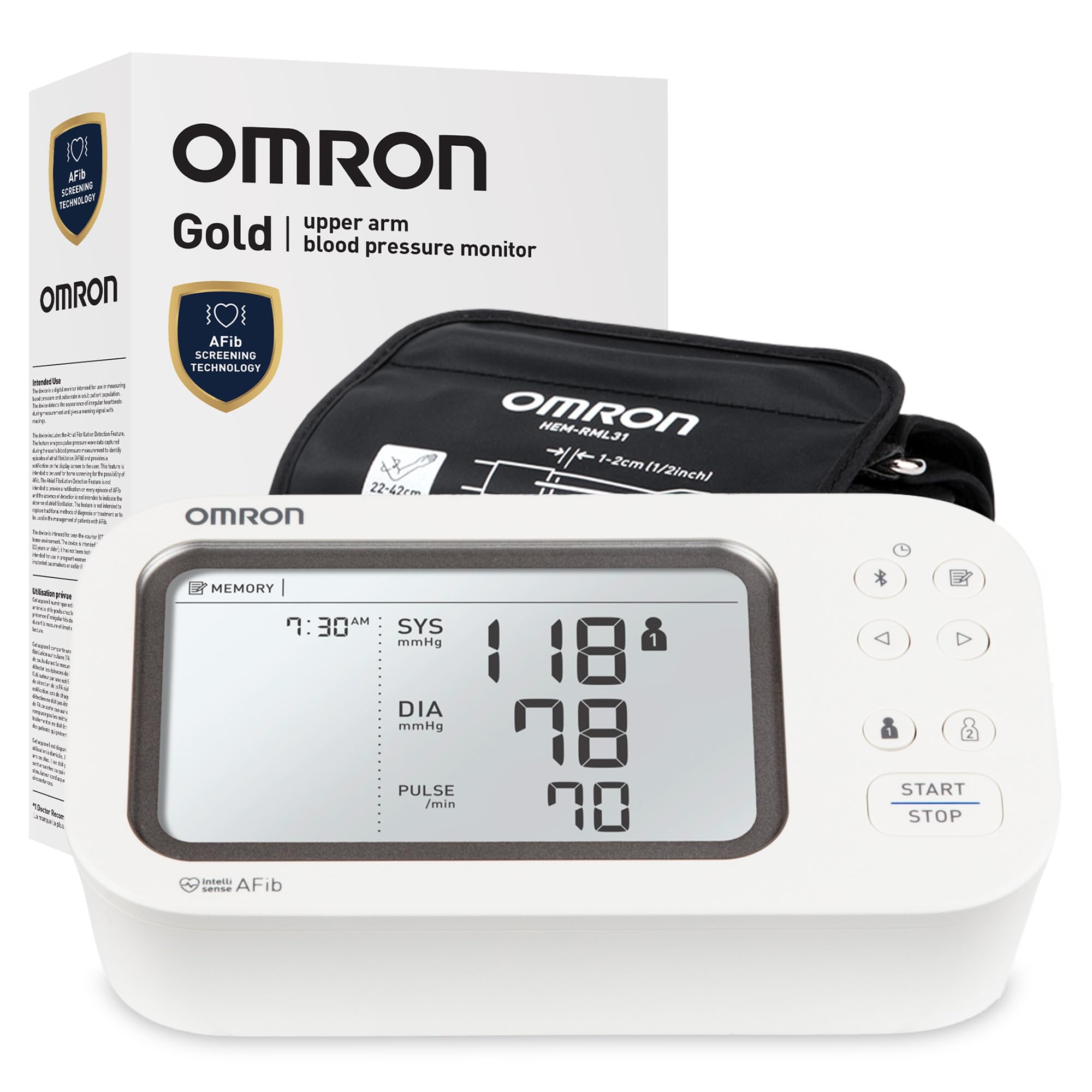
The OMRON Gold carries the validation of being the number one doctor-recommended brand, and the BP5360 model justifies that reputation with its exclusive Atrial Fibrillation detection algorithm. Every reading screens for irregular heart rhythms, and the High Morning Average Indicator flags morning blood pressure spikes that correlate with increased cardiovascular risk—both features you simply won’t find in cheaper alternatives. The wide-range D-ring cuff accommodates arms 9 to 17 inches, and the unit connects to the free OMRON connect app for unlimited data storage and trend sharing.
Clinically validated against the ESH 2010 standard, the Gold monitor measures systolic and diastolic pressure with the consistency expected from a medical-grade device. The Bluetooth sync is effortless, and the two-user mode keeps separate logs for yourself and a partner without manual organization. The storage case, four AA batteries, and quick start guide make setup a five-minute affair.
One important caveat: users with diagnosed atrial fibrillation have reported that the AFib algorithm sometimes prevents the unit from completing a reading, citing “inaccurate readings” rather than returning a number. This is technically the device doing its job of flagging arrhythmias, but it can be frustrating if you already know you have AFib. Additionally, the free app limits PDF sharing behind a subscription, so factor that in if you need to email reports to your doctor regularly.
Why it’s great
- Clinically validated AFib screening in every use
- Two-user memory with Bluetooth trend tracking
- Morning average spike detection for early warning
Good to know
- PDF export requires a monthly subscription
- AFib algorithm may refuse to produce a reading for arrhythmia patients
2. iHealth Track Smart Upper Arm 550BT
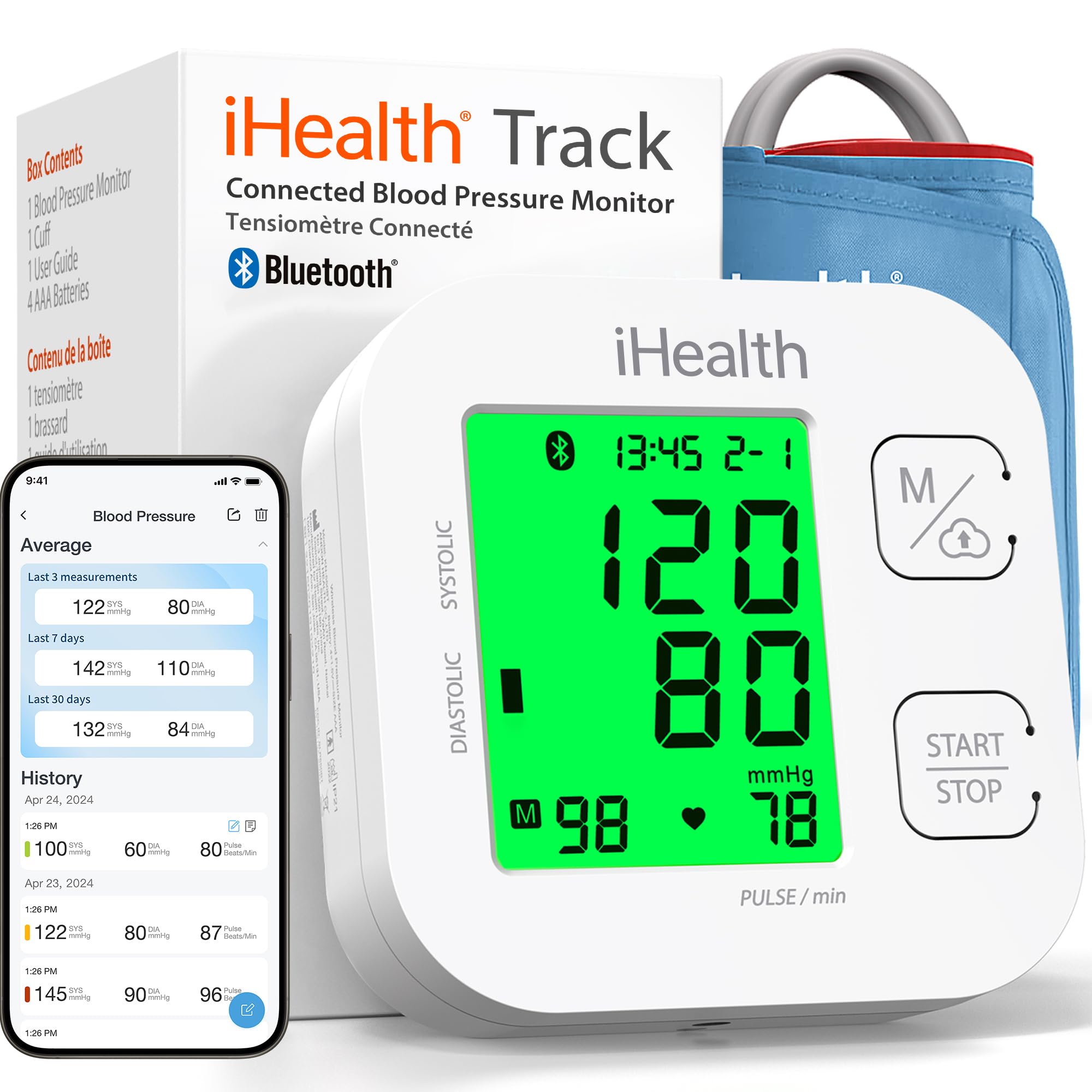
The iHealth Track combines a clinically accurate oscillometric sensor with Bluetooth connectivity for iOS and Android, making it the strongest option for anyone who wants automated trend logging without a paper notebook. The large multi-color backlit display uses green, yellow, and red coding based on the WHO classification, so you know at a glance whether your reading falls in the optimal zone. It also automatically identifies heart rhythm disturbances and displays a warning symbol if an irregular beat is detected.
The wide-range cuff covers 8.7 to 16.5 inches, which fits standard to large adult arms, and the unit stores up to 99 readings locally before syncing. Operation is simple: two buttons control everything, no calibration required. The 12-month warranty and California-based customer service provide peace of mind that off-brand imports rarely match.
The free iHealth app is functional but includes persistent, intrusive ads that can be frustrating to navigate. Many users prefer to skip the app entirely and manually record readings, which defeats the purpose of buying the Bluetooth model. The monitor still works perfectly as a standalone device, so the ad issue is not a hardware problem, but it does diminish the “smart” experience.
Why it’s great
- Clinically accurate with easy two-button operation
- Color-coded WHO display for instant health context
- Bluetooth sync for unlimited app-based tracking
Good to know
- App contains intrusive ads that degrade the user experience
- Bluetooth functionality is not required for normal operation
3. AQESO Blood Pressure Machine Dual Cuff

AQESO addresses the single biggest complaint in the arm cuff category: cuff fit. The package includes both a Medium/Large cuff (9-17 inches) and an XL cuff (13-21 inches), so it works across a much wider range of arm circumferences than most competitors. The oscillometric technology delivers fast, consistent readings, and the large backlit LCD display uses the WHO classification bar for quick health context without squinting.
One-touch operation inflates automatically, and the dual power supply (USB Type-C cable or four AAA batteries) gives you flexibility whether you are at home or traveling. The included nylon carry bag keeps everything organized.
The USB power option requires a continuous connection to function; the device is not rechargeable, so you either use batteries or stay plugged in. Some users have noted that the XL cuff runs slightly larger than the 21-inch maximum stated, so measure your arm carefully. The average user will find the reading consistency dependable, but the long-term sensor drift beyond two years is still unverified.
Why it’s great
- Includes both M/L and XL cuffs for arms up to 21 inches
- Massive 1,000-reading memory across two users
- Dual power: USB-C or battery for travel flexibility
Good to know
- USB mode requires continuous power, no internal rechargeable battery
- Long-term sensor accuracy beyond 2 years is not well documented
4. Microlife BPM2 Automatic Digital BP Monitor
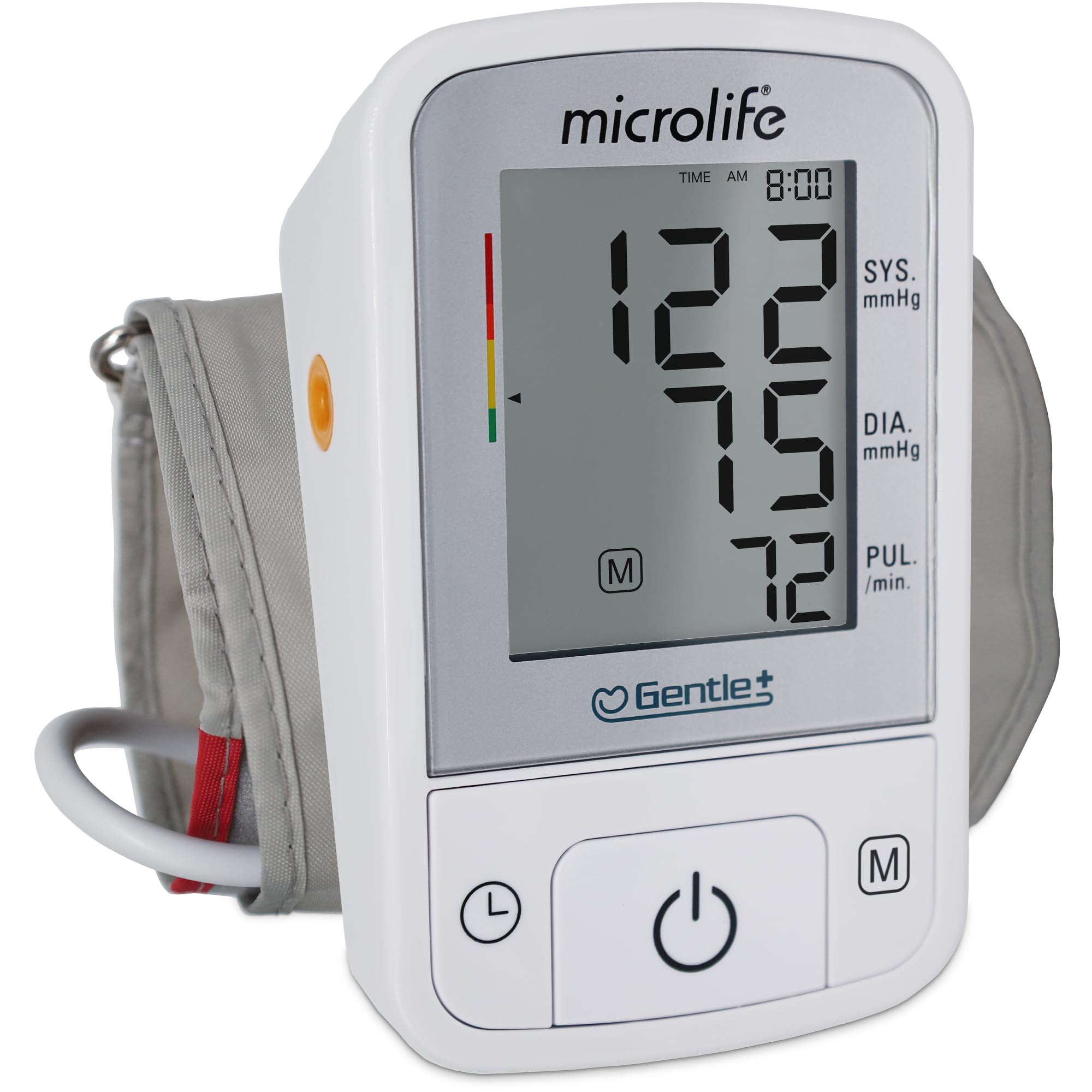
Microlife earned the highest accuracy rating from the British Hypertension Society (AA grade), and the BPM2 carries that clinical pedigree into the home setting. The Gentle+ inflation technology uses less pressure and inflates faster than conventional cuffs, which reduces the uncomfortable squeezing sensation that makes some users avoid taking readings. The contoured cuff with soft outer fabric is easier to slide on and position correctly compared to traditional D-ring designs.
The monitor displays systolic, diastolic, and pulse readings alongside a hypertension risk indicator and irregular heartbeat detector. It stores the last 60 results and computes an average from all stored memories, so you can spot trends without manually calculating. The one-touch start button and large display make it simple enough for elderly users to operate independently.
The XL cuff for arms above 16.5 inches is sold separately, which adds cost if your arm circumference exceeds the included wide-range cuff limit. Some users have reported mild variability between consecutive readings, which is normal with oscillometric devices but can be unsettling if you are not expecting it. The unit uses four AA batteries and does not include an AC adapter in the box.
Why it’s great
- BIHS AA grade for highest clinical accuracy standard
- Gentle+ inflation for faster, less uncomfortable measurements
- Contoured cuff with soft fabric for easier positioning
Good to know
- XL cuff for larger arms sold separately, not included
- No AC adapter included; runs on 4 AA batteries
5. HealthSmart Digital Premium Talking Monitor

The HealthSmart monitor distinguishes itself with a talking feature that announces systolic, diastolic, and pulse readings in English or Spanish—an essential function for users with low vision or anyone who prefers audible confirmation over squinting at an LCD. The high-contrast display also shows a visual blood pressure guide with color coding, and the device detects irregular heartbeats during each measurement cycle.
It stores up to 120 readings for two users with date and time stamps, making it easy to track changes over days and weeks. The universal cuff fits arms 8.6 to 16.5 inches, and the included zippered case protects the unit during travel. The AC adapter is included, which is rare at this price point—most competitors only provide batteries.
Long-term accuracy has been inconsistent in some units. Several users reported that after six to eight months of daily use, the readings began to drift significantly compared to their doctor’s office monitor. The talking function, while helpful, cannot be turned off, so if you take readings in a shared bedroom, the voice announcement may disturb others. Four AA batteries are required but not included in the box.
Why it’s great
- Audible readout in English or Spanish for accessibility
- AC adapter included for continuous use without battery drain
- Two-user memory with 120-reading storage capacity
Good to know
- Some units have reported accuracy drift after 6–8 months
- Talking function cannot be muted or disabled
6. COCACIS U80BH Blood Pressure Monitor
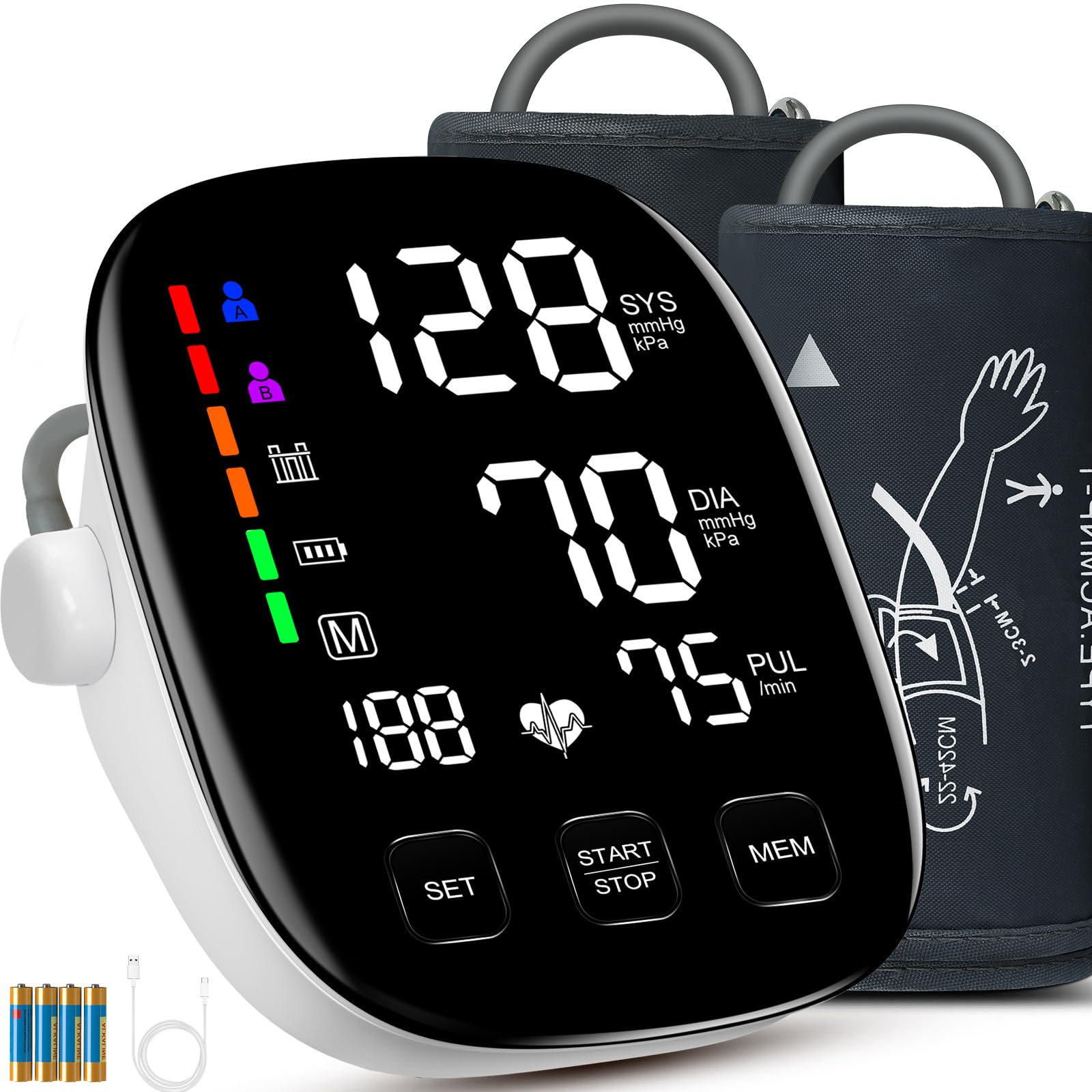
The COCACIS U80BH solves the cuff-size problem by including both a standard medium/large cuff (9–17 inches) and an extra-large cuff (13–21 inches) in the same box. The 6-inch HD backlit color display with oversized fonts is particularly kind on aging eyes, and the WHO color indicator (green/orange/red) provides immediate context without interpreting numbers. The advanced intelligent chip and high-sensitivity sensor deliver readings that correlate well with manual measurements, as confirmed by user comparisons.
Two-user mode stores 199 readings per person, and the package includes four AAA batteries plus a Type-C charging cable for dual-power flexibility. The nylon carry bag makes it easy to take along for travel, and the lifetime limited warranty with 24/7 support signals that the manufacturer stands behind the product.
The cuff attachment requires careful attention—misalignment is the primary cause of the “error” messages that some users initially reported. One customer noted that after properly centering the cuff over the brachial artery, the unit worked flawlessly. The AAA batteries drain faster than expected with frequent backlight use, so keeping the USB cable handy is recommended.
Why it’s great
- Two cuff sizes included for arms up to 21 inches
- Large 6-inch backlit display with color-coded WHO indicator
- Lifetime limited warranty with responsive customer support
Good to know
- Battery life is shorter when the backlight is used frequently
- Proper cuff alignment is essential to avoid error messages
7. Medline Digital Blood Pressure Monitor MDS4001

Medline is a trusted name in medical-grade supplies, and the MDS4001 brings that institutional reliability to home use. The proprietary programming automatically customizes inflation levels per patient and includes error detection that prevents bad readings from being stored. The large digital LCD shows systolic, diastolic, and pulse rate in clear numbers without any unnecessary visual clutter.
The one-push button control simplifies operation to the point where no instruction manual is needed for basic use. It stores up to 90 of the most recent measurements, which is enough for a month of twice-daily tracking. The adult upper arm cuff fits circumferences of 8.5 to 12 inches—a narrower range than most competitors, so it is best suited for users with smaller to average arms.
The 12-inch maximum cuff circumference is the main limitation. Users with larger or muscular arms will find the cuff too tight or unable to close properly, which directly affects accuracy. The monitor does not include a USB power option or carry case, and the display lacks a backlight, making it harder to read in dim lighting. Despite these simplicity trade-offs, its consistent reading reliability has won strong loyalty from users who value predictability over features.
Why it’s great
- Medical-grade brand with proven long-term reliability
- Automatic customized inflation reduces measurement errors
- Simple one-button operation for elderly users
Good to know
- Cuff maxes out at 12 inches, unsuitable for larger arms
- No backlight, no USB power, no carry case included
FAQ
How tight should the arm cuff feel during measurement?
Why does my arm blood pressure cuff sometimes show an error code?
Can I use an arm blood pressure cuff if I have atrial fibrillation?
Final Thoughts: The Verdict
For most users, the arm blood pressure cuff winner is the OMRON Gold BP5360 because its AFib detection, morning spike indicator, and Bluetooth trend tracking provide clinical-grade insight that no other model in this roundup matches. If you want smooth Bluetooth logging without a subscription hassle, grab the iHealth Track 550BT. And for very large arm circumferences or family use where you need dual cuffs and massive memory, nothing beats the AQESO Dual Cuff.

Mo Maruf
I created WellFizz to bridge the gap between vague wellness advice and actionable solutions. My mission is simple: to decode the research and give you practical tools you can actually use.
Beyond the data, I am a passionate traveler. I believe that stepping away from the screen to explore new environments is essential for mental clarity and physical vitality.