Our readers keep the lights on and my smoothie glass nicely filled. As an Amazon Associate, I earn from qualifying purchases.
That stabbing heel pain the moment you step out of bed in the morning is a signal. It means your plantar fascia is overstretched and your foot’s natural arch is collapsing under load. The right insole doesn’t just cushion the blow—it repositions your foot mechanics so the pain stops before it starts.
I’m Mohammad Maruf — the founder and writer behind WellFizz. I’ve spent eight years analyzing biomechanical support products, reviewing orthotic material science, and comparing how different arch heights and heel-cup depths actually change gait and fatigue over a full workday.
Whether you’re on a concrete floor for twelve-hour shifts or chasing kids through the grocery aisles, the best arch support insoles can mean the difference between hobbling home and finishing your day with energy to spare.
How To Choose The Best Arch Support Insoles
Not all arch support is equal. A soft foam insole that feels great in the store might collapse within two weeks, while a rigid polymer insert might feel aggressive for the first few days but deliver lasting relief. You need to look past the marketing and focus on four structural factors.
Arch Height and Contour Profile
Your arch type—low, medium, or high—determines the vertical lift and the curve angle you need. Low arches require a shallower, broader support that fills the collapsed space without jamming the midfoot. High arches need a taller, more aggressive ramp that lifts the metatarsal heads and prevents the heel from rolling inward. A mismatch here doesn’t just fail to help—it can cause new pain in your knees or lower back.
Material Density and Rigidity
EVA foam is lightweight and forgiving but lacks the structural memory for heavy-use scenarios. Thermoplastic polyurethane (TPU) and reinforced polymer shells hold their shape under sustained pressure, transferring load from your heel through your arch and out through the forefoot. If you weigh over 200 pounds or stand for eight-plus hours, the stiffer material is not optional—it’s necessary for the support to last more than a month.
Heel Cup Depth
The heel cup cradles your calcaneus and controls excessive motion. A shallow cup lets your heel slide side to side, which destabilises the entire stride and can aggravate heel spurs. A deep U-shaped cup locks the heel in place and prevents the overpronation that leads to arch strain. Look for cups that are at least 15 mm deep for work boots and 12 mm for sneakers.
Length and Fit Customisation
Full-length insoles replace your entire shoe insert and provide consistent support from heel to toe. Three-quarter length insoles sit just before the toe box and work well in tighter shoes or high heels, but they can shift if not fitted snugly. Trim-to-fit designs let you dial in the width, but always cut slowly—once you remove material you cannot add it back.
Quick Comparison
On smaller screens, swipe sideways to see the full table.
| Model | Category | Best For | Key Spec | Amazon |
|---|---|---|---|---|
| Dr. Scholl’s Plantar Fasciitis Relief | Orthotic Insole | Clinically proven recurrence prevention | Medium arch + deep heel cup | Amazon |
| OUOKK High Arch 3/4 Inserts | 3/4 Length Orthotic | High arches and tight shoes | 30 mm arch height; 230+ lbs capacity | Amazon |
| BestHalo Heavy Duty Insoles | Biomechanical Design | High arches and long shifts | EVA foam + gel cushioning | Amazon |
| Cloudflo Plantar Fasciitis Insoles | Full-Length Insole | Budget entry for flat feet | Rigid TPU + Ortholite cushioning | Amazon |
| Psveb Heavy Duty Orthotics | Triple Support | Load support for 230+ lbs | Dual PORON + deep U cup | Amazon |
In‑Depth Reviews
1. Dr. Scholl’s Plantar Fasciitis Relief Orthotic Insoles for Men

Dr. Scholl’s is the only insole in this lineup with published clinical data showing it prevents plantar fasciitis from recurring rather than just masking symptoms. The deep heel cup absorbs shock at the calcaneus while the firm medium-arch profile prevents overstretching of the plantar fascia during the gait cycle. That combination directly addresses the root mechanism of morning heel pain—the microtearing that happens when the fascia tightens overnight and is suddenly loaded at first step.
The full-length trim-to-fit design distributes pressure evenly from heel to toe, which reduces the inflammation spikes that happen when load concentrates on one spot. Users report immediate pain relief—several reviewers noted their heel pain stopped the same day they inserted them. The foam construction holds its shape well over weeks of daily wear, and the medium arch hits the sweet spot for most foot shapes without being too aggressive for flat-footed users.
One limitation: the medium arch may feel too tall for people with very low or flat feet. Some heavier users reported arch soreness during the break-in period, and the insole is not designed for extreme pronation control. For the average person suffering from typical plantar fasciitis, however, this is the most scientifically validated option available.
Why it’s great
- Clinically proven to stop plantar fasciitis from returning
- Immediate heel pain relief reported on day one
- Deep heel cup stabilises the calcaneus during walking
Good to know
- Medium arch may be too high for serious flat feet
- Break-in period can cause mild arch soreness
- Not designed for heavy overpronation correction
2. OUOKK High Arch Support Inserts 3/4 Length

OUOKK takes a different approach: it offers three distinct arch heights in a 3/4-length format, meaning you have to identify your arch type before buying. The high-arch variant measures a substantial 30 mm of vertical lift, which places it firmly in the category of rigid corrective support rather than casual cushioning. The TPU elastic core supplies the structural memory needed to maintain that height under sustained weight, and the heel massage area doubles as a pressure-dispersing platform for the plantar fascia.
Because the insole stops before the toe box, it fits comfortably in tighter footwear—dress shoes, high heels, hiking boots—where a full-length insert would crowd the forefoot. Users with flat feet who switched to these inserts reported complete elimination of end-of-day foot pain across multiple jobs and standing-intensive roles. The durability rating of two years-plus is realistic given the TPU shell, though the 3/4 design means there is no cushion under the metatarsal heads, which some runners might miss.
The main friction point is that the rigid arch does not flex or adjust. If your arch falls outside the pre-formed curve, the insole can feel like it is pushing against your midfoot rather than supporting it. A few users found the inserts shifted inside the shoe because there is no adhesive backing. For anyone with a confirmed high arch who wants maximum vertical support in a slim package, this is a standout choice.
Why it’s great
- Tall 30 mm arch provides aggressive corrective lift
- 3/4 length fits tight shoes and high heels easily
- TPU core rated for 230+ lbs with two-year durability
Good to know
- Rigid design may feel uncomfortable if arch type is misidentified
- No adhesive backing can cause shifting in some shoes
- Lacks forefoot cushioning for running or jumping
3. BestHalo Heavy Duty Plantar Fasciitis Insoles
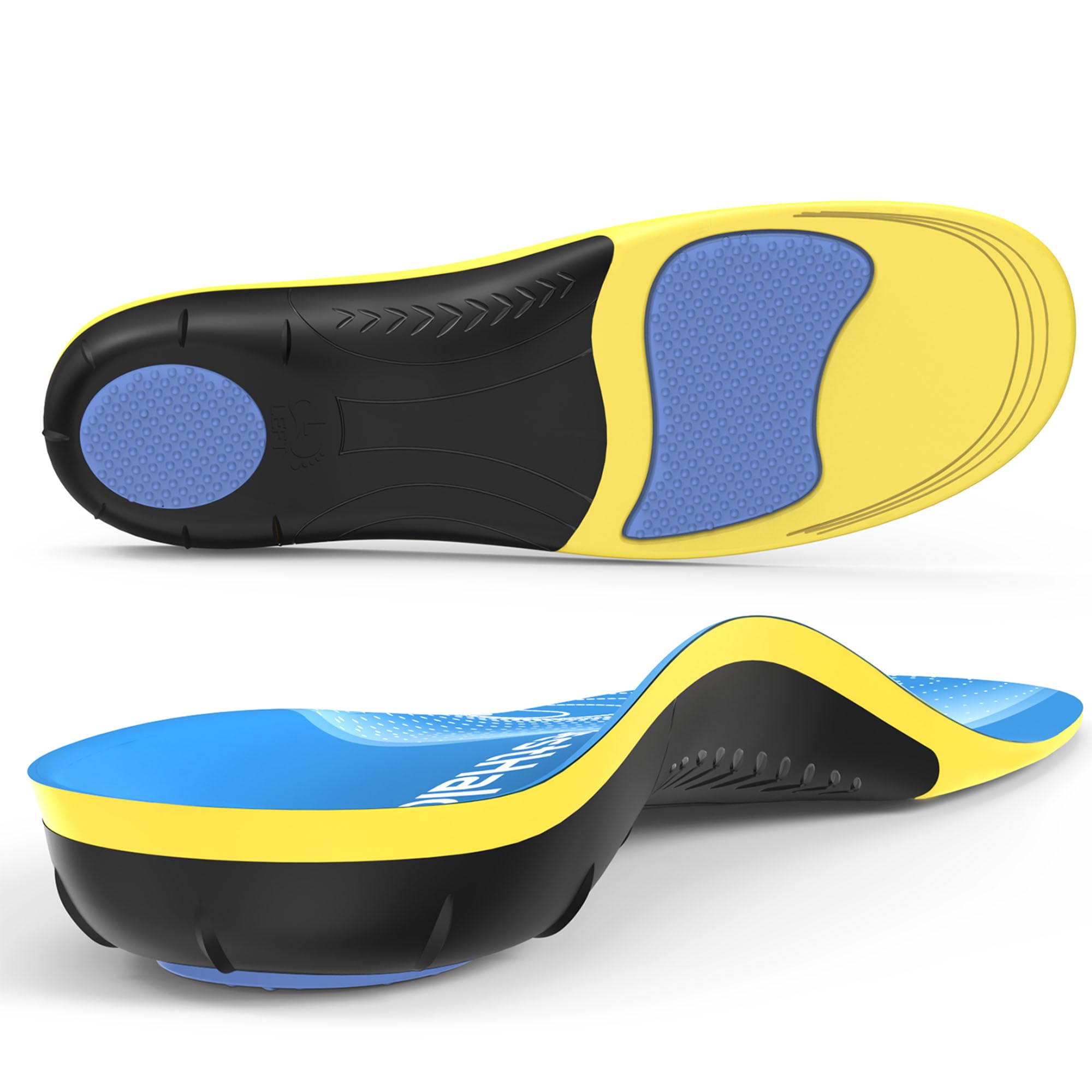
BestHalo builds its insoles on biomechanical principles that emphasise natural alignment over aggressive correction. The high arch profile is pronounced but not extreme—it lifts the midfoot enough to reduce tension on the plantar fascia without forcing the foot into a rigid position. The EVA foam base is layered with a gel pad in the heel, which gives you that initial soft landing while the deeper structural shell prevents bottoming out over long shifts.
The ergonomic deep heel cup is the standout feature here. It grips the calcaneus firmly enough to control minor overpronation and supination, which reduces the compensatory strain that travels up the kinetic chain to the knees and hips. Reviewers who work ten-hour shifts on concrete floors reported dramatic reductions in heel and arch pain within the first week. The trim-to-fit design is straightforward—the manufacturer recommends wearing them for two to three hours daily for the first week to allow the foot to adjust to the higher arch.
That adjustment period is real. Some users found the arch too high for their foot shape, causing new lower back pain after two weeks. The soft heel cup also means the foot can sink slightly off-centre if the shoe has a loose heel counter. For those with confirmed high arches who want a gradual transition into firmer support, this is the most comfortable long-wear option in the list.
Why it’s great
- Deep heel cup stabilises the foot and controls overpronation
- EVA and gel layering provides instant comfort without collapsing
- Biomechanical design supports natural gait patterns
Good to know
- Arch height can be too aggressive for flat-footed users
- Requires gradual break-in over three to seven days
- Soft heel cup may shift in shoes with loose heel counters
4. Cloudflo Plantar Fasciitis Insoles for Men Women
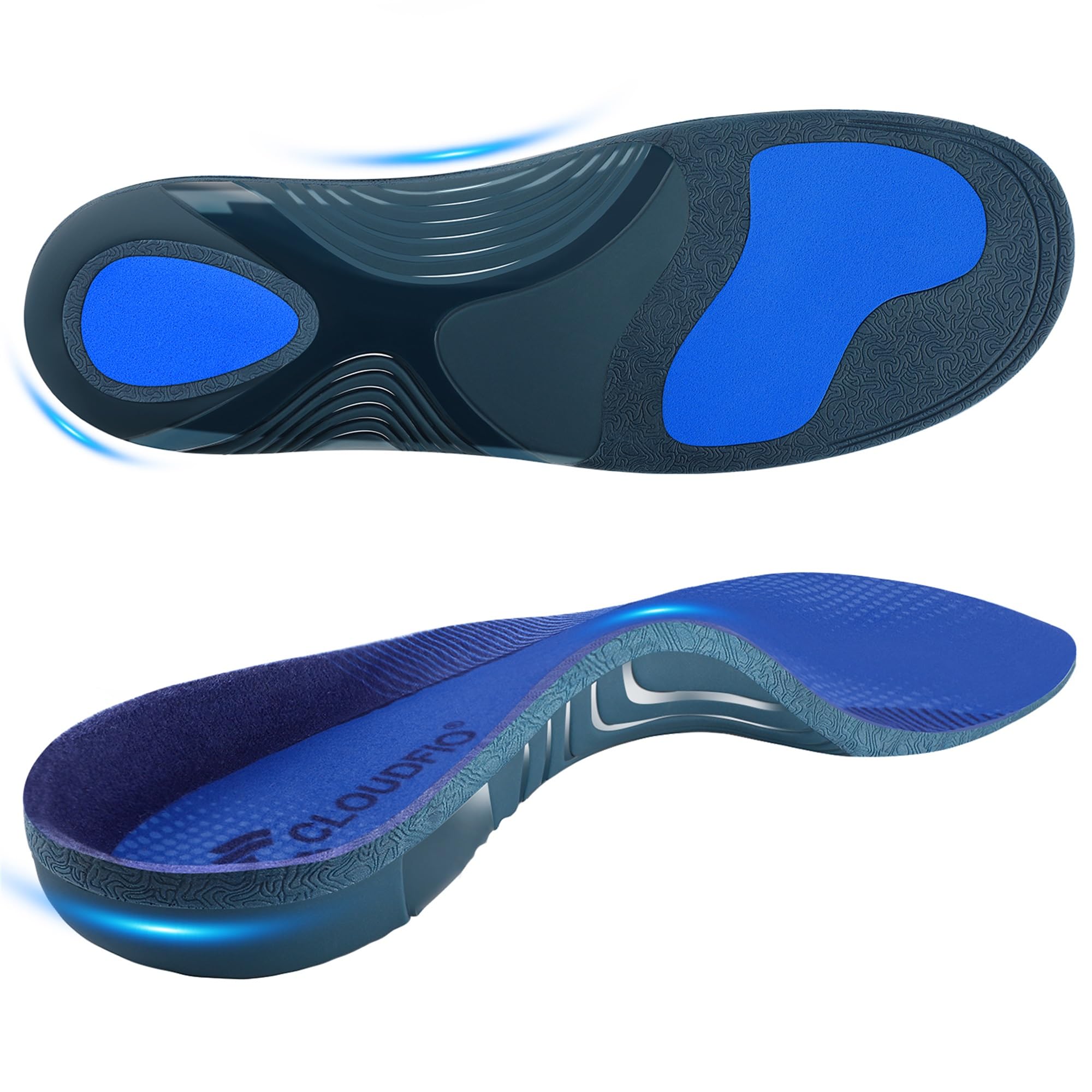
Cloudflo delivers the rare combination of a rigid TPU support frame with a thick Ortholite top layer that keeps the foot comfortable rather than bruised. The hard TPU shell resists deformation even under 220-plus pounds of load, which means the arch support stays at the same height months after purchase. The PU heel pad adds targeted shock absorption at the point of impact, reducing the jarring sensation that travels up the Achilles tendon during walking.
The fit is generous enough to accommodate both men’s and women’s sizes with a single trim-to-fit design. Reviewers consistently mention that these insoles reduced foot fatigue during ten-hour standing shifts for nurses, teachers, and retail workers. The breathable velvet top layer also addresses the sweat and odor problem that plagues cheaper foam insoles, keeping the foot environment dry through long days.
The trade-off is noticeable: the arch support is less pronounced than the OUOKK or BestHalo options. Users with advanced plantar fasciitis may find the lift insufficient for full correction, and the TPU edge can feel stiff along the midfoot during the first few wears. For entry-level buyers who need a durable, weight-rated insole without spending at the premium tier, this is the strongest value pick.
Why it’s great
- Rigid TPU shell holds arch shape under 220+ lbs loads
- Ortholite top layer prevents blisters and hot spots
- Breathable velvet reduces moisture and odor buildup
Good to know
- Arch support is moderate, not aggressive for severe cases
- TPU edge can feel stiff during initial break-in
- May need looser laces in low-volume shoes
5. Psveb Heavy Duty Support Pain Relief Orthotics

Psveb packs dual PORON cushioning layers into a design that explicitly targets heavier users over 230 pounds. The Golden Triangle ergonomic layout places three support nodes under the forefoot, arch, and heel, which distributes load more evenly than a single continuous arch plate. The deep U-shaped heel cup is aggressive enough to lock the calcaneus firmly, reducing side-to-side slippage that can cause blistering during long walks or runs.
The medium arch support strikes a careful balance—high enough to relieve tension on the plantar fascia but not so aggressive that it creates a pressure ridge under the midfoot. Reviewers reported effective relief for heel pain and arch strain during nine-to-ten-hour shifts on hard floors, and the insoles maintained their shape without flattening after three weeks of continuous use. The full PU layer on the sole side adds a softness that compensates for the firm upper structure, making the overall feel supportive without being punishing.
The main drawback is thickness. These insoles take up significant vertical space inside the shoe, and several reviewers noted they made their sneakers or low-back shoes feel noticeably tighter. They work best in boots or sneakers with removable insoles and generous toe boxes. If you have wide shoes or boots, this is an excellent heavy-load option; if you wear slim dress shoes, the volume increase may be a dealbreaker.
Why it’s great
- Triple-point support distributes load across forefoot, arch, and heel
- Dual PORON cushioning absorbs high-impact shock effectively
- Deep heel cup eliminates heel slippage during movement
Good to know
- Significant thickness reduces interior shoe volume
- May not fit low-back shoes or slim dress footwear
- Medium arch may be insufficient for severe plantar fasciitis
FAQ
How do I know if I need high arch support versus medium arch support?
Can I use heavy-duty arch support insoles in my running shoes?
How long does it take to break in rigid arch support insoles?
Final Thoughts: The Verdict
For most users, the best arch support winner is the Dr. Scholl’s Plantar Fasciitis Relief Orthotic Insoles because it offers clinically proven recurrence prevention and immediate heel pain relief without requiring an aggressive arch height. If you need maximum vertical lift for a true high arch, grab the OUOKK 3/4 Length Inserts. And for heavy users or those who stand all day on concrete, nothing beats the load-rated durability of the Cloudflo Plantar Fasciitis Insoles.

Mo Maruf
I created WellFizz to bridge the gap between vague wellness advice and actionable solutions. My mission is simple: to decode the research and give you practical tools you can actually use.
Beyond the data, I am a passionate traveler. I believe that stepping away from the screen to explore new environments is essential for mental clarity and physical vitality.