Our readers keep the lights on and my smoothie glass nicely filled. As an Amazon Associate, I earn from qualifying purchases.
That first step out of bed in the morning should not feel like stepping onto a bed of broken glass, yet for millions managing plantar fasciitis, heel pain dictates every stride until the right shoe interrupts the cycle. The specific architecture of a supportive shoe — the rigidity of the shank, the contour of the medial arch, and the density of the heel cushion — directly determines whether your fascia is loaded or unloaded during each gait cycle. Shopping for effective footwear means filtering past generic “comfort” claims and focusing on measurable structural elements that stabilize the calcaneus and support the plantar fascia.
I’m Mohammad Maruf — the founder and writer behind WellFizz. I’ve spent over a decade analyzing biomechanical data from consumer footwear trials, grading orthopedic integration in mass-market shoes, and mapping customer satisfaction patterns to specific arch support metrics like heel-cup depth and midfoot rigidity.
Selecting a pair is not about brand reputation alone; the real test lies in how a shoe’s footbed and outsole interact with your specific arch type and gait. This guide examines seven models across price tiers to help you identify the true best arch support shoes for plantar fasciitis for your daily routine.
How To Choose The Best Arch Support Shoes For Plantar Fasciitis
Plantar fasciitis is an inflammation of the thick band of tissue that runs across the bottom of your foot connecting your heel bone to your toes. The right shoe acts like a brace, reducing tension on this tissue at heel strike and toe-off. Here are the criteria that separate effective therapeutic footwear from casual sneakers.
Heel-Cup Depth and Stability
A deep, contoured heel cup cradles the calcaneus (heel bone), limiting excessive pronation and preventing the plantar fascia from stretching abnormally during weight-bearing. You want a firm heel counter that you cannot easily squeeze inwards — this rigid structure is critical for passive motion control during the stance phase of walking.
Arch Design and Removable Footbed
Look for a shoe that offers a distinct medial arch support — not just a flat footbed with a soft insole. The arch should gently rise under your midfoot without poking uncomfortably into the arch. A removable footbed is essential if you plan to insert custom orthotics or doctor-prescribed arch supports, as stacking a second insole on top of a non-removable one will compress your foot and cause discomfort.
Midfoot Shank Rigidity
The structural plate (shank) running between the heel and forefoot prevents the shoe from twisting under load. A minimal or flexible shank is fine for casual walking, but for plantar fasciitis, you need a stiffer shank that resists torsional twisting. This ensures the shoe acts as a stable platform on uneven surfaces, reducing the need for your foot’s intrinsic muscles to stabilize.
Quick Comparison
On smaller screens, swipe sideways to see the full table.
| Model | Category | Best For | Key Spec | Amazon |
|---|---|---|---|---|
| Brooks Glycerin Max | Premium Neutral | Maximum cushion for heel pain relief | Rocker sole angle reduces fascia stretch | Amazon |
| Hoka Gaviota 5 | Premium Stability | Overpronation control with arch support | J-Frame midsole for medial support | Amazon |
| Brooks Ghost Max | Mid-Range Neutral | Versatile arch support for walking & standing | GlideRoll rocker for smooth heel transition | Amazon |
| New Balance 880v15 | Mid-Range Daily | Supportive cushioned walking shoe | Fresh Foam X midsole delivers balanced feel | Amazon |
| Skechers Go Walk Glide Step 2.0 | Mid-Range Slip-In | Easy entry for limited mobility | Ultra Go cushion with Skechers Arch Fit insole | Amazon |
| Skechers Arch Fit Arcade | Budget-Friendly | Lightweight slip-on arch support | Podiatrist-certified arch shape insole | Amazon |
| New Balance 608v5 | Budget Value | Durable cross-trainer with slip resistance | ABZORB heel cushion for shock absorption | Amazon |
In‑Depth Reviews
1. Brooks Women’s Glycerin Max Neutral Running & Walking Shoe

The Brooks Glycerin Max sets a new benchmark for plantar fasciitis footwear by combining an aggressive rocker sole angle with the brand’s thickest nitrogen-infused cushioning layer. This geometry actively reduces the dorsiflexion of the toes at push-off, which directly limits tension on the plantar fascia — a biomechanical advantage that explains why users with heel and arch pain report symptom relief within the first full day of wear. The neutral platform means it works best for runners or walkers who do not overpronate heavily but need superior shock attenuation with every step.
Footbeds are removable, making the Glycerin Max compatible with custom prescription orthotics, and the heel counter is sturdy enough to provide motion control without being overly rigid. Multiple reviews highlight that the shoe eliminated lingering pain after bunion surgery and completely stopped foot discomfort during long hikes. The roomy toe box also accommodates wider forefeet without pinching, though those transitioning from a lower-stack shoe may find the height takes a few miles to adjust to.
On the flip side, this is a premium-tier shoe with a price reflective of its advanced cushioning platform. Some walkers find the rocker shape slightly too pronounced for casual strolling, describing it as feeling “heavy” during airport travel or short errands. The upper is also plush, which can run warm in hotter months.
Why it’s great
- Rocker sole unloads the plantar fascia during push-off.
- Removable footbed permits custom orthotic insertion.
- Luxurious cushioning with zero break-in period.
- Excellent joint and back pain relief reported by users.
Good to know
- Premium pricing reflects advanced foam technology.
- Rocker shape may not suit casual walking for all users.
- Plush upper can feel warm in high heat.
2. Hoka ONE ONE Women’s Gaviota 5

The Hoka Gaviota 5 is engineered specifically for runners and walkers who need active motion control, employing Hoka’s J-Frame technology — a firmer density foam wrapped around the medial heel and arch to resist overpronation. For plantar fasciitis patients whose pain is compounded by rolling ankles or collapsed arches, this integrated stability system keeps the foot aligned throughout the gait cycle, directly reducing the torsional load that stretches the fascia. Users confirm it delivers excellent support and cushioning for long walks and runs while preventing the inward collapse that aggravates heel pain.
The heel cup is notably deep and structured, cradling the calcaneus to minimize side-to-side movement at initial contact. The shoe also runs slightly wide and large, accommodating those with broader feet or the need for a thick orthotic — though some users with hypermobility or Ehlers-Danlos syndrome found they needed an additional arch insert on top of the already excellent built-in support. The upper is constructed from a breathable mesh that holds up well to machine washing, a practical plus for daily wearers.
On the downside, the Gaviota 5 commands a premium price, and its wider fit may not suit narrow-footed users without sizing down. A few reviewers noted that the rocker sole took a few walks to feel natural, and despite the stability frame, there is no dedicated medial post — the J-Frame is a density gradient, not a hard plastic shank.
Why it’s great
- J-Frame midsole actively resists overpronation at the arch.
- Deep heel cup ensures secure calcaneus positioning.
- Wide toe box and generous fit for orthotic insertion.
- Machine washable upper for easy maintenance.
Good to know
- Runs wide and large — careful sizing down may be needed.
- Premium price reflective of stability engineering.
- J-Frame works better as a density guide than a rigid post.
3. Brooks Women’s Ghost Max Suede/Leather Neutral Running & Walking Shoe

The Brooks Ghost Max bridges the gap between plush cushioning and stable arch support, making it a strong mid-range option for those managing plantar fasciitis without needing the aggressive stability of the Gaviota. Its GlideRoll rocker geometry mimics the natural rolling motion of the foot, reducing the amount of calf and fascia tension required during each step. Plantar fasciitis sufferers who have tried this shoe consistently report pain-free walking after the first full day out, citing both the rocker and the cushioned heel as the sources of relief.
The suede/leather upper adds durability and a touch of water resistance, though the shoe runs a half size smaller than typical Brooks sizing — customers recommend going up half a size to avoid pressure on the toes. The heel counter offers a good balance of structure and flexibility, making it comfortable for all-day wear on concrete floors for professions like nursing or retail. The outsole also features a slightly less slippery tread pattern than standard running shoes, with users praising its performance on icy winter pavement.
One notable limitation is that the removable insole sits on top of a moderate arch that may not be tall enough for those with very high arches — you can insert your own orthotic to increase the arch rise. At this price point, the Ghost Max delivers strong performance for the condition, but durability over extended mileage remains to be proven.
Why it’s great
- GlideRoll rocker reduces fascia strain during gait.
- Excellent heel cushion and shock absorption.
- Durable suede/leather upper with water resistance.
- Good traction on slippery surfaces.
Good to know
- Runs a half size smaller than usual Brooks sizing.
- Moderate arch may need orthotic for high arches.
- Long-term durability is still being assessed.
4. New Balance Women’s W880v15
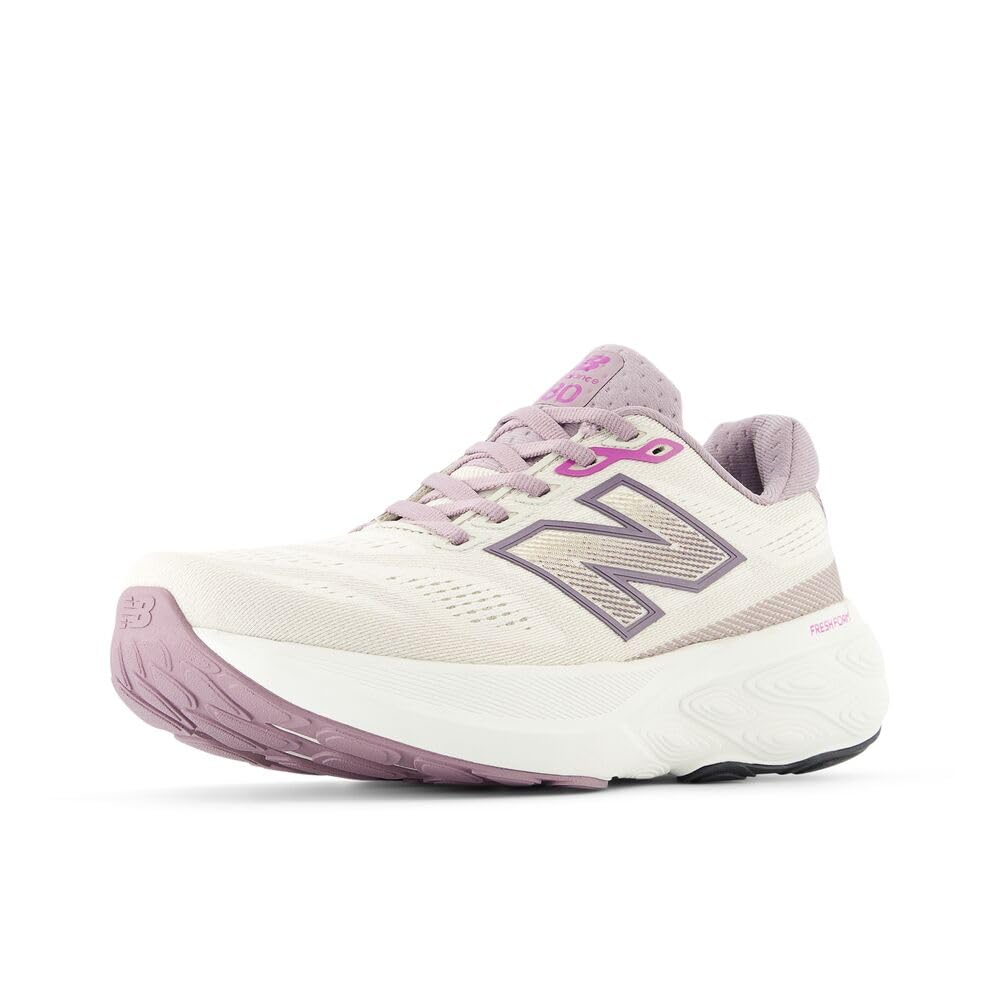
The New Balance 880v15 is a balanced neutral shoe that prioritizes even cushioning and a spacious toe box — two features that matter deeply for plantar fasciitis patients who also experience supination (foot tilting outward). The Fresh Foam X midsole delivers a soft but responsive feel under the heel, and the bed is wide enough to accommodate custom orthotics if the built-in arch is not high enough. Users with supination specifically report that this is the best shoe they have tried, as it does not torque the foot inward like many stability models do.
This version of the 880 avoids the chunky silhouette of Hoka or Brooks Max models, offering a sleeker profile that still packs ample cushioning for daily use. The heel counter is moderately stiff — you can compress it with effort, but it provides enough structure for typical walking and running. Reviewers consistently note that these shoes are comfortable straight out of the box with zero break-in discomfort, and the fit is true to size for most foot shapes.
The main variable to consider is that the arch support level is moderate; those with severe flat feet or high arches may need an aftermarket insert. Additionally, the midsole is not designed for aggressive stability — if your primary issue is overpronation rather than supination or neutral alignment, this shoe may not provide enough medial guidance.
Why it’s great
- Fresh Foam X cushioning absorbs heel strike well.
- Wide toe box reduces forefoot irritation.
- Strong performer for supination and neutral gaits.
- True to size, minimal break-in phase.
Good to know
- Moderate arch — not tall enough for high-arched feet.
- Not designed as a stability shoe for severe overpronation.
- Heel counter is less rigid than stability models.
5. Skechers Women’s Go Walk Glide Step 2.0 Elektra Hands Free Slip-ins
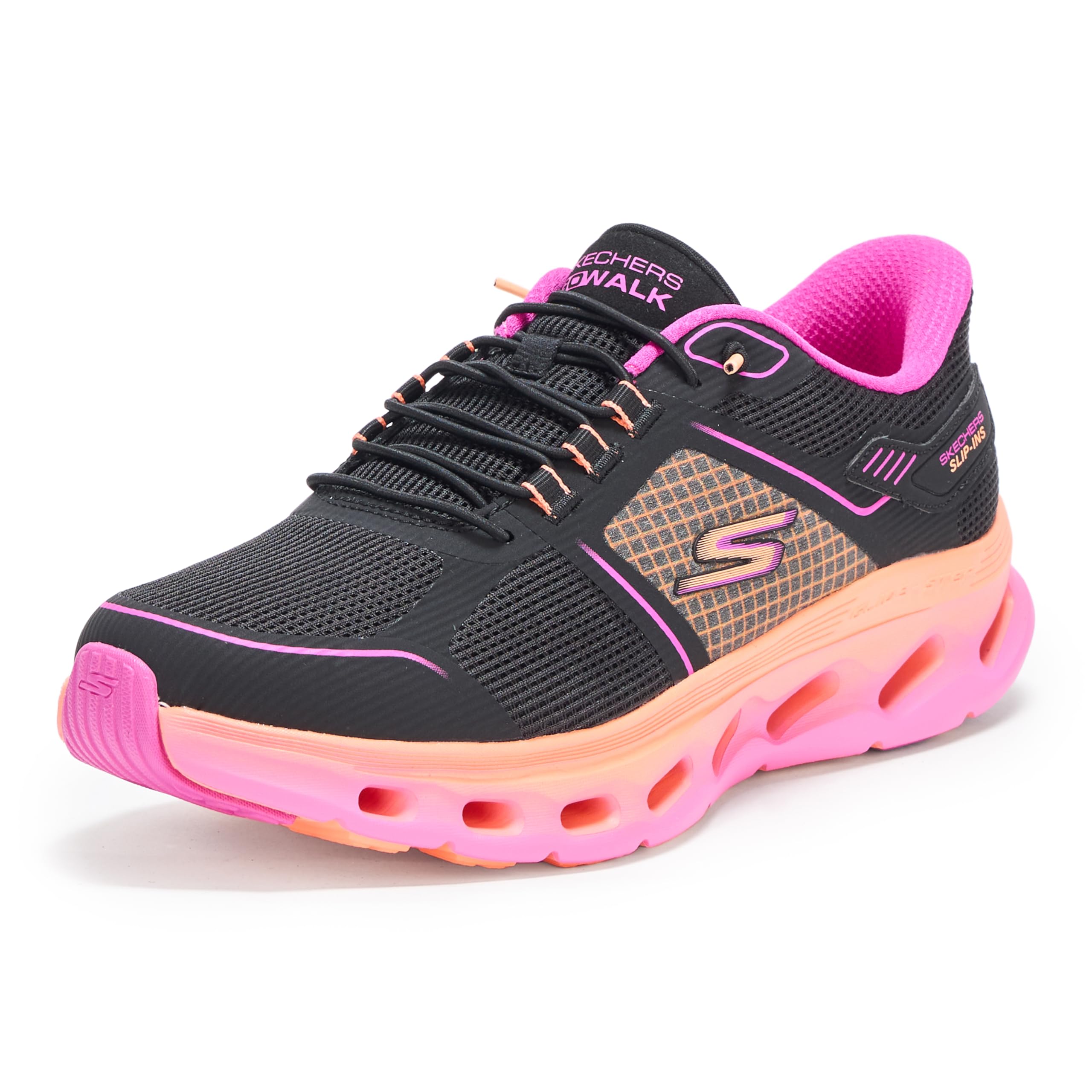
The Skechers Go Walk Glide Step 2.0 tackles a different dimension of the plantar fasciitis problem — the difficulty of putting on a shoe when morning heel stiffness makes bending down painful. Its Hands Free Slip-in design uses a collapsible heel counter that lets you step in without using your hands, with a structured arch insole certified by podiatrists. The internal heel cradle is reinforced enough to provide decent motion control, and the Ultra Go cushioning delivers a soft step that reduces impact at the heel.
Healthcare workers on 12-hour CNA or nursing shifts have praised this shoe for its combination of arch support and easy on/off — a rare pairing when you need to change shoes quickly between rooms. The footbed is designed with a pronounced medial arch that accommodates many foot types, and the shoe is lightweight enough to wear all day without fatigue. Users also report that the slip-in design works well for those recovering from hip surgery or wearing ankle braces.
The trade-off for the hands-free convenience is that the heel counter cannot be as rigid as a traditional shoe’s, which may limit its effectiveness for those who need maximum calcaneal stability. The cushioning is also on the softer side, which some users find less supportive for long runs or heavy-impact activities. The style carries a slightly athletic-casual look that may not suit all professional dress codes.
Why it’s great
- Hands-free slip-in design for stiff morning feet.
- Podiatrist-certified arch support insole is included.
- Lightweight and flexible for all-day wear on shifts.
- Works well with ankle braces and orthotics.
Good to know
- Collapsible heel limits maximum stability.
- Soft cushioning may not suit heavy-impact activities.
- Style is casual, not dress-professional.
6. Skechers Women’s Arch Fit Arcade-See Ya There Hands Free Slip-ins Sneaker
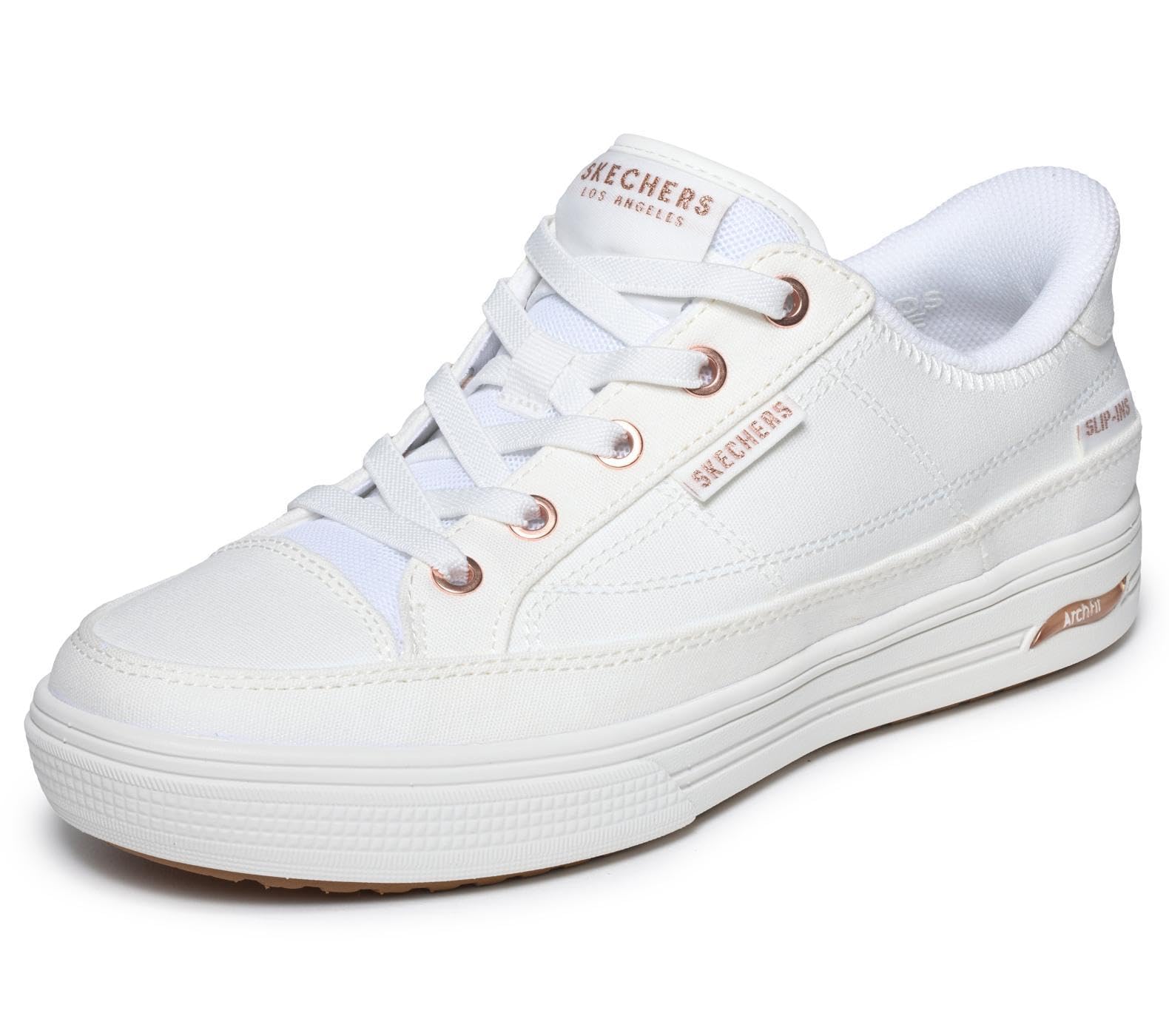
The Skechers Arch Fit Arcade brings an entry-level price to the slip-in arch support category, making it accessible for those who want basic plantar fasciitis relief without spending at the premium range. Its Arch Fit insole is podiatrist-designed with a recognizable medial arch contour that lifts the midfoot, and the hands-free slip-in mechanism again addresses the morning stiffness struggle. Users describe the fit as comfortable for errands, pregnancy, and light walking, with the shoes being notably lightweight and cute.
However, the arch support is milder than in the Go Walk Glide Step — the insole is removable but the overall midfoot rigidity is lower, meaning this shoe works best for low-impact activities and shorter standing periods. A critical dimensional note is that the Arcade fits narrow — users who wear a standard width report these feeling tight across the midfoot, and those with wide feet may find them unwearable. The upper is also thin, making the shoe less durable for heavy daily use than sturdier cross-trainers.
For the budget-conscious buyer with a narrow-to-average foot shape who needs a casual slip-on with recognizable arch support, this represents a solid entry point. The cushioning is not as plush as higher-tier models, and the heel counter lacks the rigidity needed for serious motion control.
Why it’s great
- Entry-level price point for certified arch support.
- Slip-in design helps with morning heel pain.
- Lightweight and comfortable for casual errands.
- Looks stylish for a sporty-casual shoe.
Good to know
- Fits narrow — not suitable for wide feet.
- Milder arch support than premium models.
- Less durable upper for heavy daily use.
7. New Balance Men’s 608 V5 Casual Comfort Cross Trainer

The New Balance 608v5 is a classic cross-trainer that prioritizes durable construction and a stable platform over flashy features. Its full-grain leather upper provides a level of durability that outlasts many mesh sneakers, and the ABZORB heel insert absorbs shock effectively during heel strike — a critical feature for plantar fasciitis management. Users who log over 20,000 steps a day on concrete floors report the shoe remains comfortable for eight-plus hours, with good traction and water resistance through the upper.
The insole is removable, giving you the option to replace it with a high-arch orthotic for more targeted support. The shoe’s fit is true to size with a slightly generous width, making it a good candidate for those with normal to slightly wide feet who do not want a narrow fit. The midfoot shank is reasonably rigid for the price, providing moderate torsional stability that helps maintain foot alignment during lateral and forward movements.
The trade-off for the budget-friendly price is that the outsole can separate from the upper after about a year of heavy use, and the slip resistance is good but not premium. The styling also leans toward a more classic, functional aesthetic rather than a sleek modern look. For those needing a tough, replaceable workhorse shoe with room for orthotics, this is a strong value candidate.
Why it’s great
- Durable full-grain leather upper holds up over time.
- ABZORB heel cushioning reduces impact shock.
- Removable insole for custom orthotic use.
- Generous fit for slightly wide feet and high-volume orthotics.
Good to know
- Outsole may separate after heavy year-long use.
- Style is more functional than fashion-forward.
- Arch support is mild — needs orthotic insert for high arches.
FAQ
Can I wear arch support shoes for plantar fasciitis if I have flat feet?
How often should I replace arch support shoes for plantar fasciitis?
Do slip-in shoes provide enough arch support for plantar fasciitis?
Final Thoughts: The Verdict
For most users, the best arch support shoes for plantar fasciitis winner is the Brooks Glycerin Max because its rocker sole geometry actively unloads the plantar fascia while its plush cushioning ensures zero break-in discomfort. If you need active motion control for overpronation, grab the Hoka Gaviota 5. And for a durable budget-friendly option that accommodates custom orthotics, nothing beats the New Balance 608v5.

Mo Maruf
I created WellFizz to bridge the gap between vague wellness advice and actionable solutions. My mission is simple: to decode the research and give you practical tools you can actually use.
Beyond the data, I am a passionate traveler. I believe that stepping away from the screen to explore new environments is essential for mental clarity and physical vitality.