Our readers keep the lights on and my smoothie glass nicely filled. As an Amazon Associate, I earn from qualifying purchases.
Flat feet cause a cascade of misalignment — collapsing arches strain the plantar fascia, roll the ankles inward, and force the knees and hips to compensate. The right insole halts this chain reaction by lifting the navicular bone back into its natural position, restoring the foot’s mechanical efficiency with every step.
I’m Mohammad Maruf — the founder and writer behind WellFizz. I spend my time cross-referencing biomechanics research with real-world user data to pinpoint which orthotic designs actually stand up to long shifts, heavy loads, and chronic foot conditions.
After filtering through material density, arch-height measurements, and heel-cup depth across dozens of models, I’ve narrowed the field to the five strongest contenders that deliver measurable relief for fallen arches. Read on for my complete analysis of the best arch support insoles for flat feet.
How To Choose The Best Arch Support Insoles For Flat Feet
Flat feet demand more than generic cushioning — you need a structured orthotic that actively resists arch collapse. The wrong insole can worsen pronation, while the right one realigns your entire kinetic chain from the ground up.
Arch Height and Shell Rigidity
A low or fallen arch requires a semi-rigid or rigid shell made from polypropylene or carbon fiber-infused nylon. Flexible foam-only insoles cannot hold the arch up under body weight. Look for a defined medial arch post that measures at least 22-26mm in height — this lifts the navicular and redistributes pressure away from the plantar fascia insertion point.
Heel Cup Depth and Stability
Overpronation starts at the heel. A deep heel cup (10mm or more) cradles the calcaneus and limits excessive inward roll. Shallow cups let the foot slosh sideways, which negates the arch support entirely. Test the cup by pressing into it — it should hold its shape without collapsing.
Weight Capacity and Material Density
Heavier users compress low-density foam within weeks, turning arch support into flat padding. Insoles rated for 220+ pounds typically use a dual-density construction: a rigid base layer for structure and a softer top layer for comfort. PU (polyurethane) and PORON outperform basic EVA for long-term resilience under sustained load.
Quick Comparison
On smaller screens, swipe sideways to see the full table.
| Model | Category | Best For | Key Spec | Amazon |
|---|---|---|---|---|
| Superfeet Run Cushion Low Arch | Premium | Runners with low arches | Adaptive Comfort Technology | Amazon |
| OUOKK 3/4 Length Low Arch | Premium | All-day standing in tight shoes | 26mm arch height, TPU shell | Amazon |
| BestHalo Heavy Duty | Mid-Range | High arches and heavy users | Biomechanical EVA + gel cushioning | Amazon |
| Cloudflo Plantar Fasciitis | Mid-Range | Standing all day on concrete | Rigid TPU + Ortholite cushioning | Amazon |
| Psveb Professional Heavy Duty | Value | Heavy-duty support under 230+ lbs | Dual PORON cushioning layers | Amazon |
In‑Depth Reviews
1. Superfeet Run Cushion Low Arch Insoles

Superfeet’s patented Adaptive Comfort Technology is the key differentiator here — a semi-rigid polymer shell that flexes with the foot during heel-to-toe transition while maintaining structured arch lift for low-arched runners. Unlike budget insoles that rely solely on foam compression, this design actively stores and releases energy with each stride, which explains the near-universal praise from users who switched from generic drugstore inserts.
The moisture-wicking top cover addresses a real pain point for active users: sweat accumulation that breeds odor and blisters. Multiple reviewers confirmed the insoles eliminated hip flexor and outer hip pain within days, a clear sign that the deep heel cup and contoured arch are actually correcting overpronation rather than just padding the bottom of the foot.
One user noted a transient burning sensation on the soles after 2.5-mile walks — this is the foot adapting to the new biomechanical position, typically resolving within 1-2 weeks. The trim-to-fit sizing means you can dial in the exact shape for your shoe, and the build quality consistently holds up past the 6-month mark in daily trainers.
Why it’s great
- Adaptive flex shell mirrors natural gait cycle
- Proven to eliminate hip and knee pain from overpronation
- Moisturewick fabric prevents odor in active use
Good to know
- Break-in period may cause mild sole sensitivity
- Premium price point reflects the advanced shell technology
2. OUOKK 3/4 Length Low Arch Support Inserts
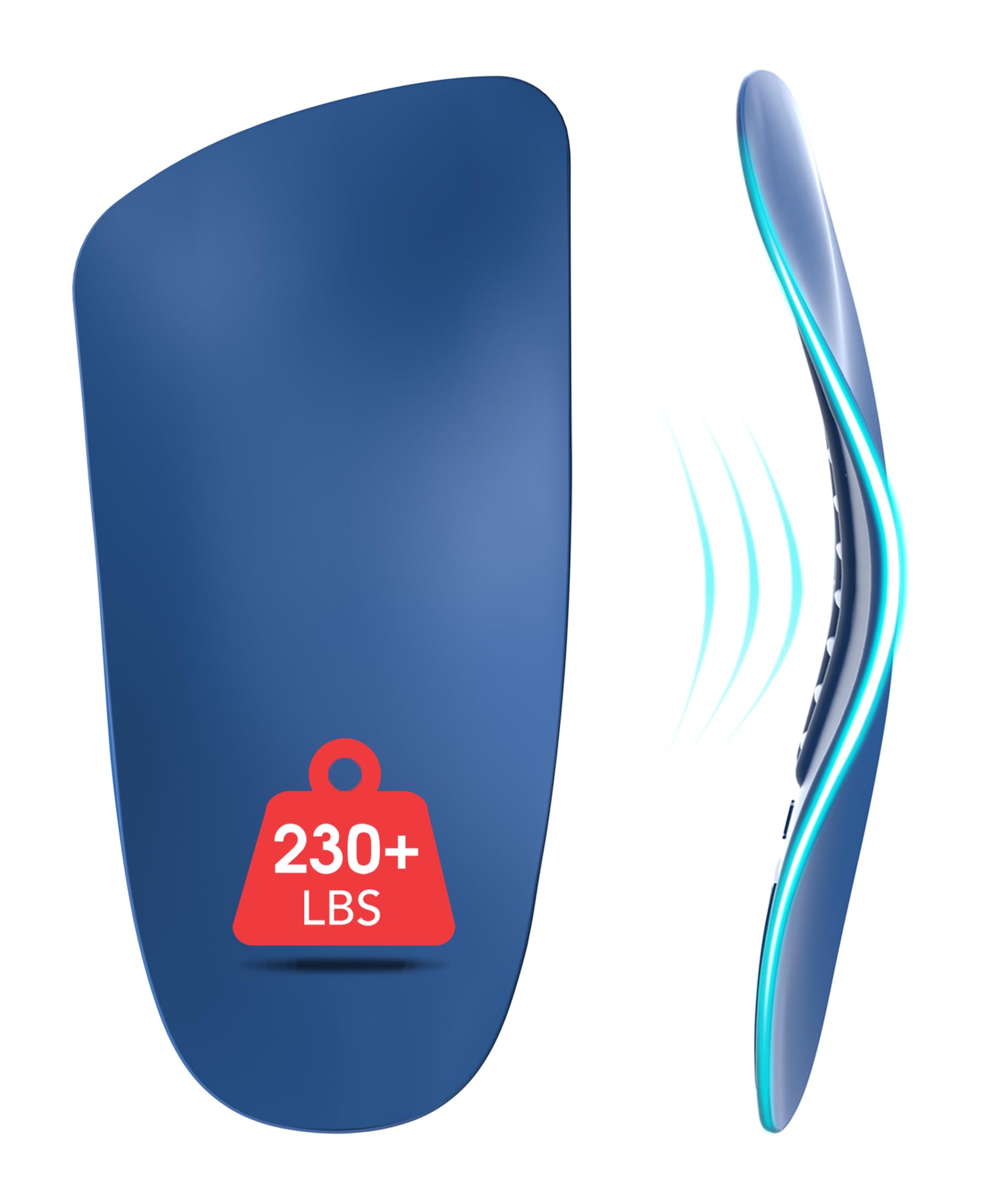
The 3/4 length design is the standout feature here — it leaves the toe box free, making these the only premium option that fits seamlessly into tighter shoes like dress loafers, hiking boots, and even some heels without cramping the toes. The 26mm TPU arch post is among the highest in this roundup, providing aggressive correction for collapsed arches that softer insoles cannot match.
Users with flat feet who stand across multiple jobs daily reported zero end-of-day pain after switching to these inserts, which speaks to the rigid shell’s ability to maintain arch position under sustained load. The foot massage area on the top layer actively stimulates circulation, a thoughtful addition for those who suffer from plantar fascia tightening during long shifts.
The primary trade-off is the lack of forefoot cushioning — because the insole stops at the metatarsal heads, runners or those who need impact absorption at the ball of the foot may find it insufficient. But for the specific use case of all-day standing in snug footwear, this design is unmatched in the current market.
Why it’s great
- Thin profile fits tight shoes without toe cramping
- Aggressive 26mm TPU arch post for severe flat feet
- Foot massage area boosts circulation during long stands
Good to know
- No forefoot cushioning for high-impact activities
- Staying in place may require adhesive strips in slippery shoes
3. BestHalo Heavy Duty Plantar Fasciitis Insoles
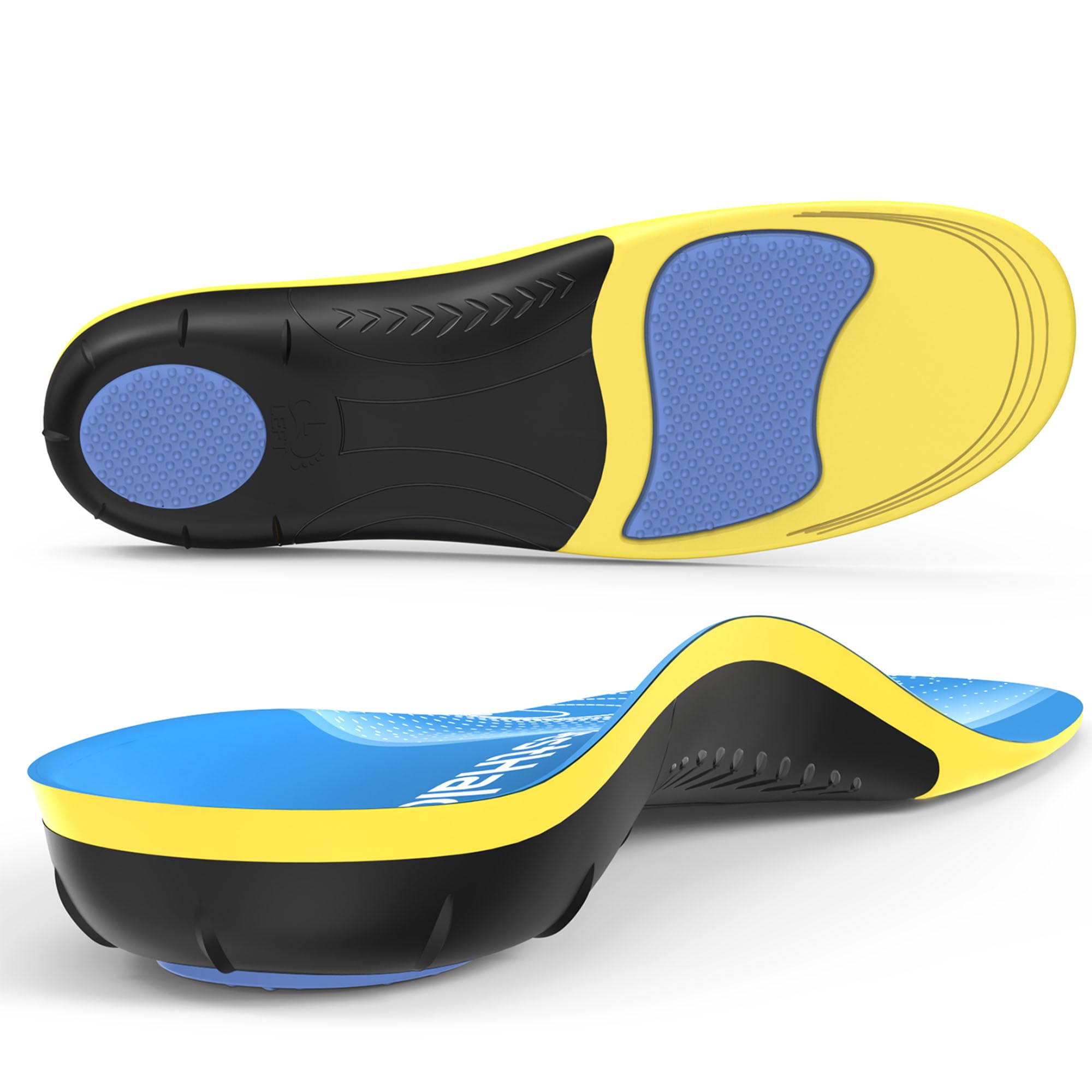
BestHalo positions itself at the intersection of biomechanical correction and plush comfort — the EVA foam base is denser than typical mid-range offerings, while the gel heel insert provides targeted shock absorption that decompresses under the calcaneus. Users recovering from foot surgery reported that this insole resolved radiating pain that traveled from the feet up to the hips, a strong indicator that the deep heel cup and structured arch are working in concert.
The manufacturer explicitly warns of a 3-7 day adjustment period because the high arch support can feel intense at first. Several reviewers confirmed this — the arch post is aggressive enough to cause mild discomfort in the first week, but those who persisted reported significant pain reduction by day four or five. The trim-to-fit design accommodates work boots and tennis shoes alike, though the 220+ pound rating suggests the foam may degrade faster under heavier loads compared to the TPU-shell options in this list.
One notable outlier review mentioned lower back pain after two weeks, which may indicate that the arch height was too aggressive for that individual’s specific foot type. This underscores the importance of matching arch height to your actual foot structure — higher is not always better for everyone.
Why it’s great
- Dense EVA plus gel heel for balanced shock absorption
- Effective for post-surgery foot and hip pain relief
- Clear break-in guidance prevents improper usage
Good to know
- Aggressive arch may cause lower back issues for some users
- Foam density may compress faster under very heavy loads
4. Cloudflo Plantar Fasciitis Insoles
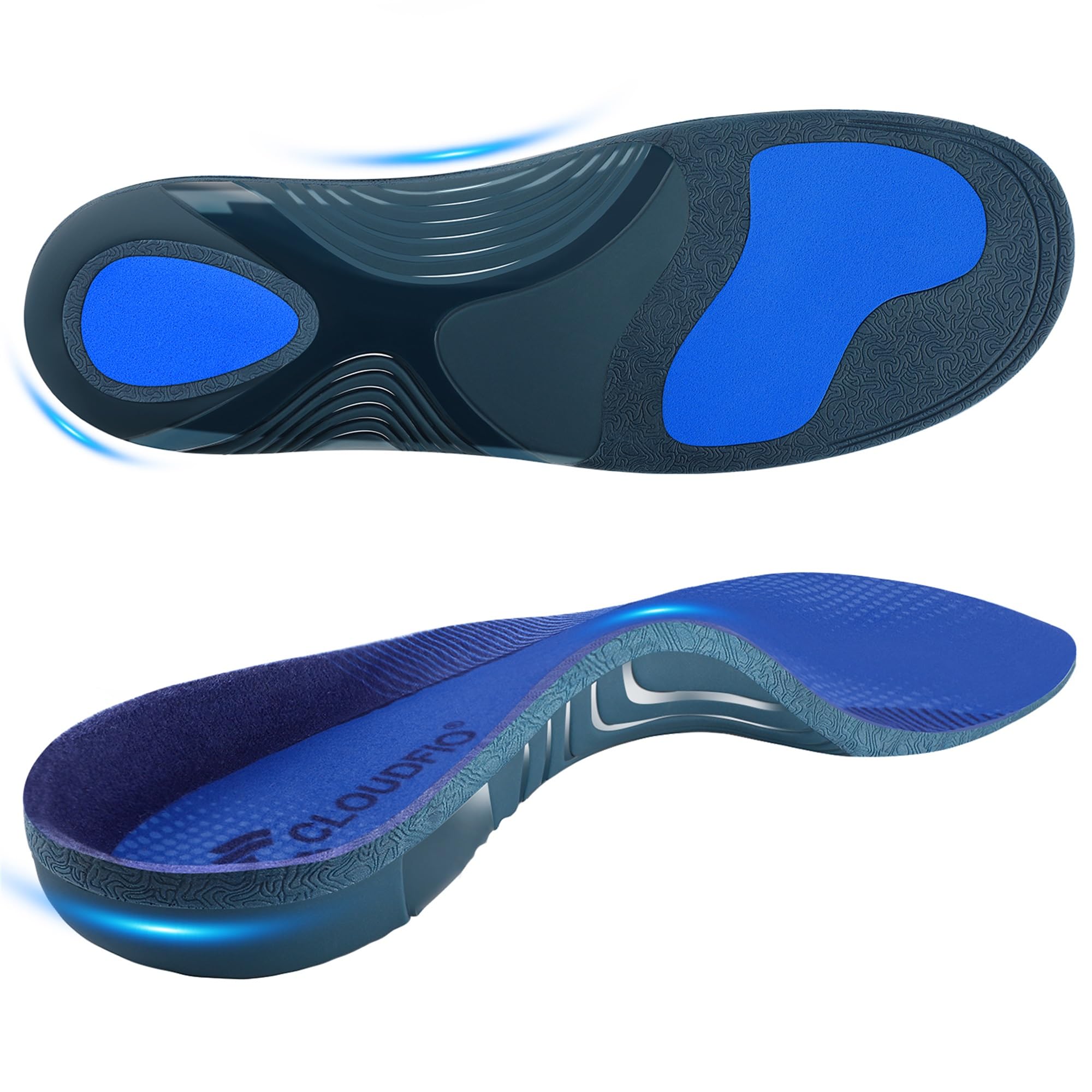
Cloudflo’s construction uses a rigid TPU arch shell bonded to an Ortholite foam top layer — a hybrid approach that provides the structural correction typically found in premium insoles while keeping the price accessible. The PU heel pad absorbs vertical ground reaction force, which matters for warehouse workers, nurses, and retail employees who spend 10+ hours on concrete floors.
Users consistently reported that the insoles felt “soft but firm” — the Ortholite layer conforms to the foot’s unique contours while the TPU shell prevents the arch from collapsing under load. Several reviews noted immediate relief from plantar fasciitis pain after the first wear, a rare outcome for budget-friendly insoles that usually require a break-in period. The product explicitly supports users weighing over 220 pounds, and the deformation-resistant TPU maintains its shape longer than all-foam alternatives.
The sizing is specific to foot length rather than shoe size, which reduces the guesswork in trimming. A few users noted that the initial arch support felt slightly less aggressive than competing models, but this actually worked in its favor for those with moderate flat feet who found other insoles too painful to break in.
Why it’s great
- Rigid TPU shell prevents arch collapse under continuous load
- Ortholite foam conforms without sacrificing structure
- Immediate pain relief for many users on first wear
Good to know
- Arch support is moderate, not aggressive enough for severe cases
- May require a break-in period for those used to very flat shoes
5. Psveb Professional Heavy Duty Support Pain Relief Orthotics

The Psveb insole is engineered specifically for users over 230 pounds who need extreme durability — the dual PORON cushioning layers provide double the shock absorption of standard EVA without the rapid compression that plagues budget orthotics under heavy loads. The “Golden Triangle” design places support at three key contact points — forefoot, arch, and heel — distributing weight evenly rather than concentrating pressure at the arch apex.
Users working 9-10 hour shifts on hard floors reported that the insoles held their shape without flattening after three weeks of daily use, a common failure point for lighter-duty insoles. The deep U-shaped heel cup stabilizes the calcaneus effectively, preventing the side slippage that can cause blisters and instability during walking. Several reviewers noted that the firm arch support was more aggressive than other models in the same price tier, making them particularly effective for chronic heel pain that had resisted other treatments.
The main caveat is thickness — the dual-layer construction takes up significant vertical space inside the shoe. Multiple users reported that their shoes felt tighter after insertion, with some needing to loosen laces substantially. Best suited for work boots, hiking shoes, or sneakers with removable insoles and ample toe box height.
Why it’s great
- Dual PORON layers resist compression under 230+ pound loads
- Deep U-shaped heel cup prevents overpronation and side slip
- Golden Triangle design distributes pressure across three points
Good to know
- Thick construction requires shoes with ample internal volume
- Firm arch may feel too aggressive for users with mild flat feet
FAQ
Can I use arch support insoles in shoes that already have built-in arch support?
How long does it take to adjust to firm arch support insoles for flat feet?
Final Thoughts: The Verdict
For most users, the best arch support insoles for flat feet winner is the Superfeet Run Cushion Low Arch because its Adaptive Comfort Technology combines structural correction with energy return, eliminating overpronation pain without a brutal break-in period. If you need a thin profile for tight dress shoes or boots, grab the OUOKK 3/4 Length. And for heavy-duty support under extreme loads, nothing beats the Psveb Professional Heavy Duty dual-PORON design — it holds its shape when everything else flattens.

Mo Maruf
I created WellFizz to bridge the gap between vague wellness advice and actionable solutions. My mission is simple: to decode the research and give you practical tools you can actually use.
Beyond the data, I am a passionate traveler. I believe that stepping away from the screen to explore new environments is essential for mental clarity and physical vitality.