Our readers keep the lights on and my smoothie glass nicely filled. As an Amazon Associate, I earn from qualifying purchases.
Every runner knows the feeling: that sharp, nagging ache in the arch that turns a five-mile loop into a mental battle. The right insole doesn’t just pad the foot—it resets your alignment, absorbs the repetitive impact of each stride, and lets you focus on the run instead of the pain. But with rigid plastic supports, soft gel cushions, and multi-layer foams all claiming to fix the same problem, choosing the wrong insert can actually aggravate your condition or pinch your foot inside the toe box.
I’m Mohammad Maruf — the founder and writer behind WellFizz. I’ve spent years analyzing biomechanical data from running labs, comparing foam density curves, and mapping customer durability reports to identify which arch support inserts actually hold up under real training loads.
This guide breaks down five rigorously vetted options so you can match your arch type, weight, and mileage to the support system that works. Read on for the best arch support inserts for running shoes that deliver measurable relief and lasting structure.
How To Choose The Best Arch Support Inserts For Running Shoes
Not all arch supports are built for the repetitive, high-impact loading of running. Many insoles marketed as “supportive” are actually designed for casual standing or walking and will collapse under the force of a heel strike at an 8-minute-mile pace. You need to match three variables: your arch type, your weekly mileage, and your shoe’s internal volume.
Match the Arch Profile to the Insert Shape
Low arches (flat feet) need a medial post—a firm wedge under the midfoot—that prevents the arch from collapsing inward during the stance phase. Medium arches require moderate support that doesn’t push the foot outward. High arches need a deep heel cup and extra metatarsal padding to absorb shock through the rigid forefoot. A high-arch runner who buys a flat-foot insert will experience unnatural pronation and lateral knee strain.
Foam Density vs. Drop-In Height
Higher-density foams like Poron and dual-layer PU retain their shape longer under running loads but add thickness inside the shoe. If your running sneakers already have a snug fit, a thick insole can compress your toes against the upper, causing blisters or black toenails. Look for a heel-to-toe drop under 4 mm in the insole itself so your foot stays close to the original shoe geometry. Gel pads work well for short recovery runs but lack the structural rigidity for tempo work.
Weight Rating and Rigid Arch Plates
Runners over 180 pounds—especially those logging 20+ miles per week—need insoles with a dedicated arch plate made from TPU or nylon. These materials resist fatigue and keep the foot from bottoming out over a long workout. Lighter runners or those focusing on speed work may prefer a flexible EVA base that allows more natural foot motion. The heaviest-duty options often include a removable arch brace, so you can dial the support level as your conditioning improves.
Quick Comparison
On smaller screens, swipe sideways to see the full table.
| Model | Category | Best For | Key Spec | Amazon |
|---|---|---|---|---|
| CRUVHEAL Sport Shock Absorbing Insoles | Athletic | High-mileage runners needing impact protection | Gel pad in heel & forefoot; deep heel cup | Amazon |
| Psveb Professional Heavy Duty Support | Orthotic | Heavy runners (230+ lbs) with medium arches | Double PORON cushion; Golden Triangle support | Amazon |
| Fit Geno Arch Support Plantar Fasciitis Insoles | Heavy-Duty | Long-shift workers & heavy runners (220+ lbs) | Removable TPU arch plate; Poron foam pads | Amazon |
| OUOKK Plantar Fasciitis Relief High Arch Support | 3/4 Length | Runners with very high arches needing targeted lift | 30mm high arch; TPU elastic core | Amazon |
| Cloudflo Plantar Fasciitis Insoles | All-Day Standing | Budget-conscious runners & walkers with flat feet | Rigid TPU arch; Ortholite cushion layer | Amazon |
In-depth Reviews
1. CRUVHEAL Sport Shock Absorbing Insoles

CRUVHEAL designed these specifically for the demands of running and court sports, not just casual walking. The strategically placed gel pads in the heel and forefoot dissipate landing forces that normally travel up through the shins and knees, and the deep heel cup cradles the calcaneus to prevent that wobbling sensation on uneven pavement. Runners logging 20-plus miles per week report that the neutral arch sits in a comfortable middle—not too aggressive for medium arches yet enough lift to keep the plantar fascia from overstretching.
The material composition leans toward bouncy responsiveness rather than deadening stiffness: the base is a dense EVA that springs back after each stride, and the non-slip gel heel insert stays locked in place even during lateral cuts. Several users noted a short 3-to-7-day adaptation window as their feet adjust to the increased support, but after that period the insoles become nearly invisible. They do add a small amount of thickness, so runners with low-volume shoes like Hokas should test fit with their usual lacing tension.
Durability holds up well through a full marathon training cycle—the gel pads don’t flatten after 300 miles like cheaper foam inserts. The moisture-wicking top layer also helps reduce the odor buildup common in synthetic running shoes. For runners who want immediate shock absorption without an aggressive orthotic feel, this is the most balanced choice on the list.
Why it’s great
- Gel pads in heel and forefoot reduce shin-splint risk during high-mileage weeks
- Deep heel cup locks the foot in place during lateral movement and corners
- Neutral arch profile fits the widest range of foot types without overcorrecting
Good to know
- May feel bulky in low-volume sneakers like Hokas or slim racing flats
- Recommended 3–7 day break-in period; not a plug-and-play for everyone
2. Psveb Professional Heavy Duty Support Orthotics
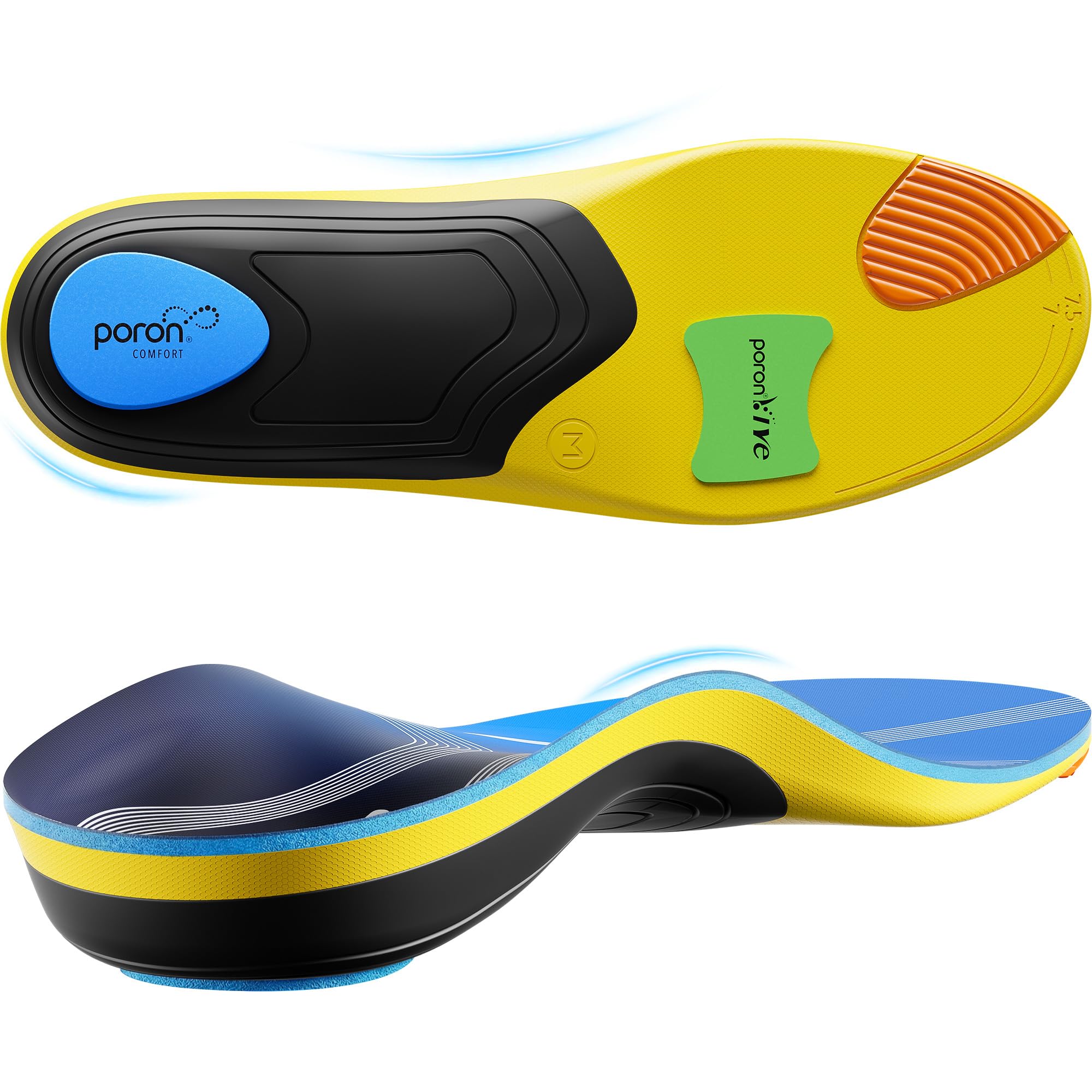
Psveb built this insole around a “Golden Triangle” three-point support system that cradles the forefoot, arch, and heel simultaneously. The double PORON cushioning layer offers advanced shock absorption that remains springy even after standing or running on concrete for 10+ hours—a critical feature for heavier runners who compress standard EVA foams within weeks. The medium arch height hits the sweet spot for runners who pronate moderately but don’t need an aggressive medial post to correct gait.
The deep U-shaped heel cup stands out in this price tier: it cups the heel firmly enough to prevent side slippage during quick direction changes, yet doesn’t dig into the Achilles insertion. Reviewers consistently mention that the insoles fit well in both work boots and running sneakers, though the full PU layer adds noticeable thickness underfoot—runners with tight toe boxes may need to loosen their laces or size up a half-step. The skin-friendly fabric also wicks sweat effectively, keeping feet cool through long tempo runs.
Heel-pain relief is the strongest use case here: reviewers with chronic plantar fasciitis reported a marked reduction in morning stiffness after three days of wear, and the insoles maintain their structural integrity over months without flattening. If your primary complaint is a sharp heel-strike pain that radiates through the arch, this insert’s combination of firm support and plush top layer is hard to beat.
Why it’s great
- Double PORON cushion maintains rebound even under 230+ lb loads on pavement
- Golden Triangle three-point support relieves both arch and heel pain simultaneously
- Deep heel cup prevents heel slip during lateral cuts and sharp turns
Good to know
- Thick profile may crowd the toe box in snug-fitting or low-volume running shoes
- Medium arch support is not adjustable; not ideal for very low or very high arches
3. Fit Geno Arch Support Plantar Fasciitis Insoles
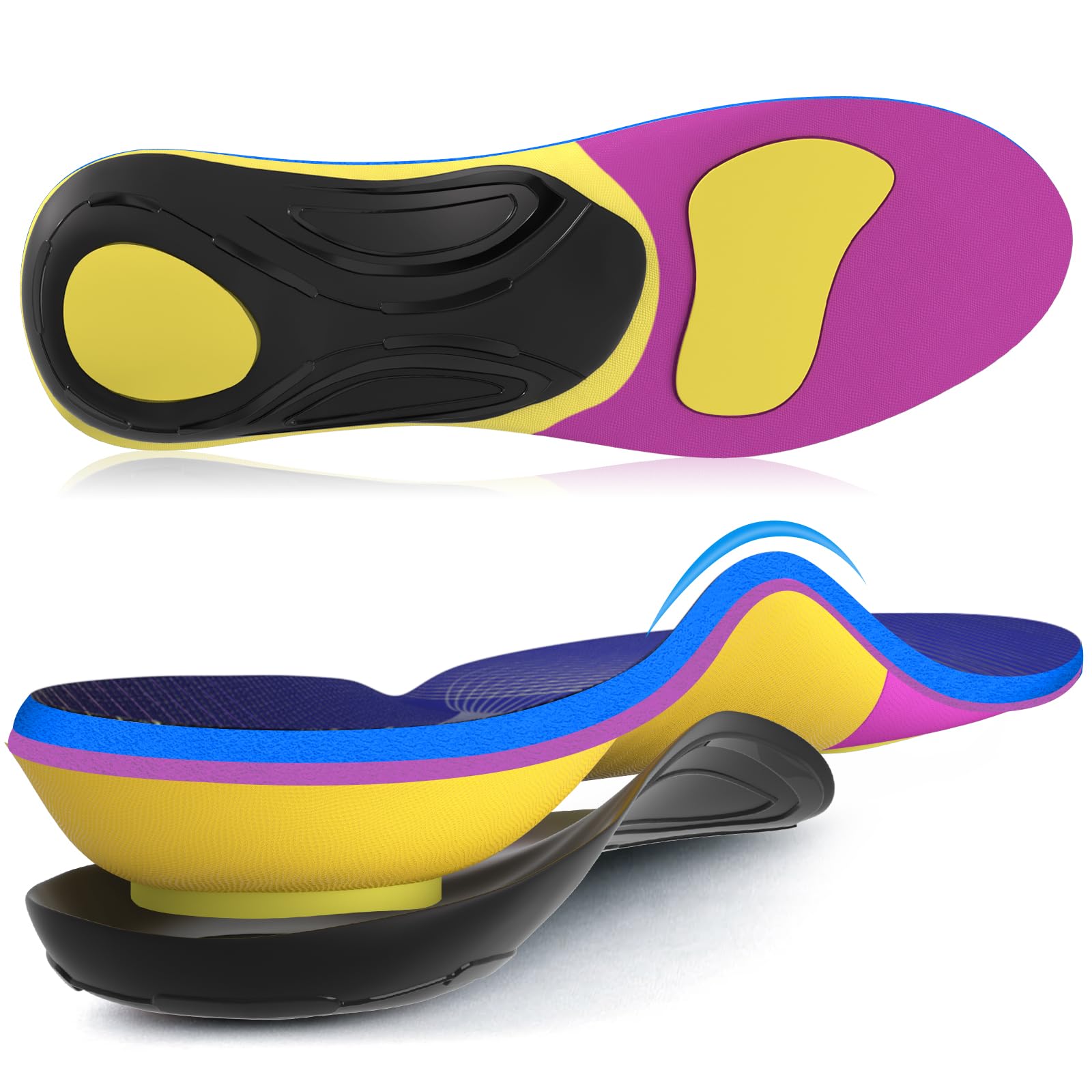
Fit Geno engineered these insoles specifically for runners and workers weighing 220 pounds and above, addressing the structural fatigue that thinner inserts suffer under heavier loads. The rigid TPU arch plate lifts the plantar fascia out of its overstretched position—critical for preventing those flare-ups that sideline runners for weeks—and the Poron foam pads under the heel and ball of the foot absorb the high-impulse forces of a heel strike. Unlike many heavy-duty inserts that feel like walking on hardwood, the top layer is surprisingly breathable and remains comfortable through full 10-hour shifts on concrete or long recovery runs.
One of the most thoughtful design features is the removable arch plate. Runners who need max structure during early-season base building can keep it in place, then remove it for race-day shoes where a lower profile and more natural foot flexion are preferred. The insoles do require trimming to fit—they come with cut lines marked for most shoe sizes—and the hard plastic brace can cause discomfort behind the arch if you rush the break-in, especially in already-cushioned shoes like Hokas where the platform height changes the foot’s angle.
User feedback highlights instant relief for plantar fasciitis, with several reviewers buying additional pairs for their rotation shoes after the first run. The main trade-off is rigidity: the TPU plate doesn’t flex much, so runners with very flat feet may find the arch too aggressive. For heavy runners who need a structure that won’t collapse after 200 miles, this is the most durable option available.
Why it’s great
- Removable TPU arch plate lets you dial support level between training and race shoes
- Poron foam pads resist compression under 220+ lb loads over hundreds of miles
- Rigid arch post offloads plantar fascia strain for near-instant flare-up relief
Good to know
- Hard arch plate can cause midfoot discomfort if break-in is rushed in plush shoes like Hokas
- Requires trimming; not a drop-in fit for all shoe brands out of the box
4. OUOKK Plantar Fasciitis Relief High Arch Support Inserts

OUOKK takes a specialized approach with a 3/4-length design that fits deep into the heel and midfoot while leaving the toes free—ideal for runners with very high arches who cannot tolerate a full-length insole that pushes into the metatarsal heads. The 30mm high arch profile is the tallest on this list, built from a rigid TPU core that resists fatigue for two years or more according to the manufacturer. This is a purpose-built insert for runners who already know they have high arches and need aggressive lift to keep the foot from rolling outward during the gait cycle.
Because it is 3/4 length, it occupies less toe-box volume than full-length alternatives, making it a better fit for tight racing shoes or minimalist trainers where every millimeter counts. The thin edges conform without cutting into the sides of the foot, and the massage-pattern top layer helps disperse plantar fascia pressure. Several reviewers with flat feet reported successful use as well, but the rigid arch can feel overwhelming if you’re transitioning from soft gel insoles—the unyielding TPU does not flex like foam.
The main limitation is that the 3/4 design offers no heel-to-toe shock absorption under the ball of the foot—runners who land midfoot or forefoot will feel the absence of padding. Best suited for heel-strikers who need maximum arch elevation and have the shoe volume to accommodate it. The no-return-replacement policy adds peace of mind when experimenting with such a specific support profile.
Why it’s great
- 30mm high arch provides maximum elevation for runners with very high or rigid arches
- 3/4-length design saves toe-box space in tight racing or minimalist shoes
- TPU core rated for two-plus years of daily use without structural fatigue
Good to know
- No forefoot padding; midfoot and forefoot strikers will lack impact protection
- Rigid arch can feel extreme for flat-footed runners transitioning from foam insoles
5. Cloudflo Plantar Fasciitis Insoles
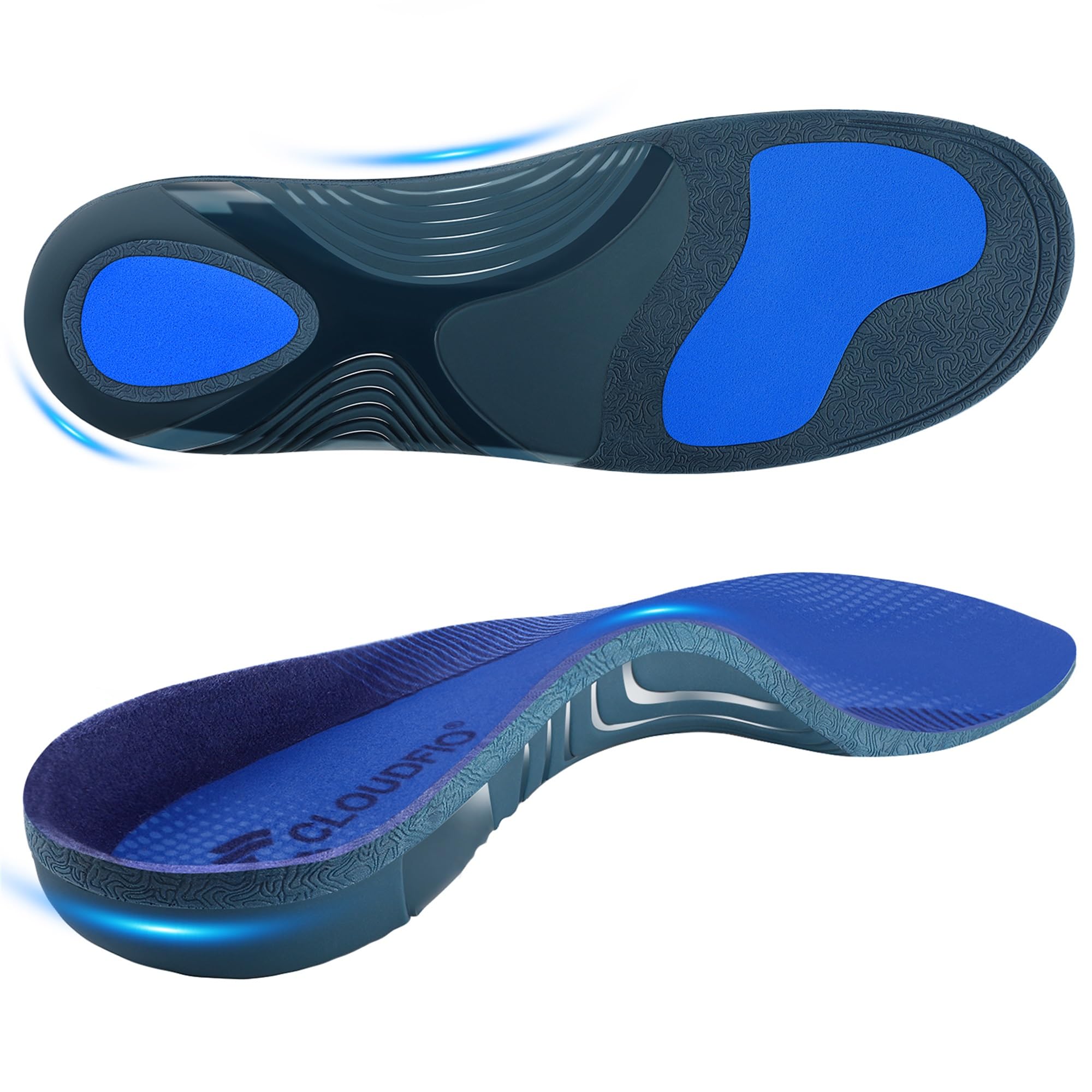
Cloudflo brings a robust set of features to a budget-friendly price point without cutting corners on the critical structural elements. The rigid TPU arch support is the same material used in higher-priced orthotics, and the thick Ortholite cushioning layer under the heel and forefoot provides a comfortable landing for runners who spend long hours on concrete. The insoles are designed for all-day standing—nurses, retail workers, and teaching professionals are the primary audience—but the arch profile also works well for recreational runners logging 10–15 miles per week on paved surfaces.
The breathable velvet top layer resists odor buildup, a practical advantage for runners who use shoes for both workouts and daily wear. Reviewers consistently note that the arch support feels moderate rather than aggressive—enough to correct overpronation in flat-footed runners but not so tall that it causes midfoot cramping. The PU heel pad adds compression resistance for runners over 220 pounds, and the insoles maintain their shape without collapsing after weeks of continuous use.
The main compromise is in overall thickness: at 1.38 inches tall in the box, these insoles take up noticeable interior height. Runners in low-volume shoes may need to relace with a looser tension pattern to avoid pressure across the top of the foot. For the price, you get TPU rigidity, Ortholite comfort, and a durable build that outperforms many insoles costing twice as much.
Why it’s great
- Rigid TPU arch provides flat-foot correction without the premium orthotic price
- Ortholite cushion and PU heel pad resist compression under 220+ lb loads
- Breathable velvet top layer reduces odor during all-day wear in work or running shoes
Good to know
- Thick profile can crowd the toe box in low-volume or slim-profile running shoes
- Moderate arch may not provide enough lift for runners with very high arches
FAQ
How long do arch support insoles last for daily running?
Can I use arch support inserts with orthotic running shoes?
Why do my arches hurt more after wearing new inserts?
Final Thoughts: The Verdict
For most runners, the best arch support inserts for running shoes winner is the CRUVHEAL Sport Shock Absorbing Insoles because they combine neutral arch support, gel impact pads, and a deep heel cup into a package that works for daily training without feeling like a medical device. If you need heavy-duty structure for a 220+ pound frame, grab the Psveb Professional Heavy Duty Support Orthotics for the double PORON cushion and Golden Triangle geometry. And for runners with very high arches who need maximum elevation without crowding the toes, nothing beats the OUOKK Plantar Fasciitis Relief High Arch Support Inserts with its 30mm TPU arch core.

Mo Maruf
I created WellFizz to bridge the gap between vague wellness advice and actionable solutions. My mission is simple: to decode the research and give you practical tools you can actually use.
Beyond the data, I am a passionate traveler. I believe that stepping away from the screen to explore new environments is essential for mental clarity and physical vitality.