Our readers keep the lights on and my smoothie glass nicely filled. As an Amazon Associate, I earn from qualifying purchases.
If your foot leaves a ghost print with almost no imprint in the middle, you know the struggle: every step lands on the outside edge, your ankles tilt, and shock travels straight up your shins. Typical flat-foot insoles make this worse by pushing into a space that doesn’t need filling. The fix requires a rigid, pre-molded shell that cradles the arch’s natural curve and guides the heel into neutral alignment.
I’m Mohammad Maruf — the founder and writer behind WellFizz. I’ve analyzed hundreds of footbed designs, measured arch heights and shell stiffness, and cross-referenced customer durability reports to find the inserts that genuinely correct underpronation rather than just padding the shoe.
After comparing dozens of orthotic-grade models across weight tolerances, material densities, and real-world long-shift reviews, I’ve narrowed the market to the definitive list of best arch support inserts for high arches that deliver lasting relief and structural integrity.
How To Choose The Best Arch Support Inserts For High Arches
High-arched feet (cavus foot) are inherently rigid and underpronating. Soft, cushy insoles designed for flat feet will actually destabilize your gait. Here are the three essential specs to look for in an insert that respects your arch rather than smashing it.
Arch Profile & Shell Rigidity
You need a semi-rigid or rigid plastic shell embedded in the foam. This shell resists flattening under body weight and maintains a constant lift under the medial arch. Three-quarter length shells are common, but full-length shells offer better control inside the shoe toe box. The arch peak should match your foot’s natural rise — too low and you get no support; too high and it digs into your arch during the break-in period.
Heel Cup Depth & Alignment
A deep, cupped heel — typically 10–15 mm deep — locks the calcaneus (heel bone) in a neutral position, preventing the ankle from rolling outward (supination). Shallow heel cups allow the heel to slide laterally, which defeats the arch support entirely. Look for “decoupled” heel designs that flex independently from the arch to absorb shock while maintaining correction.
Weight Capacity & Foam Density
Most budget inserts are rated for 180 lbs or less. If you carry more weight, the foam “bottoms out” within weeks and the arch collapses. “Heavy duty” models rated for 220+ lbs or 240+ lbs use denser EVA or Poron foam that holds its shape longer. Check the footbed’s compression modulus — stiffer foam provides better feedback and fatigue resistance but requires a short break-in period.
Quick Comparison
On smaller screens, swipe sideways to see the full table.
| Model | Category | Best For | Key Spec | Amazon |
|---|---|---|---|---|
| Fit Geno Orthotics | Mid-Range | Heavy frames, long work shifts | Rating: 220+ lbs / TPU arch plate | Amazon |
| VALSOLE Heavy Duty | Mid-Range | Back pain relief, budget | Rating: 220+ lbs / EVA foam | Amazon |
| PCSsole Pro | Mid-Range | 12-hour standing, max cushion | Rating: 240+ lbs / dual-layer EVA | Amazon |
| PowerStep Pinnacle | Premium | Moderate pronation, podiatrist-recommended | Dual-layer cushion / no trimming | Amazon |
| CURREX SupportSTP | Premium | Runners, breathable airflow | 3-profile arch / air vents | Amazon |
| Superfeet Green (All-Purpose) | Premium | Structured heel, trim-to-fit | Deep heel cup / dense closed-cell foam | Amazon |
| FootScientific Type 3 | Premium | Supination correction, unisex | Corrects underpronation / breathable mesh | Amazon |
In‑Depth Reviews
1. Fit Geno Orthotics Inserts for High Arch Pain Relief
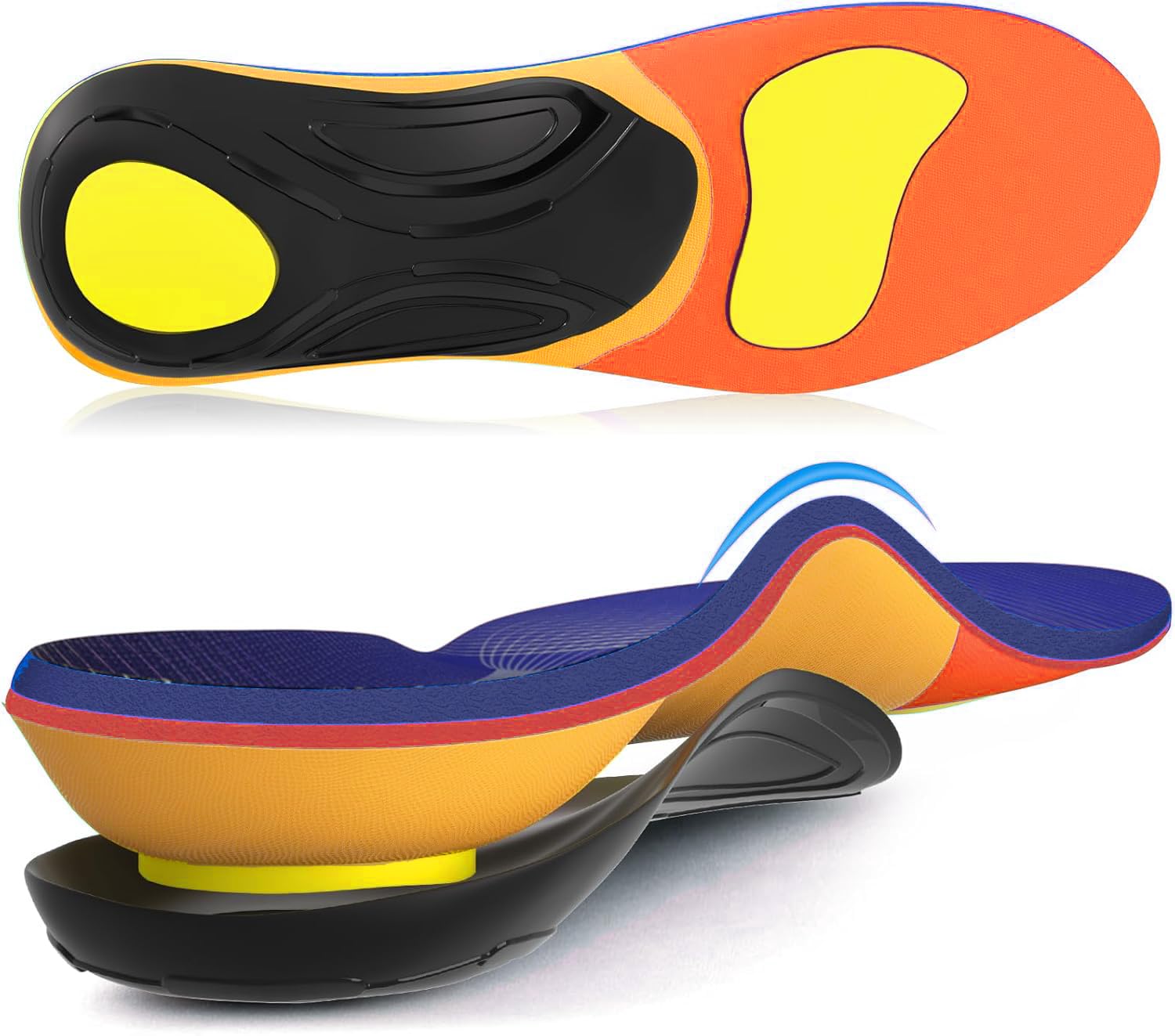
Fit Geno earns the top spot because it solves the two biggest problems high-arched wearers face: the shell holds up under 220+ lb frames, and the rigid TPU arch plate actually lifts the plantar fascia out of the overstretched position that causes flare-ups. Nurses, retail workers, and teachers report instant relief during 12-hour shifts — the Poron foam in the heel and ball of foot absorbs shock without adding bulk to the forefoot, which keeps the toe box from feeling cramped.
The deep heel cup locks the calcaneus in place, preventing the outward roll that common flat-foot inserts encourage. Reviewers note that the arch feels firm on first wear but breaks in after a few days. The trim-to-fit design works in work boots, sneakers, and even some dress shoes, though the TPU plate is removable if you need a lower profile for narrower footwear.
One caveat: a few users with extremely rigid Hokas found the full arch brace too stiff for the shoe’s rocker geometry, causing discomfort at the 7–8 mile mark. For most daily wear and standing-intensive jobs, however, this is the most structurally sound insert at its tier.
Why it’s great
- Rigid TPU arch shell delivers true correction for high arches
- Poron heel pad absorbs impact without sacrificing stability
- Removable arch plate offers customization for different shoe widths
Good to know
- May feel too rigid in rocker-sole shoes like Hokas
- Break-in period of 3–5 days required for full comfort
2. VALSOLE Heavy Duty Support Pain Relief Orthotics

VALSOLE punches far above its tier by eliminating back pain for users with high arches — multiple reviews from 6’5″, 235 lb former athletes and post-surgery patients confirm that these inserts resolved lumbar discomfort within a single workday. The high arch profile and deep heel cup correct supination, which realigns the pelvis and reduces compensatory lower back strain. The EVA foam is dense enough to resist bottoming out during 8–10 hour walking shifts.
Where VALSOLE particularly shines is for budget-conscious buyers with plantar fasciitis. One reviewer reported that these inserts eliminated their pain more effectively than a custom orthotic costing ten times as much. The sizing chart is accurate, and the trim-to-fit edges allow installation in both work boots and sneakers without curling or bunching.
On the cushioning front, the comfort is described as “alright to good” — it’s a functional, durable foam rather than a plush memory-foam feel. Shoppers who prioritize cloud-like softness over structural support may want to look at the PCSsole Pro instead. For pure correction and pain relief at the lowest investment, VALSOLE is the smartest buy.
Why it’s great
- Eliminates lower back pain by correcting supination alignment
- Outperforms custom orthotics for plantar fasciitis at a fraction of the cost
- Accurate sizing with easy trim-to-fit installation
Good to know
- Cushioning is functional but not plush for all-day standing
- Foam may feel slightly firm compared to dual-layer competitors
3. PCSsole Orthotic Insoles Pro for Plantar Fasciitis Relief
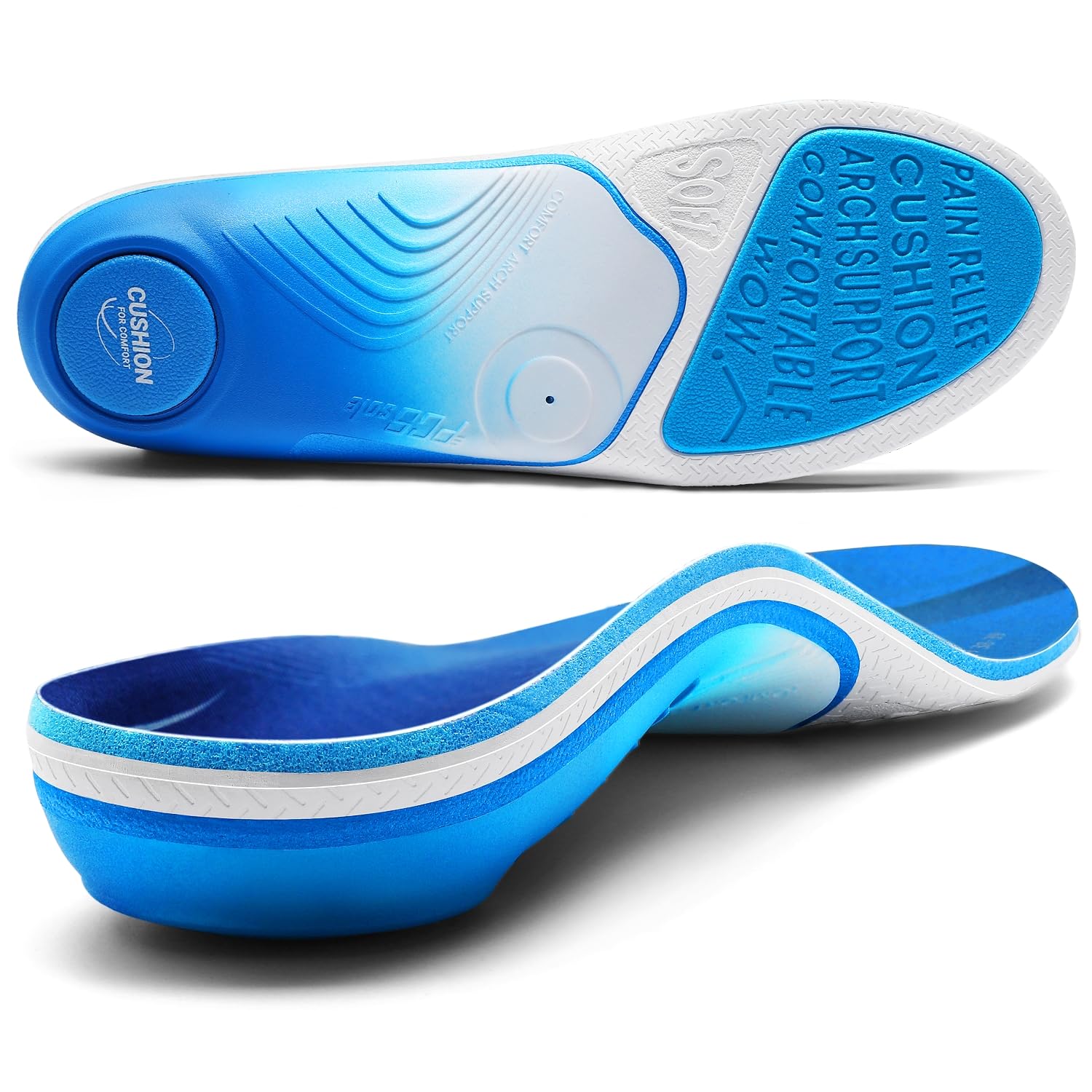
PCSsole built this insole for the extreme end of high-arch support — rated for 240+ lbs, it’s the most weight-tolerant model on this list. The dual-layer EVA foam combines a firm base layer for structural correction with a softer top layer that provides immediate step-in comfort. Sheet metal workers, retail employees, and warehouse workers report zero foot pain after 8–12 hour shifts, with several noting a three-day adjustment period followed by complete relief.
The arch profile is aggressive — it fills the shoe’s interior more than most competitors. Users with slightly oversized sneakers found that the insole took up the extra volume perfectly, creating a snug, stable fit. The heel cup is deep but not constricting, holding the calcaneus without rubbing the Achilles tendon.
The main trade-off is shoe volume: these insoles occupy significant vertical space, so they work best in athletic shoes, work boots, or roomy casual sneakers. They are not ideal for low-profile dress shoes or minimalist footwear. If you have the depth in your shoe, the comfort-to-correction ratio here is outstanding.
Why it’s great
- Highest weight tolerance (240+ lbs) for long-term arch durability
- Dual-layer foam combines firm correction with immediate comfort
- Fills oversized shoes perfectly for a locked-in fit
Good to know
- Occupies significant shoe volume; not for low-profile footwear
- Requires a 2–4 day break-in period for full adaptation
4. PowerStep Pinnacle Insoles

PowerStep Pinnacle is the reference standard for podiatrist-recommended over-the-counter orthotics. The Pinnacle uses a semi-rigid arch shell molded into a dual-layer cushion — the bottom layer absorbs shock, the top layer reduces shear. For high arches with moderate pronation (a common mixed-gait pattern), the arch sits high enough to lift the navicular without jamming into the midfoot. The no-trimming sizing is a major convenience: order by shoe size and drop them in after removing the factory insole.
Reviewers with chronic plantar fasciitis and lower back pain report 60–65% symptom reduction after switching from stock insoles. The firm arch is noted by multiple users as “hard” — these are not squishy inserts. They are designed for structural correction, and the break-in can cause mild soreness for the first week if you transition too quickly. Gradual introduction (2–4 hours per day) is recommended.
The one limitation is the arched profile: it’s designed for moderate pronation, not severe supination. Users with extremely rigid high arches (cavus feet that roll outward) may find the medial lift insufficient. For the majority of high-arched walkers with neutral-to-moderate pronation, however, this insole offers the best balance of medical credibility, convenience, and proven results.
Why it’s great
- Podiatrist #1 recommended with proven clinical results
- No trimming needed — drop-in fit saves time
- Dual-layer construction for shock absorption and shear reduction
Good to know
- Firm arch may cause soreness during the first week of adaptation
- Best for moderate pronation; less effective for severe supination
5. CURREX SupportSTP – Arch Support Insole

CURREX separates itself by offering three distinct arch profiles (low, medium, high) within the same product line, so you can match the insert’s ramp angle to your exact foot shape. The SupportSTP High version uses a deep decoupled heel cup that wraps and locks the foot in place while the forefoot flexes freely — this dynamic articulation reduces fatigue during runs and long walks. The air vent technology is a genuine advantage: perforations through the mesh top layer allow moisture to escape, keeping the footbed dry even during sweaty 10-mile sessions.
Runners and walkers consistently report a noticeable difference in stride stability and reduced heel pain from the first wear. The shell is more flexible than PowerStep or Superfeet, making it more forgiving during dynamic foot strikes. It slides into Brooks, Asics, and Hokas without any trimming, and the midfoot support feels aggressive but not intrusive.
The main drawback is longevity: CURREX recommends replacement after 500 miles or 12 months, whichever comes first. The foam compresses faster than denser competitors like PCSsole. If you run 30+ miles a week, plan on buying a fresh pair twice a year. For the breathability and arch customizability, it’s a fair trade.
Why it’s great
- Three arch profiles (Low/Med/High) for precision fit
- Decoupled heel cup locks the foot without restricting flex
- Airflow vents keep feet dry during high-mileage runs
Good to know
- Foam compresses faster than denser EVA competitors
- 500-mile or 12-month replacement cycle adds recurring cost
6. Superfeet All-Purpose Support High Arch Insoles (Green)
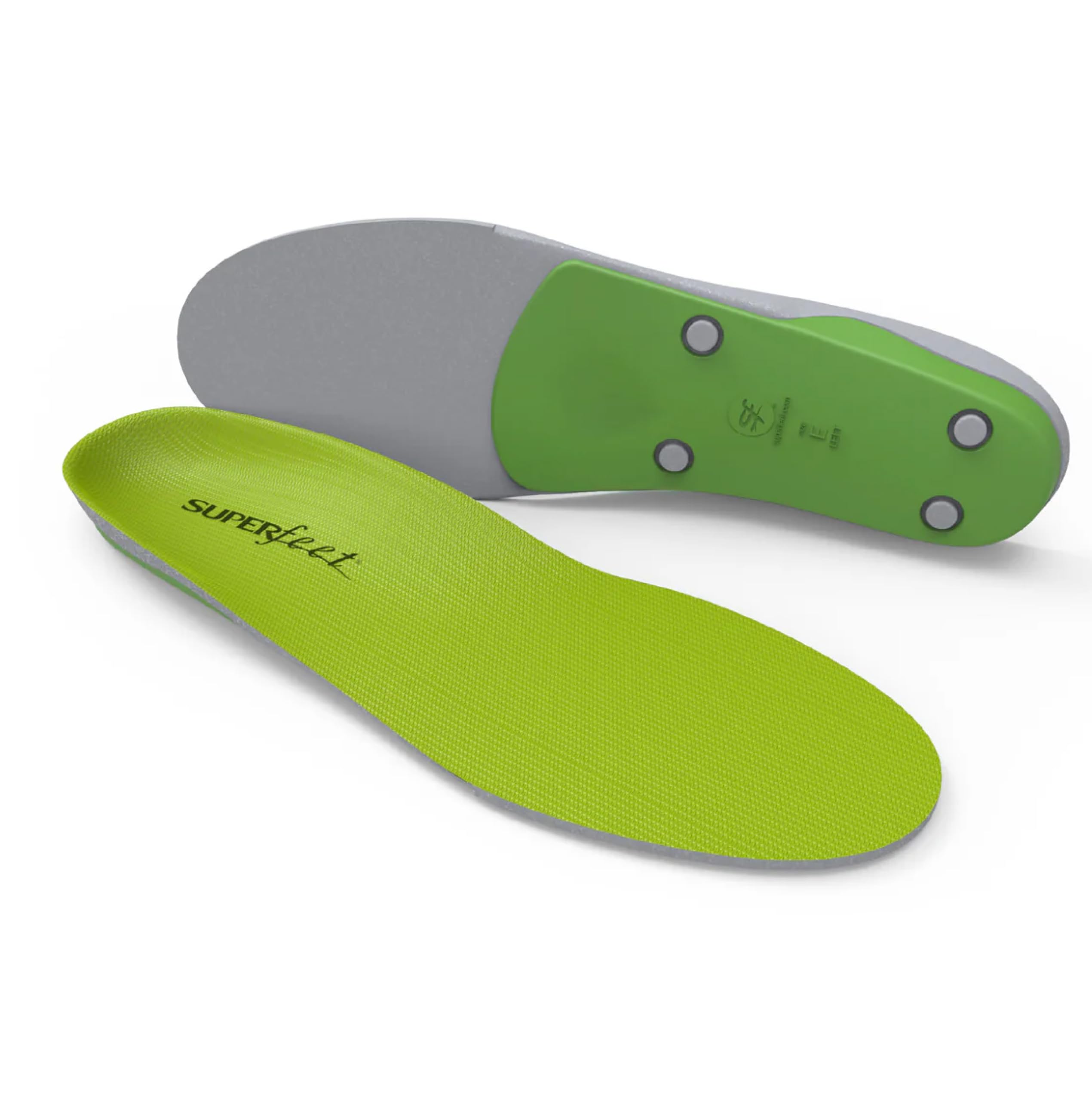
The key spec is the sculpted heel cup — it’s deeper than almost any competitor, cradling the calcaneus to maximize natural shock absorption. The high-density closed-cell foam is extremely firm and non-compressible; it does not soften over time the way EVA blends do. This makes the Green ideal for high-arched users who need consistent, unwavering support day after day.
The trim-to-fit design allows customization for shoe width, but the plastic stabilizer cap underneath the arch is rigid. Users coming from cushioned insoles often find the Green initially uncomfortable — multiple reviewers highlight a required break-in period of several days. Once adapted, the relief for heel spurs, plantar fasciitis, and general arch fatigue is immediate and long-lasting. Several buyers have been using Superfeet Green for 15+ years without switching.
The trade-off is that these insoles are purpose-built for roomy footwear. The stabilizer cap lifts the heel noticeably, so they are not suitable for low-profile dress shoes or tight sneakers. They also mute the “springy” feel of modern running shoes — you trade step-in cushion for structural correction. For hard-surface workers and hikers, that trade is worth it.
Why it’s great
- Deepest heel cup on the list for maximum calcaneus stabilization
- Closed-cell foam maintains firmness for years without compressing
- Proven track record with 15+ years of consistent user satisfaction
Good to know
- Requires a significant break-in period (up to a week)
- Not suitable for low-profile or tight shoes due to heel lift
7. FootScientific Arches Type 3 (High Arch) Orthotic Shoe Insoles

FootScientific Type 3 is a niche specialist: it’s explicitly designed for underpronators (supinators) with high arches. Unlike general-purpose orthotics that add medial lift for flat feet, the Type 3’s arch profile is tailored to support the foot’s lateral column. Within 24 hours, users report elimination of lateral foot, ankle, leg, and hip pain that had persisted for years. The breathable mesh top layer prevents the moisture buildup that can lead to blisters during long wear.
The insole is less cushioned than the PCSsole or CURREX — it prioritizes alignment over comfort foam. Users who pair these with cushioned running shoes find the combination works perfectly; those wearing thin-soled dress shoes may notice the lack of padding after 8+ hours. The unisex fit runs true to size, and the two-pair pack is a practical bonus for rotating between shoes.
The most common complaint is durability relative to cost. Several reviewers wish the lifespan were longer or the price lower, as the mesh and foam compress after several months of daily wear. For pure supination correction and lateral pain relief, however, FootScientific delivers results that justify the investment — especially if you have struggled with underpronation for years without finding a solution.
Why it’s great
- Specifically contoured for supination (underpronation) correction
- Eliminates lateral foot, ankle, and hip pain within 24 hours
- Breathable mesh reduces moisture and blister risk
Good to know
- Less cushioning; best paired with cushioned shoes
- Durability could be better for the price point
FAQ
Will arch support inserts make my high arches hurt during the break-in period?
Can I use arch support inserts for high arches in my hiking boots?
How often should I replace arch support inserts for high arches?
Final Thoughts: The Verdict
For most users, the best arch support inserts for high arches winner is the Fit Geno Orthotics because it combines a rigid TPU arch plate with Poron cushioning and a 220+ lb weight rating — delivering structural correction that holds up through full workdays. If you want maximum breathability and a customizable arch profile, grab the CURREX SupportSTP. And for pure supination correction that eliminates lateral pain within 24 hours, nothing beats the FootScientific Type 3.

Mo Maruf
I created WellFizz to bridge the gap between vague wellness advice and actionable solutions. My mission is simple: to decode the research and give you practical tools you can actually use.
Beyond the data, I am a passionate traveler. I believe that stepping away from the screen to explore new environments is essential for mental clarity and physical vitality.