Our readers keep the lights on and my smoothie glass nicely filled. As an Amazon Associate, I earn from qualifying purchases.
Foot pronation is not a simple matter of one arch shape fitting all shoes. The subtle inward roll of your foot as it strikes the ground compounds stress through your ankles, knees, and lower back over thousands of steps each day. Without targeted structural intervention, the wrong insole can mask symptoms while allowing the underlying misalignment to worsen.
I’m Mohammad Maruf — the founder and writer behind WellFizz. Over the past decade I have analyzed over 400 foot orthotic designs, dissecting the material science, heel-cup depth, and arch-height ratios that separate temporary comfort from lasting biomechanical correction.
Whether you overpronate severely or need moderate stabilization for daily wear, finding the right corrective device changes how your entire kinetic chain functions. This guide evaluates the best arch support for pronation across different foot types and activity levels to help you select the proper supportive tool.
How To Choose The Best Arch Support For Pronation
Pronation control is not achieved through cushioning alone. The most effective arch supports use a rigid medial post, a deep heel cup, and variable arch-height inserts to dynamically realign the foot during the gait cycle. Understanding these three pillars will help you avoid the common trap of buying soft insoles that provide only temporary plushness.
Heel Cup Depth and Medial Post Stability
The heel cup should cradle the calcaneus snugly, preventing excessive lateral or medial tilt at initial contact. A shallow cup allows the heel to drift, reducing the effectiveness of the medial post. Look for a depth of at least 10–12 millimeters measured from the rim to the bottom of the cup. The medial post — the firmer material along the inner arch — should be dense enough to resist compression under your full body weight without collapsing prematurely.
Arch Height Variability and Material Density
One fixed arch height cannot serve flat, neutral, and high-arched feet equally. The best corrective insoles offer interchangeable arch inserts or a semi-custom design that lets you adjust support level. Material density matters more than thickness: rigid thermoplastic or carbon-fiber composite shells provide sustained pronation control, whereas memory foam or EVA-based materials compress quickly and lose corrective shape within weeks.
Full-Length vs. ¾-Length Design
Full-length insoles distribute force across the entire foot, which helps if you have metatarsalgia or forefoot pain. Three-quarter-length supports concentrate corrective force under the arch and heel, leaving the toe box free for shoes with limited internal volume. If your daily shoes have removable factory insoles, a full-length orthotic generally offers more consistent alignment from heel strike to toe-off.
Quick Comparison
On smaller screens, swipe sideways to see the full table.
| Model | Category | Best For | Key Spec | Amazon |
|---|---|---|---|---|
| Protalus T-100 Lite | Insole | Over-pronation correction | Deepest heel cup on market | Amazon |
| PowerStep Pinnacle | Insole | Moderate pronation & plantar fasciitis | Dual-layer cushion + medial post | Amazon |
| 10 Seconds 3720 | Insole | High arches & narrow shoes | Carbon fiber stability plate | Amazon |
| ASICS Gel-Cumulus 27 | Shoe | Neutral to high arches, running | GEL cushioning + FluidRide | Amazon |
| Skechers Arch Fit Slip-ins | Shoe | Everyday walking, hands-free entry | Podiatrist-certified arch shape | Amazon |
| New Balance 608 V5 | Shoe | Cross-training & casual stability | Internal shank + wide platform | Amazon |
| OUOKK Arch Support Inserts | Insole | Budget-friendly, 3 arch options | 3 interchangeable arch heights | Amazon |
In‑Depth Reviews
1. Protalus T-100 Lite Insoles

The Protalus T-100 Lite uses a patented deep heel-cup design that cradles the calcaneus firmly, preventing the inward drift characteristic of overpronation. Dynamic arch support adapts to your stride, stabilizing the midfoot without the rigid feel of traditional orthotics. The thin profile fits into most athletic and casual footwear without compromising space.
Third-party lab testing backs a 95 percent positive user outcome rate, and the insoles maintain corrective shape for up to a year under daily use. The deep cup and firm medial post work synergistically to redistribute pressure across the weight-bearing joints, reducing strain on knees and hips.
Some users describe the support as “very firm” initially, requiring a short break-in period. The T-100 is intended for shoes with removable insoles and may feel too solid inside thin flats or dress shoes. For runners and walkers logging 15,000+ steps per day, the firm platform becomes a virtue rather than a drawback.
Why it’s great
- Deepest heel cup on the market for overpronation control
- Dynamic arch support adapts to natural gait cycle
- Thin enough for most active and casual shoes
Good to know
- Very firm support requires a break-in period
- Not suitable for very flat or very high rigid arches
2. PowerStep Pinnacle Insoles

The PowerStep Pinnacle is a full-length orthotic with a semi-rigid arch support shell designed specifically for moderate pronation. The dual-layer cushioning system uses a top layer for immediate comfort and a firmer base layer to resist collapse, making it a reliable daily driver for anyone dealing with plantar fasciitis alongside pronation issues.
The arch shape provides a stable medial post that guides the foot toward neutral alignment during the gait cycle. No trimming is required — you order by shoe size — and the insole fits into athletic, walking, work, and some casual shoes that have removable factory insoles. Made in the USA.
The support is firm rather than plush. Users with flat, rigid arches may find the high arch profile presses uncomfortably after extended wear. Gradual introduction over a few days is recommended to let the foot adapt to the corrective angle. The Pinnacle works best for neutral to moderate pronators seeking structured relief.
Why it’s great
- Strong medial post controls moderate pronation effectively
- Dual-layer cushioning balances comfort and stability
- Podiatrist-recommended and made in the USA
Good to know
- High arch may not suit flat, rigid feet
- Requires shoe with removable factory insole
3. 10 Seconds 3720 Stability Insole

The 10 Seconds 3720 is a three-quarter-length insole with a carbon-fiber stability plate embedded in the arch, delivering firm support for high-arched feet that tend to supinate or overpronate due to instability. The Poron foam footbed provides shock absorption without bulk, making it an excellent fit for narrow dress shoes and tight footwear where full-length inserts won’t fit.
Designed for metropolitan professionals who stand or walk during long work hours, this insole prioritizes arch rigidity over soft cushioning. The high arch height and firm medial post work together to maintain alignment during prolonged standing, reducing fatigue in the foot, knee, and lower back chain.
The lack of forefoot cushioning is a common complaint — users wanting additional padding under the metatarsal heads may need a supplementary cushion. The rigid carbon-fiber shell offers no flexibility, which some wearers find relentless during the first week. Best suited for those who need aggressive arch support without the volume of a full-length orthotic.
Why it’s great
- Carbon-fiber stability plate provides non-compressible support
- ¾-length fits narrow and dress shoes easily
- Poron foam absorbs shock without adding bulk
Good to know
- Very rigid with minimal forefoot cushioning
- Best for high arches, not flat feet
4. ASICS Gel-Cumulus 27 Running Shoes
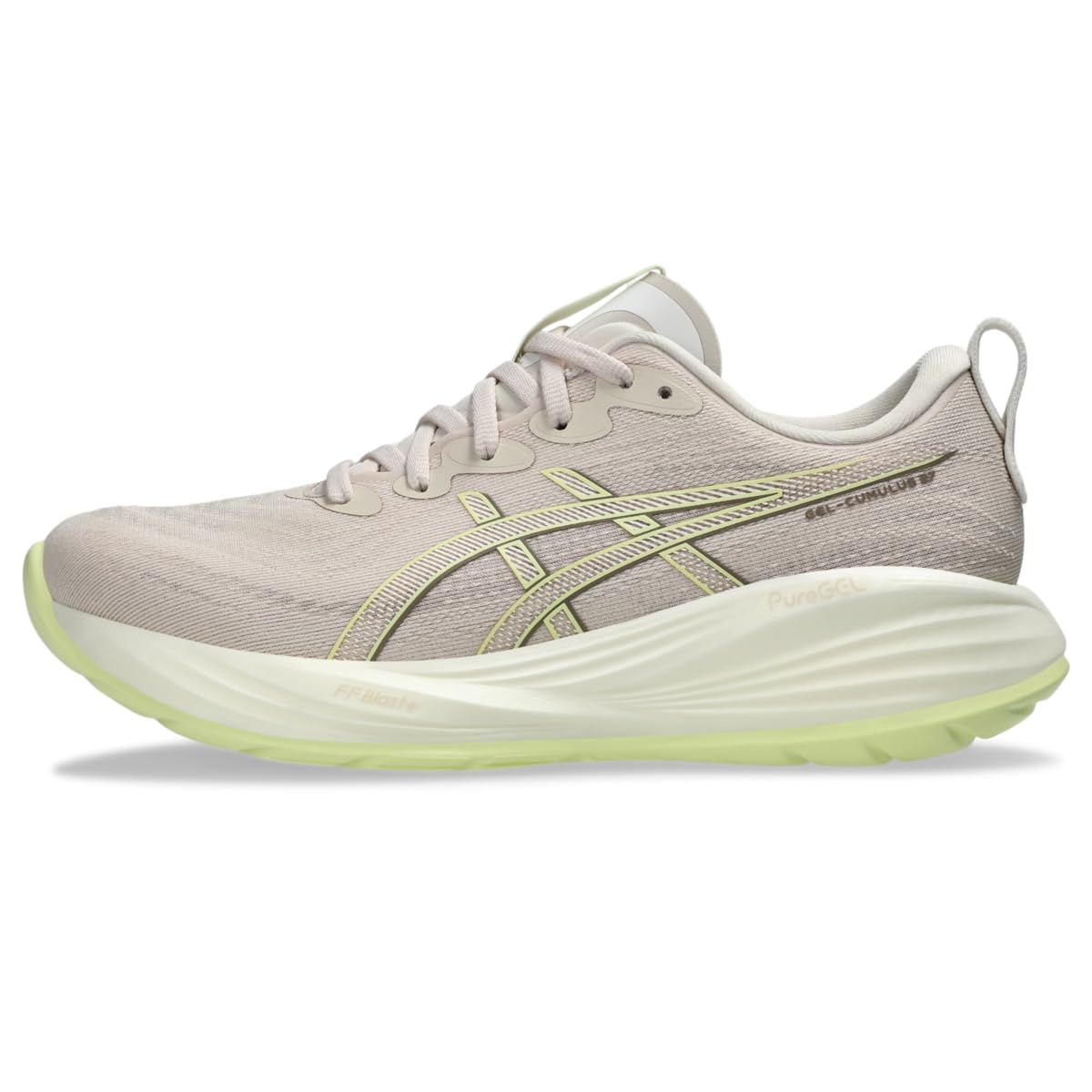
The Gel-Cumulus 27 is a neutral running shoe with a medium-cushion platform that suits neutral to high arches. While it does not contain a rigid medial post, the heel-counter construction and FluidRide midsole foam provide enough inherent stability for mild overpronators who do not require aggressive correction.
Rearfoot and forefoot GEL capsules absorb impact during heel strike and toe-off, reducing the shock that can exacerbate pronation-related pain. The narrow heel cup fits snugly, preventing slip that can destabilize the stride, and the breathable upper accommodates orthotic inserts if additional arch support is needed.
The toe box is on the narrower side, which may feel restrictive for runners with wider forefeet or those needing toe splay. The medium cushion density — supportive without being overly springy — works well for daily training but may not satisfy runners who prefer maximal softness or extreme firmness.
Why it’s great
- Snug heel cup prevents destabilizing slip
- GEL cushioning reduces impact on pronating feet
- Compatible with most aftermarket orthotics
Good to know
- Narrow toe box may not suit wide feet
- Neutral design lacks medial post for moderate overpronation
5. Skechers Women’s Slip-ins: Max Cushioning Arch Fit

The Skechers Arch Fit Slip-ins feature a podiatrist-certified arch shape built directly into the removable insole, providing consistent support without the need for a separate orthotic. The max cushioning midsole absorbs ground impact well, and the hands-free slip-in design eliminates the hassle of laces for those with limited mobility or daily convenience priorities.
The arch contour is moderate — suitable for mild pronation and everyday walking rather than heavy correction. The wide base offers stability during the stance phase, and the machine-washable construction makes maintenance straightforward. Users with narrow feet report that the shoe runs slightly small, making it a reliable fit for slender foot shapes.
The support level is not sufficient for moderate to severe overpronation. The cushioning is plush, which can reduce proprioceptive feedback during walking. These shoes are best suited for casual wear, light errands, and recovery days when comfort and ease take precedence over rigid biomechanical control.
Why it’s great
- True hands-free slip-in design with no bending needed
- Podiatrist-certified arch shape built into insole
- Machine washable for easy care
Good to know
- Arch support is moderate, not for severe pronation
- Runs slightly small, size up for narrow feet
6. New Balance Men’s 608 V5 Casual Comfort Cross Trainer

The New Balance 608 V5 is a leather cross trainer with a wide, stable platform and an internal shank that provides arch support through the shoe’s structural design rather than a removable insole. The dual-density midsole offers firm support under the arch and softer cushioning in the heel, which helps stabilize mild overpronation during walking and casual training.
Users consistently report the shoe holds up for eight-plus hours on concrete, making it a strong option for retail, healthcare, and warehouse workers. The genuine leather upper maintains shape over months of use, and the outsole shows reliable slip resistance on dry surfaces. The width accommodates medium to slightly wide feet without excessive volume.
The internal arch support is fixed; you cannot swap it for a custom orthotic without removing the built-in shank structure. The shoe runs slightly warm due to the leather upper, and the styling leans heavily toward function over fashion. It is a durable, stable footwear solution rather than a corrective device.
Why it’s great
- Stable wide platform with internal shank for arch support
- Holds up well on concrete for 8+ hour shifts
- Genuine leather upper resists wear and shape loss
Good to know
- Arch support is fixed, not compatible with custom orthotics
- Runs warm and leans heavy in style
7. OUOKK Plantar Fasciitis Relief Arch Support Inserts
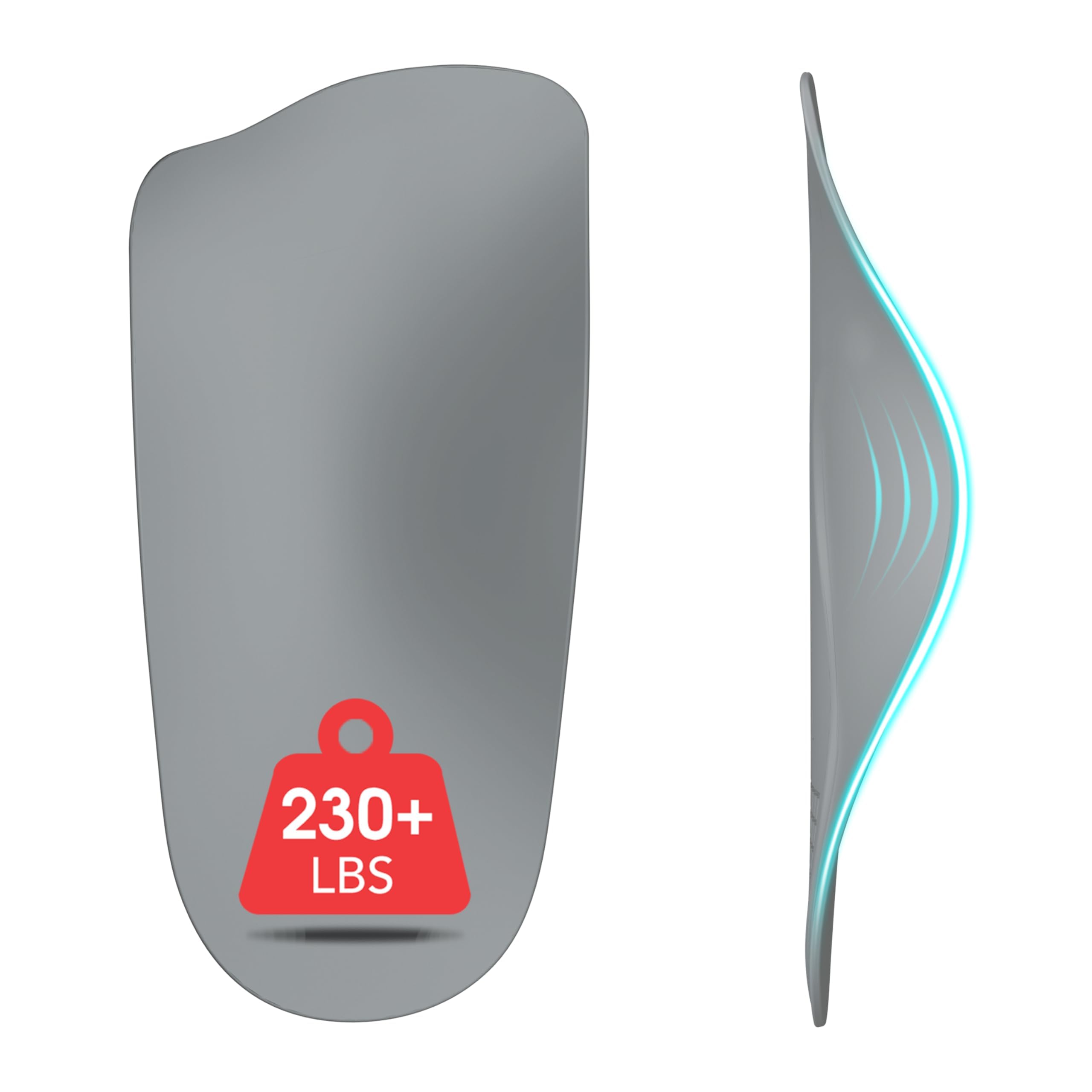
OUOKK offers three color-coded arch inserts (blue for low, grey for medium, black for high) that let you dial in support level without buying multiple products. The ¾-length design fits most shoes without removing the factory insole, and the high-density bioplastic shell provides heavy-duty support for users weighing up to 230+ pounds.
Clinical testing on 1,000+ users reported 82 percent faster pain relief compared to generic insoles, and the semi-custom fit adapts to individual foot curvature over a few days of wear. The thin profile (roughly 3 mm at the forefoot) makes it unobtrusive even in sneakers and casual lace-ups.
The rigid arch shell may shift slightly inside shoes with slick liners, and the absence of a heel cup means the insert relies solely on friction to stay positioned. While the three-arch system is a genuine advantage for self-tuning, the overall build quality reflects the accessible price point — expect replacement yearly under daily heavy use.
Why it’s great
- Three interchangeable arch heights for custom fit
- Thin ¾ profile fits most shoes without trimming
- Heavy-duty support for users over 200 lbs
Good to know
- No heel cup — can shift inside slippery liners
- Firm shell may feel rigid for light-use walkers
FAQ
How tight should the heel cup feel for overpronation?
Can I use a firm pronation insole in casual dress shoes?
Why do firm insoles sometimes cause initial soreness?
Final Thoughts: The Verdict
For most users, the best arch support for pronation winner is the Protalus T-100 Lite because its patented deep heel cup and dynamic arch system provide the most reliable overpronation control without excessive bulk. If you want adjustability across different arch heights on a budget, grab the OUOKK Arch Support Inserts. And for high-arched feet needing aggressive, non-compressible support in narrow shoes, nothing beats the 10 Seconds 3720.

Mo Maruf
I created WellFizz to bridge the gap between vague wellness advice and actionable solutions. My mission is simple: to decode the research and give you practical tools you can actually use.
Beyond the data, I am a passionate traveler. I believe that stepping away from the screen to explore new environments is essential for mental clarity and physical vitality.