Our readers keep the lights on and my smoothie glass nicely filled. As an Amazon Associate, I earn from qualifying purchases.
That dull ache at the bottom of your foot that turns into a sharp stab with every step—that isn’t something you have to live with. The right arch insole does more than pad your shoe; it lifts your plantar fascia out of the overstretched position that causes flares, realigns your gait, and spares your knees and lower back from absorbing shock they weren’t designed to handle. But not every insole on the shelf delivers that kind of biomechanical correction.
I’m Mohammad Maruf — the founder and writer behind WellFizz. I’ve spent years dissecting foot care hardware: measuring arch heights, testing foam density, and cross-referencing weight ratings against real-world user data to find the insoles that genuinely hold up under a full work shift.
After evaluating dozens of models across material composition, arch rigidity, and long-term durability, I’ve narrowed the field to the five most reliable options. This is your no-fluff guide to the best arch insoles for daily wear, high-impact activity, and serious foot fatigue.
How To Choose The Best Arch Insoles
Selecting an insole isn’t about picking the thickest or most expensive pad. The right choice depends on your arch type, your average daily load (both body weight and hours on your feet), and the shoe volume you’re working with. Here’s what actually matters.
Arch Height & Rigidity
The two strongest predictors of success are arch height classification and shell stiffness. Low arches and flat feet need a rigid, high-profile arch that prevents the foot from rolling inward (overpronation). Medium and high arches benefit from a more flexible, supportive frame that cradles without overpowering. A soft gel insole feels good in the store but collapses within weeks under a 200-pound frame—look for a TPU or polypropylene base if you’re over 180 pounds or standing more than six hours a day.
Heel Cup Depth
A deep U-shaped heel cup (15mm or deeper) stabilizes the calcaneus and prevents the fat pad from splaying sideways. This is non-negotiable for heel spur sufferers and anyone whose pain worsens upon first stepping out of bed. Shallow cups allow the heel to shift, which negates most of the arch support above it.
Trim-to-Fit vs. Pre-Cut Sizing
Most premium insoles arrive oversized with trim lines printed on the underside. This lets you match the insole to your exact shoe size. Avoid models that don’t offer this feature unless your foot perfectly matches the manufacturer’s size chart—gaps or bunching inside the shoe create hot spots that cause blisters and reduce support effectiveness.
Quick Comparison
On smaller screens, swipe sideways to see the full table.
| Model | Category | Best For | Key Spec | Amazon |
|---|---|---|---|---|
| PowerStep Bridge | Premium | All-day comfort & flexible support | Dual-layer memory foam + adaptable arch | Amazon |
| Fit Geno Orthotics | Premium | Heavy-duty work & standing shifts | 220lb+ rated, TPU arch plate + PORON | Amazon |
| BestHalo High Arch | Mid-range | High arches & post-surgery recovery | EVA + gel cushion, deep heel cup | Amazon |
| OUOKK 3/4 Length | Mid-range | Bulky or tight-fitting shoes | 30mm high arch, TPU elastic, 2-year life | Amazon |
| Psveb Professional | Budget-friendly | First-time upgrade from stock insoles | Dual PORON cushion, Golden Triangle design | Amazon |
In‑Depth Reviews
1. PowerStep Bridge
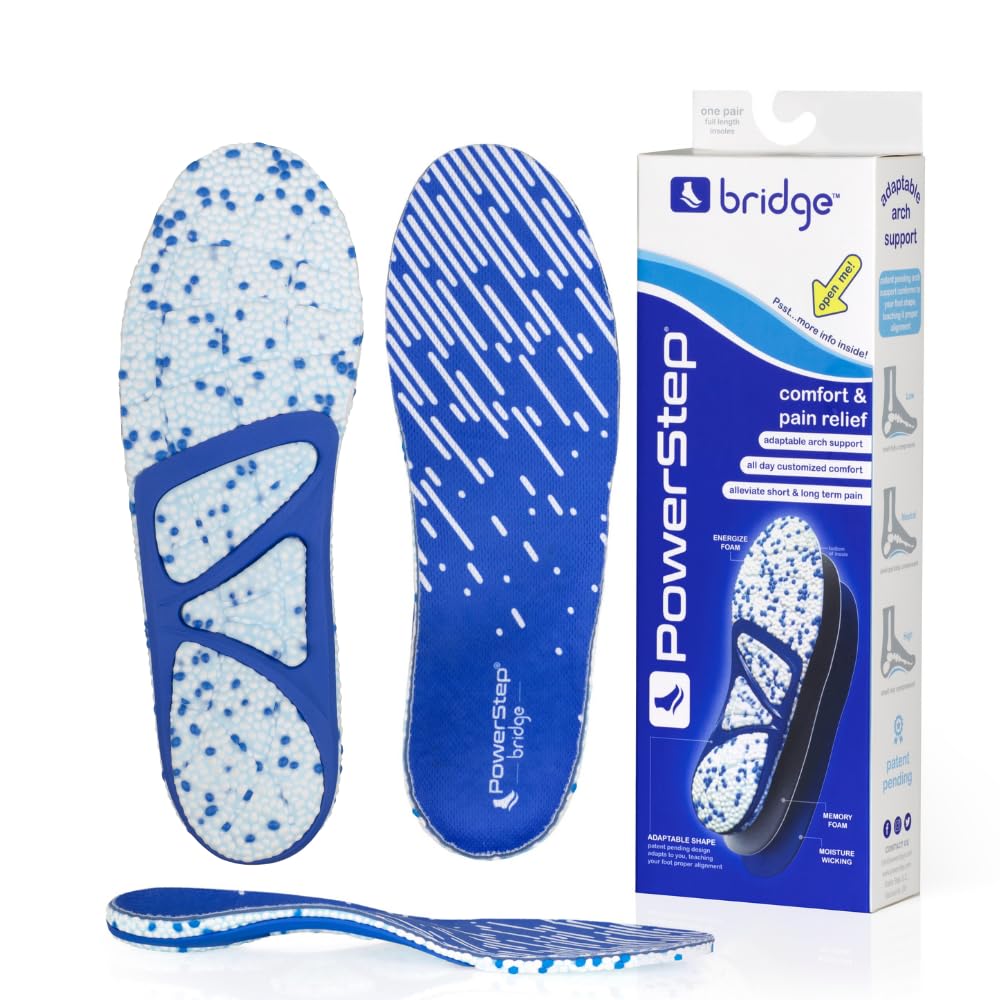
PowerStep Bridge earns the top spot because it solves the fundamental compromise in this category: most insoles are either rigid enough to correct alignment but painful to wear for hours, or soft enough to feel good but structurally useless by week three. The Bridge uses a two-layer construction—a responsive base foam topped with memory foam—that supports the arch dynamically rather than fighting it. Reviewers who run 40 miles a week and tradespeople logging 20,000 daily steps both report that the arch holds its shape without bruising the midfoot.
The most telling detail is the underside channel system, which lets the foam expand and contract with each stride rather than bottoming out. Moisture-wicking fabric keeps the footbed dry even in non-breathable work boots, and the heel cup is deep enough to stabilize the calcaneus without rubbing the Achilles. At 4.16 ounces per pair, this is one of the lightest full-support insoles on the market, making it viable for running shoes where every gram matters.
Some users report the top fabric liner wearing thin after heavy use in work boots around the one-month mark. If your daily regimen includes eight-plus hours in steel-toe boots with abrasive interiors, you may need to replace these more frequently than the 12-month cycle PowerStep advertises. For everyone else—office workers, walkers, runners, and casual wearers—this is the closest thing to a universal insole that actually works.
Why it’s great
- Adaptable arch supports high, neutral, and flat feet without overcorrecting.
- Moisture-wicking lining keeps feet dry during long shifts.
- Lightweight enough for performance running shoes.
Good to know
- Top fabric liner may show wear after sustained use in abrasive work boots.
- Not rigid enough for users needing extreme post-surgery correction.
2. Fit Geno Orthotics
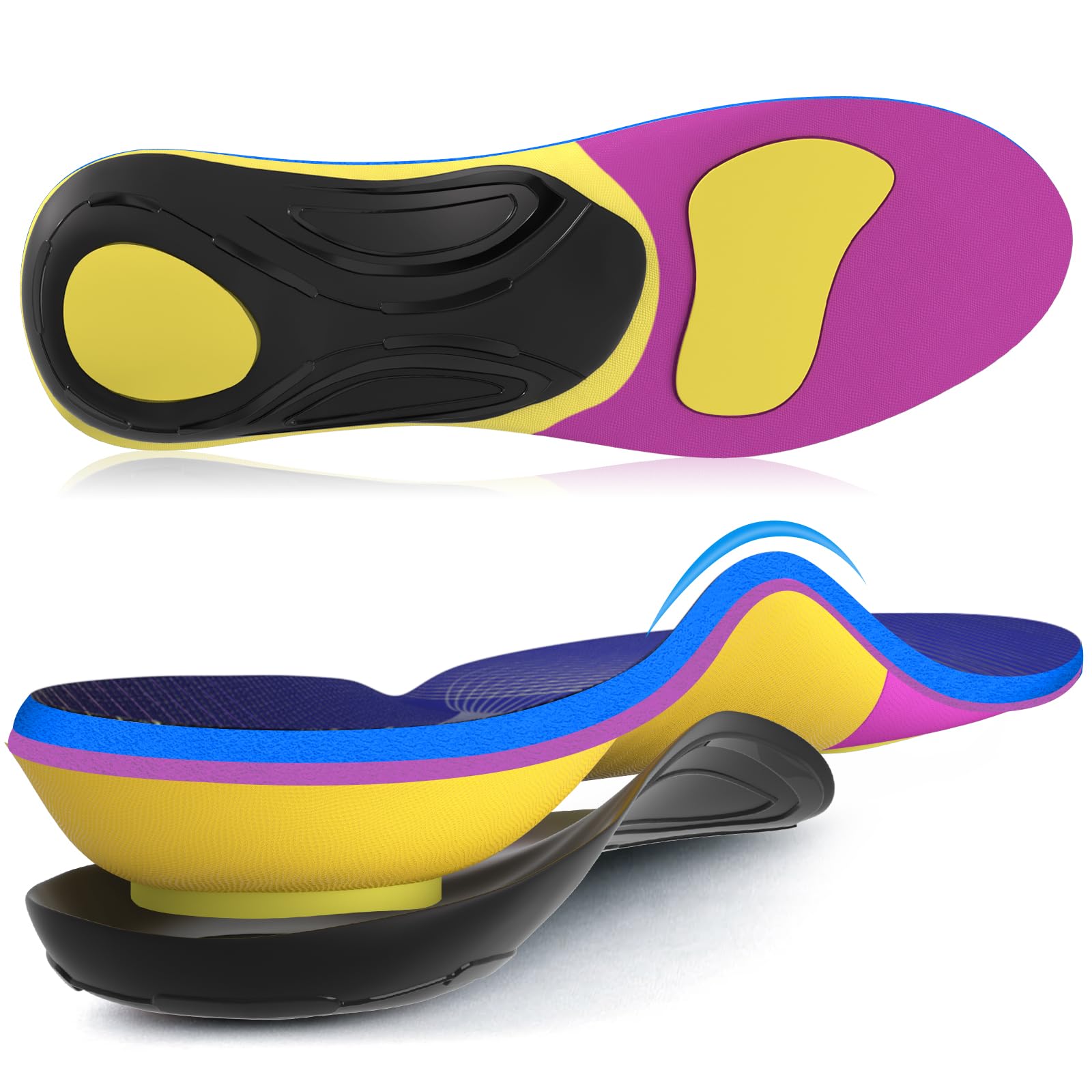
Fit Geno builds insoles specifically for the 220-pound-plus demographic that most manufacturers ignore. The key feature is a removable TPU arch plate layered over a PORON foam base—PORON is the same material used in high-end medical orthotics because it absorbs impact without packing out. This combination means the arch support is effectively non-compressible under heavy loads, while the foam layer below provides enough compliance to avoid pressure-point pain on the ball of the foot and heel.
The deep heel cup is the deepest in this lineup, extending high enough to control supination and overpronation simultaneously. Nurses and retail workers who stand nine-hour shifts report that knee and lower-back pain drops off within the first week. The trim-to-fit design includes printed cut lines for every half size, and the breathable top fabric does a solid job managing moisture through an entire shift. A removable bottom layer lets you fine-tune the thickness for higher-volume shoes.
The rigid arch shell can feel overwhelming during the first several miles of walking, especially for users transitioning from flat stock insoles. One reviewer found the plastic brace uncomfortable after seven straight miles in Hokas, though the same rigidity is exactly what heavier users need for durability. If your body weight is under 180 pounds or you prefer a softer, more forgiving ride, consider the PowerStep Bridge instead.
Why it’s great
- TPU arch plate provides uncompromising support for 220+ pound users.
- PORON heel and forefoot cushions without flattening over time.
- Removable bottom layer allows thickness adjustment for different shoes.
Good to know
- Initial break-in period may cause discomfort for users with flat feet.
- Too rigid for low-volume, minimalist shoes or casual walking sneakers.
3. BestHalo High Arch Insoles
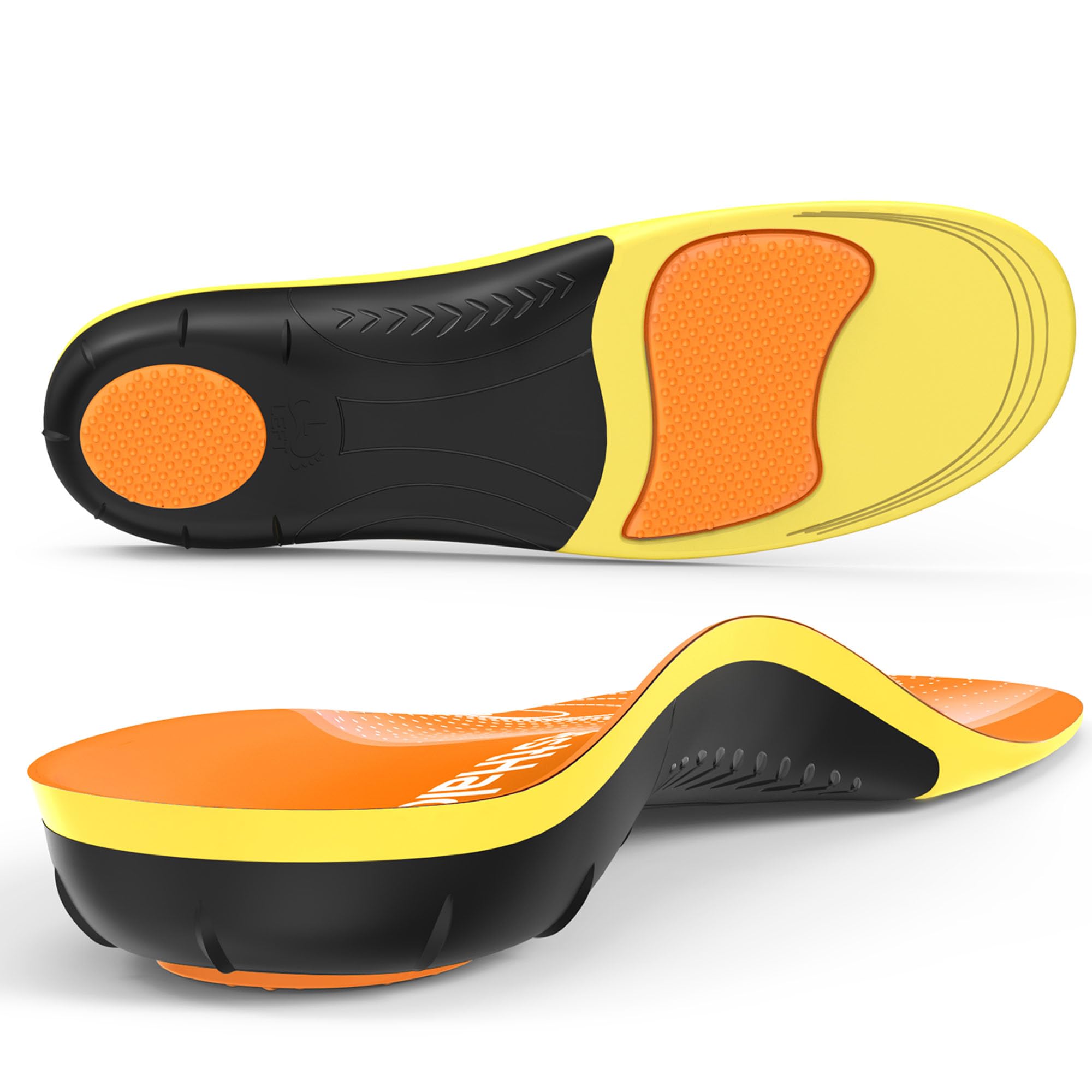
BestHalo targets a specific, underserved demographic: people with naturally high arches who need aggressive support but can’t tolerate a slab of rigid plastic underfoot. The insole uses a biomechanically-shaped EVA base with a gel pad embedded in the heel and metatarsal zones. The arch profile is higher and narrower than most competitors, which is exactly what a cavus foot requires—a broad arch ramp designed for neutral feet will miss the apex of a high arch entirely, leaving the midfoot unsupported and prone to stress fractures.
The deep heel cup locks the calcaneus in place without forcing it into an unnatural tilt, and the gel insert provides enough deceleration to make standing on concrete floors bearable. Users recovering from plantar fasciitis surgery or dealing with chronic arch strain report noticeable pain reduction within three days. The trim-to-fit system works cleanly with scissors and the 8.47-ounce weight is distributed well enough that you don’t feel like you’re lifting a brick with each step.
The adaptation period is real—multiple reviewers mention that the first week produces mild foot and lower-back soreness as the arch muscles adjust. One user with flat feet found the high profile actually caused new pain, which resolved after switching to a firmer orthotic. This is not a universal insole; if your arch is low or you overpronate heavily, look at the Fit Geno or Psveb models instead.
Why it’s great
- High, narrow arch profile fits cavus feet better than generic orthotics.
- Gel heel insert absorbs shock effectively on hard surfaces.
- Biomechanical design promotes natural walking patterns over time.
Good to know
- One-week break-in period can be uncomfortable for new users.
- Not suitable for flat feet or overpronators who need a lower arch.
4. OUOKK 3/4 Length Arch Inserts

OUOKK solves a specific spatial problem: many full-length orthotics are too thick for low-profile sneakers, dress shoes, or high heels. By cutting the insole at 3/4 length—ending just behind the toe pad—this insert eliminates the toe-box space conflict while preserving the structural arch support. The arch itself is a 30mm tall TPU elastic frame, which is exceptionally high for a partial-length insole and provides heavy-duty support rated for 230-plus pounds over a claimed two-year lifespan.
The thin edge profile tapers smoothly into the shoe’s original footbed, so there’s no raised ridge digging into the side of the foot. Reviewers with flat feet and high arches alike report that the three-point support system (forefoot, arch, heel) distributes pressure evenly and stays in place without adhesive falling off. The foot massage texture on the top layer stimulates circulation, which helps reduce plantar fascia tension during the gait cycle.
Because the 3/4 design lacks a full toe cushion, runners and walkers who need forefoot impact protection will find the front of the shoe feels bare. The insert can also shift slightly in shoes with slick stock insoles, requiring occasional repositioning. Best for casual shoes, work boots, and loafers where toe-room is tight but arch support is non-negotiable.
Why it’s great
- 30mm high arch provides heavy-duty support in a space-saving 3/4 length.
- TPU elastic frame is durable enough for multi-year daily use.
- Works well in tight-fitting shoes that can’t accommodate full-length orthotics.
Good to know
- No forefoot cushioning—runners may need additional padding up front.
- Can shift inside shoes with slick existing insoles unless secured.
5. Psveb Professional Heavy Duty Insoles
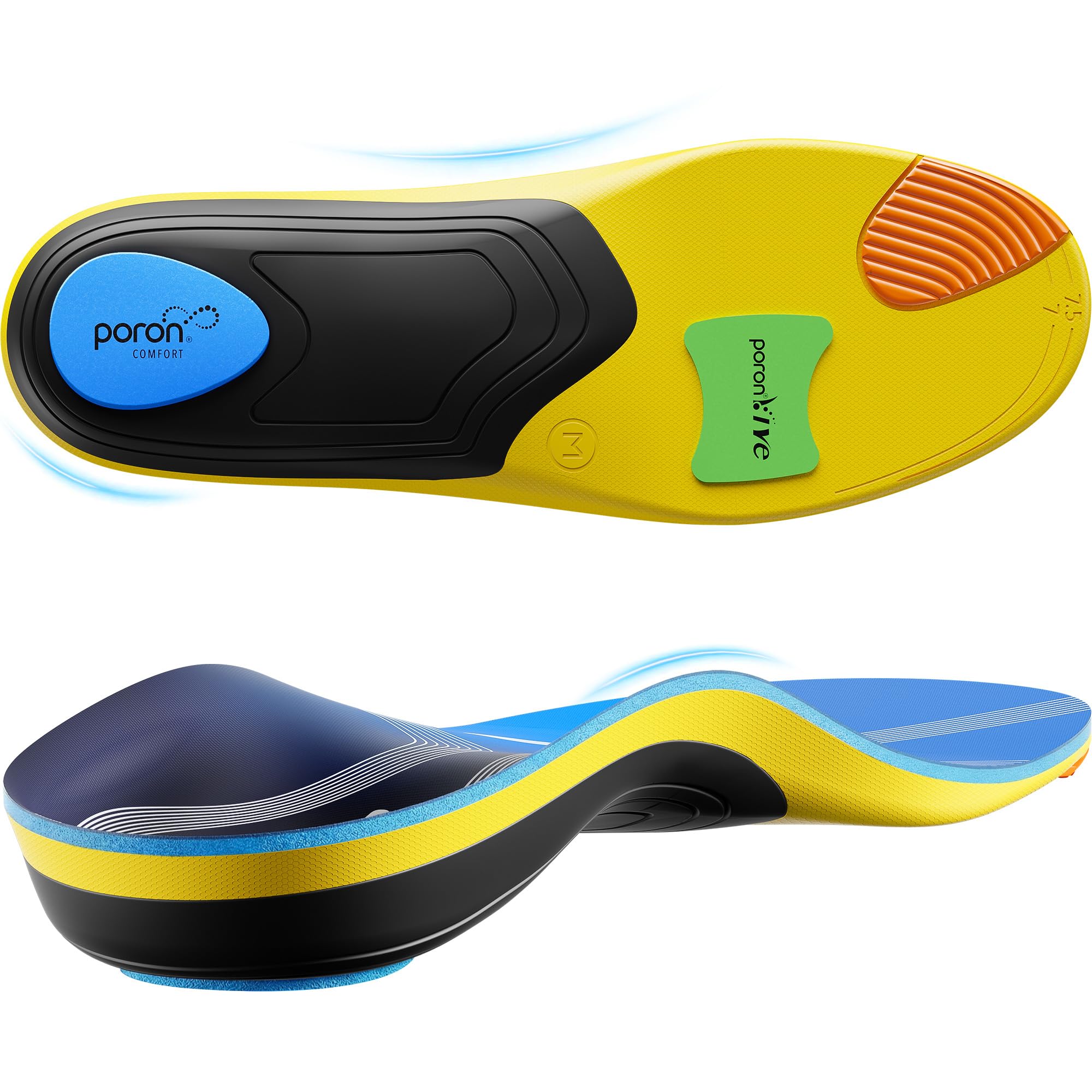
Psveb delivers the highest material-to-price ratio in this roundup. The insole sandwiches two layers of PORON foam between a PU base and a skin-friendly, sweatproof top fabric. PORON is typically reserved for orthotics costing twice as much—it outlasts standard EVA by a significant margin and rebounds to its original shape after each compression cycle. The “Golden Triangle” design distributes support across three points: the metatarsal heads, the medial arch, and the heel, which reduces the pressure spikes that cause plantar fasciitis flares.
The deep U-shaped heel cup is functionally identical to the design used in the Fit Geno model, providing solid calcaneal stabilization for users over 230 pounds. Work boot users report that a single pair lasts through nine- to ten-hour shifts on concrete without flattening, and the 8.15-ounce weight is moderate for a full-length heavy-duty insole. The trim-to-fit guide is clear and precise, accommodating sizes from men’s 7 to 13 with a single pair of scissors.
The arch profile is medium and leans slightly toward the lower side, which means users with very high arches may not feel enough support under the midfoot. One reviewer specifically noted that the arch was less pronounced than expected and switched to a higher-profile model. For flat-footed users making their first upgrade from stock insoles, this is the ideal entry point—it offers genuine structural correction without the price tag of premium orthotics.
Why it’s great
- Dual PORON foam layers provide shock absorption that rivals premium medical orthotics.
- Deep heel cup stabilizes the foot during heavy impacts and long shifts.
- Excellent entry-level option for those new to structured arch support.
Good to know
- Medium arch may be too low for users with high arches or severe overpronation.
- Initial slickness on the top fabric can cause slippage in rubber work boots during the first week.
FAQ
How long does it take an arch insole to stop feeling uncomfortable?
Can I wear arch insoles in every pair of shoes?
How do I know if I need a high, medium, or low arch insole?
Final Thoughts: The Verdict
For most users, the best arch insoles winner is the PowerStep Bridge because it combines adaptable arch support with dual-layer cushioning that works for all foot types without the punishing rigidity of full orthotics. If you weigh over 220 pounds or stand on concrete for nine-plus-hour shifts, grab the Fit Geno Orthotics for its uncompromising TPU arch plate and PORON foam base. And for a performance-minded 3/4-length insert that fits tight shoes without sacrificing support, nothing beats the OUOKK 3/4 Length.

Mo Maruf
I created WellFizz to bridge the gap between vague wellness advice and actionable solutions. My mission is simple: to decode the research and give you practical tools you can actually use.
Beyond the data, I am a passionate traveler. I believe that stepping away from the screen to explore new environments is essential for mental clarity and physical vitality.